İş inovasyonunu en üst düzeye çıkararak iş potansiyelinizi ortaya çıkarıyoruz.
Eposta GönderDisprosyum Tozu, Disprosyum Metal Tozu, Dysprosium Metal Powder, 7429-91-6
DYSPROSIUM POWDER (DYSPROSIUM METAL POWDER / DYSPROSIUM POWDER)
PRODUCT IDENTIFICATION INFORMATION
| Parameter | Information |
|---|---|
| Product Name | Dysprosium Powder / Dysprosium Metal Powder |
| Other Technical Names | Dysprosium Powder, Dysprosium Metal Powder, Dy Powder |
| CAS Number | 7429-91-6 |
| Chemical Symbol | Dy |
| Atomic Number | 66 |
| Atomic Weight | 162.50 g/mol |
| Product Family | Rare Earth Metal (Lanthanide Series) |
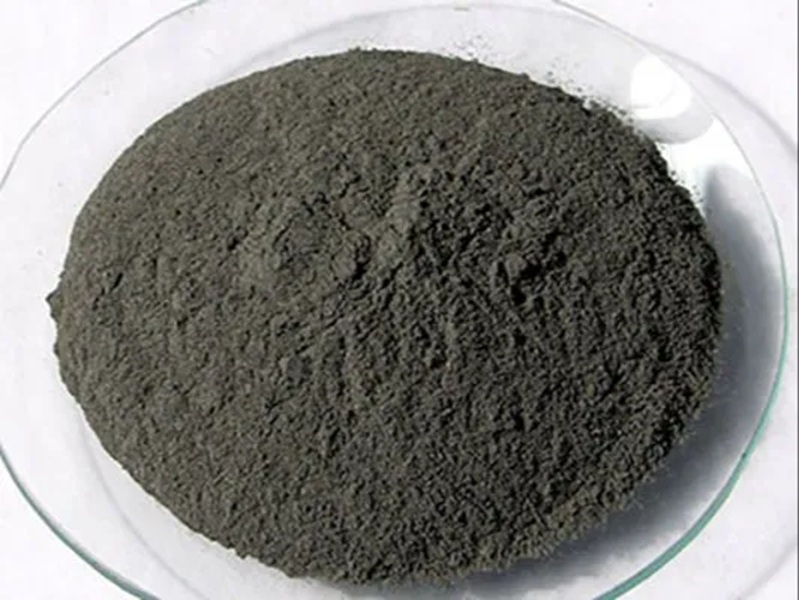
| Appearance | Silver-grey metallic powder |
CHEMICAL STRUCTURE
    Dysprosium Powder (Dy)

    Hexagonal Close Packed (HCP) Crystal Structure

         Dy  Dy  Dy  Dy
           \  |  /  |
            Dy Dy Dy Dy
           /  |  \  |
         Dy  Dy  Dy  Dy

    Hexagonal Close Packed (HCP) Crystal Structure
    Rare Earth Metal
    Very High Magnetic Susceptibility
    Used in NdFeB Magnets
Molecular Formula: Dy (Elemental)
Crystal Structure: Hexagonal Close Packed (HCP)
Electron Configuration: [Xe] 4f¹⁰ 6s²
Oxidation States: +3 (primarily)
Magnetic Property: Very high magnetic susceptibility
SECTION 1: CHEMICAL IDENTITY AND DEFINITION
| Parameter | Information |
|---|---|
| Product Name | Dysprosium Powder / Dysprosium Metal Powder |
| Other Technical Names (English) | Dysprosium Powder, Dysprosium Metal Powder, Dy Powder |
| Other Technical Names (Turkish) | Disprosyum Tozu, Disprosyum Metal Tozu, Dy Tozu |
| Other Technical Names (German) | Dysprosiumpulver, Dysprosiummetallpulver |
| Other Technical Names (French) | Poudre de Dysprosium, Poudre de Dysprosium Métallique |
| Other Technical Names (Spanish) | Polvo de Disprosio, Polvo de Disprosio Metálico |
| CAS Number | 7429-91-6 |
| Chemical Symbol | Dy |
| Atomic Number | 66 |
| Atomic Weight | 162.50 g/mol |
| Chemical Class | Rare Earth Metal; Lanthanide Series |
| Crystal Structure | Hexagonal Close Packed (HCP) |
| Electron Configuration | [Xe] 4f¹⁰ 6s² |
| Oxidation States | +3 (primarily) |
| Appearance | Silver-grey metallic powder |
| Odor | Odorless |
| Color | Silver-grey |
| Magnetic Properties | Very high magnetic susceptibility |
SECTION 2: PHYSICAL AND CHEMICAL PROPERTIES
| Property | Value | Test Method / Note |
|---|---|---|
| Appearance | Silver-grey metallic powder | Visual |
| Atomic Weight | 162.50 g/mol | Calculated |
| Density (20°C) | ~8.54 g/cm³ | ASTM D792 |
| Melting Point | 1412°C | DSC |
| Boiling Point | 2562°C | - |
| Hardness (Mohs) | ~1.5-2.0 (soft) | Mohs Scale |
| Electrical Conductivity | ~0.93 × 10⁶ S/m | - |
| Thermal Conductivity | ~10.7 W/m·K | - |
| Specific Heat (25°C) | ~0.17 J/g·K | - |
| Electrical Resistivity | ~108 × 10⁻⁸ Ω·m | - |
| Thermal Expansion Coefficient | ~9.9 × 10⁻⁶ /°C | - |
| Corrosion Resistance | Slowly oxidizes in air | - |
| Magnetic Properties | Very high magnetic susceptibility | - |
| Special Feature | Maintains performance at high temperatures | - |
| Particle Size | Variable (micron range) | Sieve analysis |
SECTION 3: CHEMICAL PROPERTIES AND REACTIVITY
| Parameter | Information |
|---|---|
| Chemical Character | Rare earth metal; lanthanide series; very high magnetic susceptibility; slowly oxidizes in air |
| Stability | Stable under normal conditions; Slowly oxidizes in air; Oxidizes at high temperatures |
| Reactivity | Reacts with acids; Reacts with halogens; Oxidizes at high temperatures |
| Incompatible Materials | Strong acids, halogens, oxidizing agents, moisture |
| Oxidation | 4Dy + 3O₂ → 2Dy₂O₃ (slow oxidation) |
| Acid Reaction | 2Dy + 6HCl → 2DyCl₃ + 3H₂ (reacts with acids) |
| Halogen Reaction | 2Dy + 3F₂ → 2DyF₃ (reacts with halogens) |
| Special Property | Very high magnetic susceptibility; Enhances performance of NdFeB magnets |
SECTION 4: RARE EARTH METALS COMPARISON TABLE
| Property | Dysprosium (Dy) | Terbium (Tb) | Holmium (Ho) | Explanation |
|---|---|---|---|---|
| Atomic Number | 66 | 65 | 67 | Lanthanide series |
| Atomic Weight | 162.50 | 158.93 | 164.93 | - |
| Density (g/cm³) | 8.54 | 8.23 | 8.79 | - |
| Melting Point (°C) | 1412 | 1356 | 1461 | - |
| Electron Configuration | [Xe] 4f¹⁰ 6s² | [Xe] 4f⁹ 6s² | [Xe] 4f¹¹ 6s² | - |
| Oxidation States | +3 | +3, +4 | +3 | - |
| Magnetic Property | Very high | High | High | Dysprosium highest |
| Primary Use | NdFeB magnets | Phosphors, nuclear | Laser, magnetic | - |
SECTION 5: DYSPROSIUM POWDER GRADES
| Grade | Purity (%) | Particle Size | Application Areas |
|---|---|---|---|
| Dy-1 | ≥ 99.99% | < 75 µm | High-purity research, magnetic applications |
| Dy-2 | ≥ 99.9% | < 150 µm | NdFeB magnets, industrial applications |
| Dy-3 | ≥ 99.5% | < 250 µm | 3D printing, alloy production |
SECTION 6: FUNCTIONAL PROPERTIES AND MECHANISM OF ACTION
| Property | Explanation |
|---|---|
| Magnetic Property | Very high magnetic susceptibility. When added to NdFeB magnets, it improves high-temperature performance. |
| Heat Resistance | Maintains performance at high temperatures. With a melting point of 1412°C, it is suitable for high-temperature applications. |
| Optical Property | Used in laser glasses and phosphors. Suitable for special optical applications. |
| Processability | Can be produced in rod, wire, foil and powder forms. Powder form is used in 3D printing and special alloy production. |
| Powder Properties | Fine metallic powder form is suitable for 3D printing (additive manufacturing), powder metallurgy and special alloy production. |
SECTION 7: MAIN APPLICATION AREAS
| Industry / Application | Function | Typical Use |
|---|---|---|
| Electronics and Data Storage | Magnet performance | Enhances performance of NdFeB magnets. Hard disk drives, motors, generators. |
| Lighting Industry | Brightness and color quality | Increases brightness and color quality in metal halide lamps. |
| Aerospace and Engineering | Sensors and actuators | Used in Terfenol-D alloy (sensors, actuators, transducers). |
| Laser and Optical Materials | Special glass and phosphor | Used in special glass and phosphor production. |
| Advanced Manufacturing | 3D printing and alloys | Powder form is suitable for 3D printing and special alloy production. |
| Nuclear Technology | Neutron absorption | Has high neutron absorption cross-section. |
SECTION 8: NdFeB MAGNET APPLICATIONS - DETAILED EXPLANATION
| Parameter | Explanation |
|---|---|
| Application | Added to NdFeB (Neodymium-Iron-Boron) magnets. |
| Function | Improves high-temperature performance. Increases coercivity. |
| Operating Principle | Dysprosium enters the crystal structure of NdFeB magnets, increasing magnetic anisotropy. |
| Advantages | High temperature resistance; Increased coercivity; Long lifetime; High performance. |
| Application Areas | Electric motors; Wind turbines; Automotive industry; Defense industry; Hard disk drives. |
SECTION 9: QUALITY SPECIFICATIONS (DY-2 GRADE – ≥99.9%)
| Parameter | Specification | Test Method |
|---|---|---|
| Appearance | Silver-grey metallic powder | Visual |
| Purity (Dy) | ≥ 99.9% | AAS / ICP / GDMS |
| Oxygen (O) | ≤ 0.05% | LECO / Inert Gas Fusion |
| Nitrogen (N) | ≤ 0.02% | LECO / Inert Gas Fusion |
| Carbon (C) | ≤ 0.02% | Combustion / ICP |
| Iron (Fe) | ≤ 0.01% | AAS / ICP / GDMS |
| Silicon (Si) | ≤ 0.01% | AAS / ICP / GDMS |
| Aluminum (Al) | ≤ 0.005% | AAS / ICP / GDMS |
| Calcium (Ca) | ≤ 0.01% | AAS / ICP / GDMS |
| Magnesium (Mg) | ≤ 0.005% | AAS / ICP / GDMS |
| Other Rare Earths | ≤ 0.01% | ICP / GDMS |
| Particle Size | < 150 µm (standard) | Sieve analysis |
| Form | Metallic powder | Visual |
SECTION 10: TOXICOLOGICAL PROFILE
| Parameter | Value |
|---|---|
| Acute Oral Toxicity | Low toxicity (metallic form) |
| Acute Inhalation Toxicity | Dust inhalation may cause irritation |
| Skin Irritation | Metallic form is not irritating |
| Eye Irritation | Metallic form is not irritating |
| Chronic Toxicity | Rare earth compounds may show health effects with prolonged exposure |
| Carcinogenicity | Not classified as carcinogenic |
| Mutagenicity | Not classified as mutagenic |
| Target Organs | Respiratory system (dust irritation); Skin |
| Occupational Exposure Limit (8h TWA) | 2.5 mg/m³ (rare earths, total dust) |
| Special Toxicity Note | Fine particles may irritate skin, eyes and respiratory tract when inhaled; Appropriate dust control measures should be used |
SECTION 11: GHS CLASSIFICATION AND LABELING
GHS Classification (in compliance with CLP and UN GHS):
| Hazard Class | Category | H-Statement |
|---|---|---|
| Flammable Solids | Category 2 | H228 (optional) |
| STOT - SE (Single Exposure) | Category 3 | H335 (optional) |
Note: May be flammable in fine powder form. Dust inhalation may cause irritation.
Signal Word: WARNING (optional)
Hazard Pictograms: GHS02 (Flammable - for powder), GHS07 (optional)
Hazard Statements (H-Codes) - if classified:
| Code | Statement |
|---|---|
| H228 | Flammable solid |
| H335 | May cause respiratory irritation |
SECTION 12: PRECAUTIONARY STATEMENTS (P-CODES)
| Code | Statement |
|---|---|
| P210 | Keep away from heat/sparks/open flames/hot surfaces |
| P261 | Avoid breathing dust/fume/gas/mist/vapors/spray |
| P264 | Wash hands thoroughly after handling |
| P271 | Use only outdoors or in a well-ventilated area |
| P280 | Wear protective gloves/protective clothing/eye protection/face protection |
| P304+P340 | IF INHALED: Remove person to fresh air and keep comfortable for breathing |
| P312 | Call a POISON CENTER/doctor if you feel unwell |
| P362+P364 | Take off contaminated clothing and wash it before reuse |
| P403+P233 | Store in a well-ventilated place. Keep container tightly closed |
| P501 | Dispose of contents/container in accordance with local/regional/national/international regulations |
SECTION 13: FIRST AID MEASURES
| Exposure Route | Action to Take |
|---|---|
| Inhalation | Move to fresh air immediately. Keep at rest in a position comfortable for breathing. If symptoms persist, get medical attention. |
| Skin Contact | Wash with plenty of soap and water. Remove contaminated clothing. If skin irritation occurs, get medical advice/attention. |
| Eye Contact | Rinse immediately with plenty of water for at least 15 minutes. Keep eyelids open. Remove contact lenses. Continue rinsing. If eye irritation persists, get medical advice/attention. |
| Ingestion | Rinse mouth with water. Do NOT induce vomiting. Drink plenty of water. If symptoms develop, get medical attention. |
SECTION 14: FIRE-FIGHTING MEASURES
| Parameter | Information |
|---|---|
| Fire Hazard | Flammable in fine powder form. May form dust explosions in air. |
| Hazards During Fire | May release dysprosium oxide fumes at high temperatures |
| Suitable Extinguishing Media | Dry chemical powder, CO₂, sand, Class D extinguishers |
| Unsuitable Extinguishing Media | Water (violent reaction) |
| Special Protective Equipment | Self-contained breathing apparatus (SCBA), full protective clothing |
| Special Precautions | Prevent dust from entering sewers and waterways; Do not inhale fumes |
SECTION 15: STORAGE AND SHELF LIFE
| Parameter | Information |
|---|---|
| Storage Conditions | Cool, dry, well-ventilated area; Away from moisture and oxidizing agents; In closed containers; Inert atmosphere recommended |
| Container Requirements | Airtight containers; Protect from moisture |
| Materials to Protect From | Moisture, oxidizing agents, acids, halogens |
| Shelf Life | 2-3 years (under proper storage conditions) |
| Stability Note | Stable under normal conditions; Slowly oxidizes in air; Store under inert atmosphere |
SECTION 16: PACKAGING OPTIONS
| Packaging Type | Quantity | Material |
|---|---|---|
| Plastic Drum | 25-50 kg | HDPE (airtight) |
| Plastic Bucket | 5-25 kg | HDPE (airtight) |
| Glass Bottle | 100 g - 2 kg | Glass (airtight) |
| Plastic Bag | 1-10 kg | PE (sealed) |
| Steel Drum | 100-500 kg | Corrosion-resistant lined steel |
SECTION 17: TRANSPORT INFORMATION
| Parameter | Information |
|---|---|
| UN Number | 3089 (Metal powder, flammable, n.o.s.) |
| Hazard Class | 4.1 (Flammable solids) |
| Packing Group | II or III |
| ADR/RID | 4.1, PG II/III |
| IMDG Code | 4.1, PG II/III |
| IATA (Air) | 4.1, PG II/III |
| Marine Pollutant | No |
| Transport Temperature | Ambient temperature; Protect from moisture; Keep away from heat and sparks |
SECTION 18: OTHER NAMES AND SYNONYMS
| Type | Name |
|---|---|
| Turkish Names | Disprosyum Tozu, Disprosyum Metal Tozu, Dy Tozu |
| English Names | Dysprosium Powder, Dysprosium Metal Powder, Dy Powder |
| German Names | Dysprosiumpulver, Dysprosiummetallpulver |
| French Names | Poudre de Dysprosium, Poudre de Dysprosium Métallique |
| Spanish Names | Polvo de Disprosio, Polvo de Disprosio Metálico |
| Chemical Names | Dysprosium (elemental form); Dysprosium metal |
| CAS Number | 7429-91-6 |
| Atomic Symbol | Dy |
| Atomic Number | 66 |
SECTION 19: SUMMARY TABLE
| Parameter | Value |
|---|---|
| Product | Dysprosium Powder / Dysprosium Metal Powder |
| CAS Number | 7429-91-6 |
| Atomic Number | 66 |
| Atomic Weight | 162.50 g/mol |
| Appearance | Silver-grey metallic powder |
| Density | ~8.54 g/cm³ |
| Melting Point | 1412°C |
| Boiling Point | 2562°C |
| Hardness (Mohs) | ~1.5-2.0 |
| Crystal Structure | Hexagonal Close Packed (HCP) |
| Primary Function | Rare earth metal; Magnetic material |
| Main Applications | NdFeB magnets, lighting, aerospace, laser, 3D printing |
| Shelf Life | 2-3 years |
| GHS Signal Word | WARNING (optional) |
| UN Number | 3089 |
| Hazard Class | 4.1 (Flammable solids) |
| Special Features | Very high magnetic susceptibility; High temperature resistance |
SECTION 20: CRITICAL WARNINGS AND BEST PRACTICES
CRITICAL WARNINGS:
-
Flammable in fine powder form. May form dust explosions in air. Keep away from heat and sparks.
-
Irritant. Fine particles may irritate skin, eyes and respiratory tract when inhaled. Use appropriate protective equipment.
-
Slowly oxidizes in air. Store in closed containers away from moisture and oxidizing agents.
-
Inert atmosphere recommended for storage.
-
Rare earth metal requires special handling and purity considerations.
-
Magnetic applications require high purity (≥99.9%).
-
Incompatibilities: Strong acids, halogens, oxidizing agents, moisture.
-
Hygiene Requirement: Wash hands thoroughly after use.
BEST PRACTICE RECOMMENDATIONS:
9. NdFeB Magnet Production:
Add dysprosium powder to NdFeB magnets to improve high-temperature performance. Increases coercivity.
10. Lighting Applications:
Use to increase brightness and color quality in metal halide lamps.
11. Aerospace and Engineering:
Use in Terfenol-D alloy for sensors, actuators and transducers.
12. Laser and Optical Materials:
Use in special glass and phosphor production.
13. Advanced Manufacturing:
Powder form is suitable for 3D printing (additive manufacturing) and special alloy production.
14. Use:
Use in well-ventilated areas; Avoid dust formation; Take static electricity precautions.
15. Personal Protective Equipment:
Use safety goggles, protective clothing, protective gloves (nitrile, neoprene), NIOSH approved dust mask.
16. Hygiene:
Do not eat, drink or smoke while using; Wash hands thoroughly after use; Do not take contaminated work clothes home.
17. Storage:
Store in cool, dry, well-ventilated area; Keep away from moisture and oxidizing agents; Store in closed, airtight containers; Inert atmosphere recommended.
18. Spill Response:
Avoid dust formation; Vacuum or sweep; Place in closed containers; Do not allow to enter drains or waterways.
19. Disposal:
Dispose in accordance with local, regional and national regulations; Contact licensed waste disposal services for rare earth metals.
20. Purity Requirements:
Select the correct purity grade according to the application. High purity (≥99.9%) is required for magnetic applications.
DYSPROSIUM POWDER SELECTION GUIDE:
| Application | Recommended Grade | Explanation |
|---|---|---|
| NdFeB magnets | Dy-2 (≥99.9%) | High purity required |
| Lighting | Dy-2 (≥99.9%) | High purity required |
| Aerospace | Dy-2 (≥99.9%) or Dy-1 (≥99.99%) | Depends on application |
| Laser and optics | Dy-1 (≥99.99%) | Highest purity required |
| 3D printing | Dy-3 (≥99.5%) | Economic solution |
RECOMMENDED STORAGE CONDITIONS:
| Parameter | Requirement |
|---|---|
| Storage Temperature | Room temperature (15-25°C) |
| Atmosphere | Inert atmosphere (argon) recommended |
| Humidity | <60% relative humidity |
| Container | Airtight containers |
| Location | Cool, dry, well-ventilated area; Keep away from heat and sparks |
ENVIRONMENTAL NOTE:
The mining and processing of rare earth elements should be carefully managed from an environmental perspective. Waste and residues should be properly disposed of.
LEGAL DISCLAIMER:
The information provided in this document is based on our current knowledge and experience and is provided in good faith; however, since all conditions of use are beyond our control, it does not constitute a binding specification or warranty. This Technical Data Sheet is for informational purposes only. Users are responsible for testing suitability for their own applications. For complete safety, storage, use, handling, disposal and regulatory compliance information, reference should be made to the official Safety Data Sheet (SDS/MSDS) provided by the manufacturer/supplier.