İş inovasyonunu en üst düzeye çıkararak iş potansiyelinizi ortaya çıkarıyoruz.
Eposta GönderLityum Heksa Floro Fosfat, Lithium Hexafluorophosphate, Lithium Hexa Fluoro Phosphate, Lithium Phosphorus Fluoride, 21324‑40‑3
LITHIUM HEXAFLUOROPHOSPHATE (LIPF₆)
LITHIUM HEXAFLUOROPHOSPHATE / LITHIUM SALT OF HEXAFLUOROPHOSPHORIC ACID
1. PRODUCT IDENTIFICATION AND CHEMICAL IDENTITY
| Parameter | Information |
|---|---|
| Product Name | Lithium Hexafluorophosphate |
| Chemical Name | Lithium Hexafluorophosphate, Lithium Phosphorus Fluoride |
| Other Names | LiPF₆, Lithium salt of hexafluorophosphoric acid, Hexafluoro‑, lithium |
| Trade Names | Purelyte, Powerlyte |
| IUPAC Name | Lithium hexafluorophosphate |
| CAS Number | 21324-40-3 |
| EC Number (EINECS) | 244-394-9 |
| Chemical Formula | LiPF₆ |
| Molecular Weight | 151.91 g/mol |
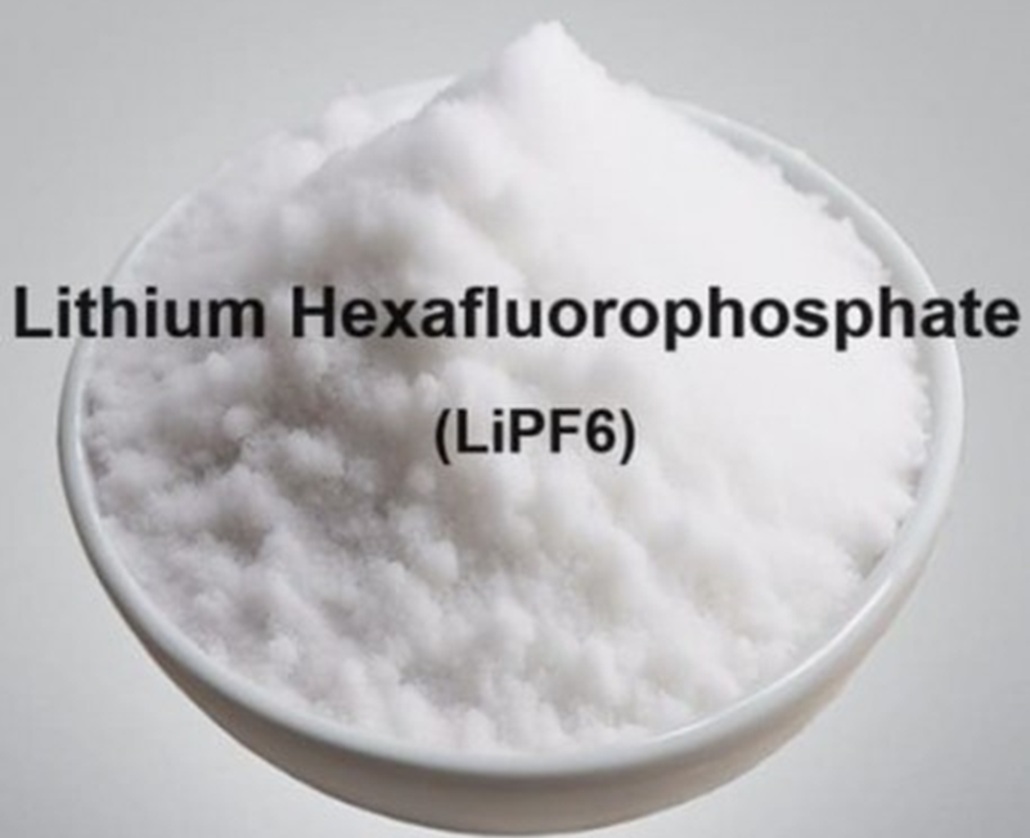
| Appearance | White crystalline powder |
| Odor | Characteristic (HF odor upon hydrolysis) |
| Physical State (20°C) | Solid (powder) |
2. CHEMICAL STRUCTURE
2.1. Molecular Structure
Lithium hexafluorophosphate is an inorganic salt composed of lithium and hexafluorophosphate anion. Lithium ions (Li⁺) and hexafluorophosphate anions (PF₆⁻) are present in a 1:1 ratio. It has an ionic crystal structure in solid state. It is the most commonly used electrolyte salt in lithium-ion batteries. It is highly hygroscopic; upon contact with moisture, it rapidly hydrolyzes releasing hydrofluoric acid (HF).
Structural Features:
                    LITHIUM HEXAFLUOROPHOSPHATE [LiPF₆]
                          |
                Li⁺ - PF₆⁻ Ionic Bonds
                          |
        +----------------+----------------+
        |                |                |
    Hygroscopic       Lithium-Ion      Hydrolysis
    Crystal           Battery          with Moisture
    Structure         Electrolyte     (HF Formation)
2.2. Structural Properties
| Parameter | Value |
|---|---|
| Crystal Structure | Ionic crystal |
| Chemical Formula | LiPF₆ |
| Molecular Weight | 151.91 g/mol |
| Density | ~1.5 g/cm³ |
| Appearance | White crystalline powder |
| Melting Point | ~200 °C (decomposes upon heating) |
| Hygroscopicity | High |
3. PHYSICAL AND CHEMICAL PROPERTIES
| Property | Value | Description |
|---|---|---|
| Appearance | White crystalline powder | - |
| Odor | Characteristic | HF odor upon hydrolysis |
| Chemical Formula | LiPF₆ | - |
| Molecular Weight | 151.91 g/mol | - |
| Density | ~1.5 g/cm³ | - |
| Melting Point | ~200 °C | Decomposes upon heating |
| Solubility in Water (25°C) | Very low solubility | Hydrolyzes |
| Solubility in Organic Carbonates | Soluble | Soluble in EC, DMC, DEC, EMC |
| Stability | Rapidly hydrolyzes in humid environments | Releases HF |
| Hygroscopicity | High | Must be stored under inert atmosphere |
| Conductivity (in EC/DMC) | ~10.7 mS/cm (1.0 M, 25°C) | - |
4. PURITY GRADES
| Parameter | Technical Grade | High Purity Grade | Battery Grade |
|---|---|---|---|
| Purity (LiPF₆) | ≥ 97.0% | ≥ 98.0% | ≥ 99.9% |
| Acid (HF) Content | ≤ 100 ppm | ≤ 50 ppm | ≤ 20 ppm |
| Water (H₂O) Content | ≤ 100 ppm | ≤ 50 ppm | ≤ 20 ppm |
| Lithium (Li) Content | - | - | ≥ 4.5% |
| Iron (Fe) | ≤ 50 ppm | ≤ 20 ppm | ≤ 10 ppm |
| Calcium (Ca) | ≤ 50 ppm | ≤ 20 ppm | ≤ 10 ppm |
| Sodium (Na) | ≤ 50 ppm | ≤ 20 ppm | ≤ 10 ppm |
| Potassium (K) | ≤ 50 ppm | ≤ 20 ppm | ≤ 10 ppm |
| Chloride (Cl⁻) | ≤ 50 ppm | ≤ 20 ppm | ≤ 10 ppm |
| Sulfate (SO₄²⁻) | ≤ 50 ppm | ≤ 20 ppm | ≤ 10 ppm |
| Other Heavy Metals | ≤ 50 ppm | ≤ 20 ppm | ≤ 10 ppm |
5. STABILITY AND REACTIVITY
| Parameter | Information |
|---|---|
| Chemical Stability | Stable under dry and inert atmosphere; rapidly hydrolyzes in humid environments. |
| Conditions to Avoid | Moisture, water, high temperature (>200°C), oxidizing agents. |
| Incompatible Materials | Water, moisture, strong oxidizing agents, strong bases, heat. |
| Hazardous Decomposition Products | Upon hydrolysis: hydrofluoric acid (HF), phosphoryl fluoride (POF₃), lithium fluoride (LiF). |
| Hazardous Polymerization | Will not occur. |
| Hygroscopicity | High; rapidly absorbs moisture and may liquefy when exposed to air. |
5.1. Chemical Reactions
-
Hydrolysis (with Moisture):
LiPF₆ + H₂O → LiF + POF₃ + 2HF
LiPF₆ + 2H₂O → LiF + H₂PO₄ + 5HF -
Thermal Decomposition (~200°C):
LiPF₆ → LiF + PF₅↑ -
Reaction with Alkali:
LiPF₆ + 4NaOH → LiOH + NaF + Na₃PO₄ + 3H₂O
6. APPLICATION AREAS
6.1. Energy Storage (Lithium-Ion Batteries)
| Application | Function | Details |
|---|---|---|
| Lithium-Ion Battery Electrolyte | Li⁺ ion carrier | Most commonly used electrolyte salt |
| Electrolyte Solution | Conductivity provider | Dissolved in organic carbonate solvents |
| Solid-State Electrolytes | Ionic conductor | Research stage |
6.2. Electronic Devices
| Application | Function | Details |
|---|---|---|
| Portable Devices | Battery electrolyte | Mobile phones, laptops, tablets |
| Electric Vehicle (EV) Batteries | Battery electrolyte | High energy density batteries |
| Energy Storage Systems | Battery electrolyte | Grid-scale energy storage |
6.3. Research and Development
| Application | Function | Details |
|---|---|---|
| New Electrolyte Development | Electrolyte studies | For high-voltage cathode materials |
| Battery Performance Improvement | Testing and analysis | Energy density and lifetime studies |
| Solid-State Battery Research | Ionic conductor | Advanced battery technologies |
6.4. Sectoral Suitability Table
| Sector | Suitability | Explanation |
|---|---|---|
| Energy Storage | Suitable | Li-ion battery electrolyte |
| Electronics | Suitable | EV and portable device batteries |
| Chemical Industry | Suitable | Electrolyte precursor |
| Research | Suitable | New electrolyte and battery development |
| Food | Not Suitable | Toxic, not permitted |
| Pharmaceutical | Not Suitable | Toxic, not permitted |
7. PRODUCTION PROCESS
| Stage | Process | Description |
|---|---|---|
| 1. Raw Material Preparation | Lithium fluoride (LiF) and phosphorus pentafluoride (PF₅) | High purity starting materials |
| 2. Reaction | LiF + PF₅ → LiPF₆ | Reaction under controlled conditions |
| 3. Purification | Crystallization | Removal of impurities |
| 4. Drying | Vacuum drying | Minimization of moisture content |
| 5. Quality Control | Analysis and testing | ICP-OES, Karl Fischer, XRD |
| 6. Packaging | Under inert atmosphere | Must be protected from moisture and air |
7.1. Major Producing Countries
| Country | Description |
|---|---|
| China | Major producer |
| Japan | High purity producer |
| USA | Battery material producer |
| Europe | Battery material producer |
8. ALTERNATIVE / SUBSTITUTE PRODUCTS
| Alternative | Description | When to Use |
|---|---|---|
| Lithium Tetrafluoroborate (LiBF₄) | Alternative electrolyte salt | When wider temperature range is required |
| Lithium Perchlorate (LiClO₄) | Alternative electrolyte salt | Laboratory studies |
| Lithium Triflate (LiCF₃SO₃) | Alternative electrolyte salt | Special battery applications |
| Lithium Bis(oxalato)borate (LiBOB) | Alternative electrolyte salt | High temperature batteries |
| Lithium Bis(trifluoromethanesulfonyl)imide (LiTFSI) | Alternative electrolyte salt | Solid-state and polymer electrolytes |
9. SAFETY AND TOXICOLOGY
| Parameter | Value |
|---|---|
| Acute Oral Toxicity (LD50, Rat) | > 500 mg/kg (toxic) |
| Dermal Toxicity | Toxic |
| Skin Irritation | Irritant |
| Eye Irritation | Serious irritant |
| Inhalation | Dust inhalation may cause respiratory tract irritation; HF formation upon hydrolysis |
| Carcinogenicity | Not classified as carcinogenic |
| Mutagenicity | May be mutagenic |
| Chronic Effects | Due to HF formation: fluorosis of bones and teeth |
| Environmental Hazards | Toxic to aquatic life; fluoride ion content |
9.1. GHS Classification
| Hazard Class | Category | H-Statement |
|---|---|---|
| Acute Toxicity | Category 3 (Oral) | H301: Toxic if swallowed |
| Acute Toxicity | Category 3 (Dermal) | H311: Toxic in contact with skin |
| Skin Irritation | Category 2 | H315: Causes skin irritation |
| Eye Irritation | Category 2A | H319: Causes serious eye irritation |
| Specific Target Organ Toxicity | Category 3 | H335: May cause respiratory irritation |
| Hazardous to the Aquatic Environment | Category 2 | H401: Toxic to aquatic life |
Signal Word: DANGER
Hazard Pictograms: GHS06 (Toxic), GHS07 (Exclamation Mark)
10. PRECAUTIONARY STATEMENTS (P-CODES)
| Code | Statement |
|---|---|
| P261 | Avoid breathing dust |
| P264 | Wash thoroughly after handling |
| P270 | Do not eat, drink or smoke when using this product |
| P271 | Use only in well-ventilated areas |
| P280 | Wear protective gloves/eye protection/face protection |
| P301+P310 | IF SWALLOWED: Immediately call a POISON CENTER or doctor |
| P302+P352 | IF ON SKIN: Wash with plenty of soap and water |
| P304+P340 | IF INHALED: Remove person to fresh air and keep comfortable for breathing |
| P305+P351+P338 | IF IN EYES: Rinse cautiously with water for several minutes. Remove contact lenses if present and easy to do |
| P312 | Call a POISON CENTER or doctor if you feel unwell |
| P337+P313 | If eye irritation persists: Get medical advice/attention |
| P405 | Store locked up |
| P501 | Dispose of contents/container in accordance with local regulations |
11. FIRST AID MEASURES
| Exposure Route | Action to Take |
|---|---|
| Inhalation | Remove to fresh air. If symptoms persist, seek medical attention. |
| Skin Contact | Wash with plenty of soap and water. Remove contaminated clothing. If irritation persists, seek medical attention. |
| Eye Contact | Rinse thoroughly with plenty of water for at least 15 minutes. Remove contact lenses. If irritation persists, seek medical attention. |
| Ingestion | Rinse mouth. Do not induce vomiting. Drink plenty of water. If large amount is swallowed, seek medical attention. |
12. STORAGE AND SHELF LIFE
| Parameter | Condition |
|---|---|
| Storage Conditions | Store in a cool, dry, and well-ventilated area. Store under inert atmosphere (Argon or Nitrogen). |
| Container Requirements | Stainless steel or PTFE-lined containers, tightly sealed, moisture-proof. |
| Temperature | Room temperature (15-25°C) or cold storage. |
| Shelf Life | 6-12 months under appropriate conditions (protected from moisture and heat). |
| Stability Note | Rapidly hydrolyzes in humid environments; must be stored with extreme care due to HF formation. |
13. PACKAGING OPTIONS
| Packaging Type | Quantity | Material |
|---|---|---|
| Laboratory Packaging | 10 g, 25 g, 50 g, 100 g, 500 g | PTFE-lined bottle, aluminum foil bag, inert atmosphere |
| Industrial Packaging | 1 kg, 5 kg, 10 kg | Stainless steel drum, inert atmosphere |
| Solution Packaging | 1 L, 5 L, 20 L, 200 L | Stainless steel or HDPE containers |
14. TRANSPORT INFORMATION
| Parameter | Information |
|---|---|
| UN Number | 2025 |
| Hazard Class | 6.1 (Toxic substances) |
| Packing Group | II |
| ADR/RID | Regulated |
| IMDG | Regulated |
| IATA | Regulated |
| HS Code | 2826.19.00.00.00 (Other fluorides) |
15. REGULATORY STATUS
| Region / Authority | Status |
|---|---|
| European Union (REACH) | Registered; toxic, hazardous to the environment |
| Turkey (KKDIK) | Compliance required |
| TSCA (USA) | Registered |
| CLP/GHS | Toxic Category 3, Environment Category 2 |
| EINECS | 244-394-9 |
| China | Registered; major production and export country |
| PubChem CID | 23688915 |
| ChEBI | CHEBI:172376 |
| UNII | T9T8DY51J3 |
16. OTHER NAMES AND SYNONYMS
| Name | Description |
|---|---|
| Lithium Hexafluorophosphate | English chemical name |
| Lityum Heksaflorofosfat | Turkish chemical name |
| LiPF₆ | Chemical abbreviation |
| Lithium salt of hexafluorophosphoric acid | Chemical description |
| Hexafluoro‑, lithium | Alternative name |
| Purelyte | Trade name |
| Powerlyte | Trade name |
| Lithium Phosphorus Fluoride | Alternative name |
17. QUICK REFERENCE TABLE
| Property | Value |
|---|---|
| CAS Number | 21324-40-3 |
| EC Number | 244-394-9 |
| Chemical Formula | LiPF₆ |
| Molecular Weight | 151.91 g/mol |
| Appearance | White crystalline powder |
| Density | ~1.5 g/cm³ |
| Melting Point | ~200 °C (decomposes) |
| UN Number | 2025 |
| HS Code | 2826.19.00.00.00 |
| GHS Signal Word | DANGER |
| PubChem CID | 23688915 |
| UNII | T9T8DY51J3 |
18. CRITICAL WARNINGS AND BEST PRACTICES
CRITICAL WARNINGS:
-
High Hygroscopicity: LiPF₆ has very high moisture absorption capacity. When exposed to air, it rapidly absorbs moisture, hydrolyzes, and releases toxic HF (hydrofluoric acid) gas. Must only be handled under inert atmosphere (Argon or Nitrogen).
-
HF Formation: HF generated by hydrolysis is extremely corrosive and toxic. Exposure can cause severe burns, respiratory damage, and death.
-
Thermal Decomposition: Decomposes above ~200°C releasing toxic PF₅ gas.
-
Contact with Water: Reacts violently with water. Do not use water for fire extinguishing.
-
Storage: Must be stored under inert atmosphere, dry and cool conditions. Stainless steel or PTFE-lined containers must be used.
-
Battery Grade Purity: Lithium-ion battery applications require ≥99.9% purity. Impurities (especially water and acid) adversely affect battery performance and lifetime.
BEST PRACTICE RECOMMENDATIONS:
-
Storage:
-
Store under inert atmosphere (Argon or Nitrogen), dry and cool conditions (15-25°C).
-
Use stainless steel or PTFE-lined, tightly sealed containers.
-
Must be completely isolated from moisture and air.
-
Glovebox or dry room (dew point < -40°C) is required.
-
-
Handling:
-
Use only under inert atmosphere (Argon or Nitrogen), in glovebox or dry room.
-
Use a dust mask (P3 filter), chemically resistant gloves (nitrile or neoprene), protective goggles, and face shield.
-
Avoid dust formation and inhalation.
-
Wash hands and equipment thoroughly after use.
-
Do not allow contact with water or moisture.
-
Keep calcium carbonate or calcium hydroxide for HF neutralization.
-
-
Waste Management:
-
Dispose of in accordance with local regulations at licensed disposal facilities.
-
Do not discharge into water sources.
-
Take precautions against HF formation during waste treatment.
-
LEGAL DISCLAIMER
This Technical Data Sheet (TDS) is for informational purposes only and has been prepared based on available technical data. The user is solely responsible for determining the suitability of the product for their specific applications and for complying with all local, national, and international regulations. For complete safety, storage, handling, transport, disposal, and regulatory compliance information, the official Safety Data Sheet (SDS/MSDS) provided by the manufacturer/supplier must be consulted. This document does not substitute professional advice. Lithium hexafluorophosphate is a critical electrolyte salt in lithium-ion batteries; due to high hygroscopicity and HF formation, it must be handled with extreme care and stored and used under inert atmosphere.