İş inovasyonunu en üst düzeye çıkararak iş potansiyelinizi ortaya çıkarıyoruz.
Eposta GönderMonosodyum Fosfat, Monosodium Phosphate, Sodium Acid Phosphate, Sodium Biphosphate, Sodium Dihydrogen Phosphate, MAP, 7558-80-7
MONOSODIUM PHOSPHATE (MSP)
1. PRODUCT DEFINITION AND CHEMICAL IDENTITY
| Parameter | Description |
|---|---|
| Chemical Name (IUPAC) | Sodium dihydrogen phosphate |
| Common Name | Monosodium Phosphate (MSP) |
| Other Names | Sodium acid phosphate, Monosodium dihydrogen phosphate, Sodium biphosphate, Sodium dihydrogen orthophosphate, Monobasic sodium phosphate, Primary sodium phosphate |
| CAS Number | 7558-80-7 |
| EC Number | 231-449-2 |
| Molecular Formula | NaH₂PO₄ (anhydrous); NaH₂PO₄·2H₂O (dihydrate) |
| Molecular Weight | 119.98 g/mol (anhydrous); 156.01 g/mol (dihydrate) |
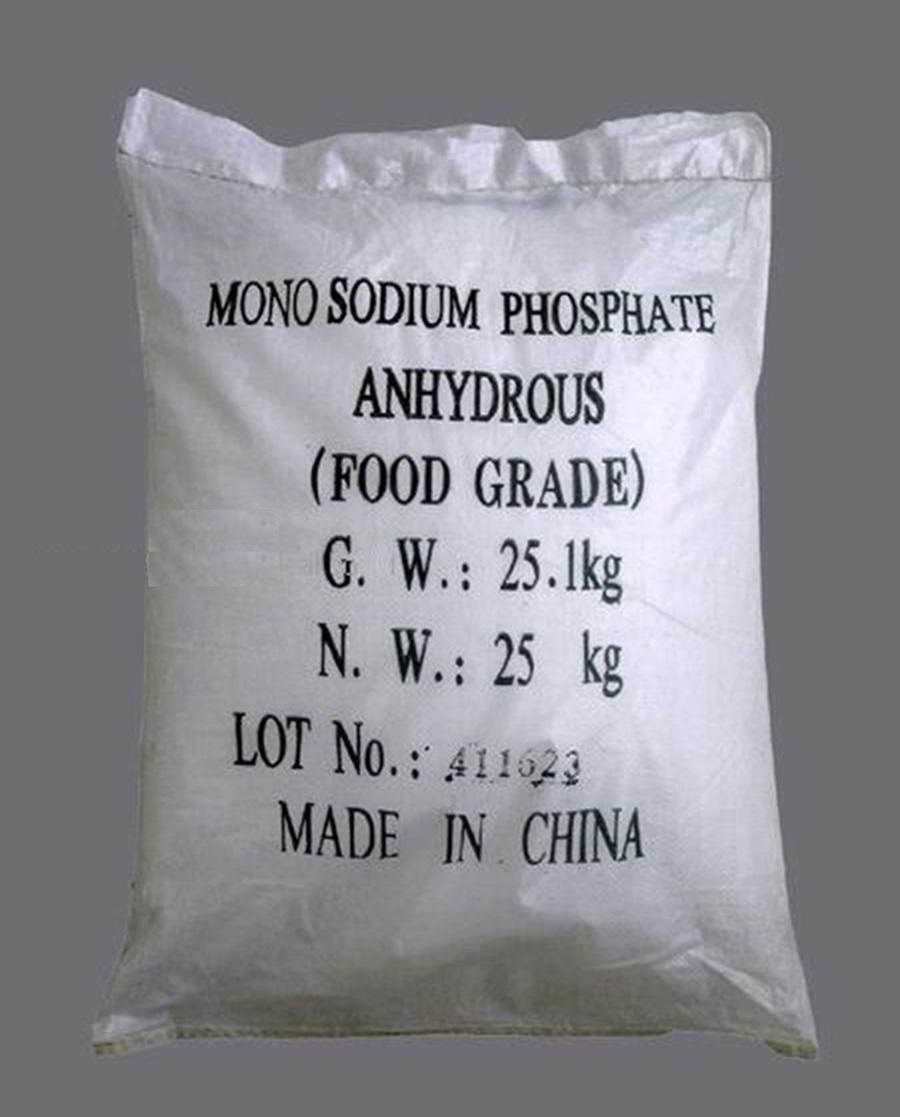
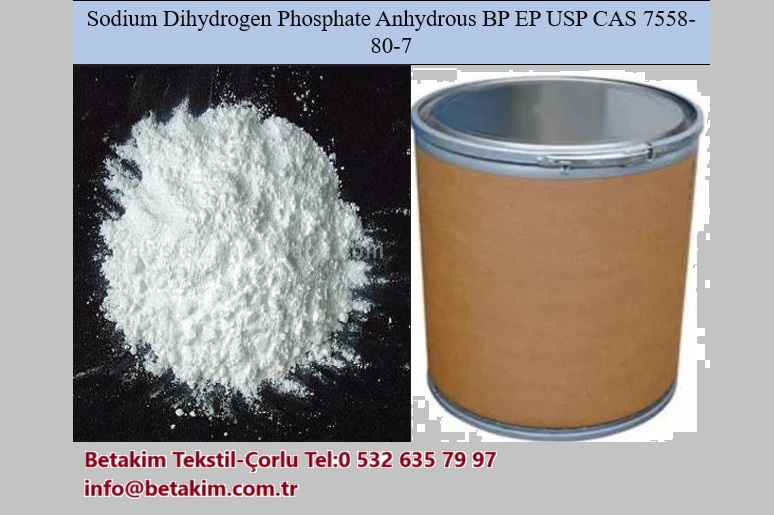
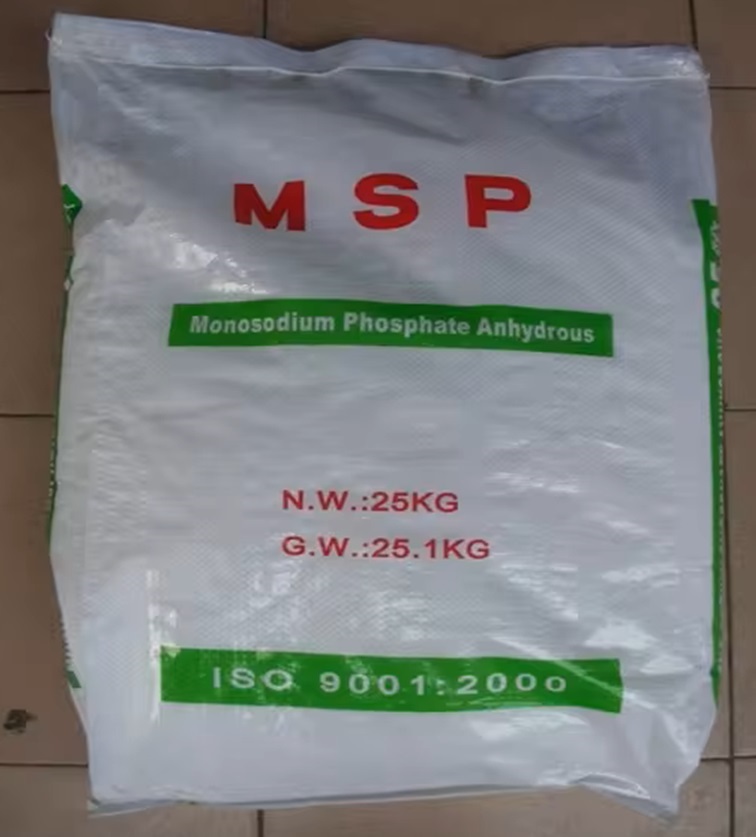
| Appearance | White crystalline powder or granules |
| Odour | Odourless |
Note: Monosodium phosphate is a monobasic sodium salt of phosphoric acid containing a single sodium atom. It is commercially available in anhydrous and dihydrate forms, as well as in technical and food/pharmaceutical grades.
2. PHYSICAL AND CHEMICAL PROPERTIES
| Property | Value |
|---|---|
| Physical form | White crystalline powder or dry crystals |
| Odour | Odourless |
| Taste | Mildly acidic, slightly salty |
| Melting point | ~200 °C (decomposes) |
| Density | 2.36 g/cm³ |
| Solubility in water (25 °C) | 87 g/100 g water (very high) |
| pH (1% aqueous solution, 25 °C) | ~4.5 (mildly acidic) |
| Hygroscopy | Slightly hygroscopic |
| Thermal decomposition | Emits hazardous fumes when heated; decomposes to sodium metaphosphate and water |
3. FUNCTIONAL PROPERTIES
-
pH Control / Acidulant: Provides a mildly acidic pH (~4.5 in solution), making it an effective acidity regulator in food, pharmaceutical, and industrial applications.
-
Buffering Agent: Forms buffer systems when combined with its conjugate base (disodium phosphate), helping maintain a stable pH in formulations.
-
Sequestrant / Metal Ion Control: Reacts with metal ions (e.g., lead, calcium, magnesium) to form insoluble phosphate coatings or soluble complexes, preventing corrosion and scale formation.
-
Binding Agent: Acts as a binder in food products and pharmaceutical tablets.
-
Halogen Neutralization: Used in waste treatment to neutralize and remove halogenated compounds.
-
Urinary Acidifier: In animal feed, helps acidify urine to prevent urinary calculi.
4. ALTERNATIVE NAMES AND SYNONYMS
-
Monosodium Phosphate (MSP)
-
Sodium Dihydrogen Phosphate
-
Sodium Acid Phosphate
-
Monosodium Dihydrogen Phosphate
-
Sodium Biphosphate
-
Sodium Dihydrogen Orthophosphate
-
Monobasic Sodium Phosphate
-
Primary Sodium Phosphate
-
Anhydrous / Dihydrate (form specification)
5. PRODUCT GRADES AND SPECIFICATIONS
| Grade | Description | Typical Applications |
|---|---|---|
| Technical Grade | Standard purity for industrial use | Water treatment, metal cleaning, textile processing, waste treatment |
| Food Grade (FCC) | High purity meeting food codex standards | Food additive (acidity regulator, binder) |
| Pharmaceutical Grade (USP/EP) | Highest purity meeting pharmacopoeial standards | Effervescent powders, laxatives, pharmaceutical preparations |
| Typical Specification | Value |
|---|---|
| Purity (as NaH₂PO₄, anhydrous) | ≥ 98.0% |
| Water content (dihydrate) | 18.0 – 20.0% |
| pH (1% solution) | 4.2 – 4.6 |
| Heavy metals (as Pb) | ≤ 10 ppm (food/pharma grade) |
| Arsenic (As) | ≤ 3 ppm (food/pharma grade) |
| Insoluble matter | ≤ 0.2% |
6. SECTORAL APPLICATIONS AND USAGE RATES
| Sector | Purpose | Typical Usage / Notes |
|---|---|---|
| Pharmaceuticals | Acidity regulator in effervescent powders and laxative preparations; urinary acidifier | Formulation-dependent; typically 1–5 g per dose |
| Water Treatment | Prevents lead leaching in distribution systems by forming protective lead-phosphate coating on pipe walls; corrosion control | 1–10 ppm as PO₄ in treated water |
| Metal Cleaning / Surface Treatment | pH control agent in acid-type metal cleaners and phosphating baths | 1–5% in cleaning/phosphating solutions |
| Food Industry | Dry acidity regulator (E339i), binder, and buffering agent in processed foods, baking powders, and cheese | 0.1–1.0% of formulation |
| Waste Treatment | Neutralizes and removes halogenated compounds | Dosage based on halogen content; typically stoichiometric or slight excess |
| Animal Feed | Urinary acidifier for livestock to prevent kidney stones | 0.5–2% of feed ration |
| Textile | Dyeing and printing auxiliary; pH control in dye baths | 0.5–3 g/L in processing baths |
| Ceramics | Component in ceramic glazes and enamels | 1–5% of batch weight |
Example Formulations:
-
Effervescent Powder Base (Pharmaceutical):
-
Monosodium phosphate (anhydrous): 30%
-
Sodium bicarbonate: 40%
-
Citric acid: 25%
-
Active ingredient + sweetener + flavour: 5%
Mix thoroughly; protect from moisture. Upon addition to water, MSP provides the acidic component for effervescence.
-
-
Lead Corrosion Control (Water Treatment):
-
Monosodium phosphate stock solution: 5–10%
-
Dose to achieve 1–3 ppm orthophosphate (PO₄) residual in the distribution system.
-
MSP reacts with lead ions and pipe surfaces to form a protective, insoluble lead-phosphate layer.
-
-
Acid Metal Cleaner:
-
Phosphoric acid (75%): 15%
-
Monosodium phosphate: 3% (pH buffer)
-
Non-ionic surfactant: 2%
-
Corrosion inhibitor: 0.5%
-
Water: 79.5%
MSP helps maintain a consistent acidic pH for effective cleaning without excessive metal attack.
-
7. ALTERNATIVES AND COMPARISON
| Alternative | Chemical Type | Comparison with MSP |
|---|---|---|
| Phosphoric Acid (H₃PO₄) | Mineral acid | More acidic, liquid form; used for direct pH reduction. MSP is a dry, milder alternative for pH control. |
| Disodium Phosphate (DSP, Na₂HPO₄) | Dibasic sodium phosphate | Alkaline pH (~9); used in combination with MSP to form buffer systems. |
| Trisodium Phosphate (TSP, Na₃PO₄) | Tribasic sodium phosphate | Strongly alkaline pH (~12); used as a heavy-duty cleaner and degreaser. MSP is acidic. |
| Citric Acid | Organic acid | More acidic, natural alternative for food and pharma; MSP provides phosphate functionality (sequestration, corrosion control). |
| Sodium Acid Pyrophosphate (SAPP) | Condensed phosphate | Higher phosphate content; used as a leavening acid in baking. MSP has a simpler phosphate profile. |
8. REGULATORY STATUS AND SAFETY
-
GHS Classification: Not classified as a hazardous substance or mixture under CLP. May cause mild eye and skin irritation upon prolonged contact.
-
Food Additive: Approved as E339i (Monosodium phosphate) in the EU; GRAS by FDA (21 CFR 182.1778).
-
Pharmaceutical: Listed in USP/EP monographs for sodium dihydrogen phosphate.
-
Water Treatment: Approved for use in drinking water treatment under NSF/ANSI Standard 60 (when certified grade is used).
-
Storage: Store in a tightly closed container in a cool, dry, and well-ventilated area. Protect from moisture (slightly hygroscopic). Avoid contact with strong bases and oxidizers.
-
Personal Protection: Use protective gloves and safety goggles when handling large quantities. Avoid breathing dust.
-
Environmental: Phosphates can contribute to eutrophication in surface waters; avoid release to the environment in concentrated form.
9. FREQUENTLY ASKED QUESTIONS
Q1. What is the difference between monosodium phosphate and disodium phosphate?
MSP (NaH₂PO₄) is monobasic and gives an acidic solution (pH ~4.5). DSP (Na₂HPO₄) is dibasic and gives an alkaline solution (pH ~9). They are often used together to form phosphate buffer systems at neutral pH.
Q2. Is monosodium phosphate safe for food use?
Yes, it is an approved food additive (E339i) used as an acidity regulator, binder, and phosphate source in many processed foods. It is GRAS (Generally Recognized As Safe) by the FDA.
Q3. How does MSP prevent lead corrosion in water pipes?
When added to drinking water, MSP dissociates and the phosphate ions react with lead ions and the pipe surface to form a highly insoluble lead-phosphate coating. This protective layer prevents lead from leaching into the water.
Q4. What is the difference between anhydrous and dihydrate forms?
The anhydrous form (NaH₂PO₄) has a molecular weight of 119.98 g/mol. The dihydrate form (NaH₂PO₄·2H₂O) contains two water molecules and has a molecular weight of 156.01 g/mol. The dihydrate is more common for general use; the anhydrous form is preferred when water content must be minimized.
Q5. Does MSP emit fumes when heated?
Yes, when heated to decomposition (~200 °C), MSP emits hazardous fumes including phosphoric acid vapours and sodium oxide. Adequate ventilation is essential when handling hot MSP solutions.
10. QUICK REFERENCE TABLE
| Property | Value |
|---|---|
| CAS | 7558-80-7 |
| Formula | NaH₂PO₄ |
| Molecular weight | 119.98 g/mol (anhydrous) |
| Appearance | White crystalline powder |
| pH (1% solution) | ~4.5 |
| Solubility in water | 87 g/100 g water (25 °C) |
| Density | 2.36 g/cm³ |
| Main uses | pH control, water treatment, food additive, pharma |