We unleash your business potential by maximize the business innovation.
Send EmailMalic Acid, Hydroxy Succinic Acid, Dioxy Tetric Acid, Butanedioic Acid, Apple Acid, E296, 6915-15-7
MALIC ACID – MALİK ASİT
CAS Number: 6915-15-7
EC Number (EINECS): 230-022-8
Molecular Formula: C₄H₆O₅
Molecular Weight: 134.09 g/mol
E Number: E296
SECTION 1: CHEMICAL IDENTITY AND DEFINITION
| Parameter | Information |
|---|---|
| Chemical Name (IUPAC) | 2-Hydroxybutanedioic acid |
| Other Names | Malic Acid, Apple Acid, Hydroxy Succinic Acid, Dioxy Tetric Acid, Alpha-hydroxysuccinic acid, Butanedioic acid, DL-2-Hydroxybutanedioic acid |
| Chemical Formula | C₄H₆O₅ |
| Molecular Weight | 134.09 g/mol |
| CAS Number | 6915-15-7 |
| EC Number (EINECS) | 230-022-8 |
| E Number | E296 (Acidity regulator, flavor enhancer) |
| Chemical Class | Organic dicarboxylic acid (alpha-hydroxy acid) |
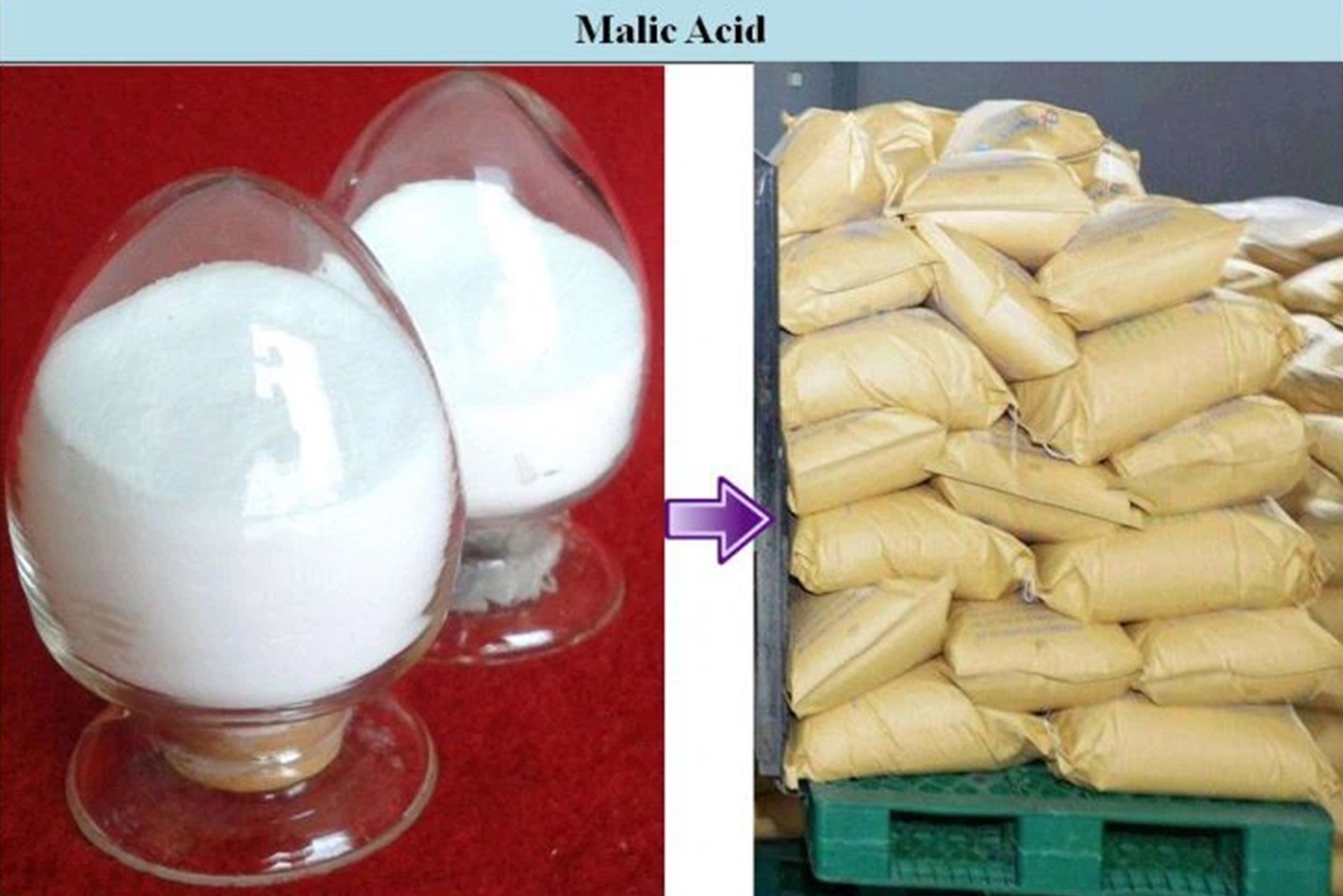
| Appearance | Colorless to white crystalline powder |
| Odor | Slight characteristic |
| Taste | Smooth, acidic (softer than citric acid) |
| Physical State (20°C) | Solid (crystalline powder) |
| Optical Isomers | D-Malic Acid, L-Malic Acid, DL-Malic Acid (racemic) |
SECTION 2: PHYSICAL PROPERTIES
| Property | Value |
|---|---|
| Appearance | Colorless to white crystalline powder |
| Odor | Slight characteristic |
| Taste | Smooth, acidic |
| Molecular Weight | 134.09 g/mol |
| Melting Point | 127 – 132 °C |
| Boiling Point | 225 – 235 °C (decomposes) |
| Density (20°C) | 1.601 g/cm³ |
| Solubility in Water (20°C) | Soluble (55.8 g/100 g water) |
| Solubility in Water (100°C) | Highly soluble |
| Solubility in Methanol | Soluble |
| Solubility in Ethanol | Soluble |
| Solubility in Acetone | Soluble |
| Solubility in Ether | Soluble |
| pH (0.1 M solution) | ~2.5 (acidic) |
| pKa₁ (25°C) | 3.40 |
| pKa₂ (25°C) | 5.13 |
| Refractive Index (nD²⁰) | ~1.46 |
SECTION 3: CHEMICAL PROPERTIES
| Property | Information |
|---|---|
| Chemical Formula | C₄H₆O₅ |
| Molecular Weight | 134.09 g/mol |
| Chemical Class | Organic dicarboxylic acid (alpha-hydroxy acid) |
| Functional Groups | Two carboxyl (-COOH), one hydroxyl (-OH) |
| SMILES | OC(=O)CC(O)C(=O)O |
| InChI Key | BJEPYKJPZRNTSH-UHFFFAOYSA-N |
| Optical Activity | DL (racemic), D, L forms available |
| Stability | Stable under normal storage conditions |
| Decomposition | Upon heating, releases irritating fumes |
| Incompatible Materials | Strong oxidizing agents, strong bases |
Chemical Structure:
    O         O
    ||        ||
HO-C-CH₂-CH-C-OH
       |
       OH

(2-Hydroxybutanedioic acid / Malic Acid)
SECTION 4: FORMS AND ISOMERS OF MALIC ACID
| Form | Description |
|---|---|
| D-Malic Acid | Natural form; found in some fruits |
| L-Malic Acid | Natural form; metabolically active |
| DL-Malic Acid | Racemic mixture; industrially produced form |
| Malate Salts | Magnesium Malate, Calcium Malate, Potassium Malate (dietary supplements) |
| Malic Acid Esters | Cosmetic and pharmaceutical applications |
SECTION 5: FOOD INDUSTRY APPLICATIONS (E296)
5.1. Acidity Regulator and Flavoring Agent
| Application | Function |
|---|---|
| Fruit Juices | Provides sour taste, regulates pH |
| Carbonated Beverages | Acidity regulator, flavor profile enhancement |
| Confectionery | Attractive sour taste in hard and soft candies |
| Sugar-Free Sweetener Tablets | Taste modifier |
| Low-Calorie Beverages | Flavor extension, natural taste profile |
| Iced Tea | pH control (4.6 or lower), microbial stabilization |
5.2. Flavor Enhancer and Taste Developer
| Application | Function |
|---|---|
| Flavorings | Enhances aromatic properties, enriches flavor notes |
| Cheese and Chili Flavors | Flavor enhancement in snack foods |
| Cider (Alcoholic) | Maintains sharp taste |
| Desserts | Provides smoother sour taste when combined with citric acid |
5.3. Preservative and Shelf Life Extension
| Application | Function |
|---|---|
| Hard Candies | Preservative at low moisture levels; extends shelf life |
| Bakery Products | As food additive; pH control |
| Freeze-Dried Foods | Prevents enzymatic color changes |
| Molasses Production | Provides sour taste |
5.4. Bakery and Flour Products
| Application | Function |
|---|---|
| Dough Leavening | Reacts with carbonates to provide leavening |
| Glaze Compositions | Lowers pH below 6 before or after baking; increases preservative efficacy |
| Flour Products | As pH regulator |
5.5. Beverages and Instant Mixes
| Application | Function |
|---|---|
| Instant Soups | Quick dissolution, flavor enhancement |
| Sports Drinks | pH regulator, masks salt residues |
| Dry Mixes | Quick dissolution properties |
SECTION 6: COSMETIC AND PERSONAL CARE APPLICATIONS
| Application | Function |
|---|---|
| Skin Care Products | As Alpha Hydroxy Acid (AHA) for exfoliation; removes dead skin cells |
| Wrinkle Treatment | Skin renewal; brighter and smoother appearance |
| Moisturizers | Moisturizing effect in lotions and creams for dry skin |
| pH Regulator | pH adjustment in cosmetic formulations |
| Skin Rejuvenation | Improves and revitalizes skin |
SECTION 7: PHARMACEUTICAL AND HEALTH APPLICATIONS
| Application | Function |
|---|---|
| Effervescent Tablets | Increases solubility, improves taste |
| Throat Lozenges | Taste improvement; malic acid supplementation |
| Cough Syrups | Taste improvement; malic acid supplementation |
| Kidney Stone Prevention | May inhibit calcium stone formation (research stage) |
| Fibromyalgia Support | Increases exercise tolerance; supportive in chronic fatigue treatment |
| Energy Production | Intermediate in Krebs cycle; supports energy production |
SECTION 8: INDUSTRIAL APPLICATIONS
| Application | Function |
|---|---|
| Metal Cleaning | Metal surface cleaning and plating |
| Petroleum Industry | Facilitates crude oil transfer from well to refinery |
| Coffee Machines | Sterilization of milk-borne bacteria |
| Biotechnology | Important role in Krebs cycle; cellular energy production |
| Amino Acid Synthesis | Provides energy and carbon skeletons |
SECTION 9: NATURAL SOURCES OF MALIC ACID
| Source | Content |
|---|---|
| Apple | Richest source (0.5-1.0%) |
| Grape | Significant amount |
| Cherry | Moderate amount |
| Banana | Low amount |
| Tomato | Trace amount |
| Other Fruits | Variable amounts |
SECTION 10: QUALITY SPECIFICATIONS (FOOD GRADE)
| Parameter | Specification (USP / Ph. Eur. / FCC) |
|---|---|
| Appearance | Colorless to white crystalline powder |
| Identification | Positive (Malic Acid tests) |
| Assay (on dried basis) | 99.0 – 101.0% |
| Melting Point | 127 – 132 °C |
| Loss on Drying | ≤ 1.0% |
| Residue on Ignition | ≤ 0.1% |
| Chlorides (Cl) | ≤ 0.01% |
| Sulfates (SO₄) | ≤ 0.02% |
| Heavy Metals (as Pb) | ≤ 10 ppm |
| Lead (Pb) | ≤ 2 ppm |
| Arsenic (As) | ≤ 3 ppm |
| Mercury (Hg) | ≤ 1 ppm |
| Cadmium (Cd) | ≤ 1 ppm |
| Fumaric Acid | ≤ 0.2% |
| Malic Acid (Optical) | Specified for DL form |
SECTION 11: MICROBIOLOGICAL SPECIFICATIONS
| Parameter | Specification |
|---|---|
| Total Aerobic Mesophilic Bacteria | ≤ 1,000 CFU/g |
| Yeast and Mold | ≤ 100 CFU/g |
| Salmonella spp. | Negative in 25g |
| Escherichia coli | Negative in 10g |
SECTION 12: STORAGE AND SHELF LIFE
| Parameter | Information |
|---|---|
| Storage Conditions | Cool (15-25°C), dry, well-ventilated area |
| Container Requirements | Tightly closed, original packaging (hygroscopic) |
| Protect From | Moisture, strong oxidizing agents, strong bases |
| Shelf Life | 24-48 months (unopened original packaging) |
| Stability Note | Upon heating, releases irritating fumes |
SECTION 13: PACKAGING OPTIONS
| Packaging Type | Quantity | Material |
|---|---|---|
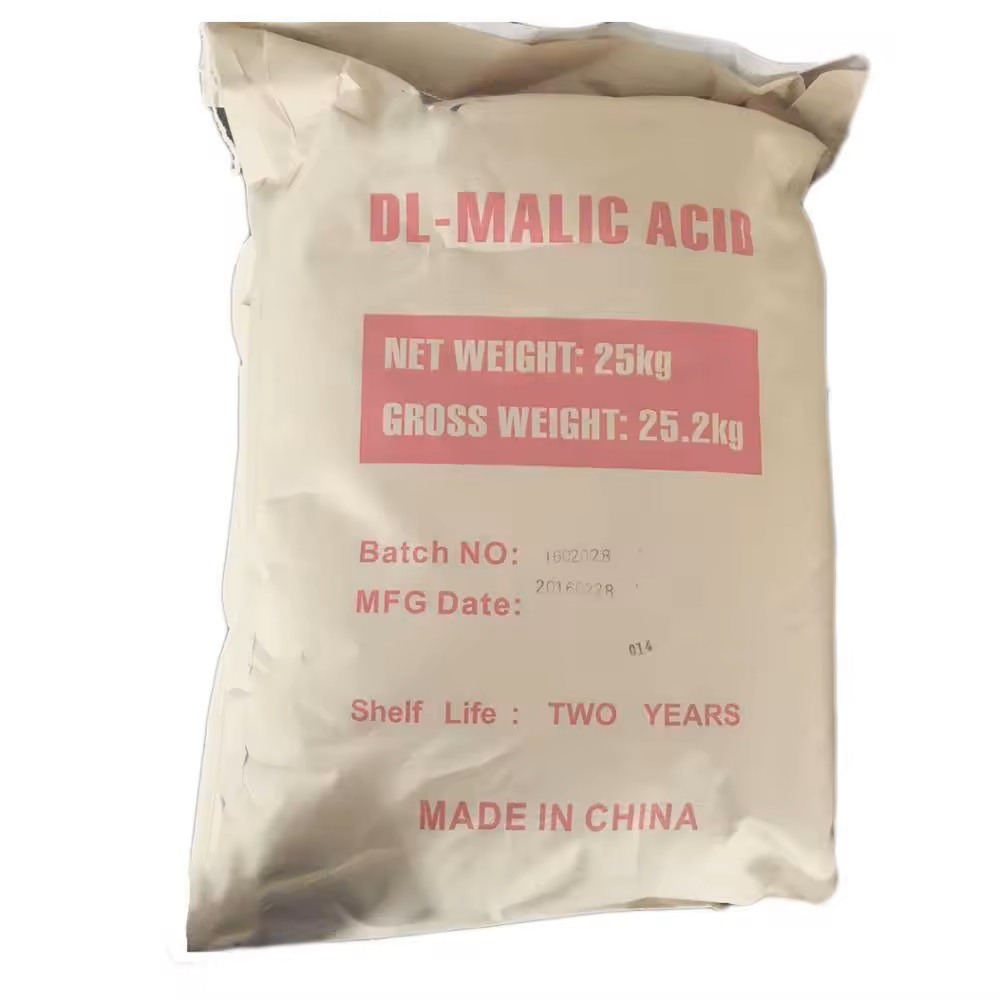
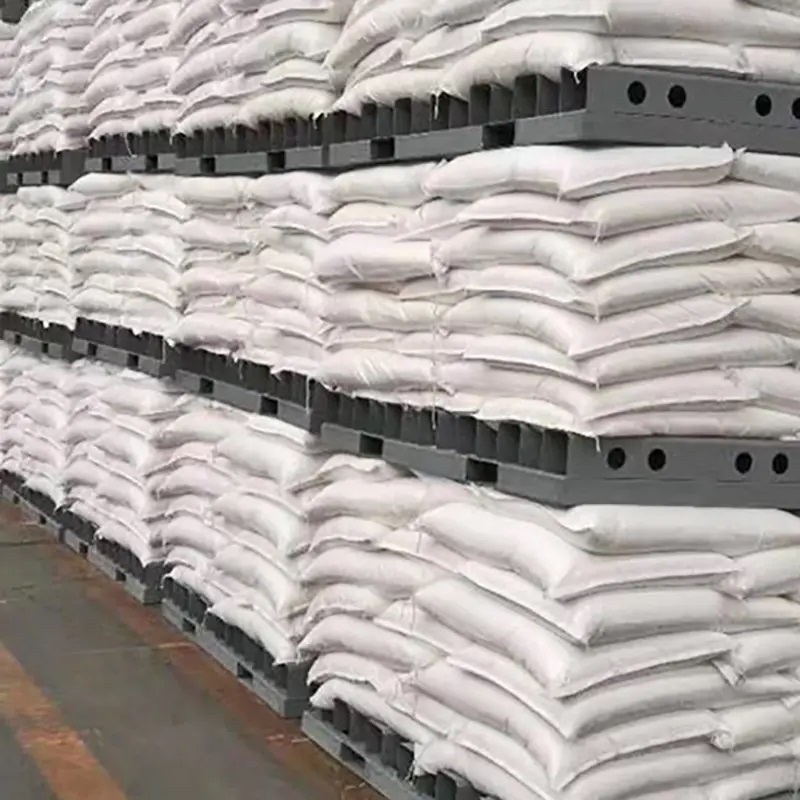
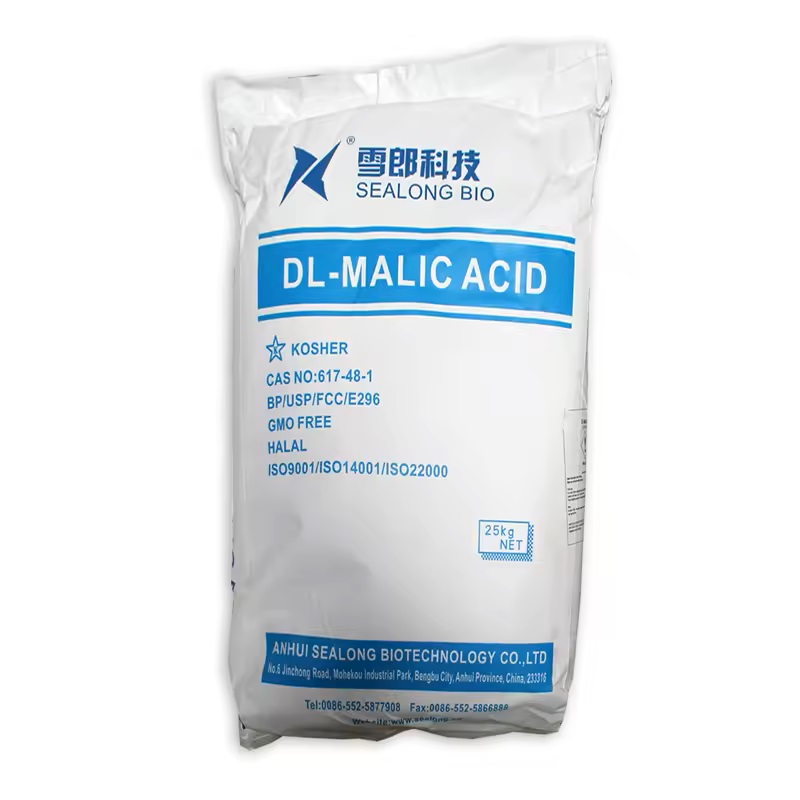
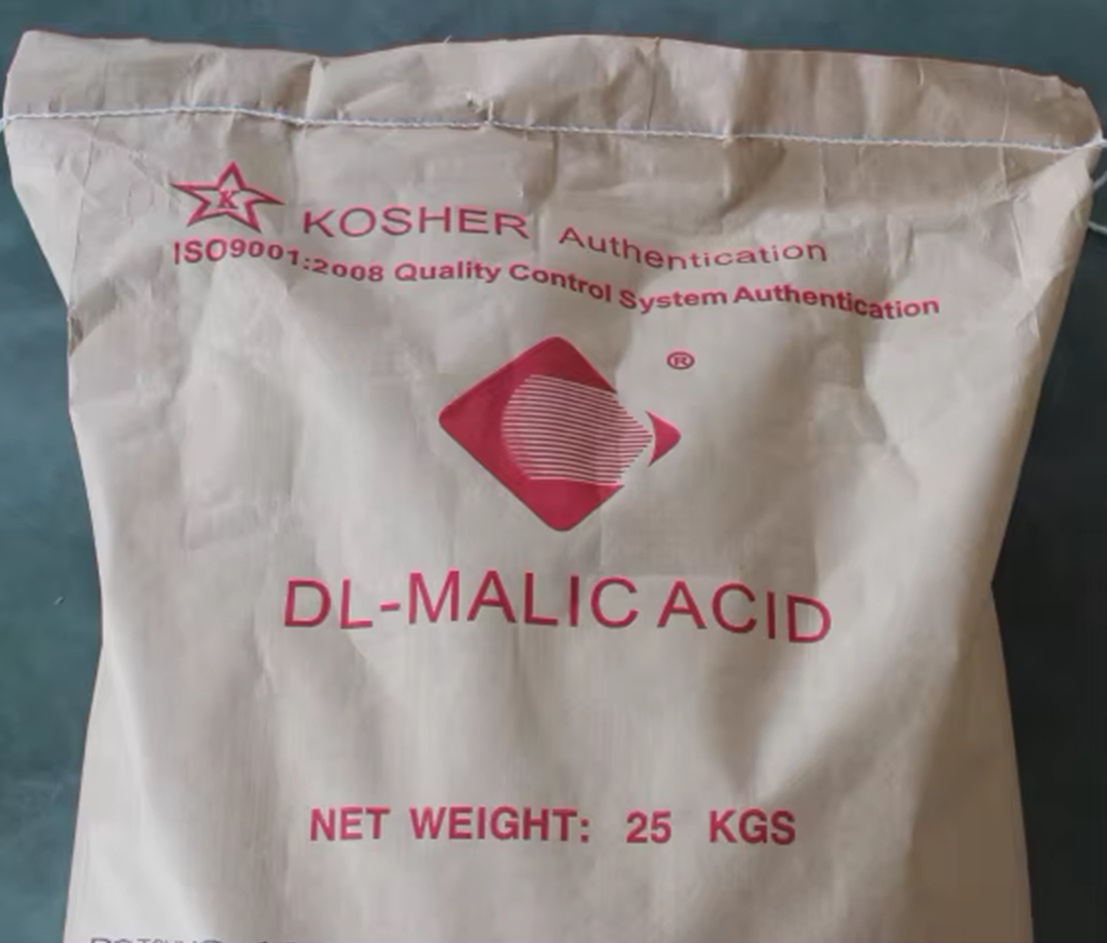
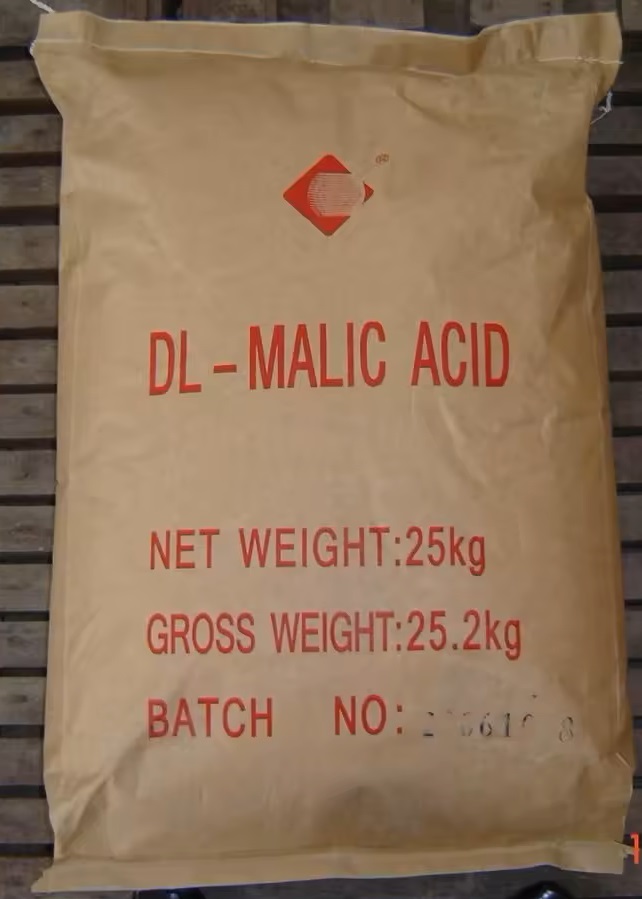
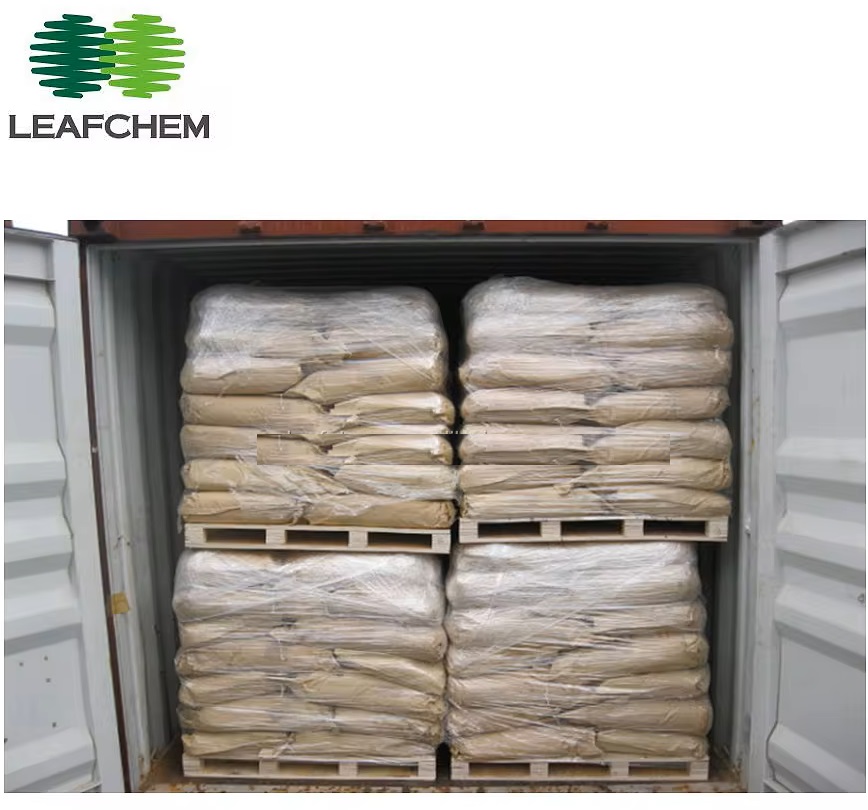
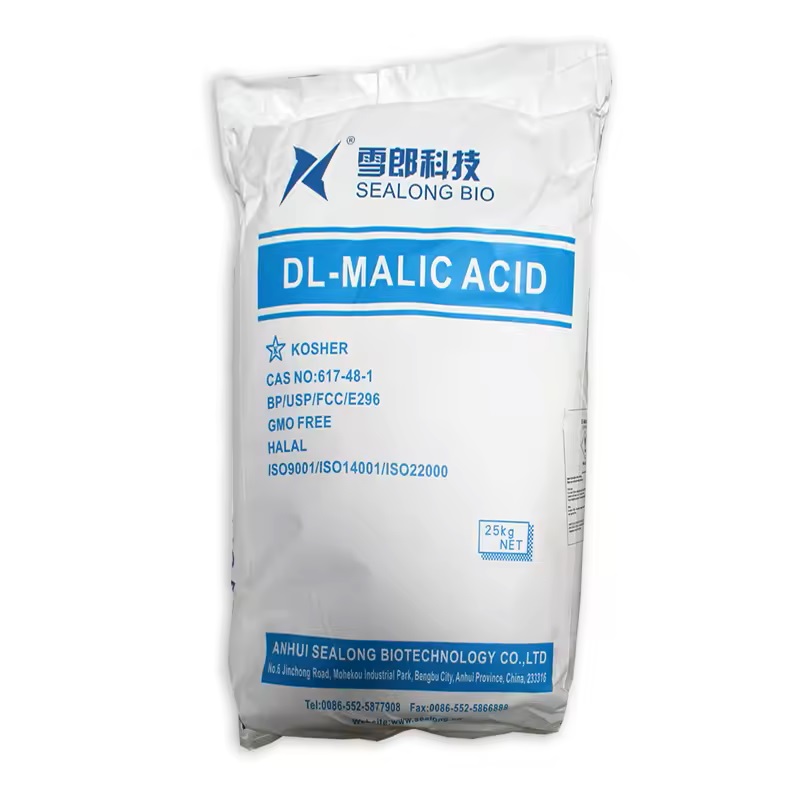
| PE-lined kraft paper bag | 25 kg | Kraft paper + PE |
| Plastic pail | 20-25 kg | HDPE |
| Aluminum foil bag | 1-5 kg | Laminated aluminum |
| Fiber drum | 25-50 kg | HDPE + PE |
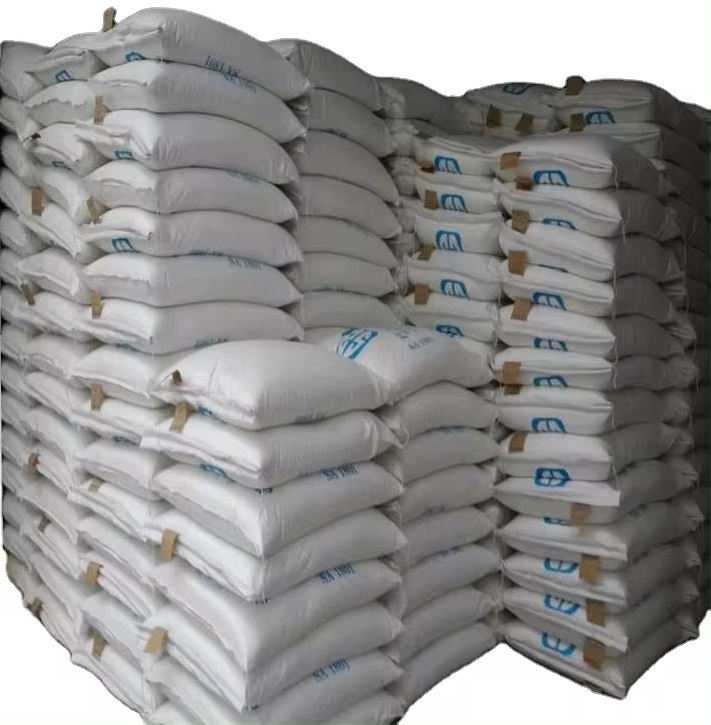
| Big-Bag | 500-1000 kg | Polypropylene |
SECTION 14: SAFETY AND HEALTH INFORMATION
GHS Classification (Bulk Powder)
| Hazard Class | Category |
|---|---|
| Serious Eye Damage/Irritation | Category 1 (H318) |
| Skin Irritation | Category 2 (H315) |
| Signal Word | Danger |
Hazard Statements (H-Codes)
| Code | Statement |
|---|---|
| H315 | Causes skin irritation |
| H318 | Causes serious eye damage |
Precautionary Statements (P-Codes)
| Code | Statement |
|---|---|
| P280 | Wear protective gloves/eye protection |
| P305+P351+P338 | IF IN EYES: Rinse cautiously with water for several minutes; remove contact lenses if present and easy to do; continue rinsing |
| P302+P352 | IF ON SKIN: Wash with plenty of soap and water |
SECTION 15: TOXICOLOGICAL INFORMATION
| Parameter | Value |
|---|---|
| Oral LD50 (Rat) | ~1,600-2,000 mg/kg |
| ADI (Acceptable Daily Intake) | Not specified (JECFA) |
| Carcinogenicity | Not classified |
| Mutagenicity | Negative in standard tests |
| FDA GRAS | 21 CFR 184.1069 |
SECTION 16: FIRST AID MEASURES
| Exposure Route | Action |
|---|---|
| Inhalation | Move to fresh air. If respiratory irritation persists, seek medical attention. |
| Skin Contact | Wash with plenty of soap and water. Remove contaminated clothing. |
| Eye Contact | Rinse immediately with plenty of water for at least 15 minutes. Seek medical attention. |
| Ingestion | Rinse mouth. Do not induce vomiting. Seek medical attention. |
SECTION 17: REGULATORY STATUS
| Region / Authority | Status |
|---|---|
| European Union | Approved as E296 |
| USA (FDA) | GRAS (21 CFR 184.1069) |
| Turkey | Approved (Turkish Food Codex) |
| JECFA (FAO/WHO) | Approved; ADI: Not specified |
| Codex Alimentarius | Approved (INS 296) |
| USP | Monograph available |
| Ph. Eur. | Monograph available |
SECTION 18: TRANSPORT INFORMATION
| Parameter | Information |
|---|---|
| UN Number | Not regulated (not dangerous goods) |
| Hazard Class | Not applicable |
| Packing Group | Not applicable |
| ADR/RID | Not regulated |
| IMDG Code | Not regulated |
| IATA (Air) | Not regulated |
| Marine Pollutant | No |
SECTION 19: FIRE-FIGHTING MEASURES
| Parameter | Information |
|---|---|
| Fire Hazard | Combustible organic solid |
| Suitable Extinguishing Media | Water spray (mist), CO₂, dry chemical powder |
| Specific Hazards | Upon thermal decomposition, releases irritating fumes |
| Decomposition Products | CO, CO₂ |
| Protective Equipment | Self-contained breathing apparatus (SCBA), full protective clothing |
SECTION 20: ACCIDENTAL SPILLAGE AND CLEANUP
| Parameter | Information |
|---|---|
| Personal Protection | Nitrile gloves, protective goggles, dust mask (N95) |
| Cleaning Methods | Collect mechanically (sweep or spatula) |
| Environmental Precautions | Prevent entry into drains, soil, and surface waters |
| Waste Disposal | According to local regulations; incineration or landfilling at licensed facilities |
SECTION 21: OTHER NAMES AND SYNONYMS
| Type | Name |
|---|---|
| Turkish Names | Malik Asit, Elma Asidi, Hidroksisüksinik Asit, Dioksitetrik Asit |
| English Names | Malic Acid, Apple Acid, Hydroxy Succinic Acid, Dioxy Tetric Acid |
| Chemical Names | 2-Hydroxybutanedioic acid, Butanedioic acid |
| E Number | E296 |
| CAS Number | 6915-15-7 |
| EC Number | 230-022-8 |
| INCI | Malic Acid |
SECTION 22: SUMMARY AND CRITICAL NOTES
Product Summary
| Parameter | Value |
|---|---|
| Product | Malic Acid |
| CAS Number | 6915-15-7 |
| E Number | E296 |
| Appearance | Colorless to white crystalline powder |
| Melting Point | 127-132 °C |
| Molecular Weight | 134.09 g/mol |
| Primary Function | Acidity regulator, flavor enhancer, AHA |
Critical Notes
-
Smooth Sour Taste: Malic acid provides a smoother, softer sour taste compared to citric acid, making it preferred in many food applications.
-
Natural Source: Naturally found in all fruits; particularly abundant in apples.
-
Krebs Cycle: An important intermediate in cellular energy production (Krebs cycle).
-
AHA Effect: As an Alpha Hydroxy Acid, provides exfoliation in skin care products.
-
Optical Isomers: Available in D, L, and DL forms; industrial product is typically DL (racemic) form.
-
Wide Applications: Extensively used in food, beverages, cosmetics, pharmaceuticals, and industrial applications.
-
Fibromyalgia Support: May increase exercise tolerance in fibromyalgia and chronic fatigue syndrome.
-
Regulatory Status: Approved in EU (E296), FDA (GRAS), JECFA, and Turkish Food Codex.
-
Hygroscopic: Absorbs moisture; must be stored in tightly closed containers.
-
Malate Salts: Magnesium Malate, Calcium Malate, and other salts are used in dietary supplements.
IMPORTANT DECLARATION: This Technical Data Sheet (TDS) is for informational purposes only and has been prepared based on available technical data. The user is responsible for determining the product's suitability for their specific application and for complying with all local, national, and international regulations. For complete safety, storage, use, transport, waste, and regulatory compliance information, refer to the official Safety Data Sheet (SDS/MSDS) provided by the manufacturer/supplier. This document does not replace medical advice.