We unleash your business potential by maximize the business innovation.
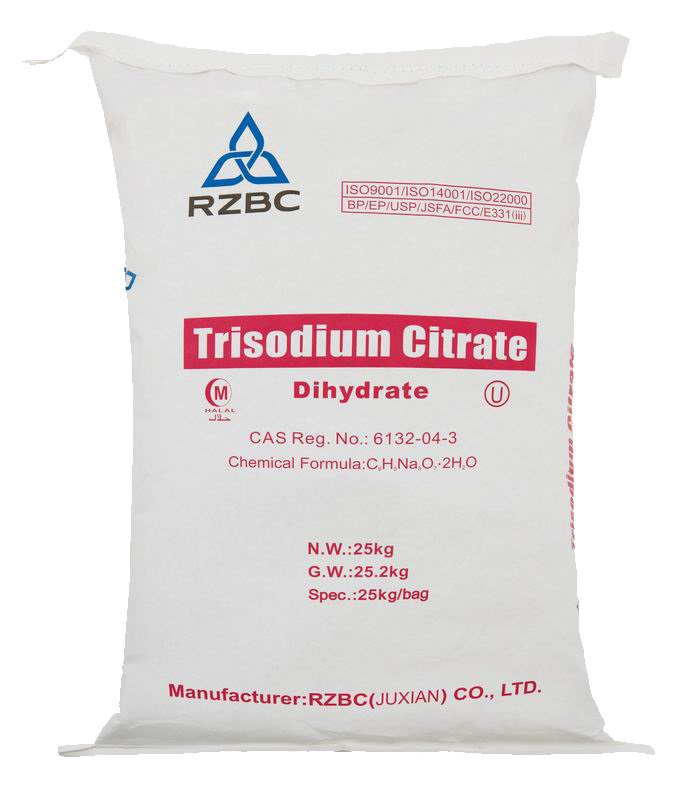
Send EmailSodium Citrate, Trisodium Citrate Anhydrous, Trisodium Citrate Anhydrous Dihydrate, Lemon Salt, E331, 68-04-2, 6132-04-3
TRISODIUM CITRATE (SODIUM CITRATE)
PRODUCT IDENTIFICATION INFORMATION
| Parameter | Information |
|---|---|
| Product Name | Trisodium Citrate |
| Chemical Name (IUPAC) | Trisodium 2-hydroxypropane-1,2,3-tricarboxylate |
| Synonyms (Turkish) | Sodyum Sitrat, Limon Tuzu, Eritme Tuzu, Sitrat |
| Synonyms (English) | Trisodium Citrate, Sodium Citrate, Citric Acid Trisodium Salt, Lemon Salt, Melting Salt |
| CAS Numbers | 68-04-2 (Anhydrous), 6132-04-3 (Dihydrate) |
| EC Number (EINECS) | 200-675-3 |
| E Number | E331 |
| Molecular Formula | Na₃C₆H₅O₇·nH₂O |
| Molecular Weight | 258.06 g/mol (Anhydrous) / 294.10 g/mol (Dihydrate) |
| Appearance | Colorless, white crystalline powder; odorless |
CHEMICAL STRUCTURE
Trisodium Citrate
CH₂—COO⁻Na⁺
|
HO—C—COO⁻Na⁺
|
CH₂—COO⁻Na⁺
Molecular Formula: Na₃C₆H₅O₇·nH₂O
SMILES: [Na+].[Na+].[Na+].OC@@(CC([O-])=O)C([O-])=O
InChI: InChI=1S/C6H8O7.3Na/c7-3(8)1-6(13,5(11)12)2-4(9)10;;;/h13H,1-2H2,(H,7,8)(H,9,10)(H,11,12);;;/q;3*+1/p-3
InChIKey: HRXKRNGNAMMEHJ-UHFFFAOYSA-K
Structure: Trisodium salt of citric acid; Three sodium ions (Na⁺) with citrate anion; Tribasic salt; Strong buffering capacity; Can form chelates with metal ions.
SECTION 1: CHEMICAL IDENTITY AND DESCRIPTION
| Parameter | Information |
|---|---|
| Product Name | Trisodium Citrate |
| Chemical Name (IUPAC) | Trisodium 2-hydroxypropane-1,2,3-tricarboxylate |
| Synonyms (Turkish) | Sodyum Sitrat, Limon Tuzu, Eritme Tuzu, Sitrat |
| Synonyms (English) | Trisodium Citrate, Sodium Citrate, Citric Acid Trisodium Salt, Lemon Salt, Melting Salt |
| CAS Numbers | 68-04-2 (Anhydrous), 6132-04-3 (Dihydrate) |
| EC Number (EINECS) | 200-675-3 |
| E Number | E331 |
| Molecular Formula | Na₃C₆H₅O₇·nH₂O |
| Molecular Weight | 258.06 g/mol (Anhydrous) / 294.10 g/mol (Dihydrate) |
| Chemical Class | Organic salt; Sodium salt; Citrate; Tribasic salt |
| Physical State (20°C) | Solid (crystalline powder) |
| Odor | Odorless |
| Color | Colorless, white |
| Taste | Cooling, salty, slightly sour |
SECTION 2: PHYSICAL AND CHEMICAL PROPERTIES
| Property | Anhydrous | Dihydrate | Test Method / Note |
|---|---|---|---|
| Appearance | White, crystalline powder | Colorless to white crystals | Visual |
| Odor | Odorless | Odorless | Olfactometric |
| Molecular Weight | 258.06 g/mol | 294.10 g/mol | Calculated |
| Density (20°C) | 1.76 g/cm³ | ~1.70 g/cm³ | ASTM D4052 |
| Melting Point | >150°C (decomposes) | ~150°C (loses water) | DSC |
| pH (5% Solution, 20°C) | 7.5 – 9.0 (avg. 8.5) | 7.5 – 9.0 (avg. 8.5) | pH Meter |
| Solubility in Water (20°C) | ~72 g/100 mL | ~72 g/100 mL | General Method |
| Solubility in Water (Temperature Dependence) | Increases with temperature | Increases with temperature | – |
| Solubility in Ethanol | Practically insoluble | Practically insoluble | General Method |
| Hygroscopicity | Low | Low | – |
| Stability | Stable under normal conditions | Stable under normal conditions | – |
| Decomposition (Heating) | >150°C (loss of water and decomposition) | ~150°C (loss of water) | – |
| Porosity | ~15% (for carrier applications) | – | – |
SECTION 3: TRISODIUM CITRATE FORMS
| Form | Formula | CAS Number | Molecular Weight | Appearance | Primary Use |
|---|---|---|---|---|---|
| Anhydrous | Na₃C₆H₅O₇ | 68-04-2 | 258.06 g/mol | White crystalline powder | Carrier, stabilizer, industrial applications |
| Dihydrate | Na₃C₆H₅O₇·2H₂O | 6132-04-3 | 294.10 g/mol | Colorless crystals | Cheese production (emulsifier), food |
| Monohydrate | Na₃C₆H₅O₇·H₂O | Variable | 276.09 g/mol | White crystalline powder | Specialty applications |
SECTION 4: CHEMICAL PROPERTIES AND REACTIVITY
| Parameter | Information |
|---|---|
| Chemical Character | Tribasic organic salt; Weak base (conjugate base); Strong buffering capacity; Chelating agent |
| Stability | Stable under normal conditions; Decomposes above 150°C losing water; Not hygroscopic |
| Reactivity | Forms complexes with metal ions (Ca²⁺, Mg²⁺, Fe²⁺, Pb²⁺); Reacts with acids to form citric acid; Incompatible with oxidizing and reducing agents |
| Incompatible Materials | Strong acids (citric acid formation), strong oxidizing agents, strong reducing agents |
| Polymerization | Does not polymerize |
| Decomposition Products (Heating) | Sodium carbonate, carbon dioxide, water (at high temperatures) |
| Acid Reaction | Na₃C₆H₅O₇ + 3HCl → C₆H₈O₇ (citric acid) + 3NaCl |
| Complex Formation | Forms stable chelates with Ca²⁺, Mg²⁺, Fe²⁺ (citrate complexes) |
| Buffering | Effective buffer in pH 3-6 range; Regulates blood and urine pH |
| Hydrolysis | Fully ionizes in water to Na⁺ and citrate ions |
| Heat of Solution | Slightly exothermic (dissolution) |
SECTION 5: PRODUCTION METHODS
Method 1: Citric Acid Neutralization
Reaction: C₆H₈O₇ (citric acid) + 3NaOH → Na₃C₆H₅O₇ + 3H₂O
Description: Citric acid is neutralized with sodium hydroxide (NaOH) or sodium carbonate (Na₂CO₃); The solution is crystallized; Anhydrous or dihydrate forms are obtained by controlling crystallization conditions. Most common industrial method.
Method 2: Fermentation and Neutralization
Process: Sugar → Citric acid (fermentation) → Neutralization → Trisodium citrate
Description: Sugar is fermented with Aspergillus niger to produce citric acid; Citric acid is neutralized with sodium hydroxide; Purification and crystallization yield the product.
Method 3: Dihydrate Production
Process: Trisodium citrate solution → Controlled crystallization → Dihydrate crystals
Description: Trisodium citrate solution is crystallized under specific temperature and concentration conditions; Dihydrate form (Na₃C₆H₅O₇·2H₂O) is obtained; Used in food and cheese production.
Method 4: Anhydrous Production
Process: Dihydrate → Heating (120-150°C) → Anhydrous
Description: Dihydrate form is heated at 120-150°C to remove water; Anhydrous form (Na₃C₆H₅O₇) is obtained; Used in industrial and pharmaceutical applications.
SECTION 6: FUNCTIONAL PROPERTIES AND MECHANISM OF ACTION
| Property | Description |
|---|---|
| Buffering Agent | Effective buffer in pH 3-6 range; Neutralizes excess acid in blood and urine; pH regulator in pharmaceutical formulations |
| Chelating Agent | Forms stable complexes with metal ions (Ca²⁺, Mg²⁺, Fe²⁺, Pb²⁺); Prevents coagulation in blood transfusions (binds calcium ions); Softens water hardness |
| Emulsifier | Acts as emulsifier in oil-water systems; Provides homogeneous distribution of fat and water in cheese production; Improves texture and consistency in food products |
| Acidity Regulator | Controls pH in food products; Regulates taste and acidity profiles; Enhances preservative effectiveness |
| Anticoagulant | Prevents clotting in blood samples and transfusions; Binds Ca²⁺ ions to inhibit coagulation cascade |
| Moisture Control / Anti-Caking | Prevents powder caking; Extends shelf life; Improves flowability of powder products |
| Enzymatic Browning Inhibitor | Prevents enzymatic browning in potatoes and vegetables; Inhibits polyphenol oxidase enzyme; Maintains color stability |
| Alkalizing Agent | Used in treatment of metabolic acidosis; Neutralizes excess acid in blood and urine |
| Carrier Substance | Anhydrous form is ~15% porous; Used as carrier for liquid absorption applications |
SECTION 7: MAIN APPLICATION AREAS
| Industry / Application | Function | Typical Use |
|---|---|---|
| Food Industry | Acidity regulator, emulsifier, preservative | Cheese (dihydrate form in sliced cheese), jam, ice cream, jelly, confectionery; Carbonated beverages, wine, energy drinks; Anti-browning agent for potatoes and vegetables; Baby food; Medium-moisture cooked foods |
| Pharmaceutical & Medical | Anticoagulant, buffering, alkalizing agent | Blood transfusions (anti-clotting); pH regulator in drug formulations; Treatment of metabolic acidosis; Excipient in diuretics, expectorants, and eye drops |
| Industrial Use | Detergent, chelating agent, cleaning | Phosphate-free detergent formulations; Cyanide-free electroplating; Antifreeze (glycol thermal stabilization); Magnesium-based cleaning systems |
| Cosmetics | Stability enhancer, preservative, pH regulator | Skin care products; Hair care products; pH buffering |
| Water Treatment | Chelating agent, scale inhibitor | Water softening; Scale prevention; Deposit control in piping systems |
| Photography | Auxiliary chemical | Developing baths; Fixing solutions |
SECTION 8: QUALITY SPECIFICATIONS
| Parameter | Food Grade (E331) | Pharmaceutical Grade (USP/EP) | Technical Grade | Test Method |
|---|---|---|---|---|
| Appearance | White crystalline powder | White crystalline powder | White crystalline powder | Visual |
| Assay (Na₃C₆H₅O₇) | ≥ 99.0% | ≥ 99.5% | ≥ 98.0% | Titrimetric |
| pH (5% Solution) | 7.5 – 9.0 | 7.5 – 9.0 | 7.5 – 9.0 | pH Meter |
| Moisture Content | ≤ 1.0% (anhydrous) | ≤ 1.0% (anhydrous) | ≤ 2.0% (anhydrous) | Gravimetric |
| Heavy Metals (as Pb) | ≤ 10 ppm | ≤ 5 ppm | ≤ 20 ppm | AAS / ICP |
| Arsenic (As) | ≤ 3 ppm | ≤ 1 ppm | ≤ 5 ppm | AAS / ICP |
| Iron (Fe) | ≤ 10 ppm | ≤ 5 ppm | ≤ 20 ppm | AAS / ICP |
| Lead (Pb) | ≤ 5 ppm | ≤ 2 ppm | ≤ 10 ppm | AAS / ICP |
| Sulfate (SO₄) | ≤ 0.01% | ≤ 0.01% | ≤ 0.05% | Gravimetric |
| Chloride (Cl) | ≤ 0.01% | ≤ 0.01% | ≤ 0.05% | Titrimetric |
| Oxalate (C₂O₄) | ≤ 0.01% | ≤ 0.005% | – | Titrimetric |
| Particle Size | Customer requirement | Customer requirement | Customer requirement | Sieve / Laser |
| Water (Crystallization) | – | – | – | Karl Fischer |
SECTION 9: TOXICOLOGICAL PROFILE
| Parameter | Value |
|---|---|
| Acute Oral Toxicity (LD50, Rat) | ~ 6,000 – 10,000 mg/kg (very low toxicity) |
| Acute Dermal Toxicity | Non-irritating |
| Acute Inhalation Toxicity | Mild irritation (dust) |
| Skin Irritation | Non-irritating |
| Eye Irritation | Mildly irritating (dust) |
| Chronic Toxicity | Non-toxic; GRAS (Generally Recognized as Safe) status |
| Carcinogenicity | Not classified as carcinogenic |
| Mutagenicity | Not mutagenic |
| Reproductive Toxicity | Not reproductive toxic |
| Target Organs | None (non-toxic) |
| Occupational Exposure Limit (8h TWA) | Not established (non-hazardous dust) |
| Special Toxicity Note | Non-toxic; FDA GRAS status; WHO JECFA approved; Food additive E331; High doses may cause mild laxative effect; Not an allergen; Gluten-free |
SECTION 10: GHS CLASSIFICATION AND LABELING
GHS Classification (in accordance with CLP and UN GHS):
| Hazard Class | Category | H-Statement |
|---|---|---|
| Not classified as hazardous | – | – |
SIGNAL WORD: NONE (not classified as hazardous)
Hazard Pictograms: NONE
Hazard Statements (H-Codes): Not classified as hazardous under GHS regulations.
NFPA 704 Hazard Classification:
| Health | Flammability | Reactivity | Special |
|---|---|---|---|
| 1 | 0 | 0 | - |
| (Slight health hazard – dust) | (Will not burn) | (Stable) | (None) |
SECTION 11: PRECAUTIONARY STATEMENTS (P-CODES)
| Code | Statement |
|---|---|
| P261 | Avoid breathing dust/fume/gas/mist/vapors/spray |
| P264 | Wash hands thoroughly after handling |
| P271 | Use only outdoors or in a well-ventilated area |
| P280 | Wear protective gloves/protective clothing/eye protection/face protection |
| P302+P352 | IF ON SKIN: Wash with plenty of soap and water |
| P304+P340 | IF INHALED: Remove person to fresh air and keep comfortable for breathing |
| P305+P351+P338 | IF IN EYES: Rinse cautiously with water for several minutes. Remove contact lenses if present and continue rinsing |
| P312 | Call a POISON CENTER/doctor if you feel unwell |
| P332+P313 | If skin irritation occurs: Get medical advice/attention |
| P337+P313 | If eye irritation persists: Get medical advice/attention |
| P362+P364 | Take off contaminated clothing and wash it before reuse |
| P403+P233 | Store in a well-ventilated place. Keep container tightly closed |
| P501 | Dispose of contents/container in accordance with local/regional/national/international regulations |
SECTION 12: FIRST AID MEASURES
| Exposure Route | Action to Take |
|---|---|
| Inhalation | Remove to fresh air immediately. If respiratory irritation develops (dust inhalation), seek medical attention. |
| Skin Contact | Wash with plenty of soap and water. If irritation persists, get medical attention. |
| Eye Contact | Rinse immediately with plenty of water for at least 15 minutes. Keep eyelids open. Remove contact lenses if present. If irritation persists, seek medical attention. |
| Ingestion | Rinse mouth. Drink plenty of water. Generally non-toxic. If large quantities are ingested (laxative effect) and symptoms occur, seek medical attention. |
SECTION 13: FIREFIGHTING MEASURES
| Parameter | Information |
|---|---|
| Fire Hazard | Non-combustible. Does not burn. |
| Hazards Arising from Fire | May release toxic sodium oxide fumes and carbon oxides at high temperatures |
| Suitable Extinguishing Media | Use extinguishing media suitable for surrounding fire. Water spray, CO₂, dry chemical powder, foam. |
| Unsuitable Extinguishing Media | None |
| Special Protective Equipment | Self-contained breathing apparatus (SCBA), full protective clothing (for surrounding fire). |
| Special Precautions | Prevent dust from entering sewers and waterways. |
SECTION 14: STORAGE AND SHELF LIFE
| Parameter | Anhydrous | Dihydrate |
|---|---|---|
| Storage Conditions | Store in a cool, dry, well-ventilated area; Protect from moisture and direct sunlight | Store in a cool, dry, well-ventilated area; Protect from moisture and direct sunlight |
| Container Requirements | Tightly closed, moisture-proof containers (PE bags, fiber drums) | Tightly closed, moisture-proof containers (PE bags, fiber drums) |
| Materials to Protect From | Moisture, strong acids, strong oxidizing agents | Moisture, strong acids, strong oxidizing agents, high temperature (loses crystal water) |
| Shelf Life | 24 – 48 months (in unopened original packaging, under proper storage conditions) | 24 – 48 months (in unopened original packaging, under proper storage conditions) |
| Stability Note | Stable under normal conditions; Not hygroscopic; Keep container tightly closed after opening | Stable under normal conditions; Not hygroscopic; Converts to anhydrous at high temperature (loss of crystal water) |
| Special Storage Requirements | Store in a dry, well-ventilated warehouse; Store separately from acids | Store in a dry, well-ventilated warehouse; Store separately from acids; Store at <30°C |
SECTION 15: PACKAGING OPTIONS
| Packaging Type | Quantity | Material |
|---|---|---|
| Multi-layer Paper Bag | 10 kg, 20 kg, 25 kg | PE-lined kraft paper bag (moisture-proof) |
| Plastic Bag | 5 kg, 10 kg, 25 kg | PE bag (inner-lined, sealed, moisture-proof) |
| Fiber Drum | 20 kg, 25 kg | PE-lined fiberboard drum |
| Plastic Drum | 25 kg, 50 kg | HDPE / Polypropylene (moisture-proof) |
| FIBC / Big Bag | 500 kg, 1000 kg | PE-lined, moisture-resistant PP woven bag |
| Small Pack | 1 kg, 5 kg | Foil-lined plastic bags (laboratory/sample) |
SECTION 16: TRANSPORT INFORMATION
| Parameter | Information |
|---|---|
| UN Number | Not regulated (non-hazardous) |
| Hazard Class | Not applicable |
| Packing Group | Not applicable |
| ADR/RID | Not regulated |
| IMDG Code | Not regulated (non-hazardous) |
| IATA (Air) | Not regulated (non-hazardous) |
| Marine Pollutant | No |
| Transport Temperature | Ambient temperature; Protect from moisture. |
SECTION 17: REGULATORY STATUS
| Region / Authority | Status |
|---|---|
| European Union | REACH registered; Food additive E331; Pharmaceutical excipient (Ph.Eur.); Cosmetic ingredient approved |
| USA (TSCA) | Listed (TSCA Inventory) |
| USA (FDA) | GRAS (Generally Recognized as Safe) – 21 CFR 184.1751; Food additive; Pharmaceutical excipient (USP-NF) |
| USA (EPA) | Not regulated as hazardous substance |
| Turkey | Food additive E331 (Food Codex); Pharmaceutical excipient; Cosmetic ingredient approved; Subject to KKDIK regulation |
| IARC | Not classified (non-toxic, non-carcinogenic) |
| NTP | Not listed |
| OSHA | Not regulated as toxic or carcinogenic substance |
| California (Prop 65) | Not listed |
| WHO JECFA | Approved (Evaluation No. 773) |
| FCC (Food Chemicals Codex) | Listed |
| INCI | Trisodium Citrate |
SECTION 18: OTHER NAMES AND SYNONYMS
| Type | Name |
|---|---|
| Turkish Names | Trisodyum Sitrat, Sodyum Sitrat, Limon Tuzu, Eritme Tuzu, Sitrat |
| English Names | Trisodium Citrate, Sodium Citrate, Citric Acid Trisodium Salt, Lemon Salt, Melting Salt |
| Chemical Names | Trisodium 2-hydroxypropane-1,2,3-tricarboxylate; Trisodium citrate; Citric acid trisodium salt |
| CAS Numbers | 68-04-2 (Anhydrous); 6132-04-3 (Dihydrate) |
| EC Number | 200-675-3 |
| Molecular Formula | Na₃C₆H₅O₇·nH₂O |
| HS Code | 2918.15 |
| E Number | E331 |
| INCI | Trisodium Citrate |
| Synonyms | Sodium Citrate, Trisodium Citrate Anhydrous, Trisodium Citrate Dihydrate, Citrosodine, TSC |
SECTION 19: SUMMARY TABLE
| Parameter | Anhydrous | Dihydrate |
|---|---|---|
| Product | Trisodium Citrate (Anhydrous) | Trisodium Citrate (Dihydrate) |
| CAS Number | 68-04-2 | 6132-04-3 |
| Molecular Formula | Na₃C₆H₅O₇ | Na₃C₆H₅O₇·2H₂O |
| Molecular Weight | 258.06 g/mol | 294.10 g/mol |
| Appearance | White crystalline powder | Colorless to white crystals |
| Density | 1.76 g/cm³ | ~1.70 g/cm³ |
| pH (5% Solution) | 7.5 – 9.0 | 7.5 – 9.0 |
| Solubility in Water | High (~72 g/100 mL) | High (~72 g/100 mL) |
| Primary Use | Carrier, stabilizer, industrial | Cheese production (emulsifier), food |
| Shelf Life | 24 – 48 months | 24 – 48 months |
| GHS Signal Word | NONE | NONE |
| UN Number | Not regulated | Not regulated |
| Special Properties | ~15% porous; Liquid carrier | Contains crystal water; Cheese emulsifier |
SECTION 20: CRITICAL WARNINGS AND BEST PRACTICES
CRITICAL WARNINGS:
-
Not classified as hazardous under GHS. Non-toxic, non-carcinogenic. FDA GRAS status.
-
Food additive E331 – Approved by EFSA, FDA, and WHO JECFA.
-
Pharmaceutical excipient – Complies with USP/Ph.Eur. standards.
-
Dust may cause mechanical irritation to eyes, skin, and respiratory system. Use appropriate dust control measures.
-
Non-combustible. However, may release toxic fumes at high temperatures.
-
Incompatibilities: Strong acids (citric acid formation), strong oxidizing agents, strong reducing agents.
-
Not hygroscopic – does not absorb moisture. However, store in dry conditions.
-
Dihydrate form loses water at high temperature – store at <30°C.
-
High doses may cause mild laxative effect.
-
Not an allergen, gluten-free.
BEST PRACTICE RECOMMENDATIONS:
Food Industry (E331): Use as acidity regulator and emulsifier; Dihydrate form preferred for cheese production; Use as texture improver in jams, ice cream, jelly, and confectionery; Acidity regulator in carbonated beverages and wine; Anti-browning agent for potatoes and vegetables; Additive in baby food production.
Pharmaceutical & Medical Applications: Use as anticoagulant in blood transfusions; pH buffer in drug formulations; Alkalizing agent in metabolic acidosis treatment; Excipient in diuretics, expectorants, and eye drops; Use pharmaceutical grade (USP/EP).
Industrial Applications: Use in phosphate-free detergent formulations for cleaning power enhancement; Chelating agent in cyanide-free electroplating; Thermal stabilizer for glycol in antifreeze; Strengthener in magnesium-based cleaning systems; Anhydrous form (~15% porous) can be used as liquid carrier.
Water Treatment: Use as chelating agent for water softening; Scale prevention in piping systems; Deposit control.
Handling: Use in well-ventilated areas; Avoid dust formation; Use dust masks (N95/FFP2) when handling powder; Use gloves and safety goggles.
Personal Protective Equipment: Dust mask (N95/FFP2 or higher), safety goggles, protective gloves (nitrile, neoprene). Not required for solution handling.
Hygiene: Wash hands thoroughly after handling; Do not eat, drink, or smoke while using.
Storage: Store in tightly closed, moisture-proof containers; Store in a cool, dry, well-ventilated area; Protect from moisture, rain, and sunlight; Store separately from acids and oxidizing agents; For dihydrate form, store at <30°C; Opened packages should be resealed immediately; Shelf life: 24-48 months under proper conditions.
Spill Management: Sweep or vacuum (HEPA) and place in suitable sealed container; Avoid dust formation; Do not allow entry into drains or waterways.
Disposal: Dispose of in accordance with local, regional, and national regulations; Non-hazardous waste; Biodegradable; Can be disposed of in compliance with regulations.
SPECIAL NOTE ON ANTICOAGULANT MECHANISM:
Trisodium citrate is widely used as an anticoagulant in blood transfusions:
-
Mechanism: Forms stable chelate complexes with calcium ions (Ca²⁺); Calcium is a required cofactor for the coagulation cascade; Calcium binding inhibits activation of coagulation factors; Maintains blood in liquid state.
-
Concentration: Typically 3.2% or 3.8% trisodium citrate solution is used for blood samples.
-
Advantages: Rapid action; Reversible effect (coagulation can be restored by adding calcium); Biocompatible; Non-toxic.
-
Applications: Blood transfusion; Blood samples (coagulation tests); Plasma separation; Blood bank applications.
SPECIAL NOTE ON CHEESE PRODUCTION:
Trisodium citrate (dihydrate form) is used as an emulsifying salt in cheese production:
-
Function: Provides homogeneous distribution of fat and water; Interacts with cheese proteins to improve melting properties; Creates a smooth, creamy texture; Improves sliceability in sliced cheese.
-
Mechanism: Binds calcium ions to relax the protein network; Allows homogeneous distribution of fat globules; Enhances emulsion stability.
-
Typical Use: Processed cheese, sliced cheese; Cheese sauces; Cream cheese.
-
Dosage: 0.5 – 2.0% of total mixture (depending on product type).
SPECIAL NOTE ON FOOD ADDITIVE E331:
Trisodium citrate is approved as food additive E331:
-
Approved Uses: Acidity regulator; Emulsifier; Stabilizer; Preservative; Anti-caking agent; Chelating agent.
-
Food Products: Cheese, jam, ice cream, jelly, confectionery; Carbonated beverages, wine, energy drinks; Potatoes and vegetables (anti-browning); Baby food; Medium-moisture cooked foods.
-
Safety: EFSA approved; FDA GRAS status; WHO JECFA approved; ADI: Not specified (safe); Not an allergen; Gluten-free.
-
ADI: "Not specified" – highest safety category; No consumption restrictions.
LEGAL DISCLAIMER:
The information provided in this document is based on our current knowledge and experience and is presented in good faith. However, as all conditions of use are beyond our control, it does not constitute a binding specification or warranty. This Technical Data Sheet is for informational purposes only. Users are responsible for testing the suitability for their own applications. For complete safety, storage, use, handling, waste, and regulatory compliance information, please refer to the official Safety Data Sheet (SDS/MSDS) provided by the manufacturer/supplier.