We unleash your business potential by maximize the business innovation.
Send EmailZinc Citrate, Trizinc Dihydrate, Trizinc Trihydrate, 546-46-3
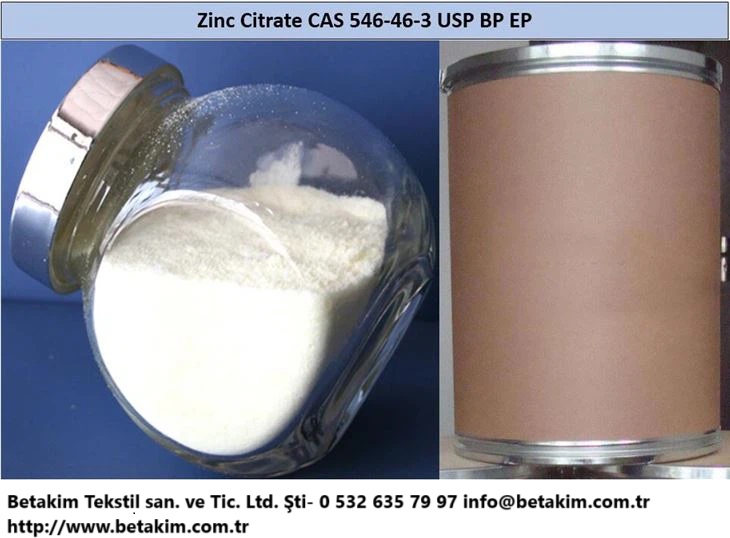
Zinc Citrate (C₁₂H₁₀O₁₄Zn₃)
1. General Information
-
Molecular Formula: C₁₂H₁₀O₁₄Zn₃
-
Molecular Weight: 574.37 g/mol
-
CAS Number: 546-46-3
-
Chemical Name: Zinc Citrate
-
Synonyms:
-
Citric Acid Zinc Salt
-
Trizinc; 2-hydroxypropane-1,2,3-tricarboxylate
-
Trizinc Dihydrate / Trihydrate
-
2. Chemical and Physical Properties
-
Appearance: White crystalline powder.
-
Hydration Forms: Exists as dihydrate (2H₂O) and trihydrate (3H₂O).
-
Zinc Content: Up to 31% under optimized production conditions, making it one of the highest zinc-containing compounds used in supplements.
-
Solubility:
-
Poorly soluble in water.
-
Soluble in dilute mineral acids (e.g., sulfuric acid).
-
Soluble in alkaline hydroxide solutions such as calcium hydroxide and magnesium hydroxide.
-
-
Melting/Boiling Point: Not well established due to decomposition before reaching a clear melting point.
3. Biological Importance
-
Essential Trace Element: Zinc is vital for numerous biological processes but cannot be synthesized by the human body.
-
Immune System Support:
-
Enhances T-cell activation and immune response.
-
Plays a role in wound healing and skin integrity.
-
-
Metabolic Functions:
-
Required for DNA/RNA synthesis and cell division.
-
Supports bone health, fertility, and reproductive functions.
-
-
Zinc Loss: Excessive sweating leads to zinc depletion, making supplementation important for athletes and individuals with high physical activity.
-
Skin Reservoir: The skin contains the highest concentration of zinc in the human body, highlighting its role in dermatological health.
4. Applications
-
Dietary Supplements:
-
Used in tablets and capsules as a zinc source.
-
High zinc content makes it suitable for strong supplementation formulas.
-
-
Pharmaceuticals:
-
Incorporated into throat lozenges and gargles for sore throat relief.
-
Utilized in anti-inflammatory formulations to strengthen immunity against cold weather conditions.
-
-
Oral Care:
-
Added to mouthwashes and toothpastes as a plaque-preventive agent.
-
Provides antibacterial activity in oral hygiene products.
-
-
Cosmetics:
-
Functions as an antibacterial agent in creams and lotions.
-
Supports skin health and healing.
-
5. Comparative Notes
-
Zinc Citrate: High zinc content, lower solubility.
-
Zinc Gluconate: Better solubility, faster absorption, often preferred in lozenges.
-
Zinc Oxide: Very low solubility but stable, used in topical and long shelf-life formulations.
6. Production and Quality
-
Manufacturing: Produced by neutralizing citric acid with zinc oxide or zinc carbonate under controlled conditions.
-
Quality Control:
-
Zinc content measured via titration or ICP-MS.
-
Hydration state determined by XRD or TGA.
-
-
Regulatory Compliance: Approved for use in dietary supplements and cosmetics under FDA, EFSA, and Turkish Food Codex standards.
7. Summary
Zinc Citrate is a highly valuable compound in the nutraceutical, pharmaceutical, oral care, and cosmetic industries. Its high zinc content (up to 31%), combined with its role in immune support, bone health, fertility, and skin care, makes it a versatile raw material. Despite its lower solubility compared to other zinc salts, it remains a preferred choice in formulations where zinc concentration is prioritized over rapid dissolution.