We unleash your business potential by maximize the business innovation.
Send EmailElemental Mercury, Mercury, Quicksilver, Hydrargyrum, 7439-97-6
ELEMENTAL MERCURY – ELEMENTEL CIVA
CAS Number: 7439-97-6
EC Number (EINECS): 231-106-7
Chemical Symbol: Hg
Molecular Weight: 200.59 g/mol
GTIP Code: 2805.31
Purity: ≥ 99.99% (4N - Commercial Grade)
SECTION 1: PRODUCT IDENTIFICATION AND DEFINITION
| Parameter | Information |
|---|---|
| Product Name | Elemental Mercury |
| Other Names | Mercury, Quicksilver, Hydrargyrum |
| Chemical Symbol | Hg |
| Molecular Weight | 200.59 g/mol |
| CAS Number | 7439-97-6 |
| EC Number (EINECS) | 231-106-7 |
| GTIP Code | 2805.31 |
| Purity | ≥ 99.99% (4N) |
| Appearance | Silver-colored, bright, fluid liquid metal |
| Odor | Odorless |
| Physical State (20°C) | Liquid (at room temperature) |
SECTION 2: PHYSICAL PROPERTIES
| Property | Value |
|---|---|
| Appearance | Silver-colored, bright, fluid liquid metal |
| Odor | Odorless |
| Molecular Weight | 200.59 g/mol |
| Density (20°C) | 13.5 g/cm³ |
| Melting Point | -38.8 °C |
| Boiling Point | 356 °C |
| Vapor Pressure (20°C) | 0.0012 mmHg |
| Surface Tension | 465 dyn/cm |
| Viscosity (20°C) | 1.55 cP |
| Electrical Conductivity | 1.04 × 10⁶ S/m |
| Thermal Conductivity | 8.3 W/m·K |
| Vapor Density | 6.9 (air = 1) |
| Heat of Vaporization | 59.2 kJ/mol |
SECTION 3: CHEMICAL PROPERTIES
| Property | Information |
|---|---|
| Chemical Symbol | Hg |
| Molecular Weight | 200.59 g/mol |
| Atomic Number | 80 |
| Element Group | Group 12 (Transition Metal) |
| Period | Period 6 |
| Electron Configuration | [Xe] 4f¹⁴ 5d¹⁰ 6s² |
| Oxidation States | +1, +2 (most common) |
| Electron Affinity | -45 kJ/mol |
| Electronegativity (Pauling) | 2.00 |
| Ionization Energy | 1007 kJ/mol |
| Stability | Stable under normal conditions |
| Reactivity | Does not react with oxygen at room temperature; resistant to acids |
| Incompatible Materials | Strong acids, strong oxidizing agents, ammonia, acetylene |
| Amalgam Formation | Forms amalgam with gold, silver, zinc, cadmium and other metals |
SECTION 4: APPLICATION AREAS
4.1. Industrial Applications
| Application | Description |
|---|---|
| Gold Mining (Amalgam) | Used in gold purification (banned in many countries) |
| Chlor-Alkali Industry | Production of chlorine and sodium hydroxide |
| Electrical and Electronics | Switches, relays, thermostats, fluorescent lamps |
| Measurement Instruments | Thermometers, barometers, manometers |
| Dentistry | Dental amalgams (usage declining) |
| Batteries | Mercury batteries (banned in many countries) |
| Catalysts | As catalyst in chemical reactions |
| Paints and Pigments | Red mercury oxide pigment (vermilion) |
4.2. Laboratory Use
| Application | Description |
|---|---|
| Reference Material | Standard substance for calibration and analysis |
| Analytical Chemistry | Polarography, gas chromatography |
| Research | Scientific research applications |
SECTION 5: SAFETY AND HEALTH INFORMATION
GHS Classification
| Hazard Class | Category |
|---|---|
| Acute Toxicity (Inhalation) | Category 1 (H330) |
| Acute Toxicity (Ingestion) | Category 2 (H300) |
| Acute Toxicity (Dermal) | Category 1 (H310) |
| Specific Target Organ Toxicity (Single) | Category 1 (H370) |
| Specific Target Organ Toxicity (Repeated) | Category 1 (H372) |
| Aquatic Toxicity (Acute) | Category 1 (H400) |
| Aquatic Toxicity (Chronic) | Category 1 (H410) |
| Signal Word | Danger |
Hazard Statements (H-Codes)
| Code | Statement |
|---|---|
| H300 | Fatal if swallowed |
| H310 | Fatal in contact with skin |
| H330 | Fatal if inhaled |
| H370 | Causes damage to organs (kidneys, nervous system) |
| H372 | Causes damage to organs through prolonged or repeated exposure |
| H400 | Very toxic to aquatic life |
| H410 | Very toxic to aquatic life with long lasting effects |
Precautionary Statements (P-Codes)
| Code | Statement |
|---|---|
| P260 | Do not breathe vapors |
| P262 | Do not get in contact with skin |
| P273 | Avoid release to the environment |
| P280 | Wear protective gloves/protective clothing |
| P301+P310 | IF SWALLOWED: Immediately call a POISON CENTER/doctor |
| P302+P352 | IF ON SKIN: Wash with plenty of soap and water |
| P304+P340 | IF INHALED: Remove person to fresh air and keep comfortable for breathing |
SECTION 6: TOXICOLOGICAL INFORMATION
| Parameter | Value |
|---|---|
| Oral LD50 (Rat) | 50-100 mg/kg |
| Dermal LD50 (Rabbit) | 10-50 mg/kg |
| Inhalation LC50 (Rat) | 10-20 mg/m³ (4 hours) |
| Target Organs | Kidneys, nervous system, liver, lungs |
| Neurotoxicity | Strong neurotoxic effect |
| Nephrotoxicity | Strong kidney damage |
| Minamata Disease | Classic example of mercury poisoning |
| Carcinogenicity | IARC Group 3 (Not classifiable) |
SECTION 7: EXPOSURE LIMITS
| Limit Type | Value | Agency |
|---|---|---|
| PEL (TWA) | 0.1 mg/m³ (mercury vapor) | OSHA |
| TLV (TWA) | 0.025 mg/m³ | ACGIH |
| TLV (STEL) | 0.05 mg/m³ | ACGIH |
| IDLH | 10 mg/m³ | NIOSH |
| Biologic (Blood) | ≤ 5 µg/L | - |
| Biologic (Urine) | ≤ 20 µg/L | - |
SECTION 8: REGULATORY STATUS
| Regulation | Status |
|---|---|
| Minamata Convention | Comprehensive restrictions; production, import, and export severely restricted |
| EU REACH | Listed in Annex XIV (Authorization required) |
| USA (EPA) | Classified as hazardous waste |
| Turkey | Import requires Ministry of Environment and Ministry of Health permits |
| ADR/RID | Subject to transport regulations |
| RoHS | Restricted in electronic products |
| Basel Convention | Classified as hazardous waste |
SECTION 9: STORAGE AND SHELF LIFE
| Parameter | Information |
|---|---|
| Storage Conditions | Cool (15-25°C), dry, well-ventilated area |
| Container Requirements | Steel, stainless steel or glass containers; tightly closed |
| Protect From | Heat, light, strong acids, strong oxidizing agents |
| Shelf Life | Unlimited (under proper storage conditions) |
| Special Note | Mercury vapor forms in case of spill; good ventilation is essential |
SECTION 10: PACKAGING OPTIONS
| Packaging Type | Quantity | Material |
|---|---|---|
| Glass Bottle | 1-10 kg | Amber glass, tightly sealed |
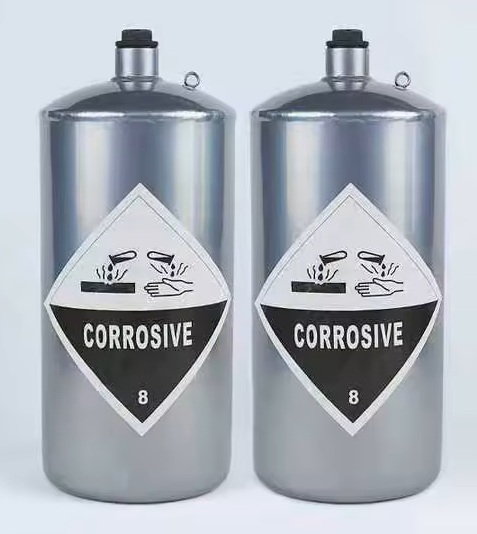
| Steel Drum | 34.50 kg | Stainless steel |
| Plastic Container | 1-5 kg | HDPE (High Density Polyethylene) |
SECTION 11: TRANSPORT INFORMATION
| Parameter | Information |
|---|---|
| UN Number | 2809 |
| Hazard Class | 8 (Corrosive) |
| Packing Group | III |
| ADR/RID | 8, III |
| IMDG Code | 8, III |
| IATA (Air) | 8, III |
| Marine Pollutant | Yes |
| Shipping Name | Mercury |
SECTION 12: FIRE-FIGHTING MEASURES
| Parameter | Information |
|---|---|
| Fire Hazard | Non-combustible |
| Suitable Extinguishing Media | All extinguishing media can be used |
| Specific Hazards | Fire produces toxic mercury vapors |
| Decomposition Products | Mercury vapor (Hg⁰) |
| Protective Equipment | Self-contained breathing apparatus (SCBA), full protective clothing |
SECTION 13: ACCIDENTAL SPILLAGE AND CLEANUP
| Parameter | Information |
|---|---|
| Personal Protection | Nitrile gloves, protective goggles, mercury vapor mask |
| Cleaning Methods | Use specialized mercury spill kits; vacuum collection (special equipment) |
| Environmental Precautions | Prevent entry into drains, soil, and surface waters |
| Waste Disposal | As hazardous waste; licensed disposal facilities |
| Special Note | Use sulfur powder or calcium hydroxide to reduce vaporization |
SECTION 14: OTHER NAMES AND SYNONYMS
| Type | Name |
|---|---|
| Turkish Names | Cıva, Elementel Cıva, Sıvı Cıva, Hidrargyrum |
| English Names | Mercury, Elemental Mercury, Quicksilver, Hydrargyrum |
| Chemical Symbol | Hg |
| CAS Number | 7439-97-6 |
| EC Number | 231-106-7 |
| UN Number | 2809 |
SECTION 15: SUMMARY AND CRITICAL NOTES
Product Summary
| Parameter | Value |
|---|---|
| Product | Elemental Mercury |
| CAS Number | 7439-97-6 |
| Appearance | Silver-colored, bright, fluid liquid metal |
| Density | 13.5 g/cm³ |
| Melting Point | -38.8 °C |
| Boiling Point | 356 °C |
| Purity | ≥ 99.99% (4N) |
| Primary Applications | Laboratory, industrial processes |
Critical Notes
-
Highly Toxic: Elemental mercury is extremely toxic; causes poisoning through skin contact, ingestion, or inhalation.
-
Vapor Hazard: Mercury vapor forms at room temperature; vapor inhalation is the most dangerous exposure route.
-
Neurotoxin: Exhibits strong neurotoxic effects; causes nervous system damage.
-
Minamata Convention: Its use, production, import, and export are severely restricted by international agreements.
-
Import Permit: Import in Turkey requires permits from the Ministry of Environment and Ministry of Health.
-
Amalgam Formation: Forms amalgam with gold, silver, zinc, cadmium, and other metals.
-
Spill Response: Special mercury spill kits must be used for cleanup; never use regular vacuum cleaners.
-
ADR/RID: Subject to dangerous goods transport regulations (UN 2809).
-
Environmental Hazard: Very toxic to aquatic life with long lasting effects.
-
RoHS: Restricted in electronic products.
IMPORTANT DECLARATION: This Technical Data Sheet (TDS) is for informational purposes only and has been prepared based on available technical data. The user is responsible for determining the product's suitability for their specific application and for complying with all local, national, and international regulations. For complete safety, storage, use, transport, waste, and regulatory compliance information, refer to the official Safety Data Sheet (SDS/MSDS) provided by the manufacturer/supplier. Elemental mercury is a hazardous substance; appropriate protective measures must be taken during handling. This document does not replace medical advice.