We unleash your business potential by maximize the business innovation.
Send EmailCerium Oxide, Ceric Oxide, Ceric Dioxide, Dioxo Cerium, Ceria, Ceroxide, 1306-38-3
CERIUM OXIDE (CERIUM DIOXIDE / CERIA)
Cerium(IV) Oxide / CeO₂
CAS Number: 1306-38-3
EC Number: 215-150-4
1. IDENTIFICATION
| Property | Information |
|---|---|
| Chemical Name | Cerium(IV) Oxide |
| Synonyms | Cerium dioxide, Ceria, Ceric oxide, Ceric dioxide, Dioxocerium, Cerium(+4) oxide |
| Chemical Formula | CeO₂ |
| Molecular Weight | 172.115 g/mol |
| CAS Number | 1306-38-3 |
| EC Number (EINECS) | 215-150-4 |
| UN Number | 3077 (Environmentally hazardous substance) |
| HS Code | 2846.90.00.00.11 |
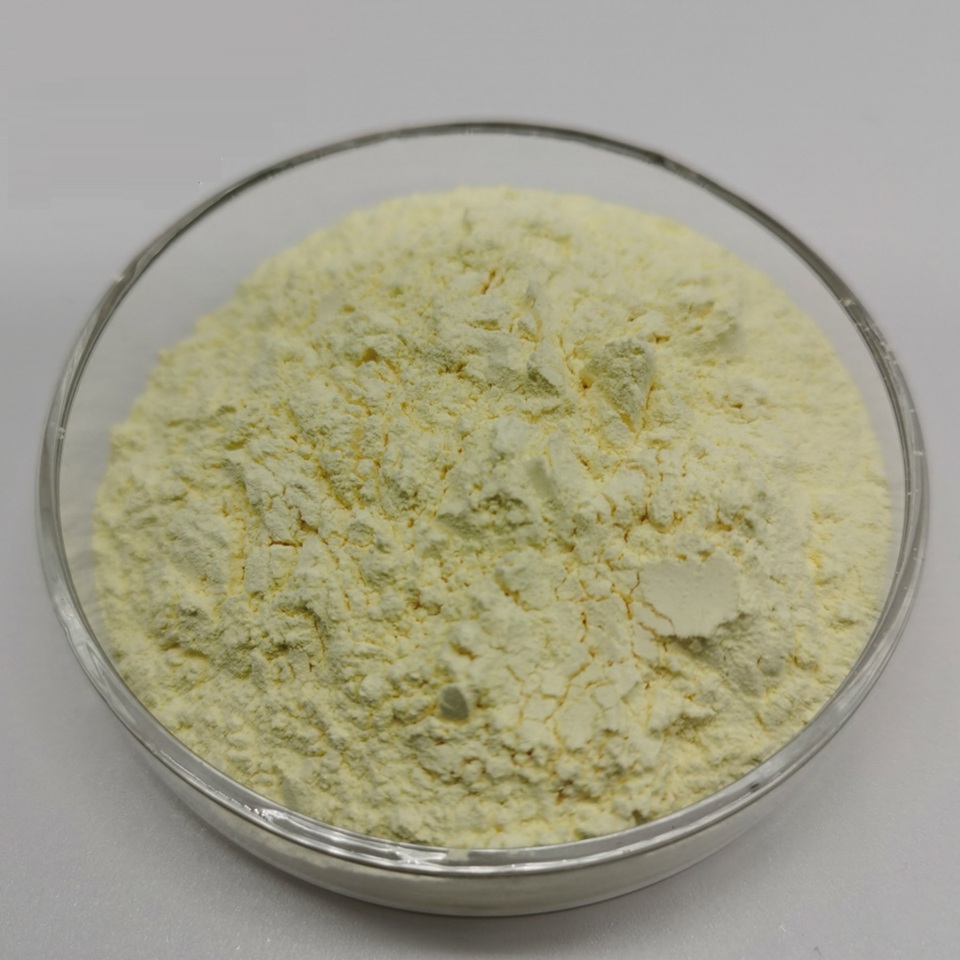
| Appearance | Pale yellow-white to light yellow powder |
| Odor | Odorless |
2. PHYSICAL PROPERTIES
| Property | Value |
|---|---|
| Physical State (20°C) | Solid (powder) |
| Appearance | Pale yellow-white to light yellow powder |
| Color | Pale yellow to off-white (varies with particle size) |
| Odor | Odorless |
| Melting Point | ~2,400 °C (~4,350 °F) |
| Boiling Point | ~3,500 °C (~6,330 °F) |
| Density (20°C) | 7.22 – 7.65 g/cm³ |
| Bulk Density (Powder) | 0.5 – 2.5 g/cm³ (varies with particle size) |
| Solubility in Water | Insoluble |
| Solubility in Acids | Limited solubility in strong acids (HCl, HNO₃, H₂SO₄) with heat and reducing agents |
| pH (aqueous suspension) | Slightly basic (~8.0 – 8.5) |
| Refractive Index | 2.2 – 2.4 |
| Hardness (Mohs) | ~6 – 7 |
| Specific Surface Area | 5 – 200 m²/g (depends on grade – nano to micron) |
3. CHEMICAL PROPERTIES
| Property | Value |
|---|---|
| Molecular Formula | CeO₂ |
| Molecular Weight | 172.115 g/mol |
| Cerium Content | 81.4% Ce by weight |
| Oxygen Content | 18.6% O by weight |
| Oxidation State | Ce(IV) (Ce⁴⁺) – can be reduced to Ce(III) |
| Oxygen Storage Capacity (OSC) | High – reversible Ce⁴⁺ ↔ Ce³⁺ redox cycling |
| Crystal Structure | Fluorite cubic (Fm3m) |
| Lattice Parameter | a = 5.411 Å |
| Stability | Stable in oxidative environments; inert under normal conditions |
| Incompatible Materials | Strong reducing agents, strong acids (with reducing agents) |
Redox Property:
-
CeO₂ can reversibly release and store oxygen via Ce⁴⁺ ↔ Ce³⁺ transition
-
Critical for catalytic applications
Chemical Resistance:
-
Insoluble in water and alkalis
-
Slowly soluble in concentrated HCl with reducing agents (e.g., H₂O₂, SnCl₂)
-
Soluble in hot concentrated H₂SO₄
4. GRADES & TYPES
| Grade | Particle Size | Purity | Applications |
|---|---|---|---|
| Nanopowder / Nano-Ceria | 5 – 100 nm | 99.5 – 99.99% | CMP slurries (semiconductors), catalysts, UV filters, fuel cells |
| Micronized / Micro-Ceria | 0.5 – 10 µm | 99.0 – 99.9% | Glass polishing, optical lens polishing, precision optics |
| Technical Grade | 1 – 50 µm | 95 – 99% | Metallurgy, glass industry (bulk), polishing compounds |
| High Purity Grade | 0.1 – 10 µm | 99.99 – 99.999% | Electronics, optical coatings, research, defense optics |
| Catalyst Grade | 5 – 100 nm | 99.0 – 99.9% | Automotive catalytic converters, oxidation catalysts |
| CMP Grade (Chemical Mechanical Planarization) | 20 – 200 nm | 99.9 – 99.99% | Semiconductor wafer polishing |
5. PRODUCTION PROCESS
| Stage | Description |
|---|---|
| 1. Ore Mining | Rare earth minerals containing cerium are mined (Monazite, Bastnäsite) |
| 2. Concentration | Ore is concentrated via flotation or magnetic separation |
| 3. Acid Leaching | Concentrate is leached with acid (H₂SO₄ or HCl) to extract rare earth elements |
| 4. Purification | Multi-stage solvent extraction separates cerium from other rare earths (lanthanum, neodymium, praseodymium) |
| 5. Cerium(III) Salt Formation | Cerium is precipitated as cerium(III) oxalate, carbonate, or hydroxide |
| 6. Filtration & Drying | Precipitated salts are filtered and dried |
| 7. Calcination (Oxidation) | Cerium salts are calcined at 600-900°C in air to form CeO₂ |
| 8. Milling & Classification | Calcined product is milled and classified to desired particle size distribution |
| 9. Optional: Nano-milling | For nano grades, additional milling and classification |
| 10. Packaging | Final product is packaged |
Reaction Equations:
-
Precipitation: Ce³⁺ + 3 OH⁻ → Ce(OH)₃↓
-
Calcination: 2 Ce(OH)₃ + ½ O₂ → 2 CeO₂ + 3 H₂O
Major Producer Countries:
-
China (dominant – ~70% of global supply)
-
USA (Mountain Pass, CA)
-
Australia (Lynas – Mt. Weld)
-
India (Indian Rare Earths)
-
Russia
6. APPLICATIONS
6.1. Automotive Industry (Primary Use – Catalysts)
| Application | Function |
|---|---|
| Three-Way Catalysts (TWC) | Oxygen storage capacity (OSC) for NOx, CO, HC conversion in gasoline engines |
| Diesel Oxidation Catalysts (DOC) | Oxidation of CO and hydrocarbons |
| Diesel Particulate Filters (DPF) | Catalytic soot oxidation |
| Selective Catalytic Reduction (SCR) | NOx reduction (as support or additive) |
| Euro 6/7 Compliance | Essential for meeting stringent emission standards |
Mechanism: CeO₂ stores oxygen during lean conditions and releases it during rich conditions, maintaining optimal air-fuel ratio for catalyst efficiency.
6.2. Glass & Optics Industry
| Application | Function |
|---|---|
| LCD Screen Polishing | Final polishing of flat panel displays |
| Optical Lens Polishing | High-precision polishing of camera, microscope, telescope lenses |
| Precision Optics | Polishing of prisms, mirrors, laser optics |
| Glass Decolorizing | Removes green tint from iron impurities in glass |
| UV Absorption | Absorbs UV light in specialty glasses |
| Radiation Resistant Glass | Used in radiation shielding glass |
Polishing Mechanism: Ceria particles provide chemical-mechanical polishing (CMP) through both mechanical abrasion and chemical interaction with glass surface.
6.3. Electronics & Semiconductors
| Application | Function |
|---|---|
| CMP (Chemical Mechanical Planarization) | Wafer polishing for semiconductor manufacturing |
| Solid Oxide Fuel Cells (SOFC) | Electrolyte material, oxygen ion conductor |
| Gas Sensors | Oxygen sensors, exhaust gas sensors |
| Semiconductor Doping | Dopant in certain semiconductor devices |
6.4. Ceramics Industry
| Application | Function |
|---|---|
| Ceramic Pigments | Yellow to orange-red pigments (with other rare earths) |
| Thermal Barrier Coatings | Heat-resistant ceramic coatings |
| Ceramic Additive | Improves mechanical properties, thermal stability |
| Refractories | High-temperature refractory applications |
| Dental Ceramics | Coloring and structural additive |
6.5. Metallurgy & Metal Treatment
| Application | Function |
|---|---|
| Steel Desulfurization | Removes sulfur from molten steel |
| Steel Deoxidation | Removes oxygen from molten steel |
| Grain Refinement | Refines grain structure in alloys |
| Titanium Alloy Polishing | Brightener and polishing agent for Ti alloys |
| Cast Iron Inoculation | Nodularizer for ductile iron |
6.6. Defense & Aerospace
| Application | Function |
|---|---|
| Laser Optics | Polishing of high-energy laser optics |
| Precision Guidance Systems | Optical components in missile guidance |
| Thermal Barrier Coatings | Turbine blade coatings |
| Radar Components | Ceramic components |
6.7. Other Applications
| Application | Function |
|---|---|
| Catalysis (Chemical Industry) | Oxidation catalysts, VOC abatement |
| Cosmetics | UV filter in sunscreens (nano grade – limited use) |
| Nuclear Industry | Simulant for radioactive actinide oxides |
| Research | Catalyst support, nanomaterial research |
7. PARTICLE SIZE & APPLICATION GUIDE
| Particle Size Range | Primary Applications | Grade Type |
|---|---|---|
| 5 – 50 nm | CMP slurries (semiconductors), catalysts, fuel cells, UV filters | Nano / High purity |
| 50 – 200 nm | Precision optics polishing, fine polishing | Nano / Micronized |
| 0.2 – 1.0 µm | Glass polishing, lens polishing, CMP (intermediate) | Micronized |
| 1 – 10 µm | Bulk glass polishing, metallurgy, ceramic pigments | Technical |
| 10 – 50 µm | Bulk polishing compounds, refractory applications | Technical / Coarse |
8. COMPARISON WITH ALTERNATIVES
| Property | Cerium Oxide (CeO₂) | Zirconium Oxide (ZrO₂) | Aluminum Oxide (Al₂O₃) |
|---|---|---|---|
| Hardness (Mohs) | 6-7 | 8-8.5 | 9 |
| Density (g/cm³) | 7.22 | 5.68 | 3.95 |
| Melting Point (°C) | 2,400 | 2,715 | 2,072 |
| Polishing Efficiency | Excellent (chemical + mechanical) | Good (mechanical) | Good (mechanical) |
| Oxygen Storage Capacity | High | None | None |
| Cost | Medium-High | Low-Medium | Low |
| Primary Use | Precision optics, catalysts | Structural ceramics, dental | Abrasives, polishing |
Advantages of Cerium Oxide:
-
Chemical-mechanical polishing (CMP) capability
-
High oxygen storage capacity (catalysts)
-
High refractive index (optics)
9. SECTORAL COMPATIBILITY
| Sector | Compatibility | Explanation |
|---|---|---|
| Automotive | ✅ High | Catalytic converters, oxygen sensors, emission control |
| Glass & Optics | ✅ High | Polishing, decolorizing, UV absorption |
| Ceramics | ✅ High | Pigments, thermal coatings, additives |
| Electronics | ✅ High | CMP, fuel cells, semiconductors |
| Defense | ✅ High | Laser optics, precision guidance |
| Metallurgy | ✅ Medium | Steel processing, alloy refinement |
| Cosmetics | ⚠️ Limited | UV filter (nano grade) – limited approval |
| Food & Pharmaceuticals | ❌ Not suitable | Direct use not approved |
| Medical (Implants) | ⚠️ Research | Under research – not approved |
10. SYNONYMS & OTHER NAMES
| Turkish Name | English Name |
|---|---|
| Seryum Oksit | Cerium Oxide |
| Seryum Dioksit | Cerium Dioxide |
| Serik Oksit | Ceric Oxide |
| Serik Dioksit | Ceric Dioxide |
| Diokzo Seryum | Dioxocerium |
| Seryum Oksit Nanotoz | Cerium Oxide Nanopowder |
Common Names:
-
Ceria
-
Cerium(IV) oxide
-
Ceric oxide
-
Ceria nanopowder
11. STORAGE & HANDLING
| Parameter | Information |
|---|---|
| Storage Conditions | Cool, dry, well-ventilated area |
| Container Requirements | Tightly sealed containers (HDPE, lined drums, moisture-proof bags) |
| Protect From | Moisture, strong reducing agents |
| Shelf Life | 36-60 months (indefinite if stored properly – chemically stable) |
| Hygroscopicity | Slightly hygroscopic (absorbs minimal moisture) |
| Packaging Options | 1 kg, 5 kg, 10 kg, 25 kg bags/drums; 500 kg, 1000 kg FIBC (big bags) |
Handling Precautions:
-
Avoid creating airborne dust (inhalation hazard)
-
Use local exhaust ventilation
-
Avoid contact with strong reducing agents
12. SAFETY & HEALTH INFORMATION
GHS Classification (CLP)
| Hazard Class | Category |
|---|---|
| Acute Toxicity (Inhalation – dust) | Category 4 (H332) |
| Specific Target Organ Toxicity (Repeated) | Category 1 (H372) – lungs |
| Aquatic Toxicity (Chronic) | Category 2 (H411) |
Hazard Statements (H-Codes)
| Code | Statement |
|---|---|
| H332 | Harmful if inhaled |
| H372 | Causes damage to organs (lungs) through prolonged or repeated exposure |
| H411 | Toxic to aquatic life with long-lasting effects |
Precautionary Statements (P-Codes)
| Code | Statement |
|---|---|
| P260 | Do not breathe dust |
| P271 | Use only outdoors or in a well-ventilated area |
| P280 | Wear protective gloves and eye protection |
| P304+P340 | IF INHALED: Remove person to fresh air and keep comfortable for breathing |
| P314 | Get medical advice if you feel unwell |
| P501 | Dispose of contents/container in accordance with local regulations |
Toxicological Information
| Parameter | Value |
|---|---|
| Oral LD50 (rat) | > 5,000 mg/kg (low toxicity) |
| Inhalation LC50 (rat) | > 0.5 mg/L (4 hours) |
| Skin Irritation | Not an irritant |
| Eye Irritation | Mild irritant (mechanical) |
| Chronic Effects | Pneumoconiosis (from prolonged inhalation of high dust concentrations) |
First Aid Measures
| Exposure Route | Action |
|---|---|
| Inhalation | Remove to fresh air. Seek medical attention if respiratory irritation occurs. |
| Skin Contact | Wash with soap and water. |
| Eye Contact | Rinse with plenty of water for 15 minutes. |
| Ingestion | Rinse mouth. Drink water. Seek medical attention if large amount ingested. |
13. ENVIRONMENTAL INFORMATION
| Parameter | Information |
|---|---|
| Aquatic Toxicity | Toxic to aquatic organisms |
| Bioaccumulation | Low potential |
| Persistence | Persistent in environment (inorganic) |
| Waste Disposal | Dispose according to local regulations. Classified as hazardous waste in some jurisdictions. |
14. TRANSPORT INFORMATION
| Parameter | Information |
|---|---|
| UN Number | 3077 |
| Hazard Class | 9 (Miscellaneous dangerous goods) |
| Packing Group | III |
| Proper Shipping Name | ENVIRONMENTALLY HAZARDOUS SUBSTANCE, SOLID, N.O.S. (Cerium dioxide) |
| Marine Pollutant | Yes |
| ADR/RID Label | 9 + "Environmentally Hazardous" mark |
15. REGULATORY INFORMATION
| Region | Status |
|---|---|
| EU | REACH registered; listed as substance of very high concern (SVHC) – not for CeO₂, but rare earths in general are monitored |
| Turkey (KKDIK) | Mandatory compliance; requires registration |
| USA (TSCA) | Listed |
| China (IECSC) | Listed |
| Japan (ENCS) | Listed |
| Korea (KECL) | Listed |
| REACH Annex XVII | Not restricted (but nanoparticle forms may have additional requirements) |
16. SUMMARY
Cerium Oxide (CeO₂, CAS 1306-38-3) is a pale yellow-white, high-density rare earth oxide with unique oxygen storage capacity (OSC), high thermal stability, and excellent chemical-mechanical polishing properties.
Key Features:
| Feature | Description |
|---|---|
| Appearance | Pale yellow-white to light yellow powder |
| Melting Point | ~2,400 °C |
| Density | 7.22 – 7.65 g/cm³ |
| Crystal Structure | Fluorite cubic |
| Oxygen Storage Capacity | High (reversible Ce⁴⁺ ↔ Ce³⁺) |
Main Application Areas:
| Sector | Applications |
|---|---|
| Automotive | Catalytic converters (TWC, DOC, DPF), oxygen storage, Euro 6/7 compliance |
| Glass & Optics | LCD screen polishing, optical lens polishing, glass decolorizing |
| Electronics | CMP slurries (semiconductor wafers), SOFC, gas sensors |
| Ceramics | Pigments, thermal barrier coatings, refractory additives |
| Metallurgy | Steel desulfurization/deoxidation, grain refinement |
| Defense | Laser optics, precision guidance systems |
17. IMPORTANT NOTES
-
Critical for Automotive Emissions: Cerium oxide's oxygen storage capacity (OSC) is essential for three-way catalytic converters, enabling efficient conversion of CO, NOx, and hydrocarbons. Modern vehicles (Euro 6/7) cannot meet emission standards without ceria-containing catalysts.
-
CMP Essential Material: In semiconductor manufacturing, ceria-based slurries are the standard for Chemical Mechanical Planarization (CMP) of silicon wafers. Nano-grade ceria provides superior surface finish.
-
Polishing Mechanism: Unlike purely abrasive aluminum oxide, cerium oxide polishes through both chemical (redox reaction with glass surface) and mechanical mechanisms, providing faster and higher-quality polishing.
-
Nanoparticle Concerns: Nano-sized ceria particles may have different toxicological profiles than bulk material. Proper dust control is essential when handling nano grades.
-
Supply Chain Risk: Cerium is a rare earth element with ~70% of global supply from China. Geopolitical supply risks exist. Recycling from spent catalysts is growing.
-
UN 3077 Classification: Ceria powder is classified as UN 3077 (Environmentally hazardous substance) due to aquatic toxicity. Proper shipping documentation and labeling required.
-
Not for Food/Pharma: Cerium oxide is not approved for direct use in food, pharmaceuticals, or implantable medical devices.
-
Color Variation: The color of cerium oxide powder ranges from pale yellow to off-white depending on particle size and calcination temperature. Finer particles tend to be lighter.
-
Hygroscopicity: While generally stable, ceria powder is slightly hygroscopic. Long-term exposure to humid air may affect performance in precision applications.
-
Recycling Potential: Spent catalytic converters are a growing source of recycled cerium (and other platinum group metals). Recycled ceria can be used in many applications with proper purification.
Important Disclaimer: This Technical Data Sheet (TDS) is for informational purposes only. For complete safety, handling, storage, and regulatory compliance information, always refer to the official Safety Data Sheet (SDS) provided by the manufacturer/supplier.