We unleash your business potential by maximize the business innovation.
Send EmailCopper Sulfate, Cupric Sulfate, Copper Sulfate Pentahydrate, Cupric Sulfate Pentahydrate, Blue Vitriol, Blue Stone, 7758-98-7
COPPER SULFATE (CuSO₄, CuSO₄·5H₂O)
1. Chemical Identity and Material Classification
-
Chemical Name: Copper(II) Sulfate, Cupric Sulfate
-
Synonyms: Copper Sulfate Pentahydrate, Blue Vitriol, Bluestone, Blue Stone, Copper(II) Sulfate, Cupric Sulfate Pentahydrate, Blue Copper, Chalcanthite (pentahydrate mineral)
-
CAS Numbers:
-
Anhydrous Copper Sulfate: 7758-98-7
-
Copper Sulfate Pentahydrate (5H₂O): 7758-99-8
-
Copper Sulfate Monohydrate (1H₂O): 10257-55-9 (less common)
-
-
EC Number (EINECS): 231-847-6 (anhydrous and pentahydrate share same EC number)
-
Molecular Formula: CuSO₄ (anhydrous), CuSO₄·5H₂O (pentahydrate)
-
Molecular Weight: 159.61 g/mol (anhydrous), 249.69 g/mol (pentahydrate)
-
E Number: E519 (copper sulfate – restricted, not widely approved as food additive)
-
Chemical Class: Inorganic salt, transition metal sulfate, copper salt
-
HS Code: 2833.25
-
UN Number: 3077 (Environmentally hazardous substance, solid, n.o.s. – for pentahydrate)
2. Physical Properties
2.1 General Physical Properties
| Property | Anhydrous | Pentahydrate (5H₂O) |
|---|---|---|
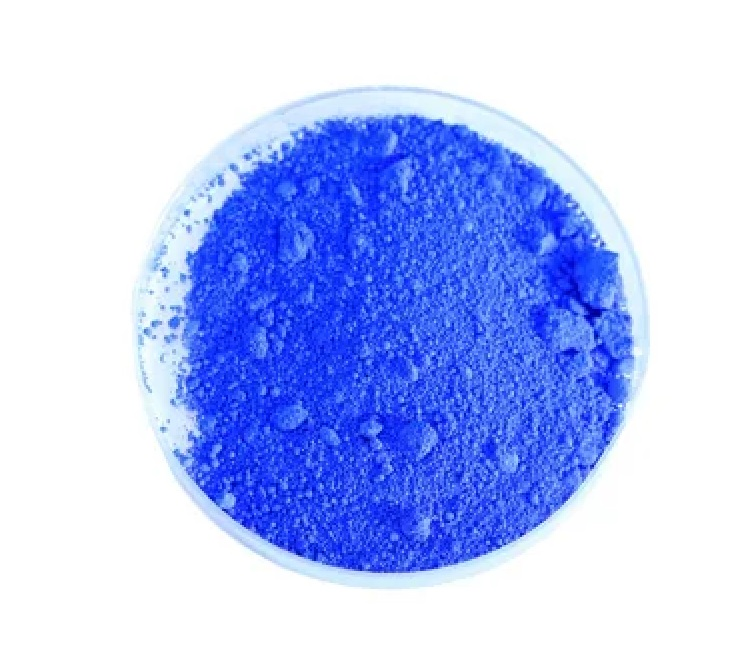
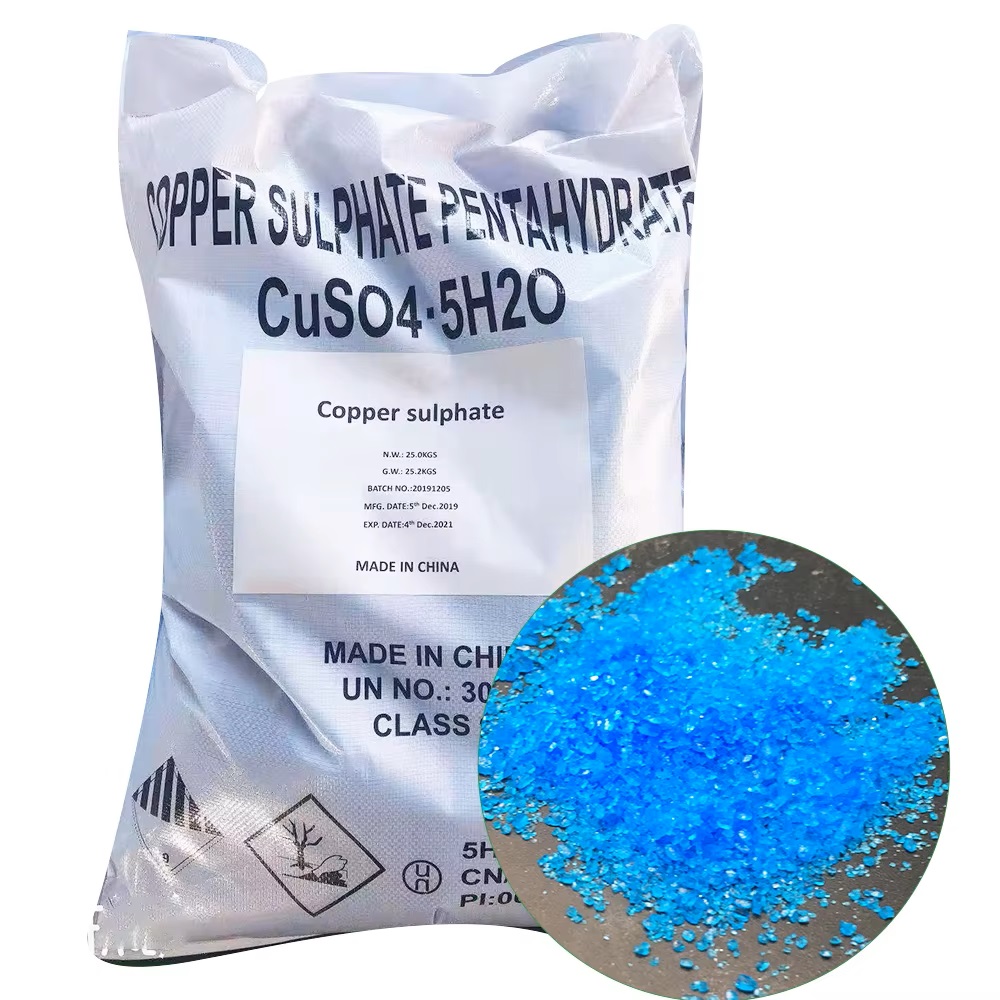
| Appearance | Gray-white, greenish or pale green powder | Brilliant blue, blue crystalline powder or large crystals |
| Physical state (20°C) | Solid (powder) | Solid (crystalline powder or large crystals) |
| Odor | Odorless | Odorless (slightly metallic feel) |
| Taste | Metallic, astringent | Metallic, astringent, unpleasant |
| Density (20°C) | 3.603 g/cm³ | 2.284 g/cm³ |
| Bulk density (powder) | ~1.2–1.8 g/cm³ | ~0.8–1.2 g/cm³ |
| Melting point | 590°C (decomposes) | 110°C (loses 4H₂O), 150°C (decomposes, loses 5H₂O) |
| Boiling point | 650°C (decomposes) | Decomposes (loses water) |
| Decomposition temperature | >590°C → CuO + SO₃ | >110°C → converts to anhydrous form |
| Flash point | Not applicable (non-flammable) | Not applicable (non-flammable) |
| Autoignition temperature | Not applicable | Not applicable |
| Refractive index (nD20) | ~1.514 | ~1.514 (solution) |
2.2 Hydration Forms and Color Change
| Formula | Water Content | Color | Occurrence |
|---|---|---|---|
| CuSO₄ (anhydrous) | 0% | Gray-white to pale green | Produced by heating pentahydrate |
| CuSO₄·H₂O (monohydrate) | 1 mol H₂O (~11.2%) | Pale blue to greenish | Intermediate form |
| CuSO₄·3H₂O (trihydrate) | 3 mol H₂O (~30%) | Blue | Mineral: bonattite |
| CuSO₄·5H₂O (pentahydrate) | 5 mol H₂O (~36.1%) | Bright blue | Most common form; mineral: chalcanthite |
| CuSO₄·7H₂O (heptahydrate) | 7 mol H₂O (~44.9%) | Blue | Mineral: boothite (less common) |
Color change (Dehydration): Blue pentahydrate → 110°C → white/gray anhydrous form. This characteristic change is used for water detection.
2.3 Solubility Properties
| Solvent | Temperature | Solubility (g/100 mL) – as pentahydrate | Note |
|---|---|---|---|
| Water | 0°C | 24.3 g/100 mL (243 g/L) | High solubility |
| Water | 20°C | 32.0 g/100 mL (320 g/L) | Very high solubility |
| Water | 25°C | 33.0 g/100 mL (330 g/L) | Very high solubility |
| Water | 50°C | 47.0 g/100 mL (470 g/L) | Very high solubility |
| Water | 100°C | 203.3 g/100 mL (2,033 g/L) | Extremely high solubility |
| Methanol | 25°C | Slightly soluble (~1 g/100 mL) | Low solubility |
| Ethanol | 25°C | Slightly soluble (~0.5 g/100 mL) | Low solubility |
| Glycerol | 25°C | Soluble | Moderate solubility |
| Acetone | 25°C | Insoluble | Insoluble |
| Acid solutions (dilute H₂SO₄) | 25°C | High solubility | Sulfuric acid increases solubility |
Important Note: Copper sulfate has very high solubility in water (~32 g/100 mL at 20°C). This makes it one of the most soluble copper salts. The solution is blue due to the hydrated Cu²⁺ ion.
2.4 Particle Characterization
| Parameter | Anhydrous | Pentahydrate |
|---|---|---|
| Particle size (D50) | 10–100 µm (powder) | 100–500 µm (crystalline) or 20–100 µm (micronized) |
| Crystal form | Orthorhombic (anhydrous) | Triclinic (pentahydrate) |
| Specific surface area (BET) | 0.5–2.0 m²/g | 0.1–0.5 m²/g |
| Bulk density (loose) | 1.2–1.8 g/cm³ | 0.8–1.2 g/cm³ |
| Compressibility index | 20–30 | 15–25 |
2.5 Hygroscopicity and Stability
| Parameter | Anhydrous | Pentahydrate |
|---|---|---|
| Hygroscopicity | Very high (rapidly absorbs moisture from air → converts to pentahydrate) | Low (may deliquesce on surface in humid air) |
| Deliquescence (moisture absorption leading to liquefaction) | Yes (at high humidity, surface dissolves) | No |
| Water of crystallization | None | 5 mol H₂O |
| Stability (dry, 20°C) | Unstable – slowly converts to pentahydrate | Stable |
| Dusting tendency | May dust | Low dust (crystalline form) |
3. Chemical Properties
3.1 Molecular Structure
-
Structure (anhydrous): Cu²⁺ [SO₄]²⁻
-
Structure (pentahydrate): [Cu(H₂O)₄]²⁺ SO₄²⁻·H₂O (four water molecules coordinated to copper, one water molecule is free crystal water)
-
Copper content (pentahydrate): 25.5% Cu (by weight)
-
Copper content (anhydrous): 39.8% Cu (by weight)
-
Sulfate content (pentahydrate): 38.4% SO₄ (by weight)
-
Sulfate content (anhydrous): 60.2% SO₄ (by weight)
3.2 Thermal Properties (Dehydration and Decomposition)
| Temperature Range | Reaction | Mass Loss | Product |
|---|---|---|---|
| 30–60°C | Surface moisture loss | ~1–2% | CuSO₄·5H₂O (moisture loss) |
| 60–110°C | Loss of 4H₂O (partial dehydration) | ~14.4% | CuSO₄·H₂O (monohydrate) |
| 110–150°C | Loss of final 1H₂O (complete dehydration) | ~36.1% (total) | CuSO₄ (anhydrous, white/gray) |
| 150–590°C | Stable anhydrous form | – | CuSO₄ (anhydrous) |
| 590–650°C | Decomposition: CuSO₄ → CuO + SO₃ | ~50% | Copper oxide (CuO, black) + sulfur trioxide |
| >650°C | Complete decomposition | ~60% | CuO + SO₂ + O₂ |
Important Note: When heated, pentahydrate becomes completely anhydrous (white/gray) at approximately 200°C. Upon contact with water, the anhydrous form hydrates exothermically and turns blue – a characteristic property used for water determination.
3.3 Chemical Reactivity
| Reaction / Behavior | Description |
|---|---|
| Reaction with bases (NaOH, KOH, NH₄OH) | CuSO₄ + 2 NaOH → Cu(OH)₂ (blue precipitate) + Na₂SO₄. Dissolves in excess ammonia → [Cu(NH₃)₄]²⁺ (dark blue complex) |
| Reaction with carbonates and bicarbonates | CuSO₄ + Na₂CO₃ → CuCO₃ (greenish) + Na₂SO₄ |
| Displacement reaction with metals (Fe, Zn, Al) | CuSO₄ + Fe → FeSO₄ + Cu (reddish copper metal precipitates) – acid baths and metal plating |
| Reaction with sulfides (Na₂S, H₂S) | CuSO₄ + Na₂S → CuS (black precipitate) + Na₂SO₄ |
| Reaction with reducing agents (glucose, formaldehyde) | Reduction of Cu²⁺ to Cu⁺ or Cu⁰ (Fehling's test – sugar determination) |
| Reaction with oxidizing agents | Stable; no reaction |
| Complex formation | Forms stable complexes with NH₃, EDTA, citrate, oxalate |
| Hydrolysis (aqueous solution) | Acidic solution: Cu²⁺ + H₂O ⇌ [Cu(OH)]⁺ + H⁺ (pH ~4–5) |
3.4 Electrochemical Properties
| Parameter | Value | |
|---|---|---|
| Aqueous solution pH (1% CuSO₄·5H₂O, 25°C) | 4.0–5.0 (acidic, due to hydrolysis) | |
| Aqueous solution pH (10% CuSO₄·5H₂O, 25°C) | 3.5–4.5 (more acidic) | |
| Standard redox potential (E°) | Cu²⁺ + 2e⁻ ⇌ Cu(s) | E° = +0.34 V |
| Copper(II) – Copper(I) redox potential | Cu²⁺ + e⁻ ⇌ Cu⁺ | E° = +0.153 V (unstable) |
| Conductivity (aqueous solution) | Good (fully ionized) | |
| Electrolysis | Copper metal deposits at cathode; oxygen evolves at anode |
3.5 Aqueous Solution Properties (Color and Complexes)
| Solution | Color | Complex / Explanation |
|---|---|---|
| Aqueous CuSO₄ solution | Blue | [Cu(H₂O)₆]²⁺ (hexaaquacopper(II) complex) |
| With concentrated HCl | Yellow to green | [CuCl₄]²⁻ (tetrachlorocuprate(II) complex) |
| With excess concentrated NH₃ | Dark blue / violet | [Cu(NH₃)₄]²⁺ (tetraamminecopper(II) complex) |
| With excess EDTA | Blue | [Cu(EDTA)]²⁻ (chelate complex) |
| With dilute acid (dilute H₂SO₄) | Pale blue | Hydrolysis suppressed |
4. Commercial Grades and Specifications
| Grade | Form | Purity | Particle Size | Applications |
|---|---|---|---|---|
| Agricultural Grade | Pentahydrate | ≥98.0% | 100–500 µm (crystalline) | Fungicide, herbicide, copper fertilizer, soil amendment |
| Technical Grade | Pentahydrate / anhydrous | ≥98.5% | 50–500 µm | Mining (flotation), metal plating, leather processing, textiles |
| Feed Grade | Pentahydrate | ≥98.5% | 100–300 µm | Animal feed additive (growth promoter, copper supplement) |
| Pharmaceutical Grade | Pentahydrate | ≥99.0% | 50–200 µm | Pharmaceutical raw material, copper supplement, antiseptic |
| Laboratory Grade (Analytical) | Pentahydrate / anhydrous | ≥99.5% | 20–100 µm | Chemical analysis, reagent, experiments |
| High Purity (Electronic) | Anhydrous | ≥99.99% | 1–50 µm | Electronics, battery materials |
5. Quality Specifications (Agricultural/Technical Grade – Pentahydrate)
| Parameter | Specification (≥98.0%) | Test Method |
|---|---|---|
| Assay (CuSO₄·5H₂O, dry basis) | ≥98.0% | Iodometric titration (copper assay) |
| Copper content (Cu) | ≥24.9% (theoretical 25.5%) | Iodometric titration / AAS |
| Sulfate content (SO₄) | ≥37.5% (theoretical 38.4%) | Gravimetric (BaSO₄) |
| Water content (crystal water + free moisture) | 34–38% (theoretical 36.1%) | Karl Fischer or gravimetric (110°C loss) |
| Water-insoluble matter | ≤0.1% | Gravimetric |
| Chlorides (Cl) | ≤0.01% | Turbidimetric |
| Iron (Fe) | ≤0.05% (500 ppm) | Colorimetric / AAS |
| Lead (Pb) | ≤10 ppm | Atomic absorption |
| Arsenic (As) | ≤5 ppm | Atomic absorption |
| Cadmium (Cd) | ≤5 ppm | Atomic absorption |
| Nickel (Ni) | ≤10 ppm | Atomic absorption |
| Zinc (Zn) | ≤0.05% | AAS |
| Free acid (as H₂SO₄) | ≤0.1% | Titration |
| pH (10% solution) | 3.5–4.5 | pH meter |
| Appearance | Bright blue crystalline powder | Visual |
6. Production Methods
6.1 Dissolution of Copper Metal in Sulfuric Acid (Most Common Method)
-
Reaction: Cu + 2 H₂SO₄ (conc.) → CuSO₄ + SO₂ + 2 H₂O (hot, concentrated H₂SO₄)
-
Alternate reaction (dilute acid + oxygen): 2 Cu + 2 H₂SO₄ + O₂ → 2 CuSO₄ + 2 H₂O
-
Process:
-
Copper metal scrap or copper ore is used.
-
Dissolved in sulfuric acid (with heating).
-
Pentahydrate form is obtained by crystallization.
-
Filtered, washed, dried.
-
-
Yield: 90–95%
-
Purity: 98–99%
6.2 Dissolution of Copper Oxide or Hydroxide in Sulfuric Acid
-
Reaction: CuO + H₂SO₄ → CuSO₄ + H₂O
-
Reaction: Cu(OH)₂ + H₂SO₄ → CuSO₄ + 2 H₂O
-
Process:
-
Copper oxide or hydroxide is used.
-
Dissolved in dilute sulfuric acid.
-
Pentahydrate form is obtained by crystallization.
-
-
Advantage: No SO₂ gas evolution; cleaner product.
-
Purity: ≥99%
6.3 Roasting and Leaching of Sulfide Ores
-
Reaction: 2 CuS + 3 O₂ → 2 CuO + 2 SO₂; CuO + H₂SO₄ → CuSO₄ + H₂O
-
Process:
-
Copper sulfide ores (e.g., chalcopyrite CuFeS₂) are roasted.
-
Formed copper oxide is leached with sulfuric acid.
-
Pentahydrate is obtained by crystallization.
-
-
Use: As a mining by-product.
6.4 Electrolytic Method (High Purity)
-
Process: Recovery from anode slime in electrolytic copper refining.
-
Purity: ≥99.9%
7. Mechanism of Action (Functional Mechanisms)
7.1 Fungicide Mechanism (Agriculture – Largest Application ~75%)
-
Slow release of copper ions (Cu²⁺): When copper sulfate contacts water, it slowly releases Cu²⁺ ions.
-
Entry into fungal cell: Cu²⁺ ions penetrate the fungal cell wall.
-
Intracellular effects:
-
Binds to thiol (-SH) groups in enzymes, inactivating them.
-
Disrupts the respiratory chain (cytochrome c oxidase inhibition).
-
Disrupts cell membrane integrity.
-
Generates reactive oxygen species (ROS) → oxidative stress.
-
-
Result: Fungal spores do not germinate; mycelium does not grow. Contact fungicide (not systemic).
-
Diseases controlled:
-
Downy mildew in grapes (Plasmopara viticola)
-
Late blight in tomatoes and potatoes (Phytophthora infestans)
-
Leaf spot in fruit trees
-
Fungal diseases in ornamental plants
-
Apple and pear scab
-
7.2 Herbicide / Algaecide Mechanism (Water Treatment, Ponds, Pools)
-
Toxicity to algal cells: Cu²⁺ ions inhibit photosynthesis in algae (chloroplast damage).
-
Cell membrane damage: Cu²⁺ peroxidizes lipids in the cell membrane.
-
Result: Algal cells die; water becomes clear.
-
Application areas:
-
Swimming pools (prevention of algal blooms)
-
Ponds and irrigation canals (algae control)
-
Roofs and walls (removal of green algae / lichen)
-
7.3 Animal Feed Additive (Growth Promoter / Copper Supplement)
-
Trace element (copper) source: Copper is a cofactor for many enzymes (cytochrome c oxidase, superoxide dismutase, tyrosinase).
-
Growth-promoting effect (poultry, swine):
-
Antibacterial effect (modulation of intestinal flora)
-
Improves feed conversion ratio (more meat with less feed)
-
Accelerates growth (5–10% increase)
-
-
Copper deficiency treatment: Anemia, bone abnormalities, nervous system disorders, depigmentation of hair/feathers.
-
Dosage (animal feed): 10–200 mg Cu/kg feed (depending on species; ~150 ppm for poultry)
7.4 Antiseptic / Disinfectant Mechanism
-
Toxic effect on microorganisms: Cu²⁺ ions damage bacterial cell walls and enzymes.
-
Protein denaturation: Cu²⁺ binds to thiol (-SH) and amino (-NH₂) groups in proteins.
-
Applications:
-
Animal foot baths (foot rot – Fusobacterium necrophorum)
-
Wound treatment (topical antiseptic – historical use, limited today)
-
Water treatment (bactericidal effect)
-
7.5 Metal Plating / Copper Plating Mechanism
-
Reaction (cementation / displacement): CuSO₄ + Fe → FeSO₄ + Cu (metallic copper deposits on surface)
-
Electrolytic copper plating: Copper metal plating from CuSO₄ solution via electrolysis (PCB, decorative coatings).
7.6 Wine Production Impurity Removal
-
Hydrogen sulfide (H₂S) removal: H₂S + CuSO₄ → CuS (black precipitate) + H₂SO₄
-
Result: Sulfurous odor (rotten egg smell) in wine is eliminated; wine taste and quality improve.
8. Applications
8.1 Agriculture – Largest Application (~75%)
| Application | Function | Typical Concentration / Dosage |
|---|---|---|
| Fungicide (Bordeaux mixture – with Ca(OH)₂) | Fungal diseases (downy mildew, blight) | 1–2% Bordeaux mixture (1% CuSO₄ + 1% Ca(OH)₂) |
| Fungicide (alone as dust) | Fungal diseases | 2–10 kg/hectare |
| Copper fertilizer (soil application) | Corrects copper deficiency in soil | 10–50 kg/hectare (every 3–5 years) |
| Copper fertilizer (foliar application) | Foliar copper supplement | 0.1–0.5% solution (1–5 g/L) |
| Herbicide / Algaecide (ponds, canals) | Algae control | 1–10 mg Cu/L water (as free Cu²⁺) |
| Soil sterilization (tomato seedlings) | Prevents seedling rot | 0.5–1% solution (with ammonium carbonate) |
| Seed treatment (seed dressing) | Seed-borne fungi | 0.1–0.5% solution (seed soaking) |
| Slug / snail control (molluscicide) | Snail and slug control | 0.5–1% solution (spray) |
8.2 Animal Husbandry and Veterinary Medicine
| Application | Function | Typical Concentration / Dosage |
|---|---|---|
| Animal feed additive (poultry, swine, cattle) | Growth promoter, copper supplement | 10–200 mg Cu/kg feed (poultry ~150 ppm, swine ~100–150 ppm) |
| Foot bath (cattle, sheep, goats) | Foot rot, hoof diseases (disinfectant) | 5–10% CuSO₄ solution (1–5 minutes in bath) |
| Disinfectant (barn, poultry house) | Fungal and bacterial control | 0.5–2% solution |
| Copper deficiency treatment (animals) | Oral or parenteral copper supplementation | Veterinary dosage as prescribed |
| Fish ponds (farm fish) | Filth control, parasite prevention | 0.5–2 mg/L (as free Cu²⁺) |
8.3 Industry and Mining
| Application | Function | Typical Concentration |
|---|---|---|
| Mining (flotation) | Mineral separation (zinc, lead, silver, molybdenum) | 10–100 g/t ore (as activator) |
| Metal plating (copper plating) | Electrolytic copper plating (PCB, decorative) | 50–200 g/L CuSO₄·5H₂O |
| Cementation (displacement) | Copper precipitation with iron (copper recovery) | Dependent on solution concentration |
| Molybdenum recovery (from wastes) | Dissolution of molybdenite with soluble metal salt | Variable |
| Leather processing (tanning) | Leather processing chemical, mordant | 0.5–2% |
| Textile (dyeing) | Mordant (dye fixing agent) | 1–5% |
| Wood preservation | Prevents wood rot (fungus, insects) | 1–5% solution (impregnation) |
| Paint and pigment production | Copper-based pigments (Prussian blue – mixed) | As raw material |
8.4 Water Treatment and Swimming Pools
| Application | Function | Typical Concentration |
|---|---|---|
| Swimming pools (algaecide) | Prevents algal blooms | 0.5–2 mg Cu/L (as free Cu²⁺) |
| Ponds and lakes (algae control) | Algaecide (herbicide) | 1–5 mg Cu/L (as free Cu²⁺) |
| Water pipes (algaecide) | Algae and bacterial film control | 0.1–0.5 mg/L (continuous dosing) |
| Fish ponds (parasite treatment) | External parasites (ciliates, fin rot) | 0.5–2 mg/L (short-term bath) |
| Wastewater treatment (odor control) | H₂S removal (odor control) | 10–50 mg/L (depending on H₂S level) |
8.5 Construction and Building
| Application | Function | Typical Concentration |
|---|---|---|
| Dry rot prevention in buildings (fungus) | As a plaster additive to prevent fungal infection | 0.5–2% (in plaster) |
| Wood impregnation (rot, insect) | Wood preservation (fungus, insects, termites) | 1–5% solution (pressure impregnation) |
| Concrete additive (algae/moss prevention) | Prevents algae and moss growth on concrete surfaces | 0.1–0.5% |
8.6 Cosmetics and Personal Care
| Application | Function | Typical Concentration |
|---|---|---|
| Toothpaste | Mouth odor removal, antibacterial | 0.01–0.1% (trace amounts) |
| Hair dye (some formulations) | Color development (copper pigments) | 0.1–1% |
| Deodorants (antimicrobial) | Bacterial control (odor prevention) | 0.01–0.1% |
| Antiseptic creams (topical) | Fungal and bacterial infections (limited use) | 0.1–1% |
8.7 Pharmaceutical and Medical
| Application | Function | Typical Concentration |
|---|---|---|
| Copper supplement (humans) | Copper deficiency treatment (oral or IV) | 1–5 mg Cu/day (under medical supervision) |
| Antiseptic (topical) | Wound cleaning, skin infections (traditional use) | 0.1–1% solution |
| Catalyst (pharmaceutical synthesis) | As a copper catalyst | Variable |
| Dialysis fluids (trace element supplementation) | Copper supplementation (total parenteral nutrition) | 0.1–0.5 mg/L |
8.8 Laboratory and Analytical Chemistry
| Application | Function |
|---|---|
| Fehling's solution (sugar determination) | Determination of reducing sugars (glucose, fructose) |
| Biuret reagent (protein determination) | Colorimetric protein concentration determination |
| Electrolysis experiments | Copper plating, Faraday's laws |
| Water determination (anhydrous form) | Blue color in presence of water (color change) |
| Reagent (analytical chemistry) | Sulfide, phosphate, cyanide determination |
| Crystal growth experiments | Education (blue crystals) |
8.9 Wine and Food Industry
| Application | Function | Typical Concentration |
|---|---|---|
| Wine production (impurity removal) | H₂S (hydrogen sulfide) removal – odor improvement | 0.5–2 g/hL (grams per hectoliter) |
| Food additive (trace element) | Copper supplementation (limited, subject to regulations) | Variable (very low) |
| Food preservative (some countries) | Fungal and mold prevention (limited use) | Variable |
9. Toxicology and Safety
9.1 Acute Toxicity
| Parameter | Value (Pentahydrate) | Classification |
|---|---|---|
| Oral LD₅₀ (rat) | 300–500 mg/kg | Acute Tox. 3 (H301) – Toxic if swallowed |
| Dermal LD₅₀ (rabbit) | >2,000 mg/kg | Not classified |
| Inhalation LC₅₀ (rat, 4 hr) | >1 mg/L (dust) | Acute Tox. 4 (H332) |
| Skin irritation | Moderate irritant | Skin Irrit. 2 (H315) |
| Eye irritation | Severe irritant | Eye Dam. 1 (H318) |
| Skin sensitization | Non-sensitizer (not an allergen) | Not classified |
9.2 Chronic Toxicity and Special Concerns
| Concern | Information |
|---|---|
| Aquatic toxicity (very high) | Very toxic to fish and aquatic organisms. Causes long-term adverse effects in the aquatic environment. Fish LC₅₀ (96 hr): 0.01–0.1 mg Cu/L (very low) – copper sulfate is a serious hazard to aquatic life. |
| Environmental persistence | Persists in soil; not biodegradable; can bioaccumulate (in aquatic organisms). |
| Carcinogenicity | IARC Group 3 – not classifiable (inadequate evidence). |
| Mutagenicity | Some mutagenic effects in vitro studies (at high doses). |
| Reproductive toxicity | Reproductive effects in animals at high doses (reduced fertility). |
| Target organs (human) | Liver, kidneys, eyes, skin, gastrointestinal system. |
| Copper accumulation (Wilson's disease) | Individuals with Wilson's disease (genetic copper accumulation disorder) must avoid copper sulfate. |
| Occupational exposure limit (PEL/OSHA) | 0.1 mg Cu/m³ (dust and fume) – for copper dust. |
9.3 GHS Classification
| Classification | Category | Hazard Statements |
|---|---|---|
| Acute toxicity (oral) | Category 3 | H301 – Toxic if swallowed |
| Acute toxicity (inhalation) | Category 4 | H332 – Harmful if inhaled |
| Skin irritation | Category 2 | H315 – Causes skin irritation |
| Serious eye damage | Category 1 | H318 – Causes serious eye damage |
| Acute aquatic toxicity | Category 1 | H400 – Very toxic to aquatic life |
| Chronic aquatic toxicity | Category 1 | H410 – Very toxic to aquatic life with long-lasting effects |
| Specific target organ toxicity – single exposure | Category 3 | H335 – May cause respiratory tract irritation |
Signal word: DANGER
9.4 NFPA Rating
| Health | Flammability | Reactivity | Special |
|---|---|---|---|
| 2 (moderate hazard) | 0 (non-flammable) | 0 (stable) | None |
10. Environmental Impact and Toxicity
| Parameter | Value (Pentahydrate) |
|---|---|
| Aquatic toxicity (fish, LC₅₀, 96 hr) | 0.01–0.1 mg Cu/L (very toxic – high risk) |
| Daphnia magna (EC₅₀, 48 hr) | 0.01–0.05 mg Cu/L (very toxic) |
| Algal toxicity (EC₅₀, 72 hr) | 0.005–0.02 mg Cu/L (very toxic) |
| Soil organisms (earthworm, LC₅₀) | 50–200 mg/kg soil (moderate toxicity) |
| Bioaccumulation factor (BCF) | 100–1,000 (moderate to high bioaccumulation) |
| Mobility in soil | Moderate to high (water-soluble; more mobile in acidic soils) |
| Degradation in water (hydrolysis) | Does not degrade – stable (inorganic) |
| Photodegradation | Not applicable (inorganic) |
| Biodegradability | Not applicable (inorganic) |
| Soil half-life | Years (persistent) |
| WGK Germany | 2 (hazard to water) – some classifications as 3 (severe hazard) |
| Disposal method | Hazardous waste (due to copper content) – recovery preferred |
Important Environmental Warning:
Copper sulfate is very toxic to aquatic organisms. Even at very low concentrations (0.01 mg Cu/L), it has lethal effects on fish, algae, and invertebrates. It must not be discharged into surface waters, ponds, lakes, rivers, or sewers. Strict compliance with environmental regulations (Turkish Environmental Law, EU REACH/CLP, US EPA) is required.
11. Safety Precautions and Personal Protective Equipment (PPE)
Hazards:
-
Toxic if swallowed. Copper poisoning symptoms: nausea, vomiting (may be blue/green), abdominal pain, diarrhea, headache.
-
Harmful if inhaled (dust) – respiratory tract irritation.
-
Causes skin irritation and serious eye damage.
-
Very toxic to the aquatic environment. Avoid release to the environment.
-
Not flammable.
-
Reacts with strong reducing agents or metals (iron, zinc, aluminum). Copper metal precipitates.
PPE (mandatory – for dust or solution form):
-
Respiratory protection: P2 or P3 filter mask (to prevent dust inhalation). Adequate ventilation for spray or solution applications.
-
Eye protection: Chemical splash goggles (EN 166) or full face shield.
-
Gloves: Nitrile or neoprene gloves (≥0.4 mm thickness). Natural rubber (latex) is not suitable.
-
Protective clothing: Chemical-resistant apron or coverall (Tyvek, PVC).
-
Footwear: Closed-toe, chemical-resistant boots.
Engineering controls:
-
Local exhaust ventilation (LEV) with dust collection.
-
Eyewash stations and safety showers.
-
Spill containment equipment (neutralizers, absorbent materials – but do not wash with water – risk of environmental release).
-
Prevent dust generation (closed systems, wet processing).
Storage conditions:
| Parameter | Requirement |
|---|---|
| Storage temperature | 10–30°C (cool, room temperature) |
| Relative humidity | <60% (not highly hygroscopic, but for pentahydrate stability) |
| Container material | HDPE, PP, plastic-lined steel, polyethylene bags (avoid METAL containers – rust/corrosion) |
| Storage conditions | Store in original, closed container. Store in a dry, well-ventilated area. Protect from direct sunlight. Keep away from food, drink, and animal feed. |
| Incompatible materials | Keep away from strong reducing agents, iron, zinc, aluminum powders. |
| Shelf life | 2–5 years (degradation signs: color change, caking, wetness) |
Incompatibilities (DO NOT MIX WITH):
-
Metals (iron, zinc, aluminum, magnesium) → copper metal precipitates, heat evolves.
-
Sulfides (Na₂S, H₂S) → forms CuS precipitate (not toxic) but heat evolves.
-
Acetylene → forms copper acetylide (explosive).
-
Strong reducing agents (hydrazine, sodium borohydride) → violent reaction, copper metal precipitation.
Firefighting:
-
Non-flammable. Use extinguishing media appropriate for surrounding fire: water spray, dry chemical powder, CO₂, foam.
-
In case of fire, toxic copper fumes (CuO) and sulfur oxides (SO₂, SO₃) may be released. Use SCBA.
First aid:
-
Inhalation: Move to fresh air. Administer oxygen if breathing difficulty. Seek immediate medical attention.
-
Skin contact: Remove contaminated clothing. Wash with plenty of water and soap for at least 15 minutes. Seek medical attention if irritation persists.
-
Eye contact: Rinse with water for at least 15 minutes, lifting eyelids. Seek immediate medical attention.
-
Ingestion: Rinse mouth. Do NOT induce vomiting. Drink water or milk (200–300 mL). Seek immediate medical attention. Never give anything by mouth to an unconscious person.
-
Emergency information: Copper poisoning symptoms: nausea, vomiting (may be blue/green), abdominal pain, diarrhea, headache, dizziness.
Spill cleanup:
-
Small spills: Sweep up carefully (avoid dust generation). Place in clean, dry, labeled container. Wash area with water (but do not release wash water to the environment – collect as hazardous waste).
-
Large spills: Evacuate area. Wear appropriate PPE. Cover spill (dry sand, vermiculite). Collect in approved hazardous waste containers.
-
Never wash spill into sewers or water bodies with water (very toxic – environmental disaster).
-
Disposal: Dispose of as hazardous waste (due to copper content). Recovery (copper recycling) is the preferred method. Incineration or landfill (only at licensed facilities).
12. Regulatory Status
| Regulation | Classification / Status |
|---|---|
| Turkey (KKDIK) | Environmentally hazardous, toxic – registration required. Restrictions due to aquatic toxicity. |
| EU (REACH, CLP) | Aquatic Toxicity Category 1 (H400, H410). Registration required. |
| USA (EPA, OSHA) | Registered as a pesticide (fungicide, herbicide). OSHA PEL: 0.1 mg Cu/m³ (dust/fume). |
| Food additive (E519) | E519 – Copper sulfate. NOT APPROVED as a food additive in the EU or Turkey (only limited use as a trace element supplement). |
| WHO Drinking Water Standard | Copper limit: 2 mg/L (2 ppm). |
| UN Number (pentahydrate) | UN 3077 – Environmentally hazardous substance, solid, n.o.s. Class 9, PG III. |
13. Transport Information (for Pentahydrate)
| Regulation | Classification |
|---|---|
| UN Number | 3077 |
| Proper shipping name | ENVIRONMENTALLY HAZARDOUS SUBSTANCE, SOLID, N.O.S. (Copper sulfate pentahydrate) |
| Class | 9 (Miscellaneous dangerous substances) |
| Packing group | III (low hazard) |
| Hazard label | 9 (Environmentally hazardous) + Fish/tree symbol (aquatic hazard) |
| Marine pollutant | Yes – Marine pollutant |
| ADR/RID | Class 9, PG III |
| IMDG | Class 9, PG III – Marine pollutant |
| IATA | Class 9, PG III |
Note: Anhydrous copper sulfate (CAS 7758-98-7) does not have a UN number in most cases, but can be classified similarly to pentahydrate. Pentahydrate is the most common commercial form.
14. Synonyms and Common Names
-
English: Copper Sulfate, Cupric Sulfate, Cupric Sulfate Pentahydrate, Blue Vitriol, Bluestone, Blue Stone, Copper(II) Sulfate, Blue Copper
-
German: Kupfersulfat, Kupfer(II)-sulfat, Blaustein, Vitriol
-
French: Sulfate de cuivre, Sulfate de cuivre(II), Vitriol bleu
-
Spanish: Sulfato de cobre, Sulfato cúprico, Vitriolo azul, Piedra azul
-
Mineral names: Chalcanthite (pentahydrate mineral), Bonattite (trihydrate), Boothite (heptahydrate), Chalcosyanite
-
Trade names: CP (Crystal Powder), Blue Copper, CuSO₄, Coppersan (agricultural product), Bordeaux mixture component
15. Copper Sulfate Pentahydrate vs. Anhydrous – Comparison
| Property | Pentahydrate (5H₂O) | Anhydrous |
|---|---|---|
| CAS Number | 7758-99-8 | 7758-98-7 |
| Appearance | Bright blue crystals | Gray-white to pale green powder |
| Molecular weight | 249.69 g/mol | 159.61 g/mol |
| Copper content | 25.5% | 39.8% |
| Density (g/cm³) | 2.284 | 3.603 |
| Melting point | 110°C (dehydration) | 590°C (decomposes) |
| Hygroscopicity | Low | Very high (absorbs moisture → turns blue) |
| Solubility in water (20°C) | 32 g/100 mL | 32 g/100 mL (forms pentahydrate when dissolved) |
| Stability | Stable | Unstable (hydrates in air moisture) |
| Commercial availability | Most common form | Less common (specialty applications) |
| Storage | Simple (closed container) | Dry environment, tightly sealed |
| Primary use | Agriculture, animal feed, water treatment, laboratory | Laboratory (water determination), specialty syntheses |
16. Frequently Asked Questions (FAQs)
Q1: What is copper sulfate and what is it used for?
A1: Copper sulfate (CuSO₄·5H₂O) is the most common copper salt. It appears as bright blue crystals and is known as "blue vitriol" or "bluestone." Main uses: agriculture as a fungicide (Bordeaux mixture), animal feed additive (growth promoter), swimming pool algaecide, mining (mineral separation), metal plating, and laboratory reagent. Approximately 75% of production is used in agriculture.
Q2: Is copper sulfate safe for humans?
A2: Copper sulfate is toxic if swallowed (LD₅₀ 300–500 mg/kg). Copper poisoning symptoms: nausea, vomiting (may be blue/green), abdominal pain, diarrhea, headache. Large amounts can cause liver and kidney damage, even death. Causes serious eye damage. Proper PPE is required for industrial use. Diluted solutions for household use (e.g., low concentrations in pools) are safe within specified limits.
Q3: Why is copper sulfate blue?
A3: Copper sulfate pentahydrate (CuSO₄·5H₂O) is blue due to four water molecules coordinated around the copper ion. These water molecules absorb specific wavelengths of light (especially red and yellow), causing the blue color to be seen (d-d transitions). The anhydrous form (without water) is gray-white to pale green. When heated, it loses water and turns from blue to white – a characteristic property used for water determination.
Q4: How is copper sulfate used in animals?
A4: Copper sulfate is used in animal husbandry for three main purposes: (1) Feed additive: Growth promoter for poultry and swine (improves feed conversion ratio, 5–10% faster growth). (2) Copper deficiency treatment: Anemia, bone abnormalities, nervous system disorders. (3) Foot bath: Treatment of foot rot (Fusobacterium necrophorum) in cattle, sheep, and goats using 5–10% solution.
Q5: Is copper sulfate soluble in water?
A5: Yes, copper sulfate has very high solubility in water. Approximately 32 grams dissolve in 100 mL of water at 20°C. At 100°C, up to 203 grams/100 mL (extremely high solubility). The solution is blue. It is insoluble or slightly soluble in ethanol and acetone.
Q6: Why is copper sulfate hazardous to the environment?
A6: Copper sulfate is very toxic to aquatic organisms. Even at very low concentrations (0.01 mg Cu/L), it has lethal effects on fish, algae, water fleas (Daphnia magna), and other invertebrates. It is not biodegradable, persists in soil and water, and can bioaccumulate. Therefore, it must never be discharged into surface waters, ponds, rivers, or sewers. Its use and disposal are subject to strict environmental regulations.
Q7: Can copper sulfate be used as a fire extinguisher?
A7: No. Copper sulfate is non-flammable and is not used as a fire extinguisher. However, it may be present as an additive in some special fire extinguishing powders. In case of fire, use extinguishing media appropriate for the surrounding fire (water spray, dry chemical powder, CO₂, foam).
Q8: Is copper sulfate permitted as a food additive (E519)?
A8: No in the EU and Turkey (E519 is listed but its use is not permitted or very restricted). It may be used in very low concentrations as a trace element supplement (copper source) in some countries. However, it is not a permitted food additive for general food applications.
Q9: Why is copper sulfate called Bordeaux mixture?
A9: Bordeaux mixture is a mixture of copper sulfate and hydrated lime (calcium hydroxide) in water. It was developed in the 1880s in the Bordeaux region of France to combat downy mildew in vineyards. It is one of the oldest and most widely used fungicides. It is permitted in organic agriculture. Formulation: 1% copper sulfate + 1% hydrated lime + water (100 L).
Q10: How should copper sulfate be disposed of?
A10: Copper sulfate must be disposed of as hazardous waste due to its copper content and high aquatic toxicity. Never pour down sewers, surface waters, or trash bins. Preferred disposal methods: (1) Recovery – copper recovery via metallurgical processes. (2) Licensed hazardous waste incineration. (3) Licensed landfill (only after inertization – e.g., solidification/stabilization). Strict compliance with environmental regulations is required.
17. Summary Table – Key Specifications at a Glance
| Parameter | Value (Pentahydrate) | Value (Anhydrous) |
|---|---|---|
| Product Name | Copper Sulfate Pentahydrate | Copper Sulfate Anhydrous |
| CAS Number | 7758-99-8 | 7758-98-7 |
| EC Number | 231-847-6 | 231-847-6 |
| Molecular Formula | CuSO₄·5H₂O | CuSO₄ |
| Molecular Weight | 249.69 g/mol | 159.61 g/mol |
| Appearance | Bright blue crystalline powder | Gray-white to pale green powder |
| Copper content (Cu) | ≥24.9% (typical) | ≥38.5% (typical) |
| Density (20°C) | 2.284 g/cm³ | 3.603 g/cm³ |
| Melting point | 110°C (dehydrates) | 590°C (decomposes) |
| Solubility in Water (20°C) | 32 g/100 mL (very high) | 32 g/100 mL (soluble) |
| pH (10% solution) | 3.5–4.5 (acidic) | 3.5–4.5 |
| Bulk density | 0.8–1.2 g/cm³ | 1.2–1.8 g/cm³ |
| UN Number | 3077 (Class 9) | Not applicable (usually) |
| Oral LD₅₀ (rat) | 300–500 mg/kg | ~500 mg/kg |
| Aquatic toxicity (fish, LC₅₀) | 0.01–0.1 mg Cu/L (very toxic) | 0.01–0.1 mg Cu/L |
| GHS Signal Word | DANGER | DANGER |
| GHS Hazard Statements | H301, H315, H318, H332, H400, H410 | H301, H315, H318, H332, H400, H410 |
| Primary Applications | Agriculture (fungicide – 75%), animal feed, water treatment, mining, metal plating, laboratory | Laboratory (water determination), specialty syntheses |
| Shelf Life | 2–5 years (dry, closed) | 1–2 years (tightly sealed, dry) |
*This TDS is prepared in compliance with ISO 11014-1 format and is intended for agricultural specialists, animal husbandry professionals, chemists, water treatment engineers, mining engineers, and procurement personnel. Certificates of Analysis (CoA), Safety Data Sheets (SDS), and sample validation reports are available upon request.*