We unleash your business potential by maximize the business innovation.
Send EmailZinc Sulfate, Zinc Sulfate Anhydrous, Zinc Vitriol, White vitriol, 7733-02-0
ZINC SULFATE (ZnSO₄)
PRODUCT IDENTIFICATION INFORMATION
| Parameter | Information |
|---|---|
| Product Name | Zinc Sulfate |
| Chemical Name (IUPAC) | Zinc Sulfate |
| Synonyms (Turkish) | Çinko Vitriyol, Beyaz Kezzap, Sülfürik Asit Çinko Tuzu |
| Synonyms (English) | Zinc Sulfate, Zinc Vitriol, White Vitriol, Zinc(II) Sulfate |
| CAS Number (Anhydrous) | 7733-02-0 |
| EC Number (EINECS) | 231-793-3 |
| Molecular Formula | ZnSO₄ |
| Molecular Weight | 161.47 g/mol (anhydrous) |
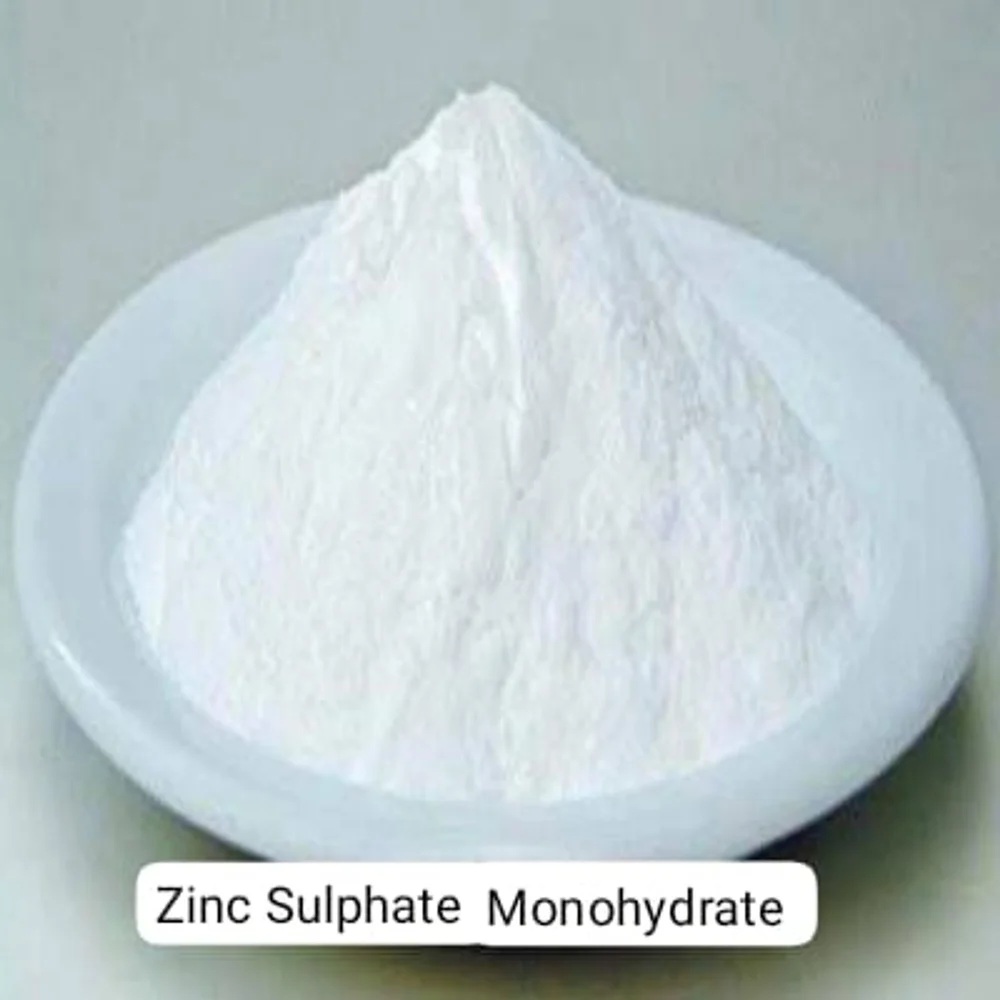
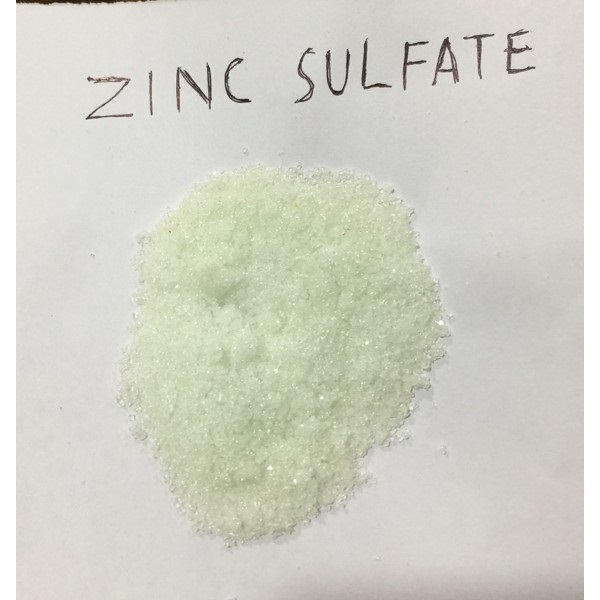
| Appearance | White crystalline powder or colorless crystals |
CHEMICAL STRUCTURE
Zinc Sulfate (ZnSO₄)
O
║
Zn²⁺ — S — O⁻²
║
O
Molecular Formula: ZnSO₄
SMILES: [Zn+2].[O-]S(=O)(=O)[O-]
InChI: InChI=1S/H2O4S.Zn/c1-5(2,3)4;/h(H2,1,2,3,4);/q;+2/p-2
Structure: Ionic compound composed of zinc ion (Zn²⁺) and sulfate ion (SO₄²⁻); tetrahedral zinc coordination.
SECTION 1: CHEMICAL IDENTITY AND DESCRIPTION
| Parameter | Information |
|---|---|
| Product Name | Zinc Sulfate |
| Chemical Name (IUPAC) | Zinc Sulfate |
| Synonyms (Turkish) | Çinko Vitriyol, Beyaz Kezzap, Sülfürik Asit Çinko Tuzu |
| Synonyms (English) | Zinc Sulfate, Zinc Vitriol, White Vitriol, Zinc(II) Sulfate |
| CAS Number (Anhydrous) | 7733-02-0 |
| EC Number (EINECS) | 231-793-3 |
| Molecular Formula | ZnSO₄ |
| Molecular Weight | 161.47 g/mol (anhydrous) |
| Chemical Class | Inorganic compound; Metal sulfate salt |
| Physical State (20°C) | Solid (crystalline powder or crystals) |
| Odor | Odorless |
| Color | White to colorless |
| Taste | Astringent, metallic taste (experimental; do not ingest) |
SECTION 2: PHYSICAL AND CHEMICAL PROPERTIES
| Property | Value | Test Method / Note |
|---|---|---|
| Appearance | White to colorless crystalline powder | Visual |
| Odor | Odorless | Olfactometric |
| Molecular Weight | 161.47 g/mol (anhydrous) | Calculated |
| Density (20°C) | ~3.8 g/cm³ (anhydrous) | ASTM D4052 |
| Melting Point | ~680°C (decomposes) | DSC |
| Boiling Point | Decomposes | - |
| Solubility in Water (20°C) | ~101 g/100 mL (anhydrous) | General Method |
| Solubility in Alcohol | Insoluble | General Method |
| pH (5% Solution) | 4.0 – 6.0 (slightly acidic) | pH Meter |
| Decomposition | Decomposes to ZnO and SO₃/SO₂ at high temperatures | - |
| Crystal System | Orthorhombic / Hexagonal (depending on hydrate) | XRD |
| Hygroscopicity | High (anhydrous form); Hydrates are less sensitive | - |
| Thermal Stability | Anhydrous form is stable up to high temperatures | - |
| Ionization in Water | Fully dissociates into Zn²⁺ and SO₄²⁻ ions | - |
| Hydrolysis | Slightly acidic solution (due to Zn²⁺ hydrolysis) | - |
SECTION 3: ZINC SULFATE FORMS
| Form | Formula | CAS Number | Molecular Weight | Zn Content | Appearance |
|---|---|---|---|---|---|
| Anhydrous | ZnSO₄ | 7733-02-0 | 161.47 g/mol | ~40.5% | White powder |
| Monohydrate | ZnSO₄·H₂O | 7446-19-7 | 179.47 g/mol | ~36.5% | White crystalline powder |
| Hexahydrate | ZnSO₄·6H₂O | 13986-24-8 | 269.56 g/mol | ~24.3% | White crystals |
| Heptahydrate | ZnSO₄·7H₂O | 7446-20-0 | 287.56 g/mol | ~22.7% | White crystals |
SECTION 4: CHEMICAL PROPERTIES AND REACTIVITY
| Parameter | Information |
|---|---|
| Chemical Character | Inorganic metal sulfate salt; Slightly acidic (due to hydrolysis); Good water solubility |
| Stability | Stable under normal conditions; Decomposes at high temperatures; Hygroscopic (anhydrous form) |
| Reactivity | Reacts with bases to form zinc hydroxide (Zn(OH)₂) or zincates; Precipitates ZnS with sulfides; Not oxidizing/reducing |
| Incompatible Materials | Strong bases (precipitation), strong oxidizing agents, magnesium, aluminum (at high temperatures) |
| Polymerization | Does not polymerize |
| Decomposition Products (Heating) | ZnO, SO₂, SO₃ (at high temperatures) |
| Base Reaction | ZnSO₄ + 2NaOH → Zn(OH)₂↓ + Na₂SO₄ (excess alkali forms zincate) |
| Sulfide Precipitation | ZnSO₄ + Na₂S → ZnS↓ + Na₂SO₄ (white zinc sulfide precipitate) |
| Hydrolysis | Zn²⁺ + 2H₂O ⇌ Zn(OH)⁺ + H₃O⁺ (slightly acidic pH) |
| Complex Formation | Forms zinc complexes with ammonia and other ligands (e.g., [Zn(NH₃)₄]²⁺) |
| Crystallization | Different hydrate forms crystallize from aqueous solution (depending on temperature and concentration) |
SECTION 5: ZINC COMPOUNDS COMPARISON
| Property | Zinc Sulfate (ZnSO₄) | Zinc Oxide (ZnO) | Zinc Chloride (ZnCl₂) | Zinc Nitrate (Zn(NO₃)₂) |
|---|---|---|---|---|
| CAS Number | 7733-02-0 | 1314-13-2 | 7646-85-7 | 10196-18-6 |
| Formula | ZnSO₄ | ZnO | ZnCl₂ | Zn(NO₃)₂ |
| Molecular Weight | 161.47 | 81.38 | 136.30 | 189.40 |
| Appearance | White powder | White powder | White crystalline powder | Colorless crystals |
| Solubility in Water | Very soluble | Insoluble | Very soluble | Very soluble |
| pH in Water | Slightly acidic (4-6) | Neutral (7-8) | Acidic (3-4) | Acidic (~4) |
| Primary Use | Fertilizer, feed additive | Rubber, cosmetics | Soldering, synthesis | Laboratory, catalyst |
SECTION 6: PRODUCTION METHODS
Method 1: Dissolution of Zinc Metal in Sulfuric Acid
Reaction: Zn + H₂SO₄ (dilute) → ZnSO₄ + H₂↑
Description: Metallic zinc (scrap or pure) is dissolved in dilute sulfuric acid; Hydrogen gas is released; The solution is filtered, evaporated, and crystallized to obtain ZnSO₄·7H₂O (or other hydrates). Low-cost and widely used method.
Method 2: Neutralization of Zinc Oxide or Zinc Hydroxide with Acid
Reaction: ZnO + H₂SO₄ → ZnSO₄ + H₂O
Description: Zinc oxide or zinc hydroxide is neutralized with sulfuric acid; By-products from sodium stannate production or pure ZnO can be used; The solution is evaporated and crystallized. Provides high-purity product.
Method 3: Roasting and Leaching of Zinc Ore
Process: ZnS (sphalerite) → ZnO (roasting) → ZnSO₄ (sulfuric acid leaching)
Description: Zinc sulfide ore (sphalerite) is roasted in air to convert it to ZnO; ZnO is leached with sulfuric acid to obtain ZnSO₄ solution; Purification and crystallization yield the product. Used on an industrial scale.
Method 4: Recovery from Zinc Wastes
Process: Zinc-containing wastes + H₂SO₄ → ZnSO₄ solution
Description: Galvanizing wastes, zinc ash, or other zinc-containing wastes are leached with sulfuric acid; The solution is purified and crystallized. An environmentally and economically favorable method.
SECTION 7: FUNCTIONAL PROPERTIES AND MECHANISM OF ACTION
| Property | Description |
|---|---|
| Micronutrient Fertilizer (Agriculture) | Provides bioavailable zinc to plants; Essential for chlorophyll synthesis and enzyme activation; Corrects zinc deficiency (chlorosis, stunted growth); Suitable for soil and foliar applications |
| Feed Additive (Animal Nutrition) | Provides essential zinc to animals; Required for reproduction, immune function, and hoof health; Supports milk production and feed conversion ratio |
| Flotation Reagent (Mining) | Used as a pH regulator and activator in froth flotation for mineral processing; Acts as an activator for sulfide minerals (especially sphalerite) flotation |
| Zinc Plating Electrolyte | Used as a zinc ion source in electroplating baths; Produces bright, smooth zinc coatings; Used in acidic or alkaline baths |
| Coagulation Aid (Water Treatment) | Acts as a coagulation aid for suspended solids; Used as a precipitant for phosphate removal; Reduces turbidity |
| Wood Preservative | Protects wood against termite and fungal attack through chromium-zinc sulfate impregnation; Makes wood resistant to decay |
| Catalyst | Used as a catalyst in organic synthesis reactions; Serves as an acid catalyst in various chemical transformations |
| Pharmaceutical Active Ingredient | Monohydrate form used as an active ingredient in some medications; Found in oral zinc supplements (capsules/tablets); Supports wound healing and tissue repair |
SECTION 8: MAIN APPLICATION AREAS
| Industry / Application | Function | Typical Use |
|---|---|---|
| Agriculture | Micronutrient fertilizer | Soil and foliar applications; Correcting zinc deficiency; Component of NPK fertilizers |
| Animal Feed | Mineral supplement | Feed additive; Reproduction, hoof health, immunity, milk production |
| Chemical Industry | Raw material | Zinc compound production; Flotation reagent; Wood pulp bleaching |
| Electroplating | Electrolyte | Zinc plating baths; Bright coatings |
| Pharmaceutical Industry | Active ingredient | Zinc supplements; Metabolic support; Wound healing |
| Wood Preservation | Impregnation agent | Termite and fungus prevention; Wood processing |
| Water Treatment | Coagulation aid | Suspended solids removal; Phosphate precipitation; Corrosion inhibitor |
| Food Supplements | Fortification | Dietary supplements; Modified with zinc gluconate |
| Veterinary Medicine | Treatment agent | Foot rot treatment (with iodine/quaternary ammonium) |
| Textile | Printing auxiliary | Textile printing agents; Color fixing agent |
SECTION 9: QUALITY SPECIFICATIONS
| Parameter | Fertilizer Grade | Feed Grade | Technical Grade | High Purity | Test Method |
|---|---|---|---|---|---|
| Appearance | White powder | White powder | White powder | White powder | Visual |
| Assay (ZnSO₄) | ≥ 98.0% | ≥ 98.0% | ≥ 99.0% | ≥ 99.63% | Titrimetric |
| Zinc (Zn) Content | ≥ 35.0% | ≥ 35.0% | ≥ 35.5% | ≥ 36.0% | AAS / ICP |
| Chloride (Cl) | ≤ 0.05% | ≤ 0.05% | ≤ 0.02% | ≤ 0.01% | Titrimetric |
| Iron (Fe) | ≤ 0.01% | ≤ 0.01% | ≤ 0.005% | ≤ 0.002% | AAS / ICP |
| Lead (Pb) | ≤ 0.005% | ≤ 0.002% | ≤ 0.001% | ≤ 0.0005% | AAS / ICP |
| Arsenic (As) | ≤ 0.0005% | ≤ 0.0005% | ≤ 0.0002% | ≤ 0.0001% | AAS / ICP |
| Cadmium (Cd) | ≤ 0.001% | ≤ 0.001% | ≤ 0.0005% | ≤ 0.0002% | AAS / ICP |
| Mercury (Hg) | – | ≤ 0.0001% | – | – | AAS / ICP |
| Water Insoluble | ≤ 0.05% | ≤ 0.05% | ≤ 0.02% | ≤ 0.01% | Gravimetric |
| pH (5% Solution) | 4.0 – 6.0 | 4.0 – 6.0 | 4.0 – 6.0 | 4.0 – 6.0 | pH Meter |
| Particle Size | Customer requirement | Customer requirement | Customer requirement | Customer requirement | Sieve / Laser |
SECTION 10: TOXICOLOGICAL PROFILE
| Parameter | Value |
|---|---|
| Acute Oral Toxicity (LD50, Rat) | ~ 2,200 mg/kg (moderate toxicity) |
| Acute Dermal Toxicity | May cause skin irritation |
| Acute Inhalation Toxicity | May cause respiratory tract irritation |
| Skin Irritation | Irritating; Causes skin irritation (H315) |
| Eye Irritation | Causes serious eye damage (H318) |
| Respiratory Irritation | May cause respiratory irritation |
| Chronic Toxicity | High doses may cause gastric irritation and nausea; Limited data |
| Carcinogenicity | Not classified as carcinogenic |
| Mutagenicity | Not classified as mutagenic |
| Reproductive Toxicity | Not classified as reproductive toxic (essential mineral) |
| Target Organs | Eyes, skin, respiratory system, gastrointestinal system |
| Occupational Exposure Limit (8h TWA) | ACGIH TLV: 5 mg/m³ (respirable dust); 10 mg/m³ (total dust) |
| Special Toxicity Note | Harmful if swallowed (H302); Very toxic to aquatic life with long-lasting effects (H410); Risk of permanent eye damage; Avoid inhalation and eye/skin contact |
SECTION 11: GHS CLASSIFICATION AND LABELING
GHS Classification (in accordance with CLP and UN GHS):
| Hazard Class | Category | H-Statement |
|---|---|---|
| Acute Toxicity (Oral) | Category 4 | H302 |
| Skin Irritation | Category 2 | H315 |
| Serious Eye Damage | Category 1 | H318 |
| Chronic Aquatic Toxicity | Category 1 | H410 |
Signal Word: WARNING
Hazard Pictograms: GHS05 (Corrosion), GHS07 (Exclamation Mark), GHS09 (Environment)
Hazard Statements (H-Codes):
| Code | Statement |
|---|---|
| H302 | Harmful if swallowed |
| H315 | Causes skin irritation |
| H318 | Causes serious eye damage |
| H410 | Very toxic to aquatic life with long-lasting effects |
NFPA 704 Hazard Classification:
| Health | Flammability | Reactivity | Special |
|---|---|---|---|
| 2 | 0 | 0 | - |
| (Moderate health hazard) | (Will not burn) | (Stable) | (None) |
SECTION 12: PRECAUTIONARY STATEMENTS (P-CODES)
| Code | Statement |
|---|---|
| P261 | Avoid breathing dust/fume/gas/mist/vapors/spray |
| P264 | Wash hands thoroughly after handling |
| P270 | Do not eat, drink or smoke when using this product |
| P271 | Use only outdoors or in a well-ventilated area |
| P273 | Avoid release to the environment |
| P280 | Wear protective gloves/protective clothing/eye protection/face protection |
| P301+P312 | IF SWALLOWED: Call a POISON CENTER/doctor if you feel unwell |
| P302+P352 | IF ON SKIN: Wash with plenty of soap and water |
| P305+P351+P338 | IF IN EYES: Rinse cautiously with water for several minutes. Remove contact lenses if present and continue rinsing |
| P310 | Immediately call a POISON CENTER/doctor |
| P332+P313 | If skin irritation occurs: Get medical advice/attention |
| P362+P364 | Take off contaminated clothing and wash it before reuse |
| P403+P233 | Store in a well-ventilated place. Keep container tightly closed |
| P501 | Dispose of contents/container in accordance with local/regional/national/international regulations |
SECTION 13: FIRST AID MEASURES
| Exposure Route | Action to Take |
|---|---|
| Inhalation | Remove to fresh air immediately. Rest in a position comfortable for breathing. If respiratory irritation persists, seek medical attention. |
| Skin Contact | Remove contaminated clothing. Wash skin with plenty of soap and water for at least 15 minutes. If skin irritation occurs, get medical advice/attention. |
| Eye Contact | Rinse immediately with plenty of water for at least 15 minutes. Keep eyelids open. Remove contact lenses if present. Continue rinsing. Seek immediate medical attention (H318). |
| Ingestion | Rinse mouth with water. Do NOT induce vomiting (due to acidic nature). Drink plenty of water. Seek immediate medical attention. |
SECTION 14: FIREFIGHTING MEASURES
| Parameter | Information |
|---|---|
| Fire Hazard | Not flammable. Does not burn. |
| Hazards Arising from Fire | May decompose at high temperatures, releasing toxic zinc oxide fumes and SO₂/SO₃ gases |
| Suitable Extinguishing Media | Use extinguishing media suitable for surrounding fire. Water spray, CO₂, dry chemical powder, foam. |
| Unsuitable Extinguishing Media | None |
| Special Protective Equipment | Self-contained breathing apparatus (SCBA), full protective clothing (for surrounding fire). |
| Special Precautions | Prevent dust from entering sewers and waterways. |
SECTION 15: STORAGE AND SHELF LIFE
| Parameter | Information |
|---|---|
| Storage Conditions | Store in a cool, dry, well-ventilated area; PROTECT FROM MOISTURE (anhydrous form is highly hygroscopic). Keep away from incompatible materials. |
| Container Requirements | Tightly closed, moisture-resistant containers (HDPE, lined drums, plastic bags). |
| Materials to Protect From | Moisture, strong bases, strong oxidizing agents, magnesium/aluminum powders. |
| Shelf Life | 12-24 months (in unopened original packaging, under proper storage conditions). |
| Stability Note | Stable under normal conditions; Anhydrous form is highly hygroscopic; Hydrates are less sensitive; Does not react with acids. |
| Special Storage Requirements | Store separately from bases and oxidizing agents; Keep containers tightly closed to prevent moisture absorption; Store in a dry and well-ventilated area. |
SECTION 16: PACKAGING OPTIONS
| Packaging Type | Quantity | Material |
|---|---|---|
| Plastic Bag | 5 kg, 10 kg, 25 kg | PE bag (inner-lined, sealed) |
| Kraft Bag | 5 kg, 10 kg, 25 kg | PE-lined kraft paper bag |
| Plastic Drum | 25 kg, 50 kg | HDPE / Polypropylene |
| Fiber Drum | 25 kg, 50 kg | PE-lined fiberboard |
| Steel Drum | 100 kg, 200 kg | Corrosion-resistant lined steel |
| FIBC / Big Bag | 500 kg, 1000 kg | PE-lined, moisture-resistant PP woven bag |
| IBC Container | 1000 kg | Corrosion-resistant coated HDPE |
SECTION 17: TRANSPORT INFORMATION
| Parameter | Information |
|---|---|
| UN Number | UN 3077 (Environmentally hazardous substance) |
| Hazard Class | 9 (Miscellaneous dangerous goods) |
| Packing Group | III |
| ADR/RID | Class 9, PG III, UN 3077 |
| IMDG Code | Class 9, PG III, UN 3077, Marine Pollutant |
| IATA (Air) | Class 9, PG III, UN 3077 |
| Marine Pollutant | Yes |
| Transport Temperature | Ambient temperature; Protect from moisture. |
SECTION 18: REGULATORY STATUS
| Region / Authority | Status |
|---|---|
| European Union | REACH registered; Environmental hazard classification (H410) |
| USA (TSCA) | Listed (TSCA Inventory) |
| USA (EPA) | Approved as pesticide inert ingredient; Use in fertilizers and feed additives regulated |
| USA (FDA) | Approved as food additive (21 CFR - zinc fortification) |
| Turkey | Industrial chemical; Subject to KKDIK regulation; Use in fertilizers and feed additives regulated by Ministry of Agriculture |
| IARC | Group 3 (Not classifiable as carcinogenic to humans) |
| NTP | Not listed |
| OSHA | Not regulated as toxic or carcinogenic substance |
| California (Prop 65) | Not listed |
| EU Restrictions | Not restricted under REACH Annex XVII (some limitations may apply for specific applications) |
SECTION 19: OTHER NAMES AND SYNONYMS
| Type | Name |
|---|---|
| Turkish Names | Çinko Sülfat, Çinko Vitriyol, Beyaz Kezzap, Sülfürik Asit Çinko Tuzu |
| English Names | Zinc Sulfate, Zinc Vitriol, White Vitriol, Zinc(II) Sulfate, Sulfuric Acid Zinc Salt |
| Chemical Names | Zinc Sulfate; ZnSO₄; Sulfuric Acid Zinc Salt |
| CAS Number | 7733-02-0 (anhydrous) |
| EC Number | 231-793-3 |
| Molecular Formula | ZnSO₄ |
| HS Code | 2833.29 |
| EINECS Name | Zinc sulfate |
SECTION 20: SUMMARY TABLE
| Parameter | Value |
|---|---|
| Product | Zinc Sulfate (ZnSO₄) |
| CAS Number | 7733-02-0 (anhydrous) |
| Molecular Formula | ZnSO₄ |
| Molecular Weight | 161.47 g/mol (anhydrous) |
| Appearance | White to colorless crystalline powder |
| Density | ~3.8 g/cm³ |
| Solubility in Water | ~101 g/100 mL (anhydrous) |
| pH (5% Solution) | 4.0 – 6.0 |
| Primary Function | Micronutrient fertilizer, feed additive |
| Main Application Areas | Agriculture (fertilizer), animal nutrition, chemical industry, pharmaceuticals, water treatment, wood preservation, veterinary medicine |
| Shelf Life | 12-24 months |
| GHS Signal Word | WARNING |
| UN Number | UN 3077 (Environmentally hazardous) |
| Special Properties | Anhydrous form highly hygroscopic; Hydrate forms available; Slightly acidic; High water solubility |
SECTION 21: CRITICAL WARNINGS AND BEST PRACTICES
CRITICAL WARNINGS:
-
Harmful if swallowed (H302). Avoid ingestion. Do not eat, drink, or smoke while using.
-
Causes serious eye damage (H318). Wear eye protection (chemical splash goggles). In case of eye contact, rinse with plenty of water and seek immediate medical attention.
-
Causes skin irritation (H315). Avoid skin contact. Wear protective gloves.
-
Very toxic to aquatic life with long-lasting effects (H410). Avoid release to the environment. Do not discharge into sewers or waterways.
-
Anhydrous form is highly hygroscopic. Store in tightly closed, moisture-resistant containers. Hydrate forms are less sensitive.
-
Acidic in nature (pH 4-6). Slightly acidic; may be corrosive to metals. Does not react with acids but neutralizes with bases.
-
Incompatibilities: Strong bases (precipitates zinc hydroxide), strong oxidizing agents, magnesium/aluminum powders (at high temperatures).
-
Hygiene Requirement: Wash hands thoroughly after handling. Avoid dust formation.
BEST PRACTICE RECOMMENDATIONS:
Agriculture (Micronutrient Fertilizer): Use to correct zinc deficiency through soil or foliar application; Soil application (fertilization): 5-10 kg/da (depending on zinc deficiency); Foliar application: 0.1-0.5% ZnSO₄ solution (pH 5.5-6.5); Can be mixed with NPK fertilizers; Used as raw material for chelated zinc (EDTA-Zn) production.
Animal Feed Additive: Use as an essential zinc source in animal nutrition; Feed additive dosage (varies by live weight): Poultry: 50-100 mg/kg, Swine: 100-150 mg/kg, Cattle: 100-300 mg/kg; Critical for reproduction, hoof health, immunity, and milk production; Veterinary-approved feed additive must be used.
Chemical Industry: Use as an activator in flotation processes (sphalerite flotation); Raw material for zinc compound production; Wood pulp bleaching processes; Used as a catalyst in organic synthesis.
Electroplating: Use as an electrolyte in acidic zinc plating baths; Bath composition: ZnSO₄ (200-300 g/L), pH 4.5-5.5; Current density 1-5 A/dm²; Organic additives added for bright coatings.
Water Treatment: Use as a coagulation aid; Accelerates precipitation of suspended solids; For phosphate removal (precipitation of Zn²⁺ with PO₄³⁻); Effective in pH 7-8 range; Can be used in cooling water as corrosion inhibitor.
Wood Preservation: Use chromium-zinc sulfate impregnation (CCB salts) to protect wood against termites and fungi; Prepare wood impregnation solution (pressure impregnation); Used in wood processing industry.
Handling: Use in well-ventilated areas; Avoid dust formation; Wear protective gloves, safety goggles (chemical splash protection), and appropriate respiratory protection (N95/FFP2).
Personal Protective Equipment: Protective gloves (nitrile, neoprene, butyl), chemical splash goggles, protective clothing, NIOSH-approved N95 or higher dust mask (for respirable dust), local exhaust ventilation.
Hygiene: Wash hands thoroughly after handling; Do not eat, drink, or smoke while using; Remove contaminated clothing and wash before reuse.
Storage: Store in tightly closed, moisture-resistant containers (HDPE, lined drums, plastic bags) in dry conditions; Keep away from bases and oxidizing agents; Protect from moisture (critical for anhydrous form).
Spill Management: Avoid dust formation; Vacuum or wet-sweep (to prevent dust dispersion); Place in closed containers; Do not allow entry into drains or waterways (environmental hazard).
Disposal: Dispose of in accordance with local, regional, and national regulations; Zinc sulfate waste may be considered hazardous waste (environmental hazard); Recovery is possible; Do not discharge to sewers.
SPECIAL NOTE ON AGRICULTURAL APPLICATIONS:
Zinc sulfate is the most commonly used micronutrient fertilizer for correcting zinc deficiency:
-
Function: Provides bioavailable zinc to plants; Essential for chlorophyll synthesis, enzyme activation, protein synthesis, and hormone production.
-
Deficiency Symptoms: Chlorosis (yellowing of leaves), stunted growth, rosette leaf formation, yield loss.
-
Application Methods: Soil application (granular or powder), foliar spray (aqueous solution), seed coating, fertigation (drip irrigation).
-
Dosage (Soil): 5-10 kg/da (depending on zinc deficiency and soil type); More effective in acidic soils.
-
Dosage (Foliar): 0.1-0.5% ZnSO₄ solution (optimum absorption at pH 5.5-6.5); May be repeated every 10-14 days.
-
Advantages: Low cost, fast-acting, widely available.
-
Disadvantages: Zinc fixation (binding) in alkaline soils; Chelated zinc (EDTA-Zn) is more effective in alkaline soils.
SPECIAL NOTE ON ANIMAL FEED APPLICATIONS:
Zinc sulfate is used as an essential mineral supplement in animal nutrition:
-
Function: Required for growth, reproduction, immune function, hoof health, milk production, and feed conversion ratio.
-
Dosage (Feed Additive): Poultry: 50-100 mg/kg, Swine: 100-150 mg/kg, Cattle: 100-300 mg/kg (varies by live weight).
-
Form: Monohydrate or heptahydrate form is used (less hygroscopic).
-
Lactation (Dairy Cows): Supports milk production and calf health.
-
Hoof Health: Supports hoof integrity and reduces risk of foot rot.
-
Advantages: Approved feed additive, high bioavailability, low cost.
SPECIAL NOTE ON WATER TREATMENT APPLICATIONS:
Zinc sulfate is used as an auxiliary chemical in water treatment processes:
-
Coagulation Aid: Used with aluminum or iron salts to reduce turbidity; Accelerates precipitation of suspended solids.
-
Phosphate Removal: Zn²⁺ ions form insoluble zinc phosphate (Zn₃(PO₄)₂) with phosphate ions (PO₄³⁻); Used in wastewater treatment to prevent eutrophication.
-
pH Range: Effective in pH 7-8 range.
-
Corrosion Inhibitor: Used in cooling water formulations to prevent corrosion.
LEGAL DISCLAIMER:
The information provided in this document is based on our current knowledge and experience and is presented in good faith. However, as all conditions of use are beyond our control, it does not constitute a binding specification or warranty. This Technical Data Sheet is for informational purposes only. Users are responsible for testing the suitability for their own applications. For complete safety, storage, use, handling, waste, and regulatory compliance information, please refer to the official Safety Data Sheet (SDS/MSDS) provided by the manufacturer/supplier.