Ferrous Sulfate, Iron Sulfate Monohyrate, Ferrous Sulfate Monohyrate, 7720-78-7
IRON(II) SULFATE MONOHYDRATE
Ferrous Sulfate Monohydrate / Iron Sulfate Monohydrate
CAS Number: 7720-78-7
1. IDENTIFICATION
| Property |
Information |
| Chemical Name |
Iron(II) Sulfate Monohydrate |
| Common Names |
Ferrous Sulfate Monohydrate, Iron Sulfate Monohydrate, Ferro Sulfate, Iron(II) Sulfate |
| Chemical Formula (Anhydrous) |
FeSO₄ |
| Chemical Formula (Monohydrate) |
FeSO₄ · H₂O |
| Molecular Weight (Anhydrous) |
151.91 g/mol |
| Molecular Weight (Monohydrate) |
169.92 g/mol |
| CAS Number |
7720-78-7 |
| EC Number |
231-753-5 |
| E Number |
Not applicable (used as food supplement) |
| Appearance |
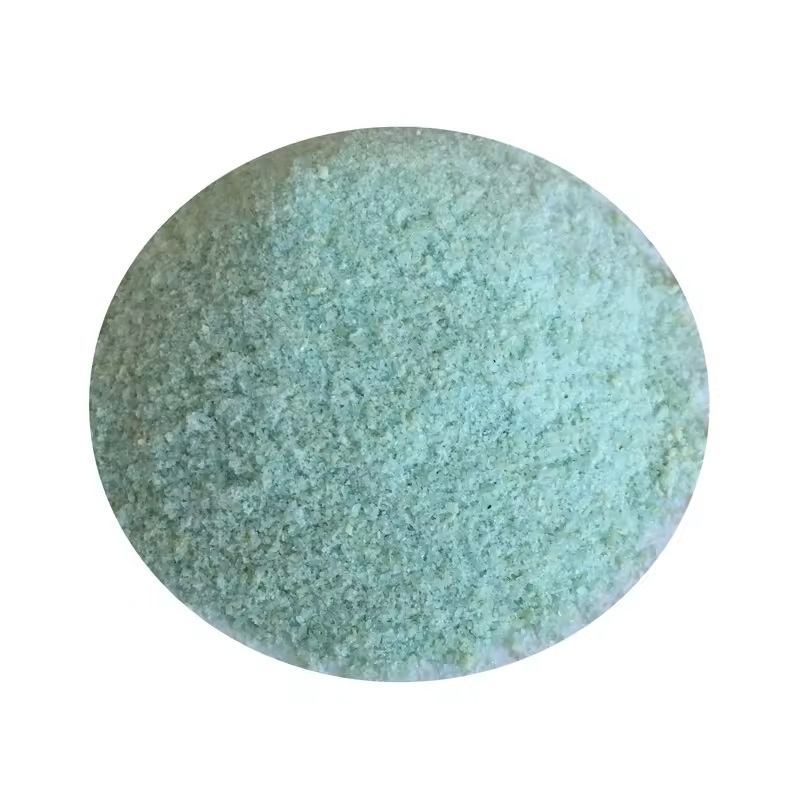
Greenish to yellow-brown crystals / powder |
Important Note on Iron Valence:
-
Iron(II) Sulfate (Ferrous Sulfate – Fe²⁺): This document. Greenish color. CAS 7720-78-7.
-
Iron(III) Sulfate (Ferric Sulfate – Fe³⁺): Yellow-brown color. Different compound with different properties and CAS (10028-22-5).
2. PHYSICAL PROPERTIES
| Property |
Value |
| Physical State (20°C) |
Solid (crystalline powder / crystals) |
| Color |
Greenish to yellow-brown (depending on hydration and oxidation state) |
| Melting Point |
64 °C (decomposes) |
| Density |
3.56 g/cm³ |
| pH (aqueous solution) |
Acidic (approx. 3-4 for 1% solution) |
| Solubility in Water (20°C) |
Good (approx. 260 g/L for heptahydrate; varies by hydrate form) |
| Hygroscopicity |
Hygroscopic (absorbs moisture from air) |
| Stability |
Surface may turn brown (ferric sulfate) when exposed to humid air |
3. CHEMICAL PROPERTIES
| Property |
Value |
| Molecular Formula (Anhydrous) |
FeSO₄ |
| Molecular Weight (Anhydrous) |
151.91 g/mol |
| Chemical Structure |
Iron(II) ion (Fe²⁺) with sulfate ion (SO₄²⁻) |
| Valence State |
+2 (Ferrous / Iron II) |
| Oxidation Tendency |
Easily oxidizes to Iron(III) (Fe³⁺) in air, forming brown Ferric Sulfate |
| Thermal Decomposition |
When heated, releases toxic sulfur oxide gases (SOₓ) |
Hydrate Forms Available:
| Form |
Formula |
CAS Number |
Color |
| Heptahydrate |
FeSO₄ · 7H₂O |
7782-63-0 |
Blue-green |
| Monohydrate |
FeSO₄ · H₂O |
7720-78-7 |
Beige/off-white to yellow-brown |
| Anhydrous |
FeSO₄ |
7720-78-7 (anhydrous also shares CAS) |
White to gray |
Oxidation Reaction:
text
4 FeSO₄ + O₂ + 2 H₂O → 4 FeOHSO₄ (Brown Ferric compounds)
Thermal Decomposition:
text
FeSO₄ + Heat → Fe₂O₃ + SO₂↑ + SO₃↑
4. CHARACTERISTICS & REACTIVITY
| Parameter |
Information |
| Reducing Agent |
Ferrous (Fe²⁺) form acts as a reducing agent |
| Oxidation Sensitivity |
Easily oxidizes to ferric (Fe³⁺) in moist air; surface turns brown |
| Acidic Nature |
Forms acidic aqueous solutions |
| Hygroscopic |
Absorbs moisture from air |
| Toxic Gas Release |
When heated, releases toxic sulfur oxide (SO₂, SO₃) gases |
| Incompatible Materials |
Strong oxidizing agents, alkalis, carbonates |
5. APPLICATIONS
5.1. Cement Industry
| Application |
Function |
| Cement Production |
Added to cement to provide cost advantage and improve strength |
| Cost Efficiency |
Low-cost additive with high strength improvement |
| Chromium Reduction |
FeSO₄·7H₂O is used to reduce high chromium (Cr⁶⁺ to Cr³⁺) in cement – has higher reducing capacity than Sodium Metabisulfite |
5.2. Agriculture – Soil Correction & Fertilizers
| Application |
Function |
| Chlorosis Treatment |
Corrects iron deficiency (chlorosis) in plants |
| pH Reduction in Calcareous Soils |
Lowers high pH in calcareous soils, making iron available to plants |
| Iron Fertilizer |
Used in agricultural formulations to provide essential iron for plant growth |
| Chlorophyll Synthesis |
Iron is essential for chlorophyll production; deficiency reduces photosynthesis |
Mechanism:
-
Iron is essential for chlorophyll synthesis in plant cells.
-
High pH in calcareous soils blocks iron uptake.
-
Iron(II) sulfate lowers soil pH and provides bioavailable iron.
5.3. Agriculture – Moss & Weed Control
| Application |
Function |
| Moss Inhibition |
Used to inhibit and control moss growth |
| Lawn Care |
Prevents moss spread in lawns and turf |
| Weed Control |
Used as herbicide for certain weeds (lower dosage than agricultural iron sulfate) |
5.4. Agriculture – Lawn Winter Hardening
| Application |
Function |
| Winter Protection |
Used to strengthen grass against freezing temperatures |
| Greening Effect |
Provides greener appearance during winter months |
| Frost Resistance |
Makes grass harder and more resilient to frost |
5.5. Agriculture – Fruit & Vegetable Color Protection
| Application |
Function |
| Organic Acid Control |
Prevents color deterioration caused by organic acids in fruits and vegetables |
| Color Stabilization |
Iron sulfate-based fertilizers maintain product color |
| Quality Improvement |
Improves visual quality of produce |
5.6. Agriculture – Legume Color Protection
| Application |
Function |
| Oxidation Prevention |
Prevents darkening of legumes due to oxidation in alkaline conditions |
| Reduction Property |
Uses reducing properties of iron sulfate for color preservation |
| Color Protection |
Maintains appealing color of legume products |
5.7. Mining Industry
| Application |
Function |
| Equipment Cleaning |
Used for removing rust and dirt from mining equipment |
| Efficiency Improvement |
Increases efficiency of mining equipment |
| Equipment Lifespan |
Extends operational life of mining machinery |
5.8. Chemical Industry
| Application |
Function |
| Chemical Production |
Used in production of various chemicals |
| Sulfur Dioxide Production |
Raw material for SO₂ production |
| Sulfuric Acid Production |
Used in sulfuric acid manufacturing processes |
5.9. Nutritional Supplements & Pharmaceuticals
| Application |
Function |
| Iron Supplement |
Anhydrous Ferric Sulfate used as iron source in non-pharmaceutical nutritional supplements |
| Dietary Supplements |
Iron fortification in food supplements |
| Anemia Treatment |
Used in iron deficiency anemia formulations (usually heptahydrate form) |
5.10. Glycolic Acid Fertilizers
| Application |
Function |
| Plant Nutrition |
Used as very effective plant nutrient in glycolic acid-based fertilizers |
| Iron Supply |
Primary feature is meeting plant iron requirements |
| Chelated Fertilizers |
Enhances nutrient availability when combined with organic acids |
5.11. Other Applications
| Application |
Function |
| Wastewater Treatment |
Used as coagulant and phosphate remover |
| Animal Feed |
Iron supplement in animal nutrition |
| Ink Manufacturing |
Used in production of iron gall ink |
| Water Treatment |
For hydrogen sulfide removal |
6. COMPARISON – IRON(II) vs IRON(III) SULFATE
| Property |
Iron(II) Sulfate (Ferrous) |
Iron(III) Sulfate (Ferric) |
| Formula |
FeSO₄ |
Fe₂(SO₄)₃ |
| Iron Valence |
Fe²⁺ (Ferrous) |
Fe³⁺ (Ferric) |
| Appearance |
Greenish / blue-green |
Yellow-brown |
| CAS Number |
7720-78-7 (monohydrate) |
10028-22-5 |
| Reducing/Oxidizing |
Reducing agent |
Oxidizing agent |
| Main Use |
Fertilizer, cement, supplements |
Water treatment coagulant |
7. FORMULATION EXAMPLES (Typical Usage Levels)
| Application Area |
Typical Concentration |
Notes |
| Soil Application (Agricultural) |
50 – 200 kg/hectare |
Depending on soil pH and iron deficiency |
| Foliar Spray |
0.5 – 2% solution |
For quick iron correction |
| Cement Additive |
0.5 – 3% of cement weight |
For chromium reduction and strength |
| Moss Control |
5 – 10% solution |
For lawn application |
| Fertilizer Formulation |
5 – 15% of formulation |
As iron source |
| Industrial Water Treatment |
10 – 100 mg/L |
As coagulant or reducing agent |
8. STORAGE & HANDLING
| Parameter |
Information |
| Storage Conditions |
Cool, dry, well-ventilated area |
| Container Requirements |
Tightly closed, moisture-proof containers (HDPE, lined steel) |
| Protect From |
Moisture, humidity, strong oxidizing agents |
| Shelf Life |
12-24 months when stored properly in unopened packaging (monohydrate more stable than heptahydrate) |
| Hygroscopicity |
Product is hygroscopic; absorbs moisture from air |
| Oxidation Prevention |
Store away from air/moisture to prevent oxidation to ferric form (brown discoloration) |
| Incompatible Materials |
Strong oxidizing agents, alkalis, carbonates, cyanides |
| Packaging Types |
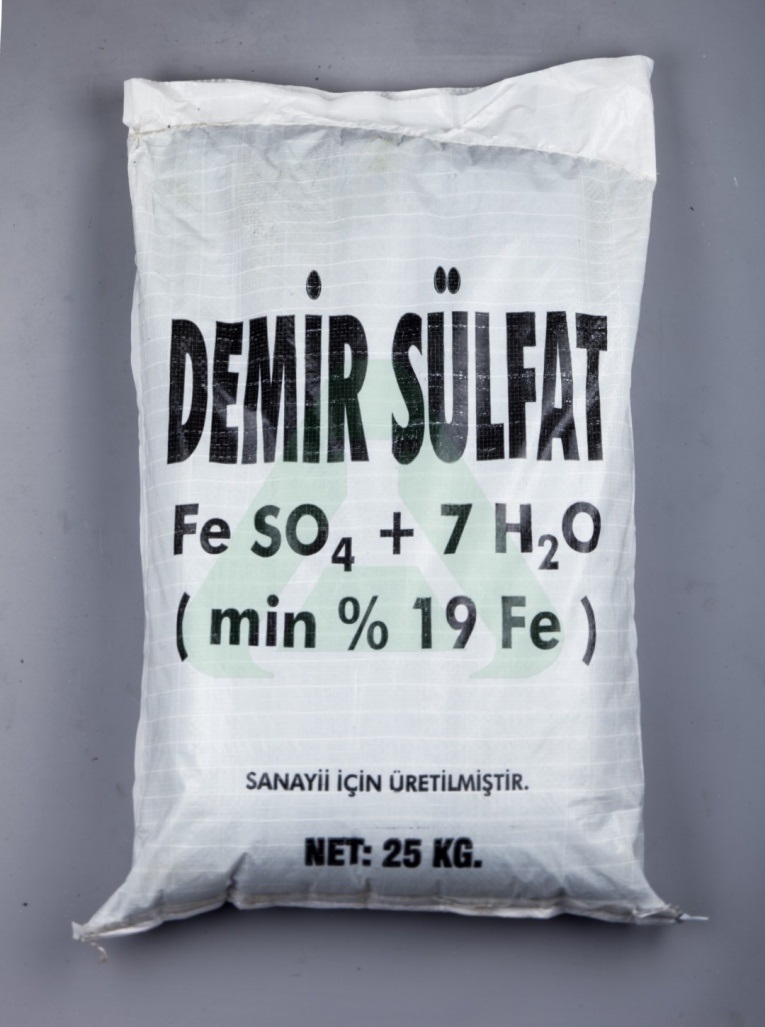
25 kg bags (multi-layer paper/PP), 50 kg drums, FIBC (big bags) |
9. SAFETY & HEALTH INFORMATION
GHS Classification
| Hazard Class |
Category |
| Acute Toxicity (Oral) |
Category 4 (Harmful if swallowed) |
| Skin Irritation |
Category 2 (Causes skin irritation) |
| Eye Irritation |
Category 2 (Causes serious eye irritation) |
| Specific Target Organ Toxicity (Single exposure) |
Category 3 (Respiratory irritation) |
Hazard Statements (H-Codes)
| Code |
Statement |
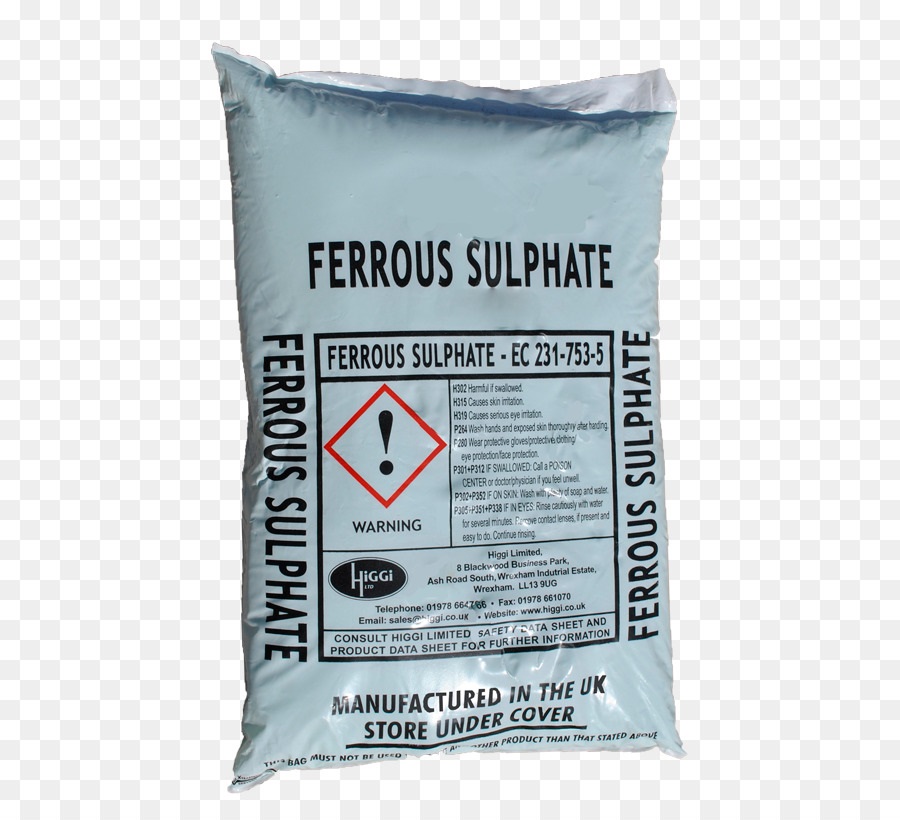
| H302 |
Harmful if swallowed |
| H315 |
Causes skin irritation |
| H319 |
Causes serious eye irritation |
| H335 |
May cause respiratory irritation |
Precautionary Statements (P-Codes)
| Code |
Statement |
| P261 |
Avoid breathing dust |
| P264 |
Wash thoroughly after handling |
| P270 |
Do not eat, drink or smoke when using this product |
| P280 |
Wear protective gloves, protective clothing, eye protection |
| P301+P312 |
IF SWALLOWED: Call a POISON CENTER if you feel unwell |
| P305+P351+P338 |
IF IN EYES: Rinse cautiously with water for several minutes |
First Aid Measures
| Exposure Route |
Action |
| Inhalation |
Remove to fresh air. Seek medical attention if respiratory irritation occurs. |
| Skin Contact |
Wash with plenty of water for at least 15 minutes. Remove contaminated clothing. |
| Eye Contact |
Rinse immediately with plenty of water for at least 15 minutes. Seek medical attention. |
| Ingestion |
Rinse mouth. Drink plenty of water. Do NOT induce vomiting. Seek medical attention. |
NFPA 704
| Health (Blue) |
Fire (Red) |
Reactivity (Yellow) |
Special (White) |
| 2 |
0 |
1 |
None |
10. ENVIRONMENTAL INFORMATION
| Parameter |
Information |
| Aquatic Toxicity |
Toxic to aquatic life; avoid release to waterways |
| Persistence |
Iron precipitates as iron hydroxide/oxide |
| Bioaccumulation |
Not expected |
| Soil Effects |
Can acidify soil; use according to recommendations |
| Waste Disposal |
Dispose according to local regulations. Do not discharge into natural water bodies. |
11. REGULATORY INFORMATION
| Region |
Status |
| EU |
Registered under REACH (EC) 1907/2006 |
| USA (FDA) |
Generally recognized as safe (GRAS) for iron supplementation at appropriate levels |
| Turkey |
Compliant with local chemical and agricultural regulations |
| Transport Classification |
Not classified as dangerous goods for transport (may vary by quantity) |
| Hazard Class |
Not regulated (but may be classified as environmentally hazardous) |
12. FORMS & HYDRATES COMPARISON
| Property |
Anhydrous |
Monohydrate |
Heptahydrate |
| Formula |
FeSO₄ |
FeSO₄ · H₂O |
FeSO₄ · 7H₂O |
| Iron Content |
~36.8% Fe |
~32.9% Fe |
~20.1% Fe |
| Appearance |
White to gray |
Beige/off-white to yellow-brown |
Blue-green crystals |
| Stability |
Stable |
More stable than heptahydrate |
Efflorescent, less stable |
| Main Use |
Specialized applications |
Agriculture, cement, animal feed |
Water treatment, supplements |
13. SUMMARY
Iron(II) Sulfate Monohydrate (Ferrous Sulfate Monohydrate, FeSO₄·H₂O, CAS 7720-78-7) is an iron compound with Fe²⁺ (ferrous) valence state, appearing as greenish to yellow-brown crystalline powder.
Key Features:
| Feature |
Description |
| Iron Source |
Provides bioavailable iron (Fe²⁺) for plants and animals |
| Reducing Agent |
Acts as a reducing agent; easily oxidizes to Fe³⁺ |
| Acidic |
Forms acidic solutions in water |
| Hygroscopic |
Absorbs moisture; requires dry storage |
| Monohydrate Advantage |
More stable and less hygroscopic than heptahydrate form |
Main Application Areas:
| Sector |
Applications |
| Agriculture |
Iron fertilizer, chlorosis correction, soil pH reduction, moss/weed control, legume color protection |
| Cement Industry |
Chromium (Cr⁶⁺) reduction, strength improvement, cost efficiency |
| Mining |
Equipment rust and dirt removal |
| Chemical Industry |
SO₂, H₂SO₄ production, chemical synthesis |
| Nutrition |
Iron supplements, dietary fortification |
| Water Treatment |
Coagulant, phosphate removal |
14. IMPORTANT NOTES
-
Valence State: This document covers Iron(II) Sulfate (Ferrous – Fe²⁺) . Do not confuse with Iron(III) Sulfate (Ferric – Fe³⁺) – they have different properties and CAS numbers.
-
Oxidation: Iron(II) sulfate easily oxidizes to brown Iron(III) compounds when exposed to moist air. Monohydrate form is more stable than heptahydrate.
-
Staining: Iron sulfate can cause rust-colored stains on surfaces. Clean spills immediately.
-
Agriculture Application: Always conduct soil testing before application. Over-application can cause iron toxicity and soil acidification.
-
Safety: When heated, iron sulfate decomposes to release toxic sulfur oxide gases (SO₂, SO₃). Avoid excessive heating.
-
Storage: Due to hygroscopic nature and oxidation tendency, store in tightly closed, moisture-proof containers in a dry environment.
Important Disclaimer: This Technical Data Sheet (TDS) is for informational purposes only. For complete safety, handling, storage, and regulatory compliance information, always refer to the official Safety Data Sheet (SDS) provided by the manufacturer/supplier.