We unleash your business potential by maximize the business innovation.
Send EmailSodium Thiosulfate, Disodium Thiosulfate, Hyposulfite, Sodium Hyposulfite, Sodium Subsulfite, 7772-98-7
SODIUM THIOSULFATE
CAS Number: 7772-98-7
EC Number (EINECS): 231-867-5
Molecular Formula: Na₂S₂O₃
Molecular Weight: 158.11 g/mol
Chemical Class: Inorganic thiosulfate salt
SECTION 1: PRODUCT IDENTIFICATION AND CHEMICAL IDENTITY
| Parameter | Description |
|---|---|
| Chemical Name (IUPAC) | Sodium thiosulfate |
| Other Names | Disodium thiosulfate, Hyposulfite, Sodium hyposulfite, Sodium subsulfite, Thiosulfuric acid disodium salt, Hypo, Antichlor |
| CAS Number | 7772-98-7 |
| EC Number (EINECS) | 231-867-5 |
| Molecular Formula | Na₂S₂O₃ |
| Molecular Weight | 158.11 g/mol |
| Chemical Class | Inorganic thiosulfate salt |
| SMILES | [Na+].[Na+].[O-]S([O-])(=O)=S |
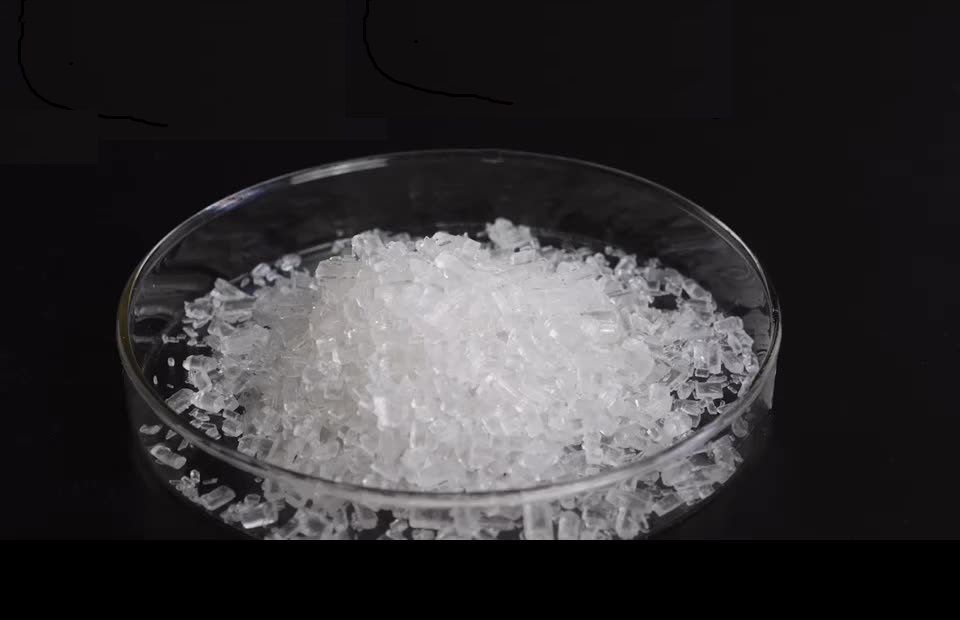
| Appearance | Colorless crystals or crystalline powder |
| Odor | Odorless |
| Physical State | Solid (crystals, powder, or lumps) |
| Forms | Anhydrous or pentahydrate (Na₂S₂O₃·5H₂O) |
SECTION 2: PHYSICAL AND CHEMICAL PROPERTIES
| Property | Value / Range |
|---|---|
| Molecular Formula | Na₂S₂O₃ |
| Molecular Weight | 158.11 g/mol |
| Appearance | Colorless crystals or crystalline powder |
| Odor | Odorless |
| Density | 1.667 g/cm³ |
| pH (50 g/L, 20°C) | 6.0 - 8.5 |
| Solubility in Water | Soluble |
| Solubility in Alcohol | Practically insoluble |
| Thermal Decomposition | Becomes anhydrous when heated above 100°C |
| Stability | Stable, environmentally friendly, inexpensive |
SECTION 3: SOLUBILITY PROFILE
| Solvent | Solubility | Condition |
|---|---|---|
| Water | Soluble | All temperatures |
| Alcohol (Ethanol) | Practically insoluble | Room temperature |
| Acetone | Insoluble | - |
| Ether | Insoluble | - |
Critical Note: Sodium thiosulfate is readily soluble in water but practically insoluble in alcohol and most organic solvents. Its aqueous solution has a slightly alkaline to neutral pH range (6.0-8.5).
SECTION 4: CHEMICAL PROPERTIES AND REACTIONS
| Property | Description |
|---|---|
| Chemical Class | Inorganic thiosulfate salt |
| Functional Group | Thiosulfate (S₂O₃²⁻) |
| Reducing Properties | General-purpose reducing agent |
| Sulfur Source | Useful sulfur source |
| Reaction with Iodine | Reduces iodine: 2S₂O₃²⁻ + I₂ → S₄O₆²⁻ + 2I⁻ |
| Reaction with Chlorine | Neutralizes chlorine (used as antichlor) |
| Reaction with Acid | Releases sulfur dioxide and sulfur with dilute acids |
| Reaction with Silver Salts | Forms silver thiosulfate complex (used in photography as fixer) |
4.1. Key Reactions
| Reaction Type | Description |
|---|---|
| Reduction | Reduces iodine, chlorine, and other oxidizers |
| Complex Formation | Forms complexes with silver, gold, and other metal ions |
| Acid Decomposition | Releases sulfur dioxide and sulfur with dilute acids |
| Alkylation | Forms Bunte salts with alkyl halides |
SECTION 5: PURITY AND QUALITY SPECIFICATIONS
| Parameter | Reagent Grade | High Purity |
|---|---|---|
| Purity | ≥ 98.0% | ≥ 99.0% |
| Appearance | Colorless crystals | Colorless crystals |
| pH (50 g/L, 20°C) | 6.0 - 8.5 | 6.0 - 8.5 |
| Sulfide (S²⁻) | ≤ 50 mg/kg | - |
| Ca | ≤ 50 mg/kg | - |
| Fe | ≤ 50 mg/kg | - |
| Pb | ≤ 50 mg/kg | - |
| K | ≤ 500 mg/kg | - |
SECTION 6: MAJOR APPLICATIONS AND END-USES
6.1. Photography (Traditional)
| Application | Function | Suitability |
|---|---|---|
| Fixer | Dissolves silver halides to fix the image | High |
| Silver Recovery | Recovers silver from used fixer baths | High |
6.2. Medical and Healthcare
| Application | Function | Suitability |
|---|---|---|
| Cyanide Poisoning | Detoxifies cyanide via rhodanese enzyme, converting it to thiocyanate (NITHIODOTE) | High |
| Calciphylaxis | Treatment for hemodialysis patients | High |
| Antidote | For nitrite poisoning and other conditions | High |
6.3. Analytical Chemistry
| Application | Function | Suitability |
|---|---|---|
| Iodometric Titration | Quantitative determination of elemental iodine | High |
| Chlorine Determination | Chlorine determination in water and wastewater | High |
| pH Buffer | Component in buffer solutions | High |
6.4. Chemical Synthesis
| Application | Function | Suitability |
|---|---|---|
| Nanoparticle Synthesis | Precursor for gold and silver nanoparticle synthesis | High |
| Organic Synthesis | Bunte salts, aryl sulfides, S-glycosyl thiosulfates | High |
| Sulfur Source | Copper sulfide nanoparticles, carbon cathodes | High |
6.5. Industrial Applications
| Application | Function | Suitability |
|---|---|---|
| Chlorine Removal | Removes excess chlorine from bleached products in textile and paper industries | High |
| Gold and Silver Extraction | Gold and silver extraction in cyanide leaching | High |
| Water Treatment | Chlorine neutralization, dechlorination | High |
| Metal Plating | Electroless plating baths | High |
6.6. Nanotechnology
| Application | Function | Suitability |
|---|---|---|
| Lithium-Sulfur Batteries | Dopant and activator in carbon cathodes | High |
| Quantum Dots | Nanomaterial synthesis | High |
| Carbon Dots | Sulfur passivation agent | High |
SECTION 7: INDUSTRY SUITABILITY MATRIX
| Industry | Suitability | Explanation |
|---|---|---|
| Photography | High | Fixer, silver recovery |
| Medical | High | Cyanide poisoning antidote, calciphylaxis |
| Analytical Chemistry | High | Iodometric titration, chlorine determination |
| Chemical Synthesis | High | Nanoparticle synthesis, organic synthesis |
| Industrial | High | Chlorine removal, gold/silver extraction |
| Water Treatment | High | Dechlorination, neutralization |
| Nanotechnology | High | Batteries, quantum dots |
| Food | Limited | Not permitted |
SECTION 8: OTHER NAMES AND IDENTIFIERS
| Type | Name / Description |
|---|---|
| IUPAC Name | Sodium thiosulfate |
| Commercial Names | Hypo, Antichlor, Sodium hyposulfite |
| Synonyms | Disodium thiosulfate, Sodium subsulfite, Thiosulfuric acid disodium salt |
| CAS Number | 7772-98-7 |
| UNSPSC Code | 12191603 |
| HS Code | 28323000 |
SECTION 9: TOXICOLOGY AND SAFETY
| Parameter | Value / Description |
|---|---|
| GHS Classification | Not classified (low toxicity) |
| Oral LD50 (Rat) | > 2,000 mg/kg |
| Skin Irritation | Not irritating |
| Eye Irritation | Mild irritant |
| Inhalation | Dust may cause respiratory irritation |
| Medical Use | FDA approved for cyanide poisoning (NITHIODOTE) |
| Target Organs | Eyes, respiratory system |
SECTION 10: STORAGE INFORMATION
| Parameter | Information |
|---|---|
| Storage Conditions | Cool, dry, well-ventilated area |
| Temperature | Room temperature (15-30°C) |
| Container | Tightly closed, original packaging |
| Materials to Avoid | Strong acids, strong oxidizers, moisture |
| Shelf Life | 24-36 months (under recommended conditions) |
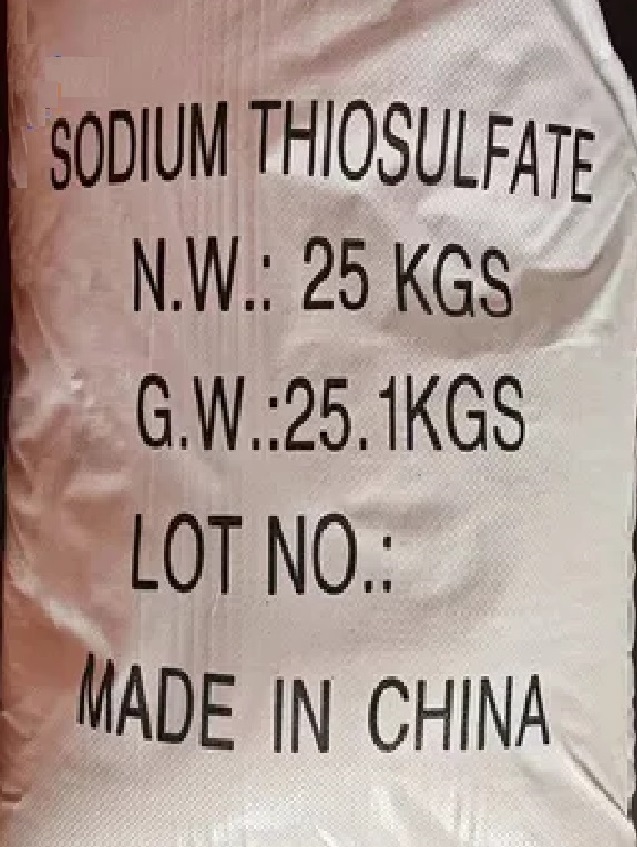
| Packaging | 25 kg bags, 50 kg drums, 1000 kg big bags |
SECTION 11: TRANSPORT INFORMATION
| Parameter | Information |
|---|---|
| UN Number | Not regulated (not dangerous goods) |
| Hazard Class | Not applicable |
| Packing Group | Not applicable |
| Proper Shipping Name | Sodium Thiosulfate |
| ADR/RID | Not regulated |
| IMDG Code | Not regulated |
| IATA (Air) | Not regulated |
| Marine Pollutant | No |
SECTION 12: FIRE-FIGHTING MEASURES
| Parameter | Information |
|---|---|
| Fire Hazard | Not combustible |
| Extinguishing Media | Water fog, CO₂, dry chemical, foam |
| Special Hazards | When heated, releases sulfur oxides (SOₓ) |
| Decomposition Products | Sulfur oxides, sodium oxide |
| Protective Equipment | Self-contained breathing apparatus (SCBA), full protective clothing |
SECTION 13: ACCIDENTAL RELEASE AND CLEANUP
| Parameter | Information |
|---|---|
| Personal Protection | Gloves, safety goggles, dust mask |
| Ventilation | Increase ventilation |
| Cleanup Methods | Sweep while preventing dust formation; collect in sealed containers |
| Environmental Precautions | Prevent entry into drains |
| Waste Disposal | According to local regulations |
SECTION 14: REGULATORY INFORMATION
| Region / Authority | Status |
|---|---|
| EU REACH | Registered |
| Turkey KKDİK | Registration required |
| USA TSCA | Listed |
| USA FDA | Approved for medical use (NITHIODOTE) |
| EPA | Listed (compatible with EPA 601) |
| WGK (Germany) | 1 (slight hazard to water) |
SECTION 15: SUMMARY AND CRITICAL WARNINGS
Product Summary
| Parameter | Value |
|---|---|
| Product | Sodium Thiosulfate |
| CAS | 7772-98-7 |
| Appearance | Colorless crystals or crystalline powder |
| Molecular Weight | 158.11 g/mol |
| pH (50 g/L) | 6.0 - 8.5 |
| Key Industries | Photography, medical, analytical chemistry, industrial, nanotechnology |
CRITICAL WARNINGS
-
Versatile Reducing Agent: Sodium thiosulfate is a stable, odorless, environmentally friendly, and inexpensive reducing agent. Its ability to reduce iodine, chlorine, and other oxidizers makes it a fundamental reagent in analytical chemistry.
-
Medical Importance - Cyanide Antidote: Sodium thiosulfate is an FDA-approved cyanide poisoning antidote (NITHIODOTE). It detoxifies cyanide via the rhodanese enzyme, converting it to non-toxic thiocyanate.
-
Fundamental Reagent in Analytical Chemistry: Used as a standard reagent for the quantitative determination of elemental iodine in iodometric titrations. Also used for chlorine determination in water and wastewater.
-
Gold and Silver Extraction: Used in gold and silver extraction in cyanide leaching processes. Its ability to form stable complexes with silver ions makes it useful as a fixer in photography.
-
Growing Use in Nanotechnology: Used as a precursor and sulfur source in nanoparticle synthesis (gold, silver, copper sulfide). Plays a role in doping and activating carbon cathodes in lithium-sulfur batteries.
-
Industrial Chlorine Removal: Used as "antichlor" to remove excess chlorine from bleached products in the textile and paper industries.
-
Forms: Available in anhydrous (Na₂S₂O₃) and pentahydrate (Na₂S₂O₃·5H₂O) forms. The pentahydrate can be converted to anhydrous form by heating above 100°C.
-
Alcohol Insolubility: Soluble in water but practically insoluble in alcohol. This property is used in purification processes.
-
Safety: Low toxicity compound. However, inhalation of dust may cause irritation. Appropriate PPE is recommended.
-
Acid Sensitivity: Reacts with dilute acids to release sulfur dioxide and sulfur. Should be kept away from acids during storage.
IMPORTANT DISCLAIMER: This Technical Data Sheet (TDS) is for informational purposes only and is based on available technical data. The user is solely responsible for determining the product's suitability for their specific application and for complying with all applicable local, national, and international regulations. For complete safety, storage, handling, transportation, disposal, and regulatory compliance information, always refer to the official Safety Data Sheet (SDS/MSDS) provided by the manufacturer/supplier. Users are responsible for testing the product in their own processes and applications. All local, national, and international regulations must be followed when working with Sodium Thiosulfate.