We unleash your business potential by maximize the business innovation.
Send EmailCalcium Sulfate Anhydrous, Calcium Sulfate, Calcium Sulfate Anhydrite, E516, 7778-18-9
CALCIUM SULFATE ANHYDROUS (CaSO₄, E516)
1. Chemical Identity and Material Classification
-
Chemical Name: Calcium Sulfate Anhydrite
-
Synonyms: Calcium Sulfate Anhydrous, Anhydrite, Drierite, Anhydrous Calcium Sulfate, Calcium Sulfate (Anhydrous)
-
CAS Number: 7778-18-9
-
EC Number (EINECS): 231-900-3
-
Molecular Formula: CaSO₄
-
Molecular Weight: 136.14 g/mol
-
E Number: E516 (food additive)
-
Chemical Class: Inorganic salt, sulfate, alkaline earth metal salt
-
HS Code: 2833.27
-
UN Number: Not applicable (not classified as hazardous material)
2. Physical Properties
2.1 General Physical Properties
| Property | Value |
|---|---|
| Appearance | White, odorless, crystalline or powder solid |
| Physical state (20°C) | Solid (powder or crystalline) |
| Odor | Odorless |
| Taste | Slightly bitter, characteristic |
| Density (20°C) | 2.96 g/cm³ (crystalline form) |
| Bulk density | 0.9–1.2 g/cm³ (powder form) |
| Melting point | 1,460°C (decomposes) |
| Boiling point | Decomposes (CaO + SO₃) |
| Flash point | Not applicable (non-flammable) |
| Autoignition temperature | Not applicable (non-flammable) |
| pH (10% aqueous suspension, 25°C) | 6.0–7.5 (neutral to slightly acidic) |
| Mohs hardness | 3.0–3.5 |
2.2 Solubility Properties
| Solvent | Temperature | Solubility |
|---|---|---|
| Water | 25°C | Approximately 0.20–0.30 g/100 mL (2.0–3.0 g/L) |
| Water | 50°C | Approximately 0.25 g/100 mL |
| Water | 100°C | Approximately 0.16 g/100 mL (inverse solubility – decreases with increasing temperature) |
| Ethanol | 25°C | Practically insoluble |
| Methanol | 25°C | Practically insoluble |
| Acetone | 25°C | Insoluble |
| Acid solutions (HCl, HNO₃) | 25°C | Limited to moderate solubility |
| Solubility in water (as Ca²⁺ and SO₄²⁻) | – | 15–20 meq/L (forms hard water) |
Important Note: Calcium sulfate exhibits inverse solubility – solubility decreases as temperature increases. This is an important property for applications such as gypsum board and cement.
2.3 Particle Characterization
| Parameter | Typical Value |
|---|---|
| Particle size (D50) | 5–50 µm (depends on grinding grade) |
| Specific surface area (BET) | 1–10 m²/g |
| Bulk density (loose) | 0.9–1.1 g/cm³ |
| Bulk density (tapped) | 1.1–1.3 g/cm³ |
| Compressibility index | 15–25 (good flowability) |
| Hausner ratio | 1.1–1.3 |
2.4 Hygroscopicity and Moisture Absorption
| Parameter | Value |
|---|---|
| Hygroscopicity | Moderate – absorbs moisture at 30–50% relative humidity (converts to dihydrate) |
| Moisture content (Karl Fischer, as-supplied) | ≤1.5% (anhydrous form) |
| Equilibrium moisture content (25°C, 50% RH) | ~2–3% (partial hydration) |
| Moisture absorption rate | Slow to moderate |
3. Chemical Properties
3.1 Molecular Structure
-
Structure: Ca²⁺ [SO₄]²⁻
-
Crystal system: Orthorhombic (anhydrite form) – different from dihydrate (monoclinic)
-
Bond type: Ionic
-
Water content: None (anhydrous)
-
Calcium content: 29.44% Ca (by weight)
-
Sulfate content: 70.56% SO₄ (by weight)
-
Water of crystallization: 0 mol H₂O
3.2 Thermal Properties
| Parameter | Value |
|---|---|
| Thermal stability | Stable up to 1,200°C |
| Decomposition onset | ~1,200°C |
| Decomposition reaction | CaSO₄ → CaO + SO₃ (≥1,200°C) |
| Mass loss (up to 1,200°C) | 0–1% (anhydrous form) |
| Conversion to dihydrate (with moisture) | CaSO₄ + 2H₂O → CaSO₄·2H₂O (slow) |
| Conversion enthalpy | Exothermic (moisture absorption) |
| Specific heat capacity (Cp, 25°C) | 0.72 J/g·K |
3.3 Chemical Reactivity
| Reaction / Behavior | Description |
|---|---|
| Hydration with water | Slow hydration → calcium sulfate dihydrate (CaSO₄·2H₂O) |
| Reaction with acids | Partially soluble in HCl, HNO₃ → calcium salts + sulfuric acid |
| Reaction with bases | Insoluble in dilute bases; slow reaction with concentrated bases |
| Reaction with reducing agents (C, H₂, CO) | Forms CaS (calcium sulfide) at high temperature |
| Reaction with oxidizing agents | Stable; no reaction |
| Complex formation | Forms complexes with chelating agents such as EDTA (calcium titration) |
| Precipitation reactions | Sulfate ion (SO₄²⁻) precipitates with barium (Ba²⁺) or lead (Pb²⁺) (BaSO₄) |
3.4 pH and Ionic Properties
| Parameter | Value |
|---|---|
| Aqueous solution pH (saturated, 25°C) | 6.0–7.5 (neutral to slightly acidic) |
| Solubility product (Ksp, 25°C) | 4.93 × 10⁻⁵ (mol²/L²) |
| Calcium ion activity (saturated solution) | ~15–20 meq/L |
| Sulfate ion activity (saturated solution) | ~15–20 meq/L |
3.5 Radiological Properties
| Parameter | Value |
|---|---|
| Natural radioactivity | Trace amounts (uranium, thorium – depends on source) |
| Typical value for gypsum board | ≤10 Bq/kg (considered safe) |
4. Calcium Sulfate Types and Comparison
| Property | Anhydrous (Anhydrite) | Hemihydrate (Plaster of Paris) | Dihydrate (Gypsum) |
|---|---|---|---|
| CAS Number | 7778-18-9 | 10034-76-1 | 10101-41-4 |
| Formula | CaSO₄ | CaSO₄·½H₂O | CaSO₄·2H₂O |
| Water content | 0% | ~6.2% | ~20.9% |
| Molecular weight | 136.14 g/mol | 145.15 g/mol | 172.17 g/mol |
| Appearance | White powder/crystal | White powder | White powder/crystal |
| Density (g/cm³) | 2.96 | 2.63 | 2.32 |
| Solubility in water (25°C) | ~0.20 g/100 mL | ~0.24 g/100 mL | ~0.26 g/100 mL |
| Common name | Anhydrite, Drierite | Plaster of Paris | Gypsum |
| Mohs hardness | 3.0–3.5 | 1.5–2.0 | 1.5–2.0 |
| Thermal stability | Up to 1,200°C | Converts to anhydrite at 100–150°C | Converts to hemihydrate at 50–120°C |
| Setting mechanism | Slow hydration with water | Rapid hydration with water → dihydrate | Does not set with water (already hydrated) |
| Major uses | Desiccant, food additive (E516), pharmaceutical filler | Construction (fast-setting plaster), molding | Gypsum board, plaster, agriculture (soil conditioner) |
5. Commercial Grades and Specifications
| Grade | Purity | Particle Size | Major Applications |
|---|---|---|---|
| Technical Grade | ≥90% | 50–200 µm | Construction, cement additive, gypsum board |
| Food Grade (E516) | ≥99% | 10–100 µm | Food additive (acidity regulator, flour treatment agent) |
| Pharmaceutical Grade (USP/NF, Ph.Eur) | ≥99.5% | 5–50 µm | Filler for tablets and capsules (excipient) |
| Laboratory Grade (Drierite) | ≥99.5% (anhydrous) | 4–20 mesh, 8–30 mesh | Desiccant agent (desiccator), gas drying |
| High Purity (Analytical) | ≥99.99% | 1–20 µm | Analytical chemistry reference standards |
6. Quality Specifications (Food Grade – E516)
| Parameter | Specification (Food Grade) | Test Method |
|---|---|---|
| Assay (CaSO₄, dry basis) | ≥99.0% | Gravimetric (sulfate) |
| Loss on drying (200°C) | ≤1.5% | Gravimetric |
| Acid-insoluble substances | ≤0.05% | Gravimetric |
| Chlorides (Cl) | ≤0.01% | Turbidimetric |
| Fluorides (F) | ≤0.003% (30 ppm) | Ion-selective electrode |
| Heavy metals (as Pb) | ≤0.001% (10 ppm) | Colorimetric |
| Arsenic (As) | ≤2 ppm | Atomic absorption |
| Lead (Pb) | ≤2 mg/kg | Atomic absorption |
| Cadmium (Cd) | ≤1 mg/kg | Atomic absorption |
| Mercury (Hg) | ≤1 mg/kg | Atomic absorption |
| Iron (Fe) | ≤0.01% | Colorimetric |
| Alkalinity (as Na₂CO₃) | ≤0.05% | Titration |
| pH (10% suspension) | 6.0–7.5 | pH meter |
| Calcium content (Ca) | 27–31% | Complexometric (EDTA) |
| Sulfate content (SO₄) | 68–71% | Gravimetric |
7. Production Methods
7.1 Natural Source Production (Mining)
-
Source: Natural anhydrite deposits (anhydrite rock)
-
Process:
-
Open-pit or underground mining
-
Crushing and grinding
-
Classification (sieving, air separation)
-
Purification (removal of impurities such as clay, carbonates)
-
Drying (to remove moisture)
-
-
Purity: 90–98%
-
Cost: Low
7.2 Production by Calcination of Dihydrate (Gypsum)
-
Reaction: CaSO₄·2H₂O → CaSO₄ (anhydrite) + 2H₂O
-
Process:
-
Natural gypsum (dihydrate) is collected
-
Crushed and ground
-
High-temperature calcination: 300–800°C (depending on type)
-
300–500°C → Soluble anhydrite (higher solubility in water)
-
500–800°C → Insoluble anhydrite (low solubility, stable)
-
800°C → Dead-burned anhydrite (very slow hydration)
-
-
Cooling and grinding
-
-
Purity: 95–99.5%
7.3 Chemical Precipitation Method (High Purity)
-
Reaction: CaCl₂ + H₂SO₄ → CaSO₄ + 2HCl
-
Process:
-
Calcium chloride (CaCl₂) solution is prepared
-
Sulfuric acid (H₂SO₄) is added
-
Calcium sulfate precipitates
-
Filtered, washed, dried
-
-
Purity: ≥99.5%
-
Use: Pharmaceutical and food grade
7.4 Production as a By-product
-
Sources:
-
Phosphate fertilizer production (phosphogypsum)
-
Flue gas desulfurization (FGD – coal power plants)
-
Salt production
-
-
Purity: Variable (80–95%)
-
Use: Cement and gypsum board production
8. Mechanism of Action (Functional Mechanisms)
8.1 Desiccant (Drying) Mechanism
-
Anhydrous calcium sulfate chemically binds water molecules into its crystal lattice, converting to the dihydrate form (CaSO₄·2H₂O).
-
Reaction: CaSO₄ + 2H₂O → CaSO₄·2H₂O + heat (exothermic)
-
Water holding capacity: ~20% (by weight) – theoretical maximum (2 mol water / 1 mol CaSO₄)
-
Typical moisture adsorption: 10–15% (under ambient conditions)
-
Advantages:
-
High water holding capacity
-
Reusable (can be re-dried at 200°C)
-
Non-toxic
-
Inexpensive
-
-
Limitations:
-
Slower moisture adsorption compared to silica gel or molecular sieves
-
Less effective at low humidity levels (<10% RH)
-
8.2 Binder Mechanism in Cement and Plaster
-
When anhydrite is mixed with water, it slowly hydrates to the dihydrate form (CaSO₄·2H₂O).
-
The dihydrate forms needle-like crystals (monoclinic), causing the mixture to harden and gain strength.
-
Reaction rate: Slow (days to weeks) – much slower than hemihydrate (minutes to hours).
-
In cement, anhydrite acts as a set retarder – prevents flash set (rapid hardening).
8.3 Acidity Regulator Mechanism (Food – E516)
-
Partially dissolves in water, creating a slightly acidic environment (pH 6.0–7.5).
-
Calcium ions (Ca²⁺) form complexes with anionic compounds, providing a buffering effect.
-
In flour treatment, activates or inhibits naturally occurring enzymes (amylase, protease).
-
In beer production, regulates water hardness and promotes yeast flocculation.
8.4 Flour Treatment Agent Mechanism (E516)
-
Regulates the pH of flour, stabilizing the gluten structure.
-
Calcium ions promote cross-linking between gluten proteins.
-
Results: Better dough elasticity, higher bread volume, improved crumb structure.
8.5 Tablet Filler Mechanism (Pharmaceutical)
-
An inert, poorly water-soluble filler.
-
Provides bulk and mechanical strength to tablets.
-
Used as an alternative to sugar-based fillers such as lactose (lower hygroscopicity).
-
Does not significantly affect tablet disintegration.
9. Applications
9.1 Construction and Building Materials – Largest Application (~70%)
| Application | Function | Typical Concentration |
|---|---|---|
| Cement additive (set retarder) | Controls setting time, prevents flash set | 3–8% (of cement weight) |
| Gypsum board (drywall) core | Binder, fire resistance, sound insulation | 20–30% (of dry mix) |
| Self-leveling floor compounds | Flow regulator, strength enhancer | 10–20% |
| Plasters and mortars | Binder, set control | 2–10% |
| Gypsum blocks and bricks | Binder | 50–90% |
| Fire-resistant coatings | Passive fire protection | 10–30% |
9.2 Food Industry (E516)
| Application | Function | Typical Concentration | Regulatory Status |
|---|---|---|---|
| Flour treatment agent | Gluten strengthener, dough conditioner | 0.1–0.5% (of flour weight) | FDA GRAS, EFSA approved |
| Bread and bakery products | pH regulator, nutritional supplement (calcium) | 0.1–0.3% | FDA GRAS, EFSA approved |
| Beer production | Water hardness regulator, yeast flocculation | 0.1–0.5 g/L (before yeast pitching) | FDA GRAS, EFSA approved |
| Acidity regulator (canned foods, jams) | pH buffering | 0.1–0.5% | FDA GRAS, EFSA approved |
| Nutritional supplement (calcium source) | Calcium fortification | Variable (product dependent) | FDA GRAS, EFSA approved |
| Confectionery (chewing gum, candies) | Filler, anti-caking agent | 0.5–2% | FDA GRAS, EFSA approved |
| Tofu production (coagulant) | Coagulates soy milk | 0.2–0.5% | Common (especially in Asia) |
Regulatory Note: E516 is permitted as a food additive in the EU and Turkey. The acceptable daily intake (ADI) is "not specified" – considered safe. As a flour treatment agent, it is limited to a maximum of 0.5% (5000 ppm).
9.3 Laboratory and Analytical Chemistry
| Application | Function | Typical Amount |
|---|---|---|
| Desiccator drying agent (Drierite) | Moisture absorption, gas drying | 200–500 g/desiccator |
| Gas drying columns | Drying of nitrogen, air, hydrogen, carbon dioxide | 10–50 cm (column height) |
| Liquid drying (solvents) | Water removal from organic solvents | 50–100 g/L solvent |
| Analytical reagent | Reference for calcium and sulfate determinations | Variable |
| Chemical reagent carrier | Catalyst support | 5–10% |
About Drierite: Drierite is a registered trademark of calcium sulfate anhydrous. It is available in blue (anhydrous, turns pink when wet) or white (indicator-free) forms. Moisture capacity is ~15–20%. It can be reactivated at 200°C.
9.4 Pharmaceutical Industry
| Application | Function | Typical Concentration |
|---|---|---|
| Tablet filler (excipient) | Bulking agent, binder | 5–20% (depending on formulation) |
| Capsule filler | Inert carrier | 10–30% |
| Effervescent tablets | Acid source (with citric or tartaric acid) | 10–30% |
| Toothpaste | Abrasive, polishing agent | 10–30% |
| Topical powders | Absorbent, lubricant | 20–50% |
| Packaging desiccant (pharmaceutical vials) | Moisture absorption (product stability) | 1–5 g/unit |
Pharmacopoeia Compliance:
-
USP: Calcium Sulfate Anhydrous (USP–NF)
-
Ph.Eur: Calcii sulfas anhydricus
-
JP: Calcium Sulfate Hydrate (anhydrous form not included – dihydrate is used)
9.5 Agriculture
| Application | Function | Typical Amount |
|---|---|---|
| Soil conditioner (alternative to liming) | Raises soil pH, provides calcium and sulfate | 200–500 kg/hectare |
| Calcium fertilizer | Calcium source for plants (cell wall strength) | 100–300 kg/hectare |
| Sulfate fertilizer | Sulfur source for plants (amino acid synthesis) | 100–300 kg/hectare |
| Animal feed additive | Calcium and sulfur supplement | 0.5–2% (of feed weight) |
| Compost additive | Ammonia absorption, odor control | 5–10% |
| Mushroom cultivation (compost additive) | pH regulator, nutrient source | 2–5% |
9.6 Ceramics and Glass Industry
| Application | Function | Typical Concentration |
|---|---|---|
| Ceramic mold making (plaster molds – not anhydrite) | Anhydrite is not directly used; hemihydrate is preferred | – |
| Glass manufacturing (flux regulator) | Lowers melting temperature, increases fluidity | 2–5% (of glass batch) |
| Glaze preparation (ceramic glazes) | Opacifier, matting agent | 5–15% |
| Investment casting powders | Binder | 10–20% |
9.7 Polymer, Plastic, and Paint Industry
| Application | Function | Typical Concentration |
|---|---|---|
| Plastic filler (PP, PE, PVC) | Cost reducer, hardness enhancer, dimensional stability | 5–20% |
| Rubber filler | Hardness enhancer, abrasion resistance | 10–30% |
| Paints and coatings (filler) | Matting agent, viscosity regulator | 5–15% |
| Inks | Filler, white pigment (reduces transparency) | 5–10% |
| Adhesives and putties | Filler, viscosity regulator | 10–20% |
9.8 Paper Industry
| Application | Function | Typical Concentration |
|---|---|---|
| Paper filler | Opacity, brightness, printability | 5–15% (of paper weight) |
| Paper coating | Smooth surface, ink absorption | 10–20% |
| Cardboard (filler) | Stiffness, strength | 5–10% |
9.9 Other Industrial Applications
| Application | Function |
|---|---|
| Wastewater treatment | Phosphate removal, heavy metal precipitation |
| Paint recovery (coagulant) | Coagulation of paint particles |
| Oil and gas (mud weighting) | Weighting material in drilling mud |
| Fire extinguishers (powder type) | Flame retardant (additive in ABC powders) |
| Foundry industry (sand binder) | Binder in foundry molds |
10. Toxicology and Safety
10.1 Acute Toxicity
| Parameter | Value | Classification |
|---|---|---|
| Oral LD₅₀ (rat) | >5,000 mg/kg | Not classified |
| Dermal LD₅₀ (rabbit) | >2,000 mg/kg | Not classified |
| Inhalation LC₅₀ (rat, 4 hr) | >2 mg/L (dust) | Not classified |
| Skin irritation | Mild irritant (dust) | Not classified |
| Eye irritation | Mild to moderate irritant (dust, mechanical) | Not classified |
| Skin sensitization | Non-sensitizer | Not classified |
10.2 Subchronic and Chronic Toxicity
| Parameter | Value |
|---|---|
| NOAEL (rat, 90 day) | 4,000 mg/kg/day (practically non-toxic) |
| Reproductive toxicity | Negative |
| Developmental toxicity | Negative |
| Genotoxicity (Ames test) | Negative |
| Carcinogenicity | Negative (not classified) |
| Target organ toxicity (repeated) | None (relatively inert) |
10.3 Special Concerns and Considerations
| Concern | Information |
|---|---|
| Inhalation (dust) | Mechanical respiratory tract irritation with prolonged exposure; not fibrogenic |
| Dust explosion risk | Low (inorganic, non-flammable) |
| Calcium load (excessive intake) | Very high doses may cause gastrointestinal discomfort, constipation |
| Allergenicity | Not known as an allergen |
| Radioactivity | Trace amounts depending on natural source (<10 Bq/kg) |
| Food additive limits | EFSA: ADI not specified; FDA: GRAS; Turkish Food Codex: Subject to relevant regulations |
10.4 GHS Classification (Generally not classified – but for dust form)
| Classification | Category (dust form) |
|---|---|
| Signal word | Warning (in case of dust inhalation or eye contact) |
| Hazard statements | H319 – Causes serious eye irritation (dust). H335 – May cause respiratory tract irritation (dust). |
| Precautionary statements | P261, P264, P271, P280, P304+P340, P305+P351+P338, P312, P337+P313 |
Note: Calcium sulfate anhydrous is considered safe (GRAS) by major regulatory authorities (FDA, EFSA).
10.5 NFPA Rating
| Health | Flammability | Reactivity | Special |
|---|---|---|---|
| 1 | 0 | 0 | None |
11. Safety Precautions and Personal Protective Equipment (PPE)
Hazards:
-
Respirable dust: Prolonged exposure may cause respiratory tract irritation (mechanical).
-
Eye irritation: Dust causes mechanical eye irritation.
-
Non-flammable: No fire risk.
-
Chemical reactivity: Low; may react with strong acids or reducing agents at high temperatures.
PPE (mandatory – for dust form):
-
Respiratory protection: P1 or P2 filter mask (to prevent dust inhalation). FFP2/N95 in enclosed areas without dust control.
-
Eye protection: Dust-tight safety goggles (not chemical splash goggles – dust goggles).
-
Gloves: Nitrile or latex gloves (for basic contact – chemical risk is low).
-
Protective clothing: Dust-proof laboratory coat.
-
Footwear: Closed-toe work shoes.
Engineering controls:
-
Local exhaust ventilation (LEV) with dust collection.
-
Regular cleaning to prevent dust accumulation.
-
Dust control during bag opening and transfer operations (dust cover, closed system).
Storage conditions:
-
Store in original, closed packaging (polyethylene bag, box, sack).
-
Store in a cool, dry, well-ventilated area (10–30°C).
-
Protect from moisture (hygroscopic – converts to dihydrate, cakes).
-
Keep away from acids and reducing agents.
-
Store on racks or pallets (prevent floor contact).
-
Shelf life: 2–5 years under proper conditions (degradation signs: caking, partial hydration).
Firefighting:
-
Fire class: Not applicable (non-flammable). Use extinguishing media appropriate for surrounding fire.
-
Extinguishing media: Dry chemical powder, CO₂, water spray, foam.
-
Special hazards: Non-flammable; at high temperatures (>1,200°C) decomposes to produce toxic SO₃ (sulfur trioxide) fumes.
First aid:
-
Inhalation: Move to fresh air; seek medical attention if respiratory distress persists.
-
Skin contact: Wash with plenty of water and soap.
-
Eye contact: Rinse with plenty of water for at least 15 minutes (lifting eyelids); remove contact lenses; seek medical attention if irritation persists.
-
Ingestion: Rinse mouth; drink plenty of water; seek medical attention if large amounts are swallowed (generally non-toxic).
Environmental precautions:
-
Do not discharge directly into water sources or sewers.
-
Not biodegradable (inorganic); persists in the environment.
-
May cause physical pollution (insoluble in water).
-
Dispose preferably by landfill (inert waste).
12. Environmental Fate
| Parameter | Value |
|---|---|
| Biodegradability | Not applicable (inorganic) |
| Aquatic toxicity (fish, LC₅₀, 96 hr) | >1,000 mg/L (low toxicity) |
| Daphnia magna (EC₅₀, 48 hr) | >1,000 mg/L |
| Algal toxicity (EC₅₀, 72 hr) | >500 mg/L |
| Bioaccumulation | Not applicable (inorganic) |
| Mobility in soil | Low (poorly soluble in water, remains in soil) |
| Degradation in water | Does not hydrolyze (stable) |
| Acid rain effect | Slowly dissolves as calcium and sulfate ions |
| Soil acidification | Neutral; provides buffering effect in acidic soils |
| WGK Germany | 1 (low hazard to water) |
| Disposal method | Landfill (inert waste) |
13. Storage and Shelf Life
13.1 Storage Conditions
| Parameter | Requirement |
|---|---|
| Storage temperature | 10–30°C (cool, room temperature) |
| Relative humidity | <50% (to prevent hydration and caking) |
| Container type | Polyethylene bag (inner), cardboard box or sack (outer) |
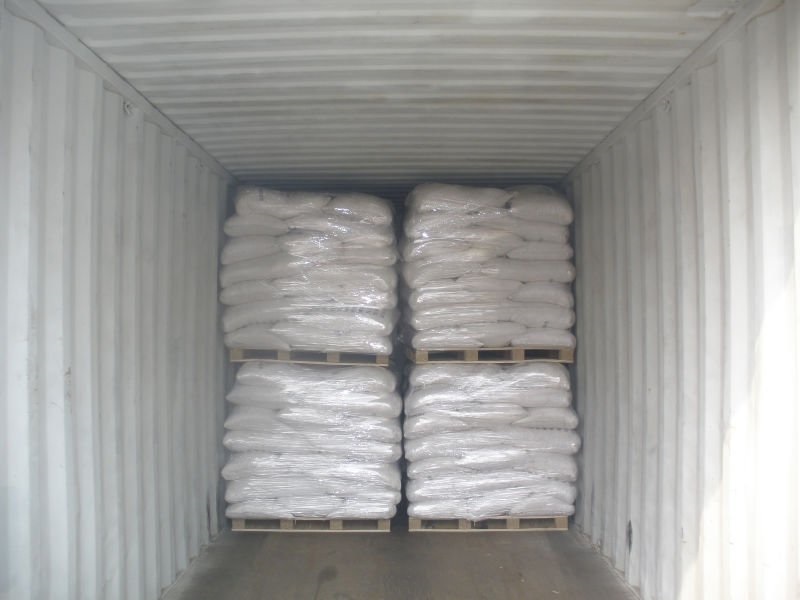
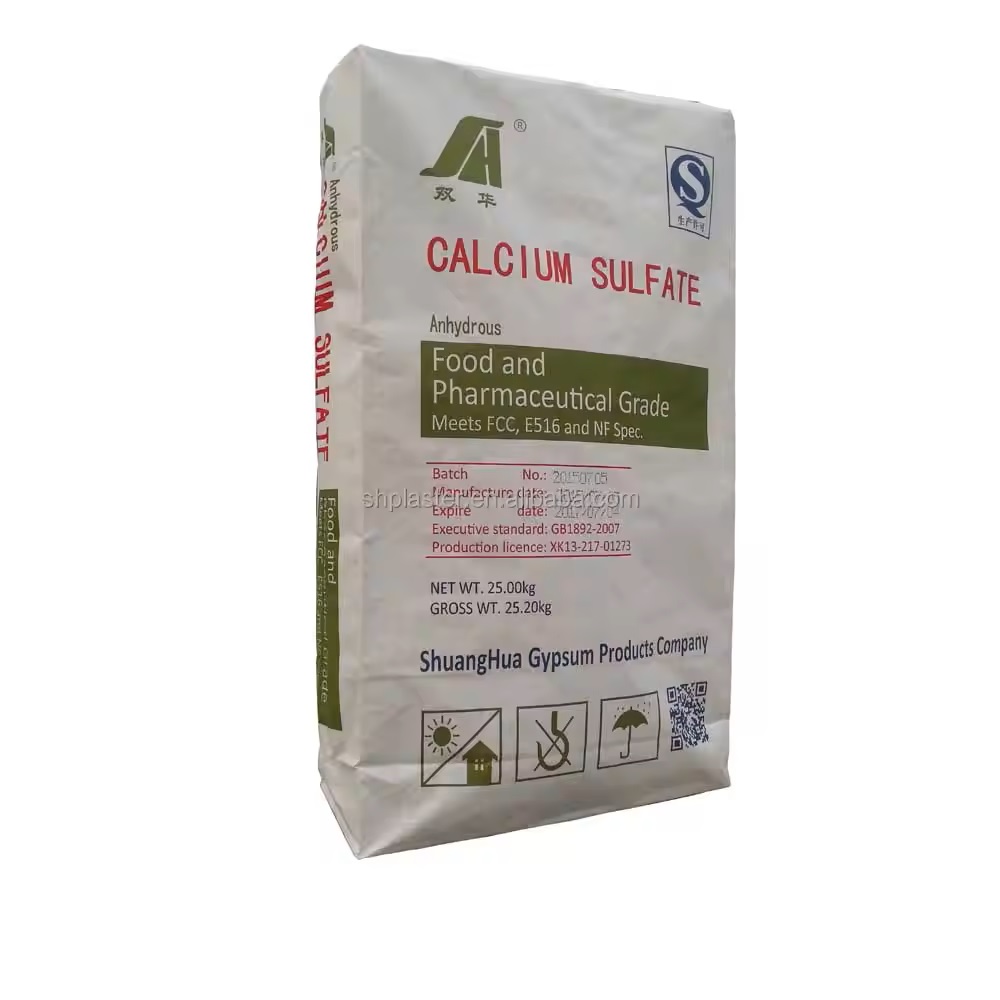
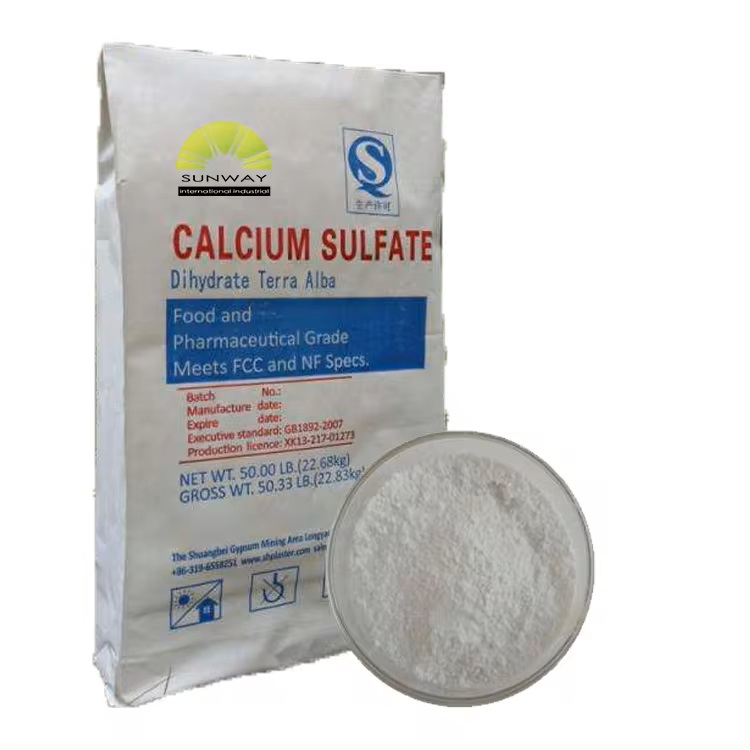
| Package sizes | 10 kg, 20 kg, 25 kg (bag/box); 500 kg (big bag); 1 ton (bulk sack) |
| Protect from | Moisture, high temperature (accelerates hydration), acids, reducing agents |
| Environment | Dry, well-ventilated, dust-free |
13.2 Shelf Life and Degradation
| Parameter | Value |
|---|---|
| Shelf life (unopened, proper conditions) | 2–5 years |
| Shelf life (after opening) | 6–12 months (if properly resealed) |
| Degradation signs | Caking (clumping); weight gain (moisture absorption); partial dihydrate formation; reduced drying capacity (as desiccant) |
| Degradation mechanism | Moisture absorption → formation of CaSO₄·2H₂O (gypsum); not irreversible (can be re-dried at 200°C) |
| Reactivation (Drierite) | 2–4 hours at 200°C (in drying oven) |
14. Transport Information
| Regulation | Classification |
|---|---|
| UN Number | Not applicable (not classified as hazardous material) |
| ADR/RID | Not classified (not dangerous goods) |
| IMDG | Not classified |
| IATA | Not classified |
| Special precautions | Dust control when transported in bulk as powder |
| Not subject to | ADR, RID, IMDG, IATA (all forms) |
Transport note: Not classified as hazardous material. When transported in large quantities (≥500 kg), precautions should be taken to prevent dust formation.
15. Synonyms and Common Names
-
English: Calcium Sulfate Anhydrous, Calcium Sulfate Anhydrite, Drierite, Anhydrous Calcium Sulfate
-
German: Calciumsulfat wasserfrei, Anhydrit
-
French: Sulfate de calcium anhydre, Anhydrite
-
Spanish: Sulfato de calcio anhidro, Anhidrita
-
Trade names: Drierite (brand), Anhydrite, Karstenite, Calcium Sulfate Anhydrous (USP/NF), Calcii sulfas anhydricus (Ph.Eur)
16. Calcium Sulfate Anhydrous vs. Dihydrate – Comparison
| Property | Anhydrous (7778-18-9) | Dihydrate (10101-41-4) |
|---|---|---|
| Water content | 0% | ~20.9% |
| Molecular weight | 136.14 g/mol | 172.17 g/mol |
| Density (g/cm³) | 2.96 | 2.32 |
| Mohs hardness | 3.0–3.5 | 1.5–2.0 |
| Solubility in water (25°C) | ~0.20 g/100 mL | ~0.26 g/100 mL |
| Hygroscopicity | Moderate (absorbs moisture) | Not hygroscopic |
| Drying capacity | High (desiccant) | None |
| Food additive code | E516 | E516 (both) |
| Calcination temperature (production) | 300–800°C | Occurs naturally (gypsum) |
| Applications | Desiccant, food additive, pharmaceutical filler | Construction, gypsum board, agriculture |
| Hydration rate | Slow (days/weeks) | Not applicable (already hydrated) |
17. Properties as a Pharmaceutical Excipient
17.1 Pharmacopoeia Compliance
| Pharmacopoeia | Monograph |
|---|---|
| USP (United States) | Calcium Sulfate Anhydrous (USP–NF) |
| Ph.Eur. (Europe) | Calcii sulfas anhydricus |
| JP (Japan) | Calcium Sulfate Hydrate (anhydrous form not included – dihydrate is used) |
| BP (United Kingdom) | Calcium Sulfate Anhydrous |
Note: USP and Ph.Eur include the anhydrous form, while JP includes only the dihydrate form (Calcium Sulfate Hydrate).
17.2 Typical Formulation Concentrations (Tablets and Capsules)
| Application | Concentration (w/w) |
|---|---|
| Direct compression (DC) formulations (filler) | 10–30% |
| Added after granulation (filler) | 5–20% |
| Hard gelatin capsules (filler) | 10–40% |
| Effervescent tablets (acid source) | 10–30% (with citric/tartaric acid) |
| Chewable tablets | 10–25% |
18. Quality Control Tests (Pharmaceutical Grade)
| Test | Method | Acceptance Criteria |
|---|---|---|
| Identification A (Sulfate) | Precipitation with BaCl₂ | White precipitate (BaSO₄) |
| Identification B (Calcium) | Flame test or AAS | Characteristic color for calcium (orange-red) |
| Loss on drying (200°C) | Gravimetric | ≤1.5% |
| Chloride | Turbidimetric (AgNO₃) | ≤0.01% |
| Fluoride | Ion-selective electrode | ≤30 ppm |
| Heavy metals (as Pb) | Colorimetric | ≤10 ppm |
| Lead (Pb) | Atomic absorption | ≤2 ppm |
| Cadmium (Cd) | Atomic absorption | ≤1 ppm |
| Mercury (Hg) | Atomic absorption | ≤1 ppm |
| Iron (Fe) | Colorimetric | ≤0.01% |
| Alkalinity | Titration | ≤0.05% |
| pH (10% suspension) | pH meter | 6.0–7.5 |
| Calcium assay (Ca) | Complexometric (EDTA) | 27–31% |
| Sulfate assay (SO₄) | Gravimetric | 68–71% |
| Particle size (optional) | Laser diffraction / sieving | User-defined |
19. Frequently Asked Questions (FAQs)
Q1: Is calcium sulfate anhydrous the same as gypsum?
A1: No. Anhydrous contains no water (CaSO₄), while gypsum (dihydrate) contains 2 mol of water (CaSO₄·2H₂O). Anhydrous is hygroscopic (absorbs moisture) and is used as a desiccant; gypsum is used as a construction material and soil conditioner.
Q2: Is calcium sulfate anhydrous safe in food?
A2: Yes, it is FDA GRAS and EFSA approved as a food additive under E516. It is widely used as a flour treatment agent, acidity regulator, and calcium supplement. No toxicity has been reported at typical use levels (0.1–0.5%).
Q3: Why is calcium sulfate anhydrous used as a desiccant?
A3: Anhydrous calcium sulfate chemically absorbs moisture from the air, converting to the dihydrate (CaSO₄·2H₂O). This reaction is exothermic and can hold up to ~20% of its weight in water. It is less expensive than silica gel or molecular sieves and can be reactivated (re-dried) at 200°C.
Q4: Is calcium sulfate anhydrous (E516) vegan?
A4: Yes, calcium sulfate anhydrous is a completely inorganic mineral. It is produced by mining or chemical synthesis and contains no animal-derived components. It is vegan, halal, and kosher.
Q5: Is calcium sulfate anhydrous soluble in water?
A5: It has very low solubility (~0.20 g/100 mL at 25°C). It exhibits inverse solubility – solubility decreases as temperature increases. This property is important for applications such as gypsum board and cement.
Q6: Is calcium sulfate anhydrous flammable?
A6: No, it is non-flammable. Its NFPA flammability rating is 0. However, at very high temperatures (>1,200°C), it decomposes to produce toxic SO₃ fumes.
Q7: How is calcium sulfate anhydrous used in tablets?
A7: It is used as an inert filler (excipient) in pharmaceutical tablets. It provides bulk and mechanical strength to tablets, but unlike other fillers such as lactose or microcrystalline cellulose, it has weak binding properties.
Q8: Does calcium sulfate anhydrous acidify soil?
A8: No, it is a neutral substance (pH 6.0–7.5 in 10% suspension). When used as a soil conditioner, it does not make soil alkaline like lime (calcium carbonate), but provides a source of calcium and sulfate. It may have a slight buffering effect in acidic soils.
20. Summary Table – Key Specifications at a Glance
| Parameter | Value |
|---|---|
| Product Name | Calcium Sulfate Anhydrous (Anhydrous Calcium Sulfate) |
| CAS Number | 7778-18-9 |
| EC Number | 231-900-3 |
| Molecular Formula | CaSO₄ |
| Molecular Weight | 136.14 g/mol |
| Appearance | White, odorless, crystalline powder or pellets |
| Odor | Odorless |
| Density (20°C) | 2.96 g/cm³ |
| Melting Point | 1,460°C (decomposes) |
| Solubility in Water (25°C) | ~0.20 g/100 mL (very low) |
| pH (10% suspension) | 6.0–7.5 (neutral) |
| Calcium content | 27–31% (typically 29.4%) |
| Sulfate content | 68–71% (typically 70.6%) |
| Water content (anhydrous form) | ≤1.5% (typical) |
| Loss on drying (200°C) | ≤1.5% (food grade) |
| Heavy metals (as Pb) | ≤10 ppm |
| Lead (Pb) | ≤2 ppm |
| Cadmium (Cd) | ≤1 ppm |
| E Number | E516 |
| Primary Applications | Desiccant, food additive (flour treatment agent, acidity regulator), pharmaceutical filler, cement additive, soil conditioner |
| GHS Signal Word | Warning (in case of dust inhalation/eye contact) |
| Hazard Statements | H319 (causes serious eye irritation), H335 (may cause respiratory tract irritation) |
| UN Number | Not applicable (not dangerous goods) |
| Oral LD₅₀ (rat) | >5,000 mg/kg (non-toxic) |
| Biodegradability | Not applicable (inorganic) |
| Shelf Life (proper conditions) | 2–5 years |
| Pharmacopoeia compliance | USP, Ph.Eur, BP (for anhydrous form) |
*This TDS is prepared in compliance with ISO 11014-1 format and is intended for construction engineers, food technologists, pharmaceutical formulators, laboratory personnel, agricultural specialists, and procurement professionals. Certificates of Analysis (CoA), Safety Data Sheets (SDS), and sample validation reports are available upon request.*