We unleash your business potential by maximize the business innovation.
Send EmailMagnesium Stearate, Magnesium Distearate, Magnesium Octadecanoate, 557-04-0
MAGNESIUM STEARATE (C₃₆H₇₀MgO₄, E470b)
1. Chemical Identity and Material Classification
-
Chemical Name: Magnesium Octadecanoate
-
Synonyms: Magnesium Stearate, Magnesium Distearate, Stearic Acid Magnesium Salt, Magnesium Octadeconate, Octadecanoic Acid Magnesium Salt, Dibasic Form
-
CAS Number: 557-04-0 (also listed as 557-04-4)
-
EC Number (EINECS): 209-150-3
-
Molecular Formula: C₃₆H₇₀MgO₄
-
Molecular Weight: 591.20 g/mol (typically 591.24–591.36 g/mol)
-
E Number: E470b (food additive – fatty acid salts)
-
Chemical Class: Fatty acid salt (metal soap), anionic surfactant
-
HS Code: 2916.10
-
UN Number: Not applicable (not classified as hazardous material)
2. Physical Properties
2.1 General Physical Properties
| Property | Value |
|---|---|
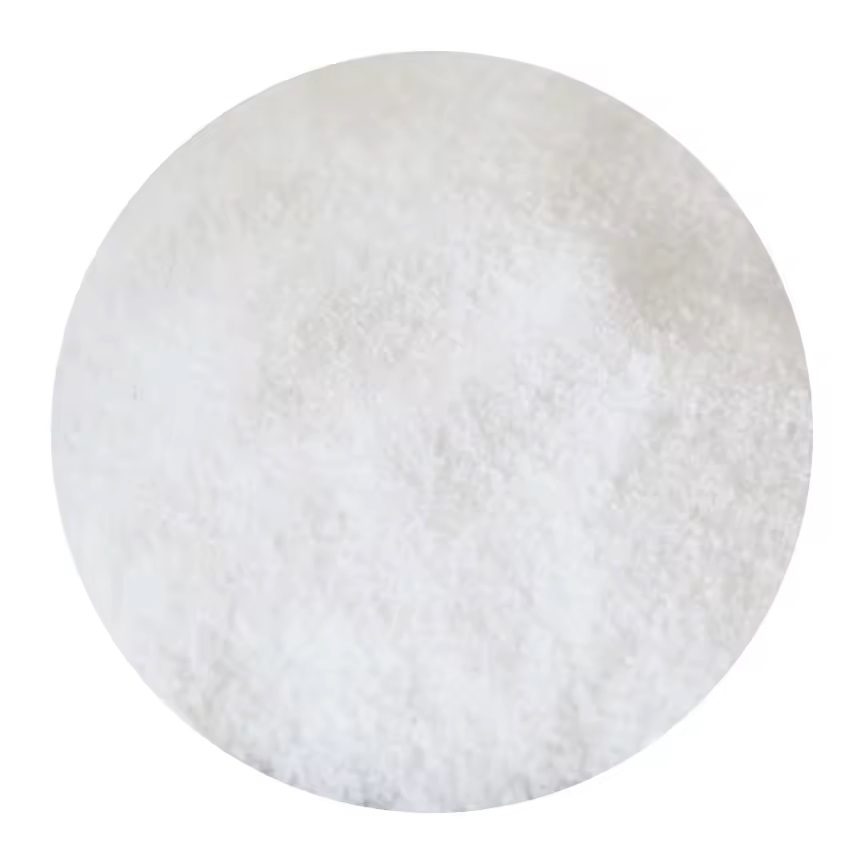
| Appearance | White to off-white, crystalline pellet or dry powder |
| Physical state (20°C) | Solid (powder or pellet/flake) |
| Odor | Odorless or faint, characteristic (mild fatty/stearic) |
| Taste | Tasteless |
| Density (20°C) | 1.02–1.09 g/cm³ (bulk density: 0.15–0.35 g/cm³) |
| Melting point | 88.5°C (88–143°C range, depending on salt form) |
| Decomposition temperature | >150°C (slow decomposition, releases stearic acid and magnesium oxide) |
| Flash point | >150°C (combustible dust) |
| Autoignition temperature | >400°C |
| Fat content (stearate) | 93–94% (calculated) |
| Magnesium content | 4.0–5.0% (typically 4.1–4.4%) |
2.2 Solubility Properties
| Solvent | Temperature | Solubility |
|---|---|---|
| Water | 15°C | Approximately 0.003 g/100 mL (3 mg/100 mL) |
| Water | 25°C | Approximately 0.004 g/100 mL (4 mg/100 mL) |
| Water | 50°C | Approximately 0.008 g/100 mL (8 mg/100 mL) |
| Ethanol (ethyl alcohol) | 25°C (cold) | Slightly soluble |
| Ethanol (ethyl alcohol) | 60–78°C (hot) | Soluble |
| Methanol | Hot | Soluble |
| Isopropanol | Hot | Soluble |
| Acetone | 25°C | Practically insoluble |
| Chloroform | 25°C | Slightly soluble |
| Diethyl ether | 25°C | Insoluble |
| Oils and hydrocarbons (hot) | >80°C | Partially soluble (disperses in hot oils) |
2.3 Particle Characterization
| Parameter | Typical Value |
|---|---|
| Particle size (D50) | 5–50 µm (powder form; varies based on grinding grade) |
| Specific surface area | 5–15 m²/g |
| Bulk density (loose) | 0.15–0.25 g/cm³ |
| Bulk density (tapped) | 0.25–0.35 g/cm³ |
| Compressibility index (Carr index) | 25–35 (medium flowability) |
| Hausner ratio | 1.3–1.5 |
2.4 Moisture Absorption and Hygroscopicity
| Parameter | Value |
|---|---|
| Hygroscopicity | Slightly hygroscopic (absorbs moisture at ≥60% relative humidity) |
| Moisture content (Karl Fischer) | ≤4% (typically 1–3%) |
3. Chemical Properties
3.1 Molecular Structure
-
Structure: [CH₃(CH₂)₁₆COO⁻]₂ Mg²⁺
-
Molecule type: Metal soap / dibasic salt
-
Anion: Two stearate anions (C₁₇H₃₅COO⁻)
-
Cation: Magnesium cation (Mg²⁺) – divalent
-
Bond type: Ionic (carboxylate-metal)
-
Hydrophobic character: Very high (due to long hydrocarbon chains)
-
Surface active properties: Anionic surfactant
3.2 Fatty Acid Composition (Typical)
Magnesium stearate is technically not a pure compound, but a mixture of magnesium salts of various fatty acids. Typical composition:
| Fatty Acid | Typical Proportion |
|---|---|
| Stearic acid (C18:0) | ≥40% (typically 40–60%) |
| Palmitic acid (C16:0) | ≥40% (typically 40–60%) |
| Oleic acid (C18:1) | ≤5% |
| Linoleic acid (C18:2) | ≤2% |
| Other fatty acids | ≤1% |
Note: Vegetable-source magnesium stearate (vegetable stearic acid) contains primarily a mixture of stearic and palmitic acids. Animal-source (tallow) variants are also available, but vegetable-source is preferred in cosmetic and pharmaceutical applications.
3.3 Thermal Properties
| Parameter | Value |
|---|---|
| Onset of melting | 80–88°C |
| Melting peak point | 88.5°C (by DSC) |
| Melting range | 88–143°C (broad range due to polymorphism and fatty acid composition) |
| Crystal transition temperature | 110–130°C |
| Decomposition onset (TGA) | ~150–200°C |
| Mass loss (200°C) | ~5–10% (stearic acid evaporation) |
| Ash content (as MgO, 800°C) | 8–10% |
3.4 Chemical Reactivity
| Reaction | Description |
|---|---|
| Reaction with acids (HCl, H₂SO₄) | Converts to stearic acid and corresponding magnesium salt |
| Reaction with strong bases | Saponification; forms magnesium hydroxide and stearate salt |
| Hydrolysis (aqueous media, high temperature) | Slow hydrolysis → stearic acid + magnesium ions |
| Oxidation (hot air, light) | Oxidation of fatty acid chains → rancidity, discoloration (yellow/brown) |
| Complex formation | Can form complexes with certain metal ions |
3.5 pH and Electrochemical Properties
| Parameter | Value |
|---|---|
| Aqueous suspension pH (10%, 25°C) | 6.5–8.0 (typically 7.0–7.5, neutral) |
| Ionic character | Anionic surfactant |
| Critical micelle concentration (CMC) | Not applicable in water (insoluble); low in organic solvents |
4. Commercial Grades and Specifications
| Grade | Purity | Source | Particle Size | Applications |
|---|---|---|---|---|
| Technical Grade | ≥90% | Vegetable/animal | Coarse (100–500 µm) | Plastics, rubber, paints, construction |
| Food Grade (E470b) | ≥98% | Vegetable (preferred) | Fine (10–100 µm) | Food additive (flow agent, lubricant, antifoam) |
| Pharmaceutical Grade (Ph.Eur, USP/NF) | ≥98% | Vegetable (preferred) | Very fine (5–50 µm) | Tablet lubricant, capsule filler adjuvant |
| Cosmetic Grade | ≥98% | Vegetable (preferred) | Fine (5–100 µm) | Powders, makeup, baby powder, lubricant |
| High Purity (Analytical) | ≥99.5% | Synthetic | Very fine (1–20 µm) | Reference standards, special applications |
5. Quality Specifications (Pharmaceutical/Food Grade – USP/NF, Ph.Eur)
| Parameter | USP/NF Specification | Ph.Eur. Specification | Test Method |
|---|---|---|---|
| Identification (IR) | Positive | Positive | FTIR |
| Identification (Magnesium) | Positive | Positive | Flame test or AAS |
| Free fatty acid (stearic acid) | ≤5.0% | ≤5.0% | Titration |
| Loss on drying (105°C) | ≤6.0% | ≤6.0% | Gravimetric |
| Chlorides (Cl) | ≤0.10% | ≤0.10% | Turbidimetric |
| Sulfates (SO₄) | ≤0.50% | ≤0.50% | Turbidimetric |
| Heavy metals (as Pb) | ≤0.0040% (40 ppm) | ≤0.0020% (20 ppm) | Colorimetric |
| Nickel (Ni) | – | ≤0.0005% (5 ppm) | Atomic absorption |
| Cadmium (Cd) | – | ≤0.0003% (3 ppm) | Atomic absorption |
| Lead (Pb) | ≤0.0010% (10 ppm) | ≤0.0010% (10 ppm) | Atomic absorption |
| Magnesium content | 4.0–5.0% | 4.0–5.0% | Complexometric titration (EDTA) |
| Fatty acid composition | Reportable | Reportable | GC |
| Particle size (optional) | Optional | Optional | Sieving / Laser diffraction |
| Microbial load | Total aerobic ≤1000 CFU/g; Yeast+mold ≤100 CFU/g; E.coli negative | Total aerobic ≤10³ CFU/g; Yeast+mold ≤10² CFU/g; E.coli negative | Plate count |
6. Production Methods
6.1 Double Decomposition (Metathesis) Method – Most Common
-
Reaction: 2 C₁₇H₃₅COONa (Sodium stearate) + MgSO₄ → Mg(C₁₇H₃₅COO)₂ + Na₂SO₄
-
Process:
-
Stearic acid is neutralized with sodium hydroxide (NaOH) to form sodium stearate.
-
Magnesium sulfate (MgSO₄) solution is added to the sodium stearate solution.
-
Magnesium stearate precipitates.
-
The precipitate is filtered and washed with hot water (to remove sulfate residues).
-
Dried (vacuum or spray dryer).
-
Milled to the desired particle size.
-
-
Yield: ≥95%
-
Product: Can be vegetable or animal source (depending on the stearic acid used)
6.2 Direct Fusion Method
-
Reaction: 2 C₁₇H₃₅COOH (Stearic acid) + Mg(OH)₂ → Mg(C₁₇H₃₅COO)₂ + 2H₂O
-
Process:
-
Stearic acid is melted (~80°C)
-
Magnesium hydroxide (Mg(OH)₂) is added
-
The mixture is heated and stirred until water is completely evaporated
-
Cooled, solidified, milled
-
-
Advantage: Higher purity, fewer impurities (no sodium, no sulfate)
-
Use: Common in pharmaceutical and food grade production
6.3 Source Differences
| Source | Fatty Acid Profile | Advantage | Disadvantage |
|---|---|---|---|
| Vegetable (palm, palm kernel, coconut, rapeseed) | High palmitic (C16:0) + stearic (C18:0) | Vegan, halal, kosher, low rancidity risk | Softer texture |
| Animal (tallow, beef fat) | High stearic (C18:0) | Hard texture, higher melting point | Not vegan, halal/kosher issues, higher rancidity risk |
| Synthetic (purified) | >90% stearic | Highest purity, reproducibility | High cost |
7. Mechanism of Action (Functional Mechanisms)
7.1 Lubrication Mechanism (Tablet Manufacturing)
-
Magnesium stearate particles form a thin hydrophobic film on the surfaces of tablet tooling (punches and dies).
-
This film reduces the coefficient of friction (reduces static friction).
-
Reduced friction results in:
-
Prevention of tablets sticking to machinery
-
Low ejection force for easy removal of tablets from the die
-
Reduced tool wear
-
High press speeds become possible
-
7.2 Anti-adherent Mechanism
-
Hydrophobic fatty acid tails physically prevent particles from adhering to each other and to machine surfaces.
-
Acts as a barrier between powder particles.
-
In cosmetic products (powders, eye shadow, blush), prevents adhesion to skin or applicator.
7.3 Antifoam Mechanism (Food and Industrial Applications)
-
Reduces water/oil interfacial tension.
-
Destabilizes foam bubble walls, causing bubble coalescence and collapse.
-
Insoluble in water, forms a thin layer on the surface, suppressing foam formation.
7.4 Glidant Mechanism
-
Reduces friction between powder particles (particle-particle friction).
-
Facilitates particles sliding over one another, increasing powder flow rate.
-
Particularly effective in fine (<50 µm) particle powders.
7.5 Carrier Particle Mechanism (Dry Powder Inhalation – DPI)
-
Protects hydrolysis-sensitive active ingredients from environmental moisture (hydrophobic barrier).
-
Allows active ingredient to adsorb onto particle surfaces, ensuring homogeneous distribution.
-
Inhibits degradation of the active ingredient (anti-hydrolysis effect).
-
Facilitates transport of the active ingredient to the lungs during inhalation.
8. Applications
8.1 Pharmaceutical Industry – Largest Application (~60%)
| Application | Function | Typical Concentration |
|---|---|---|
| Tablet manufacturing (lubricant) | Prevents sticking to tooling, facilitates ejection | 0.25–2.0% (typically 0.5–1.0%) |
| Capsule manufacturing (lubricant) | Improves flow during filling, prevents adhesion | 0.25–1.0% |
| Powder blends (glidant) | Improves powder flowability | 0.25–1.0% |
| Dry powder inhalation (DPI) drugs | Carrier particle, moisture barrier, hydrolysis protection | 90–99% (as carrier) |
| Excipient (inactive diluent) | Dilutes active ingredients | 1–90% |
| Vitamin and mineral tablets | Lubricant, glidant | 0.5–1.5% |
| Effervescent tablets | Lubricant (before contact with water) | 0.5–1.0% |
Important Note: Magnesium stearate can affect tablet hardness and disintegration time. Overuse (>2%) can slow or prevent tablet disintegration. This condition, known as "over-lubrication," must be considered in pharmaceutical formulations.
8.2 Food Industry (E470b)
| Application | Function | Typical Concentration | Regulatory Status |
|---|---|---|---|
| Dry food mixes (pudding, cake, flour) | Flow agent, anti-caking agent | 0.1–1.0% | FDA GRAS, EFSA approved |
| Compressed candies (sugar, dragees) | Mold release agent, lubricant | 0.5–2.0% | FDA GRAS, EFSA approved |
| Antifoam (concentrated juices, jams) | Suppresses foam formation | 10–100 ppm | FDA GRAS, EFSA approved |
| Spice and salt blends | Flow agent, anti-caking agent | 0.5–2.0% | FDA GRAS, EFSA approved |
| Emulsifier (chocolate, margarine) | Stabilization, homogenization | 0.1–0.5% | FDA GRAS, EFSA approved |
| Infant formula (powder form) | Flow agent, anti-adherent | 0.1–0.5% | EFSA approved (with age restrictions) |
Regulatory Note: E470b (Magnesium Stearate) is permitted in the EU and Turkey. It has FDA GRAS status (21 CFR 184.1440). The acceptable daily intake (ADI) is "not specified" – considered safe.
8.3 Cosmetics and Personal Care Products
| Application | Function | Typical Concentration |
|---|---|---|
| Baby powders (talc alternative) | Lubricant, anti-adherent, moisture absorber | 50–100% |
| Face powders (compact and loose) | Anti-adherent, slip, smooth application | 1–10% |
| Eye shadow, blush, bronzer | Lubricant, pigment dispersant, mold release agent | 1–5% |
| Lipstick and lip glosses | Texture enhancer, lubricant, anti-adherent | 0.5–3% |
| Sunscreens (dry-touch formulas) | Lubricant, smooth feel | 0.5–2% |
| Deodorants (powder form) | Lubricant, moisture absorber | 1–5% |
| Eyeliner (pressed powder form) | Binder, mold release agent | 0.5–3% |
| Body powders | Slip, anti-adherent | 1–10% |
Cosmetic Function Summary:
-
Lubricant: Provides a smooth feel when applied to skin.
-
Anti-adherent: Prevents product from sticking to skin or applicator.
-
Bulking agent: Adds volume and texture to the product.
-
Mattifying: Reduces shine on oily skin.
8.4 Plastics and Polymer Industry
| Application | Function | Typical Concentration |
|---|---|---|
| PVC (polyvinyl chloride) | Heat stabilizer, lubricant (internal/external) | 0.5–2% |
| Polyethylene (PE), polypropylene (PP) | Acid neutralizer, lubricant | 0.05–0.5% |
| Polystyrene (PS) | Lubricant, mold release agent | 0.1–1% |
| Rubber (natural and synthetic) | Vulcanization accelerator, lubricant, anti-dusting agent | 0.5–3% |
| Paints and coatings | Mattifying agent, surface leveling agent | 0.1–1% |
| 3D printing filaments (PLA, ABS) | Flow improver, nozzle anti-clogging agent | 0.1–0.5% |
8.5 Other Industrial Applications
| Application | Function |
|---|---|
| Construction (cement, mortar) | Water repellent, hydrophobic additive |
| Ceramics | Lubricant, mold release agent |
| Mining (dust control) | Dust suppressant |
| Agriculture (fertilizer coating) | Slow release, anti-caking agent |
| Explosives (safety) | Antistatic additive |
| Candle manufacturing | Hardener, matting agent |
9. Comparison with Other Metal Stearates
| Property | Magnesium Stearate | Calcium Stearate | Zinc Stearate | Aluminum Stearate |
|---|---|---|---|---|
| Formula | Mg(C₁₇H₃₅COO)₂ | Ca(C₁₇H₃₅COO)₂ | Zn(C₁₇H₃₅COO)₂ | Al(C₁₇H₃₅COO)₃ |
| Molecular weight | ~591 | ~607 | ~632 | ~877 |
| Melting point | 88.5°C | 140–160°C | 120–130°C | 110–120°C |
| Metal content | 4.1–4.4% | 6.0–7.0% | 10–11% | ~3.5% |
| Solubility in water | Very low | Very low | Very low | Very low |
| Lubrication performance | Excellent | Good | Moderate | Low |
| Toxicity | Very low | Low | Low | Moderate (Al accumulation) |
| Pharmaceutical use | Common | Rare | Very rare | None |
| Cosmetic use | Common | Limited | Limited | None |
| Food additive code | E470b | E470a | None | None |
| Color | White | White | White | Off-white |
10. Toxicology and Safety
10.1 Acute Toxicity
| Parameter | Value | Classification |
|---|---|---|
| Oral LD₅₀ (rat) | >10,000 mg/kg (practically non-toxic) | Not classified |
| Dermal LD₅₀ (rabbit) | >2,000 mg/kg | Not classified |
| Inhalation LC₅₀ (rat, 4 hr) | >5 mg/L (dust) | Not classified |
| Skin irritation | Mild irritant (dust) | Not classified |
| Eye irritation | Mild irritant (dust, mechanical) | Not classified |
| Skin sensitization | Non-sensitizer | Not classified |
10.2 Subchronic and Chronic Toxicity
| Parameter | Value |
|---|---|
| NOAEL (rat, 90 day) | 2,500 mg/kg/day |
| Reproductive toxicity | Negative |
| Developmental toxicity | Negative |
| Genotoxicity (Ames test) | Negative |
| Carcinogenicity | Negative (not classified) |
10.3 Special Concerns and Considerations
| Concern | Information |
|---|---|
| Inhalation toxicity | Dust form is respirable; prolonged exposure may cause lung irritation |
| Magnesium load | High doses (>5 g/day) may cause mild laxative effect |
| Fatty acid profile | Palmitic acid (C16:0) has been associated with cardiovascular risks at high intake levels, but safe at typical consumption levels |
| Nanotechnology | Some formulations use nanoparticle-sized particles; inhalation risk should be assessed |
| Vegan / Halal / Kosher | Vegetable-source versions are available; animal-source versions are not suitable |
10.4 GHS Classification (Generally not classified – but for dust form)
| Classification | Category (dust form) |
|---|---|
| Signal word | Warning (in case of dust inhalation) |
| Hazard statements | H335 – May cause respiratory tract irritation (dust) |
| Precautionary statements | P261, P271, P304+P340, P312 |
Note: Magnesium stearate is considered safe (GRAS) by major regulatory authorities (FDA, EFSA).
10.5 NFPA Rating
| Health | Flammability | Reactivity | Special |
|---|---|---|---|
| 1 | 1 | 0 | None |
11. Safety Precautions and Personal Protective Equipment (PPE)
Hazards:
-
Respirable dust: Prolonged exposure may cause respiratory tract irritation.
-
Combustible dust: Can form combustible dust clouds with air.
-
Mechanical irritation: May cause mechanical eye and skin irritation.
-
Dust explosion risk: Can form explosive mixtures with air at high concentrations (minimum explosion concentration ~30 g/m³).
PPE (mandatory – for dust form):
-
Respiratory protection: P2 or N95 filter mask (to prevent dust inhalation). In enclosed areas without dust control, use full-face mask.
-
Eye protection: Dust-tight safety goggles (not chemical splash goggles – dust goggles).
-
Gloves: Nitrile or latex gloves (for basic contact – chemical risk is low).
-
Protective clothing: Dust-proof lab coat or coverall.
-
Footwear: Closed-toe, non-slip work shoes.
Engineering controls:
-
Local exhaust ventilation (LEV) with dust collection system.
-
Explosion-proof electrical equipment (to prevent dust explosion ignition).
-
Regular cleaning to prevent dust accumulation (explosion risk).
Storage conditions:
-
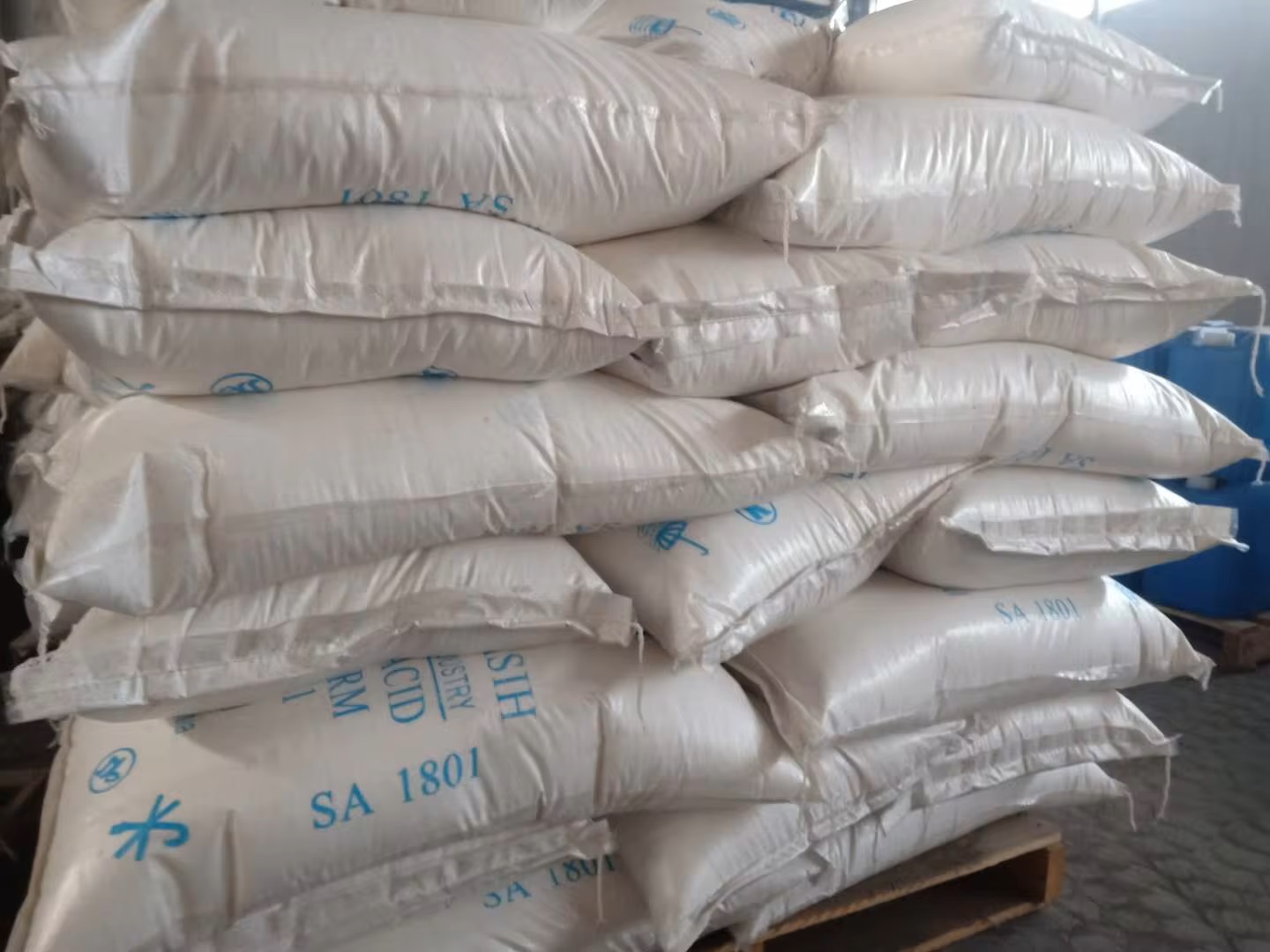
Store in original, closed packaging (polyethylene bag, box, drum).
-
Store in a cool, dry, well-ventilated area (10–30°C).
-
Protect from moisture (not highly hygroscopic, but prevents caking).
-
Keep away from heat sources and direct sunlight.
-
Keep away from oxidizing agents.
-
Store on racks or pallets to prevent dust accumulation.
-
Shelf life: 2–5 years under proper conditions (degradation signs: rancid odor, yellowing).
Firefighting:
-
Fire class: A (solid), dust explosion risk.
-
Extinguishing media: Dry chemical powder (ABC), CO₂, sand. DO NOT USE WATER (may cause boiling spatter and dust cloud formation).
-
Special hazards: Burning produces stearic acid fumes, magnesium oxide (MgO).
First aid:
-
Inhalation: Move to fresh air; administer oxygen if breathing difficulty occurs; seek medical attention if persists.
-
Skin contact: Wash with plenty of water and soap.
-
Eye contact: Rinse with plenty of water for at least 15 minutes (lifting eyelids); remove contact lenses; seek medical attention if irritation persists.
-
Ingestion: Rinse mouth; drink plenty of water; seek medical attention if accidentally swallowed (generally non-toxic).
Environmental precautions:
-
Do not discharge directly into water sources or sewers.
-
Biodegradable but insoluble in water; may cause physical pollution.
-
Dispose preferably by incineration (with energy recovery) or landfill.
12. Environmental Fate
| Parameter | Value |
|---|---|
| Biodegradability (fatty acid portion) | Readily biodegradable (OECD 301) – >60% in 28 days |
| Aquatic toxicity (fish, LC₅₀, 96 hr) | >100 mg/L (low toxicity) |
| Daphnia magna (EC₅₀, 48 hr) | >100 mg/L |
| Algal toxicity (EC₅₀, 72 hr) | >100 mg/L |
| Bioaccumulation potential | Low (log Kow ~3.0–4.0 – depending on fatty acid chain) |
| Mobility in soil | Low (insoluble in water, remains in soil) |
| Degradation in water | Very low (insoluble – remains as suspended particulate) |
| Photodegradation | Slow |
| WGK Germany | 1 (low hazard to water) |
| Disposal method | Incineration (preferred) or landfill |
13. Storage and Shelf Life
13.1 Storage Conditions
| Parameter | Requirement |
|---|---|
| Storage temperature | 10–30°C (cool, room temperature) |
| Relative humidity | <65% (to prevent caking) |
| Container type | Polyethylene bag (inner), cardboard box or fiber drum (outer) |
| Package sizes | 10 kg, 20 kg, 25 kg (bag/box); 500 kg (big bag) |
| Protect from | Moisture, heat, direct sunlight, oxidizing agents |
| Environment | Dry, well-ventilated, dust explosion-protected area |
13.2 Shelf Life and Degradation
| Parameter | Value |
|---|---|
| Shelf life (unopened, proper conditions) | 2–5 years |
| Shelf life (after opening) | 1–2 years (if properly resealed) |
| Degradation signs | Yellowing/browning; rancid odor; caking; increased free fatty acid; pH change |
| Degradation mechanism | Oxidation (fatty acid chains), hydrolysis (with moisture) |
14. Transport Information
| Regulation | Classification |
|---|---|
| UN Number | Not applicable (not classified as hazardous material) |
| ADR/RID | Not classified (not dangerous goods) |
| IMDG | Not classified |
| IATA | Not classified |
| Special precautions | Dust explosion precautions when transported in bulk as dust |
| Not subject to | ADR, RID, IMDG, IATA (in most cases) |
Transport note: For large quantities (≥500 kg) of dust transport, additional documentation may be required in some countries due to dust explosion risk.
15. Synonyms and Common Names
-
English: Magnesium Stearate, Magnesium Distearate, Magnesium Octadecanoate, Stearic Acid Magnesium Salt, Octadecanoic Acid Magnesium Salt, Dibasic Form
-
German: Magnesiumstearat
-
French: Stéarate de magnésium
-
Spanish: Estearato de magnesio
-
Trade names: HyQual®, Ligastar®, Parteck® LUB MST, Pruv®, Stear-O-Wet®, Magnesium Stearate NF
16. Properties as a Pharmaceutical Excipient
16.1 Pharmacopoeia Compliance
| Pharmacopoeia | Monograph |
|---|---|
| USP (United States) | Magnesium Stearate |
| Ph.Eur. (Europe) | Magnesii stearas |
| JP (Japan) | Magnesium Stearate |
| BP (United Kingdom) | Magnesium Stearate |
| IP (India) | Magnesium Stearate |
16.2 Typical Formulation Concentrations (Tablets)
| Application | Concentration (w/w) |
|---|---|
| Direct compression (DC) formulations | 0.5–1.0% |
| Added after granulation (wet/dry) | 0.25–0.5% |
| Soft gelatin capsules | 0.5–1.0% |
| Hard gelatin capsules (filler adjuvant) | 0.25–0.5% |
| Effervescent tablets | 0.5–1.0% (during manufacturing) |
| Chewable tablets | 0.5–1.5% |
16.3 Over-lubrication Warning
Adverse effects (at ≥2% concentration):
-
Decreased tablet hardness (≥20%)
-
Prolonged tablet disintegration time (≥100–200%)
-
Reduced dissolution rate (bioavailability risk)
-
Tablet-sticking to tooling (paradoxical effect) due to hydrophobic film
-
Tablet capping or lamination
Recommendation: Use the lowest effective concentration (typically 0.5%). Optimize mixing time (2–5 minutes; avoid prolonged mixing).
17. Quality Control Tests (Pharmaceutical Grade)
| Test | Method | Acceptance Criteria |
|---|---|---|
| Identification A (IR) | FTIR | Characteristic peaks for stearate and magnesium |
| Identification B (Magnesium) | Flame test or AAS | Characteristic color for magnesium (brilliant white) |
| Free fatty acid | Titration (NaOH 0.1N) | ≤5.0% |
| Loss on drying | 105°C, 2 hours | ≤6.0% |
| Chloride | Turbidimetric (AgNO₃) | ≤0.10% |
| Sulfate | Turbidimetric (BaCl₂) | ≤0.50% |
| Cadmium | Atomic absorption | ≤3 ppm |
| Lead | Atomic absorption | ≤10 ppm |
| Nickel | Atomic absorption | ≤5 ppm |
| Magnesium assay | Complexometric (EDTA) | 4.0–5.0% |
| Particle size (optional) | Laser diffraction / sieving | User-defined |
| Microbial limit | Plate count | ≤1000 CFU/g (TAMC); ≤100 CFU/g (TYMC) |
| E. coli | Negative | Absent |
| Salmonella (optional) | Negative | Absent |
18. Frequently Asked Questions (FAQs)
Q1: Is magnesium stearate vegan?
A1: It depends on the source. Vegetable-source (palm, coconut, rapeseed, soy) magnesium stearate is vegan. Animal-source (tallow, beef fat) is not vegan. Vegetable-source is increasingly used in pharmaceutical and cosmetic applications. The source should be indicated on the product label or certificate (halal, kosher, vegan).
Q2: Is magnesium stearate safe?
A2: Yes, it is classified as GRAS (Generally Recognized as Safe) by the FDA and EFSA. It has been safely used in food, pharmaceutical, and cosmetic products for decades. Oral LD₅₀ >10,000 mg/kg (practically non-toxic). No toxicity or side effects have been reported at typical use concentrations (0.25–2.0%).
Q3: Does magnesium stearate accumulate in the body?
A3: No. Magnesium stearate is hydrolyzed in the digestive system to stearic acid and magnesium ions. Stearic acid is a normal fatty acid; it is metabolized like other fatty acids (beta-oxidation). Magnesium is used by the body or excreted via the kidneys. No accumulation has been observed.
Q4: Is magnesium stearate an emulsifier?
A4: Yes, it is a weak emulsifier. It reduces water/oil interfacial tension, helping to stabilize emulsions. However, its emulsifying power is limited; it is generally used together with other emulsifiers (lecithin, polysorbate).
Q5: Why is magnesium stearate used in tablets?
A5: It is used in tablet manufacturing for three main reasons: (1) Lubricant – prevents tablets from sticking to machine punches and dies. (2) Glidant – improves flowability of the powder blend. (3) Anti-adherent – prevents powder from adhering to machine surfaces.
Q6: Can magnesium stearate cause allergies?
A6: Rare. Magnesium stearate itself is not allergenic. However, in rare cases, residual proteins from the production process (from vegetable or animal sources) may cause allergic reactions. High-purity pharmaceutical grade products eliminate this risk.
Q7: Is magnesium stearate safe in baby powder?
A7: Yes, it is widely used in baby powders as an alternative to talc (which has asbestos concerns). Magnesium stearate is hypoallergenic, less fine than talc (lower inhalation risk), and provides smooth lubrication on the skin. Many baby powders in Europe and North America are now magnesium stearate-based.
Q8: How does magnesium stearate prevent caking?
A8: Due to its hydrophobic (water-repelling) structure, it forms a barrier between particles, preventing moisture from reaching the particles. Powder that remains dry does not cake hygroscopically. It also reduces interparticle adhesion forces, ensuring free flow.
19. Magnesium Stearate vs. Calcium Stearate – Comparison Table
| Property | Magnesium Stearate | Calcium Stearate |
|---|---|---|
| E Number | E470b | E470a |
| Common use area | Pharmaceuticals, cosmetics, food | Plastics, construction, food (limited) |
| Lubrication performance | Excellent | Good |
| Effect on tablet disintegration | Low to moderate | Moderate to high |
| Water repellency (hydrophobicity) | High | Moderate |
| Thermal stability (melting point) | 88.5°C | 140–160°C |
| Powder flowability | Good (fine particle) | Moderate |
| Taste | Tasteless | Slightly soapy taste |
| Use in cosmetics | Common | Rare |
| Cost | Moderate | Low |
20. Summary Table – Key Specifications at a Glance
| Parameter | Value |
|---|---|
| Product Name | Magnesium Stearate (Magnesium Distearate) |
| CAS Number | 557-04-0 |
| EC Number | 209-150-3 |
| Molecular Formula | C₃₆H₇₀MgO₄ |
| Molecular Weight | 591.20 g/mol |
| Appearance | White to off-white, crystalline powder or pellets |
| Odor | Odorless or faint characteristic |
| Melting Point | 88.5°C (broad range 88–143°C) |
| Solubility in Water (25°C) | ~0.004 g/100 mL (very low) |
| Solubility in hot ethanol | Soluble |
| pH (10% aqueous suspension) | 6.5–8.0 (neutral) |
| Magnesium content | 4.0–5.0% |
| Free fatty acid (Pharmaceutical grade) | ≤5.0% |
| Loss on drying (105°C) | ≤6.0% |
| Heavy metals (as Pb) | ≤10 ppm (Ph.Eur ≤20 ppm) |
| Lead (Pb) | ≤10 ppm |
| Cadmium (Cd) | ≤3 ppm |
| Nickel (Ni) | ≤5 ppm (Ph.Eur) |
| E Number | E470b |
| Primary Applications | Pharmaceuticals (lubricant), food (flow agent, antifoam), cosmetics (lubricant), plastics (stabilizer) |
| GHS Signal Word | Warning (in case of dust inhalation) |
| Hazard Statements | H335 (in case of dust inhalation) |
| UN Number | Not applicable (not dangerous goods) |
| Oral LD₅₀ (rat) | >10,000 mg/kg (non-toxic) |
| Biodegradability | Readily biodegradable |
| Shelf Life (proper conditions) | 2–5 years |
| Pharmacopoeia compliance | USP, Ph.Eur, JP, BP, IP |
*This TDS is prepared in compliance with ISO 11014-1 format and is intended for pharmaceutical formulators, food technologists, cosmetic chemists, plastics engineers, and procurement professionals. Certificates of Analysis (CoA), Safety Data Sheets (SDS), and sample validation reports are available upon request.*