We unleash your business potential by maximize the business innovation.
Send EmailSodium Lauryl Sulfate, Sodium Dodecyl Sulfate, Mono Dodecyl Sodium Sulfate, SDS, SLS, 151-21-3, 12765-21-8, 12738-53-3, 1334-67-4
SODIUM LAURYL SULFATE (SLS - SODIUM DODECYL SULFATE) POWDER
PRODUCT IDENTIFICATION INFORMATION
| Parameter | Information |
|---|---|
| Product Name | Sodium Dodecyl Sulfate (SLS) Powder |
| Chemical Name | Sodium Dodecyl Sulfate |
| Chemical Family | Alcohol Sulfate / Primary Alkyl Sulfate |
| Synonyms (Turkish) | Sodyum Lauril Sülfat, Sodyum Dodesil Sülfat, Sodyum Dodekan Sülfat, Lauril Sülfürik Asit Sodyum Tuzu, SLS |
| Synonyms (English) | Sodium Lauryl Sulfate, Sodium Dodecyl Sulfate, Dodecyl Sulfate Sodium Salt, Lauryl Sulfate Sodium Salt, Monododecyl Sodium Sulfate, Sulfuric Acid Monododecyl Ester Sodium Salt, SDS, SLS |
| CAS Number | 151-21-3 (Primary) / 12765-21-8, 12738-53-3, 1334-67-4 (Alternative) |
| Molecular Formula | C₁₂H₂₅O₄SNa |
| Molecular Weight | 288.38 g/mol |
CHEMICAL STRUCTURE
Sodium Lauryl Sulfate Structure:
CH₃—(CH₂)₁₀—CH₂—O—S(=O)₂—O⁻ Na⁺
Structure Description:
-
Anionic surfactant (surface-active agent).
-
Sodium salt of lauryl sulfuric acid.
-
Contains a hydrophobic (water-repelling) dodecyl hydrocarbon chain (C₁₂H₂₅).
-
Contains a hydrophilic (water-attracting) sulfate head group (-OSO₃⁻Na⁺).
-
Derived from organic sources such as coconut kernel oil or palm kernel oil.
-
Consists of sodium alkyl sulfate and lauryl mixture.
SECTION 1: CHEMICAL IDENTITY AND DESCRIPTION
| Parameter | Information |
|---|---|
| Product Name | Sodium Dodecyl Sulfate (SLS) Powder |
| Chemical Name | Sodium Dodecyl Sulfate |
| Chemical Family | Alcohol Sulfate / Primary Alkyl Sulfate |
| Synonyms (Turkish) | Sodyum Lauril Sülfat, Sodyum Dodesil Sülfat, Sodyum Dodekan Sülfat, Lauril Sülfürik Asit Sodyum Tuzu, SLS |
| Synonyms (English) | Sodium Lauryl Sulfate, Sodium Dodecyl Sulfate, Dodecyl Sulfate Sodium Salt, Lauryl Sulfate Sodium Salt, Monododecyl Sodium Sulfate, Sulfuric Acid Monododecyl Ester Sodium Salt, SDS, SLS |
| CAS Number | 151-21-3 (Primary) / 12765-21-8, 12738-53-3, 1334-67-4 (Alternative) |
| Molecular Formula | C₁₂H₂₅O₄SNa |
| Molecular Weight | 288.38 g/mol |
| Chemical Class | Anionic surfactant; Alkyl sulfate; Detergent raw material |
| Source | Synthetic (sulfation of lauryl alcohol from coconut/palm kernel oil) |
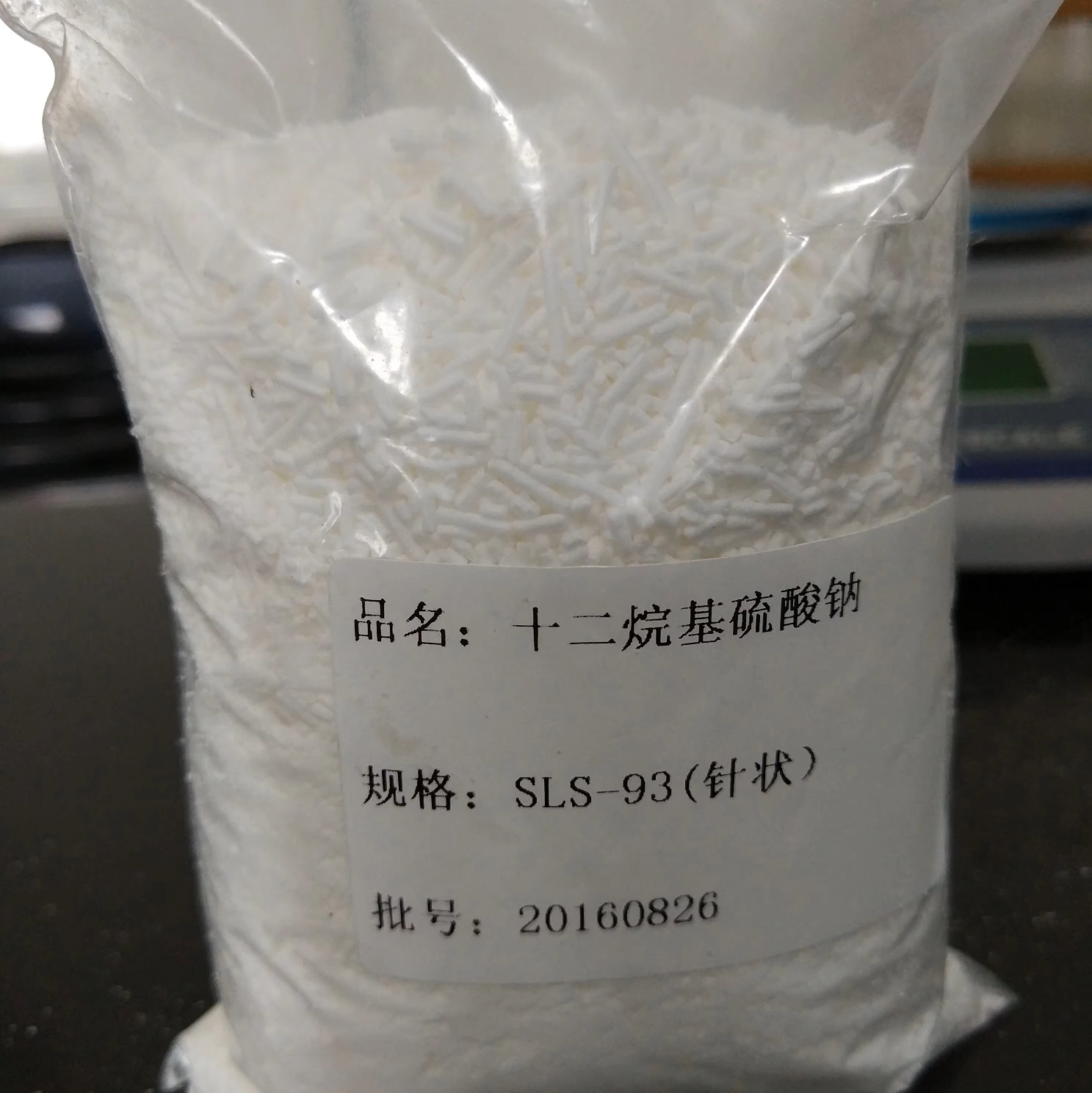
| Physical State (20°C) | Solid (white to off-white powder or crystalline solid) |
| Odor | Slight characteristic odor |
| Color | White to off-white |
SECTION 2: PHYSICAL AND CHEMICAL PROPERTIES
| Property | Value | Test Method / Note |
|---|---|---|
| Appearance | White to off-white powder or crystalline solid | Visual |
| Odor | Slight characteristic odor | Olfactometric |
| Molecular Weight | 288.38 g/mol | Calculated |
| Density | ~1.6 g/cm³ | ASTM D4052 |
| Melting Point | 205.5°C | DSC |
| Boiling Point | Decomposes | – |
| Solubility in Water (20°C) | ~15 g / 100 mL (moderately soluble) | General Method |
| pH (1% Solution) | 7.0 – 10.0 (depending on specification) | pH Meter |
| Stability | Stable under normal conditions | – |
| Surface Tension Reduction | High | – |
| Foaming Capacity | Excellent | – |
| Wetting Ability | Excellent | – |
| Emulsifying Ability | Excellent | – |
| Krafft Point | ~16°C | – |
| CMC (Critical Micelle Concentration) | ~8.2 mM (0.23%) in water | – |
| Heavy Metals (as Pb) | ≤ 10 ppm | AAS / ICP |
| Arsenic (As) | ≤ 2 ppm | AAS / ICP |
| Lead (Pb) | ≤ 2 ppm | AAS / ICP |
| Loss on Drying | ≤ 5.0% | Gravimetric |
| Sodium Chloride Content | ≤ 1.0% | Titrimetric |
| Unsulfated Matter | ≤ 2.0% | Titrimetric |
| Active Matter | ≥ 90 – 100% (depending on grade) | Titrimetric |
SECTION 3: SLS vs OTHER SURFACTANTS
| Property | SLS (Sodium Lauryl Sulfate) | SLES (Sodium Laureth Sulfate) | SCI (Sodium Cocoyl Isethionate) | SCG (Sodium Cocoyl Glutamate) |
|---|---|---|---|---|
| Source | Coconut/palm (sulfated) | Coconut/palm (ethoxylated + sulfated) | Coconut oil + isethionic acid | Coconut oil + glutamic acid |
| Chemical Family | Alkyl Sulfate | Alkyl Ether Sulfate | Alkyl Sulfonate / Acyl Isethionate | Acyl Amino Acid Salt |
| Form | Powder, Granule, Needle | Liquid (28-70% active), Paste | Powder, Flake, Noodle | Liquid (25-30%) |
| Hard Water Sensitivity | Sensitive (calcium salt precipitates) | Resistant | Resistant | Resistant |
| Skin Mildness | Moderate-High (alone) | Low-Moderate | Very Low | Very Low |
| Foam Profile | Abundant, fast, large bubbles | Abundant, creamy, dense | Dense, creamy, silky | Creamy, fine, stable |
| Irritation Potential | Relatively high | Low | Very low | Very low |
| pH Tolerance | Wide, stable at acidic pH | Wide, stable at alkaline pH | Slightly acidic-neutral best (pH 5-7) | Slightly acidic-neutral best (pH 5-7) |
| Relative Cost | 1.0 (Reference) | 1.2 – 1.5 | 3.0 – 4.0 | 5.0 – 7.0 |
| Primary Application | Shampoo, toothpaste, industrial cleaning, detergents | Liquid soap, shower gel, baby shampoo | "Sulfate-free" solid shampoos, facial cleansers | Premium sulfate-free liquids, baby, sensitive skin |
SECTION 4: MECHANISM OF ACTION
| Property | Description |
|---|---|
| Surface Activity | Reduces surface tension between water and oil/hydrophobic surfaces; Aligns at interfaces with hydrophobic tail facing oil/air and hydrophilic head facing water. |
| Foaming | Forms stable foam by reducing surface tension at air-water interfaces; Creates a film of surfactant molecules around air bubbles; Provides cleansing and sensory benefits. |
| Wetting | Improves wetting of surfaces by water; Reduces contact angle between liquid and solid surfaces; Enhances penetration into fabrics, hair, and surfaces. |
| Emulsification | Stabilizes oil-water mixtures by forming micelles; Hydrophobic tails surround oil droplets; Hydrophilic heads face water; Prevents coalescence and separation. |
| Solubilization | Dissolves hydrophobic substances in water through micelle formation; Encapsulates oils, dirt, and other insoluble materials; Enables removal during rinsing. |
| Detergency | Removes dirt and oils from surfaces; Combines wetting, emulsification, and solubilization; Effective in cleaning applications. |
| Protein Denaturation | Disrupts protein structure by interacting with hydrophobic regions; Used in SDS-PAGE for protein separation; Denatures and solubilizes proteins. |
SECTION 5: PRODUCTION PROCESS
Industrial Production Method:
Process Flow:
Coconut/Palm Kernel Oil → Transesterification/Hydrolysis → Lauryl Alcohol → Sulfation (SO₃ or Chlorosulfonic Acid) → Lauryl Sulfuric Acid → Neutralization (NaOH) → Sodium Lauryl Sulfate → Drying → Milling → Final Product
Step-by-Step Description:
-
Raw Material Source: Coconut or palm kernel oil (contains lauric acid).
-
Fatty Alcohol Production: Oil is transesterified or hydrolyzed to obtain fatty acids; Fatty acids are reduced to fatty alcohols (lauryl alcohol).
-
Sulfation: Lauryl alcohol is reacted with sulfur trioxide (SO₃) or chlorosulfonic acid to form lauryl sulfuric acid.
-
Neutralization: Lauryl sulfuric acid is neutralized with sodium hydroxide (NaOH) to form sodium lauryl sulfate.
-
Drying: The resulting product is dried to remove water.
-
Milling: Dried product is milled to achieve desired particle size.
-
Final Product: Various grades are produced with different active matter content and particle sizes.
SECTION 6: FUNCTIONAL PROPERTIES
| Property | Description |
|---|---|
| Primary Surfactant | Main cleansing and foaming agent in personal care and cleaning products; Provides detergency and lathering properties. |
| Foaming Agent | Creates abundant, stable foam in shampoos, toothpastes, and liquid soaps; Enhances product sensory experience. |
| Wetting Agent | Improves wetting and penetration in textile processing, paper production, and cleaning; Reduces surface tension for better coverage. |
| Emulsifier | Stabilizes oil-water emulsions in industrial and cosmetic formulations; Prevents phase separation. |
| Detergent | Removes dirt, oils, and soils from surfaces; Used in laundry detergents, dishwashing liquids, and household cleaners. |
| Degreaser | Dissolves grease and oils in industrial cleaning applications; Used in paint removers and general degreasers. |
| Protein Solubilizer | Denatures and solubilizes proteins; Used in laboratory applications (SDS-PAGE). |
SECTION 7: MAIN APPLICATION AREAS
| Industry / Sector | Function | Typical Use |
|---|---|---|
| Personal Care & Cosmetics | Surfactant, foaming agent, cleanser | Shampoos, liquid soaps, toothpaste, shaving creams, bath foams, facial cleansers; 1 – 15% of formulation. |
| Household & Industrial Cleaning | Wetting agent, emulsifier, foam stabilizer | Powder detergents, liquid dishwashing detergents, general surface cleaners; Used in LABSA formulations to reduce surface tension; 1 – 15% of formulation. |
| Textile Industry | Wetting agent, penetrant, post-wash softener | Raw fabric desizing, pre-dyeing wetting, wool washing, finishing; 0.5 – 3% (depending on liquor ratio). |
| Leather Industry | Softener, rewetting aid | Soft leather processing baths, post-pickle wetting; 0.5 – 2%. |
| Paper Industry | Penetrating agent | Added to paper pulp to enhance absorbency; 0.2 – 1%. |
| Metallurgy & Mining | Flotation chemical, brightener | Precious metal ore separation (flotation); Surface tension reducer and brightener in nickel and zinc electroplating baths; 0.1 – 2%. |
| Paints & Coatings | Paint stripping surfactant, wetting agent | Paint and varnish remover formulations to enhance penetration; 1 – 5%. |
| Laboratory & Biotechnology | Protein denaturation, lysis agent | SDS-PAGE gel electrophoresis, lipid separation, cell lysis buffers; 0.1 – 10% (depending on buffer). |
SECTION 8: SAMPLE FORMULATIONS
A. Liquid Shampoo (Clear, Sulfate-Based)
| Component | Function | Amount (% w/w) |
|---|---|---|
| Water (Deionized) | Solvent | q.s. (~50-55%) |
| SLS Powder (e.g., Agnique® SLS 90 P) | Primary surfactant, foaming, cleansing | 8 – 12 |
| Cocamidopropyl Betaine (CAPB) | Secondary surfactant, foam booster, mildness | 3 – 5 |
| Coconut Fatty Acid Diethanolamide (CDEA) | Thickener, foam stabilizer | 1 – 2 |
| Sodium Chloride (Salt) | Viscosity adjuster | 0.5 – 1.5 |
| Preservative (e.g., Sodium Benzoate) | Preservation | 0.5 |
| Citric Acid | pH adjuster (pH 5.5 – 6.5) | q.s. |
| Fragrance & Color | Aesthetics | q.s. |
Instructions: Add SLS powder slowly to water phase with continuous mixing; Heat to 40-50°C to accelerate dissolution; Add CAPB, CDEA, and other components; Adjust viscosity with salt; Adjust pH with citric acid.
B. Toothpaste (Opaque, Fluoridated)
| Component | Function | Amount (% w/w) |
|---|---|---|
| Sorbitol (70% Solution) | Humectant, sweetener | 25 – 35 |
| Water (Deionized) | Solvent | 15 – 20 |
| Hydrated Silica | Abrasive, thickener | 18 – 22 |
| SLS Powder | Foaming agent, surfactant | 1.5 – 2.0 |
| Xanthan Gum / Carbomer | Binder, stabilizer | 0.5 – 1.2 |
| Sodium Saccharin | Sweetener | 0.2 – 0.3 |
| Sodium Fluoride | Active (anti-cavity) | 0.32 |
| Titanium Dioxide | Opacifier | 0.5 – 1.0 |
| Flavor (Mint, etc.) | Flavoring | 1 – 1.5 |
| Sodium Benzoate | Preservative | 0.2 |
C. Powder Detergent (Laundry)
| Component | Function | Amount (% w/w) |
|---|---|---|
| Soda Ash (Sodium Carbonate) | Alkali builder, water softener | 30 – 40 |
| Sodium Percarbonate / Perborate | Bleaching agent | 10 – 15 |
| LABSA (neutralized with soda) | Primary anionic surfactant | 10 – 15 |
| SLS Powder | Secondary surfactant, rapid foam, wetting | 3 – 7 |
| Sodium Silicate | Corrosion inhibitor, powder builder | 5 – 8 |
| Filler (Sodium Sulfate) | Filler | q.s. (to 100%) |
| Carboxymethyl Cellulose (CMC) | Anti-redeposition agent | 1 – 2 |
| Optical Brightener, Enzyme, Fragrance | Performance/Aesthetics | q.s. |
D. Liquid Hand Soap
| Component | Function | Amount (% w/w) |
|---|---|---|
| Water | Solvent | q.s. (~70%) |
| SLS Powder | Primary cleanser, foaming | 5 – 8 |
| Cocamidopropyl Betaine | Mildness, foam | 3 – 5 |
| Glycerin | Humectant | 1 – 2 |
| Salt | Viscosity | 0.5 – 2 |
| Preservative, Fragrance, pH Adjuster | Aesthetics/Preservation | q.s. |
SECTION 9: QUALITY SPECIFICATIONS
| Parameter | Cosmetic Grade | Technical Grade | Pharmaceutical Grade | Test Method |
|---|---|---|---|---|
| Appearance | White to off-white powder | White to off-white powder | White to off-white powder | Visual |
| Active Matter | ≥ 90 – 100% | ≥ 90 – 95% | ≥ 99% | Titrimetric |
| pH (1% Solution) | 7.0 – 9.0 | 7.0 – 10.0 | 7.0 – 8.5 | pH Meter |
| Loss on Drying | ≤ 5.0% | ≤ 5.0% | ≤ 3.0% | Gravimetric |
| Sodium Chloride | ≤ 1.0% | ≤ 2.0% | ≤ 0.5% | Titrimetric |
| Unsulfated Matter | ≤ 2.0% | ≤ 3.0% | ≤ 1.0% | Titrimetric |
| Heavy Metals (as Pb) | ≤ 10 ppm | ≤ 20 ppm | ≤ 10 ppm | AAS / ICP |
| Arsenic (As) | ≤ 2 ppm | – | ≤ 2 ppm | AAS / ICP |
| Lead (Pb) | ≤ 2 ppm | – | ≤ 2 ppm | AAS / ICP |
| Color | White | White/Off-white | White | Visual |
| Particle Size | Customer requirement | Customer requirement | Customer requirement | Sieve / Laser |
SECTION 10: TOXICOLOGICAL PROFILE
| Parameter | Value |
|---|---|
| Acute Oral Toxicity (LD50, Rat) | ~ 1,288 mg/kg (moderate toxicity) |
| Acute Dermal Toxicity | Low toxicity; Mild to moderate irritation |
| Skin Irritation | Irritant at high concentrations; Prolonged contact may cause irritation |
| Eye Irritation | Severe irritation; Avoid eye contact |
| Inhalation Toxicity | May cause respiratory irritation (dust) |
| Chronic Toxicity | Low toxicity at normal use levels |
| Carcinogenicity | Not classified as carcinogenic |
| Mutagenicity | Not mutagenic |
| Reproductive Toxicity | No reproductive toxicity at normal levels |
| Allergenicity | May cause skin sensitization in sensitive individuals |
| Special Toxicity Note | All anionic surfactants have potential for skin and eye irritation at high concentrations; Irritation potential significantly reduced when formulated with co-surfactants (e.g., cocamidopropyl betaine); Considered safe at approved usage levels (e.g., toothpaste: ≤2%); Not classified as hazardous under normal use conditions. |
SECTION 11: GHS CLASSIFICATION AND LABELING
GHS Classification (in accordance with CLP and UN GHS):
| Hazard Class | Category | H-Statement |
|---|---|---|
| Acute Toxicity (Oral) | Category 4 | H302 |
| Skin Irritation | Category 2 | H315 |
| Eye Damage | Category 1 | H318 |
| Specific Target Organ Toxicity (Single) | Category 3 | H335 |
Signal Word: DANGER
Hazard Pictograms: GHS05 (Corrosive), GHS07 (Exclamation Mark)
Hazard Statements (H-Codes):
| Code | Statement |
|---|---|
| H302 | Harmful if swallowed |
| H315 | Causes skin irritation |
| H318 | Causes serious eye damage |
| H335 | May cause respiratory irritation |
SECTION 12: PRECAUTIONARY STATEMENTS (P-CODES)
| Code | Statement |
|---|---|
| P264 | Wash hands thoroughly after handling |
| P270 | Do not eat, drink, or smoke when using this product |
| P280 | Wear protective gloves/protective clothing/eye protection/face protection |
| P301+P312 | IF SWALLOWED: Call a POISON CENTER/doctor if you feel unwell |
| P302+P352 | IF ON SKIN: Wash with plenty of soap and water |
| P304+P340 | IF INHALED: Remove person to fresh air and keep comfortable for breathing |
| P305+P351+P338 | IF IN EYES: Rinse cautiously with water for several minutes. Remove contact lenses if present and continue rinsing |
| P310 | Immediately call a POISON CENTER/doctor |
| P332+P313 | If skin irritation occurs: Get medical advice/attention |
| P337+P313 | If eye irritation persists: Get medical advice/attention |
| P362+P364 | Take off contaminated clothing and wash it before reuse |
| P403+P233 | Store in a well-ventilated place. Keep container tightly closed |
| P501 | Dispose of contents/container in accordance with local/regional/national/international regulations |
SECTION 13: FIRST AID MEASURES
| Exposure Route | Action to Take |
|---|---|
| Inhalation | Remove to fresh air immediately. If respiratory irritation develops, seek medical attention. |
| Skin Contact | Wash with plenty of soap and water. Remove contaminated clothing. If irritation persists, get medical attention. |
| Eye Contact | Rinse immediately with plenty of water for at least 15 minutes. Keep eyelids open. Remove contact lenses if present. If irritation persists, seek medical attention. |
| Ingestion | Rinse mouth. Drink plenty of water. Do not induce vomiting. If large quantities are ingested or if feeling unwell, seek medical attention. |
SECTION 14: FIREFIGHTING MEASURES
| Parameter | Information |
|---|---|
| Fire Hazard | Combustible organic material. Dust may form explosive mixtures with air. |
| Hazards Arising from Fire | Thermal decomposition produces carbon monoxide, carbon dioxide, sulfur oxides (SOx), and irritating fumes. |
| Suitable Extinguishing Media | Water spray, CO₂, dry chemical powder, foam. |
| Unsuitable Extinguishing Media | Water jet (may spread dust) |
| Special Protective Equipment | Self-contained breathing apparatus (SCBA), full protective clothing. |
| Special Precautions | Prevent dust from entering sewers and waterways. Avoid dust cloud formation. |
SECTION 15: STORAGE AND SHELF LIFE
| Parameter | Information |
|---|---|
| Storage Conditions | Store in a cool, dry, well-ventilated area; PROTECT FROM MOISTURE and DIRECT SUNLIGHT; Keep away from heat sources. |
| Container Requirements | Tightly closed, moisture-proof containers (PE-lined kraft bags, HDPE containers). |
| Materials to Protect From | Moisture, heat, strong oxidizing agents |
| Shelf Life | 24 months minimum (in unopened original packaging, under proper storage conditions). |
| Stability Note | Stable under recommended storage conditions; Hygroscopic (absorbs moisture); May cake if exposed to high humidity. |
| Special Storage Requirements | Store in a dry, cool place; Avoid exposure to air and moisture; Opened containers must be resealed immediately. |
SECTION 16: PACKAGING OPTIONS
| Packaging Type | Quantity | Material |
|---|---|---|
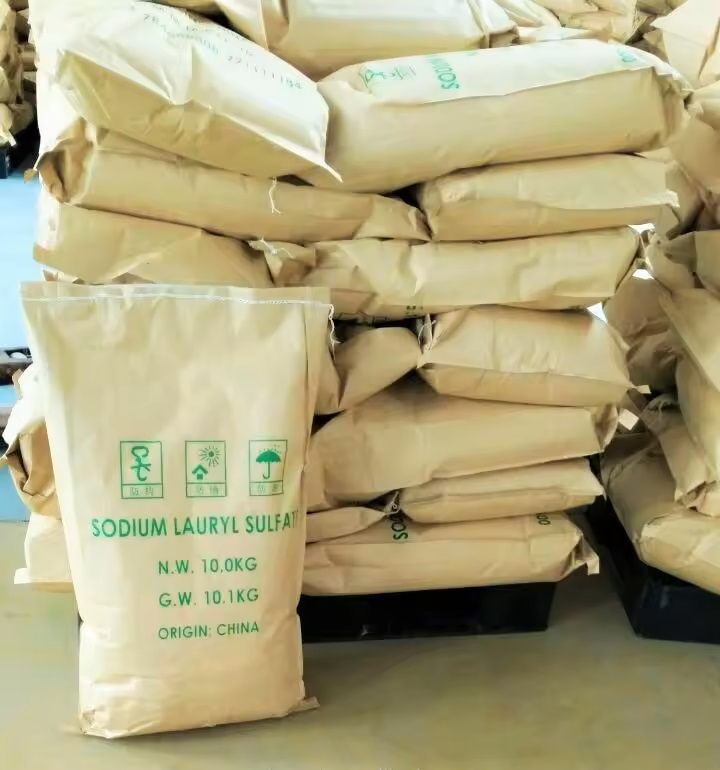
| Kraft Paper Bag | 25 kg | PE-lined kraft paper bag (moisture-proof) |
| Plastic Bag | 5 kg, 10 kg, 25 kg | PE bag (inner-lined, sealed, moisture-proof) |
| Fiber Drum | 20 kg, 25 kg | PE-lined fiberboard drum |
| Plastic Drum | 25 kg, 50 kg | HDPE / Polypropylene (moisture-proof) |
| FIBC / Big Bag | 500 kg, 1000 kg | PE-lined, moisture-resistant PP woven bag |
SECTION 17: TRANSPORT INFORMATION
| Parameter | Information |
|---|---|
| UN Number | Not regulated (non-hazardous) |
| Hazard Class | Not applicable |
| Packing Group | Not applicable |
| ADR/RID | Not regulated |
| IMDG Code | Not regulated (non-hazardous) |
| IATA (Air) | Not regulated (non-hazardous) |
| Marine Pollutant | No |
| Transport Temperature | Ambient temperature; Protect from moisture and heat. |
SECTION 18: REGULATORY STATUS
| Region / Authority | Status |
|---|---|
| European Union | Approved for use in cosmetics (EU Cosmetics Regulation); REACH registered. |
| USA (TSCA) | Listed (TSCA Inventory) |
| USA (FDA) | Approved for use in food contact applications; GRAS for specific uses; 21 CFR 172.210; 21 CFR 172.822; 21 CFR 173.315 |
| Turkey | Approved for use in cosmetics and personal care; KKDIK regulation compliance required; Ministry of Health approval for cosmetic products. |
| EFSA | Approved for use as food additive (processing aid); Specifications established. |
| IARC | Not classified (non-carcinogenic) |
| NTP | Not listed |
| OSHA | Regulated as nuisance dust/irritant |
| California (Prop 65) | Not listed |
| Halal | Yes (with certification, from plant sources) |
| Kosher | Yes (with certification) |
| Vegan | Yes (plant-derived, no animal ingredients) |
SECTION 19: OTHER NAMES AND SYNONYMS
| Type | Name |
|---|---|
| Turkish Names | Sodyum Lauril Sülfat, Sodyum Dodesil Sülfat, Sodyum Dodekan Sülfat, Lauril Sülfürik Asit Sodyum Tuzu, SLS |
| English Names | Sodium Lauryl Sulfate, Sodium Dodecyl Sulfate, Dodecyl Sulfate Sodium Salt, Lauryl Sulfate Sodium Salt, Monododecyl Sodium Sulfate, Sulfuric Acid Monododecyl Ester Sodium Salt, SDS |
| Trade Names (BASF) | Agnique® SLS 90 P (Powder, ~100% active); Disponil® SDS 15 EVO, SDS 30 EVO; Disponil® SDS G (Granule, ~97% active); Disponil® SLS 101 Spec EVO |
| Other Trade Names | Texapon® K 12 P, K 12 (former BASF nomenclature) |
| CAS Number | 151-21-3 (Primary) |
| HS Code | 3402.39 |
SECTION 20: SUMMARY TABLE
| Parameter | Value |
|---|---|
| Product | Sodium Lauryl Sulfate (SLS - Sodium Dodecyl Sulfate) Powder |
| CAS Number | 151-21-3 |
| Molecular Formula | C₁₂H₂₅O₄SNa |
| Molecular Weight | 288.38 g/mol |
| Appearance | White to off-white powder or crystalline solid |
| Melting Point | 205.5°C |
| Solubility in Water (20°C) | ~15 g/100 mL |
| pH (1% Solution) | 7.0 – 10.0 |
| Active Matter | ≥ 90 – 100% (grade dependent) |
| Primary Function | Surfactant, foaming agent, emulsifier, wetting agent, detergent |
| Main Application Areas | Personal care, cosmetics, household cleaning, textiles, leather, paper, mining, metallurgy, paint, laboratory |
| Shelf Life | 24 months minimum |
| GHS Signal Word | DANGER |
| UN Number | Not regulated |
| Special Properties | Anionic surfactant; Excellent foaming and wetting; Plant-derived (coconut/palm kernel); Moderate skin irritation potential; Biodegradable; Vegan and Halal certified. |
SECTION 21: CRITICAL WARNINGS AND BEST PRACTICES
CRITICAL WARNINGS:
-
HARMFUL IF SWALLOWED (H302): Avoid ingestion; Use appropriate safety measures.
-
CAUSES SERIOUS EYE DAMAGE (H318): Eye contact must be avoided. EYE PROTECTION IS MANDATORY.
-
CAUSES SKIN IRRITATION (H315): Prolonged or repeated contact may cause irritation; Use protective gloves.
-
MAY CAUSE RESPIRATORY IRRITATION (H335): Avoid inhalation of dust; Use in well-ventilated areas.
-
HYGROSCOPIC: Absorbs moisture from air; Store in tightly closed containers.
-
COMBUSTIBLE DUST: May form explosive dust-air mixtures; Avoid dust cloud formation.
-
MODERATE SKIN IRRITATION POTENTIAL: In pure form; Irritation significantly reduced in formulated products with co-surfactants.
-
BIOGRAPHIC: Biodegradable; Environmentally acceptable at normal usage levels.
-
PLANT-DERIVED: Derived from coconut or palm kernel oil; Suitable for vegan and halal applications (with certification).
BEST PRACTICE RECOMMENDATIONS:
-
Personal Care & Cosmetics: Use as primary surfactant and foaming agent; Shampoos, liquid soaps, toothpaste, shaving creams; Dosage: 1-15%; Dissolve in water with heating (40-50°C) for faster dissolution; Use with co-surfactants (CAPB) for reduced irritation; Adjust viscosity with salt.
-
Household & Industrial Cleaning: Use as wetting agent, emulsifier, and foam stabilizer; Powder detergents, liquid dishwashing; Dosage: 1-15%; Used in LABSA formulations to reduce surface tension; Improves cold-water performance.
-
Textile Industry: Use as wetting agent and penetrant; Raw fabric desizing, pre-dyeing wetting; Dosage: 0.5-3% (depending on liquor ratio); Effective in hard water with proper chelating agents.
-
Laboratory: Use as protein denaturant and lysis agent; SDS-PAGE electrophoresis; Dosage: 0.1-10% (depending on buffer); High purity grades required for laboratory use.
-
Handling: Use in well-ventilated areas; Avoid dust formation; Use dust masks (N95/FFP2) when handling powder; Use gloves and safety goggles; Avoid eye and skin contact.
-
Personal Protective Equipment: MANDATORY: Chemical-resistant gloves, safety goggles or face shield, protective clothing, dust mask (N95/FFP2 or higher).
-
Hygiene: Wash hands thoroughly after handling; Do not eat, drink, or smoke while using; Remove contaminated clothing and wash before reuse.
-
Storage: Store in tightly closed, moisture-proof containers; Store in cool, dry, well-ventilated area; Protect from moisture and heat; Opened containers must be resealed immediately; Shelf life: 24 months minimum under proper conditions.
-
Spill Management: Sweep or vacuum (HEPA) and place in suitable sealed container; Avoid dust formation; Do not allow entry into drains or waterways.
-
Disposal: Dispose of in accordance with local, regional, and national regulations; Non-hazardous waste; Can be incinerated in compliance with regulations.
DETECTION METHODS:
| Method | Description | Advantages | Disadvantages |
|---|---|---|---|
| Titrimetric (Epton Method) | Two-phase titration with cationic surfactant | Standard method, simple, low cost | Only total anionic surfactant |
| HPLC | Quantitative analysis of SLS | High sensitivity, specific | High cost, requires expertise |
| FTIR | Functional group identification | Fast, non-destructive | Qualitative, requires reference |
| NMR | Structural confirmation | Definitive identification | High cost, requires expertise |
| Colorimetric (Methylene Blue) | Complexation with methylene blue | Simple, moderate cost | Semi-quantitative |
SLS GRADE COMPARISON TABLE (BASF EXAMPLES)
| Property | Agnique® SLS 90 P | Disponil® SDS 15 EVO | Disponil® SDS 30 EVO | Disponil® SDS G | Disponil® SLS 101 Spec EVO |
|---|---|---|---|---|---|
| Physical Form (20°C) | Powder | Liquid (flowable) | Liquid (viscous) | Solid (Granule/Needle) | Liquid (medium viscous) |
| Active Matter (%) | ~100 | ~15 | ~30 | ~97 | ~30 |
| Alkyl Chain Distribution | C12 (Lauryl) dominant | C12 | C12 | C12 | C12-C16 blend |
| Ease of Use in Production | Medium (requires dissolution, energy cost) | Very Easy (cold process) | Easy (pumpable, cold process) | Medium-Easy (dissolves easily with little energy) | Easy |
| Storage / Transport | Low cost, stable | Expensive (water transport), freezing risk | More economical | Low cost, compact | More economical |
| Formulation Suitability | Powder shampoo, toothpaste, dry detergent, electrophoresis | Ready-to-use liquid soap, clear products, room temperature process | Liquid shampoo, bath foam, concentrated cleaning | Compact detergent, solid cosmetics, automatic processes | Low-cost liquid cleaning, industrial detergent |
LEGAL DISCLAIMER:
The information provided in this document is based on our current knowledge and experience and is presented in good faith. However, as all conditions of use are beyond our control, it does not constitute a binding specification or warranty. This Technical Data Sheet is for informational purposes only. Users are responsible for testing the suitability for their own applications and for complying with all local, regional, and national regulations. For complete safety, storage, use, handling, waste, and regulatory compliance information, please refer to the official Safety Data Sheet (SDS/MSDS) provided by the manufacturer/supplier. SLS is a skin and eye irritant at high concentrations; appropriate personal protective equipment must be used and safety procedures must be followed.