We unleash your business potential by maximize the business innovation.
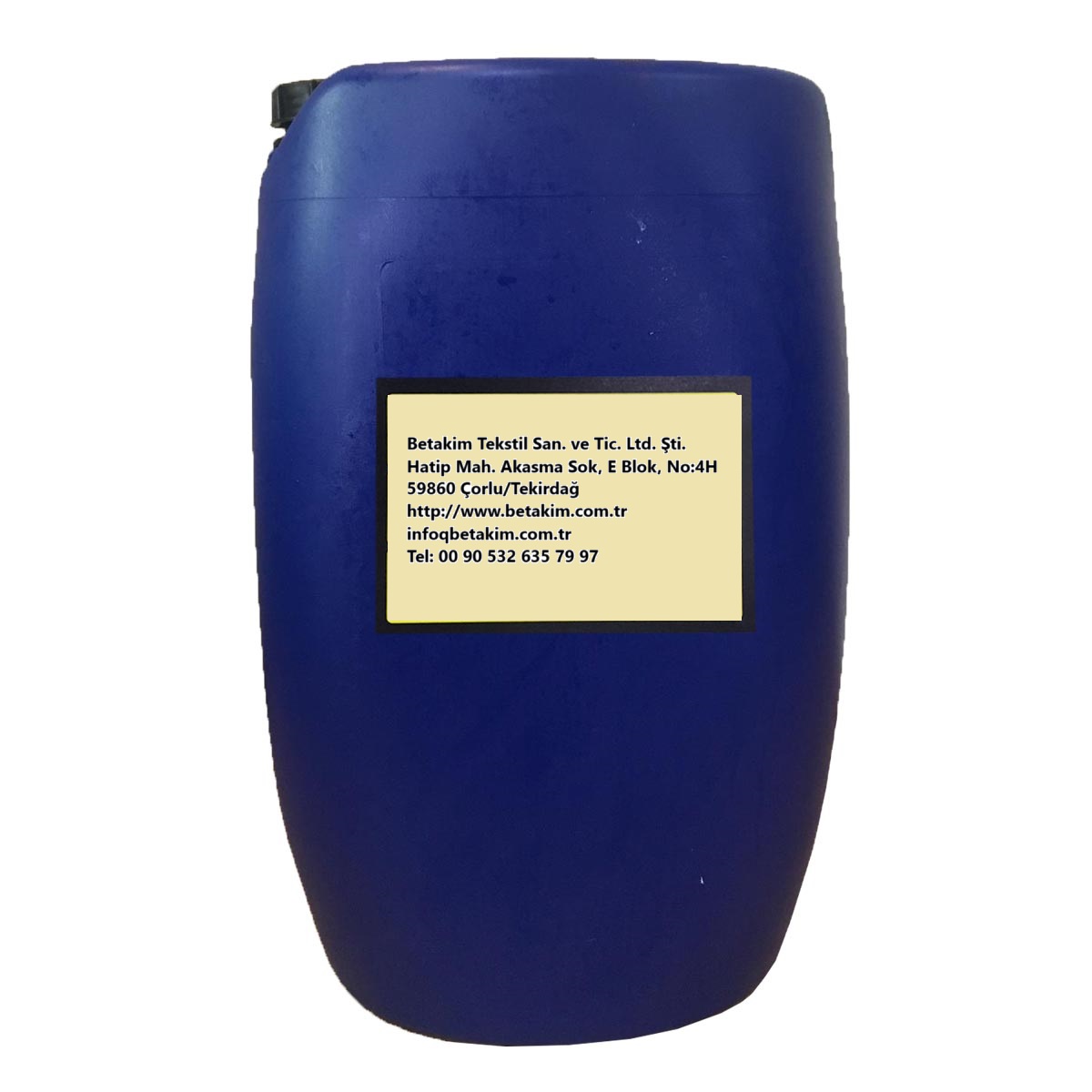
Send EmailCombined Product for Boiler Water Conditioner (Multi-functional)
COMBINED PRODUCT D409 FOR BOILER WATER CONDITIONING
1. PRODUCT DEFINITION AND CHEMICAL IDENTITY
| Parameter | Description |
|---|---|
| Product Name / Code | D409 |
| Product Type | Combined boiler water conditioner (Multi-functional) |
| Chemical Family | Blend of inorganic phosphate, polymeric dispersant, oxygen scavenger, and neutralizing amine |
| Active Components | • Inorganic phosphate salts (scale inhibitor) • Polycarboxylic acid/polymeric dispersant (deposit dispersant) • Non-volatile oxygen scavenger (e.g., sulfite, tannin, DEHA, etc.) • Volatile neutralizing amine (e.g., morpholine, cyclohexylamine, DEAE) |
| Physical Form | Liquid |
| Appearance | Clear – slightly yellowish/amber liquid with a characteristic amine odour |
Important Warning: Due to the volatile neutralizing amines it contains, this product undergoes chemical carryover into the vapour phase. Therefore, it is not suitable for use in systems producing steam that will come into direct or indirect contact with food, in sterile processes, or in applications requiring high-purity steam.
2. TYPICAL PHYSICAL AND CHEMICAL PROPERTIES
| Property | Typical Value Range |
|---|---|
| Physical State (20 °C) | Liquid |
| Appearance | Clear, colourless – pale yellow/amber |
| Odour | Characteristic amine odour |
| Density (20 °C) | 1.10 – 1.30 g/cm³ |
| pH (1% aqueous solution, 25 °C) | 9.0 – 12.0 (alkaline) |
| Viscosity (25 °C) | Low (< 50 mPa·s, water-like) |
| Solubility in Water | Completely miscible in all proportions |
3. FUNCTIONAL PROPERTIES AND MECHANISM OF ACTION
D409 is a combined boiler water conditioner that unites four fundamental functions in a single product:
-
1. Scale and Deposit Control (Phosphate + Dispersant):
-
Mechanism: The inorganic phosphate converts hardness ions (Ca²⁺, Mg²⁺) in the water into a soft, non-adherent sludge. The polymeric dispersant then disperses this sludge and other suspended solids, preventing them from adhering to heat transfer surfaces and forming a hard layer.
-
Result: Formation of limestone and hard scale inside the boiler is prevented. Heat transfer efficiency is maintained.
-
-
2. Oxygen Corrosion Prevention (Non-Volatile Oxygen Scavenger):
-
Mechanism: The non-volatile oxygen scavenger in its content reacts rapidly with oxygen dissolved in the feedwater and boiler water, chemically binding it and rendering it harmless.
-
Result: Oxygen pitting corrosion, particularly in the water phase of the boiler and the feedwater line, is prevented. This component does not enter the vapour phase.
-
-
3. Steam and Condensate Line Protection (Volatile Neutralizing Amine):
-
Mechanism: The volatile amine is carried along with the steam and distributed throughout the entire steam and condensate line. There, it neutralizes the carbonic acid (H₂CO₃) formed by carbon dioxide (CO₂) dissolving in water, raising the pH.
-
Result: Acidic corrosion in condensate return lines is prevented, the corrosive nature of the condensate is eliminated, and line life is extended.
-
-
4. Boiler Water pH Conditioning:
-
The alkaline nature of the product helps maintain the boiler water pH in the ideal range (typically 9.5 – 11.5) where corrosion is minimal.
-
4. SECTORAL APPLICATIONS AND USAGE AREAS
| Suitable Systems | Unsuitable Systems |
|---|---|
| • Industrial steam boilers up to 40 bar | • Steam production with direct food contact (e.g., UHT, sterilization, direct heating) |
| • Process heating boilers | • High-purity clean steam generators |
| • Packaged boilers (fire-tube/water-tube) | • Pharmaceutical industry pure steam systems |
| • Central heating boilers | • Steam added to food products or in direct contact for packaging sterilization |
| • Closed loop hot water systems | • Hospital central sterilization units (autoclave pure steam) |
5. EXAMPLE RECIPE / DOSAGE RECOMMENDATION
-
Initial (Shock) Dose: 100 – 250 ppm (mg/L) based on boiler water volume to quickly condition the system.
-
Maintenance (Continuous) Dose: 20 – 80 ppm (mg/L) dosed proportionally to the feedwater flow rate. The dosage is adjusted based on feedwater quality and steam capacity.
-
Dosage Point: Preferably applied continuously via a dosing pump into the feedwater tank, after the deaerator, or directly into the boiler return line.
Control Parameters: To ensure correct dosage, pH, phosphate (PO₄) residual, and sulfite (SO₃) excess should be measured regularly in the boiler water. Iron and copper levels and pH in the condensate should also be monitored.
6. ADVANTAGES
-
All-in-One Solution: Combines multiple functions such as scale prevention, oxygen scavenging, and condensate protection in a single product. This provides ease of storage, dosing, and operation.
-
Balanced Protection: Offers simultaneous corrosion and scale protection in both the water phase and the steam/condensate phase of the boiler.
-
Cost-Effectiveness: Reduces the cost of purchasing, storing, and dosing multiple separate products.
-
Operational Simplicity: The ability to apply with a single dosing pump simplifies field operations and reduces the risk of errors.
-
Easy Monitoring: Performance can be easily monitored with standard boiler water tests (pH, PO₄, SO₃).
7. DISADVANTAGES AND LIMITATIONS
-
Not Suitable for Food and High-Purity Applications: The volatile amines it contains are carried with the steam, impairing the chemical purity of the steam. Therefore, it cannot be used in processes such as food, pharmaceutical, and sterilization.
-
Limited Maximum Operating Pressure: Not suitable for use in high-pressure boilers above 40 bar due to thermal stability issues.
-
Limited Flexibility: As a combined product, there is no possibility to increase the dosage of a specific component required by the system independently from the others.
8. ALTERNATIVES AND COMPARISON
| Alternative Approach | Content | Comparison with D409 |
|---|---|---|
| Multi-Component Programme (Separate Products) | Phosphate, polymer, oxygen scavenger, and neutralizing amine in separate tanks | Advantage: Each component can be controlled independently. Disadvantage: More equipment, storage, and operational complexity. D409 is simpler and more practical. |
| Non-Volatile Combined Product | Phosphate, dispersant, and non-volatile oxygen scavenger (contains no amine) | Advantage: Can be used in food and pure steam systems. Disadvantage: Does not provide corrosion protection to the condensate line. D409 also protects the steam line. |
| Filming Amine Based Programme | Filming amine + neutralizing amine | Advantage: Excellent condensate protection. Disadvantage: Phosphate/polymer is additionally required for scale control. D409 offers all in one. |
9. SAFETY AND STORAGE
-
GHS Classification (For a typical formulation):
-
Signal Word: Warning / Danger (depending on the amine type and concentration in the content).
-
Hazard Statements: H315 (Causes skin irritation), H319 (Causes serious eye irritation), H302 (Harmful if swallowed). H335 (May cause respiratory irritation) may also be present depending on the amine content. Refer to the product SDS for precise information.
-
-
Personal Protective Equipment (PPE): When handling the product, safety goggles, chemical-resistant gloves (e.g., nitrile, neoprene), and good ventilation are essential. Avoid breathing vapour.
-
Storage: Store in a cool (preferably 5 – 40 °C), dry, and well-ventilated area, in its original, closed packaging. Keep away from strong acids and oxidizers. Protect from freezing.
-
Environmental Precautions: Prevent large quantities from directly entering the aquatic environment, drains, or soil. Amines and phosphates can be harmful to aquatic life.
10. FREQUENTLY ASKED QUESTIONS
Q1: Can I use D409 in my food factory?
No, absolutely do not use it if the steam produced comes into direct or indirect contact with food. D409 contains volatile amines that are carried with the steam. These substances can contaminate food products, leading to taste, odour, and quality issues, and are also contrary to food safety regulations. "Amine-free" products should be preferred for such systems.
Q2: Why don't I need to dose a separate oxygen scavenger when using this product?
D409 already contains a non-volatile oxygen scavenger (typically sodium sulfite or similar) in its formulation. Therefore, you do not need to dose a separate oxygen scavenger when using this product. However, the adequacy of the dosage should be checked with regular sulfite tests, depending on the oxygen load of your system.
Q3: What happens if D409 is used in a boiler above 40 bar?
The volatile amines and other organic components contained in the product can thermally decompose at temperatures above 40 bar (approximately >250 °C). This decomposition can lead to both the product losing its effectiveness and the formation of undesirable by-products such as organic acids. Therefore, it is essential to use the product within the specified pressure limits.
Q4: What is the biggest advantage of using a single product?
The biggest advantage is operational simplicity. Using a single product that meets all basic needs, instead of storing, dosing, and controlling multiple chemicals that must be compatible with each other, significantly reduces labour, equipment costs, and the risk of error.
11. QUICK REFERENCE TABLE
| Property | Typical Value |
|---|---|
| Product Code | D409 |
| Product Type | Combined boiler water conditioner |
| Chemical Family | Phosphate, dispersant, oxygen scavenger, amine blend |
| Physical Form | Liquid |
| Max. Operating Pressure | 40 bar |
| Food Contact Steam | Not Suitable |
| Main Functions | Scale control, oxygen scavenging, condensate neutralization |
| Dosage Range | 20 – 250 ppm |