We unleash your business potential by maximize the business innovation.
Send EmailLithium Silicate, Lithium Metasilicate, Lithium Disilicate, Lithium Orthosilicate, 10102-24-6
* Lithium Silicate Solution - Li2SiO3 -- CAS Number: 10102-24-6
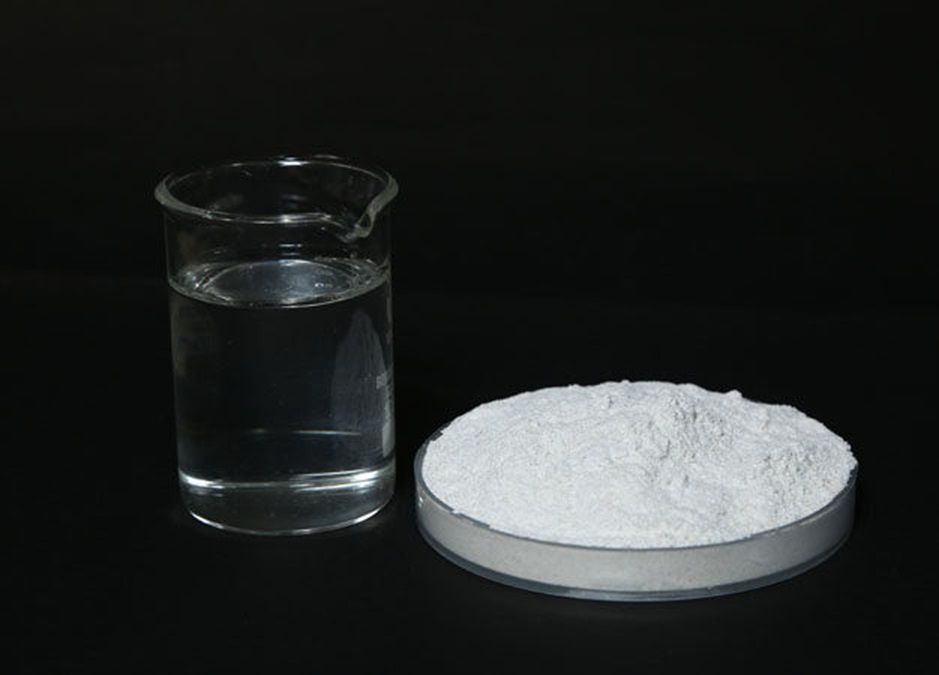
Lithium Silicate Solution is a hazy colourless aqueous solution. Standard packaging is in 1200kg IBCs.
Lithium Silicate Solution is a versatile chemical used in various industrial applications. Here are some key details:
-
Chemical Structure and Properties:
-
Chemical Formula: Li₂SiO₃
-
CAS Number: 10102-24-6
-
Appearance: Colorless clear aqueous solution
-
Standard Packaging: Typically packaged in 1200kg IBCs.
-
-
Applications:
-
Concrete Surface Treatments: Used in concrete surface treatments to enhance hardness, durability, and chemical resistance.
-
Special Paints and Coatings: Applied in special paints and coatings for added durability and protective properties.
-
Refractory Materials: Utilized in the production of refractory materials.
-
Ceramics and Glazing: Employed in ceramic and glazing processes.
-
Lithium silicate solutions are less alkaline compared to sodium and potassium silicates. They exhibit lower solubility and reduced efflorescence (white salt deposits) after drying, making them preferable for certain applications.
Lithium Silicate (Li₂SiO₃) is also known by several other names, including:
-
Lithium Metasilicate
-
Lithium Disilicate
-
Lithium Orthosilicate
These names are used to describe different forms or variations of lithium silicate in scientific and industrial contexts.
Comparative Table of Silicate Types
| Property / Application | Sodium Silicate (Na₂(SiO₂)ₙO) | Potassium Silicate (K₂SiO₃) | Lithium Silicate (Li₂SiO₃) | Calcium Silicate (Ca₂SiO₄ / CaSiO₃) | Magnesium Silicate (Mg₂SiO₄ / MgSiO₃) | Aluminum Silicate (Al₂SiO₅) |
|---|---|---|---|---|---|---|
| Form | Liquid, glassy solid, powder | Liquid, powder | Liquid, powder | Solid, powder | Solid, powder | Solid mineral |
| Appearance | Transparent, bluish/greenish | Transparent or white | Transparent | White powder | White/gray powder | White crystalline |
| Alkalinity (pH) | Strongly alkaline | Alkaline, slightly milder than sodium | Alkaline, but lower viscosity | Neutral to slightly basic | Neutral | Neutral |
| Solubility | Soluble in water | Soluble in water | Highly soluble | Insoluble (used as filler) | Insoluble | Insoluble |
| Main Applications | Detergents, textiles, paper, cement, water treatment, adhesives, fireproofing | Agriculture (foliar fertilizer), fireproof coatings, detergents | High-performance coatings, lithium battery binders, concrete hardeners | Insulation boards, fireproof materials, cement additive | Talc substitute, ceramics, refractories | Ceramics, refractories, fillers |
| Construction Use | Concrete hardener, waterproofing | Fireproof coatings, cement stabilizer | Concrete densifier | Thermal insulation, cement additive | Refractory bricks, ceramics | Ceramic reinforcement |
| Detergents & Cleaning | Builder, stabilizer | Builder, stabilizer | Limited use | Not used | Not used | Not used |
| Textiles | Bleaching stabilizer, flame-retardant | Flame-retardant additive | Flame-retardant additive | Not used | Not used | Not used |
| Water Treatment | Coagulant, flocculant | Limited use | Limited use | Not used | Not used | Not used |
| Specialty Uses | Adhesives, coatings, metallurgy | Agriculture (silicon fertilizer), protective coatings | Lithium-ion battery industry, advanced coatings | Fireproof insulation, thermal boards | Talc replacement, ceramics | High-temperature ceramics |
| Other Names | Water glass, soluble glass | Potassium water glass | Lithium water glass | Calcium silicate hydrate (CSH), wollastonite | Magnesium silicate hydrate, talc | Kaolinite, kyanite, sillimanite |
Insights
-
Sodium silicate → Most versatile, used across detergents, textiles, paper, cement, water treatment.
-
Potassium silicate → Preferred in agriculture (silicon fertilizer) and fireproof coatings.
-
Lithium silicate → Specialized in concrete densification and battery binders.
-
Calcium silicate → Mainly insulation and fireproof boards.
-
Magnesium silicate → Known as talc; used in ceramics and refractories.
-
Aluminum silicate → Mineral form, used in ceramics and high-temperature refractories.