We unleash your business potential by maximize the business innovation.
Send EmailLactic Acid, DL-Lactic acid, Milk Acid, Ethylidene Lactic Acid, Racemic Lactic, E270, 50-21-5, 598-82-3
LACTIC ACID (C₃H₆O₃, E270)
1. Chemical Identity and Material Classification
-
Chemical Name: Lactic Acid, 2-Hydroxypropanoic Acid, 2-Hydroxypropionic Acid
-
Synonyms: Milk Acid, Racemic Lactic, Ethylidene Lactic Acid, DL-Lactic Acid, α-Hydroxypropionic Acid, E270
-
CAS Numbers:
-
L(+)-Lactic Acid: 79-33-4
-
DL-Lactic Acid (Racemic): 50-21-5 (also 598-82-3)
-
Sodium Lactate: 72-17-3
-
-
EC Number (EINECS): 200-018-0
-
Molecular Formula: C₃H₆O₃ (CH₃–CHOH–COOH)
-
Molecular Weight: 90.08 g/mol
-
E Number: E270 (food additive)
-
Chemical Class: Alpha-hydroxy acid (AHA), carboxylic acid
-
HS Code: 2918.11
-
UN Number: 3265 (Corrosive liquid, acidic, organic, n.o.s.)
2. Physical Properties
2.1 General Physical Properties
| Property | L(+)-Lactic Acid (Pure) | DL-Lactic Acid (88% Solution – Commercial) |
|---|---|---|
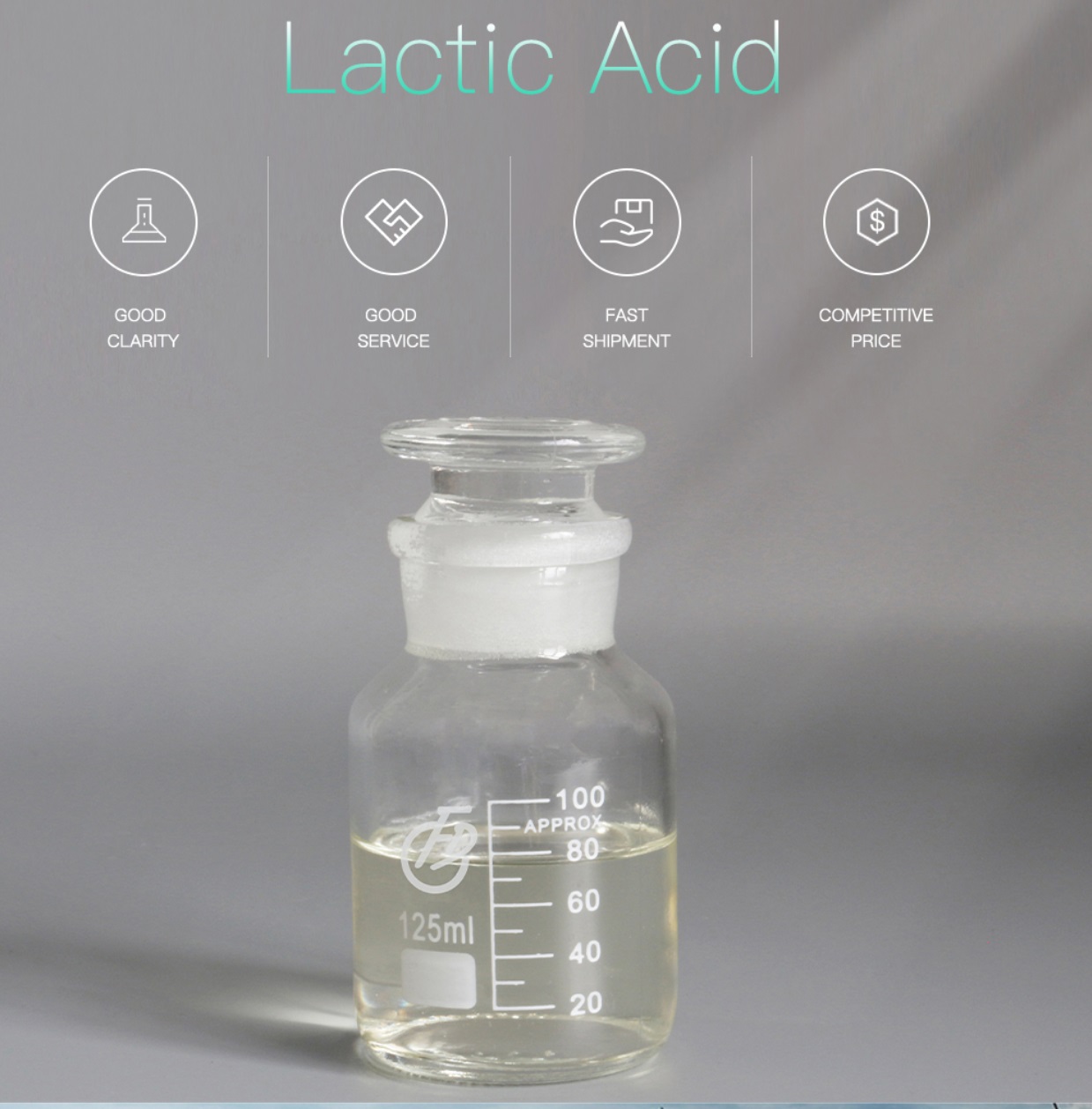
| Appearance | Colorless to pale yellow, clear viscous liquid or crystalline solid | Colorless to pale yellow clear syrupy liquid |
| Physical state (20°C) | Liquid (viscous) | Liquid (viscous) |
| Odor | Slight, characteristic (odorless when pure) | Characteristic, mild acidic |
| Taste | Mildly acidic, sour | Mildly acidic, sour |
| Density (20°C, 88% soln) | 1.209 g/cm³ | 1.20–1.21 g/cm³ |
| Density (20°C, pure) | 1.249 g/cm³ | – |
| Melting point (pure) | 18°C (64°F) | – |
| Boiling point (decomposes) | 122°C (252°F) at 15 mmHg | Decomposes |
| Flash point | >110°C (combustible) | >110°C |
| Autoignition temperature | 400°C | 400°C |
| Refractive index (nD20, 88%) | – | 1.439–1.441 |
| Viscosity (20°C, 88%) | – | 40–80 cP |
| Vapor pressure (20°C) | <1 mmHg | <1 mmHg |
2.2 Optical Activity
| Form | Optical Rotation [α]D20 | Occurrence |
|---|---|---|
| L(+)-Lactic Acid | +2.5° to +3.5° | Natural (fermentation – produced by humans, animals, bacteria) |
| D(-)-Lactic Acid | -2.5° to -3.5° | Bacterial fermentation |
| DL-Lactic Acid (Racemic) | 0° | Chemical synthesis or mixture |
2.3 Solubility in Water
| Temperature (°C) | Solubility (g/100 mL water) |
|---|---|
| 20°C | Fully miscible (all proportions) |
| All temperatures | Complete miscibility |
2.4 Solubility in Other Solvents
| Solvent | Solubility |
|---|---|
| Water | Fully miscible |
| Ethanol | Fully miscible |
| Methanol | Fully miscible |
| Acetone | Soluble |
| Glycerol | Soluble |
| Diethyl ether | Slightly soluble |
| Chloroform | Insoluble |
| Hydrocarbons | Insoluble |
2.5 Aqueous Solution Properties
| Concentration | pH (20°C) |
|---|---|
| 0.1% solution | 2.8–3.0 |
| 1% solution | 2.3–2.5 |
| 10% solution | 1.8–2.0 |
| 88% solution (as supplied) | 1.0–1.5 |
| pKa (25°C) | 3.86 |
3. Chemical Properties
3.1 Molecular Structure
Structure: CH₃–CHOH–COOH
-
Alpha-hydroxy acid (hydroxyl group on alpha carbon)
-
Carboxylic acid group (-COOH) and hydroxyl group (-OH)
-
Chiral carbon → optically active (L- and D- isomers)
-
Bifunctional molecule (acid and alcohol reactivity)
-
Weak organic acid (pKa 3.86)
3.2 Optical Isomers (Enantiomers)
| Isomer | Optical Rotation | Natural Source | Metabolism |
|---|---|---|---|
| L(+)-Lactic Acid | +2.5° to +3.5° | Humans, animals, most bacteria, fermentation | Metabolized by humans (preferred) |
| D(-)-Lactic Acid | -2.5° to -3.5° | Some bacteria (Lactobacillus, Leuconostoc), chemical synthesis | Poorly metabolized by humans |
| DL-Lactic Acid (Racemic) | 0° (inactive) | Chemical synthesis, mixture | Partially metabolized |
Note: L(+)-Lactic Acid is the naturally occurring form in humans and is the preferred form for food and pharmaceutical applications.
3.3 Acid Dissociation Constant (pKa)
| Parameter | Value |
|---|---|
| pKa (25°C) | 3.86 |
| Acid strength | Stronger than acetic acid (pKa 4.76), weaker than citric acid (pKa 3.13) |
| Dissociation | CH₃CHOHCOOH ⇌ CH₃CHOHCOO⁻ + H⁺ |
3.4 Dimerization (Lactide Formation)
| Reaction | Description |
|---|---|
| Lactic acid → Lactide | 2CH₃CHOHCOOH → C₆H₈O₄ (lactide) + 2H₂O (heating, 150–200°C) |
| Lactide → PLA | Polymerization → Polylactic acid (biodegradable plastic) |
3.5 Chemical Reactivity
| Reaction | Description |
|---|---|
| Esterification | With alcohols → lactate esters (methyl lactate, ethyl lactate, butyl lactate) |
| Neutralization | With bases → lactate salts (sodium lactate, calcium lactate, potassium lactate, zinc lactate, ferrous lactate) |
| Oxidation | To pyruvic acid, then to acetic acid, CO₂, H₂O |
| Reduction | To propylene glycol (1,2-propanediol) |
| Dehydration | To acrylic acid (with catalyst) |
| Polymerization | To polylactic acid (PLA) – biodegradable polymer |
| Amidation | With ammonia → lactamide |
3.6 Thermal Stability
| Temperature | Behavior |
|---|---|
| <18°C | Crystallizes (pure acid) |
| 18–50°C | Stable liquid |
| 50–100°C | Stable |
| 100–150°C | Slow decomposition; dimerization to lactide |
| 150–200°C | Lactide formation; decomposition to acetaldehyde, CO, CO₂ |
| >200°C | Complete decomposition |
3.7 Stability
| Parameter | Behavior |
|---|---|
| Stability (88% solution, 20°C) | Stable (12–24 months) |
| Stability (diluted solutions) | Stable |
| Light sensitivity | May discolor (yellow to brown) with prolonged exposure |
| Hygroscopicity | Hygroscopic (absorbs moisture from air) |
| Thermal stability | Decomposes upon heating (>100°C) |
3.8 Incompatibilities
| Substance | Hazard |
|---|---|
| Strong oxidizing agents (HNO₃, H₂O₂, permanganates, chromates) | Oxidation, fire/explosion risk |
| Strong bases (NaOH, KOH) | Exothermic neutralization |
| Iron, copper, aluminum, mild steel | Corrosion (acidic) |
| Reducing agents | May react |
4. Commercial Grades and Concentrations
| Grade | Concentration | Purity | Form | Applications |
|---|---|---|---|---|
| Technical Grade | 50%, 80%, 88% | ≥ 98% | Aqueous solution | Industrial cleaning, metal treatment, leather, textiles |
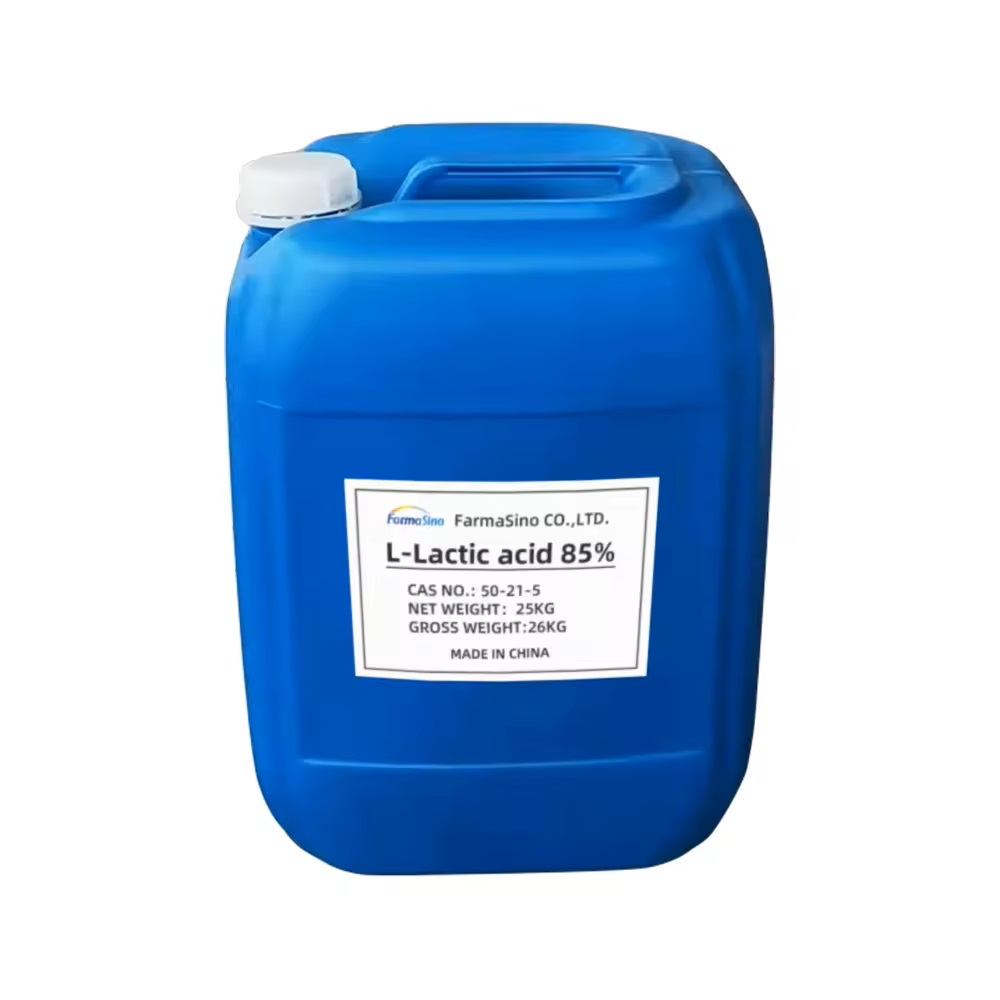
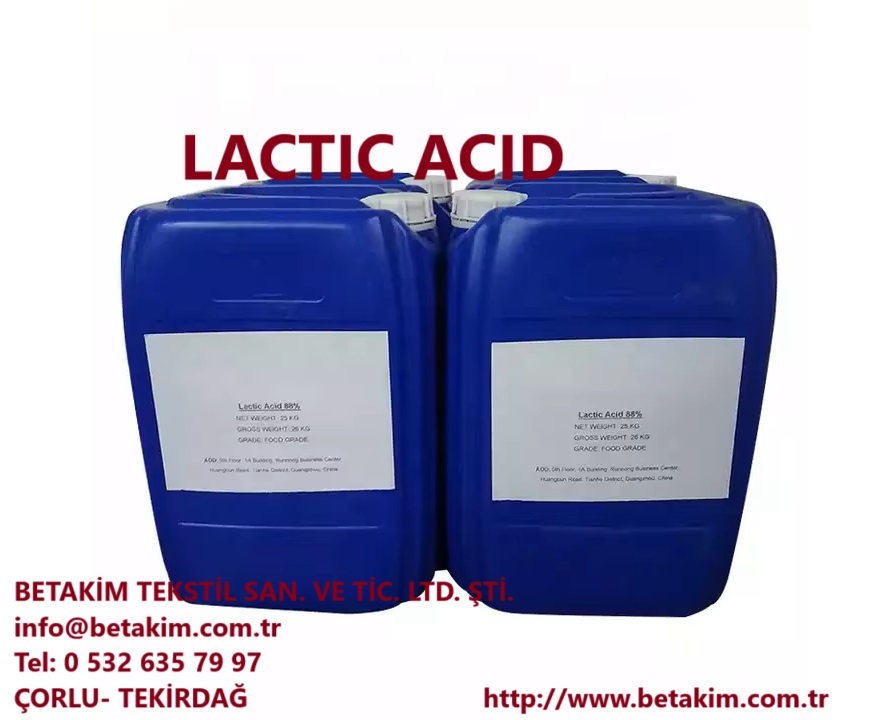
| Food Grade (E270) | 88% | ≥ 99.5% | Aqueous solution | Food preservative, acidulant, pH regulator |
| Pharmaceutical Grade | 88% | ≥ 99.5% | Aqueous solution | Pharmaceuticals, injectables, topical products |
| Cosmetic Grade | 88% | ≥ 99% | Aqueous solution | Skin care, exfoliants, moisturizers |
| L(+)-High Purity | 88% | ≥ 99.5% | Aqueous solution | Pharmaceutical, infant formula |
| Pure Crystalline | 100% | ≥ 99% | Solid | Research, polymerization (PLA production) |
5. Quality Specifications (Food/Pharmaceutical Grade – 88% Solution)
| Parameter | Specification | Test Method |
|---|---|---|
| Assay (C₃H₆O₃, w/w) | 87.5–88.5% | Titration |
| Water content (K. Fischer) | 11.5–12.5% | Karl Fischer |
| Optical purity (L-isomer) | ≥ 98.5% (for L(+) grade) | Polarimetry |
| Optical rotation [α]D20 (L(+)-grade) | +2.5° to +3.5° | Polarimetry |
| Chlorides (Cl) | ≤ 0.01% | Turbidimetric |
| Sulfates (SO₄) | ≤ 0.01% | Turbidimetric |
| Heavy metals (as Pb) | ≤ 10 ppm | Colorimetric |
| Lead (Pb) | ≤ 1 mg/kg | Atomic absorption |
| Arsenic (As) | ≤ 1 ppm | Atomic absorption |
| Iron (Fe) | ≤ 10 ppm | Colorimetric |
| Calcium (Ca) | ≤ 20 ppm | Atomic absorption |
| Citric acid | ≤ 0.01% | HPLC |
| Oxalic acid | ≤ 0.01% | HPLC |
| Tartaric acid | ≤ 0.01% | HPLC |
| Reducing sugars | ≤ 0.1% | Titration |
| Color (APHA) | ≤ 50 | Visual |
| pH (as supplied) | 1.0–1.5 | pH meter |
6. Production Methods
6.1 Fermentation (Natural L(+)-Lactic Acid – Most Common)
Microorganism: Lactobacillus species, Bacillus coagulans, Rhizopus oryzae (fungus)
Substrate: Sugar (glucose, sucrose, lactose from corn, sugar beet, molasses, whey)
Process:
-
Substrate sterilized and inoculated with lactic acid bacteria
-
Fermentation at 30–45°C, pH controlled (5.5–6.5) with CaCO₃ or NaOH
-
Calcium lactate or sodium lactate forms
-
Acidification with H₂SO₄ → lactic acid + CaSO₄ (gypsum)
-
Purification by filtration, evaporation, activated carbon, ion exchange
Yield: 85–95%
Product: L(+)-Lactic Acid (≥ 98–99% L-isomer)
6.2 Chemical Synthesis (DL-Lactic Acid – Racemic)
Reaction: CH₃CHO (acetaldehyde) + HCN → CH₃CHOHCN → hydrolysis → CH₃CHOHCOOH + NH₃
Process:
-
Acetaldehyde reacts with hydrogen cyanide (HCN)
-
Hydrolysis with sulfuric acid
-
Purification
Product: DL-Lactic Acid (racemic mixture – 50% L, 50% D)
6.3 Carbohydrate Fermentation (Whey – Lactose)
Source: Cheese whey (by-product of dairy industry)
Process: Lactose fermented by Lactobacillus bulgaricus → L(+)-lactic acid
7. Mechanism of Action
7.1 Antimicrobial Mechanism (Food Preservation)
-
Lactic acid lowers pH (acidifies the environment)
-
Undissociated lactic acid (pKa 3.86) penetrates microbial cell membranes
-
Dissociates inside the cell (pH ~5–6) → releases H⁺
-
Lowers intracellular pH → disrupts enzyme activity, metabolism
-
Inhibits growth of bacteria, yeasts, molds
Effective against: Listeria monocytogenes, E. coli, Salmonella, Clostridium botulinum, Lactobacillus (resistant)
7.2 Skin Care (Exfoliation – AHA)
-
Breaks down intercellular bonds between corneocytes (dead skin cells)
-
Promotes shedding of dead skin cells
-
Stimulates collagen synthesis
-
Improves skin hydration (increases hyaluronic acid)
-
Reduces fine lines, wrinkles, hyperpigmentation
8. Industrial Applications
8.1 Food and Beverage Industry (E270 – Largest Application ~85% of production)
| Application | Function | Typical Concentration |
|---|---|---|
| Preservative (meat, poultry, fish) | Inhibits bacterial growth (Listeria, Salmonella) | 0.5–3% |
| Acidulant (soft drinks, juices) | Provides mild acidity, flavor enhancement | 0.1–0.5% |
| Pickling (vegetables, olives, sauerkraut) | Acidulant, preservative, texture improver | 0.5–2% |
| Bakery products (bread) | Preservative (mold inhibition), flavor enhancer | 0.1–0.5% |
| Cheese production | pH regulator (curd formation) | 0.1–0.5% |
| Confectionery (candies, chewing gum) | Acidulant, flavor enhancer | 0.5–2% |
| Beer brewing | pH adjustment, yeast nutrient | 0.1–0.3% |
| Wine making | Malolactic fermentation, pH control | 0.1–0.5% |
| Infant formula | Calcium lactate, ferrous lactate (mineral fortification) | As per regulations |
| Jams, jellies, marmalades | pH regulator, preservative | 0.1–0.5% |
Food additive code: E270 – permitted worldwide (EU, USA, Codex)
8.2 Pharmaceutical Applications
| Application | Function | Typical Concentration |
|---|---|---|
| Intravenous solutions (lactated Ringer's) | Electrolyte replacement, pH buffer | 2.5–3.5% |
| Calcium lactate (calcium supplement) | Osteoporosis treatment | 500–1,500 mg Ca/day |
| Ferrous lactate (iron supplement) | Anemia treatment | 100–200 mg Fe/day |
| Zinc lactate (zinc supplement) | Immune support | 15–50 mg Zn/day |
| Sodium lactate (IV hydration) | Electrolyte source | 1.5–3% |
| Topical creams (exfoliants) | Keratolytic, moisturizer | 5–10% |
| Lactic acid polymers (PLA) | Biodegradable sutures, drug delivery | – |
8.3 Cosmetics and Personal Care
| Application | Function | Typical Concentration |
|---|---|---|
| Skin exfoliants (AHAs) | Chemical exfoliation, anti-aging | 5–15% |
| Moisturizers | Humectant, skin conditioning | 1–5% |
| Anti-aging creams | Stimulates collagen, reduces wrinkles | 5–10% |
| Acne treatments | Antibacterial, exfoliating | 2–5% |
| pH adjusters | Buffering | 0.1–1% |
| Hair care products | pH adjuster, shine enhancer | 0.1–1% |
| Soaps and cleansers | Mild exfoliant, moisturizer | 1–5% |
8.4 Industrial and Technical Applications
| Application | Function | Typical Concentration |
|---|---|---|
| Leather tanning | De-liming agent, pH control, pickling | 1–10% |
| Textile finishing | Acidifying agent, dyeing auxiliary | 1–5% |
| Metal cleaning (descaling) | Removes calcium and rust | 5–20% |
| Oil well acidizing | Matrix stimulation, scale removal | 5–15% |
| pH control in water treatment | Neutralization, buffering | 0.1–1% |
| Biodegradable plastics (PLA) | Polymer precursor | 100% (polymer) |
| Green solvents (ethyl lactate, methyl lactate) | Biodegradable, non-toxic solvents | 1–100% |
8.5 Agriculture and Animal Feed
| Application | Function | Typical Concentration |
|---|---|---|
| Animal feed preservative | Mold inhibition, pH control | 0.1–1% |
| Silage additive | Preserves forage, inhibits spoilage | 0.1–0.5% |
| Growth promoter (pigs, poultry) | Acidifies stomach, improves digestion | 0.1–0.5% |
| Fertilizer additive | Chelates micronutrients | 0.01–0.1% |
8.6 Biodegradable Polymers (PLA – Polylactic Acid)
| Parameter | Value |
|---|---|
| Monomer | Lactic acid (L(+)-isomer preferred) |
| Polymer | Polylactic acid (PLA) |
| Polymerization | Ring-opening polymerization of lactide or direct polycondensation |
| Properties | Biodegradable, compostable, bio-based |
| Applications | Bioplastics, sutures, drug delivery, packaging, 3D printing filaments |
9. Lactate Salts – Comparison
| Salt | Formula | CAS | Applications |
|---|---|---|---|
| Sodium lactate | C₃H₅NaO₃ | 72-17-3 | IV solutions (Ringer's lactate), humectant, preservative (E325) |
| Calcium lactate | C₆H₁₀CaO₆ | 814-80-2 | Calcium supplement, baking powder (E327) |
| Potassium lactate | C₃H₅KO₃ | 996-31-6 | Preservative, humectant (E326) |
| Zinc lactate | C₆H₁₀O₆Zn | 16039-53-5 | Zinc supplement, dental care |
| Ferrous lactate | C₆H₁₀FeO₆ | 5905-52-2 | Iron supplement (anemia treatment) |
| Magnesium lactate | C₆H₁₀MgO₆ | 18917-93-6 | Magnesium supplement |
10. Toxicology and Safety
10.1 Acute Toxicity
| Parameter | Value | Classification |
|---|---|---|
| Oral LD₅₀ (rat) | 3,000–5,000 mg/kg | Acute Tox. 4 (H302) |
| Dermal LD₅₀ (rabbit) | >2,000 mg/kg | Not classified |
| Inhalation LC₅₀ | Not determined (mist may irritate) | Not classified |
| Skin corrosion | Category 1B – Causes severe skin burns (H314) – concentrated (88%) | |
| Eye damage | Category 1 – Causes serious eye damage (H318) | |
| Skin sensitization | Non-sensitizer | Not classified |
10.2 Special Concerns
| Concern | Information |
|---|---|
| Metal corrosion | Corrosive to aluminum, mild steel, copper |
| Skin irritation | Diluted solutions (≤10%) are mild; concentrated (88%) causes burns |
| Eye hazard | Concentrated solution causes serious eye damage |
| D-Lactic acid | Poorly metabolized by humans; high levels in infants may cause acidosis (L(+) form preferred) |
10.3 GHS Classification (88% Solution)
| Classification | Category |
|---|---|
| Signal word | Danger |
| Hazard statements | H302 – Harmful if swallowed |
| H314 – Causes severe skin burns and eye damage | |
| H318 – Causes serious eye damage | |
| Precautionary statements | P260, P264, P280, P301+P330+P331, P303+P361+P353, P305+P351+P338, P310 |
10.4 NFPA Rating
| Health | Flammability | Reactivity |
|---|---|---|
| 3 | 0 | 0 |
11. Safety Precautions and Personal Protective Equipment (PPE)
-
Hazards:
-
Corrosive – causes severe skin burns and eye damage (H314)
-
Harmful if swallowed (H302)
-
Hygroscopic – absorbs moisture from air
-
Combustible (flash point >110°C)
-
Corrosive to metals
-
-
PPE (mandatory – for concentrated 88% solution):
-
Chemical-resistant gloves (nitrile, neoprene, or butyl rubber, EN 374)
-
Chemical splash goggles (EN 166) or full face shield
-
Protective clothing (acid-resistant apron or coverall)
-
Respiratory protection: P2 filter for mist
-
-
Engineering controls:
-
Local exhaust ventilation (LEV) for mist control
-
Eyewash stations and safety showers
-
-
Storage conditions:
-
Keep tightly closed in original container (HDPE, PP, stainless steel – NOT carbon steel or aluminum)
-
Store in cool, dry, well-ventilated area (5–30°C)
-
Protect from freezing (may crystallize below 18°C – warm to 20–30°C)
-
Protect from light (may discolor)
-
Store away from strong oxidizing agents and strong bases
-
-
First aid:
-
Inhalation: Move to fresh air
-
Skin contact: Remove contaminated clothing; wash with copious water for at least 15 minutes; seek medical attention immediately
-
Eye contact: Rinse with water for at least 15 minutes, lifting eyelids; remove contact lenses; seek immediate medical attention
-
Ingestion: Rinse mouth; do NOT induce vomiting; drink water or milk; seek immediate medical attention
-
12. Environmental Fate
| Parameter | Value |
|---|---|
| Biodegradability | Readily biodegradable (OECD 301) – 90–100% in 28 days |
| Aquatic toxicity (fish, LC₅₀, 96 hours) | 100–500 mg/L (moderate toxicity – due to pH) |
| Daphnia magna (EC₅₀, 48 hours) | 50–200 mg/L |
| Algal toxicity (EC₅₀, 72 hours) | 10–100 mg/L |
| Bioaccumulation | Low (log P = -0.72) |
| Soil mobility | High (high water solubility) |
| WGK Germany | 1 (low hazard to water) |
| Disposal method | Neutralization → wastewater treatment (biodegradable) or incineration |
13. Storage and Shelf Life
13.1 Storage Conditions
| Parameter | Requirement |
|---|---|
| Storage temperature | 5–30°C (avoid freezing – may crystallize below 18°C) |
| Container | HDPE, PP, stainless steel (NOT carbon steel, aluminum, copper) |
| Protect from | Freezing (crystallization), light (discoloration), moisture (hygroscopic), heat (decomposition) |
| Environment | Cool, dry, well-ventilated area |
13.2 Shelf Life
| Parameter | Value |
|---|---|
| Shelf life (88% solution, sealed) | 12–24 months |
| Shelf life (diluted solutions) | 6–12 months |
| Degradation indicators | Color darkening (yellow to brown), crystallization (freezing), reduced assay |
14. Transport Information
| Regulation | Classification |
|---|---|
| UN Number | 3265 |
| Proper shipping name | Corrosive liquid, acidic, organic, n.o.s. (lactic acid) |
| ADR/RID | Class 8 (Corrosive), Packing group II |
| IMDG | Class 8, PG II |
| IATA | Class 8, PG II |
| Hazard label | Corrosive (8) |
15. Synonyms and Common Names
-
English: Lactic Acid, 2-Hydroxypropanoic Acid, 2-Hydroxypropionic Acid, Milk Acid, Racemic Lactic, Ethylidene Lactic Acid, E270
-
French: Acide lactique
-
German: Milchsäure
-
Spanish: Ácido láctico
-
Turkish: Laktik Asit, Süt Asidi
Trade names: Purac, Galacid, Lactic Acid 88%, L(+)-Lactic Acid
16. Lactic Acid vs. Other Acids – Comparison
| Property | Lactic Acid | Citric Acid | Tartaric Acid | Acetic Acid |
|---|---|---|---|---|
| Formula | C₃H₆O₃ | C₆H₈O₇ | C₄H₆O₆ | C₂H₄O₂ |
| pKa | 3.86 | 3.13 | 3.04 | 4.76 |
| Acid strength | Moderate | Stronger | Stronger | Weaker |
| Taste | Mild, smooth | Sharp, tangy | Very tart, astringent | Vinegar, pungent |
| Solubility (20°C) | Miscible | 70 g/100 mL | 133 g/100 mL | Miscible |
| Natural source | Sour milk, fermentation | Citrus fruits | Grapes | Vinegar |
| E number | E270 | E330 | E334 | E260 |
| Antimicrobial | Good | Good | Moderate | Excellent |
17. Frequently Asked Questions (FAQs)
Q1: What is the difference between L-lactic acid and DL-lactic acid?
A1: L-Lactic acid is the naturally occurring form (produced by humans, animals, and most bacteria). It is optically active (+). DL-Lactic acid is a synthetic racemic mixture (50% L, 50% D). L-Lactic acid is preferred for food and pharmaceutical applications because humans metabolize it efficiently. D-Lactic acid is poorly metabolized.
Q2: Is lactic acid safe to eat?
A2: Yes, food-grade lactic acid (E270) is GRAS (Generally Recognized as Safe) by FDA and EFSA. It occurs naturally in many fermented foods (yogurt, cheese, sourdough bread, pickles, sauerkraut) and is used as a preservative and acidulant.
Q3: Is lactic acid gluten-free?
A3: Yes, lactic acid is gluten-free. It is produced by fermentation of carbohydrates (sugar, corn, beets) or by chemical synthesis – it contains no gluten.
Q4: Is lactic acid vegan?
A4: Yes, lactic acid produced by fermentation is vegan (non-animal origin). However, some commercial lactic acid may be derived from whey (dairy by-product) – check the source. Most industrial lactic acid is from corn or sugar fermentation (vegan).
Q5: Does lactic acid exfoliate skin?
A5: Yes, lactic acid is an alpha-hydroxy acid (AHA) that exfoliates the skin by breaking down the bonds between dead skin cells. It also stimulates collagen production and improves skin hydration.
Q6: Can lactic acid be used for descaling?
A6: Yes, lactic acid is an effective descaling agent for removing limescale (calcium carbonate) and rust. It is less corrosive than strong mineral acids (HCl, H₂SO₄) and is used in coffee makers, kettles, and industrial equipment.
18. Lactic Acid and Polylactic Acid (PLA)
| Parameter | Lactic Acid | Polylactic Acid (PLA) |
|---|---|---|
| Monomer | Lactic acid (C₃H₆O₃) | Lactide (C₆H₈O₄ – cyclic dimer) |
| Polymerization | Polycondensation or ring-opening polymerization | – |
| Properties | Monomer | Biodegradable, compostable thermoplastic |
| Melting point | 18°C | 150–180°C |
| Glass transition (Tg) | – | 55–60°C |
| Applications | Food, pharma, cosmetics | Bioplastics, 3D printing filaments, sutures, packaging |
19. Lactic Acid Concentration Guide
| Concentration | Form | pH (approx) | Applications |
|---|---|---|---|
| 50% | Aqueous solution | 1.5–1.8 | Industrial cleaning, metal treatment |
| 80% | Aqueous solution | 1.2–1.5 | Leather, textiles, industrial |
| 88% | Aqueous solution (commercial standard) | 1.0–1.5 | Food, pharma, cosmetics, general industrial |
| 100% (pure) | Crystalline solid (warm to melt) | – | Research, polymerization (PLA) |
| 10% | Diluted solution (cosmetic) | 2.0–2.5 | Skin care, exfoliants |
20. Summary Table – Key Specifications at a Glance
| Parameter | Value |
|---|---|
| Product Name | Lactic Acid (E270) |
| CAS Number | 50-21-5 (DL); 79-33-4 (L(+)) |
| Molecular Formula | C₃H₆O₃ (CH₃CHOHCOOH) |
| Molecular Weight | 90.08 g/mol |
| Appearance (88% soln) | Colorless to pale yellow clear viscous liquid |
| Density (88%, 20°C) | 1.20–1.21 g/cm³ |
| Melting Point (pure) | 18°C |
| pKa (25°C) | 3.86 |
| pH (88% solution) | 1.0–1.5 |
| Water Solubility | Fully miscible |
| Optical Rotation (L(+)-grade) | +2.5° to +3.5° |
| Assay (food grade) | 87.5–88.5% |
| E Number | E270 |
| Primary Applications | Food preservative (E270), acidulant, skin care (AHA), pharmaceutical (lactate salts), industrial cleaning, biodegradable plastics (PLA) |
| GHS Signal Word | Danger |
| Hazard Statements | H302, H314, H318 |
| UN Number | 3265 |
| Oral LD₅₀ (rat) | 3,000–5,000 mg/kg |
| Biodegradability | Readily biodegradable |
| Shelf Life (88% soln) | 12–24 months |
This TDS is prepared in compliance with ISO 11014-1 format and is intended for food technologists, pharmaceutical scientists, cosmetic formulators, industrial cleaning specialists, textile chemists, and procurement professionals. Certificates of Analysis (CoA), Safety Data Sheets (SDS), and sample validation reports are available upon request.