We unleash your business potential by maximize the business innovation.
Send EmailTOFA, Tall Oil Fatty Acid, Distilled Tall Oil Fatty Acid, Tallol, Tall Oil, Pine Oil Fatty Acid, Tallate Acid, Hydrogenated Tall Oil Fatty Acid, High Oleic Tall Oil Fatty Acid, Sylfat2, 61790-12-3
SYLFAT 2 – Tall Oil Fatty Acid (TOFA)
1. Basic Identity
| Property | Information |
|---|---|
| Product Name | SYLFAT™ 2 Tall Oil Fatty Acid |
| Manufacturer | Kraton Corporation |
| Chemical Category | Tall Oil Fatty Acid (TOFA) |
| CAS Number | Not specified in TDS (typical TOFA CAS: 61790-12-3) |
| EINECS Number | Not specified |
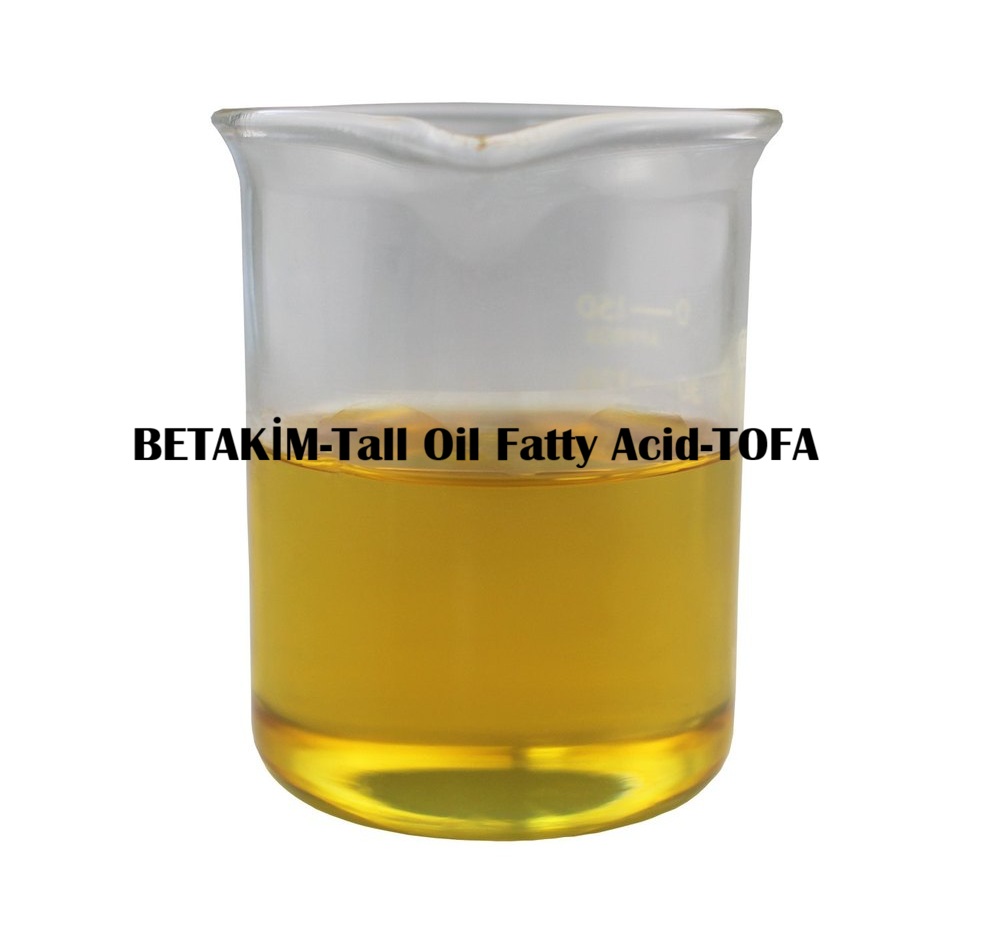
| Appearance | Clear, light yellow to amber liquid |
| Biobased Content | 100% USDA Certified Biobased |
| Regulatory Status | USDA BioPreferred Program |
2. Chemical Composition & Structure
Molecular Characteristics
-
Carbon chain length: C18 (primarily)
-
Functional group: Carboxyl acid (-COOH)
-
Bond type: High unsaturation (many double bonds)
-
Monocarboxylic acid: One carboxylic acid group per molecule
Typical Composition (Approximate)
| Component | Percentage |
|---|---|
| Oleic acid (C18:1) | 20–30% |
| Linoleic acid (C18:2) | 40–50% |
| Pinolenic acid (C18:3) | 5–10% |
| Saturated fatty acids (C16, C18:0) | 2–5% |
| Rosin acids | 1.6% (typical) |
| Unsaponifiables | 1.5% (typical) |
Key Chemical Features
-
Low conjugation despite high iodine number – contains pinolenic acid (unique to tall oil)
-
Reactive polyunsaturation – participates in oxidative curing, polymerization, and addition reactions
-
Good color stability – resists darkening during processing
3. Detailed Specifications
Sales Specifications (Guaranteed)
| Property | Test Method | Specification | Typical Value |
|---|---|---|---|
| Acid Number (mg KOH/g) | AQCM 001 | Min 193 | 196 |
| Color (Gardner) | AQCM 002 | Max 5 | 4.2 |
| Free Rosin Acids (%) | AQCM 010 | Max 2.1 | 1.6 |
| Unsaponifiables (%) | AQCM 011 | Max 2.5 | 1.5 |
Typical Properties (Not Guaranteed)
| Property | Test Method | Typical Value |
|---|---|---|
| Iodine Number (cg I/g) | AQCM 009 | 152 |
| Saponification Number (mg KOH/g) | AQCM 019 | 197 |
| Cloud Point (°C) | AQCM 061 | 2 |
| Pour Point (°C) | AQCM 060 | -14 |
| Viscosity at 20°C (cP) | AQCM 004 | 25 |
| Density at 20°C (kg/m³) | AQCM 133 | 905 |
Explanation of Key Properties
Acid Number (196 mg KOH/g)
-
Measures free carboxylic acid content
-
Indicates the amount of KOH needed to neutralize 1 gram of sample
-
High value means high fatty acid purity
-
Typical range for TOFA: 190–205
Iodine Number (152)
-
Measures unsaturation (double bonds)
-
Higher number = more double bonds = more reactive
-
SYLFAT 2 has one of the highest iodine numbers among TOFA grades
-
Enables air drying (oxidative crosslinking)
Rosin Acids (1.6%)
-
Residual pine-derived resin acids from crude tall oil
-
Low rosin content improves color stability and reduces odor
-
High rosin can cause darkening and unwanted tack
Unsaponifiables (1.5%)
-
Non-fatty materials (sterols, higher alcohols, hydrocarbons)
-
Lower is better for most chemical applications
Cloud Point (2°C)
-
Temperature at which crystallization begins
-
Below 2°C, product may become hazy
-
For low-temperature applications, use SYLFAT 2LT (cloud point ≤ -4°C)
Pour Point (-14°C)
-
Temperature at which product stops flowing
-
SYLFAT 2 remains pumpable down to -14°C
Viscosity (25 cP at 20°C)
-
Similar to light machine oil
-
Easy to pump, mix, and handle at room temperature
Density (905 kg/m³ at 20°C)
-
Lighter than water (water = 1000 kg/m³)
-
Floats on water
4. Solubility & Compatibility
Solubility
| Solvent Type | Solubility |
|---|---|
| Alcohols (ethanol, isopropanol) | Soluble |
| Aromatics (toluene, xylene) | Soluble |
| Esters (ethyl acetate, butyl acetate) | Soluble |
| Ketones (acetone, MEK) | Soluble |
| Aliphatic hydrocarbons (mineral spirits) | Partially soluble |
| Water | Insoluble |
Compatibility
-
Compatible with other liquid fatty acids
-
Compatible with vegetable oils (soybean, linseed, sunflower)
-
Compatible with alkyd resins
-
Compatible with most organic solvents
-
Incompatible with strong oxidizing agents
-
Incompatible with strong bases (will form soaps)
5. Physical & Chemical Properties (Detailed)
| Property | Value | Notes |
|---|---|---|
| Physical state at 25°C | Liquid | Clear to slightly hazy |
| Color | Light yellow to amber | Gardner 4–5 |
| Odor | Characteristic fatty acid | Mild, not unpleasant |
| Boiling point | >250°C | Decomposes before boiling |
| Flash point | >150°C (estimated) | Not flammable at room temp |
| Auto-ignition temperature | ~300°C (estimated) | |
| Vapor pressure | Very low | Negligible at room temp |
| Specific gravity | 0.905 at 20°C | |
| Refractive index | ~1.47 (estimated) | |
| Surface tension | ~30 dynes/cm (estimated) | |
| Saponification value | 197 mg KOH/g | Total reactive groups |
| Peroxide value | Low (fresh) | Increases with age |
6. Chemical Reactions & Reactivity
SYLFAT 2 participates in several chemical reactions due to its carboxylic acid group and double bonds:
A. Carboxylic Acid Reactions
| Reaction | Product | Application |
|---|---|---|
| Esterification + alcohol | Ester | Plasticizers, lubricants |
| Amidization + amine | Amide | Surfactants, thickeners |
| Neutralization + base | Soap (carboxylate salt) | Emulsifiers, cleaners |
| Reduction | Fatty alcohol | Surfactants, cosmetics |
B. Double Bond Reactions
| Reaction | Product | Application |
|---|---|---|
| Oxidative curing (air) | Crosslinked polymer | Alkyd resin drying |
| Dimerization (heat/clay) | Dimer acid | Polyamide resins |
| Hydrogenation | Saturated fatty acid | Lubricants, stabilizers |
| Epoxidation | Epoxidized oil | Plasticizers, stabilizers |
| Sulfonation | Sulfonated fatty acid | Emulsifiers, oilfield chemicals |
C. Special Feature – Pinolenic Acid
-
Contains a unique conjugated double bond system
-
Provides faster drying than typical linoleic acid
-
Contributes to high iodine number without excessive conjugation
7. Production Process (Conceptual)
Crude Tall Oil (CTO)
        ↓
Distillation (Fractional)
        ↓
TOFA Fraction (C18 acids)
        ↓
Refining (Color, Rosin reduction)
        ↓
SYLFAT 2
Kraton's proprietary process ensures:
-
Low rosin content (max 2.1%)
-
Low unsaponifiables (max 2.5%)
-
Consistent color (max 5 Gardner)
-
High iodine number (152 typical)
8. Detailed Applications
A. Alkyd Resins (Primary Application)
Role: Drying oil substitute / modifier
Typical Formulation (Short oil alkyd):
| Component | % |
|---|---|
| SYLFAT 2 | 35% |
| Phthalic anhydride | 25% |
| Glycerol / Pentaerythritol | 15% |
| Solvent (xylene) | 25% |
Why SYLFAT 2?
-
High iodine number (152) → fast air drying
-
Low rosin → better color retention
-
Good compatibility with other alkyd components
End Products:
-
Architectural paints (interior/exterior)
-
Industrial enamels
-
Wood varnishes
-
Primers
-
Marine coatings
B. Dimer Acids
Role: Monomer source for C36 dimer acid
Process:
text
SYLFAT 2 → Dimerization (heat, clay catalyst) → Dimer Acid (C36) + Monomer (C18) + Trimer (C54)
Why SYLFAT 2?
-
High unsaturation → high dimer yield
-
Low rosin → cleaner reaction
End Products from Dimer Acid:
-
Polyamide resins (hot-melt adhesives, printing inks)
-
Corrosion inhibitors
-
Lubricant thickeners
-
Epoxy curing agents
C. Polymers
Role: Reactive monomer/modifier
Applications:
-
Polyester resins
-
Polyurethane dispersions
-
Acrylic copolymers
-
Nylon precursors (via dimer acid)
D. Oilfield Chemicals
Role: Surfactant / corrosion inhibitor precursor
Applications:
-
Drilling mud additives
-
Corrosion inhibitors for pipelines
-
Emulsion breakers
-
Friction reducers
Why SYLFAT 2?
-
Biodegradable (environmentally friendly for offshore)
-
Good thermal stability
-
Effective at low concentrations
E. Mining Chemicals
Role: Collector in flotation processes
Applications:
-
Froth flotation collectors (phosphate, potash, sulfide ores)
-
Dust suppressants
-
Grinding aids
Why SYLFAT 2?
-
Selective adsorption on mineral surfaces
-
Biodegradable – acceptable for mine tailings
F. Surfactants
Role: Hydrophobic tail for surfactant synthesis
Reactions:
-
Ethoxylation → nonionic surfactants
-
Amidization → alkanolamides
-
Sulfonation → anionic surfactants
End Products:
-
Detergents
-
Emulsifiers
-
Wetting agents
-
Foam boosters
G. Specialty Industrial & Household Cleaners
Role: Cleaning agent / emulsifier
Applications:
-
Heavy-duty degreasers
-
Concrete cleaners
-
Car wash formulations
-
Laundry detergents
Why SYLFAT 2?
-
Good oil solubilization
-
Biodegradable
-
Mild to surfaces
9. Handling, Storage & Stability
Storage Recommendations
| Parameter | Requirement |
|---|---|
| Temperature | Below 25°C (77°F) |
| Humidity | Dry environment |
| Light | Away from direct sunlight |
| Container | Sealed, dry, clean |
| Material | Stainless steel, carbon steel, plastic (HDPE, PP) |
Stability Over Time
| Time | Expected Changes |
|---|---|
| 0–6 months | Minimal change |
| 6–12 months | Color may increase by 1–2 Gardner units |
| 12–24 months | Color increase, possible precipitate formation |
| >24 months | Retest before use |
Degradation Mechanisms
-
Oxidation: Double bonds react with oxygen → peroxide formation → color darkening, viscosity increase
-
Polymerization: Unsaturated acids slowly polymerize → sediment formation
-
Hydrolysis: Minimal (no water present)
-
Light exposure: Accelerates oxidation
Precipitate Formation
-
Occurs during storage at low temperatures or extended aging
-
Composition: Saturated fatty acids (stearic, palmitic) that crystallize
-
Effect on use: None – product remains suitable as chemical raw material
-
Remedy: Heat to 40°C (104°F) with gentle agitation until clear
Color Change
-
Color can increase by >1 Gardner unit over time
-
Caused by oxygen and/or heat exposure
-
For color-sensitive applications: Test before use after long storage
Incompatibilities
-
Strong oxidizing agents (nitric acid, peroxides) → fire/explosion risk
-
Strong bases (NaOH, KOH) → exothermic saponification
-
Reactive metals (Na, K) → violent reaction
10. Packaging
| Container Type | Typical Capacity | Availability |
|---|---|---|
| Steel drums | 420 lb (190 kg) net | Available |
| IBCs (Intermediate Bulk Containers) | ~1000 kg | As available |
| Flexi tanks | ~20,000 kg | As available |
| Tank trucks | 20,000–25,000 kg | As available |
| ISO containers | ~20,000 kg | As available |
| Rail cars | ~60,000–80,000 kg | As available |
Typical delivery temperature: 10 – 30°C (50 – 86°F)
11. Safety & Environmental
Hazard Classification (Expected – Confirm with SDS)
| Parameter | Classification |
|---|---|
| Flammability | Not flammable (flash point >150°C) |
| Skin irritation | May cause mild irritation |
| Eye irritation | May cause irritation |
| Inhalation | Low hazard at room temperature |
| Ingestion | Harmful if swallowed (large amounts) |
| Aquatic toxicity | Harmful to aquatic life (expected) |
Personal Protective Equipment (PPE)
-
Gloves: Nitrile or neoprene
-
Eye protection: Safety goggles
-
Clothing: Chemical-resistant apron
-
Ventilation: Local exhaust if heated
Spill Cleanup
-
Small spill: Absorb with inert material (sand, vermiculite)
-
Large spill: Dike, pump into containers, absorb residue
-
Wash area: Soap and water
-
Do not: Flush to sewer or water bodies
Disposal
-
Incinerate at approved facility (energy recovery possible due to high heat content)
-
Comply with local regulations
-
Not a hazardous waste under RCRA (expected)
Environmental Fate
-
Biodegradable (readily)
-
Low bioaccumulation potential
-
Not persistent in environment
12. Regulatory & Certification
USDA Certified Biobased Product
-
Certification: 100% biobased content
-
Label: USDA BioPreferred Program
-
Significance: Eligible for federal procurement preference (US)
Food Contact Status
-
Not specified in TDS
-
Typical TOFA: Not approved for direct food contact (check with Kraton)
REACH (EU)
-
Registered (expected)
-
Check with Kraton for specific registration number
TSCA (US)
-
Listed (expected)
DSL (Canada)
-
Listed (expected)
EINECS (EU)
-
Listed (expected)
China IECSC
-
Listed (expected)
13. Comparison with Other SYLFAT Grades
| Property | SYLFAT 2 | SYLFAT FA2 | SYLFAT FA1 | SYLFAT 2LT |
|---|---|---|---|---|
| Iodine Number | 152 | 125 | 125 | Not specified |
| Rosin Acids (%) | 1.6 (max 2.1) | 0.8 (max 1) | 2.5 (max 3) | 1.0–2.0 |
| Color (Gardner) | 4.2 (max 5) | 3 (max 4) | 4.5 (max 5) | 3.0–4.5 |
| Acid Number | 196 (min 193) | 196 | 194 | 194–199 |
| Cloud Point (°C) | 2 | Not specified | Not specified | Max -4 |
| Pour Point (°C) | -14 | Not specified | Not specified | Not specified |
| Unsaponifiables (%) | 1.5 (max 2.5) | 1.3 | 2.2 | Max 2.0 |
| Best for | Fast drying, high reactivity | Light color, low rosin | General purpose | Low temperature |
14. Troubleshooting & Common Issues
| Problem | Cause | Solution |
|---|---|---|
| Product is hazy/cloudy | Stored below cloud point (2°C) | Heat to 40°C |
| Precipitate/sediment at bottom | Crystallized saturates | Heat to 40°C, mix well |
| Color too dark for application | Aged product or heat exposure | Use fresh product; test before use |
| Slow drying in alkyd resin | Old product (iodine number decreased) | Check iodine number; add drier |
| Unpleasant odor | Oxidation/rancidity | Replace with fresh product |
| Too viscous to pump | Temperature too low (below pour point) | Heat to 20–30°C |
15. Frequently Asked Questions (FAQ)
Q1: Is SYLFAT 2 vegetable oil?
A: No. It is derived from tall oil, a byproduct of pine tree pulp manufacturing. It is not a vegetable oil but is 100% biobased.
Q2: Can I use SYLFAT 2 for making soap?
A: Yes, but it will produce a soft soap due to high unsaturation. For hard soaps, use saturated fatty acids or hydrogenated TOFA.
Q3: Does SYLFAT 2 contain rosin?
A: Yes, but very low (1.6% typical). For rosin-free applications, consider SYLFAT FA2 (0.8% rosin).
Q4: Can I store SYLFAT 2 outdoors in winter?
A: Not recommended. Below 2°C it becomes hazy; below -14°C it may solidify. Store in temperature-controlled area.
Q5: Is SYLFAT 2 food grade?
A: Not specified. Contact Kraton for food contact status. Standard TOFA is not food grade.
Q6: How does SYLFAT 2 compare to linseed oil?
A: SYLFAT 2 has higher iodine number (152 vs ~170–200 for linseed oil – actually linseed oil is higher). SYLFAT 2 dries faster than soybean oil but slower than tung oil. It is less expensive than linseed oil.
Q7: What is the shelf life?
A: Not specified. Typically 12–24 months when stored properly. Retest after longer storage.
Q8: Can I heat SYLFAT 2 above 40°C?
A: Yes, for short periods. Prolonged heating above 40°C accelerates color darkening and oxidation. Do not exceed 100°C without inert atmosphere.
16. Ordering Information
| Item | Detail |
|---|---|
| Product Code | SYLFAT 2 |
| Manufacturer | Kraton Corporation |
| Minimum Order Quantity | Contact Kraton (varies by packaging) |
| Lead Time | Contact Kraton |
| Pricing | Contact Kraton sales |
| Technical Support | Kraton technical service team |
17. Summary – Key Takeaways
| Aspect | Summary |
|---|---|
| What it is | C18 unsaturated fatty acid from tall oil |
| Key feature | High iodine number (152) – fast air drying |
| Main use | Alkyd resins, dimer acids, polymers |
| Biobased | 100% USDA certified |
| Storage | Below 25°C, dry, dark |
| Handling | Heat to 40°C if precipitate forms |
| Alternatives | SYLFAT FA2 (lower rosin, lighter color); SYLFAT 2LT (low temperature) |
| Restrictions | Not for direct food contact (verify) |
What does "Tall" mean?
"Tall" is a Swedish word meaning "Pine" (the tree).
Origin
-
The word "Tall" comes from the Swedish word "tall" or "tallolja".
-
"Tallolja" = Pine oil
-
This term is the origin of "Tall Oil" used in the paper industry.
What is Tall Oil?
-
Tall Oil is a byproduct obtained during the conversion of pine trees into paper pulp.
-
It is produced during the Kraft process (chemical pulping method).
-
As pine wood is digested, the fatty acids and resin acids are separated, collected, and refined into tall oil.
-
It is 100% renewable and biobased.
Composition of Crude Tall Oil
| Component | Percentage |
|---|---|
| Fatty acids (TOFA) | 30–60% |
| Rosin acids | 30–50% |
| Unsaponifiables (sterols, etc.) | 5–15% |
Products Derived from Tall Oil
| Product | Description | Kraton Product Example |
|---|---|---|
| TOFA (Tall Oil Fatty Acids) | Fatty acids from tall oil | SYLFAT series |
| Tall Oil Rosin | Resin acids from tall oil | Not in your files |
| Tall Oil Pitch | Heavy residue from distillation | SYLVABLEND PF series |
| Distilled Tall Oil | Purified tall oil | Not in your files |
Summary
| Term | Meaning | Origin |
|---|---|---|
| Tall | Pine | Swedish |
| Tall Oil | Pine oil (byproduct of paper industry) | Kraft pulping process |
| TOFA | Tall Oil Fatty Acids | Main component of SYLFAT products |
| Tall Oil Pitch | Heavy distillation residue | Main component of SYLVABLEND PF products |
1. SYLFAT 2 (Tall Oil Fatty Acid)
-
Description: Low viscosity, liquid long fatty acid chain (C18). Provides light color, good color stability, and air-drying properties. Features carboxyl group (-COOH) and double bonds for reactivity.
-
Biobased Content: 100% USDA certified biobased.
-
Acid Number: Min 193 mg KOH/g (typical 196).
-
Color (Gardner): Max 5 (typical 4.2).
-
Free Rosin Acids: Max 2.1% (typical 1.6%).
-
Unsaponifiables: Max 2.5% (typical 1.5%).
-
Iodine Number: 152 cg I/g (highest value – high reactivity).
-
Cloud Point: 2°C.
-
Pour Point: -14°C.
-
Viscosity (20°C): 25 cP.
-
Density (20°C): 905 kg/m³.
-
Solubility: Soluble in alcohols, aromatics, esters, ketones. Insoluble in water.
-
Compatibility: Compatible with other liquid fatty acids and vegetable oils.
-
Packaging: Delivered as liquid in tank trucks, ISO containers, rail cars, flexi tanks, IBCs, or steel drums (as available). Typical delivery temperature: 10 – 30°C (50 – 86°F).
-
Storage: Store dry and below 25°C (77°F), away from direct sunlight. Color changes (>1 Gardner unit) may occur over time. If precipitation occurs, slight heating to about 40°C (104°F) dissolves the material.
-
Applications:
-
Alkyd resins (especially air-drying paints and varnishes)
-
Dimer acids
-
Polymers
-
Oilfield chemicals
-
Mining chemicals
-
Surfactants
-
Specialty industrial and household cleaners
-
2. SYLFAT FA2 (Tall Oil Fatty Acid)
-
Description: Long carbon chain (C18) with high unsaturation and carboxyl group (-COOH). Features lower color than FA1 and very low rosin acid content.
-
Biobased Content: 100% USDA certified biobased.
-
Acid Number: 195 – 205 mg KOH/g (typical 196).
-
Color (Gardner): Max 4 (typical 3).
-
Rosin Acids: Max 1% (typical 0.8%) – very low.
-
Unsaponifiables: 1.3% (typical).
-
Iodine Number: 125.
-
Solubility: Soluble in alcohols, aromatics, esters, ketones. Insoluble in water.
-
Compatibility: Compatible with other liquid fatty acids and vegetable oils.
-
Packaging: Delivered as liquid in 420 lb net steel drums or bulk in totes, tank trucks, or tank cars (as available).
-
Storage: Store dry and below 25°C (77°F), away from direct sunlight. If precipitation occurs, slight heating to about 40°C (104°F) dissolves the material.
-
Applications:
-
Alkyd resins
-
Dimer acids
-
Oilfield chemicals
-
Asphalt emulsifiers
-
Lubricant additives
-
Metalworking fluids
-
Plasticizers
-
Textile drawing lubricants
-
Specialty industrial and household cleaners
-
3. SYLFAT FA1 (Tall Oil Fatty Acid)
-
Description: Low viscosity, liquid long fatty acid chain (C18). Low saturated fatty acid content. Features carboxyl group (-COOH) and reactive polyunsaturation.
-
Biobased Content: 100% USDA certified biobased.
-
Acid Number: 193 – 205 mg KOH/g (typical 194).
-
Color (Gardner): Max 5 (typical 4.5).
-
Rosin Acids: Max 3% (typical 2.5%).
-
Unsaponifiables: 2.2% (typical).
-
Iodine Number: 125.
-
Solubility: Soluble in alcohols, aromatics, esters, ketones. Insoluble in water.
-
Compatibility: Compatible with other liquid fatty acids and vegetable oils.
-
Packaging: Delivered as liquid in 420 lb net steel drums or bulk in totes, tank trucks, or tank cars (as available).
-
Storage: Store dry and below 25°C (77°F), away from direct sunlight. If precipitation occurs, slight heating to about 40°C (104°F) dissolves the material.
-
Applications: Same as FA2 (alkyd resins, dimer acids, oilfield chemicals, asphalt emulsifiers, lubricant additives, metalworking fluids, plasticizers, textile lubricants, industrial and household cleaners).
4. SYLFAT 2LT (Tall Oil Fatty Acid – Low Temperature)
-
Description: Refined from selected crude tall oil grades for low temperature performance. Features low cloud point and pour point, maintaining clarity at low temperatures.
-
Biobased Content: 100% USDA certified biobased.
-
Acid Number: 194 – 199 mg KOH/g.
-
Color (Gardner): 3.0 – 4.5.
-
Free Rosin Acids: 1.0 – 2.0%.
-
Unsaponifiables: Max 2.0%.
-
Cloud Point: Max -4°C (key feature).
-
Viscosity (20°C): 20 – 50 cSt.
-
Density (15°C): 0.89 – 0.93 g/cm³.
-
Solubility: Soluble in alcohols, aromatics, esters, ketones. Insoluble in water.
-
Compatibility: Compatible with other liquid fatty acids and vegetable oils.
-
Packaging: Delivered as liquid in tank trucks, ISO containers, rail cars, flexi tanks, IBCs, or steel drums (as available). Typical delivery temperature: 10 – 30°C (50 – 86°F).
-
Storage: Store dry and below 25°C (77°F), away from direct sunlight. If precipitation occurs when stored below cloud point, slight heating to about 40°C (104°F) dissolves the material.
-
Application: Component for lubricity improvers (especially for low-temperature lubricants and metalworking fluids).
5. SYLVABLEND PF60 (Tall Oil Pitch – Bio-liquid Fuel)
-
Description: Bio-liquid made from tall oil pitch and other distillates. Used as a low-sulfur replacement for heavy fuel oils, mainly in power plants.
-
Biobased Content: 100% USDA certified biobased.
-
Acid Number: Max 130 mg KOH/g (typical 90).
-
Moisture: Max 0.5% (typical <0.2%).
-
Viscosity (50°C): Max 600 cP (typical 100 – 300).
-
Sulfur: Max 0.40% (typical <0.2%).
-
Flash Point: Min 100°C (typical >150°C).
-
Ash: Max 0.6% (typical <0.3%).
-
Heat of Combustion: 37.6 MJ/kg.
-
Pour Point: <20°C.
-
Density (50°C): 950 kg/m³.
-
Delivery: Delivered as a liquid in heated tank trucks or boat shipments.
-
Application: Low-sulfur heavy fuel oil replacement in power plants.
6. SYLVABLEND PF40 (Tall Oil Pitch – Bio-liquid Fuel)
-
Description: Bio-liquid made from tall oil pitch and other distillates. Very similar to PF60, but with lower ash content.
-
Biobased Content: 100% USDA certified biobased.
-
Acid Number: Max 130 mg KOH/g (typical 90).
-
Moisture: Max 0.5% (typical <0.2%).
-
Viscosity (50°C): Max 600 cP (typical 100 – 300).
-
Sulfur: Max 0.40% (typical <0.2%).
-
Flash Point: Min 100°C (typical >150°C).
-
Ash: Max 0.4% (typical <0.3%) – lower than PF60.
-
Heat of Combustion: 37.6 MJ/kg.
-
Pour Point: <20°C.
-
Density (50°C): 950 kg/m³.
-
Application: Low-sulfur heavy fuel oil replacement in power plants (for applications requiring lower ash content).
7. SYLVABLEND SF75 (Terpene Oil & Fatty Acid Blend – Fuel)
-
Description: Natural source of terpene oil and low boiling tall oil fatty acid.
-
Ash: Max 0.3% (typical 0.1%).
-
Sulfur: Max 8000 ppm (typical 5300 ppm = 0.53%).
-
Terpene Oil: 80%.
-
Fatty Acids: 18%.
-
Rosin Acids: <1%.
-
Moisture: 0.3%.
-
Application: Fuel.
1. SYLFAT 2 (Tall Oil Fatty Acid – High Iodine)
Industry Suitability
-
Paint & Coatings (alkyd resins, air-drying paints)
-
Polymers & Dimer Acids
-
Oilfield chemicals
-
Mining chemicals
-
Surfactants
-
Industrial cleaners
Usage Method & Ratio
-
Alkyd Resins: 30–50% by weight of resin formulation. Acts as the main drying component.
-
Dimer Acids: 100% as monomer feedstock.
-
Additives: 5–20% depending on desired performance.
Reasons for Preference
-
Highest iodine number (152) – fastest drying and highest hardness for air-drying coatings.
-
Good color stability.
-
Low viscosity – easy to handle.
Mandatory Application Areas
-
Air-drying paints & varnishes – where oxidative curing is required. Standard fatty acids with lower iodine numbers will not dry properly.
Other Names / Synonyms
-
High-iodine TOFA
-
Drying fatty acid
-
C18 unsaturated fatty acid
2. SYLFAT FA2 (Tall Oil Fatty Acid – Low Rosin)
Industry Suitability
-
Alkyd resins (light-color applications)
-
Dimer acids
-
Asphalt emulsifiers
-
Lubricant additives
-
Metalworking fluids
-
Plasticizers
-
Textile lubricants
-
Industrial & household cleaners
Usage Method & Ratio
-
Alkyd Resins: 30–50% of formulation.
-
Metalworking Fluids: 5–20% as lubricity additive.
-
Asphalt Emulsifiers: 10–30% as co-emulsifier.
Reasons for Preference
-
Very low rosin acids (max 1%) – provides better color stability and lower odor.
-
Low color (Gardner max 4) – ideal for light-colored varnishes and clear coatings.
-
Consistent quality.
Mandatory Application Areas
-
Light-colored alkyd resins and clear varnishes – FA1 (higher rosin) would cause darkening and is not suitable.
-
Thermally sensitive formulations – where high rosin content causes degradation.
Other Names / Synonyms
-
Low-rosin TOFA
-
Distilled tall oil fatty acid
-
Light-color TOFA
3. SYLFAT FA1 (Tall Oil Fatty Acid – Standard)
Industry Suitability
-
Alkyd resins
-
Dimer acids
-
Oilfield chemicals
-
Asphalt emulsifiers
-
Lubricant additives
-
Metalworking fluids
-
Plasticizers
-
Textile lubricants
-
Industrial & household cleaners
Usage Method & Ratio
-
Same as FA2: 30–50% in alkyd resins, 5–20% in additives, 10–30% in emulsifiers.
Reasons for Preference
-
Low viscosity – easy to pump and mix.
-
Low saturated fatty acid content – good low-temperature properties.
-
Cost-effective general-purpose TOFA.
Mandatory Application Areas
-
General-purpose alkyd resins – where extremely low color or ultra-low rosin is not required.
-
Dimer acid production – as a standard feedstock.
Other Names / Synonyms
-
Standard TOFA
-
Crude tall oil fatty acid (refined grade)
-
C18 unsaturated fatty acid
4. SYLFAT 2LT (Tall Oil Fatty Acid – Low Temperature)
Industry Suitability
-
Lubricity improvers
-
Low-temperature lubricants
-
Metalworking fluids (cold climate)
-
Hydraulic oils
Usage Method & Ratio
-
Lubricity improver: 5–20% of final lubricant formulation.
-
Metalworking fluids: 10–30% as a co-additive.
Reasons for Preference
-
Very low cloud point (max -4°C) – remains clear and fluid at low temperatures.
-
Low rosin and unsaponifiables.
-
Consistent low-temperature performance.
Mandatory Application Areas
-
Cold-weather lubricants and hydraulic oils – standard TOFA (FA1, FA2, SYLFAT 2) will cloud or solidify near freezing, making them unusable.
-
Outdoor metalworking in winter conditions – where fluid clarity and flow are critical.
Other Names / Synonyms
-
Low-cloud TOFA
-
Cold-weather TOFA
-
Low-temperature fatty acid
5. SYLVABLEND PF60 (Tall Oil Pitch – Bio-liquid Fuel)
Industry Suitability
-
Power plants
-
Industrial boilers
-
Cogeneration plants
-
Marine boilers
Usage Method & Ratio
-
100% as direct fuel replacement for heavy fuel oil (HFO).
-
20–50% blend with HFO to reduce sulfur content and increase biobased content.
Reasons for Preference
-
Low sulfur (max 0.40%, typical <0.2%) – meets strict emission regulations.
-
100% USDA biobased – helps meet renewable energy mandates.
-
Good heat of combustion (37.6 MJ/kg).
Mandatory Application Areas
-
EU RED II compliance – where fossil fuel blends require minimum biobased content.
-
Low-emission zones – where high-sulfur HFO (typically 3.5% sulfur) is banned.
Other Names / Synonyms
-
Bio-fuel oil
-
Biobased heavy fuel oil alternative
-
Tall oil pitch (TOP)
-
Lignin oil
6. SYLVABLEND PF40 (Tall Oil Pitch – Low Ash)
Industry Suitability
-
Power plants
-
Industrial boilers
-
Cogeneration plants
Usage Method & Ratio
-
Same as PF60: 100% direct use or 20–50% blend with HFO.
Reasons for Preference
-
Lower ash content (max 0.4%) than PF60 (max 0.6%) – reduces slagging and fouling in boilers.
-
Low sulfur (max 0.40%).
-
100% USDA biobased.
Mandatory Application Areas
-
Boilers with ash sensitivity – where PF60's ash content would cause maintenance issues.
-
Same as PF60 for renewable fuel compliance and low-emission zones.
Other Names / Synonyms
-
Low-ash bio-fuel oil
-
Biobased heavy fuel oil alternative (low-ash grade)
-
Tall oil pitch (refined)
7. SYLVABLEND SF75 (Terpene Oil & Fatty Acid Blend)
Industry Suitability
-
Fuel applications (general)
-
Fuel blending
Usage Method & Ratio
-
As fuel: 100% direct combustion.
-
As blend component: 10–30% with other fuel oils.
Reasons for Preference
-
Natural source (terpene oil + TOFA).
-
Low ash (max 0.3%).
Mandatory Application Areas
-
None specifically – this product has higher sulfur (0.53%) than PF40/PF60, so it is not mandatory for low-emission applications. It is used where sulfur limits are less strict.
Other Names / Synonyms
-
Terpene oil blend
-
Sulfite oil
-
Natural fuel oil additive
Summary Table
| Product | Key Industry | Main Use Ratio | Primary Reason for Preference | Mandatory When... | Other Names |
|---|---|---|---|---|---|
| SYLFAT 2 | Paints & Coatings | 30-50% in alkyds | Highest iodine (152) – fastest drying | Air-drying coatings required | High-iodine TOFA, drying fatty acid |
| SYLFAT FA2 | Light-color coatings | 30-50% in alkyds | Very low rosin (max 1%), low color | Light-colored/clear varnishes | Low-rosin TOFA |
| SYLFAT FA1 | General chemicals | 30-50% in alkyds | Cost-effective, low viscosity | General-purpose use | Standard TOFA |
| SYLFAT 2LT | Cold-weather lubricants | 5-20% in lubricants | Cloud point ≤ -4°C | Low-temperature operation | Cold-weather TOFA |
| PF60 | Power plants | 100% or 20-50% blend | Low sulfur, 100% biobased | EU RED II, low-emission zones | Bio-fuel oil, TOP |
| PF40 | Power plants (ash-sensitive) | 100% or 20-50% blend | Lower ash than PF60 | Boilers sensitive to ash | Low-ash bio-fuel oil |
| SF75 | General fuel | 100% or 10-30% blend | Natural terpene + TOFA | No mandatory use (higher sulfur) | Terpene oil blend |
Let me know if you need a specific formulation ratio or more detail on any application.