We unleash your business potential by maximize the business innovation.
Send EmailTOFA, Tall Oil Fatty Acid, Distilled Tall Oil Fatty Acid, Tallol, Tall Oil, Pine Oil Fatty Acid, Tallate Acid, Hydrogenated Tall Oil Fatty Acid, High Oleic Tall Oil Fatty Acid, Sylfat2, 61790-12-3
TALL OIL FATTY ACID (TOFA)
SYLFAT™ 2 - Tall Oil Fatty Acid
CAS: 61790-12-3
| Product Name | SYLFAT™ 2 Tall Oil Fatty Acid |
| Manufacturer | Kraton Corporation |
| CAS Number | 61790-12-3 |
| EC Number | 263-107-3 |
| Chemical Class | Tall Oil Fatty Acid (TOFA) |
| Bio-based Content | 100% USDA Certified Bio-based |
ITEM 1: PRODUCT IDENTITY AND NOMENCLATURE
| Parameter | Description |
|---|---|
| Chemical Name | Fatty Acids, Tall-Oil |
| CAS Number | 61790-12-3 |
| EC Number | 263-107-3 |
| Common Names | Tall Oil Fatty Acid, TOFA, Tallol, Tall Oil, Tallate Acid |
| Turkish Equivalents | Çam Yağ Asidi, Tall Yağı, Tall Yağı Yağ Asidi |
| INCI Name (Cosmetics) | Tall Oil Acid |
| Synonyms | Distilled Tall Oil Fatty Acids, Liquid Rosin, Pine Oil Fatty Acid |
| HS Code | 3823.19.00.00.00 |
| REACH Status | Registered and compliant |
Description: Tall Oil Fatty Acid (TOFA) is a renewable, bio-based raw material derived from the kraft pulping process of pine trees. The term "Tall" comes from the Swedish word for "pine". SYLFAT™ 2 is a high-quality, distilled TOFA with low rosin acid content and high iodine value, making it highly reactive and suitable for a wide range of industrial applications.
ITEM 2: RAW MATERIAL SOURCE AND PRODUCTION
| Parameter | Description |
|---|---|
| Raw Material | Crude Tall Oil (CTO) from pine wood pulping |
| Source Region | Primarily Scandinavian (European) pine |
| Production Process | Fractional distillation of CTO |
| Bio-based Content | 100% USDA Certified |
| Renewable Resource | Yes - derived from sustainably managed forests |
| Palm Oil Free | Yes |
| GMO Free | Yes |
Production Process:
text
Crude Tall Oil (CTO)
        ↓
Fractional Distillation
        ↓
TOFA Fraction (C18 acids)
        ↓
Refining (Color & Rosin reduction)
        ↓
SYLFAT™ 2
Description: Crude Tall Oil is a by-product of the kraft pulping process. It contains a mixture of fatty acids, rosin acids, and unsaponifiables. Through fractional distillation, the fatty acid fraction (TOFA) is separated. Further refining reduces color bodies and rosin acid content to produce SYLFAT™ 2 with its characteristic high purity, low color, and consistent quality.
ITEM 3: CHEMICAL STRUCTURE AND COMPOSITION
| Parameter | Description |
|---|---|
| Chemical Family | Monocarboxylic Fatty Acids |
| Carbon Chain Length | Predominantly C18 |
| Functional Group | Carboxyl group (-COOH) |
| Bond Type | Highly unsaturated (multiple double bonds) |
| Molecular Weight Range | 270 – 285 g/mol |
Typical Fatty Acid Composition:
| Fatty Acid | Typical Composition (%) |
|---|---|
| Oleic Acid (C18:1) | 20 – 30 |
| Linoleic Acid (C18:2) | 40 – 50 |
| Pinolenic Acid (C18:3) | 5 – 10 |
| Saturated Fatty Acids (C16, C18:0) | 2 – 5 |
| Rosin Acids | 1.6 (typical) |
| Unsaponifiables | 1.5 (typical) |
Description: SYLFAT™ 2 is characterized by a high proportion of unsaturated C18 fatty acids, particularly linoleic acid (40-50%) and oleic acid (20-30%). The presence of pinolenic acid, a unique component of tall oil, provides a distinctive conjugation pattern that enhances reactivity. The low rosin acid content (<2.1%) ensures better color stability and reduced odor compared to standard TOFA grades.
ITEM 4: GUARANTEED SALES SPECIFICATIONS
| Property | Test Method | Specification | Typical Value |
|---|---|---|---|
| Acid Value (mg KOH/g) | AQCM 001 | Min 193 | 196 |
| Color (Gardner) | AQCM 002 | Max 5 | 4.2 |
| Free Rosin Acids (%) | AQCM 010 | Max 2.1 | 1.6 |
| Unsaponifiables (%) | AQCM 011 | Max 2.5 | 1.5 |
Description: The guaranteed sales specifications represent the minimum quality standards for SYLFAT™ 2. These parameters are tested for every batch and are the basis for product acceptance. The typical values are provided for reference and represent average performance.
ITEM 5: TYPICAL PROPERTIES (NOT GUARANTEED)
| Property | Test Method | Typical Value |
|---|---|---|
| Iodine Value (cg I/g) | AQCM 009 | 152 |
| Saponification Value (mg KOH/g) | AQCM 019 | 197 |
| Cloud Point (°C) | AQCM 061 | 2 |
| Pour Point (°C) | AQCM 060 | -14 |
| Viscosity at 20°C (cP) | AQCM 004 | 25 |
| Density at 20°C (kg/m³) | AQCM 133 | 905 |
| Refractive Index | – | ~1.47 |
| Surface Tension (dyn/cm) | – | ~30 |
| Peroxide Value | – | Low (fresh) |
Description: These typical properties are provided for guidance only and are not guaranteed. They represent average values from routine production and may vary slightly between batches.
ITEM 6: KEY PROPERTY EXPLANATIONS
| Property | Explanation |
|---|---|
| Acid Value (196 mg KOH/g) | Measures the amount of free carboxylic acid. Indicates the amount of KOH required to neutralize 1 gram of sample. Higher value = higher fatty acid purity. Typical range for TOFA is 190-205. |
| Iodine Value (152) | Measures unsaturation (double bonds). Higher value = more double bonds = more reactive. SYLFAT™ 2 has one of the highest iodine values among TOFA grades, providing excellent air-drying capability. |
| Rosin Acids (1.6%) | Residual pine rosin acids from crude tall oil. Low rosin content improves color stability and reduces odor. High rosin can cause darkening and unwanted tackiness. |
| Unsaponifiables (1.5%) | Non-fatty acid substances (sterols, higher alcohols, hydrocarbons). Lower is generally better for most chemical applications. |
| Cloud Point (2°C) | Temperature at which crystallization begins. Below 2°C, the product may become cloudy. For low-temperature applications, use SYLFAT 2LT (cloud point ≤ -4°C). |
| Pour Point (-14°C) | Temperature at which the product stops flowing. SYLFAT™ 2 remains pumpable down to -14°C. |
| Viscosity (25 cP at 20°C) | Similar to light machine oil. Easy to pump, mix, and process at room temperature. |
| Density (905 kg/m³ at 20°C) | Lighter than water (water = 1000 kg/m³). Floats on water. |
ITEM 7: PHYSICAL AND CHEMICAL PROPERTIES (DETAILED)
| Property | Value | Notes |
|---|---|---|
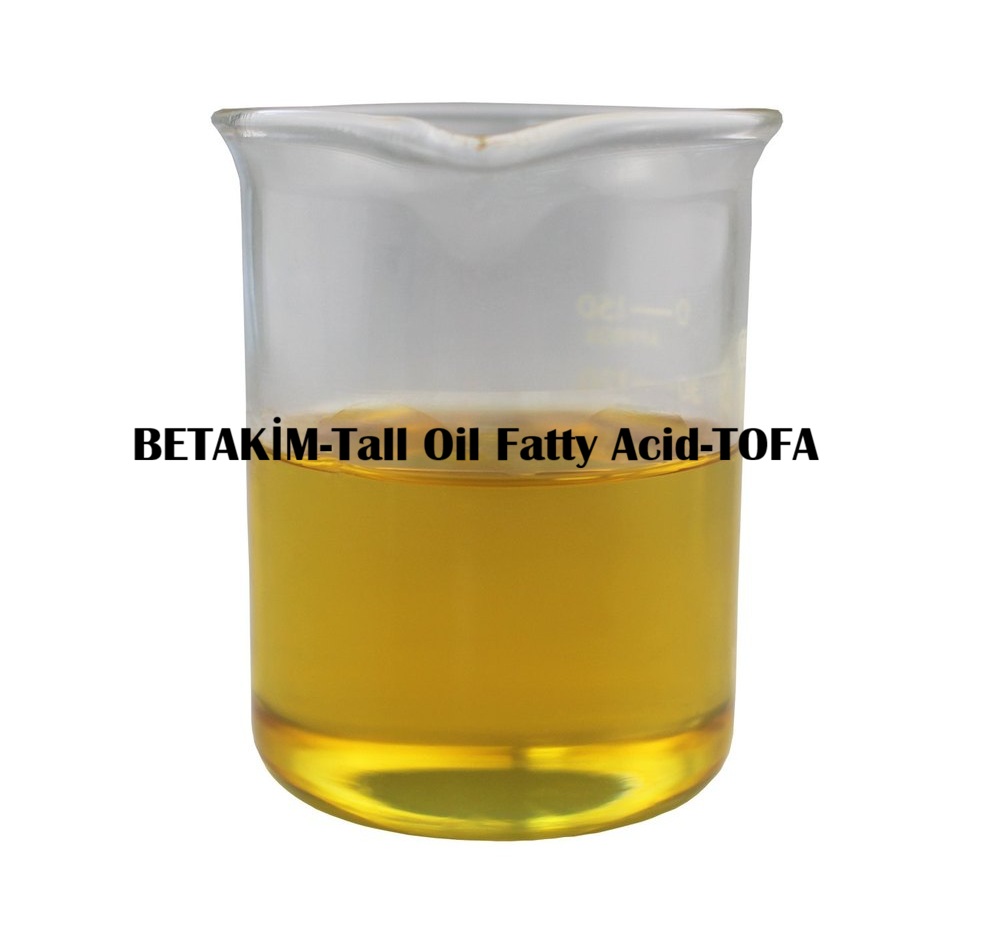
| Physical State at 25°C | Liquid | Clear to slightly hazy |
| Color | Light yellow to amber | Gardner 4-5 |
| Odor | Characteristic fatty acid | Mild, not unpleasant |
| Boiling Point | >250°C | Decomposes before boiling |
| Flash Point | >150°C (estimated) | Not flammable at room temperature |
| Auto-ignition Temperature | ~300°C (estimated) | – |
| Vapor Pressure | Very low | Negligible at room temperature |
| Specific Gravity at 20°C | 0.905 | – |
| Refractive Index | ~1.47 | – |
| Surface Tension | ~30 dyn/cm | – |
| Saponification Value | 197 mg KOH/g | Total reactive groups |
| Peroxide Value | Low (fresh) | Increases with age |
Description: SYLFAT™ 2 is a liquid fatty acid with properties similar to vegetable oils such as soybean or linseed oil, but with distinct advantages including lower cost, higher unsaturation, and better color stability.
ITEM 8: SOLUBILITY AND MISCIBILITY
| Solvent Type | Solubility |
|---|---|
| Alcohols (Ethanol, Isopropanol) | Soluble |
| Aromatics (Toluene, Xylene) | Soluble |
| Esters (Ethyl Acetate, Butyl Acetate) | Soluble |
| Ketones (Acetone, MEK) | Soluble |
| Aliphatic Hydrocarbons (Mineral Spirits) | Partially Soluble |
| Water | Insoluble |
Description: SYLFAT™ 2 is soluble in most organic solvents and insoluble in water. This solubility profile makes it suitable for solvent-based coatings, adhesives, and other industrial applications.
ITEM 9: COMPATIBILITY PROFILE
| Material | Compatibility |
|---|---|
| Other Liquid Fatty Acids | Compatible |
| Vegetable Oils (Soybean, Linseed, Sunflower) | Compatible |
| Alkyd Resins | Compatible |
| Most Organic Solvents | Compatible |
| Strong Oxidizing Agents | Incompatible |
| Strong Bases (NaOH, KOH) | Incompatible (saponification) |
| Reactive Metals (Na, K) | Incompatible (violent reaction) |
Description: SYLFAT™ 2 shows good compatibility with most organic materials used in coatings, adhesives, and chemical synthesis. Strong bases will cause exothermic saponification (soap formation). Strong oxidizers should be avoided due to fire/explosion risk.
ITEM 10: CHEMICAL REACTIONS AND REACTIVITY
| Reaction Type | Reaction Partner | Product | Application |
|---|---|---|---|
| Carboxyl Group Reactions | |||
| Esterification | Alcohol | Ester | Plasticizers, Lubricants |
| Amidation | Amine | Amide | Surfactants, Thickeners |
| Neutralization | Base | Soap (Carboxylate Salt) | Emulsifiers, Cleaners |
| Reduction | Hydrogen | Fatty Alcohol | Surfactants, Cosmetics |
| Double Bond Reactions | |||
| Oxidative Curing | Oxygen (Air) | Cross-linked Polymer | Alkyd Resin Drying |
| Dimerization | Heat / Clay Catalyst | Dimer Acid | Polyamide Resins |
| Hydrogenation | Hydrogen | Saturated Fatty Acid | Lubricants, Stabilizers |
| Epoxidation | Peracid | Epoxidized Oil | Plasticizers, Stabilizers |
| Sulfonation | Sulfuric Acid | Sulfonated Fatty Acid | Emulsifiers, Field Chemicals |
Description: SYLFAT™ 2 participates in a wide range of chemical reactions due to its carboxyl group and double bonds. The high iodine value (152) provides exceptional reactivity for oxidative curing and polymerization reactions.
ITEM 11: SPECIAL FEATURE - PINOLENIC ACID
| Parameter | Description |
|---|---|
| Unique Component | Pinolenic Acid (C18:3) |
| Characteristic | Contains a unique conjugated double bond system |
| Content in SYLFAT™ 2 | 5 – 10% |
| Advantage | Provides faster drying compared to typical linoleic acid |
| Contribution | Contributes to high iodine value without excessive conjugation |
Description: Pinolenic acid is a unique component of tall oil fatty acids. It contains a conjugated double bond system that accelerates oxidative curing, making SYLFAT™ 2 particularly valuable for fast-drying alkyd resins and coatings.
ITEM 12: DETAILED APPLICATIONS - ALKYD RESINS
| Parameter | Description |
|---|---|
| Role | Drying oil replacement / modifier |
| Function | Provides air-drying properties through oxidative crosslinking |
| Typical Formulation (Short Oil Alkyd) | SYLFAT™ 2: 35%, Phthalic Anhydride: 25%, Glycerol / Pentaerythritol: 15%, Solvent (Xylene): 25% |
| Why SYLFAT™ 2? | High iodine value (152) → fast air drying; Low rosin → better color retention; Good compatibility with other alkyd components |
End Products:
-
Architectural paints (interior/exterior)
-
Industrial enamels
-
Wood varnishes
-
Primers
-
Marine coatings
ITEM 13: DETAILED APPLICATIONS - DIMER ACIDS
| Parameter | Description |
|---|---|
| Role | Monomer source for C36 dimer acid |
| Process | SYLFAT™ 2 → Dimerization (Heat + Clay Catalyst) → Dimer Acid (C36) + Monomer (C18) + Trimer (C54) |
| Why SYLFAT™ 2? | High unsaturation → high dimer yield; Low rosin → cleaner reaction |
End Products from Dimer Acids:
-
Polyamide resins (hot-melt adhesives, printing inks)
-
Corrosion inhibitors
-
Lubricant thickeners
-
Epoxy curing agents
ITEM 14: DETAILED APPLICATIONS - POLYMERS
| Parameter | Description |
|---|---|
| Role | Reactive monomer / modifier |
| Applications | - Polyester resins - Polyurethane dispersions - Acrylic copolymers - Nylon precursors (via dimer acid) |
| Advantages | Bio-based content, good reactivity, improves flexibility and impact resistance |
ITEM 15: DETAILED APPLICATIONS - OILFIELD CHEMICALS
| Parameter | Description |
|---|---|
| Role | Surfactant / corrosion inhibitor precursor |
| Applications | - Drilling mud additives - Pipeline corrosion inhibitors - Demulsifiers - Friction reducers |
| Why SYLFAT™ 2? | Biodegradable (environmentally friendly for offshore); Good thermal stability; Effective at low concentrations |
ITEM 16: DETAILED APPLICATIONS - MINING CHEMICALS
| Parameter | Description |
|---|---|
| Role | Collector in flotation processes |
| Applications | - Froth flotation collectors (phosphate, potash, sulfide ores) - Dust suppressants - Grinding aids |
| Why SYLFAT™ 2? | Selective adsorption on mineral surfaces; Biodegradable – acceptable for mine tailings |
ITEM 17: DETAILED APPLICATIONS - SURFACTANTS
| Parameter | Description |
|---|---|
| Role | Hydrophobic tail for surfactant synthesis |
| Reactions | - Ethoxylation → Nonionic surfactants - Amidation → Alkanolamides - Sulfonation → Anionic surfactants |
| End Products | - Detergents - Emulsifiers - Wetting agents - Foam boosters |
ITEM 18: DETAILED APPLICATIONS - INDUSTRIAL & INSTITUTIONAL CLEANERS
| Parameter | Description |
|---|---|
| Role | Cleaning agent / emulsifier |
| Applications | - Heavy-duty degreasers - Concrete cleaners - Car wash formulations - Laundry detergents |
| Why SYLFAT™ 2? | Good oil solubilization; Biodegradable; Gentle on surfaces |
ITEM 19: HANDLING, STORAGE AND STABILITY
| Parameter | Requirement / Recommendation |
|---|---|
| Storage Temperature | Below 25°C (77°F) |
| Moisture | Dry environment |
| Light | Away from direct sunlight |
| Container | Closed, dry, clean |
| Material Compatibility | Stainless steel, carbon steel, plastics (HDPE, PP) |
| Shelf Life (Unopened) | 24 – 36 months |
Stability Over Time:
| Duration | Expected Changes |
|---|---|
| 0 – 6 months | Minimum change |
| 6 – 12 months | Color may increase 1-2 Gardner units |
| 12 – 24 months | Color increase, possible sediment formation |
| > 24 months | Retest before use |
Degradation Mechanisms:
| Mechanism | Description |
|---|---|
| Oxidation | Double bonds react with oxygen → peroxide formation → color darkening, viscosity increase |
| Polymerization | Unsaturated acids slowly polymerize → sediment formation |
| Hydrolysis | Minimal (no water) |
| Light Exposure | Accelerates oxidation |
ITEM 20: SEDIMENT AND CRYSTALLIZATION
| Parameter | Description |
|---|---|
| Sediment Formation | Occurs at low temperatures or during prolonged storage |
| Composition | Crystallized saturated fatty acids (stearic, palmitic) |
| Effect on Use | None – product remains suitable as chemical raw material |
| Solution | Warm to 40°C (104°F) with mild stirring |
Color Change:
| Parameter | Description |
|---|---|
| Color Change Over Time | May increase >1 Gardner unit |
| Cause | Exposure to oxygen and/or heat |
| For Color-Sensitive Applications | Test before use after extended storage |
Incompatibilities:
| Material | Hazard |
|---|---|
| Strong Oxidizers (Nitric Acid, Peroxides) | Fire/explosion risk |
| Strong Bases (NaOH, KOH) | Exothermic saponification |
| Reactive Metals (Na, K) | Violent reaction |
ITEM 21: PACKAGING INFORMATION
| Container Type | Typical Capacity | Availability |
|---|---|---|
| Steel Drums | 420 lb (190 kg) net | Available |
| IBCs (Intermediate Bulk Containers) | ~930 kg | Available |
| Flexi Tanks | ~20,000 kg | Subject to availability |
| Tankers | 20,000 – 25,000 kg | Subject to availability |
| ISO Containers | ~20,000 kg | Subject to availability |
| Rail Cars | ~60,000 – 80,000 kg | Subject to availability |
Typical Shipping Temperature: 10 – 30°C (50 – 86°F)
ITEM 22: SAFETY AND ENVIRONMENTAL PROFILE
| Parameter | Classification |
|---|---|
| Flammability | Not flammable (flash point >150°C) |
| Skin Irritation | May cause mild irritation |
| Eye Irritation | May cause irritation |
| Inhalation | Low risk at room temperature |
| Ingestion | Harmful if swallowed in large quantities |
| Aquatic Toxicity | Harmful to aquatic life (expected) |
Personal Protective Equipment (PPE):
| Equipment | Type |
|---|---|
| Gloves | Nitrile or Neoprene |
| Eye Protection | Safety goggles |
| Clothing | Chemical-resistant apron |
| Ventilation | Local exhaust if heated |
ITEM 23: SPILL CLEANUP AND DISPOSAL
| Parameter | Description |
|---|---|
| Small Spills | Absorb with inert material (sand, vermiculite) |
| Large Spills | Dike, pump to containers, absorb residue |
| Wash Area | Soap and water |
| Do Not | Discharge to sewers or water sources |
| Disposal | Incinerate at approved facility (energy recovery possible due to high heat content) |
| RCRA Classification | Not hazardous waste (expected) |
ITEM 24: ENVIRONMENTAL FATE
| Parameter | Description |
|---|---|
| Biodegradability | Readily biodegradable |
| Bioaccumulation Potential | Low |
| Persistence in Environment | Not persistent |
ITEM 25: REGULATORY AND CERTIFICATION STATUS
| Certificate / Standard | Status |
|---|---|
| USDA Certified Bio-based | 100% bio-based content |
| USDA BioPreferred Program | Compliant |
| REACH (EU) | Registered |
| TSCA (USA) | Listed |
| DSL (Canada) | Listed |
| EINECS (EU) | Listed |
| China IECSC | Listed |
| Food Contact Status | Not approved for direct food contact (confirm with Kraton) |
Description: SYLFAT™ 2 is 100% USDA Certified Bio-based, making it eligible for federal procurement preference in the United States. It is registered and listed in all major chemical inventories worldwide. Direct food contact approval is not standard for TOFA; confirm with the manufacturer for specific grade suitability.
ITEM 26: COMPARISON WITH OTHER SYLFAT GRADES
| Property | SYLFAT 2 | SYLFAT FA2 | SYLFAT FA1 | SYLFAT 2LT |
|---|---|---|---|---|
| Iodine Value | 152 | 125 | 125 | Not specified |
| Rosin Acids (%) | 1.6 (max 2.1) | 0.8 (max 1.0) | 2.5 (max 3.0) | 1.0 – 2.0 |
| Color (Gardner) | 4.2 (max 5) | 3 (max 4) | 4.5 (max 5) | 3.0 – 4.5 |
| Acid Value | 196 (min 193) | 196 | 194 | 194 – 199 |
| Cloud Point (°C) | 2 | Not specified | Not specified | Max -4 |
| Pour Point (°C) | -14 | Not specified | Not specified | Not specified |
| Unsaponifiables (%) | 1.5 (max 2.5) | 1.3 | 2.2 | Max 2.0 |
| Best For | Fast drying, high reactivity | Light color, low rosin | General purpose | Low temperature |
Description: SYLFAT™ 2 offers the highest iodine value (152) among Kraton's TOFA grades, providing the fastest air-drying and highest reactivity. For applications requiring very low rosin content and lighter color, SYLFAT FA2 is recommended. For low-temperature applications (below 2°C), SYLFAT 2LT is the preferred choice due to its lower cloud point.
ITEM 27: TROUBLESHOOTING COMMON ISSUES
| Problem | Cause | Solution |
|---|---|---|
| Product Cloudy / Hazy | Stored below cloud point (2°C) | Warm to 40°C |
| Sediment / Deposit at Bottom | Crystallized saturated acids | Warm to 40°C, mix thoroughly |
| Too Viscous to Pump | Temperature below pour point | Warm to 20 – 30°C |
ITEM 28: FREQUENTLY ASKED QUESTIONS (FAQ)
Q1: Is SYLFAT™ 2 a vegetable oil?
A: No. It is derived from tall oil, a by-product of pine wood pulping. It is not a vegetable oil but is 100% bio-based.
Q2: Can I use SYLFAT™ 2 for soap making?
A: Yes, but it produces soft soaps due to high unsaturation. For hard soaps, use saturated fatty acids or hydrogenated TOFA.
Q3: Does SYLFAT™ 2 contain rosin?
A: Yes, but at very low levels (typical 1.6%). For rosin-free applications, consider SYLFAT FA2 (0.8% rosin).
Q4: Can I store SYLFAT™ 2 outdoors in winter?
A: Not recommended. It becomes cloudy below 2°C and may solidify below -14°C. Store in temperature-controlled area.
Q5: Is SYLFAT™ 2 food grade?
A: Not specified. Confirm with Kraton for food contact status. Standard TOFA is not food grade.
Q6: How does SYLFAT™ 2 compare to linseed oil?
A: SYLFAT™ 2 has a high iodine value (152), drying faster than linseed oil and slower than tung oil. It is generally less expensive than linseed oil.
Q7: What is the shelf life?
A: Typically 24-36 months when properly stored.
Q8: Can I heat SYLFAT™ 2 above 40°C?
A: Yes, for short periods. Prolonged heating above 40°C accelerates color darkening and oxidation. Do not exceed 100°C without inert atmosphere.
ITEM 29: TURKISH MARKET ALIASES AND LOCAL TERMS
| Turkish Term | English Equivalent |
|---|---|
| Çam Yağ Asidi | Pine Oil Fatty Acid |
| Tall Yağı Yağ Asidi | Tall Oil Fatty Acid |
| Tallol | Tall Oil (Swedish term) |
| Tall Yağı | Tall Oil |
| Tallat Asidi | Tallate Acid |
| Tall Zifti | Tall Oil Pitch |
| Tall Reçinesi | Tall Oil Rosin |
| TOFA | Tall Oil Fatty Acid (acronym) |
| Sıvı Reçine | Liquid Rosin |
| Distile Tall Yağı Asidi | Distilled Tall Oil Fatty Acid |
ITEM 30: SECTOR COMPATIBILITY AND APPLICATION SUMMARY
| Industry | Suitability | Primary Functions |
|---|---|---|
| Coatings & Paints | Excellent | Alkyd resin raw material, drying oil modifier |
| Adhesives | Excellent | Polyamide resin precursor, tackifier |
| Oilfield Chemicals | Good | Corrosion inhibitors, demulsifiers, drilling additives |
| Mining | Good | Flotation collectors, dust suppressants |
| Surfactants | Good | Hydrophobic tail for surfactant synthesis |
| Industrial Cleaners | Good | Degreasers, emulsifiers |
| Plastics & Polymers | Good | Plasticizers, polyurethane dispersions, polyester resins |
| Lubricants | Good | Thickeners, metalworking fluids |
| Asphalt | Good | Emulsifiers for asphalt emulsions |
| Energy | Limited (PF grades) | Bio-fuel (SYLVABLEND PF series) |
PACKAGING AND STORAGE SUMMARY
| Parameter | Description |
|---|---|
| Standard Packaging | 190 kg (420 lb) steel drums |
| Bulk Packaging | IBCs (~930 kg), ISO containers, tankers |
| Storage Temperature | Below 25°C |
| Storage Environment | Cool, dry, away from direct sunlight |
| Shelf Life | 24-36 months (proper storage) |
| Sediment Handling | Warm to 40°C, mix thoroughly |