We unleash your business potential by maximize the business innovation.
Send EmailDioctyl Phthalate, Octyl Phthalate, DOP, DEHP, 117-81-7
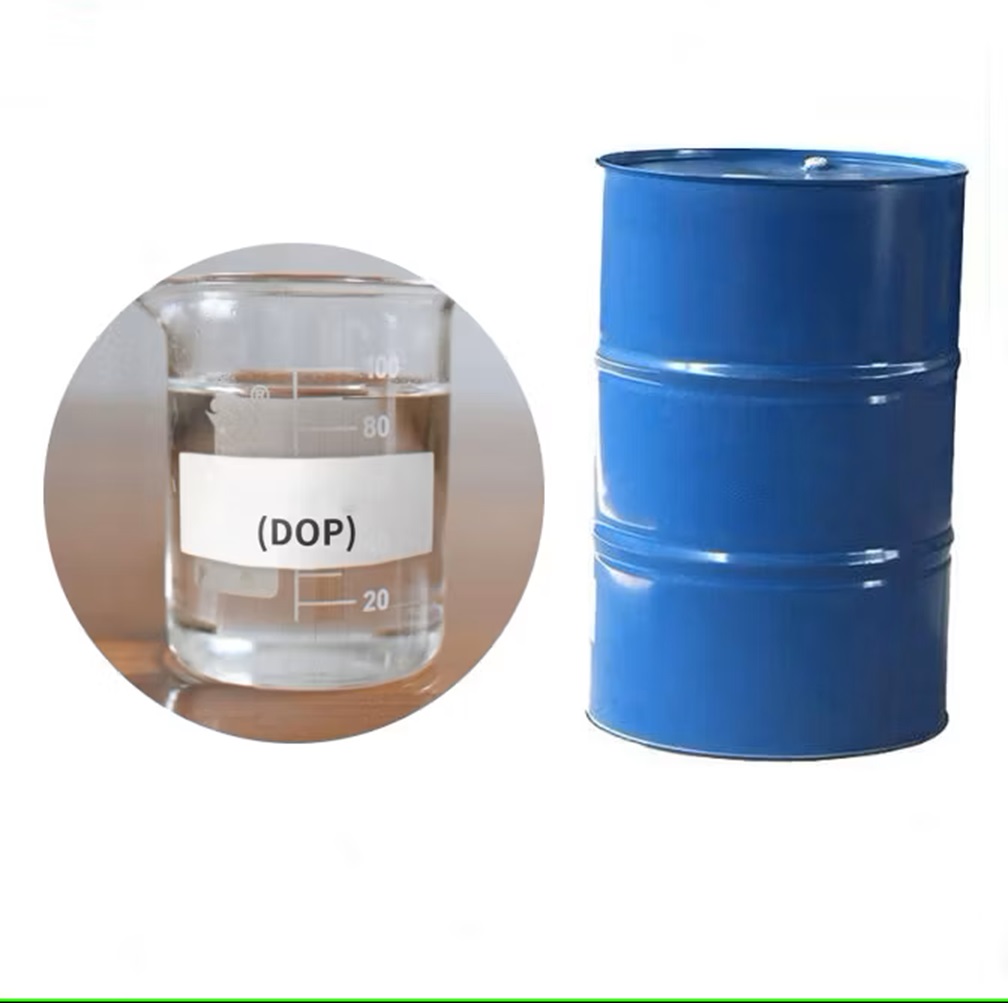
DIOCTYL PHTHALATE (DOP)
CAS Number: 117-81-7
EC Number (EINECS): 204-211-0
Molecular Formula: C₂₄H₃₈O₄
Molecular Weight: 390.56 g/mol
Chemical Class: Phthalate ester (plasticizer)
SECTION 1: PRODUCT IDENTIFICATION AND CHEMICAL IDENTITY
| Parameter | Description |
|---|---|
| Chemical Name (IUPAC) | 1,2-Benzenedicarboxylic acid bis(2-ethylhexyl) ester |
| Other Names | DOP, DEHP, Di(2-ethylhexyl) phthalate, Bis(2-ethylhexyl) phthalate, Octyl phthalate, Phthalic acid dioctyl ester, Plasticizer |
| CAS Number | 117-81-7 |
| EC Number (EINECS) | 204-211-0 |
| Molecular Formula | C₂₄H₃₈O₄ |
| Molecular Weight | 390.56 g/mol |
| Chemical Class | Phthalate ester |
| Structure | Benzene ring with two 2-ethylhexyl ester groups |
| Appearance | Clear, colorless liquid |
| Odor | Very mild, characteristic |
SECTION 2: PHYSICAL AND CHEMICAL PROPERTIES
| Property | Value / Range |
|---|---|
| Molecular Formula | C₂₄H₃₈O₄ |
| Molecular Weight | 390.56 g/mol |
| Appearance | Clear, colorless liquid |
| Odor | Very mild, characteristic |
| Melting Point | -50°C |
| Boiling Point | ~386°C |
| Density (25°C) | ~0.985 g/cm³ |
| Refractive Index (20°C) | ~1.486 |
| Flash Point | ~218°C (405°F) |
| Viscosity (25°C) | ~57 mPa·s |
| Vapor Pressure | 1.2 mmHg (at 93°C) |
| Water Solubility | Negligible |
| Organic Solubility | Miscible with mineral oil and hexane |
| LogP (octanol/water) | 4.88 - 7.6 |
| Dielectric Constant (24°C) | 5.1 |
| Vapor Density (air=1) | > 16 |
SECTION 3: SOLUBILITY PROFILE
| Solvent | Solubility | Condition |
|---|---|---|
| Water | Negligible | All temperatures |
| Methanol | Partially soluble | - |
| Ethanol | Partially soluble | - |
| Acetone | Soluble | - |
| Toluene | Soluble | - |
| Xylene | Soluble | - |
| Mineral Oils | Miscible | - |
| Hexane | Miscible | - |
| Glycerin | Very slightly soluble | - |
| Ethylene Glycol | Very slightly soluble | - |
Critical Note: DOP is practically insoluble in water but miscible with most organic solvents and oils. This property makes it an ideal plasticizer for PVC and other polymers.
SECTION 4: CHEMICAL PROPERTIES AND REACTIONS
| Property | Description |
|---|---|
| Chemical Class | Phthalate ester |
| Functional Group | Ester (-COOR) |
| Reactivity | Low under normal conditions |
| Hydrolysis | Slow hydrolysis in acidic or basic medium |
| Thermal Decomposition | Decomposes > 393°C |
| UV Stability | Good |
| Oxidation | Stable under normal conditions |
| Hydrolytic Stability | Excellent |
4.1. Stability
| Parameter | Information |
|---|---|
| Thermal Stability | Stable up to 200°C |
| Hydrolytic Stability | Excellent |
| UV Stability | Good |
| Low Volatility | Low |
| Incompatibilities | Strong oxidizers, strong acids, strong bases |
SECTION 5: MAJOR APPLICATIONS AND END-USES
5.1. PVC Plasticizer (Most Important Application)
| Application | Function | Suitability |
|---|---|---|
| Flexible PVC Production | Provides flexibility and durability | High |
| Cable and Wire Insulation | Provides processability and flexibility | High |
| Artificial Leather | Provides flexibility and durability | High |
| Films and Sheets | Provides flexibility and optical clarity | High |
| PVC Granules | Provides processability and homogeneity | High |
5.2. Polymer and Resin Applications
| Application | Function | Suitability |
|---|---|---|
| Cellulose Resins | Plasticizer | High |
| Rubber | Processing aid, flexibility | High |
| Synthetic Resins | Plasticizer | High |
5.3. Other Applications
| Application | Function | Suitability |
|---|---|---|
| Coatings | Plasticizer | High |
| Adhesives | Flexibility and adhesion enhancer | High |
| Sealants | Plasticizer | High |
| Lubricants | Additive | Moderate |
| Emulsifiers | Additive | Moderate |
SECTION 6: INDUSTRY SUITABILITY MATRIX
| Industry | Suitability | Explanation |
|---|---|---|
| PVC Processing | High | Most widely used general-purpose plasticizer |
| Cable Manufacturing | High | Provides insulation and flexibility |
| Films and Sheets | High | Flexibility and optical clarity |
| Artificial Leather | High | Flexibility and durability |
| Adhesives | High | Flexibility and adhesion |
| Coatings | High | Plasticizer |
| Cosmetics | Limited | Only in specific formulations |
| Food Contact | Restricted | Due to regulatory restrictions |
SECTION 7: OTHER NAMES AND IDENTIFIERS
| Type | Name / Description |
|---|---|
| IUPAC Name | 1,2-Benzenedicarboxylic acid bis(2-ethylhexyl) ester |
| Commercial Names | DOP, DEHP |
| Synonyms | Di(2-ethylhexyl) phthalate, Octyl phthalate, Phthalic acid dioctyl ester, Plasticizer |
| CAS Number | 117-81-7 |
| EC Number | 204-211-0 |
| HS Code | 29173200.00 |
SECTION 8: COMPARISON OF PHTHALATES
| Property | DMP (Dimethyl) | DEP (Diethyl) | DBP (Dibutyl) | DOP/DEHP (Dioctyl) | DIDP (Diisodecyl) |
|---|---|---|---|---|---|
| Molecular Formula | C₁₀H₁₀O₄ | C₁₂H₁₄O₄ | C₁₆H₂₂O₄ | C₂₄H₃₈O₄ | C₂₈H₄₆O₄ |
| Molecular Weight | ~194 g/mol | ~222 g/mol | ~278 g/mol | ~390 g/mol | ~446 g/mol |
| Boiling Point | ~282°C | ~298°C | ~340°C | ~386°C | > 400°C |
| Volatility | High | Moderate | Low | Very low | Very low |
| Water Solubility | Partially | Slight | Insoluble | Insoluble | Insoluble |
| Main Use | Insect repellent, specialty polymers | Cosmetics, perfume, cellulose acetate | PVC, adhesives, rubber | PVC, vinyl, cable coatings | Cable, automotive, durable PVC |
| Toxicological Status | Relatively low | Low | Endocrine disruptor risk | Environmental concerns, restricted | Safer, low migration |
SECTION 9: TOXICOLOGY AND HEALTH EFFECTS
| Parameter | Value / Description |
|---|---|
| GHS Classification | Danger |
| Signal Word | Danger |
| Hazard Statements | H360 (May damage fertility or the unborn child), H373 (May cause organ damage through prolonged exposure), H413 (May cause long-lasting effects to aquatic life), H315 (Causes skin irritation), H319 (Causes serious eye irritation) |
| Precautionary Statements | P202 (Do not handle until all safety precautions are read/understood), P262 (Do not get in eyes, on skin, or on clothing), P280 (Wear protective gloves/protective clothing/eye protection), P404 (Store in a closed container) |
| Oral LD50 | > 5,000 mg/kg (low acute toxicity) |
| Skin Irritation | Irritant |
| Eye Irritation | Irritant |
| Reproductive Toxicity | May damage fertility or unborn child |
| Carcinogenicity | Suspected carcinogen (IARC/NTP/OSHA) |
| Target Organs | Reproductive system, liver, kidneys |
| Occupational Exposure Limit (TWA) | 5 mg/m³ |
| NIOSH IDLH | 5,000 mg/m³ |
| California Prop 65 | Cancer and reproductive toxicity risk |
SECTION 10: ECOTOXICOLOGY AND ENVIRONMENTAL BEHAVIOR
| Parameter | Value / Description |
|---|---|
| Fish Toxicity | Toxic to aquatic organisms |
| Aquatic Toxicity | Long-lasting adverse effects (H413) |
| Bioaccumulation Potential | High (LogP > 4) |
| Biodegradability | Slow biodegradation |
| Persistence | Persistent in the environment |
| Water Hazard Class (WGK Germany) | WGK 3 (very hazardous to water) |
SECTION 11: SAFETY MEASURES AND PERSONAL PROTECTIVE EQUIPMENT
| Parameter | Information |
|---|---|
| Respiratory Protection | NIOSH-approved organic vapor cartridge or SCBA |
| Gloves | Chemically resistant |
| Eye Protection | Chemical safety goggles |
| Body Protection | Chemical-resistant apron |
| Ventilation | Local exhaust ventilation |
| Engineering Controls | Closed systems |
SECTION 12: STORAGE INFORMATION
| Parameter | Information |
|---|---|
| Storage Conditions | Cool, dry, well-ventilated area |
| Temperature | Room temperature (15-30°C) |
| Container | Tightly closed containers |
| Materials to Avoid | High heat, strong oxidizers |
| Shelf Life | 24 months (under recommended conditions) |
| Packaging | 200 kg drum, 1000 kg IBC |
SECTION 13: TRANSPORT INFORMATION
| Parameter | Information |
|---|---|
| UN Number | Not regulated (not classified as dangerous goods) |
| Hazard Class | Not applicable |
| Packing Group | Not applicable |
| Proper Shipping Name | Dioctyl Phthalate |
| ADR/RID | Not regulated |
| IMDG Code | Not regulated |
| Transport Notes | Protect from impact and rain |
SECTION 14: FIRE-FIGHTING MEASURES
| Parameter | Information |
|---|---|
| Fire Hazard | Combustible liquid (flash point 218°C) |
| Extinguishing Media | Water fog, foam, CO₂, dry chemical |
| Special Hazards | When heated, releases CO, CO₂ |
| Decomposition Products | CO, CO₂ |
| Protective Equipment | Self-contained breathing apparatus (SCBA), full protective clothing |
SECTION 15: ACCIDENTAL RELEASE AND CLEANUP
| Parameter | Information |
|---|---|
| Personal Protection | Gloves, safety goggles, protective clothing |
| Ventilation | Increase ventilation |
| Cleanup Methods | Absorb with absorbent material; collect in sealed containers |
| Environmental Precautions | Prevent entry into drains |
| Waste Disposal | According to local regulations |
SECTION 16: REGULATORY INFORMATION
| Region / Authority | Status |
|---|---|
| EU REACH | Registered (with restrictions) |
| Turkey KKDİK | Registration required |
| USA TSCA | Listed |
| USA FDA | Restricted for food contact |
| USA OSHA | Regulated (PEL: 5 mg/m³) |
| NIOSH | TWA: 5, STEL: 10, IDLH: 5,000 mg/m³ |
| ACGIH | TLV: 5 mg/m³ |
| California Prop 65 | Cancer and reproductive toxicity risk |
| EINECS | 204-211-0 |
SECTION 17: SUMMARY AND CRITICAL WARNINGS
Product Summary
| Parameter | Value |
|---|---|
| Product | Dioctyl Phthalate (DOP) |
| CAS | 117-81-7 |
| Appearance | Clear, colorless liquid |
| Density | ~0.985 g/cm³ |
| Boiling Point | ~386°C |
| Water Solubility | Negligible |
| Flash Point | ~218°C |
| Key Industry | PVC plasticizer |
CRITICAL WARNINGS
-
Most Widely Used Plasticizer: DOP is the most widely used general-purpose plasticizer for PVC. It enhances flexibility, durability, and processability of PVC materials.
-
Low Volatility: Due to its low volatility, DOP minimizes evaporation losses during high-temperature processing.
-
Excellent Stability: Shows good stability against heat, UV, and hydrolysis. Ensures long service life of PVC products.
-
Broad Compatibility: Compatible with many polymers and resins, especially PVC.
-
Environmental and Toxicological Concerns: DOP is under regulatory scrutiny due to its endocrine-disrupting effects and carcinogenic risk. Its use is restricted in toys and childcare articles.
-
Aquatic Toxicity: Toxic to aquatic organisms and may cause long-lasting environmental effects (H413).
-
California Prop 65: Requires warning notification for cancer and reproductive toxicity risk under California Prop 65.
-
Alternatives: Due to environmental and toxicological concerns, higher molecular weight phthalates (DIDP, DINP) or non-phthalate plasticizers are preferred.
IMPORTANT DISCLAIMER: This Technical Data Sheet (TDS) is for informational purposes only and is based on available technical data. The user is solely responsible for determining the product's suitability for their specific application and for complying with all applicable local, national, and international regulations. DOP is classified as an endocrine disruptor and suspected carcinogen! For complete safety, storage, handling, transportation, disposal, and regulatory compliance information, always refer to the official Safety Data Sheet (SDS/MSDS) provided by the manufacturer/supplier.