We unleash your business potential by maximize the business innovation.
Send EmailCalcium Carbonate, Chalk, Calcite, Limestone, Aragonite, Chalk, Gesso, 471-34-1
CALCIUM CARBONATE (CaCO₃)
Chalk / Calcite / Limestone / Aragonite / E170
CAS Number: 471-34-1
EC Number: 207-439-9
1. IDENTIFICATION
| Property | Information |
|---|---|
| Chemical Name | Calcium Carbonate |
| Synonyms | Calcite, Limestone, Chalk, Aragonite, Marble, Gesso, Precipitated calcium carbonate (PCC), Ground calcium carbonate (GCC), E170 |
| Chemical Formula | CaCO₃ |
| Molecular Weight | 100.09 g/mol |
| CAS Number | 471-34-1 |
| EC Number (EINECS) | 207-439-9 |
| E Number | E170 (Food additive – white colorant) |
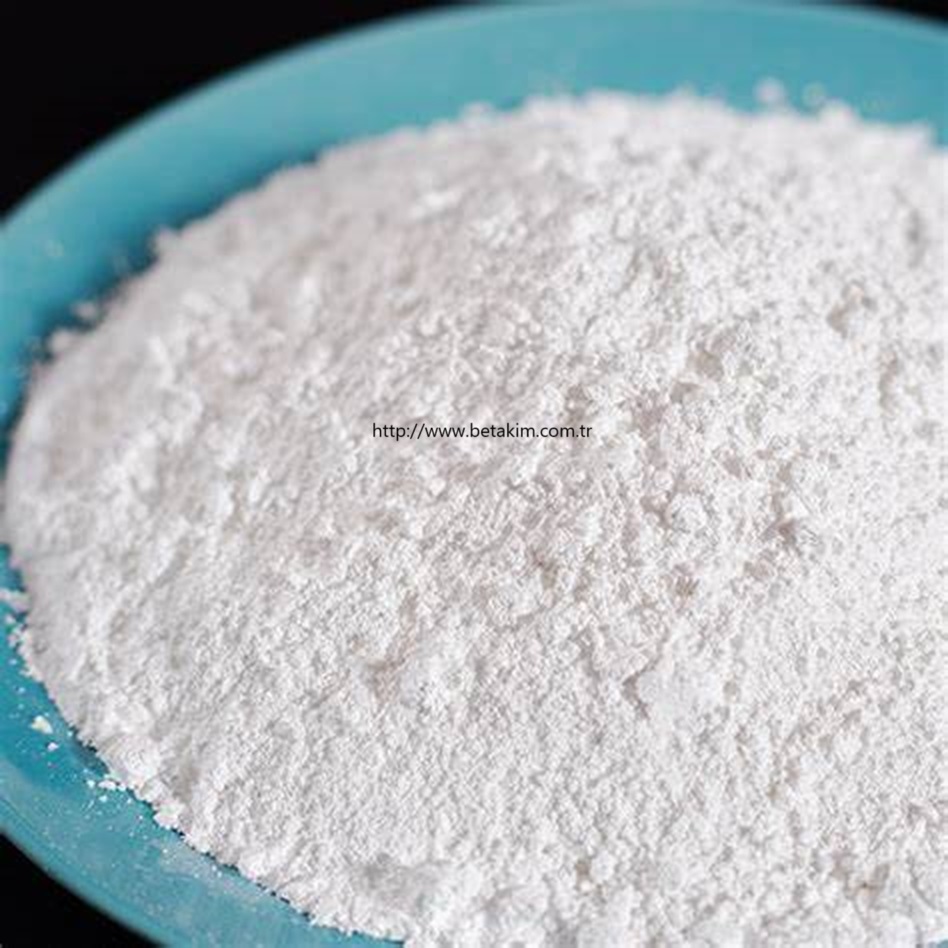
| Appearance | White, fine powder or crystalline solid |
| Odor | Odorless |
| Texture | Porous, soft |
2. PHYSICAL PROPERTIES
| Property | Value |
|---|---|
| Physical State (20°C) | Solid (powder, crystalline) |
| Appearance | White, odorless fine powder |
| Molecular Weight | 100.09 g/mol |
| Density (20°C) | 2.711 g/cm³ |
| Melting Point | 1,339 °C (decomposes) |
| Decomposition Temperature | ~825 °C (to CaO + CO₂) |
| Solubility in Water (20°C) | Very low (0.0013 g/100 mL) |
| Solubility in Acids | Soluble (effervescent) |
| pH (10% slurry) | ~9 – 10 (slightly alkaline) |
| Hardness (Mohs) | 3 (calcite), 3.5-4 (aragonite) |
| Refractive Index | 1.49 – 1.66 |
| Bulk Density (Powder) | 0.8 – 1.2 g/cm³ |
3. CRYSTAL FORMS (POLYMORPHS)
| Form | Crystal System | Density (g/cm³) | Hardness (Mohs) | Occurrence |
|---|---|---|---|---|
| Calcite | Trigonal (Rhombohedral) | 2.711 | 3 | Most common form; limestone, marble, chalk |
| Aragonite | Orthorhombic | 2.930 – 2.950 | 3.5-4 | Less common; pearls, seashells |
| Vaterite | Hexagonal | 2.540 | – | Rare; metastable |
4. CHEMICAL PROPERTIES
| Property | Information |
|---|---|
| Chemical Formula | CaCO₃ |
| Molecular Weight | 100.09 g/mol |
| Calcium Oxide (CaO) Content | ~56% |
| Carbon Dioxide (CO₂) Content | ~44% |
| pH (10% slurry) | ~9 – 10 (slightly alkaline) |
| Stability | Stable under normal conditions |
| Reaction with Acids | CaCO₃ + 2 H⁺ → Ca²⁺ + H₂O + CO₂↑ (effervescence) |
| Thermal Decomposition | CaCO₃ + Heat → CaO + CO₂↑ (above 825°C) |
| Reaction with CO₂ and Water | CaCO₃ + H₂O + CO₂ → Ca(HCO₃)₂ (soluble) |
| Incompatible Materials | Strong acids (decomposes, releases CO₂), ammonium salts |
Reaction with Acids (Effervescence):
CaCO₃ + 2 HCl → CaCl₂ + H₂O + CO₂↑
Thermal Decomposition (Calcination):
CaCO₃ + Heat → CaO (quicklime) + CO₂↑ (above 825°C)
Formation of Calcium Bicarbonate:
CaCO₃ + H₂O + CO₂ ⇌ Ca(HCO₃)₂ (soluble)
5. SOURCES & TYPES
| Type | Source | Properties | Applications |
|---|---|---|---|
| Ground Calcium Carbonate (GCC) | Mined limestone, marble, chalk | Natural, irregular particle shape | Fillers, extenders (paints, plastics, paper) |
| Precipitated Calcium Carbonate (PCC) | Synthetic (chemical precipitation) | Controlled particle size, high purity, regular shape | High-end fillers (pharmaceutical, food, paper) |
| Chalk | Natural (marine deposits) | Soft, porous, fine particles | Education (blackboard chalk), filler |
| Marble | Metamorphic (recrystallized limestone) | Dense, crystalline, high purity | Construction, sculpture, filler |
| Limestone | Sedimentary | Variable purity, fossil fragments | Construction, cement, agriculture |
6. PRODUCTION PROCESS
6.1. Ground Calcium Carbonate (GCC) – Mining & Milling
| Stage | Description |
|---|---|
| 1. Mining | Limestone or marble is mined from quarries |
| 2. Crushing | Large rocks are crushed to smaller sizes |
| 3. Grinding | Crushed material is ground to fine powder (dry or wet milling) |
| 4. Classification | Particle size is controlled (air classifier or screening) |
| 5. Coating (Optional) | Surface treatment with stearic acid for hydrophobicity |
| 6. Packaging | Product is packaged |
6.2. Precipitated Calcium Carbonate (PCC) – Chemical Synthesis
| Stage | Description |
|---|---|
| 1. Calcination | Limestone is heated to produce quicklime (CaO) |
| 2. Slaking | Quicklime is reacted with water to produce slaked lime (Ca(OH)₂) |
| 3. Carbonation | Slaked lime is reacted with CO₂ to precipitate CaCO₃ |
| 4. Filtration | Precipitated CaCO₃ is filtered |
| 5. Drying | Product is dried |
| 6. Milling | Dried product is milled to desired particle size |
| 7. Packaging | Product is packaged |
Reaction Equations:
Calcination: CaCO₃ + Heat → CaO + CO₂↑
Slaking: CaO + H₂O → Ca(OH)₂ + Heat
Carbonation: Ca(OH)₂ + CO₂ → CaCO₃↓ + H₂O
7. APPLICATIONS
7.1. Construction Industry (Largest Use – ~40-50%)
| Application | Function |
|---|---|
| Cement Production | Raw material for Portland cement (CaO source) |
| Concrete Aggregate | Crushed limestone as aggregate |
| Road Base | Base material for roads and foundations |
| Building Stone | Dimension stone (marble, limestone) |
| Mortar | Component in masonry mortar |
| Plaster | Filler and extender |
| Roofing | Roofing granules |
7.2. Agriculture (Soil Amendment)
| Application | Function |
|---|---|
| Soil pH Adjustment (Liming) | Raises pH of acidic soils (neutralizes soil acidity) |
| Calcium Source | Provides calcium for plant nutrition |
| Animal Feed | Calcium supplement for livestock and poultry |
| Fertilizer Filler | Inert filler in fertilizer blends |
| Poultry Grit | Helps digestion in birds |
7.3. Paper Industry
| Application | Function |
|---|---|
| Paper Filler | Increases opacity, brightness, smoothness |
| Paper Coating | Coating pigment for glossy paper |
| Alkaline Sizing | Buffer for pH control |
7.4. Plastics & Rubber Industry
| Application | Function |
|---|---|
| Filler (Extender) | Reduces cost, improves mechanical properties |
| PVC Compounding | Filler for PVC pipes, profiles, cables |
| Masterbatch | Carrier for pigment concentrates |
| Rubber | Filler for tires and rubber goods |
7.5. Paints & Coatings
| Application | Function |
|---|---|
| Filler (Extender) | Reduces cost, improves opacity |
| Matting Agent | Reduces gloss |
| Pigment Extender | Extends titanium dioxide (TiO₂) |
7.6. Food Industry (E170)
| Application | Function |
|---|---|
| Food Additive (E170) | White colorant, anti-caking agent |
| Calcium Fortification | Calcium source for food products |
| Baking Powder | Component of baking powder (with acid) |
| Cheese Production | Calcium source for cheese making |
| Toothpaste | Mild abrasive, whitening agent |
| Cereals & Flour | Calcium fortification |
| Confectionery | Anti-caking agent in powdered sugar |
| Wine Making | Acidity reduction (deacidification) |
7.7. Pharmaceutical & Nutraceutical
| Application | Function |
|---|---|
| Calcium Supplement | Calcium source (tablets, capsules) |
| Antacid | Neutralizes stomach acid (heartburn relief) |
| Tablet Excipient | Filler, diluent in tablet formulations |
| Dental Products | Abrasive in toothpaste |
7.8. Environmental Applications
| Application | Function |
|---|---|
| Flue Gas Desulfurization (FGD) | Removes SO₂ from power plant emissions |
| Water Treatment | Neutralizes acidic water, removes heavy metals |
| Acid Mine Drainage | Neutralizes acidic mine runoff |
7.9. Education (Traditional)
| Application | Function |
|---|---|
| Blackboard Chalk | Writing and drawing on blackboards (traditional) |
| Sidewalk Chalk | Drawing on pavement |
7.10. Art & Craft
| Application | Function |
|---|---|
| Gesso | Primer for painting surfaces (canvas, wood) |
| Pastels | Binder for soft pastels |
| Sculpture | Marble for sculpting |
| Fresco | Plaster base for fresco painting |
7.11. Other Applications
| Application | Function |
|---|---|
| Oil & Gas Drilling | Weighting agent in drilling fluids |
| Glass Manufacturing | Raw material (CaO source) |
| Ceramics | Filler, flux agent |
| Detergents | Abrasive in scouring powders |
| Petrochemicals | Catalyst support |
8. E170 – FOOD ADDITIVE SPECIFICATIONS
| Parameter | Specification |
|---|---|
| E Number | E170 |
| Purity (CaCO₃) | ≥ 98.0% |
| Calcium (Ca) Content | ≥ 39.0% |
| Acid Insoluble Matter | ≤ 0.5% |
| Magnesium and Alkali Salts | ≤ 1.0% |
| Arsenic (As) | ≤ 1 ppm |
| Lead (Pb) | ≤ 2 ppm |
| Mercury (Hg) | ≤ 0.1 ppm |
| Cadmium (Cd) | ≤ 1 ppm |
| Fluoride (F) | ≤ 50 ppm |
9. GRADES & PARTICLE SIZES
| Grade | Particle Size (D50) | Primary Applications |
|---|---|---|
| Coarse (100-200 mesh) | 75 – 150 µm | Agriculture (liming), construction |
| Medium (200-400 mesh) | 38 – 75 µm | Animal feed, plastics (general) |
| Fine (400-800 mesh) | 15 – 38 µm | Paper filler, paints, rubber |
| Ultrafine (800-2500 mesh) | 3 – 15 µm | High-quality paper, coatings, plastics |
| Nano | < 100 nm | Specialty applications |
| Food/Pharma Grade | 5 – 50 µm | Food additive, calcium supplements |
| Precipitated (PCC) | 0.1 – 10 µm | High-purity applications |
10. STORAGE & HANDLING
| Parameter | Information |
|---|---|
| Storage Conditions | Cool, dry, well-ventilated area |
| Container Requirements | Sealed bags, drums, or silos (protect from moisture) |
| Protect From | Strong acids (decomposes), moisture (may cause caking) |
| Shelf Life | 24-60 months (stable – indefinite if kept dry) |
| Dust Hazard | Avoid inhalation of fine dust |
| Incompatible Materials | Strong acids (releases CO₂), ammonium salts |
| Packaging Options | 25 kg bags (multi-layer paper/plastic), 50 kg drums, 500 kg/1000 kg FIBC (big bags), bulk silos |
11. SAFETY & HEALTH INFORMATION
GHS Classification
| Hazard Class | Category |
|---|---|
| Not classified as hazardous (for bulk solid) | – |
Notes:
-
Calcium carbonate is generally recognized as safe (GRAS)
-
Fine dust may cause mechanical irritation to eyes and respiratory tract
-
Not classified as a hazardous substance under normal handling conditions
Hazard Statements (H-Codes)
| Code | Statement |
|---|---|
| None | Not classified as hazardous |
Precautionary Statements (P-Codes)
| Code | Statement |
|---|---|
| P261 | Avoid breathing dust |
| P271 | Use only outdoors or in a well-ventilated area |
| P280 | Wear protective gloves and eye protection |
Toxicological Information
| Parameter | Value |
|---|---|
| Oral LD50 (rat) | > 5,000 mg/kg (practically non-toxic) |
| Inhalation LC50 (rat) | Not applicable (dust may cause irritation) |
| Skin Irritation | Not an irritant |
| Eye Irritation | Mechanical irritant (dust) |
First Aid Measures
| Exposure Route | Action |
|---|---|
| Inhalation | Remove to fresh air. Seek medical attention if respiratory irritation occurs. |
| Skin Contact | Wash with soap and water. |
| Eye Contact | Rinse with plenty of water for 15 minutes. |
| Ingestion | Unlikely to cause harm. Seek medical attention if large amount ingested. |
Personal Protective Equipment (PPE)
| Equipment | Recommendation |
|---|---|
| Respiratory Protection | Dust mask (N95) when handling fine powder |
| Hand Protection | Gloves (minimal risk – mechanical protection) |
| Eye Protection | Safety glasses with side shields |
| Body Protection | Lab coat or protective clothing |
12. ENVIRONMENTAL INFORMATION
| Parameter | Information |
|---|---|
| Aquatic Toxicity | Low (insoluble) |
| Biodegradability | Not applicable (inorganic) |
| Bioaccumulation | Not expected |
| Persistence | Persistent (inorganic mineral) |
| Source | Natural (mining) – non-renewable |
| Waste Disposal | Non-hazardous; can be landfilled or recycled (cement production) |
13. TRANSPORT INFORMATION
| Parameter | Information |
|---|---|
| UN Number | Not regulated (non-hazardous) |
| Hazard Class | None |
| Packing Group | Not applicable |
| Marine Pollutant | No |
14. REGULATORY INFORMATION
| Region | Status |
|---|---|
| EU | REACH registered; E170 approved as food additive |
| Turkey (KKDIK) | Mandatory compliance; requires registration |
| USA (FDA) | GRAS – 21 CFR 184.1191 (calcium carbonate) |
| Canada (DSL) | Listed |
| Australia (AICS) | Listed |
| E170 | Approved worldwide |
15. SYNONYMS & OTHER NAMES
| Turkish Name | English Name |
|---|---|
| Kalsiyum Karbonat | Calcium Carbonate |
| Tebeşir | Chalk |
| Kalsit | Calcite |
| Kireçtaşı | Limestone |
| Aragonit | Aragonite |
| E170 | E170 |
| Gesso | Gesso (Italian) |
| Mermer | Marble |
Database Identifiers:
-
CAS: 471-34-1
-
EC: 207-439-9
-
E Number: E170
-
MDL: MFCD00010906
-
PubChem CID: 10112
-
RTECS: FF9335000
16. SUMMARY
Calcium Carbonate (CaCO₃, CAS 471-34-1, E170) is a white, naturally occurring mineral found in limestone, chalk, marble, and calcite. It is one of the most widely used industrial minerals, serving as a filler, extender, pigment, and pH adjuster across numerous industries.
Key Features:
| Feature | Value |
|---|---|
| Appearance | White fine powder |
| Molecular Weight | 100.09 g/mol |
| Density | 2.711 g/cm³ |
| Melting Point | 1,339°C (decomposes) |
| Solubility | Very low in water (0.0013 g/100 mL) |
| Decomposition | 825°C → CaO + CO₂ |
Main Application Areas:
| Sector | Applications |
|---|---|
| Construction | Cement, concrete, road base, building stone |
| Agriculture | Soil pH adjustment (liming), calcium source |
| Paper Industry | Filler, coating pigment |
| Plastics & Rubber | Filler, extender |
| Paints & Coatings | Extender, matting agent |
| Food (E170) | White colorant, anti-caking agent, calcium fortification |
| Pharmaceutical | Calcium supplements, antacid, excipient |
| Environmental | Flue gas desulfurization, water treatment |
| Education/Art | Chalk, gesso |
Key Safety Points:
-
NON-TOXIC – Generally recognized as safe (GRAS)
-
MECHANICAL IRRITANT – Dust may cause eye/respiratory irritation
-
STABLE – Chemically stable under normal conditions
-
NON-FLAMMABLE – No fire hazard
-
LOW SOLUBILITY – Practically insoluble in water
17. IMPORTANT NOTES
-
Natural vs Synthetic: Two main types: Ground Calcium Carbonate (GCC) from natural limestone/marble, and Precipitated Calcium Carbonate (PCC) synthesized chemically. PCC has higher purity and controlled particle shape, used in high-end applications (pharmaceutical, food, premium paper).
-
Calcium Carbonate Cycle (Karst Formation): CaCO₃ dissolves in acidic water to form Ca(HCO₃)₂. When CO₂ is released, CaCO₃ precipitates, forming stalactites, stalagmites, and cave formations.
-
Liming (Soil pH Adjustment): In agriculture, calcium carbonate is used to raise pH of acidic soils. The effectiveness depends on particle size (finer particles react faster) and purity (CaCO₃ equivalent).
-
Acid Reaction (Effervescence): One of the key identification tests for carbonate minerals is the reaction with dilute hydrochloric acid (HCl), which produces CO₂ bubbles (effervescence).
-
Thermal Decomposition (Calcination): When heated above 825°C, CaCO₃ decomposes to quicklime (CaO) and CO₂. This is the first step in cement production and lime manufacturing.
-
E170 – Food Additive: Calcium carbonate is approved as food additive E170 (white colorant). It is used in products such as powdered sugar (anti-caking), baking powder, toothpaste, and calcium-fortified foods.
-
Paper Industry Shift: The paper industry has shifted from using kaolin clay to PCC (precipitated calcium carbonate) due to improved brightness, opacity, and cost. Alkaline papermaking (using PCC) also allows the use of more durable fibers.
-
Plastics and Rubber Filler: CaCO₃ is the most widely used filler in the plastics industry. It reduces material cost, improves mechanical properties (stiffness, impact resistance), and can improve processing.
-
Polymorphs (Calcite vs Aragonite): Calcite is the stable form at room temperature. Aragonite is metastable and converts to calcite over geological time. Marine organisms (corals, mollusks) produce aragonite shells.
-
Reaction with CO₂: CaCO₃ reacts with CO₂ and water to form soluble calcium bicarbonate [Ca(HCO₃)₂]. This reaction is important in the natural carbon cycle and in industrial processes such as water softening.
Important Disclaimer: This Technical Data Sheet (TDS) is for informational purposes only. For complete safety, handling, storage, and regulatory compliance information, always refer to the official Safety Data Sheet (SDS) provided by the manufacturer/supplier.