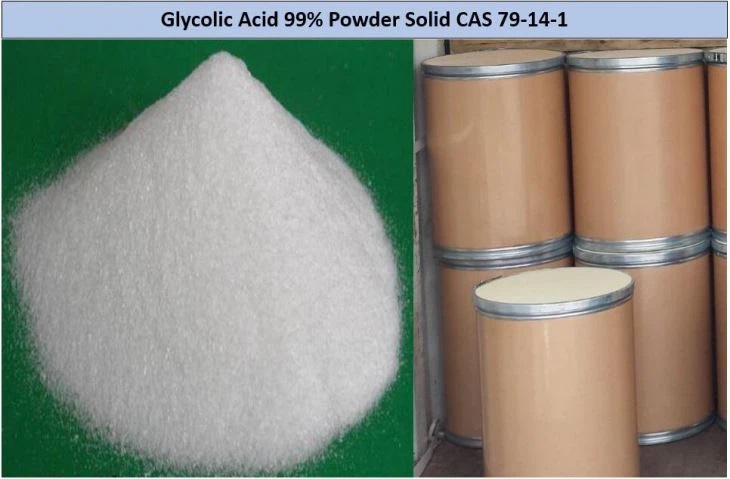
We unleash your business potential by maximize the business innovation.
Send EmailGlycolic Acid, Total Acid, Hydroxyacetic Acid, Hydroxyethanoic Acid, 79-14-1
GLYCOLIC ACID (C₂H₄O₃)
1. Chemical Identity and Material Classification
-
Chemical Name: Glycolic Acid, Hydroxyacetic Acid, Hydroxyethanoic Acid
-
Synonyms: 2-Hydroxyacetic Acid, Alpha-Hydroxyacetic Acid, Glycolic Acid Homopolymer, Glypure, Glycolate
-
CAS Number: 79-14-1
-
EC Number (EINECS): 201-180-5
-
Molecular Formula: C₂H₄O₃ (HOCH₂–COOH)
-
Molecular Weight: 76.05 g/mol
-
Chemical Class: Alpha-hydroxy acid (AHA)
-
HS Code: 2918.14
-
UN Number: 3261 (Corrosive solid, acidic, organic, n.o.s.) – for solid; 1760 (Corrosive liquid) – for solution
2. Physical Properties
2.1 General Physical Properties
| Property | Pure (Solid) | 70% Solution (Commercial) |
|---|---|---|
| Appearance | White, odorless, hygroscopic crystalline solid | Colorless to pale yellow clear liquid |
| Physical state (20°C) | Solid (crystals) | Liquid (viscous) |
| Odor | Odorless | Odorless to faint caramel-like odor |
| Density (20°C) | 1.49 g/cm³ | 1.30–1.32 g/cm³ |
| Melting point | 79.5°C (175°F) | – |
| Boiling point (decomposes) | 100°C (212°F) (decomposes) | ~112°C (decomposes) |
| Flash point | Not flammable | Not flammable (aqueous solution) |
| Vapor pressure (20°C) | Negligible | 15 mmHg (estimated) |
| Refractive index (nD20) | – | 1.415–1.420 |
| Viscosity (20°C) | – | 10–30 cP |
2.2 Solubility
| Solvent | Solubility |
|---|---|
| Water | Very soluble (miscible) |
| Methanol | Soluble |
| Ethanol | Soluble |
| Acetone | Soluble |
| Acetic acid | Soluble |
| Diethyl ether | Slightly soluble |
| Hydrocarbons | Insoluble |
2.3 Aqueous Solution Properties
| Concentration | pH (20°C) |
|---|---|
| 1% solution | 2.0–2.5 |
| 10% solution | 1.5–2.0 |
| 70% solution (as supplied) | 1.0–1.5 |
| pKa (25°C) | 3.83 |
| Heat of dilution | Endothermic (cools water) |
3. Chemical Properties
3.1 Molecular Structure
Structure: HO–CH₂–COOH
-
Smallest alpha-hydroxy acid (AHA)
-
Contains both a hydroxyl group (-OH) and a carboxylic acid group (-COOH)
-
Bifunctional molecule (both alcohol and acid reactivity)
-
Weak organic acid (pKa 3.83)
3.2 Dimerization and Polymerization
| Condition | Reaction | Products |
|---|---|---|
| Heating (100–150°C) | Dimerization | Glycolide (cyclic diester) |
| Heating with catalyst | Polymerization | Polyglycolic acid (PGA) – biodegradable polymer |
| Heating alone (extended) | Decomposition | Formaldehyde, formic acid, CO, CO₂, H₂O |
3.3 Chemical Reactivity
| Reaction | Description |
|---|---|
| Esterification | With alcohols → glycolate esters |
| Neutralization | With bases → glycolate salts (sodium, potassium, calcium, ammonium glycolate) |
| Etherification | With alcohols (acid catalyst) → glycol ethers |
| Oxidation | To glyoxylic acid, oxalic acid, formic acid (strong oxidizers) |
| Polymerization | To polyglycolic acid (PGA) – biodegradable plastic |
| Dimerization | To glycolide (cyclic diester) |
3.4 Acid-Base Properties
| Parameter | Value |
|---|---|
| pKa (25°C) | 3.83 |
| Acid strength | Stronger than acetic acid (pKa 4.76), weaker than citric acid (pKa 3.13) |
| Dissociation | HOCH₂–COOH ⇌ HOCH₂–COO⁻ + H⁺ |
3.5 Thermal Stability
| Temperature | Behavior |
|---|---|
| <70°C | Stable |
| 70–100°C | Slow decomposition begins |
| 100–150°C | Dimerization to glycolide |
| >150°C | Decomposition to formaldehyde, formic acid, CO, CO₂ |
| Complete combustion | CO₂ + H₂O |
3.6 Stability
| Parameter | Behavior |
|---|---|
| Stability (pure solid, dry) | Stable (store dry) |
| Stability (70% solution) | Stable (but may discolor over time) |
| Light sensitivity | May discolor (yellow to brown) |
| Hygroscopicity | Highly hygroscopic (absorbs moisture from air) |
| Thermal stability | Decomposes upon heating |
| Hydrolytic stability | Stable in water |
3.7 Incompatibilities
| Substance | Hazard |
|---|---|
| Strong oxidizing agents (HNO₃, H₂O₂, permanganates, chromates) | Oxidation, fire/explosion risk |
| Strong bases (NaOH, KOH) | Exothermic neutralization |
| Iron, copper, aluminum | Corrosion (acidic) |
| Reducing agents | May react |
4. Available Commercial Grades
| Grade | Concentration | Form | Purity | Applications |
|---|---|---|---|---|
| Technical Grade | 70% | Aqueous solution | ≥ 99% | Industrial cleaning, metal treatment |
| Cosmetic Grade | 70% (or 50%) | Aqueous solution | ≥ 99% | Skin care, peels, cosmetics |
| Pharmaceutical Grade | 70% | Aqueous solution | ≥ 99.5% | Dermatological products, pharmaceutical intermediates |
| High Purity / Electronic Grade | 70% | Aqueous solution | ≥ 99.9% | Semiconductor cleaning |
| Pure (Solid) | 99%+ | Crystalline solid | ≥ 99% | Chemical synthesis, polymerization |
5. Quality Specifications (70% Cosmetic/Pharmaceutical Grade)
| Parameter | Specification | Test Method |
|---|---|---|
| Assay (C₂H₄O₃, w/w) | 69.5–70.5% | Titration |
| Water content | 29.5–30.5% | Karl Fischer |
| Chlorides (Cl) | ≤ 50 ppm | Turbidimetric |
| Sulfates (SO₄) | ≤ 50 ppm | Turbidimetric |
| Heavy metals (as Pb) | ≤ 10 ppm | Colorimetric |
| Iron (Fe) | ≤ 10 ppm | Colorimetric |
| Color (APHA) | ≤ 50 | Visual |
| pH (as supplied) | 1.0–1.5 | pH meter |
| Residue on ignition | ≤ 0.1% | Ignition (800°C) |
| Appearance | Clear, colorless to pale yellow liquid | Visual |
6. Production Methods
6.1 From Chloroacetic Acid (Industrial Standard)
Reaction: ClCH₂COOH + NaOH → HOCH₂COONa + NaCl
Then: HOCH₂COONa + H₂SO₄ → HOCH₂COOH + Na₂SO₄
Process:
-
Chloroacetic acid is reacted with sodium hydroxide
-
Sodium glycolate forms
-
Acidification with sulfuric acid yields glycolic acid
-
Purification by extraction or ion exchange
Purity: 98–99% (technical grade)
6.2 From Formaldehyde and Carbon Monoxide (High Purity)
Reaction: HCHO + CO + H₂O → HOCH₂COOH (catalyst: acid)
Process:
-
Formaldehyde, carbon monoxide, and water are reacted under pressure
-
Product purified by distillation
Purity: 99.9%+ (pharmaceutical/electronic grade)
6.3 From Ethylene Glycol (Oxidation)
Reaction: HOCH₂–CH₂OH + O₂ → HOCH₂–COOH + H₂O (catalyst)
Process:
-
Ethylene glycol oxidized with air or oxygen
-
Glycolic acid recovered
6.4 Natural Extraction (Minor – from sugar cane, beets, pineapple, unripe grapes)
-
Historically extracted from sugar cane juice
-
Not economically viable for large-scale industrial production
7. Mechanism of Action – Skin Care (AHA)
7.1 Exfoliation Mechanism
| Step | Description |
|---|---|
| 1 | Glycolic acid penetrates the stratum corneum (outer skin layer) |
| 2 | Weakens intercellular bonds (desmosomes) between corneocytes |
| 3 | Dissolves the "cement" that holds dead skin cells together |
| 4 | Promotes shedding of dead skin cells |
| 5 | Reveals fresher, smoother, more even-toned skin |
7.2 Collagen and Elastin Stimulation
-
Glycolic acid stimulates fibroblasts in the dermis
-
Increases collagen (Type I and III) production
-
Increases elastin production
-
Reduces fine lines and wrinkles
-
Improves skin firmness and elasticity
7.3 Hyaluronic Acid Enhancement
-
Increases hyaluronic acid synthesis in the skin
-
Improves skin hydration (water-binding capacity)
-
Plumps the skin
7.4 Hyperpigmentation (Age Spots, Melasma)
-
Inhibits tyrosinase (melanin-producing enzyme)
-
Promotes shedding of melanin-containing cells
-
Lightens age spots, sunspots, melasma, post-inflammatory hyperpigmentation
7.5 Acne Treatment
-
Unclogs pores (comedolytic effect)
-
Reduces sebum (oil) production
-
Anti-inflammatory
-
Reduces acne lesions and prevents future breakouts
8. Cosmetic and Personal Care Applications (Primary)
8.1 Skin Care Products
| Application | Function | Typical Concentration |
|---|---|---|
| Chemical peels (professional) | Deep exfoliation, collagen stimulation | 20–70% (medical setting) |
| At-home peels | Mild exfoliation, brightening | 5–10% |
| Anti-aging creams | Reduces fine lines, wrinkles | 5–10% |
| Moisturizers | Enhances hydration (hyaluronic acid) | 2–5% |
| Serums | Brightening, smoothing, anti-aging | 5–15% |
| Acne treatments | Unclogs pores, reduces breakouts | 2–10% |
| Hyperpigmentation creams | Fades age spots, melasma | 5–10% |
| Toners | pH adjustment, mild exfoliation | 1–5% |
| Face washes (cleansers) | Exfoliation, smoother skin | 1–5% |
| Body lotions | Smooths rough skin (keratosis pilaris) | 5–10% |
Note: Cosmetic products typically have pH adjusted to 3.5–4.5 for safety and efficacy.
8.2 Professional Chemical Peels
| Strength | Depth | Applications | Downtime |
|---|---|---|---|
| 20–30% | Superficial | Mild exfoliation, glow | None |
| 30–50% | Medium | Fine lines, pigment, acne | 2–5 days |
| 50–70% | Deep | Deep wrinkles, scars (medical) | 7–14 days |
Precautions: Must be performed by trained professionals; requires neutralization.
8.3 Hair Care Products
| Application | Function |
|---|---|
| Shampoos | Removes product buildup, smooths cuticle |
| Conditioners | Improves shine, smoothness |
| Hair smoothing treatments | Reduces frizz (with keratin) |
| pH adjuster | Maintains optimal hair pH (4.5–5.5) |
8.4 Other Personal Care
| Application | Function |
|---|---|
| Hand creams | Softens rough, dry hands |
| Foot creams | Removes calluses, rough skin |
| Lip treatments | Exfoliates, smooths lips |
9. Pharmaceutical Applications
9.1 Dermatological Products
| Application | Function |
|---|---|
| Acne creams | Unclogs pores, reduces inflammation |
| Psoriasis treatment | Exfoliates plaques |
| Wart removal | Keratolytic effect |
| Ichthyosis treatment | Removes scales |
| Photoaging treatment | Reduces wrinkles, improves texture |
9.2 Hydrogels and Wound Care
| Application | Function |
|---|---|
| Burn wound dressings | pH adjustment to 4.0–7.0, promotes healing |
| Pressure ulcer treatment | Debridement, exfoliation |
| Diabetic foot ulcer care | Cleans wounds |
9.3 Pharmaceutical Intermediates
| Product | Use |
|---|---|
| Glycolate salts (sodium, calcium, ammonium) | Buffers, excipients |
| Ester derivatives | Drug intermediates |
10. Industrial Applications
10.1 Cleaning and Metal Treatment
| Application | Function | Typical Concentration |
|---|---|---|
| Descaling (calcium, lime scale) | Dissolves CaCO₃, CaSO₄ scale | 5–20% |
| Rust removal | Chelates Fe³⁺ | 5–15% |
| Metal surface preparation | Removes oxides, improves adhesion | 5–20% |
| Aluminum etching | Surface preparation | 1–5% |
| Boiler and heat exchanger cleaning | Scale removal | 5–15% |
| Dairy and brewery equipment (CIP) | Removes milk/beer stone | 1–5% |
Advantage over strong acids: Less corrosive to equipment, safer to handle.
10.2 Textile Industry
| Application | Function |
|---|---|
| Fabric finishing | pH adjustment |
| Dyeing auxiliary | Leveling agent |
| Fiber treatment | Improves dye uptake |
10.3 Leather Industry
| Application | Function |
|---|---|
| Tanning auxiliary | pH control |
| Dehairing agent | Assists in hair removal |
10.4 Biodegradable Polymers
| Product | Description |
|---|---|
| Polyglycolic acid (PGA) | Biodegradable polymer for sutures, drug delivery |
| Glycolide (cyclic diester) | Monomer for PGA and copolymers (PLGA with lactic acid) |
11. Agricultural Applications
| Application | Function | Typical Concentration |
|---|---|---|
| Plant growth promoter | Stimulates growth, increases stress resistance | 2–500 ppm |
| Irrigation system cleaner | Prevents clogging, pH control | 0.1–1% |
| Post-harvest treatment | Maintains quality, extends shelf life | 0.1–0.5% |
| Fertilizer additive | Chelates micronutrients | 0.01–0.1% |
| Soil pH amendment | Lowers pH (for acid-loving plants) | Variable |
12. Water Treatment and Descaling
| Application | Function |
|---|---|
| Cooling tower scale removal | Dissolves calcium carbonate scale |
| Boiler descaling | Removes mineral deposits |
| Reverse osmosis membrane cleaning | Removes inorganic scale |
| Pipe and fitting cleaning | Descale without damage |
13. Toxicology and Safety
13.1 Acute Toxicity
| Parameter | Value | Classification |
|---|---|---|
| Oral LD₅₀ (rat) | 1,500–3,000 mg/kg | Acute Tox. 4 (H302) |
| Dermal LD₅₀ (rabbit) | >2,000 mg/kg | Not classified |
| Inhalation LC₅₀ | Not determined | Not classified |
| Skin corrosion | Category 1B – Causes severe skin burns (H314) – concentrated | |
| Eye damage | Category 1 – Causes serious eye damage (H318) | |
| Skin sensitization | Non-sensitizer | Not classified |
13.2 Special Concerns (Cosmetic Use)
| Concern | Information |
|---|---|
| Skin irritation | High concentrations (≥10%) may cause burning, redness |
| Sun sensitivity | Increases UV sensitivity (use sunscreen after AHA treatment) |
| Safe concentration (consumer) | ≤10% in leave-on products (EU, US) |
| Safe pH (consumer) | ≥3.5 (EU Cosmetic Regulation) |
13.3 GHS Classification (70% Solution)
| Classification | Category |
|---|---|
| Signal word | Danger |
| Hazard statements | H302 – Harmful if swallowed |
| H314 – Causes severe skin burns and eye damage | |
| Precautionary statements | P260, P264, P280, P301+P330+P331, P303+P361+P353, P305+P351+P338, P310 |
13.4 NFPA Rating
| Health | Flammability | Reactivity |
|---|---|---|
| 3 | 0 | 0 |
14. Safety Precautions and Personal Protective Equipment (PPE)
-
Hazards:
-
Corrosive – causes severe skin burns and eye damage (H314)
-
Harmful if swallowed (H302)
-
Hygroscopic – absorbs moisture from air
-
Non-flammable (aqueous solution)
-
-
PPE (mandatory – for concentrated 70% solution):
-
Chemical-resistant gloves (nitrile or neoprene, EN 374)
-
Chemical splash goggles (EN 166) or full face shield
-
Protective clothing (acid-resistant apron or coverall)
-
Respiratory protection: Not normally required (low vapor pressure)
-
-
Engineering controls:
-
Local exhaust ventilation (LEV) for mist control
-
Eyewash stations and safety showers
-
-
Storage conditions:
-
Keep tightly closed in original container (HDPE, PP, stainless steel – NOT carbon steel or aluminum)
-
Store in cool, dry, well-ventilated area (5–30°C)
-
Protect from freezing (70% solution may crystallize below 10°C – warm to 20–30°C to re-dissolve)
-
Protect from light (may discolor)
-
Store away from strong oxidizing agents and strong bases
-
-
First aid:
-
Inhalation: Move to fresh air
-
Skin contact: Remove contaminated clothing; wash with copious water for at least 15 minutes; seek medical attention immediately
-
Eye contact: Rinse with water for at least 15 minutes, lifting eyelids; remove contact lenses; seek immediate medical attention
-
Ingestion: Rinse mouth; do NOT induce vomiting; drink water or milk; seek immediate medical attention
-
15. Environmental Fate
| Parameter | Value |
|---|---|
| Biodegradability | Readily biodegradable (OECD 301) – 90–100% in 28 days |
| Aquatic toxicity (fish, LC₅₀, 96 hours) | 100–500 mg/L (moderate toxicity – due to pH) |
| Daphnia magna (EC₅₀, 48 hours) | 50–200 mg/L |
| Algal toxicity (EC₅₀, 72 hours) | 10–100 mg/L |
| Bioaccumulation | Low (log P = -1.11) |
| Soil mobility | High (high water solubility) |
| WGK Germany | 1 (low hazard to water) |
| Disposal method | Neutralization → wastewater treatment (biodegradable) or incineration |
16. Storage and Shelf Life
16.1 Storage Conditions
| Parameter | Requirement |
|---|---|
| Storage temperature | 5–30°C (avoid freezing – crystallizes below 10°C) |
| Container | HDPE, PP, stainless steel, glass (NOT carbon steel, aluminum, copper) |
| Protect from | Freezing (crystallization), light (discoloration), moisture (hygroscopic), heat (decomposition) |
| Environment | Cool, dry, well-ventilated area |
16.2 Shelf Life
| Parameter | Value |
|---|---|
| Shelf life (70% solution, sealed) | 12–24 months |
| Shelf life (pure solid, sealed, dry) | 24–36 months |
| Degradation indicators | Color darkening (yellow to brown), crystallization (freezing), reduced assay |
17. Transport Information
| Regulation | Classification |
|---|---|
| UN Number | 3261 (solid); 1760 (solution) |
| Proper shipping name | Corrosive solid, acidic, organic, n.o.s. (solid); Corrosive liquid, n.o.s. (solution) |
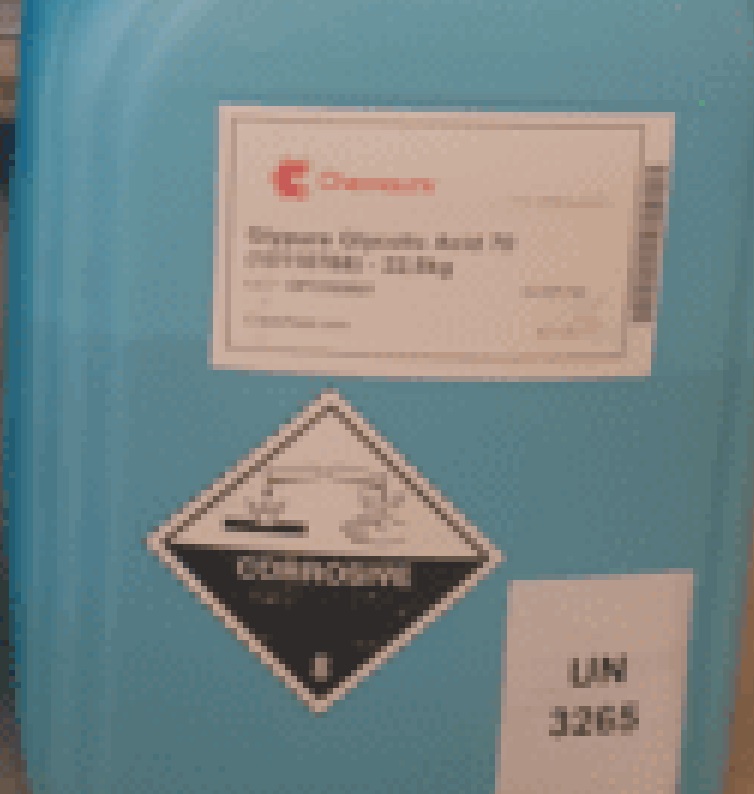
| ADR/RID | Class 8 (Corrosive), Packing group II |
| IMDG | Class 8, PG II |
| IATA | Class 8, PG II |
| Hazard label | Corrosive (8) |
18. Synonyms and Common Names
-
English: Glycolic Acid, Hydroxyacetic Acid, Hydroxyethanoic Acid, 2-Hydroxyacetic Acid, Alpha-Hydroxyacetic Acid
-
Trade names: Glypure, Glycolic Acid 70%, Glycolate, Glycosidic Acid
-
French: Acide glycolique
-
German: Glykolsäure
-
Spanish: Ácido glicólico
-
Turkish: Glikolik Asit, Hidroksiasetik Asit
19. Why Choose Glycolic Acid?
| Advantage | Description |
|---|---|
| Smallest AHA molecule | Deepest penetration of all AHAs (lowest molecular weight) |
| Proven exfoliant | Removes dead skin cells, unclogs pores |
| Stimulates collagen | Reduces fine lines, wrinkles, improves firmness |
| Brightens skin | Fades age spots, hyperpigmentation, melasma |
| Treats acne | Unclogs pores, reduces oil, anti-inflammatory |
| Improves hydration | Increases hyaluronic acid synthesis |
| Readily biodegradable | Environmentally friendly |
| Multi-functional | Cosmetics, cleaning, metal treatment, agriculture, polymers |
| Biocompatible | Used in wound care, medical devices |
| Effective descaling agent | Removes scale without damaging equipment |
Limitations:
-
Corrosive – Causes severe skin burns and eye damage (concentrated solutions)
-
Skin irritation risk – High concentrations require neutralization and professional application
-
Sun sensitivity – Increases UV sensitivity (sunscreen required after use)
-
Hygroscopic – Absorbs moisture; requires airtight storage
-
May crystallize below 10°C – Warm to 20–30°C to re-dissolve
-
Limited stability in alkaline conditions – Degrades or neutralizes
20. Summary Table – Key Specifications at a Glance
| Parameter | Value |
|---|---|
| Product Name | Glycolic Acid (Hydroxyacetic Acid) |
| CAS Number | 79-14-1 |
| EC Number | 201-180-5 |
| Molecular Formula | C₂H₄O₃ (HOCH₂COOH) |
| Molecular Weight | 76.05 g/mol |
| Appearance (70% soln) | Colorless to pale yellow clear liquid |
| Density (70% soln, 20°C) | 1.30–1.32 g/cm³ |
| Melting Point (pure) | 79.5°C |
| pKa (25°C) | 3.83 |
| pH (70% solution) | 1.0–1.5 |
| Water Solubility | Very soluble (miscible) |
| Assay (70% grade) | 69.5–70.5% |
| Primary Applications | Cosmetics (exfoliant, anti-aging), chemical peels, industrial cleaning (descaling), metal treatment, agriculture, biodegradable polymers |
| IARC Carcinogenicity | Not classified (non-carcinogenic) |
| GHS Signal Word | Danger |
| Hazard Statements | H302, H314, H318 |
| UN Number | 1760 (solution); 3261 (solid) |
| Oral LD₅₀ (rat) | 1,500–3,000 mg/kg |
| Biodegradability | Readily biodegradable |
| Shelf Life (70% soln) | 12–24 months |
This TDS is prepared in compliance with ISO 11014-1 format and is intended for cosmetic formulators, dermatologists, industrial cleaning specialists, metal treatment engineers, agricultural scientists, and procurement professionals. Certificates of Analysis (CoA), Safety Data Sheets (SDS), and sample validation reports are available upon request.