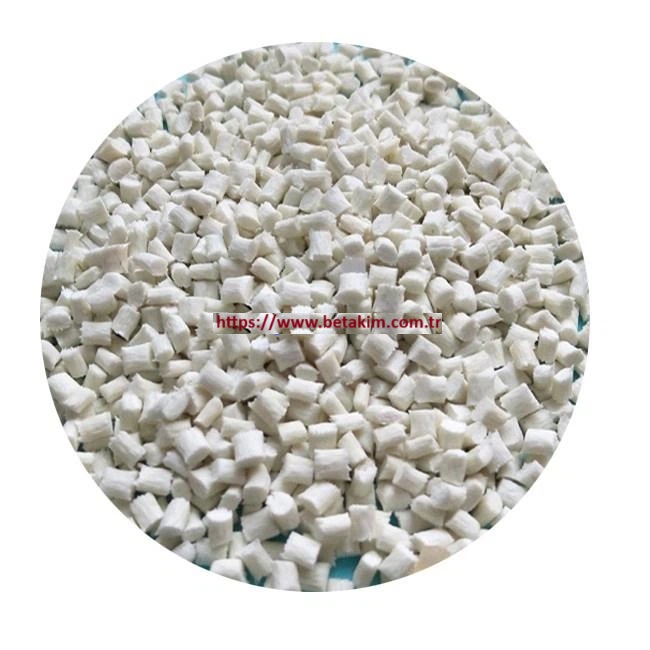
Tetramethylthiuram Disulfide, Thiram, Thioperoxy Dicarbonic Diamide, Bisdimethyl Thiocarbamoyl, TMTD, TMTD-80, 137-26-8
TMTD-80 (TETRAMETHYLTHIURAM DISULFIDE)
CAS Number: 137-26-8
EC Number (EINECS): 205-286-2
Molecular Formula: C₆H₁₂N₂S₄
Molecular Weight: 240.43 g/mol
Chemical Class: Thiuram accelerator
SECTION 1: PRODUCT IDENTIFICATION AND CHEMICAL IDENTITY
| Parameter |
Description |
| Chemical Name (IUPAC) |
Tetramethylthiuram disulfide |
| Other Names |
TMTD, Thiram, Rubber Accelerator TT, Disulfide, bis(dimethylthiocarbamoyl), Tetramethylthioperoxydicarbonic diamide |
| CAS Number |
137-26-8 |
| EC Number (EINECS) |
205-286-2 |
| Molecular Formula |
C₆H₁₂N₂S₄ |
| Molecular Weight |
240.43 g/mol |
| Chemical Class |
Thiuram accelerator |
| Appearance (Powder Form) |
White to yellow-white powder |
| Appearance (Granule Form) |
Beige granules |
| Odor |
Characteristic |
SECTION 2: PHYSICAL AND CHEMICAL PROPERTIES
2.1. Powder Form (Pure TMTD)
| Property |
Value / Range |
| Molecular Formula |
C₆H₁₂N₂S₄ |
| Molecular Weight |
240.43 g/mol |
| Appearance |
White to yellow-white powder |
| Melting Point |
140-146°C |
| Density |
~1.29-1.32 g/cm³ |
| Solubility in Water |
Insoluble (~0.03 g/L) |
| Solubility in Organic Solvents |
Soluble in acetone, chloroform, benzene, carbon disulfide; slightly soluble in alcohol, ether |
| pH (Aqueous) |
~6-7 (neutral) |
| Flash Point |
> 150°C |
| Decomposition |
> 200°C releases sulfur oxides, nitrogen oxides, carbon disulfide |
2.2. Granule Form (TMTD-80)
| Property |
Value / Range |
| Appearance |
Beige granules |
| Density (20°C) |
~1.29 g/cm³ |
| Active Content |
80% TMTD |
| Binder Content |
20% Elastomer binder and dispersing agents |
| Form |
Pre-dispersed granules |
SECTION 3: CHEMICAL PROPERTIES AND REACTIONS
| Property |
Description |
| Chemical Class |
Thiuram accelerator |
| Functional Group |
Thiuram disulfide (-N-C(=S)-S-S-C(=S)-N-) |
| Sulfur Donor |
Disulfide structure (two sulfur atoms between thiuram units) |
| Reactivity |
High; reacts with metal oxides and accelerators |
| Thermal Decomposition |
> 200°C releases sulfur oxides (SOₓ), nitrogen oxides (NOₓ), carbon disulfide |
| Oxidation |
Can oxidize to corresponding sulfoxides |
| Hydrolysis |
Hydrolyzes in strong acidic/basic conditions |
3.1. Key Reactions
| Reaction Type |
Description |
| Sulfur Donor |
Provides active sulfur for vulcanization |
| Accelerator Synergy |
Works synergistically with thiazole and sulfenamide accelerators (e.g., CBS) |
| Curing Activation |
Activates thiazole and sulfenamide accelerators |
| Metal Oxide Reaction |
Reacts with zinc oxide to form active complexes |
| Disulfide Cleavage |
Cleaves to form dithiocarbamate radicals during vulcanization |
3.2. Rubber Curing Mechanism
TMTD is a super accelerator for natural and synthetic rubber vulcanization:
-
Ultra-Fast Curing: Provides very fast vulcanization at low temperatures
-
Sulfur Donor: Acts as a sulfur donor for sulfurless or low-sulfur vulcanization systems
-
Activator: When used with delayed-action accelerators (like CBS), acts as an activator
-
Heat Resistance: Provides excellent heat and aging resistance in rubber products
-
Scorch Safety: Lower than sulfenamides; requires careful processing control
SECTION 4: FUNCTIONAL PROPERTIES
| Property |
Description |
| Accelerator Type |
Super accelerator |
| Primary Use |
Natural and synthetic rubber vulcanization |
| Function |
Accelerator / sulfur donor / activator |
| Curing Speed |
Ultra-fast |
| Scorch Safety |
Moderate (lower than sulfenamides) |
| Heat Resistance |
Excellent heat and aging resistance |
| Sulfur Donor Capacity |
High (disulfide structure) |
| Synergistic Effect |
Works synergistically with CBS, MBT, MBTS, and other accelerators |
| Nitrosamine Risk |
Low to moderate |
SECTION 5: MAJOR APPLICATIONS AND END-USES
5.1. Rubber Vulcanization (Primary Application)
| Application |
Function |
Suitability |
| Natural Rubber (NR) |
Primary accelerator / sulfur donor |
High |
| Styrene-Butadiene Rubber (SBR) |
Primary accelerator / sulfur donor |
High |
| Nitrile Rubber (NBR) |
Primary accelerator / sulfur donor |
High |
| Butyl Rubber (IIR) |
Primary accelerator / sulfur donor |
High |
| Polybutadiene Rubber (BR) |
Primary accelerator / sulfur donor |
High |
| EPDM Rubber |
Primary accelerator / sulfur donor |
Moderate |
5.2. Rubber Products
| Application |
Suitability |
| Tires |
High |
| Hoses |
High |
| Belts (Conveyor, Drive) |
High |
| Rubber Footwear |
High |
| General Industrial Products |
High |
| Technical Rubber Goods |
High |
| Sulfurless Vulcanization Systems |
High |
| Low-Sulfur Vulcanization Systems |
High |
5.3. Agricultural Chemicals (Secondary Use)
| Application |
Function |
Suitability |
| Fungicide |
Seed and foliar fungicide (Thiram) |
High |
| Seed Treatment |
Protectant fungicide for seeds |
High |
| Animal Repellent |
Bird and rodent repellent |
Moderate |
SECTION 6: INDUSTRY SUITABILITY MATRIX
| Industry |
Suitability |
Explanation |
| Tire Manufacturing |
High |
Super accelerator for tire compounds |
| Automotive Rubber |
High |
Hoses, belts, seals, gaskets |
| Industrial Rubber |
High |
General industrial products |
| Rubber Footwear |
High |
Rubber soles and components |
| Technical Rubber Goods |
High |
Various molded and extruded products |
| Latex Products |
High |
Accelerator in latex systems |
| Agriculture |
High |
Fungicide (Thiram) for seed treatment |
SECTION 7: DOSAGE AND APPLICATION
7.1. Recommended Dosage
| Application |
Dosage (phr) |
| As Primary Accelerator |
0.3 - 1.5 phr |
| As Sulfur Donor |
1.0 - 3.0 phr |
| As Activator (with CBS) |
0.1 - 0.5 phr |
| Sulfurless Systems |
2.0 - 3.0 phr (alone) |
| Low-Sulfur Systems |
0.5 - 1.0 phr (with reduced sulfur) |
7.2. Advantages of Pre-Dispersed Form (TMTD-80)
| Advantage |
Description |
| Excellent Dispersion |
Prevents localized over-cured areas |
| Consistent Performance |
Ensures stable vulcanizate properties |
| Reduced Dust |
Cleaner handling compared to powder form |
| Easy Weighing |
Granules facilitate accurate measurement |
| Shorter Mixing Time |
Suitable for compounds requiring short mixing cycles |
| Better Homogeneity |
Uniform distribution in rubber matrix |
SECTION 8: COMPARISON - TMTD vs TMTM
| Property |
TMTD |
TMTM |
| Full Name |
Tetramethylthiuram Disulfide |
Tetramethylthiuram Monosulfide |
| Sulfur Content |
Two sulfur atoms between thiuram units |
One sulfur atom between thiuram units |
| Sulfur Donor Capacity |
High |
Moderate |
| Curing Speed |
Ultra-fast |
Ultra-fast |
| Heat Resistance |
Excellent |
Good |
| Nitrosamine Risk |
Low to moderate |
Low |
| Color |
White to yellow-white |
Light yellow |
| Melting Point |
140-146°C |
104-107°C |
| Use |
Accelerator / sulfur donor / activator |
Accelerator / sulfur donor / activator |
SECTION 9: OTHER NAMES AND IDENTIFIERS
| Type |
Name / Description |
| IUPAC Name |
Tetramethylthiuram disulfide |
| Chemical Name |
Tetramethylthioperoxydicarbonic diamide |
| Commercial Names |
TMTD, Thiram, Accelerator TT, Rubber Accelerator TMTD |
| Common Names |
TMTD, Thiram, bis(dimethylthiocarbamoyl) disulfide |
| CAS Number |
137-26-8 |
| EC Number |
205-286-2 |
| RTECS Number |
JO1400000 |
| HS Code |
29302000 |
SECTION 10: TOXICOLOGY AND HEALTH EFFECTS
| Parameter |
Value / Description |
| GHS Classification |
Warning |
| Signal Word |
Warning |
| Hazard Statements |
H302 (Harmful if swallowed), H315 (Causes skin irritation), H317 (May cause allergic skin reaction), H319 (Causes serious eye irritation), H335 (May cause respiratory irritation), H373 (May cause organ damage through prolonged exposure), H410 (Very toxic to aquatic life with long-lasting effects) |
| Precautionary Statements |
P261 (Avoid breathing dust), P280 (Wear protective gloves/protective clothing/eye protection/face protection), P302+P352 (IF ON SKIN: Wash with plenty of water), P305+P351+P338 (IF IN EYES: Rinse cautiously with water), P308+P313 (IF exposed or concerned: Get medical advice/attention) |
| Oral LD50 (Rat) |
~500-1,000 mg/kg |
| Dermal LD50 (Rabbit) |
> 2,000 mg/kg |
| Skin Irritation |
Irritant; may cause contact dermatitis |
| Eye Irritation |
Irritant |
| Skin Sensitization |
Positive (allergic contact dermatitis) |
| Mutagenicity |
Negative |
| Carcinogenicity |
Not classified |
| Reproductive Toxicity |
Not classified |
| Target Organs |
Skin, eyes, respiratory system, liver, thyroid |
| WGK (Germany) |
3 (very hazardous to water) |
| Environmental Hazard |
Very toxic to aquatic life with long-lasting effects (H410) |
SECTION 11: SAFETY AND STORAGE
| Parameter |
Information |
| Storage Conditions |
Cool, dry, well-ventilated area |
| Temperature |
Room temperature (15-30°C) |
| Container |
Tightly closed, original packaging |
| Materials to Avoid |
Strong oxidizers, strong acids, strong bases, moisture |
| Shelf Life |
24 months (under recommended conditions) |
| Packaging |
25 kg bags, 500 kg big bags |
SECTION 12: TRANSPORT INFORMATION
| Parameter |
Information |
| UN Number |
3077 |
| Hazard Class |
9 (Miscellaneous dangerous goods) |
| Packing Group |
III |
| Proper Shipping Name |
Environmentally hazardous substance, solid, n.o.s. (TMTD) |
| Marine Pollutant |
Yes |
| ADR/RID |
UN 3077, Class 9, PG III |
| IMDG Code |
UN 3077, Class 9, PG III |
| IATA (Air) |
UN 3077, Class 9, PG III |
SECTION 13: FIRE-FIGHTING MEASURES
| Parameter |
Information |
| Fire Hazard |
Combustible dust |
| Extinguishing Media |
Water fog, CO₂, dry chemical, foam |
| Special Hazards |
When heated, releases sulfur oxides (SOₓ), nitrogen oxides (NOₓ), and carbon disulfide |
| Decomposition Products |
Sulfur oxides, nitrogen oxides, carbon disulfide, CO, CO₂ |
| Protective Equipment |
Self-contained breathing apparatus (SCBA), full protective clothing |
SECTION 14: ACCIDENTAL RELEASE AND CLEANUP
| Parameter |
Information |
| Personal Protection |
Gloves, safety goggles, dust mask |
| Ventilation |
Increase ventilation |
| Cleanup Methods |
Sweep or vacuum while preventing dust formation; collect in sealed containers |
| Environmental Precautions |
Prevent entry into drains (H410) |
| Waste Disposal |
According to local regulations |
SECTION 15: FIRST AID MEASURES
| Exposure Route |
Action |
| Inhalation |
Move to fresh air. Seek medical attention if symptoms persist. |
| Skin Contact |
Remove contaminated clothing. Wash with soap and plenty of water. |
| Eye Contact |
Rinse with plenty of water for at least 15 minutes. Seek medical attention if irritation persists. |
| Ingestion |
Do NOT induce vomiting. Drink plenty of water. Seek medical attention. |
SECTION 16: REGULATORY INFORMATION
| Region / Authority |
Status |
| EU REACH |
Registered |
| Turkey KKDİK |
Registration required |
| USA TSCA |
Listed |
| USA FDA |
Regulated for food contact (21 CFR 178.3120) |
| EU Pesticide Regulation |
Active substance for fungicide (Thiram) |
| EINECS |
205-286-2 |
| RTECS |
JO1400000 |
| WGK (Germany) |
3 (very hazardous to water) |
SECTION 17: SUMMARY AND CRITICAL WARNINGS
Product Summary
| Parameter |
Value |
| Product |
TMTD-80 (Tetramethylthiuram Disulfide) |
| CAS |
137-26-8 |
| Appearance |
Beige granules |
| Active Content |
80% TMTD |
| Density |
~1.29 g/cm³ |
| Primary Use |
Super accelerator / sulfur donor |
| Key Industries |
Tire, automotive rubber, industrial rubber, agriculture (fungicide) |
CRITICAL WARNINGS
-
Super Accelerator: TMTD is a super accelerator providing ultra-fast vulcanization for natural and synthetic rubbers at low temperatures.
-
Sulfur Donor: The disulfide structure provides high sulfur donor capacity for sulfurless or low-sulfur vulcanization systems.
-
Activator Function: When used with delayed-action accelerators (like CBS), TMTD acts as an activator and enhances curing efficiency.
-
Excellent Heat Resistance: Provides excellent heat and aging resistance in rubber products.
-
Dual Use - Agriculture: TMTD (Thiram) is widely used as a fungicide for seed treatment and crop protection.
-
Environmental Hazard: Very toxic to aquatic life with long-lasting effects (H410). Classified as WGK 3 (very hazardous to water).
-
Skin Sensitization: TMTD may cause allergic skin reactions (H317). Appropriate PPE required during handling.
-
Pre-Dispersed Form Advantage: TMTD-80 form provides excellent dispersion, reduced dust, and easy weighing.
-
Transport: Classified as UN 3077, Class 9, Packing Group III. Marine pollutant.
-
Storage: Store in cool, dry, well-ventilated areas. Keep away from strong oxidizers, acids, and bases.
IMPORTANT DISCLAIMER: This Technical Data Sheet (TDS) is for informational purposes only and is based on available technical data. The user is solely responsible for determining the product's suitability for their specific application and for complying with all applicable local, national, and international regulations. TMTD is very toxic to aquatic life with long-lasting effects (H410)! For complete safety, storage, handling, transportation, disposal, and regulatory compliance information, always refer to the official Safety Data Sheet (SDS/MSDS) provided by the manufacturer/supplier. Users are responsible for testing the product in their own processes and applications. All local, national, and international regulations must be followed when working with TMTD-80.