We unleash your business potential by maximize the business innovation.
Send EmailDried Apricot, Malatya Apricot, Prunus Armeniaca L
DRIED APRICOT – KURU KAYISI
1. PRODUCT IDENTIFICATION
| Parameter | Information |
|---|---|
| Scientific Name | Prunus armeniaca L. |
| Turkish Name | Kuru Kayısı (Malatya Kayısısı) |
| English Name | Dried Apricot (Malatya Apricot) |
| Geographical Indication | Malatya Apricot (Protected by EU Geographical Indication) |
| Global Production Ranking | Malatya is known as the "apricot capital of the world" |
| Product Type | Dried fruit |
| Number of Trees (Malatya) | Approximately 8 million apricot trees |
2. BOTANICAL AND AGRICULTURAL PROPERTIES
| Parameter | Information |
|---|---|
| Family | Rosaceae |
| Genus | Prunus |
| Species | Prunus armeniaca L. |
| Growing Region | Malatya and surrounding areas (Turkey) |
| Harvest Season | Mid-July |
| Climate Preference | Hot and dry summers, cold winters |
| Soil Preference | Deep, permeable, calcareous soils |
3. MAIN VARIETIES
| Variety | Characteristics | Production Share |
|---|---|---|
| Hacıhaliloğlu | Most common variety in Malatya. Large, sweet and juicy fruits. The most preferred variety for dried apricots. | 60-65% |
| Hasanbey | High quality and sweet variety. | Variable |
| Kabaaşı | Large fruited, high quality variety. | Variable |
| Soğancı | Medium-sized fruits. | Variable |
| Çataloğlu | Local variety specific to Malatya. | Variable |
| Çöloğlu | Local variety specific to Malatya. | Variable |
4. PHYSICAL PROPERTIES (Dried Apricot)
| Property | Value |
|---|---|
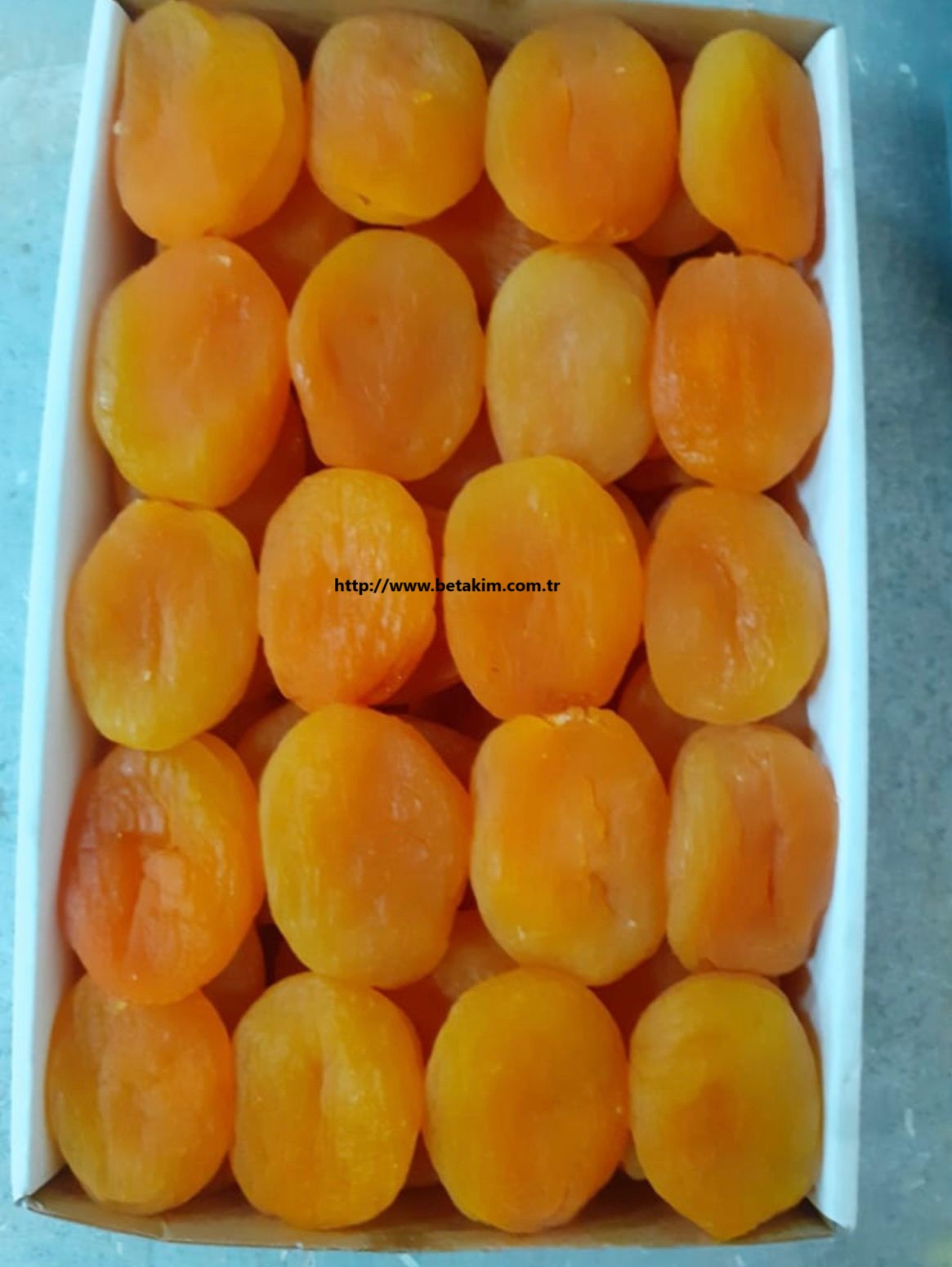
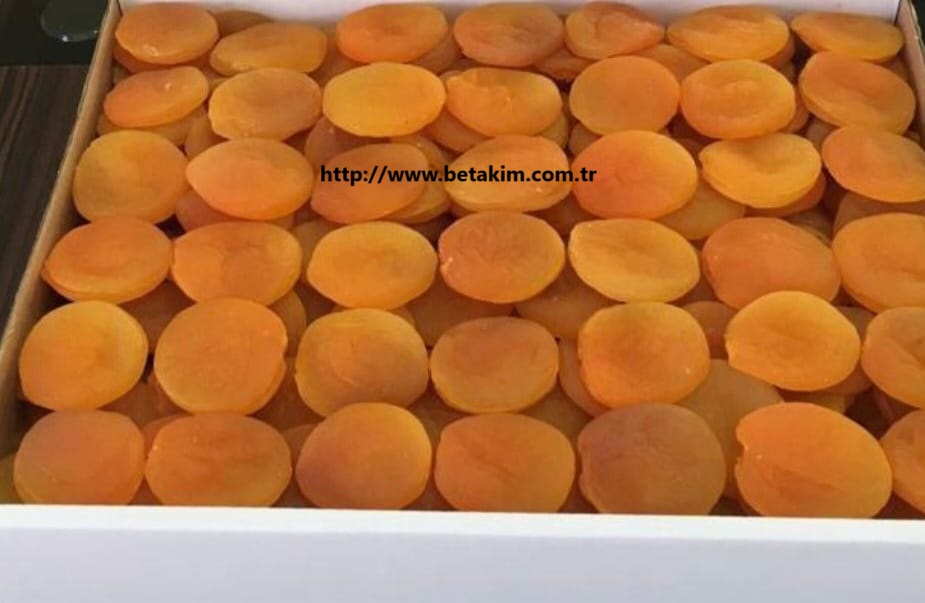
| Color | Light yellow, golden yellow, brown (depending on variety and processing method) |
| Shape | Flat, oval |
| Size | 2-5 cm (variety dependent) |
| Weight | 5-15 g (variety dependent) |
| Texture | Soft, elastic, fleshy |
| Taste | Sweet, slightly tangy |
| Moisture Content | ~20-25% (depending on processing method) |
5. NUTRITIONAL VALUES (100 g Dried Apricot)
| Nutrient | Amount |
|---|---|
| Energy | ~241 kcal |
| Water | ~31 g |
| Carbohydrates | ~63 g |
| Sugars | ~53 g |
| Fiber | ~7 g |
| Protein | ~3.4 g |
| Fat | ~0.5 g |
| Potassium | ~1162 mg |
| Calcium | ~55 mg |
| Magnesium | ~32 mg |
| Iron | ~2.7 mg |
| Vitamin A (Retinol) | ~1260 IU |
| Beta-Carotene | ~2160 µg |
| Vitamin B6 | ~0.1 mg |
6. HEALTH BENEFITS
| Benefit | Description |
|---|---|
| Eye Health | High vitamin A and beta-carotene content supports eye health. |
| Digestive Health | High fiber content regulates the digestive system. |
| Energy Boost | Natural sugars and carbohydrates provide quick energy. |
| Bone Health | Calcium and magnesium content supports bone density. |
| Blood Pressure | Potassium content helps regulate blood pressure. |
| Antioxidant Properties | Contains polyphenols and flavonoids; protects against free radicals. |
7. APPLICATIONS AND USES
| Application | Description |
|---|---|
| Dried Fruit Consumption | Consumed directly as a snack. |
| Desserts | Used in apricot dessert, compote, cakes and pastries. |
| Jam and Marmalade | Used in breakfast jam and marmalade production. |
| Traditional Products | Used in traditional foods such as pestil (fruit leather), sucuk (fruit roll), apricot paste, and apricot cake. |
| Industrial Use | Used in juice, canned goods, ice cream, chocolate, confectionery, and bakery products in the food industry. |
8. MALATYA APRICOT ROUTE
| Parameter | Information |
|---|---|
| Activity Area | Dried apricot production, drying facilities, packaging and export |
| Capacity | 200,000 - 250,000 tons of dried apricot processing annually |
| Storage | Cold storage warehouses (0-4°C) |
| Export Markets | European Union, North America, Far East, Middle East |
9. MARKETING AND SALES INFORMATION
| Parameter | Information |
|---|---|
| Retail Sales | NOT AVAILABLE. |
| Sales Unit | Container basis or palletized |
| Packaging Options | 1 kg packages and 10 kg boxes |
| Shipping | Shipped by container, palletized. |
10. SUMMARY AND KEY POINTS
| Parameter | Value |
|---|---|
| Product | Dried Apricot (Malatya Apricot) |
| Scientific Name | Prunus armeniaca L. |
| Geographical Indication | Malatya (EU Protected) |
| Main Varieties | Hacıhaliloğlu, Hasanbey, Kabaaşı, Soğancı, Çataloğlu, Çöloğlu |
| Harvest Season | Mid-July |
| Primary Uses | Dried fruit consumption, desserts, jam, industrial use |
CRITICAL NOTES
-
No Retail Sales: Product sales are made only on a container basis or palletized (in 1 kg or 10 kg packaging).
-
Geographical Indication: Malatya apricot has a Protected Geographical Indication from the European Union. This guarantees the quality and authenticity of the product.
-
Hacıhaliloğlu Variety: 60-65% of dried apricots produced in Malatya are of the Hacıhaliloğlu variety. This is the most preferred apricot variety worldwide.
-
Harvest and Processing: Harvest takes place in mid-July. 10-15% of apricots are sold fresh, while the remainder is dried.
-
Nutritional Value: Dried apricots are rich in potassium, fiber, and vitamin A. They are a healthy snack and energy source.
IMPORTANT DECLARATION: This Technical Data Sheet (TDS) is for informational purposes only and has been prepared based on available technical data. Product characteristics may vary depending on growing conditions, harvest period, and processing methods. This document does not guarantee the stated specifications; sample analysis and supplier verification are recommended for final acceptance.