We unleash your business potential by maximize the business innovation.
Send EmailClouding Agent, Cloudifier, Turbidity Agent, Haze Agent, Opacifier, Cloudy Agent
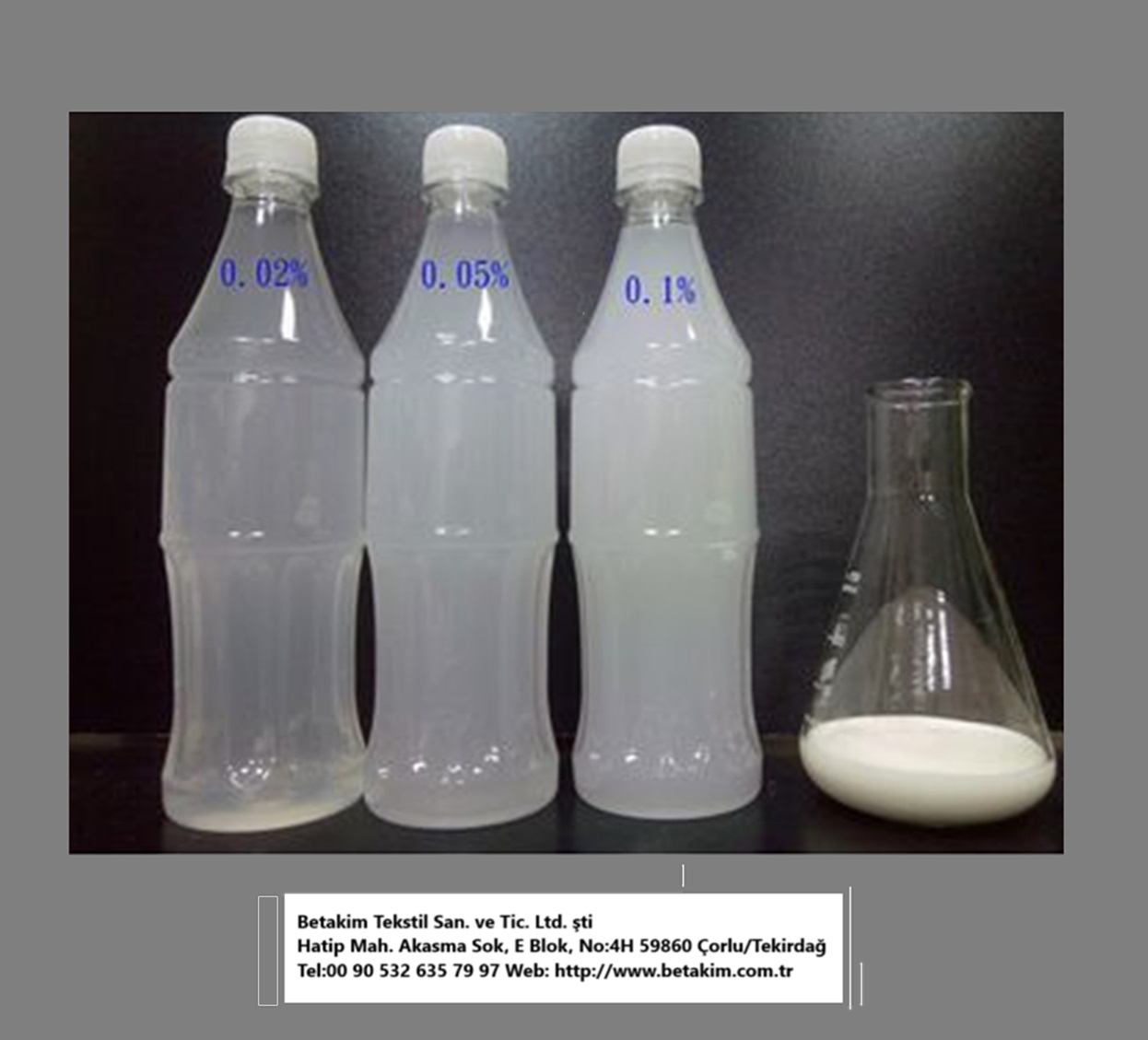
CLOUDING AGENT – BULANIKLIK VERİCİ
1. PRODUCT IDENTIFICATION
| Parameter | Information |
|---|---|
| Product Name (Turkish) | Bulanıklık Verici, Bulanıklaştırıcı, Bulanıklık Tozu |
| Product Name (English) | Clouding Agent, Cloudifier, Turbidity Agent, Haze Agent, Opacifier, Cloudy Agent |
| Definition | Food additive used to create a cloudy, natural appearance in beverages and liquid foods |
| Function | Visual appeal, opacity, natural appearance |
| Type | Emulsion-based or particle suspension system |
2. FUNCTIONAL PROPERTIES
2.1. Clouding Mechanisms
| Mechanism | Description |
|---|---|
| Oil Droplet Emulsion | Emulsion containing micron-sized oil droplets causes light scattering |
| Light Scattering | Particles or droplets scatter incoming light in different directions, creating a cloudy appearance |
| Suspension | Insoluble particles remain suspended in the liquid, providing opacity |
| Crystal Structure | Micron-level crystal particles create uneven light refraction, causing turbidity |
2.2. Types of Clouding Agents
| Type | Description | Characteristics |
|---|---|---|
| Oil-Based Emulsions | Systems containing vegetable oils and emulsifiers | High stability, natural appearance |
| Particle-Based | Insoluble inorganic or organic particles | Low cost, easy application |
| Polymer-Based | Modified starches, cellulose derivatives | High stability, pH tolerance |
3. COMMON CLOUDING AGENTS AND CAS NUMBERS
| Component | CAS Number | Description |
|---|---|---|
| Acacia Gum (Gum Arabic) | 9000-01-5 | Natural gum from acacia tree sap; stabilizer and clouding agent |
| Pectin | 9000-69-5 | Natural polysaccharide found in fruits; gelling and clouding agent |
| Carboxymethyl Cellulose (CMC) | 9004-32-4 | Cellulose derivative; creates cloudy appearance in beverages |
| Modified Starches | Variable | Chemically modified starches; stability and clouding |
| Calcium Sulfate (E516) | 7778-18-9 | Creates clouding through light scattering and precipitation |
| Calcium Carbonate (E170) | 471-34-1 | Provides opacity through light scattering and precipitation |
| Titanium Dioxide (TiO₂) | 13463-67-7 | Opacifier; restricted in some countries |
4. APPLICATION AREAS
| Application | Description |
|---|---|
| Fruit Juices | Provides natural cloudy fruit juice appearance |
| Carbonated Beverages | Used in cloudy lemonade, soda, and similar products |
| Alcoholic Beverages | Beer, wine, and alcoholic soft drinks |
| Sauces and Salad Dressings | Enhances visual appeal |
| Dairy Products | Yogurt drinks, ayran (Turkish yogurt drink), and similar products |
5. ADVANTAGES AND DISADVANTAGES
| Advantages | Disadvantages |
|---|---|
| Provides natural appearance | Stability issues in some types |
| Enhances visual appeal | Oxidation risk in oil-based systems |
| Low-cost solutions available | Particle settling may occur over time |
| Compatible with various formulations | Some substances are restricted or banned in certain countries |
6. REGULATORY STATUS
| Component | EU Status | USA Status | Turkey Status |
|---|---|---|---|
| Acacia Gum (E414) | Approved | GRAS | Approved |
| Pectin (E440) | Approved | GRAS | Approved |
| CMC (E466) | Approved | GRAS | Approved |
| Calcium Sulfate (E516) | Approved | GRAS | Approved |
| Titanium Dioxide (E171) | Restricted/Banned | GRAS (limited) | Restricted |
7. SELECTION CRITERIA FOR CLOUDING AGENTS
| Criterion | Considerations |
|---|---|
| pH Stability | Some agents lose effectiveness in acidic environments (e.g., calcium sulfate) |
| Temperature Stability | Heat treatment may affect stability during pasteurization |
| Shelf Life | Long-term stability without sedimentation |
| Regulatory Compliance | Must meet local food additive regulations |
| Cost | Balance between performance and cost |
| Consumer Preference | Natural vs. synthetic ingredients |
CRITICAL NOTES
-
Titanium Dioxide (E171): Restricted or banned in food products in some countries (e.g., European Union) due to potential toxicity of nano-sized particles .
-
Stability: Oil-based clouding agents may oxidize over time; antioxidants should be added.
-
pH Sensitivity: Some clouding agents (e.g., calcium sulfate) may dissolve in acidic environments, reducing clouding effect .
-
Natural vs. Synthetic: Consumer trends favor natural ingredients; natural options like acacia gum and pectin should be preferred.
IMPORTANT DECLARATION: This Technical Data Sheet (TDS) is for informational purposes only and has been prepared based on available technical data. The user is responsible for determining the product's suitability for their specific application and for complying with all local, national, and international regulations. For complete safety, storage, use, transport, waste, and regulatory compliance information, refer to the official Safety Data Sheet (SDS/MSDS) provided by the manufacturer/supplier. The user is responsible for testing the product in their own processes and applications.