We unleash your business potential by maximize the business innovation.
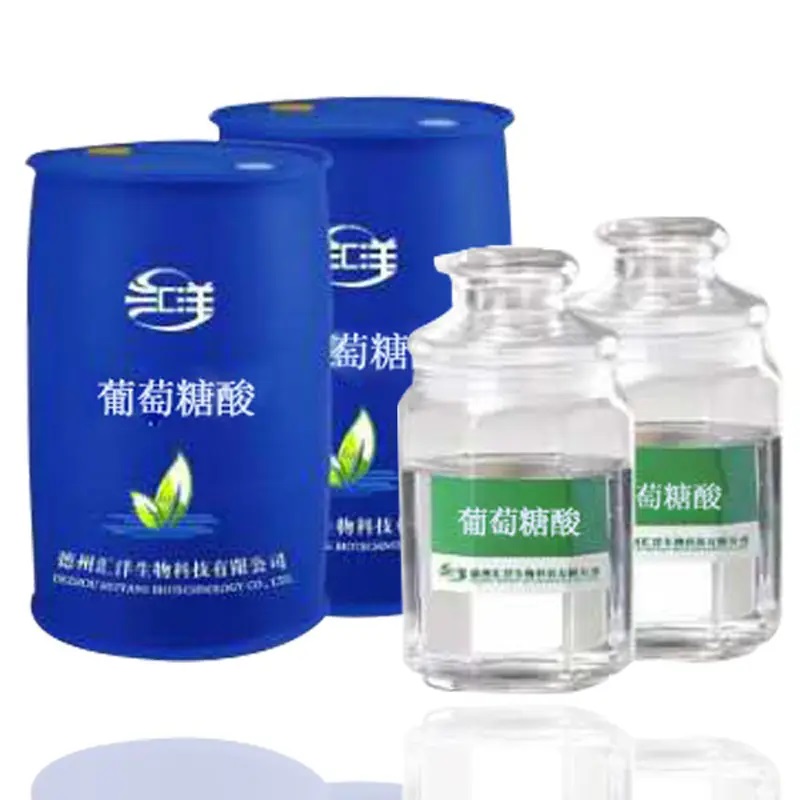
Send EmailGluconic Acid, Glyconic Acid, Glycogenic Acid, Pentahydroxyhexanoic Acid, D-Gluco-hexonic Acid, Dextronic Acid, Maltonic Acid, E574, 526-95-4, 133-42-6
GLUCONIC ACID (C₆H₁₂O₇, E574)
1. Chemical Identity and Material Classification
-
Chemical Name (IUPAC): D-Gluco-hexonic Acid, 2,3,4,5,6-Pentahydroxyhexanoic acid
-
Synonyms: Dextronic Acid, Maltonic Acid, Glycogenic Acid, Pentahydroxycaproic Acid, Gluconate (salt form)
-
CAS Numbers:
-
Gluconic Acid (free acid): 526-95-4
-
Gluconic Acid (aqueous solution): 133-42-6
-
Sodium Gluconate: 527-07-1
-
Glucono-delta-lactone (GDL): 90-80-2
-
-
EC Number (EINECS): 208-401-4
-
Molecular Formula: C₆H₁₂O₇
-
Molecular Weight: 196.16 g/mol
-
E Number: E574 (food additive)
-
Chemical Class: Organic acid (polyhydroxy carboxylic acid)
-
HS Code: 2918.16
-
UN Number: Not regulated (non-hazardous for transport)
2. Physical Properties
2.1 General Physical Properties (50% Aqueous Solution – Commercial Form)
| Property | Value |
|---|---|
| Appearance | Clear, colorless to pale yellow to amber, syrupy liquid |
| Physical state (20°C) | Liquid (viscous syrup) |
| Odor | Characteristic, slightly acidic |
| Taste | Mildly acidic |
| Density (20°C) | 1.23–1.24 g/cm³ (1.23–1.24 g/mL) |
| Viscosity (20°C) | 100–300 cP (syrupy) |
| pH (as supplied) | 1.8–2.0 |
| pH (1% solution) | 2.5–3.0 |
| Refractive index (nD20) | 1.416–1.418 |
| Freezing point | Approx. -15°C (may crystallize below 15°C) |
2.2 Physical Properties (Pure Solid – Theoretical)
| Property | Value |
|---|---|
| Appearance | White crystalline powder |
| Melting point | 131°C (decomposes) |
| Density | 1.23 g/cm³ |
2.3 Solubility (Gluconic Acid)
| Solvent | Solubility (g/100 mL) | Temperature |
|---|---|---|
| Water | 316 mg/mL (31.6 g/100 mL) | 25°C |
| Water | Very soluble | 20°C |
| Methanol | Slightly soluble | 20°C |
| DMSO | Slightly soluble | 20°C |
| Ethanol | Slightly soluble | 20°C |
| Acetone | Insoluble | 20°C |
2.4 Solubility (Sodium Gluconate)
| Temperature (°C) | Solubility (g/100 mL water) |
|---|---|
| 0°C | 30.0 |
| 10°C | 35.0 |
| 20°C | 59.0 |
| 25°C | 62.0 |
| 30°C | 66.0 |
| 40°C | 74.0 |
| 50°C | 82.0 |
| 60°C | 90.0 |
3. Chemical Properties
3.1 Molecular Structure
Structure: HOCH₂(CHOH)₄COOH
-
Polyhydroxy carboxylic acid (one carboxyl group, five hydroxyl groups)
-
Mild organic acid (pKa = 3.86)
-
Excellent chelating agent (especially in alkaline solutions)
-
Exists in equilibrium with glucono-delta-lactone (GDL) in aqueous solution
3.2 Acid Dissociation Constant (pKa)
| Parameter | Value |
|---|---|
| pKa (25°C) | 3.86 |
| Acid strength | Weaker than citric acid (pKa 3.13), stronger than boric acid |
3.3 Equilibrium with Glucono-delta-lactone (GDL)
In aqueous solution, gluconic acid exists in equilibrium with its lactone form:
| Form | Description | Equilibrium |
|---|---|---|
| Gluconic acid (free acid) | Open-chain form | ⇌ |
| Glucono-delta-lactone (GDL) | Cyclic ester form | ⇌ |
| Glucono-gamma-lactone | Minor form | ⇌ |
Typical composition (50% solution, 20°C):
-
Free gluconic acid: ~90–95%
-
GDL: ~5–10%
3.4 Chelation (Sequestration) – Stability Constants (log K)
| Metal Ion | Stability Constant (log K) | Application |
|---|---|---|
| Fe³⁺ (iron) | 4.5 | Iron chelation, rust removal |
| Cu²⁺ (copper) | 3.9 | Copper complexation |
| Ca²⁺ (calcium) | 2.1 | Water softening, scale prevention |
| Mg²⁺ (magnesium) | 1.8 | Water softening |
| Al³⁺ (aluminum) | 2.5 | Aluminum surface treatment |
Key advantage: Gluconic acid is a stronger chelator than EDTA and NTA in alkaline solutions (pH > 10) due to its polyhydroxy structure.
3.5 Thermal Stability
| Parameter | Value |
|---|---|
| Decomposition temperature | >200°C (forms CO₂, H₂O, char) |
| GDL formation (heating) | Converts to lactone at elevated temperatures |
| Stability in alkaline solutions | Excellent (forms stable metal complexes) |
3.6 Chemical Reactivity
| Reaction | Description |
|---|---|
| With bases (neutralization) | Forms gluconate salts (sodium, calcium, zinc, iron, magnesium gluconate) |
| With metal ions | Forms stable, water-soluble complexes (chelates) |
| With lactonization | Forms GDL (glucono-delta-lactone) upon heating or concentration |
| Oxidation | Can be oxidized to glucaric acid |
| Esterification | With alcohols → gluconate esters |
3.7 Stability
| Parameter | Behavior |
|---|---|
| Stability (50% solution, 20°C) | Stable (but equilibrium shifts with temperature) |
| Stability (dilute solutions) | Stable |
| Light sensitivity | Stable |
| Thermal stability | GDL forms upon heating (reversible) |
4. Available Commercial Grades and Forms
4.1 Liquid Form (Aqueous Solution) – Most Common
| Concentration | Grade | pH | Density (20°C) | Applications |
|---|---|---|---|---|
| 50% w/w | Technical | 1.8–2.0 | 1.23–1.24 g/cm³ | Industrial cleaning, concrete, metal treatment |
| 50% w/w | Food Grade (FCC) | 1.8–2.0 | 1.23–1.24 g/cm³ | Food, beverage, pharmaceutical |
| 50% w/w | Pharmaceutical | 1.8–2.0 | 1.23–1.24 g/cm³ | Injectable gluconate salt production |
| 70% w/w | Technical | 1.8–2.0 | 1.30–1.35 g/cm³ | Industrial (specialty) |
4.2 Solid Forms (Derivatives)
| Form | Formula | Purity | Applications |
|---|---|---|---|
| Sodium Gluconate | C₆H₁₁NaO₇ | ≥ 98% | Concrete admixtures, cleaning, metal treatment |
| Glucono-delta-lactone (GDL) | C₆H₁₀O₆ | ≥ 99% | Tofu coagulant, food acidulant, baking powder |
| Calcium Gluconate | C₁₂H₂₂CaO₁₄ | ≥ 98% | Pharmaceuticals (calcium supplement) |
| Zinc Gluconate | C₁₂H₂₂O₁₄Zn | ≥ 98% | Dietary supplements (zinc source) |
| Iron(II) Gluconate | C₁₂H₂₂FeO₁₄ | ≥ 98% | Anemia treatment (iron supplement) |
| Magnesium Gluconate | C₁₂H₂₂MgO₁₄ | ≥ 98% | Magnesium supplement |
| Potassium Gluconate | C₆H₁₁KO₇ | ≥ 98% | Potassium supplement |
5. Quality Specifications (50% Food Grade – FCC)
| Parameter | Specification | Test Method |
|---|---|---|
| Assay (C₆H₁₂O₇, w/w) | 49.5–50.5% | Titration |
| GDL content | ≤ 5% | HPLC |
| Reducing sugars (as dextrose) | ≤ 0.5% | Titration |
| Chlorides (Cl) | ≤ 0.02% | Turbidimetric |
| Sulfates (SO₄) | ≤ 0.02% | Turbidimetric |
| Heavy metals (as Pb) | ≤ 10 ppm | Colorimetric |
| Lead (Pb) | ≤ 1 mg/kg | Atomic absorption |
| Arsenic (As) | ≤ 1 ppm | Atomic absorption |
| Iron (Fe) | ≤ 20 ppm | Colorimetric |
| Calcium (Ca) | ≤ 50 ppm | Atomic absorption |
| pH (1% solution) | 2.5–3.0 | pH meter |
| Appearance | Clear to pale yellow liquid | Visual |
| Density (20°C) | 1.23–1.24 g/cm³ | Hydrometer |
6. Production Methods
6.1 Fermentation Process (Industrial Standard)
Microorganism: Aspergillus niger (mold)
Substrate: Glucose syrup (from corn starch or other carbohydrates)
Reaction: C₆H₁₂O₆ (glucose) + ½O₂ → C₆H₁₂O₇ (gluconic acid)
Process:
-
Glucose solution is sterilized and inoculated with Aspergillus niger
-
Fermentation at 25–30°C for 24–48 hours
-
pH controlled at 5.5–6.5 (by adding CaCO₃ or NaOH)
-
Calcium gluconate or sodium gluconate crystallizes
-
Acidification with H₂SO₄ → gluconic acid + CaSO₄ (gypsum) or direct recovery
Typical yield: 80–90%
6.2 Catalytic Oxidation (Alternative)
Reaction: Glucose + O₂ (with Pt/Pd catalyst) → Gluconic acid
Process:
-
Glucose solution passed over fixed-bed catalyst
-
Air or oxygen bubbled through
-
Product purified and concentrated
Purity: Very high (pharmaceutical grade)
7. Mechanism of Action – Chelation
7.1 Chelation in Alkaline Solutions
| Step | Description |
|---|---|
| 1 | In alkaline solution (pH > 10), gluconic acid deprotonates to gluconate ion |
| 2 | Hydroxyl groups (-OH) and carboxylate group (-COO⁻) coordinate with metal ions |
| 3 | Forms stable, water-soluble 1:1 or 1:2 complexes |
| 4 | Prevents metal ion precipitation (CaCO₃, CaSO₄, iron oxides) |
| 5 | Removes existing scale (chelates metal ions from insoluble deposits) |
7.2 Comparison with EDTA and NTA
| Property | Gluconic Acid | EDTA | NTA |
|---|---|---|---|
| pH effectiveness | >10 (excellent) | 4–11 | 6–11 |
| Chelation strength (Ca²⁺) | Moderate (log K 2.1) | High (log K 10.7) | Moderate (log K 6.4) |
| Alkaline solution chelation | Superior | Good | Good |
| Biodegradability | Readily biodegradable | Slow | Moderate |
| Toxicity | Very low | Low | Moderate |
| Environmental acceptance | Excellent | Poor | Restricted |
8. Industrial Applications
8.1 Construction Industry (Largest Application – ~45% of global consumption)
Form used: Sodium gluconate (not free gluconic acid)
| Application | Function | Typical Dosage |
|---|---|---|
| Concrete admixture (retarder) | Delays setting time, improves workability | 0.05–0.25% by weight of cement |
| Superplasticizer component | Reduces water demand, increases strength | 0.1–0.5% by weight of cement |
| Hot weather concreting | Prevents flash setting | 0.1–0.3% by weight of cement |
Mechanism: Adsorbs on cement particle surfaces, retards hydration (calcium silicate reaction)
Benefits:
-
Extends working time (especially in hot weather)
-
Reduces water requirement (15–25%)
-
Increases final compressive strength
-
Improves workability and pumpability
8.2 Food and Beverage Industry (E574 – ~35% of consumption)
| Application | Function | Typical Concentration |
|---|---|---|
| Acidulant (soft drinks, iced tea, coffee) | pH adjustment (3.0–4.0), provides mild acidity | 0.1–0.5% |
| Tofu coagulant (as GDL) | Silk-like texture, gentle protein coagulation | 0.2–0.3% of soy milk weight |
| Baking powder (as GDL) | Leavening agent (slow-release acid) | 10–30% of baking powder |
| Wine and beer clarification (indirect – cleaning) | Scale prevention (beer stone, milk stone) | 0.5–2% in cleaning formulations |
| Preservative (synergist) | Enhances other preservatives, chelates metals | 0.05–0.2% |
| Mineral fortification (as gluconate salts) | Ca, Fe, Zn, Mg sources (high bioavailability) | As per regulations |
8.3 Pharmaceutical and Nutraceutical Industry (~10% of consumption)
Form used: Gluconate salts (calcium, zinc, iron, magnesium, potassium gluconate)
| Application | Function | Typical Dosage |
|---|---|---|
| Calcium supplement (calcium gluconate) | Osteoporosis, hypocalcemia, pregnancy | 500–1,500 mg Ca/day |
| Iron supplement (iron(II) gluconate) | Anemia treatment (less GI irritation than ferrous sulfate) | 100–200 mg Fe/day |
| Zinc supplement (zinc gluconate) | Immune support, cold lozenges | 15–50 mg Zn/day |
| Magnesium supplement (magnesium gluconate) | Muscle function, sleep support | 200–400 mg Mg/day |
| IV calcium gluconate (10% solution) | Emergency treatment for hypocalcemia, MgSO₄ overdose | 5–15 mL IV |
| Electrolyte solutions | Mineral source in sports drinks | 50–200 mg/L |
Advantages of gluconate salts:
-
High bioavailability
-
Well-tolerated (low GI irritation)
-
Non-toxic, non-irritating
-
Stable in solution
8.4 Industrial Cleaning and Metal Treatment (~7% of consumption)
| Application | Function | Typical Concentration |
|---|---|---|
| Alkaline bottle washing (returnable glass) | Prevents white film (limescale), chelates Ca²⁺ | 0.5–2.0 g/L wash bath |
| Dairy industry (CIP – milk stone removal) | Removes calcium oxalate and phosphate scale | 1–5% in alkaline cleaners |
| Brewery cleaning (beer stone removal) | Removes calcium oxalate deposits | 1–5% in alkaline cleaners |
| Metal degreasing/cleaning baths | Chelates metal ions, prevents redeposition | 1–5% in alkaline solutions |
| Rust removal (iron chelation) | Chelates Fe³⁺, removes rust | 5–20% solution |
| Aluminum etching | pH control, chelation | 1–5% |
| Cooling tower cleaning | Scale removal | 0.1–1% |
Key advantage: Non-corrosive to metals (unlike strong acids)
8.5 Textile and Leather Industry (~3% of consumption)
| Application | Function | Typical Concentration |
|---|---|---|
| Peroxide bleaching stabilizer | Chelates Fe, Cu, Mn (prevents pinholes/catalyst damage) | 0.5–1.0 g/L |
| Dyeing auxiliary | Metal ion chelation, leveling agent | 0.5–2 g/L |
| Leather tanning (as gluconic acid) | pH adjustment, metal masking | 1–5% |
8.6 Agriculture (Emerging market)
| Application | Function | Typical Concentration |
|---|---|---|
| Micronutrient chelates (Fe, Zn, Mn, Cu gluconates) | Foliar spray, soil application | 0.1–0.5% solution |
| Chlorosis treatment (iron deficiency) | Corrects iron deficiency in plants | 0.1–0.2% iron gluconate spray |
8.7 Water Treatment
| Application | Function |
|---|---|
| Scale inhibition | Chelates Ca²⁺, Mg²⁺ (prevents scale in cooling water, boilers) |
| Corrosion inhibition | Forms protective film on metal surfaces (in combination) |
| Heavy metal precipitation (indirect) | Chelates metals, prevents precipitation |
9. Sodium Gluconate – Key Data
Sodium gluconate is the sodium salt of gluconic acid, widely used as a concrete admixture and chelating agent.
| Parameter | Value |
|---|---|
| CAS Number | 527-07-1 |
| Molecular Formula | C₆H₁₁NaO₇ |
| Molecular Weight | 218.14 g/mol |
| Appearance | White to off-white crystalline powder |
| Purity (industrial grade) | ≥ 98% |
| pH (1% solution) | 6.5–7.5 |
| Water solubility (20°C) | 59 g/100 mL (very soluble) |
| Primary applications | Concrete admixtures (retarder), cleaning, metal treatment |
10. Glucono-delta-lactone (GDL) – Key Data
GDL is the lactone (cyclic ester) form of gluconic acid, used as a slow-release acidulant.
| Parameter | Value |
|---|---|
| CAS Number | 90-80-2 |
| Molecular Formula | C₆H₁₀O₆ |
| Molecular Weight | 178.14 g/mol |
| Appearance | White crystalline powder |
| Melting point | 150–155°C (decomposes) |
| pH (1% solution) | 3.5–4.5 (slow hydrolysis to gluconic acid) |
| Solubility (water, 20°C) | 60 g/100 mL |
| Primary applications | Tofu coagulant, baking powder, cheese making |
11. Toxicology and Safety
11.1 Acute Toxicity
| Parameter | Value | Classification |
|---|---|---|
| Oral LD₅₀ (rat) | >10,000 mg/kg (very low toxicity) | Not classified |
| Dermal LD₅₀ (rabbit) | >2,000 mg/kg | Not classified |
| Inhalation LC₅₀ | Not determined | Not classified |
| Skin irritation | Non-irritant | Not classified |
| Eye irritation | Mild irritant (concentrated solution) | Not classified |
| Skin sensitization | Non-sensitizer | Not classified |
11.2 Chronic Toxicity
| Endpoint | Classification |
|---|---|
| Carcinogenicity | Not classified (non-carcinogenic) |
| Mutagenicity | Negative |
| Reproductive toxicity | Not classified |
| Target organ toxicity | Not classified |
11.3 Special Hazards
| Hazard | Description |
|---|---|
| Corrosivity | Non-corrosive (mild organic acid) |
| Crystallization (50% solution) | May crystallize below 15°C – warm to 30–40°C to re-dissolve |
11.4 GHS Classification (Typical)
| Classification | Category |
|---|---|
| Signal word | None (not classified as hazardous for most grades) |
| Hazard statements | H319 – Causes serious eye irritation (concentrated 50% solution) |
| Precautionary statements | P264, P280, P305+P351+P338 |
12. Safety Precautions and Personal Protective Equipment (PPE)
-
Hazards:
-
Very low acute toxicity
-
Concentrated solution (50%) may cause mild eye irritation
-
Non-flammable
-
Non-corrosive
-
-
PPE (recommended – industrial handling):
-
Safety glasses (EN 166)
-
Chemical-resistant gloves (nitrile – optional)
-
Protective clothing (for bulk handling)
-
-
Engineering controls:
-
Eyewash stations
-
Adequate ventilation
-
-
Storage conditions:
-
Keep tightly closed in original container (HDPE, PP, stainless steel)
-
Store in cool, dry, well-ventilated area (5–30°C)
-
Protect from freezing (may crystallize below 15°C – warm to 30–40°C to re-dissolve)
-
Avoid metal containers (may corrode – use plastic or stainless steel)
-
-
First aid:
-
Inhalation: Move to fresh air
-
Eye contact: Rinse with water for 15 minutes; remove contact lenses; seek medical attention if irritation persists
-
Skin contact: Wash with soap and water
-
Ingestion: Rinse mouth; drink water (low toxicity)
-
13. Environmental Fate
| Parameter | Value |
|---|---|
| Biodegradability | Readily biodegradable (OECD 301) – 90–100% in 28 days |
| Aquatic toxicity (fish, LC₅₀, 96 hours) | >1,000 mg/L (very low toxicity) |
| Daphnia magna (EC₅₀, 48 hours) | >500 mg/L |
| Algal toxicity (EC₅₀, 72 hours) | >100 mg/L |
| Bioaccumulation | Low potential (log P < 1) |
| Soil mobility | High (high water solubility) |
| WGK Germany | 1 (low hazard to water) |
| Disposal method | Neutralization (if required) → wastewater treatment (biodegradable) |
14. Storage and Shelf Life
14.1 Storage Conditions
| Parameter | Requirement |
|---|---|
| Storage temperature | 5–30°C (avoid freezing – may crystallize below 15°C) |
| Container | HDPE, PP, stainless steel (avoid carbon steel, aluminum) |
| Protect from | Freezing (crystallization), heat (lactone formation) |
| Environment | Cool, dry, well-ventilated area |
14.2 Shelf Life
| Parameter | Value |
|---|---|
| Shelf life (sealed, 50% solution) | 12–24 months |
| Shelf life (sodium gluconate powder) | 24–36 months |
| Degradation indicators | Crystallization (freezing), color darkening (oxidation), lactone formation (GDL) |
15. Transport Information
| Regulation | Classification |
|---|---|
| UN Number | Not regulated (non-hazardous) |
| ADR/RID | Not classified as dangerous goods |
| IMDG | Not regulated |
| IATA | Not regulated |
| Proper shipping name | Gluconic acid solution (non-hazardous) |
16. Synonyms and Common Names
-
English: Gluconic Acid, Dextronic Acid, Maltonic Acid, Glycogenic Acid, Pentahydroxycaproic Acid, D-Gluco-hexonic Acid
-
Other names: Gluconate (salt form), E574
-
French: Acide gluconique
-
German: Gluconsäure
-
Spanish: Ácido glucónico
-
Turkish: Glukonik Asit, Glikojenik Asit
Trade names: Gluconal, Dextronic acid, Gluconic acid 50%
17. Regulatory Status
| Regulation | Status |
|---|---|
| REACH (EU) | Registered |
| TSCA (US) | Listed |
| FDA | GRAS – food additive (E574) – 21 CFR § 184.1316 |
| EFSA | Permitted as food additive (E574) |
| USP / Ph. Eur. | Monographed (for gluconate salts) |
| EPA | Not restricted |
18. Why Choose Gluconic Acid?
| Advantage | Description |
|---|---|
| Excellent chelator in alkaline solutions | Stronger than EDTA/NTA at pH >10 |
| Readily biodegradable | Environmentally friendly (90–100% degradation) |
| Non-corrosive | Safe for equipment (unlike strong mineral acids) |
| Non-toxic | GRAS status; very low acute toxicity |
| Versatile | Construction, food, pharma, cleaning, metal treatment |
| High bioavailability (gluconate salts) | Well-tolerated mineral supplements |
| Mild acidity | No sharp off-flavor (suitable for beverages) |
| Stable | Long shelf life (12–24 months) |
| Multiple forms | Acid, sodium salt, GDL, gluconate salts |
| Cost-effective | Lower cost than specialty chelators (EDTA alternatives) |
Limitations:
-
May crystallize at low temperatures (50% solution – warm to 30–40°C to re-dissolve)
-
Weak acid (pKa 3.86) – Not suitable for strong acid applications
-
Limited solubility (free acid) – Use sodium salt for high-concentration aqueous solutions
-
GDL formation upon heating – May alter properties if overheated
19. Application Summary Table – Selection Guide
| Application | Recommended Form | Typical Concentration | Key Benefit |
|---|---|---|---|
| Concrete admixture | Sodium gluconate | 0.05–0.25% of cement | Retarder, water reducer |
| Beverage acidulant | Gluconic acid (50%) | 0.1–0.5% | Mild acidity, no sharp flavor |
| Tofu coagulant | GDL | 0.2–0.3% of soy milk | Silk-like texture |
| Calcium supplement | Calcium gluconate | 500–1,500 mg Ca/day | High bioavailability |
| Iron supplement | Iron(II) gluconate | 100–200 mg Fe/day | Well-tolerated, low GI irritation |
| Alkaline bottle washing | Sodium gluconate | 0.5–2 g/L | Prevents scale (white film) |
| Dairy CIP cleaning | Gluconic acid/sodium gluconate | 1–5% in alkaline cleaner | Removes milk stone |
| Rust removal | Gluconic acid (50%) | 5–20% solution | Chelates Fe³⁺ |
| Peroxide bleaching (textile) | Sodium gluconate | 0.5–1.0 g/L | Stabilizer (chelates Fe, Cu, Mn) |
| Foliar spray (agriculture) | Iron/zinc gluconate | 0.1–0.5% solution | Corrects micronutrient deficiency |
20. Summary Table – Key Specifications at a Glance
| Parameter | Value |
|---|---|
| Product Name | Gluconic Acid (E574) |
| CAS Number | 526-95-4 (free acid); 133-42-6 (solution) |
| EC Number | 208-401-4 |
| Molecular Formula | C₆H₁₂O₇ |
| Molecular Weight | 196.16 g/mol |
| Appearance (50% soln) | Clear to pale yellow syrupy liquid |
| Density (50% soln, 20°C) | 1.23–1.24 g/cm³ |
| pH (50% solution) | 1.8–2.0 |
| pKa (25°C) | 3.86 |
| Water Solubility | 316 mg/mL (free acid); 59 g/100 mL (sodium gluconate) |
| E Number | E574 |
| Primary Applications | Concrete admixture (sodium gluconate), food acidulant, chelating agent, mineral supplements (gluconate salts), industrial cleaning |
| Biodegradability | Readily biodegradable (90–100%) |
| Oral LD₅₀ (rat) | >10,000 mg/kg |
| GHS Signal Word | None (non-hazardous) |
| UN Number | Not regulated |
| Shelf Life (50% solution) | 12–24 months |
This TDS is prepared in compliance with ISO 11014-1 format and is intended for construction chemical formulators, food technologists, pharmaceutical scientists, industrial cleaning specialists, textile chemists, and procurement professionals. Certificates of Analysis (CoA), Safety Data Sheets (SDS), and sample validation reports are available upon request.