We unleash your business potential by maximize the business innovation.
Send EmailEpoxidized Soybean Oil, Epoxidized Soya Bean Oil, ESO, ESBO, 8013-07-8
EPOXIDIZED SOYBEAN OIL (ESBO)
CAS Number: 8013-07-8
EC Number (EINECS): 232-391-0
Molecular Formula: Variable (fatty acid triglyceride mixture)
Molecular Weight: ~900-1,000 g/mol
Chemical Class: Epoxidized fatty acid ester
SECTION 1: PRODUCT IDENTIFICATION AND CHEMICAL IDENTITY
| Parameter | Description |
|---|---|
| Chemical Name (IUPAC) | Epoxidized soybean oil |
| Other Names | ESBO, ESO, Epoxidized Soya Bean Oil |
| CAS Number | 8013-07-8 |
| EC Number (EINECS) | 232-391-0 |
| Molecular Formula | Variable (fatty acid triglyceride mixture) |
| Molecular Weight | ~900-1,000 g/mol |
| Chemical Class | Epoxidized fatty acid ester |
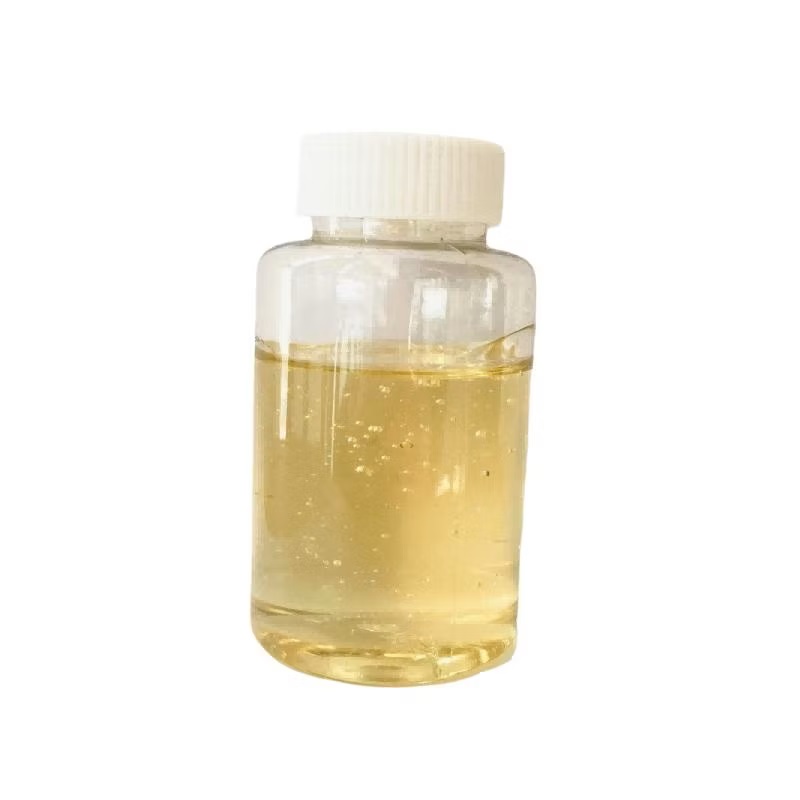
| Appearance | Light yellow, viscous oily liquid |
| Odor | Mild, characteristic |
| Source | Epoxidation of soybean oil |
SECTION 2: PHYSICAL AND CHEMICAL PROPERTIES
| Property | Value / Range |
|---|---|
| Molecular Weight | ~900-1,000 g/mol |
| Appearance | Light yellow, viscous oily liquid |
| Odor | Mild, characteristic |
| Density (25°C) | ~0.989-0.999 g/cm³ |
| Viscosity (25°C) | ~400-600 cP |
| Viscosity (50°C) | ~50-80 cP |
| Pour Point | ~-10°C to -5°C |
| Flash Point | ~250°C |
| Autoignition Temperature | ~400°C |
| Refractive Index (n²⁰D) | ~1.471-1.475 |
| Acid Value | ≤ 0.5 mg KOH/g |
| Saponification Value | ~180-195 mg KOH/g |
| Iodine Value | ≤ 5 g I₂/100 g |
| Oxirane Oxygen Content | ≥ 6.0% (typical: 6.5-7.5%) |
| Water Content | ≤ 0.1% |
| Solubility in Water | Insoluble |
| Solubility in Organic Solvents | Soluble in most organic solvents |
| Volatility | Very low |
| LogP | ~10-12 (highly hydrophobic) |
SECTION 3: CHEMICAL PROPERTIES AND REACTIONS
| Property | Description |
|---|---|
| Chemical Class | Epoxidized fatty acid ester |
| Functional Groups | Epoxide (oxirane) rings, ester bonds |
| Reactivity | Epoxide rings can react with nucleophiles |
| Thermal Stability | High stability against heat and sunlight |
| Hydrolysis | Slow hydrolysis in acidic or basic media |
| Epoxide Ring Opening | Can be opened with acids, alcohols, amines |
| Oxidation | Stable under normal conditions |
| PVC Compatibility | Excellent compatibility with PVC |
4.1. Key Reactions
| Reaction Type | Description |
|---|---|
| Epoxide Ring Opening | Ester or ether formation under acidic/basic conditions |
| Polymerization | Polymerization via epoxide rings |
| Hydrolysis | Hydrolysis to fatty acids and glycerol |
| Transesterification | Ester exchange with other alcohols |
| PVC Stabilization | PVC stabilization via HCl absorption |
4.2. Stability
| Parameter | Information |
|---|---|
| Thermal Stability | Stable up to ~250°C |
| UV Stability | Good |
| Oxidation Stability | Good |
| Hydrolytic Stability | Stable at neutral pH; hydrolysis in acidic/basic media |
| Incompatibilities | Strong acids, strong bases, strong oxidizers |
SECTION 5: MAJOR APPLICATIONS AND END-USES
5.1. PVC Plasticizer and Stabilizer (Most Important Application)
| Application | Function | Suitability |
|---|---|---|
| PVC Products | Primary or secondary plasticizer | High |
| PVC Stabilizer | Heat and UV stabilizer (HCl scavenger) | High |
| Flexible PVC | Provides flexibility and durability | High |
| PVC Film and Sheet | Processability and optical properties | High |
| PVC Pipe and Hose | Flexibility and durability | High |
| PVC Seals and Profiles | Flexibility and weatherability | High |
5.2. Food Packaging
| Application | Function | Suitability |
|---|---|---|
| Food Packaging Films | Plasticizer and stabilizer | High |
| Food Coatings | Protective coating | High |
| Food-Grade PVC | Non-toxic plasticizer | High |
5.3. Medical Products
| Application | Function | Suitability |
|---|---|---|
| Medical Devices | Plasticizer and stabilizer | High |
| Medical Tubing | Flexibility and durability | High |
| Blood Bags | Plasticizer | High |
5.4. Coatings and Inks
| Application | Function | Suitability |
|---|---|---|
| Paints and Coatings | Plasticizer, pigment dispersant | High |
| Inks | Plasticizer, flow control | High |
| Protective Coatings | Flexibility and durability | High |
5.5. Other Applications
| Application | Function | Suitability |
|---|---|---|
| Lubricants | As additive | Moderate |
| Adhesives | Plasticizer | Moderate |
| Biodiesel | As additive | Moderate |
| Surfactants | As intermediate | Moderate |
SECTION 6: INDUSTRY SUITABILITY MATRIX
| Industry | Suitability | Explanation |
|---|---|---|
| PVC Processing | High | Most widely used epoxy plasticizer |
| Food Packaging | High | FDA approved, non-toxic |
| Medical | High | Non-toxic, biocompatible |
| Coatings / Paints | High | Plasticizer, pigment dispersant |
| Inks | High | Plasticizer, flow control |
| Adhesives | High | Plasticizer |
| Automotive | Moderate | PVC interior parts, coatings |
| Cosmetics | Limited | Only in specific formulations |
| Food Additive | Not suitable | Not used as direct food additive |
SECTION 7: OTHER NAMES AND IDENTIFIERS
| Type | Name / Description |
|---|---|
| IUPAC Name | Epoxidized soybean oil |
| Commercial Names | ESBO, ESO, Epoxidized Soybean Oil |
| Synonyms | Epoxidized Soya Bean Oil |
| CAS Number | 8013-07-8 |
| EC Number | 232-391-0 |
| HS Code | 15180000 |
SECTION 8: ADVANTAGES OVER PHTHALATES
| Property | ESBO | Phthalate Plasticizers (DEHP, DBP) |
|---|---|---|
| Source | Renewable (vegetable) | Petrochemical |
| Toxicology | Low toxicity | Endocrine disruptor concerns |
| Food Contact | Approved (FDA) | Restricted |
| Biodegradability | Partially biodegradable | Poorly biodegradable |
| Thermal Stability | Excellent | Good |
| UV Stability | Good | Moderate |
| Cost | Medium-high | Low-medium |
| Regulatory Status | Preferred | Restricted / phased out |
SECTION 9: TOXICOLOGY AND HEALTH EFFECTS
| Parameter | Value / Description |
|---|---|
| GHS Classification | Not classified (non-toxic) |
| Oral LD50 (Rat) | > 5,000 mg/kg |
| Dermal LD50 (Rabbit) | > 2,000 mg/kg |
| Skin Irritation | Mild irritant |
| Eye Irritation | Mild irritant |
| Skin Sensitization | Not sensitizing |
| Mutagenicity | Negative |
| Carcinogenicity | Not classified |
| Endocrine Disruption | No concern |
| Target Organs | Skin, eyes |
SECTION 10: SAFETY AND STORAGE
| Parameter | Information |
|---|---|
| Storage Conditions | Cool, dry, well-ventilated area |
| Temperature | Room temperature (15-30°C) |
| Container | Tightly closed containers |
| Materials to Avoid | Strong acids, strong bases, high heat |
| Shelf Life | 12-24 months (under recommended conditions) |
| Packaging | 200 kg drum, 1000 kg IBC, bulk tanker |
SECTION 11: TRANSPORT INFORMATION
| Parameter | Information |
|---|---|
| UN Number | Not regulated (not classified as dangerous goods) |
| Hazard Class | Not applicable |
| Packing Group | Not applicable |
| Proper Shipping Name | Epoxidized Soybean Oil |
| ADR/RID | Not regulated |
| IMDG Code | Not regulated |
| IATA (Air) | Not regulated |
| Marine Pollutant | No |
SECTION 12: FIRE-FIGHTING MEASURES
| Parameter | Information |
|---|---|
| Fire Hazard | Combustible liquid (flash point ~250°C) |
| Extinguishing Media | Water fog, foam, CO₂, dry chemical |
| Special Hazards | When heated, releases CO, CO₂ |
| Decomposition Products | CO, CO₂, hydrocarbons |
| Protective Equipment | Self-contained breathing apparatus (SCBA), full protective clothing |
SECTION 13: ACCIDENTAL RELEASE AND CLEANUP
| Parameter | Information |
|---|---|
| Personal Protection | Gloves, safety goggles, protective clothing |
| Ventilation | Increase ventilation |
| Cleanup Methods | Absorb with absorbent material; collect in sealed containers |
| Environmental Precautions | Prevent entry into drains |
| Waste Disposal | According to local regulations |
SECTION 14: REGULATORY INFORMATION
| Region / Authority | Status |
|---|---|
| EU REACH | Registered |
| Turkey KKDİK | Registration required |
| USA TSCA | Listed |
| USA FDA | Approved for food contact (21 CFR) |
| EU Food Contact | Approved |
| EU Cosmetics Regulation | Permitted |
| EINECS | 232-391-0 |
| WGK (Germany) | 1 (slight hazard to water) |
SECTION 15: SUMMARY AND CRITICAL WARNINGS
Product Summary
| Parameter | Value |
|---|---|
| Product | Epoxidized Soybean Oil (ESBO) |
| CAS | 8013-07-8 |
| Appearance | Light yellow, viscous oily liquid |
| Density | ~0.99 g/cm³ |
| Oxirane Oxygen | ≥ 6.0% |
| Flash Point | ~250°C |
| Key Industry | PVC plasticizer and stabilizer |
CRITICAL WARNINGS
-
Eco-Friendly Alternative: ESBO is a non-toxic, partially biodegradable plasticizer produced from renewable resources (soybean oil). It is an environmentally friendly alternative to phthalate plasticizers.
-
PVC Stabilization: ESBO functions as an effective heat stabilizer by absorbing HCl released during thermal degradation of PVC.
-
Food and Medical Approval: Due to its non-toxic nature, it is FDA-approved and can be safely used in food packaging and medical devices.
-
Low Toxicity: Low toxicity profile with oral LD₅₀ > 5,000 mg/kg. No endocrine-disrupting effects.
-
Pigment Dispersant: ESBO can also be used as a pigment dispersant, providing color homogeneity in paints and coatings.
-
Internal Lubricant: Functions as an internal lubricant in PVC formulations, improving processability and surface quality.
-
High Oxirane Oxygen Content: ESBO with oxirane oxygen content ≥ 6.0% provides high-performance stabilization.
-
Storage: Store in cool and dry areas. Acid value may increase during long-term storage.
-
Alternatives: Other epoxidized oils (epoxidized linseed oil, epoxidized palm oil) can be used in similar applications.
-
Regulatory Status: Registered under REACH. Approved for food contact under FDA 21 CFR.
IMPORTANT DISCLAIMER: This Technical Data Sheet (TDS) is for informational purposes only and is based on available technical data. The user is solely responsible for determining the product's suitability for their specific application and for complying with all applicable local, national, and international regulations. For complete safety, storage, handling, transportation, disposal, and regulatory compliance information, always refer to the official Safety Data Sheet (SDS/MSDS) provided by the manufacturer/supplier. Users are responsible for testing the product in their own processes and applications. All local, national, and international regulations must be followed when working with ESBO.