We unleash your business potential by maximize the business innovation.
Send EmailDioctyl Adipate, Bis(2-ethylhexyl) Adipate, Dioctyl Hexanedioate, DOA Plasticizer, DOA, 103-23-1
Dioctyl Adipate (DOA – Bis(2-ethylhexyl) Adipate)
CAS Number: 103-23-1
Chemical Formula: C₂₂H₄₂O₄
Molecular Weight: 370.57 g/mol
EC Number: 203-090-1
Synonyms: DOA, Bis(2-ethylhexyl) Adipate, Di(2-ethylhexyl) Adipate, Adipic Acid Dioctyl Ester, Dioctyl Hexanedioate, DOA Plasticizer
1. CHEMICAL IDENTITY
| Parameter | Information |
|---|---|
| Product Name | Dioctyl Adipate |
| IUPAC Name | Bis(2-ethylhexyl) hexanedioate |
| CAS Number | 103-23-1 |
| Chemical Formula | C₂₂H₄₂O₄ |
| Molecular Weight | 370.57 g/mol |
| EC Number | 203-090-1 |
| Chemical Class | Diester, Adipate Ester, Plasticizer |
| Synonyms | DOA, Bis(2-ethylhexyl) Adipate, Di(2-ethylhexyl) Adipate, Adipic Acid Dioctyl Ester, Dioctyl Hexanedioate, DOA Plasticizer |
2. PHYSICAL PROPERTIES
| Parameter | Value |
|---|---|
| Physical State (20°C) | Liquid |
| Color | Colorless to pale yellow |
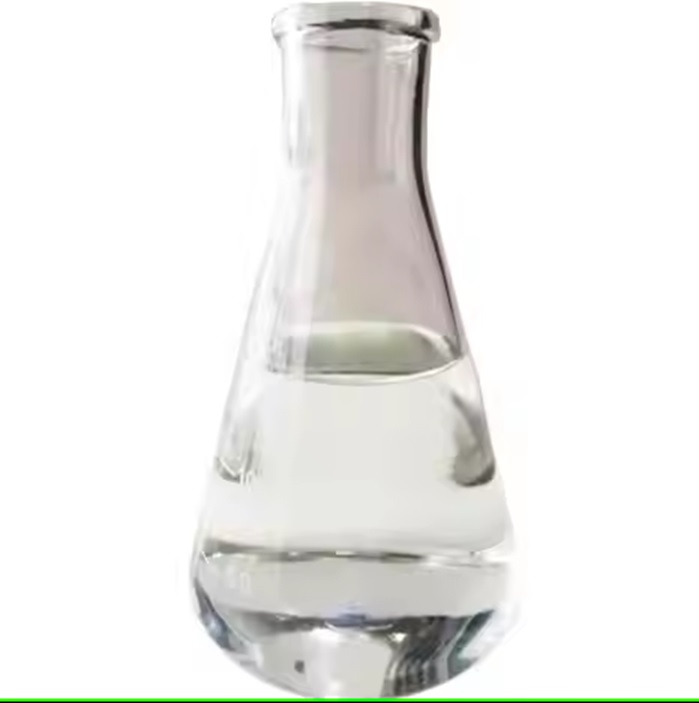
| Appearance | Clear, oily liquid |
| Odor | Slight, characteristic |
| Melting Point | -67 °C (-89 °F) |
| Boiling Point (760 mmHg) | 417 °C (783 °F) |
| Flash Point (closed cup) | 196 °C (385 °F) |
| Density (20°C) | 0.92 g/cm³ |
| Viscosity (20°C) | ~15 – 18 cP |
| Refractive Index (20°C) | 1.447 – 1.450 |
| Vapor Pressure (20°C) | < 0.01 mmHg (very low) |
| Pour Point | -70 °C |
3. THERMODYNAMIC PROPERTIES
| Parameter | Value |
|---|---|
| Autoignition Temperature | 385 °C (725 °F) |
| Specific Heat Capacity | ~1.9 J/g·K |
| Thermal Conductivity | ~0.15 W/m·K |
| Coefficient of Thermal Expansion | ~0.0008 /°C |
4. SOLUBILITY PROPERTIES
| Solvent | Solubility |
|---|---|
| Water | Insoluble (< 0.01 g/L at 20°C) |
| Acetone | Soluble |
| Ethanol | Soluble |
| Toluene | Soluble |
| Xylene | Soluble |
| Mineral Oils | Soluble |
| Chlorinated Solvents | Soluble |
| Esters | Soluble |
| Most Organic Solvents | Soluble |
5. CHEMICAL PROPERTIES AND REACTIVITY
| Parameter | Information |
|---|---|
| Acid Value | ≤ 0.1 mg KOH/g (typical) |
| Saponification Value | 295 – 315 mg KOH/g |
| Ester Content | ≥ 99.5% |
| Hydroxyl Value | ≤ 5 mg KOH/g |
| Water Content | ≤ 0.1% |
| Chemical Stability | Stable under normal conditions |
| Hydrolysis Sensitivity | Slowly hydrolyzes in presence of strong acids or bases |
| Oxidation Stability | Good (resistant to oxidation) |
6. PRODUCTION PROCESS
| Step | Description |
|---|---|
| Raw Materials | Adipic acid + 2-Ethylhexanol |
| Reaction Type | Esterification |
| Catalyst | Acid catalyst (e.g., sulfuric acid, p-toluenesulfonic acid, or titanium-based catalysts) |
| Reaction | Adipic Acid + 2-Ethylhexanol → DOA + Water |
| Purification | Distillation to remove excess alcohol, water, and by-products; neutralization; filtration |
| Quality Control | Acid value, color, viscosity, water content, ester content |
Simplified Reaction:
HOOC-(CH₂)₄-COOH + 2 C₈H₁₇OH → C₈H₁₇OOC-(CH₂)₄-COOC₈H₁₇ + 2 H₂O
7. TYPICAL PRODUCT SPECIFICATIONS
| Parameter | Specification | Test Method |
|---|---|---|
| Purity (Ester Content) | ≥ 99.5% | GC / Titration |
| Acid Value | ≤ 0.1 mg KOH/g | ASTM D 1613 |
| Saponification Value | 295 – 315 mg KOH/g | ASTM D 94 |
| Water Content | ≤ 0.1% | Karl Fischer (ASTM E203) |
| Color (APHA/Pt-Co) | ≤ 50 | ASTM D 1209 |
| Density (20°C) | 0.918 – 0.928 g/cm³ | ASTM D 4052 |
| Refractive Index (20°C) | 1.447 – 1.450 | ASTM D 1218 |
| Viscosity (20°C) | 15 – 18 cP | ASTM D 445 |
| Flash Point | ≥ 190 °C | ASTM D 93 |
8. FUNCTIONAL PROPERTIES AS PLASTICIZER
| Property | Description |
|---|---|
| Low Temperature Flexibility | Excellent (melting point -67°C; Tg depression in polymers) |
| Compatibility | Good with PVC, PVAc, nitrocellulose, and many polymers |
| Viscosity Reduction | Reduces melt viscosity of polymers (improves processing) |
| Migration Resistance | Moderate (lower than phthalates) |
| Water Extraction Resistance | Good (low water solubility) |
| Solvent Extraction Resistance | Moderate to good |
| Volatility | Low (high boiling point) |
| Light Stability | Good |
| Heat Stability | Good |
9. KEY ADVANTAGES OF DOA AS PLASTICIZER
| Advantage | Description |
|---|---|
| Excellent Low-Temperature Flexibility | Maintains flexibility down to -40°C to -50°C; superior to phthalate plasticizers |
| Low Glass Transition Temperature Depression | Significantly lowers polymer Tg (PVC Tg reduced from ~80°C to -30°C with 50 phr DOA) |
| Good Viscosity Reduction | Improves processing and flow properties |
| Good Compatibility with PVC | Miscible with PVC at typical use levels |
| Low Color | Water-white; suitable for clear, transparent products |
| Low Toxicity | Lower toxicity profile than many phthalate plasticizers |
| Good Light Stability | Resists yellowing during UV exposure |
10. APPLICATIONS – PLASTICIZED PVC (Primary Use)
| Application | Description |
|---|---|
| Flexible Films and Sheets | Packaging films, agricultural films, protective covers |
| Cables and Wires | Insulation and sheathing (requires low-temperature flexibility) |
| Hoses and Tubing | Automotive hoses, industrial hoses, garden hoses, medical tubing |
| Gaskets and Seals | Low-temperature sealing applications |
| Synthetic Leather | Coated fabrics, upholstery, shoe soles |
| Injection Molded Parts | Soft-touch products, grommets, bushings |
| Flooring | Vinyl flooring (especially low-temperature grades) |
11. APPLICATIONS – NON-PVC POLYMERS
| Polymer | Application |
|---|---|
| Polyvinyl Acetate (PVAc) | Adhesives, coatings (improves flexibility) |
| Nitrocellulose | Lacquers, coatings |
| Polystyrene | Impact modification (limited use) |
| Acrylic Polymers | Coatings, adhesives |
| Polyurethane | Flexible foams, elastomers |
| Rubber | Synthetic rubber processing aid |
12. APPLICATIONS – ADHESIVES AND SEALANTS
| Application | Function |
|---|---|
| Pressure Sensitive Adhesives (PSA) | Provides tack and flexibility |
| Hot Melt Adhesives | Low-temperature flexibility |
| Contact Adhesives | Improves film flexibility |
| Sealants | Low-temperature performance |
13. APPLICATIONS – COATINGS AND INKS
| Application | Function |
|---|---|
| Printing Inks | Plasticizer for flexographic and gravure inks; improves film flexibility |
| Coil Coatings | Flexibility enhancement |
| Industrial Coatings | Improves low-temperature impact resistance |
| Automotive Coatings | Chip resistance at low temperatures |
14. COMPARISON: DOA vs. OTHER PLASTICIZERS
| Property | DOA (Adipate) | DOP (DEHP – Phthalate) | DINP (Phthalate) | DOS (Sebacate) |
|---|---|---|---|---|
| Molecular Weight | 370.6 | 390.6 | 424.7 | 426.7 |
| Melting Point (°C) | -67 | -50 | -48 | -55 |
| Low-Temp Flexibility | Excellent | Good | Moderate | Excellent |
| Compatibility with PVC | Excellent | Excellent | Excellent | Good |
| Volatility | Moderate | Low | Very Low | Very Low |
| Migration Resistance | Moderate | Good | Very Good | Good |
| Water Extraction | Very Low | Very Low | Very Low | Very Low |
| Cost | Higher | Low | Moderate | High |
| Toxicity | Lower | Higher (regulated) | Moderate | Low |
| Primary Use | Low-temp applications | General purpose | High-performance | High-performance low-temp |
15. TYPICAL PVC FORMULATION GUIDELINES
| Formulation | Parts per Hundred Resin (phr) | Application |
|---|---|---|
| Flexible Film (DOA only) | 30 – 50 phr | Low-temperature packaging |
| Cable Insulation | 30 – 40 phr (with secondary plasticizer) | Cold-weather cables |
| Hoses and Tubing | 35 – 50 phr | Automotive, industrial |
| Synthetic Leather | 40 – 60 phr | Upholstery, footwear |
| Gaskets and Seals | 50 – 80 phr | Low-temperature seals |
| DOA + DOP Blend | 20-30 phr DOA + 20-30 phr DOP | Balanced properties (cost + low temp) |
| DOA + DINP Blend | 15-25 phr DOA + 25-35 phr DINP | Low migration + low temp |
16. COMPATIBILITY WITH PVC
| DOA Content (phr) | PVC Tg (°C) | Flexibility Rating |
|---|---|---|
| 0 phr | ~80°C | Rigid |
| 20 phr | ~-10°C | Semi-flexible |
| 30 phr | ~-20°C | Flexible |
| 40 phr | ~-28°C | Very flexible |
| 50 phr | ~-35°C | Extremely flexible |
17. SAFETY AND TOXICOLOGICAL PROFILE
| Parameter | Value |
|---|---|
| Acute oral toxicity (rat, LD₅₀) | > 3,000 mg/kg (low toxicity) |
| Acute dermal toxicity (rabbit, LD₅₀) | > 2,000 mg/kg |
| Skin irritation | Non-irritating to mildly irritating |
| Eye irritation | Mildly irritating |
| Skin sensitization | Not a sensitizer |
| Carcinogenicity | Not classified as carcinogenic (IARC: Group 3) |
| Mutagenicity | Negative |
| Reproductive toxicity | Not classified |
| Environmental toxicity | Moderate (biodegradable, but aquatic toxicity) |
GHS Classification: Not classified as hazardous under normal use (most grades are non-hazardous). Check specific SDS for details.
18. REGULATORY STATUS
| Region/Agency | Status |
|---|---|
| FDA (USA) | Approved for food contact applications (21 CFR 178.3740, 175.105, 177.2600) |
| EU REACH | Registered; not restricted (unlike some phthalates) |
| EU 10/2011 | Approved for food contact plastics (with specific migration limits) |
| California Prop 65 | Not listed (safe) |
| RoHS | Compliant |
| WEEE | Compliant |
| Türkiye (TGK) | Approved for use |
FDA Food Contact Clearance: DOA is permitted as a plasticizer in food contact applications (adhesives, coatings, rubber articles, and PVC) with specific use limitations.
19. STORAGE AND HANDLING
| Parameter | Requirement |
|---|---|
| Storage Temperature | 15-30°C (room temperature) |
| Container | Tightly closed (drums, IBC, bulk tanks) |
| Incompatible Materials | Strong oxidizing agents, strong acids, strong bases |
| Protection | Protect from moisture (hydrolysis), direct sunlight |
| Ventilation | Good ventilation not required (low volatility) |
| Shelf Life | 24-36 months under proper storage |
| Special Precautions | Avoid long-term storage at high temperatures |
20. SUMMARY AND CRITICAL INFORMATION
Description: Dioctyl Adipate (DOA, Bis(2-ethylhexyl) Adipate, CAS 103-23-1) is a diester plasticizer produced by the esterification of adipic acid with 2-ethylhexanol. It is a colorless to pale yellow, clear, oily liquid with a very low melting point (-67°C) and high boiling point (417°C). DOA is primarily used as a plasticizer for PVC and other polymers, valued for its excellent low-temperature flexibility, good compatibility, and lower toxicity compared to many phthalate plasticizers.
Key Advantages:
-
Excellent low-temperature flexibility (maintains flexibility down to -50°C)
-
Low glass transition temperature depression
-
Good compatibility with PVC and other polar polymers
-
Low color (water-white), suitable for transparent products
-
Lower toxicity than many phthalate plasticizers
-
FDA approved for food contact applications
-
Good light and heat stability
Key Limitations/Considerations:
-
Higher cost than general-purpose phthalates (DOP, DINP)
-
Moderate migration resistance (higher than phthalates)
-
Not suitable for high-temperature applications (>100°C continuous)
-
Higher volatility than phthalate plasticizers
Major Applications Summary:
| Sector | Applications |
|---|---|
| Plasticized PVC | Flexible films, cables/wires, hoses, tubing, gaskets, synthetic leather, flooring |
| Adhesives & Sealants | PSA, hot melt adhesives, contact adhesives |
| Coatings & Inks | Printing inks, industrial coatings, coil coatings |
| Non-PVC Polymers | PVAc, nitrocellulose, acrylics, polyurethane |
Typical PVC Formulations:
| Application | DOA Content (phr) |
|---|---|
| Low-temperature films | 30 – 50 phr |
| Cable insulation | 30 – 40 phr |
| Hoses and tubing | 35 – 50 phr |
| Synthetic leather | 40 – 60 phr |
Comparison to Other Plasticizers:
| Property | DOA | DOP | DINP |
|---|---|---|---|
| Low-temp flexibility | Excellent | Good | Moderate |
| Cost | Higher | Low | Moderate |
| Toxicity | Lower | Regulated | Moderate |
Safety Summary:
-
Low acute toxicity (oral LD₅₀ > 3,000 mg/kg)
-
Not classified as hazardous (most grades)
-
Not listed on California Prop 65
-
FDA approved for food contact
-
IARC Group 3 (not classifiable)
Storage: Cool, dry, sealed containers; 24-36 months shelf life.
Conclusion: Dioctyl Adipate (DOA) is the plasticizer of choice when excellent low-temperature flexibility is required. Although more expensive than general-purpose phthalates like DOP, DOA's superior low-temperature performance and lower toxicity profile make it essential for cold-weather cables, automotive hoses, outdoor films, and food-contact applications. It is widely used in flexible PVC, adhesives, coatings, and non-PVC polymers where low-temperature impact resistance and flexibility are critical. With FDA approval for food contact and favorable regulatory status (not restricted like many phthalates), DOA remains a safe and effective plasticizer for demanding applications.