We unleash your business potential by maximize the business innovation.
Send EmailDiisodecyl Phthalate, Bisisodecyl Phthalate, DIDP, 26761-40-0
DIISODECYL PHTHALATE (DIDP)
CAS Number: 26761-40-0
EC Number (EINECS): 247-977-1
Molecular Formula: C₂₈H₄₆O₄
Molecular Weight: 446.67 g/mol
Chemical Class: Phthalate ester (plasticizer)
SECTION 1: PRODUCT IDENTIFICATION AND CHEMICAL IDENTITY
| Parameter | Description |
|---|---|
| Chemical Name (IUPAC) | 1,2-Benzenedicarboxylic acid diisodecyl ester |
| Other Names | DIDP, Diisodecyl Phthalate, Bisiisodecyl Phthalate |
| CAS Number | 26761-40-0 |
| EC Number (EINECS) | 247-977-1 |
| Molecular Formula | C₂₈H₄₆O₄ |
| Molecular Weight | 446.67 g/mol |
| Chemical Class | Phthalate ester (plasticizer) |
| Structure | Benzene ring with two isodecyl ester groups |
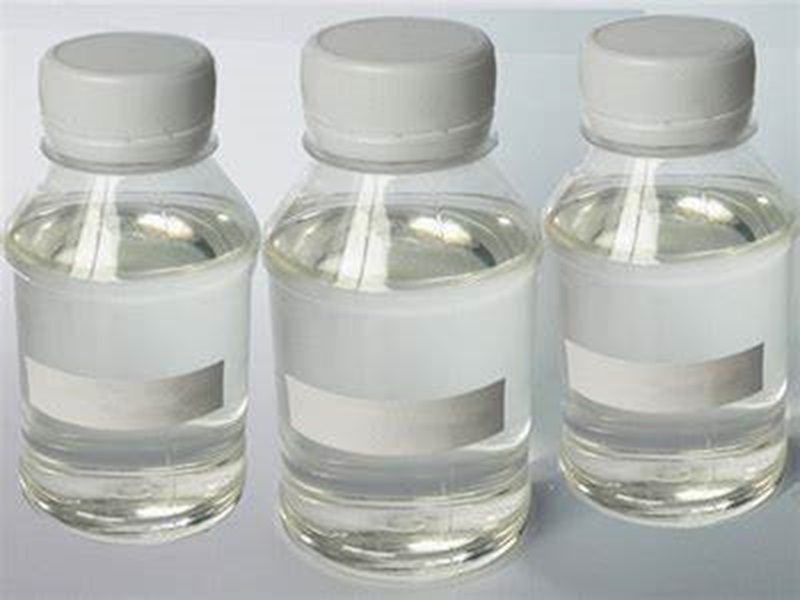
| Appearance | Clear, colorless liquid |
| Odor | Very mild, characteristic |
SECTION 2: PHYSICAL AND CHEMICAL PROPERTIES
| Property | Value / Range |
|---|---|
| Molecular Formula | C₂₈H₄₆O₄ |
| Molecular Weight | 446.67 g/mol |
| Appearance | Clear, colorless liquid |
| Odor | Very mild, characteristic |
| Density (20°C) | 0.96-0.97 g/cm³ |
| Melting Point | -50°C |
| Boiling Point | 250-257°C (at 0.5 kPa) |
| Flash Point | > 230°C |
| Viscosity (20°C) | ~80-90 cP |
| Viscosity (100°C) | ~7-10 cP |
| Vapor Pressure | < 0.01 mmHg (very low) |
| Solubility in Water | Insoluble |
| Solubility in Organic Solvents | Soluble in most organic solvents |
| LogP (octanol/water) | ~9.0-9.5 (very high hydrophobic) |
| Acid Value | ≤ 0.05 mg KOH/g |
| Water Content | ≤ 0.1% |
| Purity (GC) | ≥ 99.0% |
| Volatility | Very low |
| Dielectric Constant (25°C) | ~4.5 |
SECTION 3: CHEMICAL PROPERTIES AND REACTIONS
| Property | Description |
|---|---|
| Chemical Class | Phthalate ester |
| Functional Group | Ester (-COOR) |
| Reactivity | Low under normal conditions |
| Hydrolysis | Slow hydrolysis in acidic or basic medium |
| Thermal Decomposition | > 350°C releases CO, CO₂ |
| Oxidation | Stable under normal conditions |
| Hydrolytic Stability | Excellent |
| UV Stability | Good |
| High Molecular Weight | Provides low migration and low volatility |
3.1. Stability
| Parameter | Information |
|---|---|
| Thermal Stability | Excellent |
| Hydrolytic Stability | Excellent |
| UV Stability | Good |
| Low Volatility | Very low |
| Migration Resistance | Excellent |
| Fogging | Very low |
| Incompatibilities | Strong oxidizers, strong acids, strong bases |
SECTION 4: FUNCTIONAL PROPERTIES
| Property | Description |
|---|---|
| Plasticizer Type | Primary plasticizer |
| PVC Compatibility | Excellent |
| Low Volatility | Very low |
| Migration Resistance | Excellent |
| Thermal Stability | Excellent |
| Low Fogging | Very low (suitable for automotive applications) |
| Aging Resistance | Excellent |
| Cold Resistance | Good |
| Electrical Properties | Excellent (high volume resistivity) |
| Extraction Resistance | Excellent |
| Low-Temperature Flexibility | Moderate |
| Cost/Performance | High |
SECTION 5: MAJOR APPLICATIONS AND END-USES
5.1. PVC Plasticizer (Most Important Application)
| Application | Function | Suitability |
|---|---|---|
| Flexible PVC Products | Primary plasticizer | High |
| High-Temperature PVC | Heat-resistant plasticizer | High |
| PVC Cable Insulation | Low-volatility plasticizer | High |
5.2. Coatings
| Application | Function | Suitability |
|---|---|---|
| Furniture Coatings | Plasticizer | High |
| Kitchenware Coatings | Plasticizer | High |
| Pharmaceutical Tablet Coatings | Plasticizer | Moderate |
| Food Packaging Coatings | Plasticizer | High |
5.3. Automotive
| Application | Function | Suitability |
|---|---|---|
| Vehicle Interior Upholstery | Plasticizer | High |
| Automotive Cables | Plasticizer | High |
| Automotive Wires | Plasticizer | High |
| Steering Wheel Covers | Plasticizer | High |
5.4. Adhesives and Sealants
| Application | Function | Suitability |
|---|---|---|
| Caulks | Plasticizer | High |
| Mastic Applications | Plasticizer | High |
| Sealants | Plasticizer | High |
5.5. Other Applications
| Application | Function | Suitability |
|---|---|---|
| Floor Coverings | Plasticizer | High |
| Durable PVC Products | Plasticizer | High |
| Flooring | Plasticizer | High |
| Industrial Belts | Plasticizer | High |
SECTION 6: INDUSTRY SUITABILITY MATRIX
| Industry | Suitability | Explanation |
|---|---|---|
| PVC Processing | High | High-temperature and durable PVC applications |
| Coatings | High | Furniture, kitchenware, food packaging |
| Automotive | High | Interior upholstery, cables, wires (low fogging) |
| Adhesives / Sealants | High | Caulks, mastic applications |
| Wire and Cable | High | Insulation and sheathing compounds |
| Flooring | High | Flexible floor coverings |
| Food Contact | Regulated | Restricted in food packaging applications |
| Cosmetics | Not suitable | Not approved for cosmetic use |
| Medical | Not suitable | Limited for medical applications (safer than DEHP/DOP) |
SECTION 7: COMPARISON OF PHTHALATES
| Property | DMP (Dimethyl) | DEP (Diethyl) | DBP (Dibutyl) | DOP/DEHP (Dioctyl) | DIDP (Diisodecyl) |
|---|---|---|---|---|---|
| Molecular Formula | C₁₀H₁₀O₄ | C₁₂H₁₄O₄ | C₁₆H₂₂O₄ | C₂₄H₃₈O₄ | C₂₈H₄₆O₄ |
| Molecular Weight | ~194 g/mol | ~222 g/mol | ~278 g/mol | ~390 g/mol | ~446 g/mol |
| Boiling Point | ~282°C | ~298°C | ~340°C | ~385°C | >400°C |
| Volatility | High | Moderate | Low | Very low | Very low |
| Water Solubility | Partially | Slight | Insoluble | Insoluble | Insoluble |
| Main Use | Insect repellent, specialty polymers | Cosmetics, perfume, cellulose acetate | PVC, adhesives, rubber | PVC, vinyl, cable coatings | Cable, automotive, durable PVC |
| Toxicological Status | Relatively low | Low | Endocrine disruptor risk | Environmental concerns, restricted | Safer, low migration |
| Usage Share (per 100 units) | 8% | 12% | 15% | 40% | 25% |
SECTION 8: OTHER NAMES AND IDENTIFIERS
| Type | Name / Description |
|---|---|
| IUPAC Name | 1,2-Benzenedicarboxylic acid diisodecyl ester |
| Commercial Names | DIDP, Diisodecyl Phthalate |
| Synonyms | Bisiisodecyl Phthalate |
| CAS Number | 26761-40-0 |
| EC Number | 247-977-1 |
| HS Code | 29173200 |
SECTION 9: TOXICOLOGY AND HEALTH EFFECTS
| Parameter | Value / Description |
|---|---|
| GHS Classification | Warning |
| Signal Word | Warning |
| Hazard Statements | H315 (Causes skin irritation), H319 (Causes serious eye irritation), H335 (May cause respiratory irritation), H373 (May cause organ damage through prolonged exposure), H413 (May cause long-lasting effects to aquatic life) |
| Precautionary Statements | P261 (Avoid breathing dust), P280 (Wear protective gloves/eye protection), P302+P352 (IF ON SKIN: Wash with plenty of water), P305+P351+P338 (IF IN EYES: Rinse cautiously with water) |
| Oral LD50 (Rat) | > 5,000 mg/kg |
| Dermal LD50 (Rabbit) | > 2,000 mg/kg |
| Skin Irritation | Mild irritant |
| Eye Irritation | Mild irritant |
| Skin Sensitization | Not sensitizing |
| Mutagenicity | Negative |
| Carcinogenicity | Not classified |
| Reproductive Toxicity | Not classified |
| Endocrine Disruption | Lower concern than DEHP/DOP |
| Target Organs | Skin, eyes, liver, kidneys |
| WGK (Germany) | 2 (hazardous to water) |
SECTION 10: SAFETY AND STORAGE
| Parameter | Information |
|---|---|
| Storage Conditions | Cool, dry, well-ventilated area |
| Temperature | Room temperature (15-30°C) |
| Container | Tightly closed containers |
| Materials to Avoid | Strong oxidizers, strong acids, strong bases |
| Shelf Life | 24 months (under recommended conditions) |
| Packaging | 200 kg drum, 1000 kg IBC, bulk tanker |
SECTION 11: TRANSPORT INFORMATION
| Parameter | Information |
|---|---|
| UN Number | Not regulated (not classified as dangerous goods) |
| Hazard Class | Not applicable |
| Packing Group | Not applicable |
| Proper Shipping Name | Diisodecyl Phthalate |
| ADR/RID | Not regulated |
| IMDG Code | Not regulated |
| IATA (Air) | Not regulated |
| Marine Pollutant | No |
SECTION 12: FIRE-FIGHTING MEASURES
| Parameter | Information |
|---|---|
| Fire Hazard | Combustible liquid (flash point > 230°C) |
| Extinguishing Media | Water fog, foam, CO₂, dry chemical |
| Special Hazards | When heated, releases CO, CO₂ |
| Decomposition Products | CO, CO₂ |
| Protective Equipment | Self-contained breathing apparatus (SCBA), full protective clothing |
SECTION 13: ACCIDENTAL RELEASE AND CLEANUP
| Parameter | Information |
|---|---|
| Personal Protection | Gloves, safety goggles, protective clothing |
| Ventilation | Increase ventilation |
| Cleanup Methods | Absorb with absorbent material; collect in sealed containers |
| Environmental Precautions | Prevent entry into drains |
| Waste Disposal | According to local regulations |
SECTION 14: REGULATORY INFORMATION
| Region / Authority | Status |
|---|---|
| EU REACH | Registered |
| Turkey KKDİK | Registration required |
| USA TSCA | Listed |
| USA FDA | Restricted for food contact |
| EU Toys Directive | Restricted in toys |
| California Prop 65 | Not listed (safer than DEHP/DOP) |
| EINECS | 247-977-1 |
| WGK (Germany) | 2 (hazardous to water) |
SECTION 15: SUMMARY AND CRITICAL WARNINGS
Product Summary
| Parameter | Value |
|---|---|
| Product | Diisodecyl Phthalate (DIDP) |
| CAS | 26761-40-0 |
| Appearance | Clear, colorless liquid |
| Density | ~0.96 g/cm³ |
| Molecular Weight | 446.67 g/mol |
| Flash Point | > 230°C |
| Key Industries | PVC, cable, automotive, coatings |
CRITICAL WARNINGS
-
High Molecular Weight Phthalate: DIDP is a high molecular weight phthalate plasticizer. It provides low volatility, low migration, and excellent thermal stability.
-
Low Volatility and Migration: Due to its high molecular weight (446.67 g/mol), DIDP exhibits very low volatility and excellent migration resistance. This makes it suitable for high-temperature applications.
-
Automotive Applications: Ideal for automotive interior applications due to its low fogging properties. Fogging refers to the unwanted film formation on vehicle windows and interiors.
-
Safer Alternative to DEHP/DOP: DIDP has a lower toxicity profile compared to DEHP/DOP and exhibits lower migration. Not listed under California Prop 65.
-
Excellent Electrical Properties: High volume resistivity and good dielectric properties make it ideal for wire and cable applications.
-
Durable PVC Products: DIDP is preferred in durable PVC products, floor coverings, and industrial belts.
-
Food Contact Restrictions: DIDP is restricted in food contact applications. Use in food packaging is regulated.
-
Toy Restrictions: Restricted in toys and childcare articles under the EU Toys Directive.
-
Lower Concern than DEHP/DOP: DIDP has lower endocrine-disrupting potential compared to DEHP/DOP. However, it is still subject to regulatory review as a phthalate.
-
Market Trend: DIDP is widely used in automotive, cable, and durable PVC applications due to regulatory restrictions on DEHP/DOP.
IMPORTANT DISCLAIMER: This Technical Data Sheet (TDS) is for informational purposes only and is based on available technical data. The user is solely responsible for determining the product's suitability for their specific application and for complying with all applicable local, national, and international regulations. DIDP is a safer phthalate plasticizer compared to DEHP/DOP but is still subject to regulatory review. For complete safety, storage, handling, transportation, disposal, and regulatory compliance information, always refer to the official Safety Data Sheet (SDS/MSDS) provided by the manufacturer/supplier. Users are responsible for testing the product in their own processes and applications. All local, national, and international regulations must be followed when working with DIDP.