We unleash your business potential by maximize the business innovation.
Send EmailAcrylonitrile Butadiene Styrene, Acrylonitrile Butadiene Styrene Copolymer, ABS Resin, 9003-54-7
ACRYLONITRILE BUTADIENE STYRENE (ABS)
CAS Number: 9003-54-7
EC Number (EINECS): 618-371-8
Molecular Formula: (C₈H₈·C₄H₆·C₃H₃N)ₙ
Molecular Weight: Variable (typically 20,000–200,000 g/mol)
Chemical Class: Thermoplastic (amorphous)
SECTION 1: CHEMICAL IDENTITY AND MATERIAL CLASSIFICATION
| Parameter | Description |
|---|---|
| Chemical Name (IUPAC) | Acrylonitrile-butadiene-styrene copolymer |
| Other Names | ABS, Acrylonitrile Butadiene Styrene Copolymer, ABS Resin |
| CAS Number | 9003-54-7 |
| EC Number (EINECS) | 618-371-8 |
| Molecular Formula | (C₈H₈·C₄H₆·C₃H₃N)ₙ |
| Molecular Weight | Variable (typically 20,000–200,000 g/mol) |
| Chemical Class | Thermoplastic (amorphous) |
| Structure | Styrene-acrylonitrile (SAN) copolymer matrix with dispersed polybutadiene rubber particles |
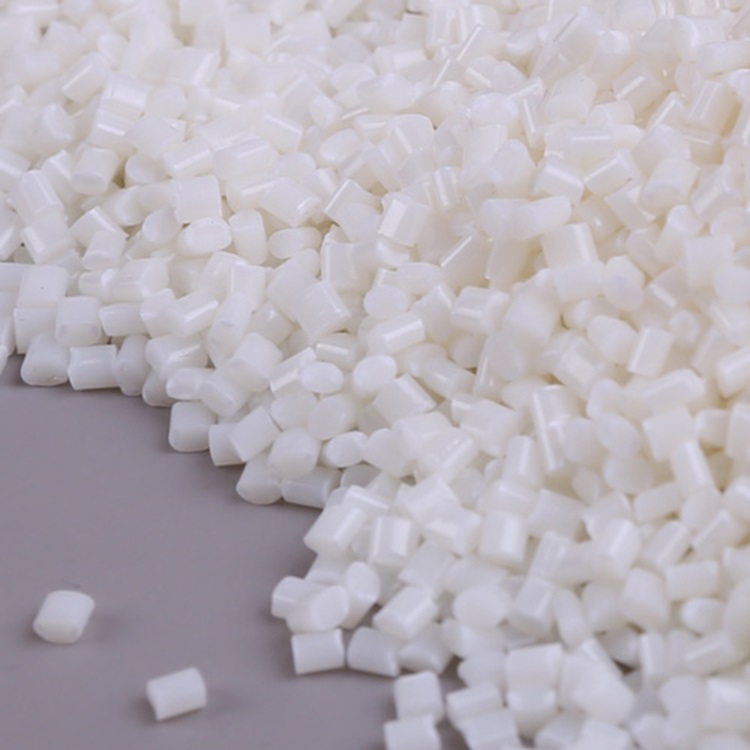
| Appearance | Opaque, ivory-white to off-white pellets or granules |
| Odor | Slight characteristic |
SECTION 2: PHYSICAL PROPERTIES
2.1. General Physical Properties
| Property | Value / Range |
|---|---|
| Appearance | Opaque, ivory-white to off-white pellets or granules |
| Odor | Slight characteristic |
| Density | 1.04–1.08 g/cm³ |
| Bulk Density | 0.55–0.75 g/cm³ |
| Melt Flow Index (MFI) | 1–50 g/10 min (varies by grade) |
| Mold Shrinkage | 0.4–0.8% |
| Water Absorption (24h) | 0.2–0.4% |
| Melting Point | 200–240°C (processing temperature) |
| Glass Transition Temperature (Tg) | ~105°C (SAN phase) |
| Vicat Softening Point | 95–110°C |
| Heat Deflection Temperature (HDT) | 80–105°C (at 1.82 MPa) |
| Coefficient of Thermal Expansion | 7–9 × 10⁻⁵ /K |
| Thermal Conductivity | 0.15–0.20 W/(m·K) |
| Specific Heat Capacity | 1.0–1.3 J/(g·K) |
2.2. Mechanical Properties
| Property | General Purpose ABS | High Impact ABS |
|---|---|---|
| Tensile Strength | 40–50 MPa | 35–45 MPa |
| Tensile Modulus | 2.0–2.5 GPa | 1.5–2.0 GPa |
| Elongation at Break | 10–30% | 30–100% |
| Flexural Strength | 60–80 MPa | 50–70 MPa |
| Flexural Modulus | 2.0–2.5 GPa | 1.5–2.2 GPa |
| Izod Impact Strength (Notched) | 20–40 kJ/m² | 40–60 kJ/m² |
| Charpy Impact Strength (Notched) | 15–30 kJ/m² | 30–50 kJ/m² |
| Rockwell Hardness (R) | 100–115 | 90–105 |
| Shore Hardness (D) | 75–85 | 70–80 |
2.3. Electrical Properties
| Property | Value / Range |
|---|---|
| Dielectric Constant (1 MHz) | 2.8–3.2 |
| Dielectric Strength | 15–20 kV/mm |
| Volume Resistivity | 10¹⁴–10¹⁶ Ω·cm |
| Surface Resistivity | 10¹³–10¹⁵ Ω |
| Arc Resistance | 60–100 s |
| Tracking Resistance (CTI) | 400–600 V |
SECTION 3: CHEMICAL COMPOSITION AND PROPERTIES
3.1. Monomer Composition
| Monomer | Typical Content | Function |
|---|---|---|
| Acrylonitrile (AN) | 15–35% | Chemical resistance, heat resistance, stiffness |
| Butadiene (BD) | 5–30% | Impact strength, toughness, ductility |
| Styrene (S) | 40–60% | Processability, surface gloss, rigidity |
3.2. Chemical Properties
| Property | Description |
|---|---|
| Chemical Class | Thermoplastic (amorphous) |
| Structure | SAN matrix with dispersed PB rubber particles |
| Morphology | Core-shell rubber particles in SAN matrix |
| Acid Resistance | Good to excellent (dilute acids) |
| Alkali Resistance | Good to excellent |
| Alcohol Resistance | Good (aliphatic alcohols) |
| Hydrocarbon Resistance | Poor (aromatic and chlorinated hydrocarbons) |
| Ketone Resistance | Poor (acetone, MEK) |
| Ester Resistance | Poor (ethyl acetate) |
| Oil and Grease Resistance | Good to moderate |
| Solubility | Insoluble in water; soluble in MEK, acetone, DMF, THF |
| Weathering Resistance | Moderate (requires UV stabilization for outdoor use) |
3.3. Chemical Resistance Table
| Chemical | Concentration | Resistance (23°C) |
|---|---|---|
| Acetic Acid | 10% | Good |
| Ammonia | 10% | Good |
| Hydrochloric Acid | 10% | Good |
| Sulfuric Acid | 10% | Good |
| Sodium Hydroxide | 10% | Good |
| Ethanol | 96% | Good |
| Methanol | 100% | Good |
| Benzene | 100% | Poor (dissolves) |
| Toluene | 100% | Poor (dissolves) |
| Acetone | 100% | Poor (dissolves) |
| MEK | 100% | Poor (dissolves) |
| Gasoline | 100% | Moderate |
| Motor Oil | 100% | Good |
| Water | 100% | Excellent |
SECTION 4: TYPICAL PROPERTIES BY GRADE
4.1. ABS Grades and Applications
| Grade | Impact Strength | Flowability | Applications |
|---|---|---|---|
| General Purpose (GP-ABS) | Moderate | High | Toys, housings, consumer goods |
| High Impact (HI-ABS) | Very High | Moderate | Automotive bumpers, helmets, pipes |
| High Flow (HF-ABS) | Low | Very High | Thin-wall injection molding, electrical parts |
| Heat Resistant (HR-ABS) | Moderate | Moderate | Automotive interiors, electronic housings |
| Flame Retardant (FR-ABS) | Moderate | Moderate | Office equipment, electrical housings |
| Extrusion Grade | High | Low | Sheets, pipes, profiles |
| Electroplating Grade | Moderate | High | Automotive trim, bathroom fixtures |
| Transparent ABS (MABS) | Low | High | Automotive lenses, optical applications |
SECTION 5: MAJOR APPLICATIONS AND END-USES
5.1. Automotive Industry (15–20%)
| Application | Function | Suitability |
|---|---|---|
| Bumpers and Grilles | Impact resistance, weatherability | High |
| Interior Trim | Surface appearance, UV resistance | High |
| Dashboard Components | Heat resistance, dimensional stability | High |
| Door Panels | Impact resistance, aesthetics | High |
| Instrument Panels | Heat resistance, rigidity | High |
| Rear Light Housings | Weatherability, dimensional stability | High |
| Wheel Covers | Impact resistance, aesthetics | High |
| Air Ventilation Grilles | Dimensional stability, heat resistance | High |
5.2. Electrical and Electronics (20–25%)
| Application | Function | Suitability |
|---|---|---|
| Computer Housings | Flame retardancy, aesthetics | High |
| TV and Monitor Housings | Flame retardancy, impact resistance | High |
| Telephone Equipment | Flame retardancy, dimensional stability | High |
| Printer Housings | Flame retardancy, aesthetics | High |
| Keyboard Housings | Impact resistance, aesthetics | High |
| Power Tool Housings | Impact resistance, durability | High |
| Sockets and Switches | Electrical insulation, flame retardancy | High |
| Small Appliance Housings | Impact resistance, aesthetics | High |
5.3. Consumer Goods (20–25%)
| Application | Function | Suitability |
|---|---|---|
| LEGO Bricks | Dimensional accuracy, colorability | High |
| Toy Blocks | Impact resistance, colorability | High |
| Sporting Goods | Impact resistance, durability | High |
| Safety Helmets | Impact resistance, durability | High |
| Luggage Shells | Impact resistance, aesthetics | High |
| Musical Instruments | Dimensional stability, aesthetics | High |
| Kitchen Appliances | Heat resistance, aesthetics | High |
| Vacuum Cleaners | Impact resistance, aesthetics | High |
5.4. Pipes and Fittings (10–15%)
| Application | Function | Suitability |
|---|---|---|
| Plumbing Fittings | Impact resistance, weatherability | High |
| Drainage Pipes | Impact resistance, chemical resistance | High |
| Pressure Pipes | Impact resistance, weatherability | High |
| Pipe Fittings | Dimensional stability, impact resistance | High |
5.5. Construction and Building (5–10%)
| Application | Function | Suitability |
|---|---|---|
| Roofing Sheets | Weatherability, impact resistance | High |
| Wall Panels | Aesthetics, weatherability | High |
| Bathroom Fixtures | Electroplating suitability, aesthetics | High |
| Door and Window Profiles | Weatherability, dimensional stability | High |
5.6. Medical (2–3%)
| Application | Function | Suitability |
|---|---|---|
| Medical Device Housings | Impact resistance, sterilizability | High |
| IV and Syringe Components | Sterilizability, dimensional stability | High |
| Surgical Instruments | Sterilizability, durability | High |
| Laboratory Equipment | Chemical resistance, durability | High |
5.7. Other Applications
| Application | Function | Suitability |
|---|---|---|
| 3D Printing Filaments | Processability, dimensional stability | High |
| Prototyping | Machinability, dimensional stability | High |
| Acoustic Products | Damping properties, dimensional stability | High |
| Office Equipment | Aesthetics, impact resistance | High |
SECTION 6: ADVANTAGES AND DISADVANTAGES
6.1. Advantages
| Advantage | Description |
|---|---|
| Excellent Impact Resistance | Outstanding toughness even at low temperatures |
| Good Processability | Excellent flow, easy injection molding and extrusion |
| Aesthetic Appearance | High gloss, excellent paintability and colorability |
| Good Dimensional Stability | Low mold shrinkage, good dimensional accuracy |
| Chemical Resistance | Good resistance to acids, alkalis, and oils |
| Electrical Insulation | Good dielectric properties |
| Recyclability | Thermoplastic – can be reprocessed |
| Cost-Effective | Good balance of performance and cost |
| Versatility | Wide range of grades for different applications |
| Metal Plating | Excellent adhesion for electroplating |
6.2. Disadvantages
| Disadvantage | Description |
|---|---|
| Poor UV Resistance | Degrades under sunlight; requires UV stabilization |
| Poor Weathering Resistance | Chalking and discoloration outdoors |
| Low Heat Resistance | HDT ~100°C; not suitable for high-temperature applications |
| Solvent Sensitivity | Dissolves in aromatic and chlorinated solvents |
| Flammability | Burns with black smoke; flame retardant grades available |
| Creep Under Load | Susceptible to creep under long-term loading |
| Poor Scratch Resistance | Surface can be scratched easily |
SECTION 7: PROCESSING METHODS
7.1. Processing Conditions
| Method | Temperature Range | Drying Required | Applications |
|---|---|---|---|
| Injection Molding | 200–260°C | Yes (80°C, 2–4h) | Housings, parts, toys |
| Extrusion | 200–240°C | Yes (80°C, 2–4h) | Sheets, profiles, pipes |
| Blow Molding | 200–230°C | Yes (80°C, 2–4h) | Bottles, containers |
| Thermoforming | 160–200°C | Yes (80°C, 2–4h) | Packaging, trays |
| 3D Printing (FDM) | 220–260°C | Recommended | Prototyping, production parts |
| Hot Stamping | 180–220°C | Yes (80°C, 2–4h) | Decorative parts |
7.2. Drying Recommendations
| Parameter | Value |
|---|---|
| Drying Temperature | 80–90°C |
| Drying Time | 2–4 hours |
| Residual Moisture | <0.1% |
| Maximum Drying Time | 6 hours |
7.3. Injection Molding Parameters
| Parameter | Value / Range |
|---|---|
| Melt Temperature | 220–260°C |
| Mold Temperature | 40–80°C |
| Injection Pressure | 60–100 MPa |
| Holding Pressure | 40–60 MPa |
| Back Pressure | 5–15 MPa |
| Screw Speed | 50–100 rpm |
SECTION 8: TOXICOLOGY AND SAFETY
8.1. Acute Toxicity
| Parameter | Value |
|---|---|
| Oral LD₅₀ (Rat) | >5,000 mg/kg (very low toxicity) |
| Dermal LD₅₀ (Rabbit) | >5,000 mg/kg |
| Skin Irritation | Not irritating |
| Eye Irritation | Mild irritant (dust) |
| Inhalation (Dust) | May cause mechanical irritation |
8.2. Degradation Hazards
| Hazard | Condition | Product |
|---|---|---|
| Thermal Degradation | >250°C | Styrene, acrylonitrile, butadiene |
| Acrolein Formation | High temperature | Acrolein (lachrymatory) |
| Combustion | Fire | CO, CO₂, HCN, NOₓ |
8.3. Safety Measures
| Parameter | Recommendation |
|---|---|
| Respiratory Protection | Dust mask (FFP2/N95) for dusty operations |
| Eye Protection | Safety goggles |
| Hand Protection | Nitrile gloves (for liquid monomer exposure) |
| Ventilation | Local exhaust ventilation for processing |
| Fire Fighting | Water spray, foam, CO₂, dry chemical |
SECTION 9: ENVIRONMENTAL ASPECTS
| Parameter | Value |
|---|---|
| Biodegradability | Not biodegradable |
| Recyclability | Yes (mechanical recycling) |
| Recycled ABS | Can be blended with virgin ABS |
| Combustion Products | CO, CO₂, HCN, NOₓ, toxic fumes |
| Density | 1.04–1.08 g/cm³ |
| Categorization | Recycling code: #7 (Other) |
SECTION 10: STORAGE AND SHELF LIFE
Storage Conditions:
-
Cool, dry, well-ventilated area
-
Protect from direct sunlight (UV degradation)
-
Keep away from moisture (hygroscopic)
-
Keep away from heat sources and flames
Shelf Life:
| Product Type | Shelf Life |
|---|---|
| Virgin ABS Pellets | 12–24 months (in cool, dry storage) |
| Recycled ABS | 6–12 months (depends on quality) |
Degradation Indicators:
-
Color change (yellowing, browning)
-
Reduced impact strength
-
Surface chalkiness
-
Dust formation (surface degradation)
SECTION 11: TRANSPORT INFORMATION
| Parameter | Information |
|---|---|
| UN Number | Not regulated |
| Hazard Class | Not classified as dangerous goods |
| Proper Shipping Name | Acrylonitrile Butadiene Styrene (ABS) |
| ADR/RID | Not regulated |
| IMDG | Not regulated |
| IATA | Not regulated |
| Dust Explosion Hazard | Fine dust suspended in air can be explosive |
SECTION 12: SYNONYMS AND COMMON NAMES
| Type | Names |
|---|---|
| Turkish | Akrilonitril Bütadien Stiren, ABS, ABS Kopolimeri |
| English | Acrylonitrile Butadiene Styrene, ABS, ABS Resin, Acrylonitrile Butadiene Styrene Copolymer |
| Trade Names | Cycolac, Lustran, Magnum, Novodur, Terluran, Bayblend, Absolac |
| Chemical Name | Acrylonitrile-butadiene-styrene copolymer |
SECTION 13: REGULATORY STATUS
| Regulation | Status |
|---|---|
| REACH (EU) | Registered |
| TSCA (USA) | Listed |
| FDA (USA) | Food contact approved (specific grades) |
| EU Food Contact (10/2011) | Permitted under specific conditions |
| RoHS | Compliant |
| California Prop 65 | Not listed |
| Conflict Minerals | Not applicable |
SECTION 14: COMPARISON WITH OTHER POLYMERS
| Property | ABS | PS | PC | PVC (Rigid) | PP |
|---|---|---|---|---|---|
| Density (g/cm³) | 1.04–1.08 | 1.04–1.06 | 1.20 | 1.38–1.41 | 0.90–0.91 |
| Tensile Strength (MPa) | 40–50 | 35–50 | 60–75 | 40–60 | 30–40 |
| Impact Strength (kJ/m²) | 15–60 | 2–10 | 60–90 | 2–10 | 5–20 |
| Max. Service Temp. (°C) | 80–90 | 70–80 | 120–130 | 50–60 | 90–110 |
| Cost | Moderate | Low | High | Low | Low |
| UV Resistance | Poor | Poor | Good | Good | Good |
SECTION 15: SUMMARY AND CRITICAL WARNINGS
Product Summary
| Parameter | Value |
|---|---|
| Product | Acrylonitrile Butadiene Styrene (ABS) |
| CAS | 9003-54-7 |
| Appearance | Ivory-white to off-white pellets |
| Density | 1.04–1.08 g/cm³ |
| Key Properties | Impact resistance, processability, aesthetics |
| Key Industries | Automotive, electronics, consumer goods, pipes |
CRITICAL WARNINGS
-
Impact Resistance: ABS offers excellent impact resistance, even at low temperatures, making it suitable for demanding applications.
-
Processability: Easy to process by injection molding, extrusion, blow molding, and 3D printing.
-
Aesthetics: Good surface appearance, excellent paintability, printability, and electroplating suitability.
-
Drying Required: ABS is hygroscopic and must be dried before processing (80°C, 2–4 hours) to prevent surface defects.
-
UV Resistance: Poor UV resistance – requires UV stabilization for outdoor applications.
-
Solvent Sensitivity: Dissolves in acetone, MEK, and aromatic hydrocarbons; avoid these solvents.
-
Flame Retardant Grades: Available for electrical and electronic applications.
-
Recyclable: ABS is fully recyclable and can be reprocessed.
-
Food Contact: Specific grades are FDA-approved for food contact.
-
Regulatory Status: Registered under REACH; FDA-approved grades available.
IMPORTANT DISCLAIMER: This Technical Data Sheet (TDS) is for informational purposes only and is based on available technical data. The user is solely responsible for determining the product's suitability for their specific application and for complying with all applicable local, national, and international regulations. For complete safety, storage, handling, transportation, disposal, and regulatory compliance information, always refer to the official Safety Data Sheet (SDS/MSDS) provided by the manufacturer/supplier. Users are responsible for testing the product in their own processes and applications. All local, national, and international regulations must be followed when working with ABS.