We unleash your business potential by maximize the business innovation.
Send EmailLatex, Natural Rubber Latex, Polyisoprene, Standard Ammonia Latex, High Ammonia Latex, Low Ammonia Latex, Latex SA, Latex LA, Latex HA, 9006-04-6
NATURAL RUBBER LATEX
Lateks / Natural Rubber Latex / Polyisoprene / Standard Ammonia Latex / High Ammonia Latex / Low Ammonia Latex
CAS Number: 9006-04-6
EC Number: 232-674-7
1. PRODUCT IDENTIFICATION AND CHEMICAL IDENTITY
| Parameter | Description |
|---|---|
| Product Name | Natural Rubber Latex |
| Other Names | Hevea Latex, Polyisoprene, Latex, Natural Latex |
| CAS Number | 9006-04-6 |
| EC Number (EINECS) | 232-674-7 |
| Chemical Formula | (C₅H₈)ₙ |
| Molecular Weight | Variable (depends on degree of polymerization) |
| Chemical Class | Natural polymer (cis-1,4-polyisoprene) |
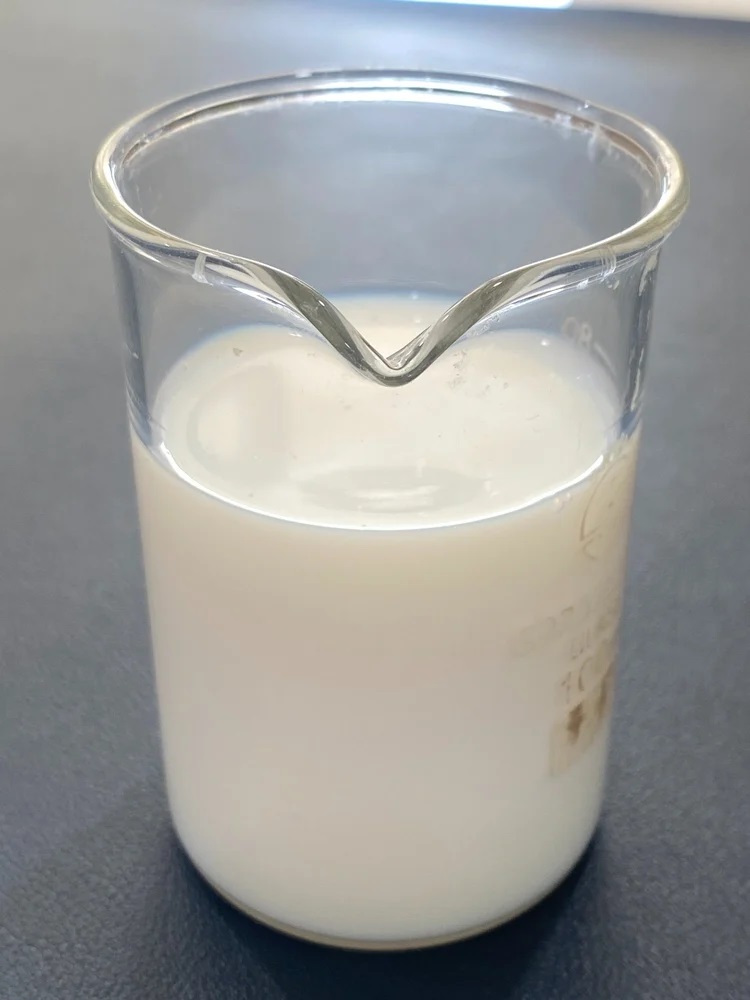
| Appearance | Milky white liquid |
| Odor | Characteristic ammonia odor (preserved) |
| Density | ~0.92 g/cm³ |
| Dry Rubber Content (DRC) | ~60% (concentrated latex) |
| Total Solids Content (TSC) | ~61.5% |
Natural Rubber Latex is a milky white colloidal suspension obtained from the sap (latex) of rubber trees, primarily Hevea brasiliensis. It consists of rubber particles (cis-1,4-polyisoprene) dispersed in an aqueous serum containing proteins, lipids, carbohydrates, and inorganic salts. The latex is harvested by tapping the tree and collecting the exuded sap. Fresh latex is naturally preserved by its own ammonia content, but additional preservatives (ammonia, sodium sulfite, etc.) are added for commercial transport and storage. Natural rubber latex is the raw material for many rubber products and is distinguished from synthetic latex. It is used in medical gloves, catheters, condoms, balloons, rubber threads, adhesives, and various dipped goods.
2. LATEX TYPES AND CLASSIFICATION
2.1. By Ammonia Content
| Type | Ammonia Content | Preservation | Applications |
|---|---|---|---|
| High Ammonia Latex (HA / FA / SA) | 0.6-0.7% | High ammonia only | General-purpose; dipping, casting, adhesives |
| Low Ammonia Latex (LA) | 0.15-0.29% | Low ammonia + secondary preservatives (TMTD, ZnO) | Dipping, adhesives, foam |
| Medium Ammonia Latex (MA) | 0.3-0.5% | Medium ammonia + preservatives | Specialized applications |
| Low Ammonia/Non-ammonia | <0.1% | Alternative preservatives | Applications requiring low ammonia odor |
2.2. By Concentration Method
| Type | Description | DRC | Applications |
|---|---|---|---|
| Concentrated Latex | Centrifuged or creamed | ~60% | Dipping, adhesives, casting, foam |
| Field Latex | Freshly tapped | ~30-35% | Local processing, small-scale production |
| Skim Latex | Byproduct of centrifugation | ~5-8% | Low-cost products, fillers |
3. TECHNICAL SPECIFICATIONS
Typical Specifications for Concentrated Latex (HA/FA/SA):
| Parameter | Specification | Test Method |
|---|---|---|
| Total Solids Content (TSC) | ≥ 61.5% | ASTM D1076 |
| Dry Rubber Content (DRC) | ≥ 60.0% | ASTM D1076 |
| Non-Rubber Solids | ≤ 2.0% | Calculated (TSC - DRC) |
| Ammonia Content | 0.6-0.7% | ASTM D1076 |
| Mechanical Stability (MST) | ≥ 650 seconds | ASTM D1076 |
| Coagulum Content | ≤ 0.03% | ASTM D1076 |
| Sludge Content | ≤ 0.10% | ASTM D1076 |
| Copper Content | ≤ 8 ppm | ASTM D1076 |
| Manganese Content | ≤ 8 ppm | ASTM D1076 |
| Iron Content | ≤ 20 ppm | ASTM D1076 |
| Volatile Fatty Acid Number (VFA) | ≤ 0.06 | ASTM D1076 |
| Potassium Hydroxide Number (KOH) | ≤ 1.0 | ASTM D1076 |
| pH | 10.0-11.5 | ASTM D1076 |
4. PHYSICAL AND CHEMICAL PROPERTIES
| Property | Value |
|---|---|
| Appearance | Milky white liquid |
| Odor | Characteristic ammonia odor |
| Density | ~0.92 g/cm³ |
| pH | 10.0-11.5 |
| Dry Rubber Content (DRC) | ~60% (concentrated) |
| Total Solids Content (TSC) | ~61.5% |
| Mechanical Stability | ≥ 650 seconds |
| Viscosity | 30-80 cP (depending on solids content) |
| Surface Tension | 30-40 dynes/cm |
| Particle Size | 0.5-3.0 µm |
| Specific Gravity | 0.93-0.95 |
| Glass Transition Temperature (Tg) | -72°C to -70°C |
5. LATEX STABILITY AND PRESERVATION
| Parameter | Information |
|---|---|
| Natural Preservation | Fresh latex contains natural ammonia from proteins |
| Added Preservatives | Ammonia (NH₃) - most common |
| Secondary Preservatives | Sodium sulfite, TMTD (tetramethylthiuram disulfide), Zinc oxide |
| Storage Stability (HA Latex) | 6-12 months under proper storage |
| Storage Temperature | 15-30°C (avoid freezing and excessive heat) |
| Coagulation Prevention | Keep pH > 9.0 |
| Contamination Prevention | Avoid contact with acids, heavy metals, and organic solvents |
6. ADVANTAGES OF NATURAL RUBBER LATEX
| Advantage | Description |
|---|---|
| High Elasticity | Excellent stretch and recovery properties |
| Good Tensile Strength | High tear resistance |
| Excellent Wet Gel Strength | Strong green strength for dipped goods |
| Good Processability | Easy to compound and process |
| Biodegradable | Environmentally friendly compared to synthetic alternatives |
| Wide Application Range | Suitable for dipping, casting, foaming, and adhesives |
| High Film Formation | Forms continuous, pinhole-free films |
7. LIMITATIONS
| Limitation | Description |
|---|---|
| Protein Allergenicity | Contains proteins that can cause allergic reactions |
| Ammonia Odor | Strong characteristic odor in preserved latex |
| Limited Heat Resistance | Not suitable for high-temperature applications >80°C |
| Poor Oil and Solvent Resistance | Swells in hydrocarbons and organic solvents |
| Ozone Sensitivity | Requires antioxidants for ozone resistance |
| Storage Stability | Limited shelf life; requires careful preservation |
| Copper and Manganese Sensitivity | Trace metals can cause degradation |
8. APPLICATIONS AND INDUSTRIAL USES
8.1. Dipped Goods (Largest Application)
| Application | Description |
|---|---|
| Medical Gloves | Surgical and examination gloves |
| Industrial Gloves | Chemical-resistant and general-purpose gloves |
| Catheters | Medical catheters and tubes |
| Condoms | Male and female condoms |
| Finger Cots | Protective finger coverings |
| Balloons | Latex balloons |
| Pacifiers | Baby pacifiers and nipples |
8.2. Adhesives
| Application | Description |
|---|---|
| Wood Lamination | Plywood and veneer bonding |
| Carpet Backing | Carpet and rug backing |
| Paper and Packaging | Paper laminating and packaging adhesives |
| Foam Bonding | Bonding foam materials |
| Rubber-to-Metal | Rubber-to-metal bonding |
8.3. Casting and Molding
| Application | Description |
|---|---|
| Rubber Threads | Elastic threads for textiles |
| Toys | Rubber toys |
| Matting | Floor mats and anti-slip mats |
| Gaskets | Custom molded gaskets |
8.4. Foam Products
| Application | Description |
|---|---|
| Mattresses | Latex foam mattresses |
| Cushions | Furniture and automotive cushions |
| Pillows | Latex pillows |
8.5. Other Applications
| Application | Description |
|---|---|
| Rubberized Textiles | Waterproof fabric coatings |
| Rubber Bands | Elastic bands |
| Tire Manufacturing | Component of tire compounds |
| Medical Textiles | Compression bandages |
9. COMPARISON OF LATEX TYPES
| Property | High Ammonia (HA/FA/SA) | Low Ammonia (LA) |
|---|---|---|
| Ammonia Content | 0.6-0.7% | 0.15-0.29% |
| Odor | Strong ammonia | Reduced ammonia |
| pH | 10.0-11.0 | 9.5-10.5 |
| Mechanical Stability | ≥ 650 seconds | ≥ 650 seconds |
| Primary Applications | Dipping, casting, adhesives | Dipping, adhesives (low-odor applications) |
| Storage Stability | Excellent | Good |
10. PACKAGING AND SHIPPING
| Packaging Option | Details |
|---|---|
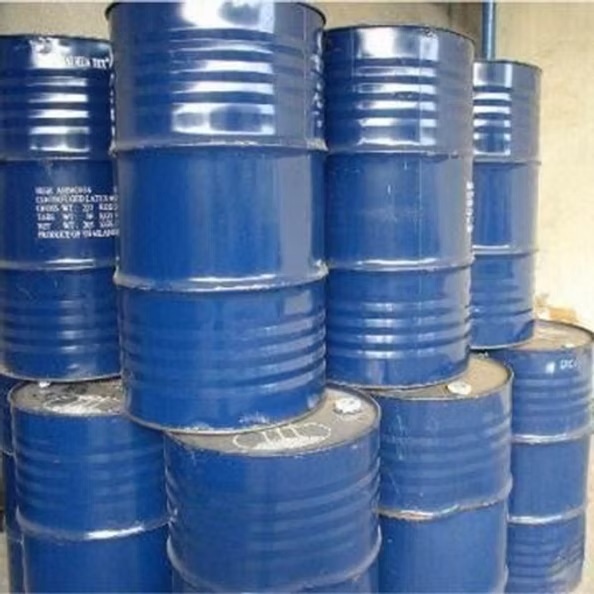
| Drum | 200 L steel or plastic drums |
| IBC Container | 1,000 L intermediate bulk containers |
| Bulk Tanker | Road tankers for large quantities |
| Storage Temperature | 15-30°C |
| Avoid | Freezing, direct sunlight, and excessive heat |
11. STORAGE AND HANDLING
| Parameter | Information |
|---|---|
| Storage Conditions | Cool, dry, well-ventilated area; away from direct sunlight |
| Recommended Temperature | 15-30°C |
| Shelf Life (HA Latex) | 6-12 months under proper storage |
| Shelf Life (LA Latex) | 3-6 months under proper storage |
| Handling | Avoid contamination with acids, heavy metals, and solvents |
| Protection | Keep containers sealed to prevent evaporation |
| Agitation | Gentle agitation to maintain homogeneity |
12. SAFETY AND HEALTH INFORMATION
| Parameter | Information |
|---|---|
| Protein Allergy | Contains proteins that can cause allergic reactions |
| Skin Irritation | Non-irritant to skin (in normal use) |
| Eye Irritation | Mild irritant |
| Inhalation | May cause respiratory irritation (ammonia fumes) |
| Flammability | Non-flammable (liquid) |
| Fire Extinguishing Media | Water spray, foam, CO₂, dry chemical powder |
| Special Hazards | Burning produces toxic fumes (CO, CO₂, SO₂) |
13. FIRST AID MEASURES
| Exposure Route | Action |
|---|---|
| Inhalation | Move person to fresh air. If irritation persists, seek medical attention. |
| Skin Contact | Wash with soap and water. Remove contaminated clothing. |
| Eye Contact | Rinse with plenty of water for at least 15 minutes. Seek medical attention if irritation persists. |
| Ingestion | Rinse mouth. Do NOT induce vomiting. Seek medical attention if large amounts are swallowed. |
14. REGULATORY INFORMATION
| Region | Status |
|---|---|
| EU | REACH registered |
| Turkey (KKDİK) | Mandatory compliance; requires registration |
| USA (TSCA) | Listed |
| Canada (DSL) | Listed |
| Australia (AICS) | Listed |
| Japan (ENCS) | Listed |
| Korea (KECL) | Listed |
| China (IECSC) | Listed |
Regulatory Status:
| Status | Information |
|---|---|
| HS Code | 40011000 (Natural Rubber Latex) |
| CAS Number | 9006-04-6 |
| EC Number | 232-674-7 |
| IARC Classification | Not classified |
| WGK Germany | 1 (slight hazard to water) |
15. OTHER NAMES AND DATABASE IDENTIFIERS
| Category | Names / Identifiers |
|---|---|
| Product Names | Natural Rubber Latex, Latex, Hevea Latex |
| Type Names | HA Latex, FA Latex, SA Latex, LA Latex |
| Chemical Names | Polyisoprene, Cis-1,4-Polyisoprene |
| Common Names | Latex Rubber, Natural Latex, Rubber Latex |
Database Identifiers:
| Database | Identifier |
|---|---|
| CAS | 9006-04-6 |
| EC (EINECS) | 232-674-7 |
| HS Code | 40011000 |
16. LATEX PRODUCTION PROCESS
| Step | Description |
|---|---|
| 1. Tapping | Rubber trees (Hevea brasiliensis) are tapped by cutting a thin layer of bark to release latex |
| 2. Collection | Latex is collected in cups attached to the tree |
| 3. Screening | Fresh latex is screened to remove coagulum and debris |
| 4. Preserving | Ammonia is added to prevent premature coagulation |
| 5. Concentration | Latex is concentrated by centrifugation or creaming to ~60% DRC |
| 6. Further Preservation | Additional ammonia or preservatives are added |
| 7. Storage | Latex is stored in drums, IBCs, or tankers for shipment |
17. LATEX CONCENTRATION METHODS
| Method | Description | DRC Achieved | Applications |
|---|---|---|---|
| Centrifugation | Most common method; uses high-speed centrifuges | ~60% | General-purpose concentrated latex |
| Creaming | Uses creaming agents (e.g., sodium alginate) | ~60% | Specialized applications |
| Evaporation | Removes water by evaporation | ~65-70% | Specialized applications |
| Electro-decantation | Uses electrical fields | ~60-65% | Laboratory-scale |
18. LATEX VISCOSITY AND RHEOLOGY
| Property | Value |
|---|---|
| Viscosity (Fresh Latex) | 10-20 cP |
| Viscosity (Concentrated Latex) | 30-80 cP |
| Shear Thinning | Non-Newtonian (shear-thinning behavior) |
| Thixotropy | Thixotropic properties (time-dependent) |
| Temperature Dependence | Viscosity decreases with temperature |
19. LATEX ALLERGY INFORMATION
| Parameter | Information |
|---|---|
| Allergen Source | Natural rubber proteins |
| Allergen Types | Hev b 1, Hev b 3, Hev b 5, Hev b 6.02, Hev b 13 |
| Symptoms | Skin rash, hives, itching, respiratory issues, anaphylaxis |
| Risk Groups | Healthcare workers, rubber industry workers, multiple surgery patients |
| Prevention | Use low-protein latex or synthetic alternatives (nitrile, neoprene) |
| Regulation | FDA requires labeling of latex-containing products |
20. SUMMARY AND CRITICAL WARNINGS
SUMMARY:
Natural Rubber Latex is a milky white colloidal suspension obtained from rubber trees (Hevea brasiliensis). It consists of cis-1,4-polyisoprene particles dispersed in an aqueous serum. The main types are High Ammonia Latex (HA/FA/SA) with 0.6-0.7% ammonia and Low Ammonia Latex (LA) with 0.15-0.29% ammonia. Concentrated latex has ~60% Dry Rubber Content (DRC) and ~61.5% Total Solids Content (TSC). Latex is used in medical gloves, catheters, condoms, balloons, adhesives, rubber threads, and foam products. Latex contains proteins that can cause allergic reactions. CAS Number: 9006-04-6. HS Code: 40011000.
Key Properties:
| Property | Value |
|---|---|
| Appearance | Milky white liquid |
| CAS Number | 9006-04-6 |
| Density | ~0.92 g/cm³ |
| DRC | ~60% |
| Primary Types | HA Latex, LA Latex |
| Primary Use | Dipped goods, adhesives, casting, foam |
Major Application Areas:
| Industry | Applications |
|---|---|
| Medical | Gloves, catheters, condoms |
| Industrial | Gloves, rubber threads, adhesives |
| Consumer | Balloons, rubber bands, toys |
| Construction | Adhesives, sealants |
| Foam | Mattresses, cushions |
Key Safety Points:
-
ALLERGENIC: Contains proteins that can cause allergic reactions
-
IRRITANT: Ammonia fumes may cause respiratory irritation
-
STORAGE: Store at 15-30°C; avoid freezing and direct sunlight
-
PPE RECOMMENDED: Safety goggles, protective gloves (for handling)
-
PROTECT: Avoid contamination with acids, heavy metals, and solvents
CRITICAL WARNINGS:
-
Natural rubber latex contains proteins that can cause severe allergic reactions in sensitive individuals. Low-protein or synthetic alternatives are available for allergy-sensitive applications.
-
High Ammonia Latex (HA/FA/SA) has strong ammonia odor and is used for general-purpose dipping and casting applications.
-
Low Ammonia Latex (LA) has reduced odor and is used in applications where ammonia odor is undesirable.
-
Latex must be stored at 15-30°C. Freezing causes irreversible coagulation. Excessive heat (>35°C) accelerates degradation.
-
Latex is sensitive to contamination with acids, heavy metals (copper, manganese), and organic solvents, which can cause coagulation or degradation.
-
Fresh latex has limited shelf life; proper preservation is essential for storage and transport.
-
Latex is used in the production of medical gloves, catheters, condoms, balloons, adhesives, rubber threads, and foam products.
-
The main producing countries are Thailand, Indonesia, Malaysia, Vietnam, and India.
-
Latex concentration by centrifugation is the most common method for producing concentrated latex.
Important Disclaimer: This Technical Data Sheet (TDS) is for informational purposes only. The information provided is based on available data and is believed to be accurate. However, the user is solely responsible for determining the suitability of the product for their specific application and for complying with all applicable regulations and safety requirements. For complete safety, handling, storage, and regulatory compliance information, always refer to the official Safety Data Sheet (SDS/MSDS) provided by the manufacturer/supplier.