We unleash your business potential by maximize the business innovation.
Send EmailRibbed Smoked Sheet, Naturel Rubber Sheet, Air Dried Sheet, ADS, RSS, RSS-1, RSS-2, RSS-3, RSS-4, RSS-5, 9006-04-6
RIBBED SMOKED SHEETS (RSS)
Ribbed Smoked Sheets / RSS / RSS-1 / RSS-2 / RSS-3 / RSS-4 / RSS-5 / Natural Rubber Sheet
CAS Number: 9006-04-6
EINECS: 232-674-7
1. PRODUCT IDENTIFICATION AND CHEMICAL IDENTITY
| Parameter | Description |
|---|---|
| Product Name | Ribbed Smoked Sheets (RSS) |
| Other Names | Natural Rubber Sheet, Smoked Sheets, Rubber Sheets, ADS (Air Dried Sheets) |
| CAS Number | 9006-04-6 |
| EINECS | 232-674-7 |
| Chemical Formula | (C₅H₈)ₙ |
| Molecular Weight | Variable (depends on degree of polymerization) |
| Chemical Class | Natural rubber (polyisoprene) |
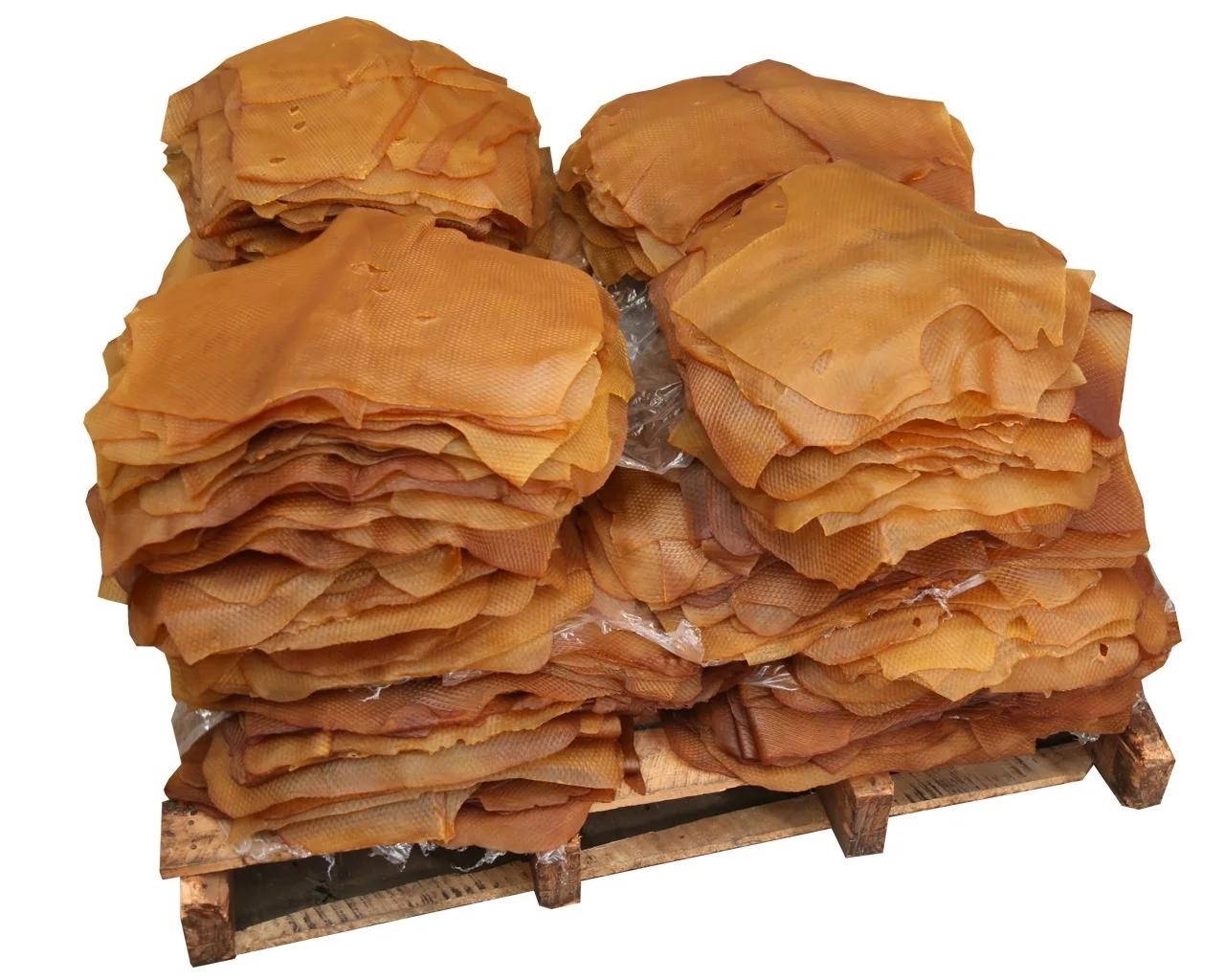
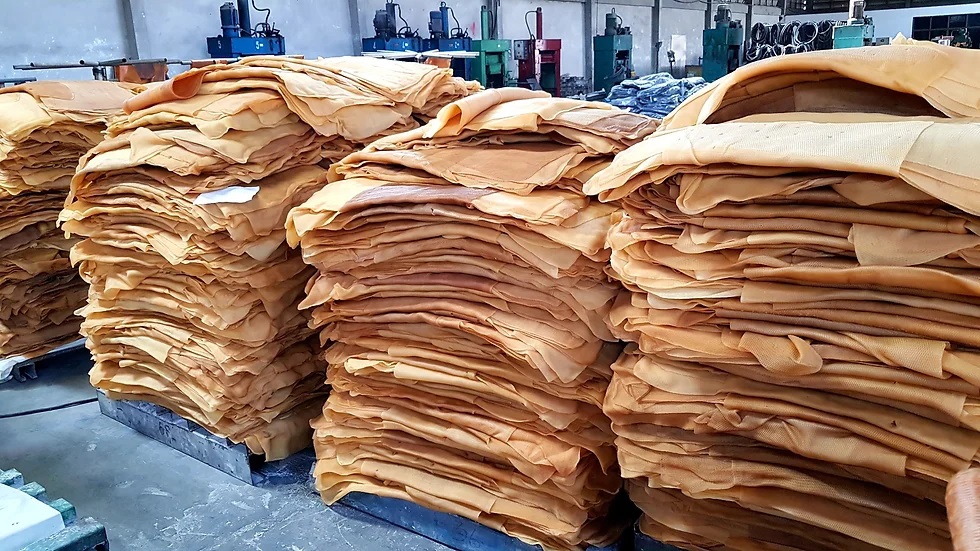
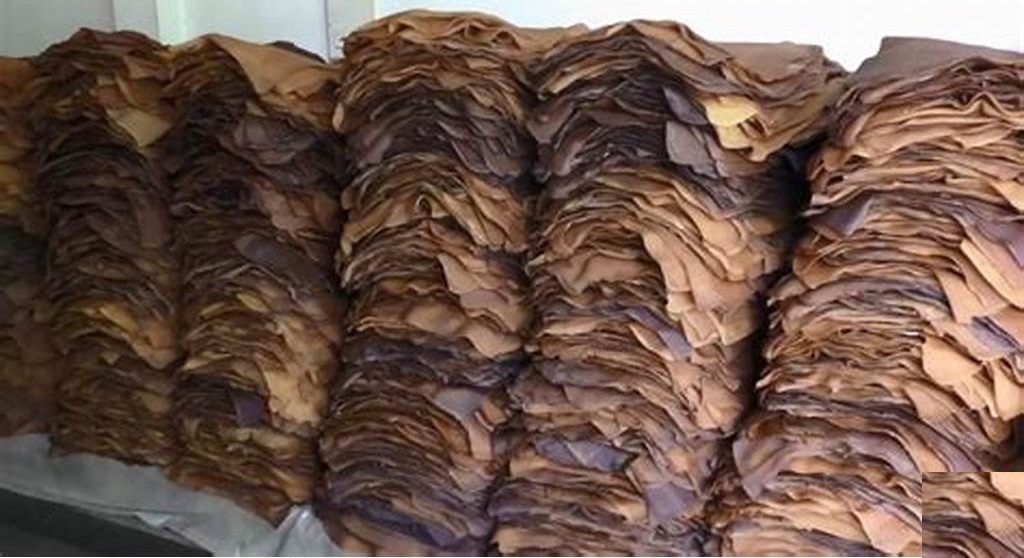
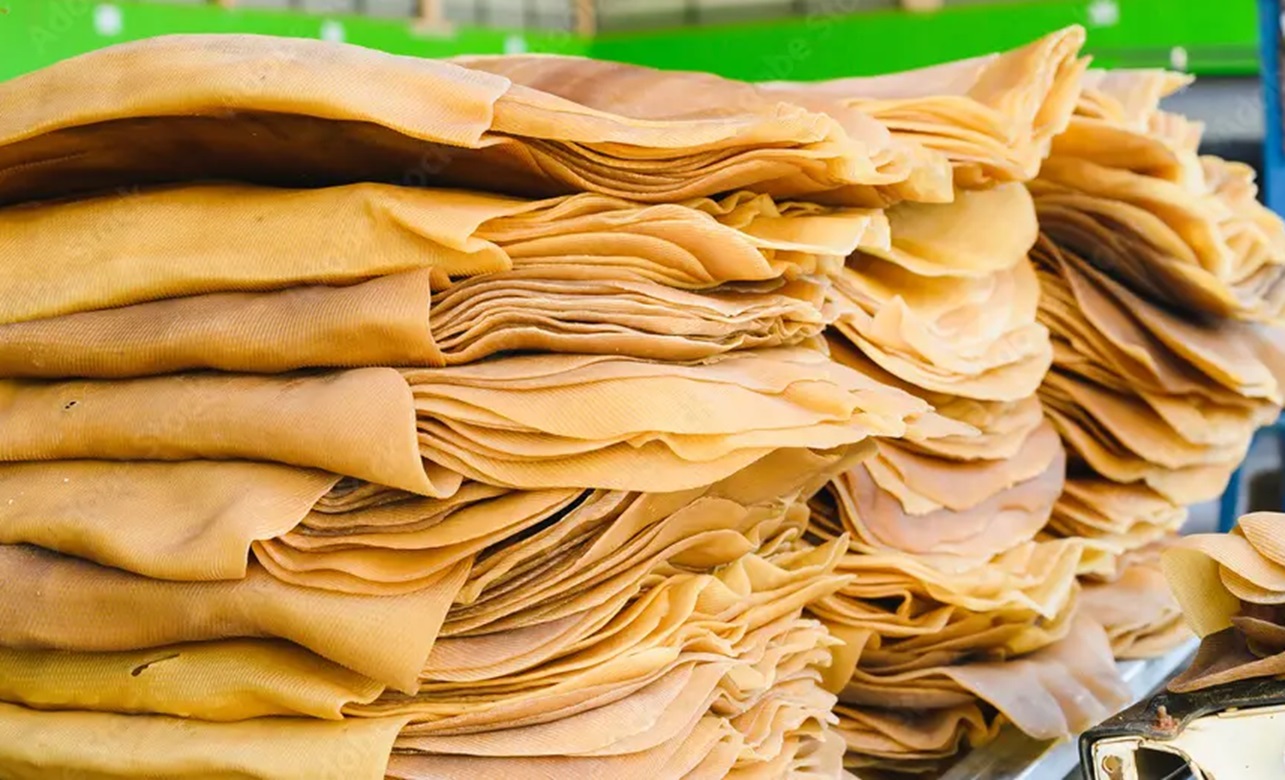
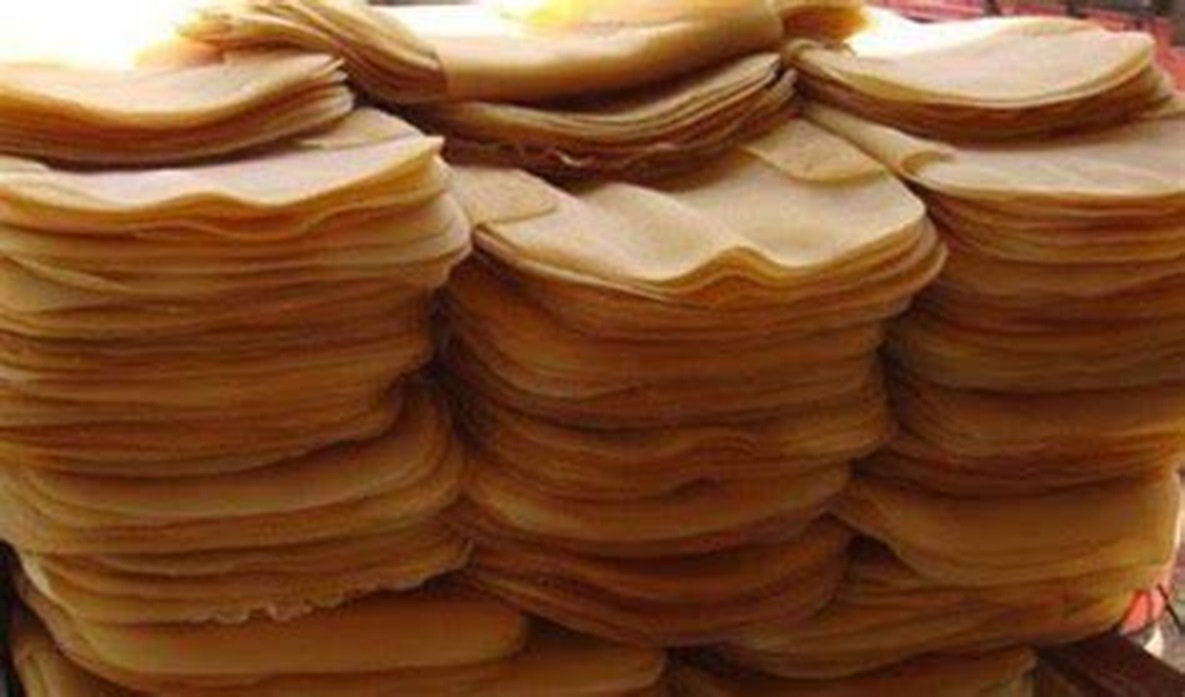
| Appearance | Amber to dark brown translucent sheets |
| Odor | Characteristic smoky odor |
| Density | 0.92 - 0.94 g/cm³ |
| Melting Point | 180 - 220°C |
| Water Solubility | Insoluble |
| Organic Solvent Solubility | Soluble in toluene, benzene, chloroform, and other organic solvents |
| Glass Transition Temperature (Tg) | ~ -70°C |
Ribbed Smoked Sheets (RSS) are one of the oldest and most traditional forms of natural rubber. Produced from the latex of the Hevea brasiliensis tree, RSS is made by coagulating the latex, passing it through ribbed rollers to create a textured surface, and then smoke-drying the sheets in specially designed smokehouses. The smoking process not only dries the sheets but also preserves them, giving RSS its characteristic amber to dark brown color, distinctive smoky odor, and excellent aging resistance. RSS grades are classified based on visual quality, cleanliness, and physical properties. Historically, RSS was the dominant form of natural rubber in international trade, and it remains widely used in tire manufacturing, industrial products, footwear, and consumer goods.
2. RSS GRADES AND CLASSIFICATION SYSTEM
RSS grades are classified based on visual quality, cleanliness, and physical properties. The grading is primarily determined by visual inspection of the sheets, considering factors such as color, uniformity, presence of bubbles, and contamination. Higher grades (RSS-1, RSS-2, RSS-3) are used in premium applications, while lower grades (RSS-4, RSS-5) are used in general-purpose products.
| Grade | Quality Level | Color | Characteristics | Primary Applications |
|---|---|---|---|---|
| RSS-1 | Highest Quality | Pale amber to light brown | Very clean, uniform, no bubbles or specks | Medical products, pharmaceuticals, engineering products, premium tires |
| RSS-2 | Very High Quality | Amber | Very few bubbles, good uniformity | High-quality tires, automotive parts, premium industrial products |
| RSS-3 | High Quality | Amber to light brown | Moderate bubbles, acceptable for most uses | Radial tires, high-quality rubber products, technical goods |
| RSS-4 | Standard Quality | Amber to dark brown | Some bubbles, minor specks | Automobile tires, retreading materials, general rubber products |
| RSS-5 | Lower Quality | Dark brown | More bubbles, specks, less uniform | General tires, rubber sheets, floor coverings, mats |
Grade Definitions:
-
RSS-1 (Highest Quality): The highest grade of RSS with very clean, uniform sheets. No bubbles, specks, or contamination. Used in medical, pharmaceutical, and engineering applications requiring the highest purity and consistency.
-
RSS-2 (Very High Quality): Very high quality with very few bubbles and good uniformity. Used in high-quality tires and premium industrial products.
-
RSS-3 (High Quality): High quality with moderate bubbles, acceptable for most high-performance applications. Preferred for radial tires and technical rubber goods.
-
RSS-4 (Standard Quality): Standard quality with some bubbles and minor specks. Used in automobile tires, retreading materials, and general rubber products.
-
RSS-5 (Lower Quality): Lower quality with more bubbles, specks, and less uniformity. Used in general tires, rubber sheets, floor coverings, and mats.
3. TECHNICAL SPECIFICATIONS
Typical Quality Parameters by Grade:
| Parameter | Unit | RSS-1 | RSS-2 | RSS-3 | RSS-4 | RSS-5 |
|---|---|---|---|---|---|---|
| Dirt Content (max) | % wt | 0.03 | 0.03 | 0.05 | 0.08 | 0.16 |
| Ash Content (max) | % wt | 0.40 | 0.40 | 0.50 | 0.60 | 0.75 |
| Nitrogen Content (max) | % wt | 0.60 | 0.60 | 0.60 | 0.60 | 0.60 |
| Volatile Matter (max) | % wt | 0.80 | 0.80 | 0.80 | 0.80 | 0.80 |
| Initial Plasticity (Po, min) | - | 35 | 33 | 30 | 30 | 28 |
| PRI (min) | - | 60 | 60 | 55 | 50 | 45 |
| Mooney Viscosity (ML 1+4 at 100°C) | MU | Variable | Variable | Variable | Variable | Variable |
Note: RSS grades are primarily classified by visual inspection rather than chemical analysis. The above specifications are typical values for reference.
4. COMPARISON OF RSS GRADES
| Property | RSS-1 | RSS-2 | RSS-3 | RSS-4 | RSS-5 |
|---|---|---|---|---|---|
| Quality Level | Highest | Very High | High | Standard | Lower |
| Color | Pale amber to light brown | Amber | Amber to light brown | Amber to dark brown | Dark brown |
| Bubbles | None | Very few | Moderate | Some | More |
| Specks/Contamination | None | None | Minor | Minor specks | Specks present |
| Uniformity | Excellent | Very Good | Good | Moderate | Fair |
| Primary Applications | Medical, pharmaceutical, engineering, premium tires | High-quality tires, automotive parts | Radial tires, technical goods | Automobile tires, retreading | General tires, mats, floor coverings |
5. PRODUCTION PROCESS
RSS is produced from natural rubber latex through a traditional process that has been refined over decades.
Production Steps:
-
Latex Collection: Latex is tapped from Hevea brasiliensis trees and collected in cups.
-
Coagulation: The latex is coagulated using formic acid or acetic acid to form a solid coagulum.
-
Sheeting: The coagulum is passed through a series of ribbed rollers to form thin, uniform sheets with a characteristic ribbed (grooved) surface pattern. The ribbed texture increases the surface area for more efficient drying.
-
Drying: The ribbed sheets are hung in smokehouses where they are dried and smoked at controlled temperatures (typically 40-50°C) for several days. The smoking process gives RSS its characteristic amber color, smoky odor, and excellent aging resistance.
-
Grading: The dried sheets are visually inspected and graded according to quality standards (RSS-1 to RSS-5). The grading considers color, uniformity, presence of bubbles, specks, and contamination.
-
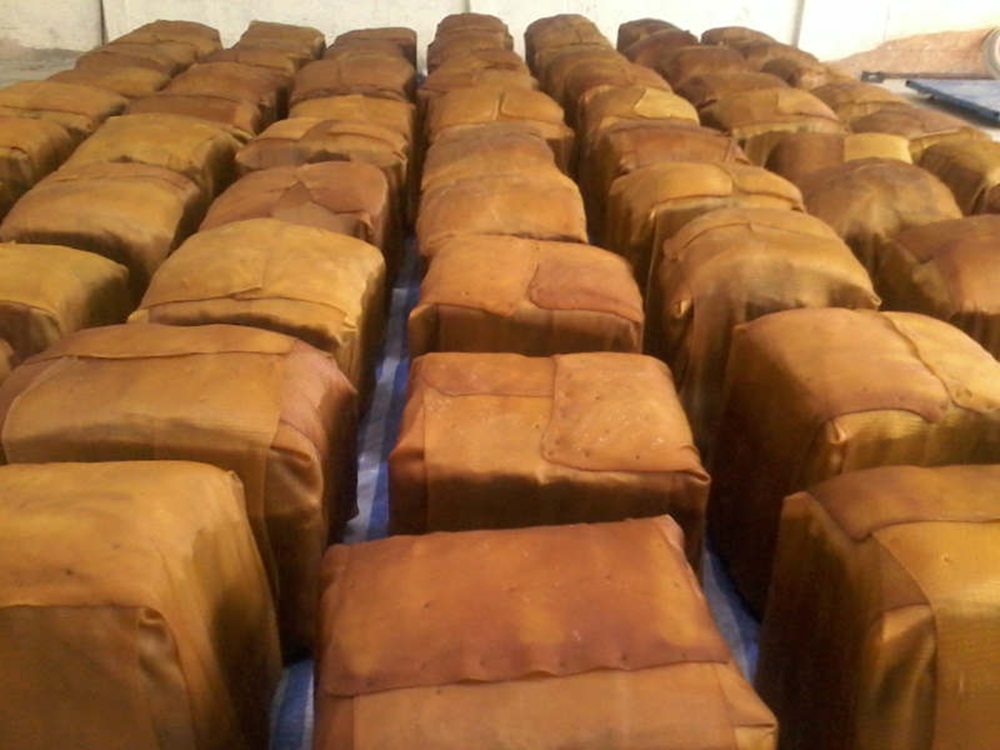
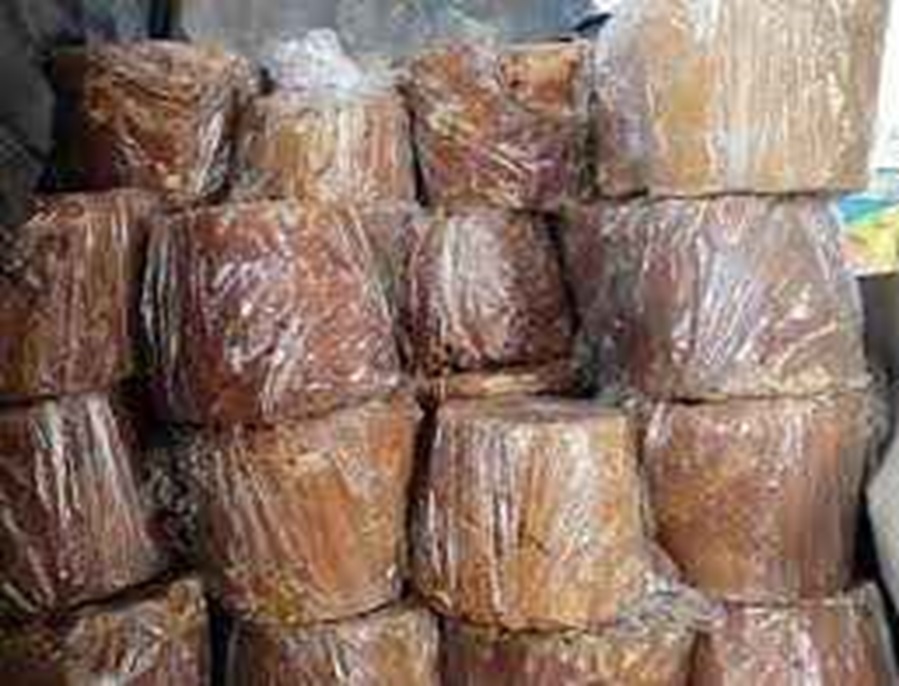
Baling: The graded sheets are folded and compressed into bales for packaging and shipping.
6. PHYSICAL PROPERTIES
| Property | Value |
|---|---|
| Density | 0.92 - 0.94 g/cm³ |
| Glass Transition Temperature | ~ -70°C |
| Mooney Viscosity (ML 1+4 at 100°C) | Variable (50-65 MU typical) |
| Color | Amber to dark brown (higher grades are lighter) |
| Odor | Characteristic smoky odor |
| Texture | Ribbed/grooved surface |
7. CHEMICAL PROPERTIES AND REACTIONS
Natural rubber (polyisoprene) has a hydrocarbon backbone with unsaturated double bonds, making it susceptible to oxidation, vulcanization, and addition reactions.
Vulcanization: Sulfur cross-linking with accelerators to improve strength, elasticity, and heat resistance.
Oxidation: Reacts with oxygen, especially when heated, causing chain scission and hardening. PRI measures resistance to this. RSS has good aging resistance due to the natural antioxidants present in the rubber and the smoking process.
Ozone Resistance: RSS has poor resistance to ozone; requires antioxidants/antiozonants in formulations.
Addition Reactions: The double bonds can undergo halogenation, hydrogenation, and epoxidation.
8. ADVANTAGES OF RSS
| Advantage | Description |
|---|---|
| Excellent Aging Resistance | The smoking process provides natural antioxidants, giving RSS superior aging resistance compared to some other natural rubber forms. |
| High Tensile Strength | RSS exhibits excellent tensile strength and tear resistance. |
| Good Processability | Consistent quality and uniform texture make RSS easy to process in rubber compounding. |
| Traditional and Well-Known | RSS is a well-established grade with decades of proven performance in various applications. |
| Widely Available | RSS is produced in several countries (Thailand, Indonesia, Malaysia, Vietnam, Sri Lanka) and is readily available in international markets. |
| Good Electrical Insulation | Natural rubber has excellent electrical insulation properties. |
9. APPLICATIONS AND INDUSTRIAL USES
9.1. Tire Industry (Largest Application)
| Application | Recommended Grade |
|---|---|
| Passenger Car Tires - Tread | RSS-1, RSS-3 |
| Truck and Bus Tires | RSS-3, RSS-4 |
| OTR (Mining/Construction) Tires | RSS-4, RSS-5 |
| Retreading | RSS-3, RSS-4 |
| Tire Sidewalls | RSS-3 |
9.2. Medical and Pharmaceutical Products
| Application | Recommended Grade |
|---|---|
| Surgical Gloves | RSS-1 |
| Catheters | RSS-1 |
| Medical Tubing | RSS-1 |
| Pharmaceutical Stoppers | RSS-1 |
9.3. Automotive and Industrial Rubber Products
| Application | Recommended Grade |
|---|---|
| Automotive Seals and Gaskets | RSS-1, RSS-2 |
| Hoses and Tubing | RSS-3, RSS-4 |
| Conveyor Belts | RSS-3, RSS-4 |
| V-Belts and Drive Belts | RSS-2, RSS-3 |
| Anti-Vibration Mounts | RSS-2, RSS-3 |
| Rubber Rollers | RSS-1, RSS-2 |
9.4. Footwear and Consumer Goods
| Application | Recommended Grade |
|---|---|
| Shoe Soles | RSS-3, RSS-4 |
| Athletic Footwear | RSS-2, RSS-3 |
| Rubber Bands | RSS-3 |
| Floor Mats | RSS-4, RSS-5 |
| Rubber Sheets | RSS-4, RSS-5 |
| Floor Coverings | RSS-5 |
9.5. Engineering and Technical Products
| Application | Recommended Grade |
|---|---|
| Engineering Components | RSS-1 |
| Vibration Dampers | RSS-2, RSS-3 |
| Gaskets | RSS-1, RSS-2 |
10. COMPARISON WITH OTHER NATURAL RUBBER GRADES
| Property | RSS-3 | SMR-10 | SVR-10 | STR-10 |
|---|---|---|---|---|
| Origin | Thailand/Malaysia | Malaysia | Vietnam | Thailand |
| Grading Method | Visual Inspection | Technical Specifications | Technical Specifications | Technical Specifications |
| Color | Amber | Light to variable | Light to variable | Light to variable |
| Odor | Smoky | Natural | Natural | Natural |
| Dirt Content | Variable | 0.08% | 0.08% | 0.08% |
| Ash Content | Variable | 0.60% | 0.60% | 0.60% |
| PRI | 55 (min) | 50 (min) | 50 (min) | 50 (min) |
| Consistency | Less consistent (visual grading) | Highly consistent | Highly consistent | Highly consistent |
| Primary Use | Tires, general products | Tires, industrial products | Tires, industrial products | Tires, industrial products |
11. PACKAGING AND SHIPPING
| Packaging Option | Details |
|---|---|
| Sheet Size | ~1.2 m x 0.6 m (standard) |
| Bale Weight | 33.33 kg or 35 kg |
| Bale Dimensions | ~70 cm x 35 cm x 18 cm |
| Pallet Configuration | 36 bales/pallet = 1.26 MT |
| Pallet Type | Wooden pallet, shrink-wrapped |
| Container Capacity (20-ft) | 16 pallets = 20.16 MT |
| Container Type | Standard 20-ft container |
12. STORAGE AND HANDLING
| Parameter | Information |
|---|---|
| Storage Conditions | Cool, dry, well-ventilated area; away from direct sunlight |
| Recommended Temperature | Below 30°C |
| Humidity | Avoid high humidity to prevent mold growth and surface stickiness |
| Shelf Life | 12-24 months under proper storage conditions |
| Handling | Avoid contamination with oils, solvents, and dirt |
| Protection | Keep bales covered and protected from moisture and dust |
| Stacking | Maximum 4-5 pallets high for stable storage |
13. SAFETY AND HEALTH INFORMATION
| Parameter | Information |
|---|---|
| Toxicity | Non-toxic |
| Skin Irritation | Non-irritant |
| Eye Irritation | Mild irritant (dust) |
| Inhalation | May cause respiratory irritation (dust) |
| Flammability | Combustible (can burn) |
| Fire Extinguishing Media | Water spray, foam, CO₂, dry chemical powder |
| Special Hazards | Burning produces toxic fumes (CO, CO₂, SO₂) |
14. FIRST AID MEASURES
| Exposure Route | Action |
|---|---|
| Inhalation | Move person to fresh air. If irritation persists, seek medical attention. |
| Skin Contact | Wash with soap and water. Remove contaminated clothing. |
| Eye Contact | Rinse with plenty of water for at least 15 minutes. Seek medical attention if irritation persists. |
| Ingestion | Rinse mouth. Do NOT induce vomiting. Seek medical attention if large amounts are swallowed. |
15. REGULATORY INFORMATION
| Region | Status |
|---|---|
| EU | REACH registered |
| Turkey (KKDİK) | Mandatory compliance; requires registration |
| USA (TSCA) | Listed |
| Canada (DSL) | Listed |
| Australia (AICS) | Listed |
| Japan (ENCS) | Listed |
| Korea (KECL) | Listed |
| China (IECSC) | Listed |
Regulatory Status:
| Status | Information |
|---|---|
| HS Code | 40012100 (Smoked Sheets) |
| CAS Number | 9006-04-6 |
| EINECS | 232-674-7 |
| IARC Classification | Not classified |
| WGK Germany | 1 (slight hazard to water) |
16. OTHER NAMES AND DATABASE IDENTIFIERS
| Category | Names / Identifiers |
|---|---|
| Product Names | Ribbed Smoked Sheets, RSS, Smoked Sheets, Natural Rubber Sheet, Rubber Sheets |
| Grade Names | RSS-1, RSS-2, RSS-3, RSS-4, RSS-5 |
| Common Names | Smoked Rubber, Sheet Rubber, NR |
| Country Equivalents | RSS (Thailand, Malaysia, Indonesia, Vietnam, Sri Lanka) |
| Alternative Forms | ADS (Air Dried Sheets), Sun Dried Sheets |
Database Identifiers:
| Database | Identifier |
|---|---|
| CAS | 9006-04-6 |
| EINECS | 232-674-7 |
| HS Code | 40012100 |
17. PRODUCING COUNTRIES
RSS is produced in several countries in Southeast Asia and other regions where Hevea brasiliensis is cultivated:
| Country | Notable Features |
|---|---|
| Thailand | Largest producer of RSS; known for consistent quality |
| Indonesia | Major producer; produces significant volumes |
| Malaysia | Traditional producer; high-quality grades available |
| Vietnam | Growing producer; RSS grades increasingly available |
| Sri Lanka | Smaller producer; known for high-grade RSS |
| India | Produces RSS for domestic consumption |
18. HISTORY AND TRADITION
RSS has been produced for over a century and was historically the dominant form of natural rubber in international trade. The smoking process was developed to preserve the rubber sheets during long ocean voyages from Southeast Asia to Europe and America. The distinctive ribbed pattern on the sheets is created by passing the coagulated rubber through ribbed rollers, which increases the surface area for more efficient drying and smoking. The smoking process not only dries the sheets but also imparts antioxidant properties to the rubber, giving RSS its characteristic amber color and excellent aging resistance. Today, RSS remains an important grade in the natural rubber market, particularly for applications requiring high quality and traditional processing characteristics.
19. INDUSTRY SUITABILITY TABLE
| Industry | Applications | Recommended Grades | Suitability |
|---|---|---|---|
| Tire Industry | Passenger, truck, OTR tires | RSS-1, RSS-3, RSS-4 | High |
| Medical/Pharmaceutical | Gloves, catheters, stoppers | RSS-1 | High |
| Automotive Parts | Seals, hoses, mounts | RSS-1, RSS-2, RSS-3 | High |
| Footwear | Shoe soles, sports shoes | RSS-2, RSS-3, RSS-4 | High |
| Industrial Products | Conveyor belts, rollers | RSS-3, RSS-4 | High |
| Engineering | Gaskets, components | RSS-1, RSS-2 | High |
| Consumer Goods | Rubber bands, floor mats | RSS-3, RSS-4, RSS-5 | High |
20. SUMMARY AND CRITICAL WARNINGS
SUMMARY:
Ribbed Smoked Sheets (RSS) are one of the oldest and most traditional forms of natural rubber, produced by coagulating latex, sheeting it through ribbed rollers, and smoke-drying the sheets. RSS grades are classified based on visual quality: RSS-1 (highest quality), RSS-2 (very high quality), RSS-3 (high quality), RSS-4 (standard quality), and RSS-5 (lower quality). RSS exhibits excellent aging resistance, high tensile strength, and good processability. It is used in tires, medical products, automotive parts, footwear, industrial products, and consumer goods. RSS is produced primarily in Thailand, Indonesia, Malaysia, Vietnam, and Sri Lanka. Packaging: 33.33 kg or 35 kg bales, 36 bales/pallet (1.26 MT), 16 pallets/20-ft container (20.16 MT). RSS is non-toxic, combustible, and requires storage in cool, dry conditions. HS Code: 40012100.
Key Properties:
| Property | Value |
|---|---|
| Appearance | Amber to dark brown translucent sheets |
| CAS Number | 9006-04-6 |
| Density | 0.92 - 0.94 g/cm³ |
| Primary Grades | RSS-1, RSS-2, RSS-3, RSS-4, RSS-5 |
| Primary Use | Tires, medical products, automotive parts, footwear |
Major Application Areas:
| Industry | Applications |
|---|---|
| Tire Industry | Passenger, truck, OTR tires |
| Medical/Pharmaceutical | Gloves, catheters, stoppers |
| Automotive Parts | Seals, hoses, mounts |
| Footwear | Shoe soles |
| Industrial Products | Conveyor belts, rollers |
| Engineering | Gaskets, components |
| Consumer Goods | Rubber bands, mats |
Key Safety Points:
-
NON-TOXIC: Generally safe for handling
-
COMBUSTIBLE: Can burn; keep away from ignition sources
-
STORAGE: Store in cool, dry, well-ventilated area; avoid direct sunlight and high humidity
-
PPE RECOMMENDED: Dust mask, safety goggles, protective gloves (for handling)
-
PROTECT: Keep away from oils, solvents, and contaminants
CRITICAL WARNINGS:
-
RSS grades are classified primarily by visual inspection rather than chemical analysis. Higher grades (RSS-1, RSS-2) have better quality and uniformity.
-
RSS-1 is the highest quality grade, used in medical, pharmaceutical, and engineering applications requiring the highest purity and consistency.
-
RSS-3 is the most widely used grade for radial tires and high-quality rubber products.
-
RSS-4 and RSS-5 are lower quality grades used in general tires and industrial applications.
-
The smoking process gives RSS its characteristic amber color, smoky odor, and excellent aging resistance due to natural antioxidants.
-
RSS has poor resistance to ozone and requires antioxidants/antiozonants in formulations.
-
Store away from direct sunlight and heat sources to prevent degradation and maintain quality.
-
Contamination with oils or solvents can significantly affect rubber performance.
-
RSS is a traditional grade with a long history of proven performance in various applications.
-
Produced primarily in Thailand, Indonesia, Malaysia, Vietnam, and Sri Lanka.
Important Disclaimer: This Technical Data Sheet (TDS) is for informational purposes only. The information provided is based on available data and is believed to be accurate. However, the user is solely responsible for determining the suitability of the product for their specific application and for complying with all applicable regulations and safety requirements. For complete safety, handling, storage, and regulatory compliance information, always refer to the official Safety Data Sheet (SDS/MSDS) provided by the manufacturer/supplier.