We unleash your business potential by maximize the business innovation.
Send EmailStandard Indonesian Rubber, SIR, TSR, SIR 3CV50, SIR 3CV60, SIR-3L, SIR-5, SIR-10, SIR-20, 9006-04-6
STANDARD INDONESIAN RUBBER (SIR)
Standard Indonesian Rubber / SIR / TSR / SIR 3CV50 / SIR 3CV60 / SIR-3L / SIR-5 / SIR-10 / SIR-20
CAS Number: 9006-04-6
EINECS: 232-674-7
1. PRODUCT IDENTIFICATION AND CHEMICAL IDENTITY
| Parameter | Description |
|---|---|
| Product Name | Standard Indonesian Rubber (SIR) |
| Other Names | TSR (Technically Specified Rubber), Indonesian Rubber, Natural Rubber (NR) |
| CAS Number | 9006-04-6 |
| EINECS | 232-674-7 |
| Chemical Formula | (C₅H₈)ₙ |
| Molecular Weight | Variable (depends on degree of polymerization) |
| Chemical Class | Natural rubber (polyisoprene) |
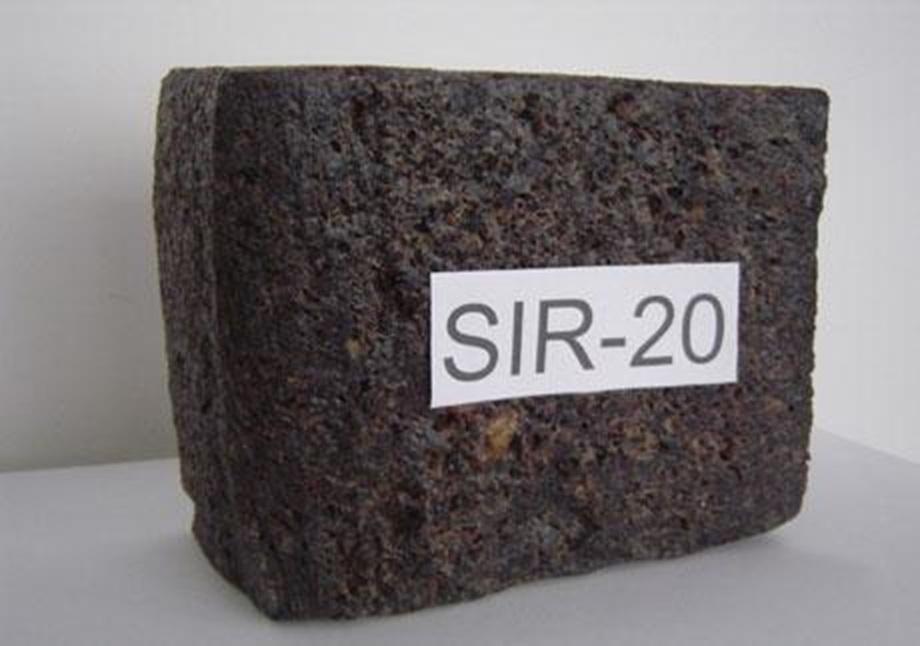
| Appearance | White to pale yellow solid block (bale) |
| Odor | Characteristic rubber odor |
| Density | 0.92 - 0.94 g/cm³ |
| Melting Point | 180 - 220°C |
| Water Solubility | Insoluble |
| Organic Solvent Solubility | Soluble in toluene, benzene, chloroform, and other organic solvents |
| Glass Transition Temperature (Tg) | ~ -70°C |
Standard Indonesian Rubber (SIR) is a technically specified natural rubber produced in Indonesia according to international standards (ISO 2000:2014). The naming convention follows the TSR (Technically Specified Rubber) system: SIR stands for Standard Indonesian Rubber, indicating the country of origin. Indonesia is the world's second-largest natural rubber producer after Thailand, producing approximately 2 million tonnes of rubber annually. About 85% of Indonesia's rubber output is exported. SIR grades are classified based on dirt content, ash content, nitrogen content, volatile matter, plasticity, and Plasticity Retention Index (PRI). The rubber is derived from the latex of the Hevea brasiliensis tree, primarily produced in North and South Sumatra, Riau, Jambi, and West Kalimantan.
2. SIR GRADES AND CLASSIFICATION SYSTEM
SIR grades are classified according to technical specifications including cleanliness (dirt content), ash content, nitrogen content, volatile matter, initial plasticity (Po), and Plasticity Retention Index (PRI). Indonesia is one of the largest producers of SIR-20, which is widely traded in the global market.
| Grade | Dirt (%) | Ash (%) | Nitrogen (%) | Volatile (%) | Po (min) | PRI (min) | Mooney Viscosity |
|---|---|---|---|---|---|---|---|
| SIR 3CV50 | 0.03 | 0.50 | 0.60 | 0.60 | 30 | 60 | 50 ± 5 |
| SIR 3CV60 | 0.03 | 0.50 | 0.60 | 0.60 | 30 | 60 | 60 ± 5 |
| SIR 3L | 0.03 | 0.50 | 0.60 | 0.80 | 30 | 75 | - |
| SIR 5 | 0.05 | 0.50 | 0.60 | 0.80 | 30 | 70 | - |
| SIR 10 | 0.10 | 0.75 | 0.60 | 0.80 | 30 | 60 | 60 ± 5 |
| SIR 20 | 0.20 | 1.00 | 0.60 | 0.80 | 30 | 50 | 60 ± 5 |
Grade Definitions:
-
SIR 3CV50 / SIR 3CV60 (Constant Viscosity): Grades with controlled Mooney viscosity (50 ± 5 or 60 ± 5). Provide consistent processing behavior for automated and high-volume production. CV grades are preferred for applications requiring uniform processing characteristics.
-
SIR 3L (Latex Grade): Made from high-quality latex with low dirt and ash content. Has the highest PRI value (75), indicating excellent aging resistance. Suitable for light-colored products and premium applications.
-
SIR 5: Medium quality grade with low dirt (0.05%) and ash (0.50%) content. PRI value of 70 indicates good aging resistance.
-
SIR 10: Medium quality grade with dirt content (0.10%) and ash content (0.75%). PRI value is 60.
-
SIR 20: Standard quality grade with higher dirt (0.20%) and ash (1.00%) content. This is Indonesia's most commonly produced and exported grade. Used for cost-effective tires and industrial products.
3. TECHNICAL SPECIFICATIONS (ISO 2000:2014)
Detailed Quality Parameters by Grade:
| Parameter | Unit | SIR 3CV50 | SIR 3CV60 | SIR 3L | SIR 5 | SIR 10 | SIR 20 |
|---|---|---|---|---|---|---|---|
| Dirt Content (max) | % wt | 0.03 | 0.03 | 0.03 | 0.05 | 0.10 | 0.20 |
| Ash Content (max) | % wt | 0.50 | 0.50 | 0.50 | 0.50 | 0.75 | 1.00 |
| Nitrogen Content (max) | % wt | 0.60 | 0.60 | 0.60 | 0.60 | 0.60 | 0.60 |
| Volatile Matter (max) | % wt | 0.60 | 0.60 | 0.80 | 0.80 | 0.80 | 0.80 |
| Initial Plasticity (Po, min) | - | 30 | 30 | 30 | 30 | 30 | 30 |
| PRI (min) | - | 60 | 60 | 75 | 70 | 60 | 50 |
| Mooney Viscosity (ML 1+4 at 100°C) | MU | 50 ± 5 | 60 ± 5 | - | - | 60 ± 5 | 60 ± 5 |
Explanation of Key Parameters:
-
Dirt Content: Impurities such as sand, bark, and foreign matter. Lower is better for premium applications. SIR 3L and CV grades have the lowest dirt content (0.03%).
-
Ash Content: Inorganic residue after combustion. Indicates mineral contamination.
-
Nitrogen Content: Protein content indicator. Higher nitrogen may affect aging resistance.
-
Volatile Matter: Moisture and volatiles. High levels can cause porosity in finished products.
-
Initial Plasticity (Po): Measure of raw rubber's ability to deform under pressure. All SIR grades have a minimum of 30.
-
PRI (Plasticity Retention Index): Resistance to oxidation and aging. SIR 3L has the highest PRI (75), indicating excellent aging resistance.
-
Mooney Viscosity: Resistance to flow. CV grades have controlled values (50 ± 5 or 60 ± 5).
4. COMPARISON OF SIR GRADES
| Property | SIR 3CV60 | SIR 3L | SIR 10 | SIR 20 |
|---|---|---|---|---|
| Grade Type | Constant Viscosity | High Quality | Medium Quality | Standard Quality |
| Dirt Content | Very Low (0.03%) | Very Low (0.03%) | Low (0.10%) | Medium (0.20%) |
| Ash Content | Low (0.50%) | Low (0.50%) | Medium (0.75%) | Medium (1.00%) |
| PRI | Good (60) | Excellent (75) | Good (60) | Moderate (50) |
| Color | Light | Bright | Variable | Darker |
| Viscosity Control | Yes (60 ± 5) | No | No (60 ± 5) | No (60 ± 5) |
| Primary Applications | Premium products, consistent processing | Premium tires, light-colored products | General tires, industrial products | Most common grade; cost-effective tires |
5. CHEMICAL PROPERTIES AND REACTIONS
Natural rubber (polyisoprene) has a hydrocarbon backbone with unsaturated double bonds, making it susceptible to oxidation, vulcanization, and addition reactions.
Vulcanization: Sulfur cross-linking with accelerators to improve strength, elasticity, and heat resistance.
Oxidation: Reacts with oxygen, especially when heated, causing chain scission and hardening. PRI measures resistance to this.
Ozone Resistance: SIR has poor resistance to ozone; requires antioxidants/antiozonants in formulations.
Addition Reactions: The double bonds can undergo halogenation, hydrogenation, and epoxidation.
6. PHYSICAL PROPERTIES
| Property | Value |
|---|---|
| Density | 0.92 - 0.94 g/cm³ |
| Glass Transition Temperature | ~ -70°C |
| Mooney Viscosity (ML 1+4 at 100°C) | 50-60 MU (grade-dependent) |
| Color | White to pale yellow (higher grades are lighter) |
| Odor | Characteristic rubber odor |
7. APPLICATIONS AND INDUSTRIAL USES
7.1. Tire Industry (Largest Application)
| Application | Recommended Grade |
|---|---|
| Passenger Car Tires - Tread | SIR 3L, SIR 3CV60 |
| Truck and Bus Tires | SIR 10 |
| OTR (Mining/Construction) Tires | SIR 20 |
| Tire Sidewalls | SIR 3CV50, SIR 3CV60 |
| Retreading | SIR 3L, SIR 10 |
7.2. Automotive and Industrial Rubber Products
| Application | Recommended Grade |
|---|---|
| Automotive Seals and Gaskets | SIR 3L, SIR 3CV60 |
| Hoses and Tubing | SIR 10, SIR 20 |
| Conveyor Belts | SIR 10 |
| V-Belts and Drive Belts | SIR 3CV50, SIR 3CV60 |
| Anti-Vibration Mounts | SIR 3CV50, SIR 3CV60 |
| Rubber Rollers | SIR 3L |
7.3. Consumer Goods and Other Applications
| Application | Recommended Grade |
|---|---|
| Shoe Soles | SIR 10 |
| Athletic Footwear | SIR 3L |
| Rubber Bands | SIR 3CV50, SIR 3CV60 |
| Adhesive Tapes | SIR 3CV50, SIR 3CV60 |
| Medical Rubber Products | SIR 3L |
| Light-colored Products | SIR 3L |
| Condoms | SIR 3L |
| Hot Water Bottles | SIR 3L, SIR 10 |
| Balloons | SIR 3L, SIR 3CV60 |
| Rubber Boots | SIR 10, SIR 20 |
8. GLOBAL SIGNIFICANCE OF SIR-20
SIR-20 is Indonesia's most commonly produced and exported natural rubber grade. Indonesia is the world's largest producer of SIR-20, and this grade constitutes a significant portion of global natural rubber trade. SIR-20 is preferred by tire manufacturers and industrial rubber product producers due to its standardized specifications, consistent quality, and competitive pricing. The grade is widely traded on major commodity exchanges and is a benchmark for natural rubber pricing in Southeast Asia.
9. PACKAGING AND SHIPPING
| Packaging Option | Details |
|---|---|
| Bale Weight | 35 kg (standard) |
| Pallet Configuration | 36 bales/pallet = 1.26 MT |
| Pallet Type | Wooden pallet, shrink-wrapped |
| Container Capacity (20-ft) | 16 pallets = 20.16 MT |
| Container Type | Standard 20-ft container |
10. STORAGE AND HANDLING
| Parameter | Information |
|---|---|
| Storage Conditions | Cool, dry, well-ventilated area; away from direct sunlight |
| Recommended Temperature | Below 30°C |
| Humidity | Avoid high humidity to prevent mold growth |
| Shelf Life | 12-24 months under proper storage conditions |
| Handling | Avoid contamination with oils, solvents, and dirt |
| Protection | Keep bales covered and protected from moisture and dust |
| Stacking | Maximum 4-5 pallets high for stable storage |
11. SAFETY AND HEALTH INFORMATION
| Parameter | Information |
|---|---|
| Toxicity | Non-toxic |
| Skin Irritation | Non-irritant |
| Eye Irritation | Mild irritant (dust) |
| Inhalation | May cause respiratory irritation (dust) |
| Flammability | Combustible (can burn) |
| Fire Extinguishing Media | Water spray, foam, CO₂, dry chemical powder |
| Special Hazards | Burning produces toxic fumes (CO, CO₂, SO₂) |
12. FIRST AID MEASURES
| Exposure Route | Action |
|---|---|
| Inhalation | Move person to fresh air. If irritation persists, seek medical attention. |
| Skin Contact | Wash with soap and water. Remove contaminated clothing. |
| Eye Contact | Rinse with plenty of water for at least 15 minutes. Seek medical attention if irritation persists. |
| Ingestion | Rinse mouth. Do NOT induce vomiting. Seek medical attention if large amounts are swallowed. |
13. REGULATORY INFORMATION
| Region | Status |
|---|---|
| EU | REACH registered |
| Turkey (KKDİK) | Mandatory compliance; requires registration |
| USA (TSCA) | Listed |
| Canada (DSL) | Listed |
| Australia (AICS) | Listed |
| Japan (ENCS) | Listed |
| Korea (KECL) | Listed |
| China (IECSC) | Listed |
Regulatory Status:
| Status | Information |
|---|---|
| HS Code | 40012200 (Technically Specified Natural Rubber) |
| CAS Number | 9006-04-6 |
| EINECS | 232-674-7 |
| IARC Classification | Not classified |
| WGK Germany | 1 (slight hazard to water) |
14. OTHER NAMES AND DATABASE IDENTIFIERS
| Category | Names / Identifiers |
|---|---|
| Product Names | Standard Indonesian Rubber, SIR, Indonesian Rubber, Natural Rubber |
| Grade Names | SIR 3CV50, SIR 3CV60, SIR 3L, SIR 5, SIR 10, SIR 20 |
| Common Names | TSR (Technically Specified Rubber), NR |
| Country Equivalents | SIR (Indonesia), SMR (Malaysia), STR (Thailand), SVR (Vietnam) |
Database Identifiers:
| Database | Identifier |
|---|---|
| CAS | 9006-04-6 |
| EINECS | 232-674-7 |
| HS Code | 40012200 |
15. COMPARISON WITH OTHER NATURAL RUBBER GRADES
| Grade | Origin | Characteristics | Equivalence |
|---|---|---|---|
| SIR 3L | Indonesia | Low dirt, high quality, PRI 75 | Comparable to SMR-3L / SVR 3L |
| SIR 5 | Indonesia | Low dirt, PRI 70 | Comparable to SMR-5 |
| SIR 10 | Indonesia | Medium quality, PRI 60 | Comparable to SMR-10 / SVR 10 |
| SIR 20 | Indonesia | Standard quality, PRI 50 | Comparable to SMR-20 / SVR 20 |
| SIR 3CV60 | Indonesia | Constant viscosity | Comparable to SMR CV / SVR CV |
| STR 20 | Thailand | Standard TSR | Comparable to SIR 20 |
| SMR 20 | Malaysia | Standard TSR | Comparable to SIR 20 |
TSR Naming Convention: The letters indicate country of origin (SIR = Indonesia, SMR = Malaysia, STR = Thailand, SVR = Vietnam), and the number/letters indicate the grade.
16. INDONESIAN RUBBER INDUSTRY OVERVIEW
Indonesia is the world's second-largest natural rubber producer after Thailand, producing approximately 2 million tonnes of rubber annually. About 85% of the production is exported to major markets including Singapore, China, Japan, the USA, and Brazil. Production is concentrated in North and South Sumatra, Riau, Jambi, and West Kalimantan. However, Indonesia's yield per hectare is lower compared to other leading producers due to older rubber trees and low investment capabilities of farmers. The country also relies on processed rubber products from abroad due to its underdeveloped processing and manufacturing plants. Despite these challenges, Indonesia remains a critical player in the global natural rubber supply chain.
17. ADVANTAGES OF SIR
| Advantage | Description |
|---|---|
| Technically Specified | Consistent quality determined by scientific analysis |
| Consistent Quality | Standardized specifications ensure batch-to-batch consistency |
| Wide Range of Grades | Grades from premium (SIR 3L) to cost-effective (SIR 20) |
| High PRI Values | SIR 3L (PRI 75) and SIR 5 (PRI 70) offer excellent aging resistance |
| Good Mechanical Properties | High tensile strength, elasticity, and abrasion resistance |
| Global Acceptance | Widely recognized and accepted in international markets |
| Competitive Pricing | SIR-20 offers cost-effective options for volume buyers |
18. LIMITATIONS
| Limitation | Description |
|---|---|
| Poor Ozone Resistance | Requires antioxidants/antiozonants in formulations |
| Oxidative Aging | Susceptible to oxidation at high temperatures; PRI indicates resistance |
| Moisture Sensitivity | Requires proper storage to prevent mold growth |
| Color Variation | Lower grades have darker color; affects light-colored products |
| Yield | Lower yield per hectare due to older trees and limited investment |
19. INDUSTRY SUITABILITY TABLE
| Industry | Applications | Recommended Grades | Suitability |
|---|---|---|---|
| Tire Industry | Passenger, truck, OTR tires | SIR 3L, SIR 10, SIR 20, SIR 3CV60 | High |
| Automotive Parts | Seals, hoses, mounts, belts | SIR 3L, SIR 3CV60 | High |
| Footwear | Shoe soles, sports shoes | SIR 10, SIR 3L | High |
| Industrial Products | Conveyor belts, rollers | SIR 10, SIR 20 | High |
| Medical Products | Gloves, catheters | SIR 3L | High |
| Adhesives and Tapes | Rubber bands, PSA tapes | SIR 3CV50, SIR 3CV60 | High |
| Sports Equipment | Racket surfaces | SIR 3CV50, SIR 3CV60 | High |
| Light-colored Products | Premium consumer goods | SIR 3L | High |
20. SUMMARY AND CRITICAL WARNINGS
SUMMARY:
Standard Indonesian Rubber (SIR) is a technically specified natural rubber produced in Indonesia according to international standards (ISO 2000:2014). The main grades are SIR 3CV50, SIR 3CV60 (Constant Viscosity), SIR 3L (High Quality), SIR 5, SIR 10, and SIR 20. Specifications vary by grade: dirt content (0.03-0.20%), ash content (0.50-1.00%), nitrogen content (≤0.60%), volatile matter (≤0.60-0.80%), Po (min 30), PRI (50-75), and Mooney viscosity (50 ± 5 or 60 ± 5 for CV grades). Indonesia produces approximately 2 million tonnes of natural rubber annually, making it the world's second-largest producer. SIR is used in tires, automotive parts, footwear, conveyor belts, adhesives, medical products, and consumer goods. Packaging: 35 kg bales, 36 bales/pallet (1.26 MT), 16 pallets/20-ft container (20.16 MT). SIR is non-toxic, combustible, and requires storage in cool, dry conditions. HS Code: 40012200.
Key Properties:
| Property | Value |
|---|---|
| Appearance | White to pale yellow solid block |
| CAS Number | 9006-04-6 |
| Density | 0.92 - 0.94 g/cm³ |
| Primary Grades | SIR 3CV50, SIR 3CV60, SIR 3L, SIR 5, SIR 10, SIR 20 |
| Primary Use | Tires, automotive parts, industrial products |
Major Application Areas:
| Industry | Applications |
|---|---|
| Tire Industry | Passenger, truck, OTR tires |
| Automotive Parts | Seals, hoses, mounts, belts |
| Footwear | Shoe soles |
| Industrial Products | Conveyor belts, rollers |
| Medical Products | Gloves, catheters |
| Adhesives | Rubber bands, tape adhesives |
Key Safety Points:
-
NON-TOXIC: Generally safe for handling
-
COMBUSTIBLE: Can burn; keep away from ignition sources
-
STORAGE: Store in cool, dry, well-ventilated area; avoid direct sunlight and high humidity
-
PPE RECOMMENDED: Dust mask, safety goggles, protective gloves (for handling)
-
PROTECT: Keep away from oils, solvents, and contaminants
CRITICAL WARNINGS:
-
SIR grades are classified by technical specifications rather than visual inspection, ensuring consistent quality.
-
SIR 3L has the highest PRI value (75), indicating excellent aging resistance and oxidation stability.
-
SIR 3CV50 and SIR 3CV60 have controlled Mooney viscosity (50 ± 5 or 60 ± 5) for consistent processing.
-
SIR-20 is Indonesia's most common grade and is widely used in tire manufacturing and general industrial applications worldwide.
-
PRI indicates aging resistance; higher values (75) indicate better durability and longer service life.
-
Indonesia is the world's second-largest natural rubber producer after Thailand, with annual production of approximately 2 million tonnes.
-
Store away from direct sunlight and heat sources to prevent degradation and maintain quality.
-
Contamination with oils or solvents can significantly affect rubber performance.
Important Disclaimer: This Technical Data Sheet (TDS) is for informational purposes only. The information provided is based on available data and is believed to be accurate. However, the user is solely responsible for determining the suitability of the product for their specific application and for complying with all applicable regulations and safety requirements. For complete safety, handling, storage, and regulatory compliance information, always refer to the official Safety Data Sheet (SDS/MSDS) provided by the manufacturer/supplier.