We unleash your business potential by maximize the business innovation.
Send EmailPolymethyl Methacrylate, Poly(methyl 2-methylpropenoate), PMMA, 9011-14-7
POLYMETHYL METHACRYLATE (PMMA)
CAS Number: 9011-14-7
EC Number (EINECS): 618-466-4
Molecular Formula: (C₅H₈O₂)ₙ
Molecular Weight: Variable (typically 50,000–200,000 g/mol)
Chemical Class: Thermoplastic (amorphous)
SECTION 1: CHEMICAL IDENTITY AND MATERIAL CLASSIFICATION
| Parameter | Description |
|---|---|
| Chemical Name (IUPAC) | Poly(methyl 2-methylpropenoate) |
| Other Names | PMMA, Acrylic, Plexiglas, Perspex, Lucite, Acrylic Glass, Polymethyl Methacrylate |
| CAS Number | 9011-14-7 |
| EC Number (EINECS) | 618-466-4 |
| Molecular Formula | (C₅H₈O₂)ₙ |
| Molecular Weight | Variable (typically 50,000–200,000 g/mol) |
| Chemical Class | Thermoplastic (amorphous) |
| Structure | –[CH₂–C(CH₃)(COOCH₃)]ₙ– |
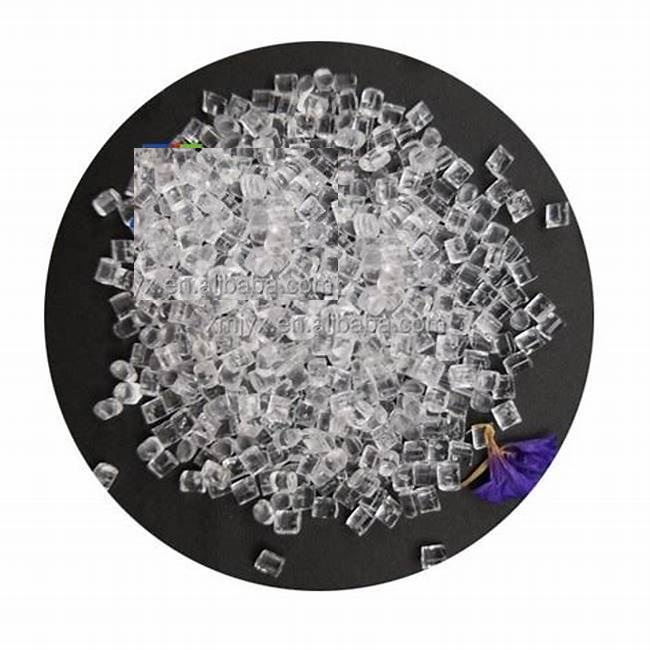
| Appearance | Transparent, colorless sheets, pellets, or granules |
| Odor | Odorless |
| E Number | Not applicable |
SECTION 2: PHYSICAL PROPERTIES
| Property | Value / Range |
|---|---|
| Appearance | Transparent, colorless sheets, pellets, or granules |
| Odor | Odorless |
| Density | 1.17–1.20 g/cm³ |
| Glass Transition Temp (Tg) | ~105°C |
| Melting Point | ~160°C (processing temperature) |
| Vicat Softening Point | 95–110°C |
| Heat Deflection Temp (HDT) | 75–100°C (at 1.82 MPa) |
| Max. Continuous Service Temp | 80–90°C |
| Min. Service Temp | -40°C to -20°C |
| Coefficient of Thermal Expansion | 50–80 × 10⁻⁶ /K |
| Thermal Conductivity | 0.17–0.21 W/(m·K) |
| Specific Heat | 1.4–1.5 kJ/(kg·K) |
| Water Absorption (24h) | 0.2–0.4% |
| Solubility in Water | Insoluble |
| Solubility in Organic Solvents | Soluble in ketones, esters, aromatics |
| Refractive Index | 1.49–1.50 |
| Light Transmission | 92% (transmitted) |
| Dielectric Constant (1 MHz) | 2.6–3.2 |
| Dielectric Strength | 15–20 kV/mm |
| Volume Resistivity | >10¹⁵ Ω·cm |
| Surface Resistivity | 10¹³–10¹⁵ Ω |
SECTION 3: MECHANICAL PROPERTIES
| Property | Cast PMMA | Extruded PMMA |
|---|---|---|
| Tensile Strength | 65–75 MPa | 50–70 MPa |
| Tensile Modulus | 2.5–3.5 GPa | 2.5–3.5 GPa |
| Elongation at Break | 3–5% | 2–5% |
| Flexural Strength | 90–110 MPa | 80–100 MPa |
| Flexural Modulus | 2.5–3.5 GPa | 2.5–3.5 GPa |
| Izod Impact Strength (Notched) | 1.5–2.5 kJ/m² | 1.5–2.5 kJ/m² |
| Charpy Impact Strength | 1.5–2.5 kJ/m² | 1.5–2.5 kJ/m² |
| Hardness (Rockwell M) | 80–100 | 80–100 |
| Hardness (Shore D) | 80–85 | 80–85 |
SECTION 4: CHEMICAL RESISTANCE
| Chemical | Resistance at Room Temp |
|---|---|
| Acids (Dilute) | Good |
| Acids (Concentrated) | Poor |
| Alkalies | Good |
| Alcohols | Good |
| Aliphatic Hydrocarbons | Good |
| Aromatic Hydrocarbons | Poor (dissolves) |
| Chlorinated Solvents | Poor (dissolves) |
| Ketones | Poor (dissolves) |
| Esters | Poor (dissolves) |
| Oils and Greases | Good |
| Water | Excellent |
| UV Light | Excellent (UV stable) |
| Weathering | Excellent |
SECTION 5: OPTICAL PROPERTIES
| Property | Value |
|---|---|
| Light Transmission (3 mm) | 92% |
| Refractive Index (n²⁰D) | 1.49–1.50 |
| Abbe Number | ~57 |
| Haze | <0.5% |
| UV Cutoff | Absorbs up to ~300 nm |
| Optical Clarity | Excellent |
| Color | Colorless |
SECTION 6: MAJOR APPLICATIONS AND END-USES
6.1. Optics and Lenses
| Application | Advantages |
|---|---|
| Eyeglass Lenses | Excellent optical clarity, lightweight |
| Contact Lenses | Optical clarity, biocompatibility |
| Magnifiers | Optical clarity, machinability |
| Cameras | Optical clarity, dimensional stability |
6.2. Automotive
| Application | Advantages |
|---|---|
| Taillight Covers | Clarity, weatherability |
| Instrument Cluster Covers | Clarity, dimensional stability |
| Headlight Lenses | Clarity, UV resistance |
| Interior Trim | Aesthetics, durability |
6.3. Medical and Dental
| Application | Advantages |
|---|---|
| Prosthetic Devices | Biocompatibility, clarity |
| Dental Materials | Biocompatibility, clarity |
| Medical Devices | Clarity, sterilization |
| Surgical Imaging | Optical clarity, dimensional stability |
6.4. Construction and Building
| Application | Advantages |
|---|---|
| Window Glazing | Clarity, weatherability |
| Safety Barriers | Clarity, impact resistance |
| Lighting | Clarity, weatherability |
| Ceilings and Walls | Clarity, aesthetics |
| Skylights | Clarity, weatherability |
6.5. Electronics and LCD Displays
| Application | Advantages |
|---|---|
| LCD Displays | Optical clarity, flatness |
| Television Screens | Optical clarity, flatness |
| Touch Screens | Optical clarity, durability |
| Fiber Optics | Optical clarity, low loss |
6.6. Consumer Products
| Application | Advantages |
|---|---|
| Acrylic Nails | Clarity, toughness |
| Furniture | Clarity, aesthetics |
| Decoration | Clarity, aesthetics |
| Aquariums | Clarity, durability |
| Signage | Clarity, weatherability |
6.7. Coatings and Paints
| Application | Advantages |
|---|---|
| Industrial Coatings | Clarity, weatherability |
| Automotive Coatings | Clarity, UV resistance |
| Varnishes | Clarity, gloss |
| Architectural Coatings | Clarity, weatherability |
SECTION 7: ADVANTAGES AND DISADVANTAGES
7.1. Advantages
| Advantage | Description |
|---|---|
| Excellent Optical Clarity | 92% light transmission; substitutes for glass |
| Lightweight | 50% lighter than glass |
| Excellent Weatherability | Suitable for outdoor use with UV stability |
| Excellent UV Resistance | High resistance to UV radiation |
| Good Chemical Resistance | Resistant to acids and alkalis |
| Easy Processability | Injection molding, extrusion, thermoforming |
| Biocompatibility | Suitable for medical and dental applications |
| Recyclability | Thermoplastic – can be reprocessed |
| Aesthetics | Glass-like appearance; variety of colors and finishes |
7.2. Disadvantages
| Disadvantage | Description |
|---|---|
| Low Impact Resistance | Notch-sensitive; brittle (similar to GPPS) |
| Low Heat Resistance | HDT ~75–100°C; not suitable for high temperatures |
| Solvent Sensitivity | Dissolves in ketones, esters, aromatics |
| Flammability | Flammable; not flame retardant |
| Poor Scratch Resistance | Easily scratched; requires hard coating |
| High Cost | More expensive than GPPS and PET |
SECTION 8: PROCESSING METHODS
| Method | Temperature Range | Applications |
|---|---|---|
| Injection Molding | 200–250°C | Lenses, medical devices, automotive parts |
| Extrusion | 190–240°C | Sheets, films, profiles |
| Cast Polymerization | 40–80°C | Optical quality sheets |
| Thermoforming | 140–180°C | Packaging, trays |
| CNC Machining | Room temperature | Prototypes, custom parts |
| Laser Cutting | Room temperature | Sheets, signage |
SECTION 9: TOXICOLOGY AND SAFETY
| Parameter | Value / Description |
|---|---|
| GHS Classification | Not classified |
| Oral LD₅₀ (Rat) | >5,000 mg/kg (very low toxicity) |
| Dermal LD₅₀ (Rabbit) | >5,000 mg/kg |
| Skin Irritation | Not irritating |
| Eye Irritation | Mild irritant (dust) |
| Inhalation (Dust) | May cause mechanical irritation |
| Thermal Decomposition | >250°C releases methyl methacrylate monomer |
| Combustion Products | CO, CO₂, MMA monomer |
| Biodegradability | Not biodegradable |
| Recycling Code | #7 (Other) |
SECTION 10: ENVIRONMENTAL ASPECTS
| Parameter | Value |
|---|---|
| Biodegradability | Not biodegradable |
| Recyclability | Yes (mechanical recycling) |
| Combustion Products | CO, CO₂, MMA |
| Recycling Code | #7 (Other) |
| Marine Environment | Contributes to microplastic pollution |
SECTION 11: STORAGE AND SHELF LIFE
Storage Conditions:
-
Cool, dry, well-ventilated area
-
Protect from direct sunlight
-
Protect from UV light (to prevent yellowing)
-
Keep away from heat sources and flames
Shelf Life:
| Product Type | Shelf Life |
|---|---|
| PMMA Pellets | 12–24 months (in cool, dry storage) |
| PMMA Sheets | 12–24 months (in UV-protected packaging) |
Degradation Indicators:
-
Color change (yellowing)
-
Surface scratches
-
Reduced light transmission
-
Brittleness
SECTION 12: TRANSPORT INFORMATION
| Parameter | Information |
|---|---|
| UN Number | Not regulated |
| Hazard Class | Not classified as dangerous goods |
| Proper Shipping Name | Polymethyl Methacrylate (PMMA) |
| ADR/RID | Not regulated |
| IMDG | Not regulated |
| IATA | Not regulated |
| Dust Explosion Hazard | Fine dust suspended in air can be explosive |
SECTION 13: SYNONYMS AND COMMON NAMES
| Type | Names |
|---|---|
| Turkish | Polimetil Metakrilat, PMMA, Pleksiglas, Akrilik, Akrilik Cam |
| English | Polymethyl Methacrylate, PMMA, Acrylic, Plexiglas, Perspex, Lucite |
| Trade Names | Plexiglas, Perspex, Lucite, Altuglas, Acrylite, Acrycast |
| Recycling Code | #7 (Other) |
SECTION 14: REGULATORY STATUS
| Regulation | Status |
|---|---|
| REACH (EU) | Registered |
| TSCA (USA) | Listed |
| FDA (USA) | Food contact approved (21 CFR 177.1010) |
| EU Food Contact (10/2011) | Permitted |
| RoHS | Compliant |
| California Prop 65 | Not listed |
| Conflict Minerals | Not applicable |
SECTION 15: SUMMARY AND CRITICAL WARNINGS
Product Summary
| Parameter | Value |
|---|---|
| Product | Polymethyl Methacrylate (PMMA) |
| CAS | 9011-14-7 |
| Appearance | Transparent, colorless sheets, pellets, or granules |
| Density | 1.17–1.20 g/cm³ |
| Light Transmission | 92% |
| Key Properties | Optical clarity, weatherability, lightweight |
| Key Industries | Optics, automotive, medical, construction, electronics |
CRITICAL WARNINGS
-
Glass Substitute: PMMA is a substitute for glass due to its excellent optical clarity (92% light transmission) and lightweight (50% lighter than glass). Preferred where glass breakage is a concern.
-
Excellent Weatherability: UV stable and suitable for outdoor use. High resistance to UV radiation. Does not yellow under sunlight.
-
Low Impact Resistance: PMMA is brittle, similar to GPPS. Not suitable for applications requiring impact resistance.
-
Solvent Sensitivity: Dissolves in ketones, esters, and aromatic solvents. Avoid contact with these solvents.
-
Drying Required: PMMA is hygroscopic and must be dried before processing (80–90°C, 2–4 hours).
-
Food Contact: Approved for food contact under FDA 21 CFR 177.1010. Safe for use in food packaging.
-
Medical Applications: Widely used in medical devices and dental materials due to biocompatibility and sterilization stability.
-
Recyclable: Recycling code #7 (Other). Mechanical recycling is possible.
-
Storage: Store in cool, dry, UV-protected areas. Exposure to UV light may cause yellowing.
-
Regulatory Status: REACH, TSCA, and FDA compliant. Not listed under California Prop 65.
IMPORTANT DISCLAIMER: This Technical Data Sheet (TDS) is for informational purposes only and is based on available technical data. The user is solely responsible for determining the product's suitability for their specific application and for complying with all applicable local, national, and international regulations. For complete safety, storage, handling, transportation, disposal, and regulatory compliance information, always refer to the official Safety Data Sheet (SDS/MSDS) provided by the manufacturer/supplier. Users are responsible for testing the product in their own processes and applications. All local, national, and international regulations must be followed when working with PMMA.