We unleash your business potential by maximize the business innovation.
Send EmailGlucono Delta Lactone, Gluconolactone, Delta-gluconolactone, D-Glucono Lactone, GDL, E575, 90-80-2
GLUCONO DELTA LACTONE (GDL)
1. PRODUCT IDENTIFICATION AND GENERAL INFORMATION
| Parameter | Value |
|---|---|
| Chemical Name (IUPAC) | D-Glucono-1,5-lactone |
| Other Names | Gluconolactone, Delta-gluconolactone, Glucono delta-lactone |
| CAS Number | 90-80-2 |
| EC (EINECS) Number | 202-016-5 |
| Food Additive Code | E 575 |
| Molecular Formula | C₆H₁₀O₆ |
| Molecular Weight | 178.14 g/mol |
| Structural Class | Lactone (cyclic ester of D-gluconic acid) |
| Appearance | White crystalline powder |
| Odor | Almost odorless |
| Taste | Slightly sweet, followed by a mildly acidic tang |
GDL is a lactone derivative of D-gluconic acid and is functionally related to D-gluconic acid. It is known as food additive E575 and is a naturally occurring compound.
2. CHEMICAL STRUCTURE AND REACTIVITY
2.1. Molecular Structure
GDL is a gluconolactone and an aldono-1,5-lactone. Its molecular structure contains a lactone ring. The hydrolysis reaction in water is as follows:
C₆H₁₀O₆ (GDL) + H₂O → C₆H₁₂O₇ (Gluconic Acid)
Structural Formula:
        O
        ||
    O---C
    |    |
    C    C
    |    |
    C    C
    |    |
    C --- C
    |    |
    OH   OH
SMILES: OC1C(O)C(O)C(OC1=O)CO
InChI Key: PHOQVHQSTUBQQK-UHFFFAOYSA-N
2.2. Hydrolysis Properties
| Property | Description |
|---|---|
| Hydrolysis | When dissolved in water, it spontaneously and slowly hydrolyzes to gluconic acid |
| pH Effect | Provides controlled and delayed acidification; unlike other food acids (e.g., citric acid), it does not cause sudden pH drop |
| Temperature Dependence | Hydrolysis rate is temperature-dependent; higher temperatures accelerate hydrolysis |
| Chelation | The resulting gluconic acid exhibits chelating (complex-forming) properties |
2.3. Functional Groups
| Functional Group | Location | Properties |
|---|---|---|
| Lactone Ring (-COO-) | Within the molecule | Provides slow hydrolysis; acidification properties |
| Hydroxyl Groups (-OH) | Within the molecule | Provides water solubility; hydrogen bonding |
| Carbonyl Group (C=O) | Within the lactone ring | Participates in hydrolysis reaction |
3. PHYSICAL AND CHEMICAL PROPERTIES
| Property | Value / Description |
|---|---|
| Appearance | White crystalline powder |
| Odor | Almost odorless |
| Taste | Slightly sweet, followed by mildly acidic tang |
| Melting Point | 151-155 °C (decomposes at ~153 °C) |
| Density | ~0.6 g/cm³ |
| Optical Rotation | [α]D20 +61.7° (c = 1) |
| Solubility in Water (20°C) | 500 g/L; 59 g/100 mL (25°C) |
| Solubility in Ethanol | ~1 g/100 g (slightly soluble) |
| Solubility in Ether | Insoluble |
| Solubility in Chloroform | Insoluble |
| pH (Aqueous Solution) | Forms acidic solution upon hydrolysis |
| Stability | Stable when stored dry at room temperature; gradually converts to gluconic acid in solution |
4. STABILITY AND REACTIVITY
| Parameter | Information |
|---|---|
| Chemical Stability | Stable under normal temperatures and pressures |
| Conditions to Avoid | High temperatures, moisture, strong oxidizers, strong bases |
| Incompatible Materials | Strong oxidizing agents, strong bases |
| Hazardous Decomposition Products | Carbon oxides (CO, CO₂) |
| Hazardous Polymerization | Will not occur |
| Hydrolysis | Slowly hydrolyzes to gluconic acid in aqueous solution |
| Shelf Life | 6 months under recommended storage conditions |
5. PRODUCTION METHOD
GDL is commercially produced through the oxidation of glucose. The traditional production process consists of the following steps:
5.1. Gluconic Acid Production
Glucose is converted to gluconic acid. Several methods are available:
| Method | Description |
|---|---|
| Microbiological Oxidation | Fermentation using Aspergillus niger |
| Electrolytic Oxidation | Electrochemical oxidation of glucose |
| Chemical Oxidation | Oxidation with hypochlorous acid |
5.2. Lactonization
The obtained gluconic acid solution is processed under suitable conditions (temperature, catalyst, vacuum) to remove water, forming the lactone ring, yielding GDL crystals.
Alternative Method: D-glucose oxidation with bromine water is also a commercial production method.
6. APPLICATION AREAS
6.1. Food Industry (Primary Application)
GDL is a versatile food additive (E575) used for the following functions:
| Function | Application Examples |
|---|---|
| Acidulant | Beverages, jams, confectionery, sauces |
| Protein Coagulant | Tofu (soybean curd), cheese, yogurt |
| Leavening Agent | Bread, cakes, pastries (with sodium bicarbonate) |
| Curing Agent | Meat products, salami, sausage, bacon |
| Sequestrant (Chelating Agent) | Metal ion binding, color and flavor stabilization |
| pH Control Agent | Fermented products, preserves |
6.2. Specialty Food Applications
| Application | Function | Details |
|---|---|---|
| Tofu Production | Soy protein coagulant | Most common coagulant; provides smooth, soft texture through slow, controlled coagulation |
| Cheese Production | Milk coagulant | Gradual acidification ensures uniform cheese texture |
| Meat Products | pH control and flavor development | Used in bacon and fermented sausages; preserves freshness in seafood |
| Dough Leavening | Leavening agent with sodium bicarbonate | Slow but steady leavening effect; controlled rising during proofing |
| Beverages | Mild acidulant | Provides initial sweetness followed by clean, non-sharp acidity |
| Seafood Preservation | Freshness preservation | Used in fresh fish and shrimp to maintain brightness and prevent melanosis |
6.3. Cosmetics and Personal Care
| Application | Function | Details |
|---|---|---|
| Exfoliant | Natural exfoliant | Gentle skin exfoliation |
| Moisturizer | Skin hydration | Humectant properties |
| pH Regulator | Skin pH balance | Mild acidic structure helps regulate skin pH |
6.4. Other Industrial Applications
| Application | Function | Details |
|---|---|---|
| Cleaning Products | Chelating agent | Used in powdered detergent production |
| Mining and Construction | Metal ion chelation | Binds metal ions |
| Pharmaceuticals | Excipient | As auxiliary substance in formulations |
7. APPLICATION FORMULATION GUIDE
7.1. Tofu Production (Detailed Mixture)
| Parameter | Recommendation |
|---|---|
| Pure GDL Recipe | Produces very soft, custard-like, slightly tangy tofu |
| Recommended Blend | Mix GDL with Calcium Sulfate (Gypsum) |
| Optimal Ratio | 40% GDL / 60% Calcium Sulfate |
| Benefits | Increases yield; creates firmer yet smooth texture; neutralizes sour taste |
| Dosage | 0.25 – 0.30% of dry soybean weight |
7.2. Meat Curing (Nitrite Reduction Strategy)
GDL enhances the conversion of nitrite to nitric oxide (responsible for the pink cured color) by slowly lowering pH.
| Parameter | Value |
|---|---|
| Application | Slowly lowers pH, improving color development |
| Benefit | Enables reduction of residual nitrite levels by 10-20% while maintaining same color intensity |
| Maximum Dosage | 0.3% |
7.3. Baking (Shelf Life Extension)
Unlike fast-acting leavening agents, GDL dough can be held for 15-30 minutes before baking without significant loss of leavening power.
| Parameter | Recommendation |
|---|---|
| Substitution | 1 tsp GDL + 0.5 tsp Baking Soda ≈ 2 tsp Baking Powder (for 140g flour) |
| Benefit | Phosphate-free baking; controlled leavening |
7.4. Dairy Products (Cheese/Yogurt)
| Parameter | Recommendation |
|---|---|
| Dosage | 0.025 – 1.5% by weight of milk |
| Application | Direct acidification for Cottage cheese, Paneer |
| Temperature | ~30°C incubation for yogurt-like texture |
7.5. Seafood
| Parameter | Recommendation |
|---|---|
| Dosage | Max 0.1 g/kg (surface treatment) |
| Function | Maintains brightness; prevents melanosis (black spot) in shrimp; helps maintain firmness |
8. ALTERNATIVES AND SUBSTITUTIONS
| GDL Function | Alternative Material | Comparison |
|---|---|---|
| Coagulant (Tofu) | Calcium Sulfate (Gypsum) | GDL: Smooth, tangy, soft; Gypsum: Neutral taste, firm, high calcium; often used together |
| Coagulant (Tofu) | Nigari (Magnesium Chloride) | GDL: Slower, softer; Nigari: Fast-acting, firmer, traditional Japanese flavor |
| Coagulant (Cheese) | Citric Acid / Lemon Juice | GDL: Gradual curd formation, smooth texture; Citric Acid: Sudden shock coagulation, grainy texture |
| Leavening Acid | Cream of Tartar / MCP / SAPP | GDL: Slow reaction, clean taste, phosphate-free; SAPP: Fast/medium reaction, contains phosphate; Cream of Tartar: Fast reaction, more expensive |
| Acidulant | Citric Acid / Lactic Acid | GDL: Slow release, less sharp initial acidity; Citric Acid: Sharp, immediate sourness |
9. QUALITY SPECIFICATIONS
The following specifications are based on European Commission Regulation (EU) No 231/2012 and FCC (Food Chemicals Codex) standards:
| Parameter | Specification |
|---|---|
| Purity (on anhydrous basis) | ≥ 99.0% |
| Appearance | White crystalline powder |
| Solubility | Freely soluble in water |
| Loss on Drying | ≤ 1.0% |
| Residue on Ignition | ≤ 0.1% |
| Heavy Metals (as Pb) | ≤ 10 mg/kg |
| Arsenic (As) | ≤ 3 mg/kg |
| Lead (Pb) | ≤ 2 mg/kg |
| Mercury (Hg) | ≤ 1 mg/kg |
10. TOXICOLOGICAL PROFILE
| Parameter | Information |
|---|---|
| Acute Oral Toxicity (LD50, Rat) | > 5,000 mg/kg (very low toxicity) |
| Acute Dermal Toxicity | Low |
| Skin Irritation | Mild irritant |
| Eye Irritation | May cause mild irritation |
| Inhalation | Dust may cause respiratory irritation |
| Carcinogenicity | Not classified as a carcinogen |
| Mutagenicity | Not mutagenic |
| Allergenicity | No known allergenic effects |
| FDA Status | GRAS (Generally Recognized as Safe) |
| EU Approval | Approved as food additive E575 |
| ADI (Acceptable Daily Intake) | Not specified (safe at current usage levels) |
11. GHS CLASSIFICATION
| Hazard Class | Category | H-Statement |
|---|---|---|
| Not classified as hazardous | – | – |
Signal Word: None (Generally not classified as hazardous)
Hazard Pictograms: None
12. PRECAUTIONARY STATEMENTS (P-CODES)
| Code | Statement |
|---|---|
| P261 | Avoid breathing dust |
| P264 | Wash hands thoroughly after handling |
| P271 | Use only in well-ventilated areas |
| P280 | Wear protective gloves/eye protection |
| P304+P340 | IF INHALED: Remove person to fresh air and keep comfortable for breathing |
| P305+P351+P338 | IF IN EYES: Rinse cautiously with water for several minutes. Remove contact lenses if present |
| P337+P313 | If eye irritation persists: Get medical advice/attention |
| P501 | Dispose of contents/container in accordance with local regulations |
13. FIRST AID MEASURES
| Route of Exposure | Action to Be Taken |
|---|---|
| Inhalation | Move to fresh air; ensure comfortable breathing |
| Skin Contact | Wash with plenty of soap and water |
| Eye Contact | Rinse thoroughly with plenty of water for at least 15 minutes. Seek medical attention if irritation persists |
| Ingestion | Rinse mouth with water. Do not induce vomiting. Drink plenty of water. Seek medical attention if large amount is swallowed |
14. FIRE-FIGHTING MEASURES
| Parameter | Information |
|---|---|
| Fire Hazard | Non-flammable |
| Suitable Extinguishing Media | Water spray, foam, dry chemical, CO₂ |
| Hazardous Decomposition Products | Carbon oxides (CO, CO₂) |
| Special Protective Equipment | Use self-contained breathing apparatus (SCBA) if required |
15. ACCIDENTAL RELEASE MEASURES
| Parameter | Information |
|---|---|
| Personal Protection | Dust mask, protective goggles, gloves |
| Cleaning Methods | Sweep or vacuum (HEPA) and collect in suitable containers. Avoid creating dust |
| Environmental Precautions | Prevent entry into drains and water bodies |
16. STORAGE AND SHELF LIFE
| Parameter | Condition |
|---|---|
| Storage Temperature | Room temperature |
| Storage Conditions | Store in a cool, dry, well-ventilated place |
| Container Requirements | Keep tightly closed in moisture-proof containers |
| Shelf Life | 6 months under recommended conditions (up to 12-24 months for some grades) |
| Incompatible Materials | Strong oxidizing agents, strong bases |
| Protect From | Moisture, high temperatures, strong oxidizers |
17. PACKAGING OPTIONS
| Packaging Type | Quantity | Material |
|---|---|---|
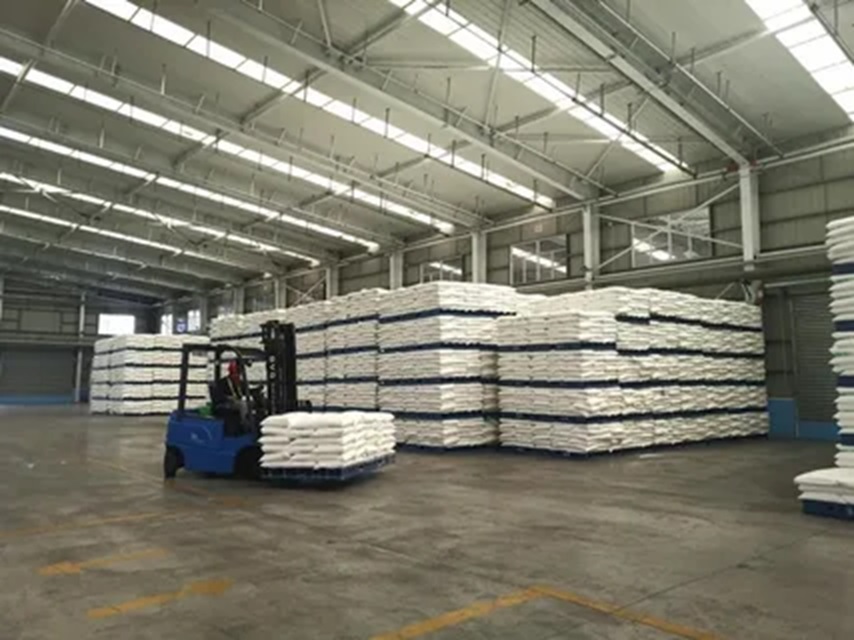
| Kraft Bag | 25 kg | PE-lined kraft paper bag |
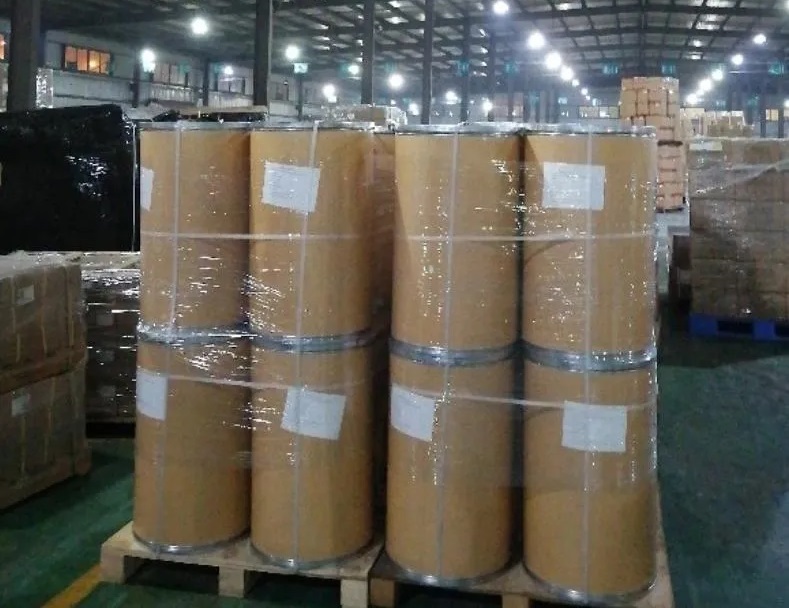
| Fiber Drum | 50 kg | PE-lined fiber drum |
| Big-Bag | 500 kg, 1000 kg | PE-lined PP woven bag |
| Small Containers | 1 kg, 5 kg, 10 kg | HDPE containers |
Available Grades
-
Food Grade
-
USP Grade
-
FCC Grade
18. TRANSPORT INFORMATION
| Parameter | Information |
|---|---|
| UN Number | Not applicable (not dangerous goods) |
| Hazard Class | Not applicable |
| Packing Group | Not applicable |
| ADR/RID | Not regulated |
| IMDG | Not regulated |
| IATA | Not regulated |
| Transport Temperature | Ambient; protect from moisture |
19. REGULATORY INFORMATION
| Region / Authority | Status |
|---|---|
| USA (FDA) | GRAS; 21 CFR Ch. I §184.1318 |
| European Union | Approved as food additive (EC) No 1333/2008; (EU) No 231/2012 |
| Turkey | Approved as food additive (Turkish Food Codex) |
| Codex Alimentarius | INS No. 575 |
| JECFA | Evaluated; safe at current usage levels |
| Kosher/Halal | Available upon request |
| IARC | Not classified as carcinogen |
| California Prop 65 | Not listed |
20. OTHER NAMES AND SYNONYMS
| Category | Name |
|---|---|
| Common Synonyms | Gluconolactone, D-Gluconic acid delta-lactone, Delta-gluconolactone |
| Standard Abbreviation | GDL |
| Food Additive Code | E 575 |
| Chemical Name (IUPAC) | D-Glucono-1,5-lactone |
| INCI Name (Cosmetics) | Gluconolactone |
| INS Number (Codex) | 575 |
| EC Number | 202-016-5 |
| CAS Number | 90-80-2 |
21. QUICK REFERENCE TABLE
| Property | Value |
|---|---|
| CAS Number | 90-80-2 |
| EC Number | 202-016-5 |
| Molecular Formula | C₆H₁₀O₆ |
| Molecular Weight | 178.14 g/mol |
| Appearance | White crystalline powder |
| Melting Point | 151-155 °C |
| Solubility in Water | 500 g/L (20°C) |
| E Number | E575 |
| FDA Status | GRAS |
| GHS Signal Word | None |
| UN Number | Not applicable |
| Shelf Life | 6 months (under proper storage) |
22. ENVIRONMENTAL INFORMATION
| Parameter | Information |
|---|---|
| Aquatic Toxicity | Not toxic to aquatic organisms |
| Biodegradability | Readily biodegradable; hydrolyzes naturally |
| Bioaccumulation | Not expected |
| Persistence | Not persistent in the environment |
23. CRITICAL NOTICES AND BEST PRACTICES
CRITICAL NOTICES:
-
Slow Hydrolysis: The key value of GDL is its slow acidification, providing controlled pH reduction without sudden drops. This is its primary advantage over other acidulants.
-
Moisture Sensitivity: GDL must be protected from moisture as it will hydrolyze to gluconic acid, losing its functionality. Keep tightly closed in moisture-proof containers.
-
Temperature Effect: Higher temperatures accelerate hydrolysis. In hot environments, adjust usage accordingly.
-
Dosage Optimization: Recommended dosages are starting points. Optimize through trial runs for each specific application.
-
Shelf Life: GDL has a relatively short shelf life (6 months) under recommended conditions due to gradual hydrolysis. Always check the manufacturing date.
-
Phosphate-Free: GDL provides a phosphate-free leavening alternative in baking.
-
Taste Consideration: Pure GDL may impart a slight sour taste in tofu; blending with calcium sulfate helps neutralize this.
BEST PRACTICE RECOMMENDATIONS:
Storage:
-
Store in a cool, dry, well-ventilated place
-
Keep tightly closed in moisture-proof containers
-
Protect from moisture and high temperatures
Handling:
-
Use dust mask, protective goggles, and gloves
-
Avoid dust formation
-
Use in well-ventilated areas
-
Wash hands after handling
Tofu Production:
-
Use 40% GDL / 60% Calcium Sulfate blend for optimal texture
-
Dosage: 0.25-0.30% of dry soybean weight
Baking:
-
1 tsp GDL + 0.5 tsp Baking Soda ≈ 2 tsp Baking Powder
-
Dough can be held for 15-30 minutes before baking
Meat Curing:
-
Maximum dosage: 0.3%
-
Enables 10-20% reduction in residual nitrite levels
Waste Disposal:
-
Dispose in accordance with local regulations
-
Not hazardous to the environment
LEGAL DISCLAIMER
This Technical Data Sheet (TDS) is for informational purposes only and is prepared based on available technical data. The user is solely responsible for determining the suitability of the product for their specific application and for complying with all local, national, and international regulations. For complete safety, storage, handling, transport, waste, and regulatory compliance information, the official Safety Data Sheet (SDS/MSDS) provided by the manufacturer/supplier must be consulted. This document does not substitute professional advice. Dosage and application conditions should be optimized through product-specific trials.