We unleash your business potential by maximize the business innovation.
Send EmailGlyoxal, Oxaldehyde, Ethanedial, Glyoxaldehyde, Oxalaldehyde, Ethanedialdehyde, 107-22-2
GLYOXAL
Glyoxal / Oxaldehyde / Ethanedial / Glyoxaldehyde / Oxalaldehyde / Ethanedialdehyde
CAS Number: 107-22-2
EC Number: 203-474-9
1. IDENTIFICATION INFORMATION
| Property | Information |
|---|---|
| Chemical Name | Glyoxal |
| Other Names | Oxaldehyde, Ethanedial, Glyoxaldehyde, Oxalaldehyde, Ethanedialdehyde, Oxalaldehyde |
| Chemical Formula | C₂H₂O₂ (OHC-CHO) |
| Molecular Weight | 58.04 g/mol |
| CAS Number | 107-22-2 |
| EC Number (EINECS) | 203-474-9 |
| Appearance (below 15°C) | White crystalline solid |
| Appearance (above 15°C) | Yellow liquid (vapor is green) |
| Odor | Characteristic, sharp aldehyde odor |
2. PHYSICAL PROPERTIES
| Property | Value |
|---|---|
| Physical State (20°C) | Liquid |
| Appearance | Yellow liquid (white crystalline solid at low temperature) |
| Vapor Color | Green |
| Odor | Sharp, characteristic |
| Molecular Weight | 58.04 g/mol |
| Density (Pure, 20°C) | 1.14 g/cm³ |
| Density (40% solution, 20°C) | 1.27 g/cm³ |
| Melting Point | 15°C |
| Boiling Point | 51°C |
| Flash Point | 94°C (closed cup) |
| Autoignition Temperature | 285°C |
| Vapor Pressure (20°C) | 293 hPa |
| Solubility in Water (20°C) | ~600 g/L (completely miscible) |
| Solubility in Ethanol | Soluble |
| Solubility in Ethyl Ether | Soluble |
| pH (40% aqueous solution) | 2.1 - 2.7 |
| Viscosity (40% solution, 20°C) | ~4.5 mPa·s |
3. CHEMICAL PROPERTIES
| Property | Information |
|---|---|
| Chemical Formula | C₂H₂O₂ |
| Molecular Weight | 58.04 g/mol |
| Chemical Class | Aliphatic dialdehyde (smallest dialdehyde) |
| Functional Group | Two aldehyde groups (-CHO) |
| Stability | Forms hydrates in aqueous solution; relatively stable in dilute solutions |
| Reaction with Water | Miscible; forms various hydrates (monohydrate, dihydrate, oligomers) |
| Reaction with Alcohols | Forms acetals |
| Reaction with Amines | Forms Schiff bases |
| Reaction with Cellulose | Crosslinking (fabric wrinkle resistance) |
| Reaction with Proteins | Crosslinking and fixation |
| Incompatible Materials | Strong oxidizers, strong bases, amines |
Hydration Reaction (In Aqueous Solution):
OHC-CHO + H₂O ⇌ OHC-CH(OH)₂ (monohydrate)
OHC-CH(OH)₂ + H₂O ⇌ (HO)₂HC-CH(OH)₂ (dihydrate)
Reactive Properties:
As the smallest dialdehyde with two aldehyde groups, glyoxal undergoes the following reactions:
-
Oxidation: Glycolic acid → Glyoxylic acid → Oxalic acid
-
Reduction: Ethylene glycol
-
Crosslinking: Reacts with cellulose, starch, proteins, polyvinyl alcohol (PVA)
4. PRODUCTION PROCESS
| Method | Description |
|---|---|
| Ethylene Glycol Oxidation (Industrial Standard) | HOCH₂-CH₂OH + 2 O₂ → OHC-CHO + 2 H₂O (Silver or copper catalyst, 300-400°C) |
| Acetaldehyde Oxidation | CH₃CHO + 4 O₂ → OHC-CHO + 2 H₂O + CO₂ |
| Commercial Forms | 40% aqueous solution (most common), 30%, 50%, 80%, 100% pure (anhydrous) |
| Purification | Distillation, resin treatment |
Reaction Equation (Ethylene Glycol Oxidation – Most Common):
HOCH₂-CH₂OH + 2 O₂ —[Ag/Cu, 300-400°C]—> OHC-CHO + 2 H₂O
Typical Commercial Concentrations:
| Grade | Concentration | Description |
|---|---|---|
| Standard Aqueous Solution | 40% w/w | Most common commercial form |
| Low Concentration | 30% w/w | Mild applications |
| High Concentration | 50% w/w, 80% w/w | Industrial crosslinking |
| Anhydrous (Pure) | ≥99% | Specialty synthesis applications |
5. AVAILABLE FORMS AND SPECIFICATIONS
| Form | Concentration | Description | Applications |
|---|---|---|---|
| Aqueous Solution | 40% | Clear, yellowish liquid | Most common; textile, paper, adhesives |
| Aqueous Solution | 30% | Clear, yellowish liquid | Cosmetics, pharmaceuticals, mild applications |
| Aqueous Solution | 50% | Clear, yellow liquid | High-performance crosslinking |
| Anhydrous Glyoxal | ≥99% | Yellow liquid/solid | Specialty synthesis, research |
Typical Specifications (40% Aqueous Solution):
| Parameter | Specification | Test Method |
|---|---|---|
| Assay (GC) | 40% ± 0.5% | Gas Chromatography |
| Appearance | Clear, yellowish liquid | Visual |
| pH (20°C) | 2.1 - 2.7 | Potentiometric |
| Density (20°C) | 1.265 - 1.275 g/cm³ | Hydrometer |
| Acidity (as Acetic Acid) | ≤ 0.5% | Titration |
| Formaldehyde | ≤ 50 ppm | Colorimetric |
| Heavy Metals (as Pb) | ≤ 10 ppm | ICP |
| Iron (Fe) | ≤ 5 ppm | ICP |
6. APPLICATIONS
6.1. Textile Industry – Largest Use
| Application | Function |
|---|---|
| Fabric Wrinkle Resistance | Crosslinking of cellulose fibers (wash-and-wear) |
| Water Repellency | Imparts hydrophobic properties to fabric surfaces |
| Dye Fixation | Fixation of textile dyes |
| Cotton Fabric Finishing | "Wash-and-wear" property |
| Fabric Stiffening | Stiffer, more durable fabrics |
6.2. Paper and Packaging Industry
| Application | Function |
|---|---|
| Wet Strength | Water resistance in paper products |
| Paper Stiffness | Durability increase for cardboard and packaging paper |
| Surface Sizing | Improvement of paper surface properties |
| Crepe Paper | Strength in toilet paper, paper towel production |
6.3. Adhesives and Resins
| Application | Function |
|---|---|
| Polymer Crosslinking | Crosslinking agent for PVA, starch, cellulose derivatives |
| Melamine Resins | Alternative to formaldehyde-based resins |
| Urea Formaldehyde Resins | Additive reducing formaldehyde emissions |
| Wood Adhesives | Durability and water resistance |
| Polyamide Epichlorohydrin | For paper wet strength resins |
6.4. Pharmaceutical and Cosmetic Industry
| Application | Function |
|---|---|
| Disinfectant | Antimicrobial agent |
| Preservative | Antimicrobial preservative in cosmetic products |
| Fixative | Histology (less toxic alternative to formaldehyde) |
| Pharmaceutical Intermediates | Synthesis of various pharmaceutical compounds |
| Antimicrobial Agent | Topical preparations |
6.5. Water Treatment
| Application | Function |
|---|---|
| Biocide | Microbial control in water |
| Disinfectant | Disinfection in industrial water systems |
| Cooling Water Treatment | Slime and bacterial control |
| Injection Water | Biocide for oil fields |
6.6. Leather and Tanning
| Application | Function |
|---|---|
| Leather Tanning | Collagen crosslinking |
| Chrome Tanning Auxiliary | Pre-tanning agent |
| Leather Softening | Textured surface in finishing |
6.7. Food Industry
| Application | Function |
|---|---|
| Food Additive | Thickener, stabilizer (in some countries) |
| Protein Modification | Protein crosslinking |
| Starch Modification | Starch crosslinking (resistance to retrogradation) |
6.8. Formaldehyde Alternative
| Application | Function |
|---|---|
| Histological Fixative | Less toxic alternative to formaldehyde |
| Textile Finishing | Formaldehyde-free wrinkle resistance treatment |
| Paper Production | Formaldehyde-free wet strength |
| Cosmetic Preservative | Alternative to formaldehyde-releasing preservatives |
6.9. Other Applications
| Application | Function |
|---|---|
| Paints and Coatings | Crosslinking resins |
| Inks | Improves flow and drying properties |
| Oil Drilling | Viscosity control in drilling muds |
| Emulsion Stabilizer | In polymer emulsions |
| Polymer Synthesis | Synthesis of imidazoles, pyridines, heterocyclic compounds |
7. GLYOXAL AS FORMALDEHYDE ALTERNATIVE
| Application Area | Formaldehyde | Glyoxal (Alternative) |
|---|---|---|
| Histological Fixation | Carcinogenic, toxic | Less toxic, formaldehyde alternative |
| Textile Wrinkle Resistance | Formaldehyde emission | Low-formaldehyde or formaldehyde-free |
| Paper Wet Strength | Toxic | More environmentally friendly |
| Cosmetic Preservative | Formaldehyde-releasing | Direct antimicrobial |
Glyoxal vs Formaldehyde (Fixative Comparison):
| Property | Formaldehyde | Glyoxal |
|---|---|---|
| Toxicity | High (Carcinogenic) | Lower |
| Fixation Speed | Fast | Medium |
| Tissue Penetration | Excellent | Good |
| Residual | Low | Low |
| Cost | Low | Medium |
8. QUALITY SPECIFICATIONS (Technical Grade - 40%)
| Parameter | Specification | Test Method |
|---|---|---|
| Assay (as C₂H₂O₂) | 40% ± 0.5% | GC |
| Appearance | Clear, yellowish liquid | Visual |
| pH (20°C) | 2.1 - 2.7 | ASTM E70 |
| Density (20°C) | 1.265 - 1.275 g/cm³ | ASTM D891 |
| Acidity (as Acetic Acid) | ≤ 0.5% | Titration |
| Formaldehyde Content | ≤ 50 ppm | Colorimetric |
| Ethylene Glycol (Reducing) | ≤ 0.5% | GC |
| Heavy Metals (as Pb) | ≤ 10 ppm | ICP |
| Iron (Fe) | ≤ 5 ppm | ICP |
| Ash Content | ≤ 0.05% | Gravimetric |
High Purity Specifications (Anhydrous Glyoxal):
| Parameter | Specification |
|---|---|
| Assay (C₂H₂O₂) | ≥ 99% |
| Water Content | ≤ 0.5% |
| Acidity | ≤ 0.1% |
9. STORAGE AND HANDLING
| Parameter | Information |
|---|---|
| Storage Conditions | Cool (15-30°C), dry, well-ventilated area; protect from sunlight |
| Container Requirements | HDPE or stainless steel containers (corrosion-resistant) |
| Temperature Warning | May solidify below 15°C (melting point 15°C) |
| Protect from | Heat, strong oxidizers, strong bases |
| Shelf Life | 12-24 months (unopened containers) |
| Incompatible Materials | Strong oxidizers, strong bases, amines |
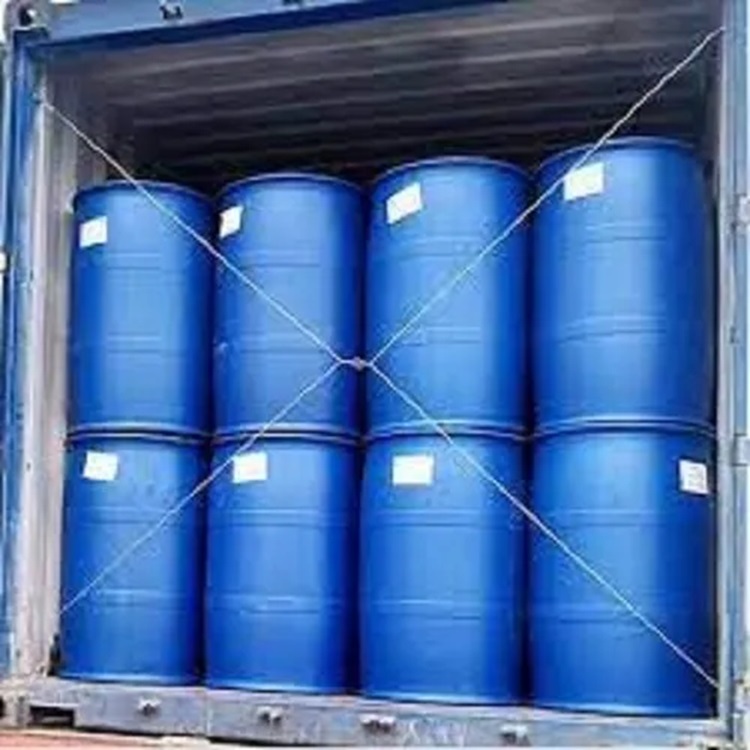
| Packaging Options | 25 kg HDPE drum, 250 kg drum, 1,200 kg IBC, tanker |
Handling Notes:
-
Solidifies below 15°C. If frozen, warm to 30-40°C.
-
Aqueous solutions are relatively stable but dilution causes hydrate formation
-
More stable in acidic media; alkaline pH causes polymerization
-
Metal ions (especially iron) may cause discoloration
-
Avoid skin and eye contact; use good ventilation
10. SAFETY AND HEALTH INFORMATION (GHS CLASSIFICATION)
| Hazard Class | Category |
|---|---|
| Acute Toxicity (Oral) | Category 4 (H302) |
| Acute Toxicity (Dermal) | Category 4 (H312) |
| Acute Toxicity (Inhalation) | Category 4 (H332) |
| Skin Irritation | Category 2 (H315) |
| Eye Irritation | Category 2 (H319) |
| Respiratory Tract Irritation | Category 3 (H335) |
| Skin Sensitization | Category 1 (H317) |
| Acute Aquatic Toxicity | Category 3 (H402) |
| Chronic Aquatic Toxicity | Category 3 (H412) |
11. HAZARD STATEMENTS (H-CODES)
| Code | Statement |
|---|---|
| H302 | Harmful if swallowed |
| H312 | Harmful in contact with skin |
| H315 | Causes skin irritation |
| H317 | May cause an allergic skin reaction |
| H319 | Causes serious eye irritation |
| H332 | Harmful if inhaled |
| H335 | May cause respiratory irritation |
| H402 | Harmful to aquatic life |
| H412 | Harmful to aquatic life with long lasting effects |
12. SAFETY STATEMENTS (P-CODES)
| Code | Statement |
|---|---|
| P261 | Avoid breathing dust/fumes/vapor/spray |
| P280 | Wear protective gloves, protective clothing, eye protection |
| P302+P352 | IF ON SKIN: Wash with plenty of water |
| P304+P340 | IF INHALED: Remove person to fresh air and keep comfortable for breathing |
| P305+P351+P338 | IF IN EYES: Rinse cautiously with water for several minutes. Remove contact lenses if present and easy to do. Continue rinsing |
| P312 | Call a POISON CENTER or doctor if you feel unwell |
| P333+P313 | If skin irritation or rash occurs: Get medical advice/attention |
13. TOXICOLOGICAL INFORMATION
| Parameter | Value |
|---|---|
| Oral LD50 (rat) | ~2,000 - 3,000 mg/kg |
| Dermal LD50 (rabbit) | > 2,000 mg/kg |
| Inhalation LC50 (rat) | ~5 mg/L (4 hours) |
| Skin Irritation | Mild to moderate irritation |
| Eye Irritation | Irritating |
| Skin Sensitization | Yes – allergic reactions possible |
| Mutagenicity | Limited evidence (in vitro positive) |
| Carcinogenicity | IARC: Not classified (Group 3) |
Health Effects:
| Exposure | Effect |
|---|---|
| Acute (Inhalation) | Respiratory tract irritation, coughing, sore throat, shortness of breath |
| Acute (Skin Contact) | Redness, irritation, allergic contact dermatitis |
| Acute (Eye Contact) | Redness, pain, tearing, temporary blurred vision |
| Acute (Ingestion) | Stomach pain, nausea, vomiting, diarrhea |
| Chronic | Allergic skin reactions (sensitization) |
14. FIRST AID MEASURES
| Exposure Route | Action |
|---|---|
| Inhalation | Remove to fresh air. Give oxygen if breathing difficulty. Seek medical attention. |
| Skin Contact | Remove contaminated clothing. Wash with soap and plenty of water. Seek medical attention if irritation persists. |
| Eye Contact | Rinse immediately with plenty of water for at least 15 minutes. Remove contact lenses. Seek medical attention. |
| Ingestion | Rinse mouth. Drink plenty of water. Do NOT induce vomiting. Seek medical attention. |
15. FIRE FIGHTING MEASURES
| Parameter | Information |
|---|---|
| Fire Hazard | Combustible (flash point 94°C) |
| Extinguishing Media | Water spray, CO₂, dry chemical powder, alcohol-resistant foam |
| Special Hazards | Thermal decomposition produces toxic gases (CO, CO₂) |
| Protective Equipment | Self-contained breathing apparatus (SCBA), full protective clothing |
16. ENVIRONMENTAL INFORMATION
| Parameter | Information |
|---|---|
| Aquatic Toxicity | Harmful to aquatic life (H402, H412) |
| Biodegradability | Readily biodegradable (>70% BOD) |
| Bioaccumulation | Low potential (low Log P) |
| Mobility in Water | High (completely miscible) |
| Waste Disposal | Dispose according to local regulations |
17. TRANSPORT INFORMATION
| Parameter | Information |
|---|---|
| UN Number | Not applicable (not classified as dangerous goods in some jurisdictions) |
| Hazard Class | Generally not classified as dangerous goods |
| Packing Group | Not applicable |
| Proper Shipping Name | Glyoxal solution |
| Marine Pollutant | No |
| ADR/RID Label | Not applicable |
18. REGULATORY INFORMATION
| Region | Status |
|---|---|
| EU | REACH registered; approved for industrial use |
| Türkiye (KKDİK) | Mandatory compliance; registration required |
| USA (TSCA) | Listed |
| Canada (DSL) | Listed |
| Australia (AICS) | Listed |
| Japan (ENCS) | Listed |
| Korea (KECL) | Listed |
| China (IECSC) | Listed |
FDA Compliance: Approved for use in food contact materials (within specific limits)
Cosmetic Compliance: As cosmetic preservative (within specific concentration limits in EU)
19. OTHER NAMES AND SYNONYMS
| Name |
|---|
| Oxaldehyde |
| Ethanedial |
| Glyoxaldehyde |
| Oxalaldehyde |
| Ethanedialdehyde |
| Biformyl |
| Diformal |
| Dihydroxyethanedial (hydrate form) |
Database Identifiers:
| Database | Identifier |
|---|---|
| CAS | 107-22-2 |
| EC | 203-474-9 |
| MDL | MFCD00006957 |
| PubChem CID | 7860 |
| RTECS | MD2700000 |
| Beilstein | 1732463 |
20. SUMMARY AND IMPORTANT WARNINGS
SUMMARY:
Glyoxal (C₂H₂O₂, CAS 107-22-2) is the smallest dialdehyde containing two aldehyde groups. Below 15°C it exists as a white crystalline solid; above 15°C as a yellow liquid (its vapor is green). It has very high water solubility (~600 g/L) and is commercially supplied primarily as a 40% aqueous solution. Major applications include textile wrinkle resistance and water repellency, paper wet strength, crosslinking agent for adhesives and resins, and as a less toxic alternative to formaldehyde in histological fixation, cosmetic preservation, and biocidal applications.
Key Properties:
| Property | Value |
|---|---|
| Appearance (below 15°C) | White crystalline solid |
| Appearance (above 15°C) | Yellow liquid (green vapor) |
| Molecular Weight | 58.04 g/mol |
| Melting Point | 15°C |
| Boiling Point | 51°C |
| Density (40% solution) | 1.27 g/cm³ |
| Water Solubility | ~600 g/L (completely miscible) |
| pH (40% solution) | 2.1 - 2.7 |
| Primary Use | Textile, paper, adhesives, formaldehyde alternative |
Main Application Areas:
| Industry | Applications |
|---|---|
| Textile | Wrinkle resistance, water repellency, fabric finishing |
| Paper and Packaging | Wet strength, paper stiffness, surface sizing |
| Adhesives and Resins | Crosslinking agent (PVA, starch, cellulose) |
| Pharmaceutical & Cosmetic | Disinfectant, preservative, histological fixative |
| Water Treatment | Biocide, disinfectant |
| Leather | Tanning auxiliary, collagen crosslinking |
| Formaldehyde Alternative | Fixative, textile finishing, paper production, cosmetic preservative |
Key Safety Points:
-
HARMFUL: Harmful if swallowed, in contact with skin, or if inhaled (H302, H312, H332)
-
IRRITANT: Causes skin and eye irritation (H315, H319, H335)
-
SENSITIZER: May cause allergic skin reaction (H317)
-
ENVIRONMENTAL: Harmful to aquatic life (H402, H412)
-
USE PPE: Gloves, safety goggles, dust mask (if needed)
-
TEMPERATURE WARNING: Solidifies below 15°C; if frozen, warm to 30-40°C
IMPORTANT WARNINGS:
Formaldehyde Alternative: Glyoxal is used as a less toxic alternative to formaldehyde in many applications including histological fixation, textile wrinkle resistance treatments, and paper wet strength applications.
Crosslinking Agent: As the smallest dialdehyde, glyoxal is an effective crosslinking agent for polymer chains such as cellulose, starch, polyvinyl alcohol (PVA), and proteins via its two aldehyde groups.
Hydrate Formation: Glyoxal forms various hydrates (monohydrate, dihydrate, oligomers) in aqueous solution. These hydrates affect reactivity and crosslinking efficiency.
Solidification Warning: With a melting point of 15°C, glyoxal may solidify during storage in cold weather or winter conditions. Frozen product can be reliquefied by warming to 30-40°C.
Color Formation: Pure (anhydrous) glyoxal is yellow and its vapor appears green. Aqueous solutions are also yellowish. Metal ions (especially iron) may cause discoloration.
Sensitization: Repeated exposure may cause allergic skin reactions. Workers in cosmetic and textile applications are particularly at risk.
Important Disclaimer: This Technical Data Sheet (TDS) is for informational purposes only. For complete safety, handling, storage, and regulatory compliance information, always refer to the official Safety Data Sheet (SDS) provided by the manufacturer/supplier.