We unleash your business potential by maximize the business innovation.
Send EmailZinc Sulfate Monohydrate, White vitriol, Goslarite, Zinc Vitriol, Gunningite, 7446-19-7
ZINC SULFATE MONOHYDRATE (ZnSO₄·H₂O)
White Vitriol / Goslarite / Zinc Vitriol
CAS Number: 7446-19-7
EC Number: 231-793-3 (for ZnSO₄)
1. IDENTIFICATION
| Property | Information |
|---|---|
| Chemical Name | Zinc Sulfate Monohydrate |
| Synonyms | White vitriol, Goslarite, Zinc vitriol, Sulfuric acid zinc salt (monohydrate), Zinc(II) sulfate monohydrate |
| Chemical Formula | ZnSO₄·H₂O |
| Molecular Weight | 179.47 g/mol |
| CAS Number | 7446-19-7 |
| EC Number (EINECS) | 231-793-3 (for ZnSO₄) |
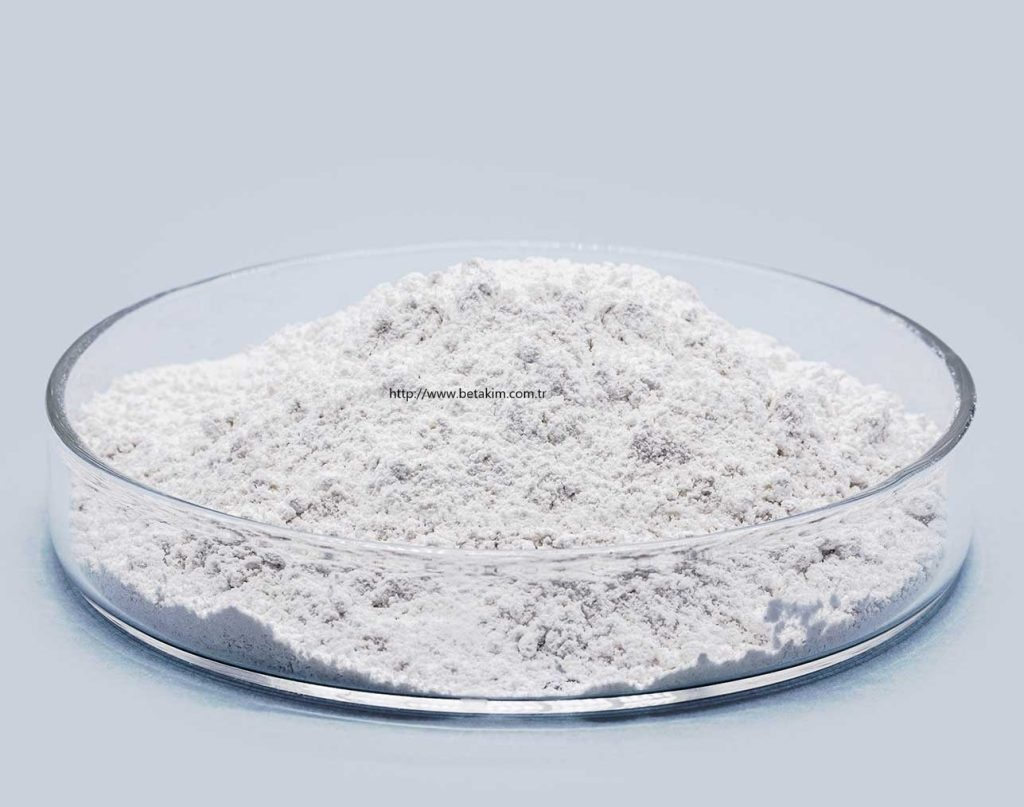
| Appearance | White crystalline powder or crystals |
| Odor | Odorless |
2. PHYSICAL PROPERTIES
| Property | Value |
|---|---|
| Physical State (20°C) | Solid (crystalline powder/crystals) |
| Appearance | White, odorless crystalline powder |
| Molecular Weight | 179.47 g/mol |
| Density (20°C) | 3.54 g/cm³ (anhydrous basis) |
| Melting Point | 100 °C (loses crystal water) |
| Decomposition Temperature | > 500 °C (decomposes to ZnO + SO₃) |
| Solubility in Water (20°C) | High – approx. 54 g/100 mL |
| Solubility in Alcohol | Insoluble |
| pH (5% solution) | 4.0 – 6.0 (slightly acidic) |
| Zinc (Zn) Content | ~36.5% Zn (anhydrous: ~40.5%) |
| Hygroscopicity | Slightly hygroscopic |
| Bulk Density | 1.2 – 1.6 g/cm³ |
3. CHEMICAL PROPERTIES
| Property | Information |
|---|---|
| Chemical Formula | ZnSO₄·H₂O |
| Molecular Weight | 179.47 g/mol |
| Zinc Content | ~36.5% Zn (as ZnSO₄·H₂O) |
| Sulfate Content | ~53.5% SO₄ |
| Oxidation State | Zn(II) |
| Stability | Stable under normal conditions |
| Dehydration | Loses crystal water at 100°C to form anhydrous ZnSO₄ |
| Thermal Decomposition | ZnSO₄ + Heat → ZnO + SO₂↑ + SO₃↑ (above 500°C) |
| Incompatible Materials | Strong bases (precipitates Zn(OH)₂), strong oxidizing agents |
Dehydration Reaction:
ZnSO₄·H₂O + Heat (100°C) → ZnSO₄ + H₂O↑
Thermal Decomposition (Above 500°C):
ZnSO₄ + Heat → ZnO + SO₂↑ + SO₃↑
4. FORMS OF ZINC SULFATE
| Form | Formula | CAS Number | Zn Content | Primary Use |
|---|---|---|---|---|
| Monohydrate | ZnSO₄·H₂O | 7446-19-7 | ~36.5% | Most common commercial form – agriculture, feed |
| Heptahydrate | ZnSO₄·7H₂O | 7446-20-0 | ~22.7% | Less common – higher solubility |
| Anhydrous | ZnSO₄ | 7733-02-0 | ~40.5% | Laboratory, specialty applications |
5. APPLICATIONS
5.1. Agriculture (Micronutrient Fertilizer) – Primary Use
| Application | Function |
|---|---|
| Micronutrient Fertilizer | Provides zinc for plant growth |
| Soil Application | Corrects zinc deficiency in soils |
| Foliar Spray | Rapid correction of deficiency symptoms |
| Fertilizer Blending | Component of NPK fertilizers (zinc-coated or blended) |
| Chelated Zinc Production | Raw material for EDTA-Zn, other chelates |
Zinc Deficiency Symptoms in Plants:
-
Stunted growth
-
Interveinal chlorosis (yellowing between veins)
-
Small leaves (little leaf)
-
Reduced yield
Typical Application Rates:
-
Soil application: 5 – 50 kg/ha (depending on deficiency severity)
-
Foliar spray: 0.5 – 2% solution
5.2. Animal Feed (Micronutrient Supplement)
| Application | Function |
|---|---|
| Feed Additive | Provides essential zinc for animal health |
| Growth Promotion | Supports normal growth and development |
| Immune Function | Essential for immune system |
| Skin and Coat Health | Supports healthy skin and hair/feathers |
| Reproduction | Essential for reproductive health |
Typical Dosage in Animal Feed:
-
Poultry: 50 – 150 mg Zn/kg feed
-
Swine: 50 – 150 mg Zn/kg feed
-
Cattle: 30 – 100 mg Zn/kg feed
Note: Consult veterinarian or animal nutrition specialist for specific formulations.
5.3. Chemical Industry
| Application | Function |
|---|---|
| Zinc Compound Production | Raw material for zinc carbonate, zinc oxide, zinc chloride |
| Catalyst | Catalyst in organic synthesis |
| Reagent | Analytical chemistry reagent |
| Electrolyte | In zinc plating and electroplating baths |
5.4. Pharmaceutical Industry
| Application | Function |
|---|---|
| Zinc Supplement | Treatment of zinc deficiency |
| Topical Preparations | Antiseptic, astringent in ointments and lotions |
| Dental Products | Component in some dental formulations |
| Dietary Supplements | Oral zinc tablets and capsules |
5.5. Water Treatment
| Application | Function |
|---|---|
| Coagulant Aid | Helps remove suspended solids |
| Phosphate Removal | Precipitates phosphates |
| Corrosion Inhibitor | In some cooling water formulations |
5.6. Textile Industry
| Application | Function |
|---|---|
| Mordant | Fixes dyes to fabrics |
| Finishing Agent | Flame retardant treatments |
6. SECTORAL SUITABILITY
| Sector | Suitability | Notes |
|---|---|---|
| Agriculture | High | Micronutrient fertilizer for Zn-deficient soils |
| Animal Feed | High | Essential trace mineral supplement |
| Chemical Industry | High | Raw material for zinc compounds |
| Pharmaceutical | Medium | Zinc supplements, topical preparations |
| Water Treatment | Medium | Coagulant aid, phosphate removal |
| Textile | Medium | Mordant, finishing agent |
| Food | Limited | Not a direct food additive; supplements only |
| Cosmetics | Limited | Some topical applications |
7. QUALITY SPECIFICATIONS (TYPICAL)
| Parameter | Fertilizer Grade | Feed Grade | Technical Grade |
|---|---|---|---|
| Purity (ZnSO₄·H₂O) | ≥ 98.0% | ≥ 98.0% | ≥ 99.0% |
| Zinc (Zn) Content | ≥ 35.0% | ≥ 35.0% | ≥ 35.5% |
| Chlorides (Cl) | ≤ 0.05% | ≤ 0.05% | ≤ 0.02% |
| Iron (Fe) | ≤ 0.01% | ≤ 0.01% | ≤ 0.005% |
| Lead (Pb) | ≤ 0.005% | ≤ 0.002% | ≤ 0.001% |
| Arsenic (As) | ≤ 0.0005% | ≤ 0.0005% | ≤ 0.0002% |
| Cadmium (Cd) | ≤ 0.001% | ≤ 0.001% | ≤ 0.0005% |
| Mercury (Hg) | – | ≤ 0.0001% | – |
| Water Insolubles | ≤ 0.05% | ≤ 0.05% | ≤ 0.02% |
| pH (5% solution) | 4.0 – 6.0 | 4.0 – 6.0 | 4.0 – 6.0 |
8. STORAGE & HANDLING
| Parameter | Information |
|---|---|
| Storage Conditions | Cool, dry, well-ventilated area |
| Container Requirements | Tightly closed, moisture-proof containers (HDPE, lined drums, plastic bags) |
| Protect From | Moisture, strong bases, strong oxidizing agents |
| Shelf Life | 12-24 months (when stored properly in unopened packaging) |
| Hygroscopicity | Slightly hygroscopic |
| Incompatible Materials | Strong bases (precipitates Zn(OH)₂), strong oxidizing agents |
| Packaging Options | 25 kg bags, 50 kg drums, 500 kg/1000 kg FIBC (big bags) |
9. SAFETY & HEALTH INFORMATION
GHS Classification
| Hazard Class | Category |
|---|---|
| Acute Toxicity (Oral) | Category 4 (H302) |
| Serious Eye Damage | Category 1 (H318) |
| Skin Irritation | Category 2 (H315) |
| Chronic Aquatic Toxicity | Category 1 (H410) |
Hazard Statements (H-Codes)
| Code | Statement |
|---|---|
| H302 | Harmful if swallowed |
| H315 | Causes skin irritation |
| H318 | Causes serious eye damage |
| H410 | Very toxic to aquatic life with long-lasting effects |
Precautionary Statements (P-Codes)
| Code | Statement |
|---|---|
| P261 | Avoid breathing dust |
| P264 | Wash thoroughly after handling |
| P270 | Do not eat, drink or smoke when using this product |
| P280 | Wear protective gloves, eye protection, face protection |
| P301+P312 | IF SWALLOWED: Call a POISON CENTER if you feel unwell |
| P302+P352 | IF ON SKIN: Wash with plenty of water |
| P305+P351+P338 | IF IN EYES: Rinse cautiously with water for several minutes |
Toxicological Information
| Parameter | Value |
|---|---|
| Oral LD50 (rat) | ~1,000 – 2,000 mg/kg (moderate toxicity) |
| Dermal LD50 (rabbit) | > 2,000 mg/kg |
| Skin Irritation | Moderate irritant |
| Eye Irritation | Severe irritant (causes serious damage) |
| Chronic Effects | Prolonged exposure may cause metal fume fever |
Health Effects:
-
Acute (Ingestion): Nausea, vomiting, abdominal pain, diarrhea
-
Acute (Inhalation): Respiratory tract irritation
-
Eyes: Causes serious eye damage
First Aid Measures
| Exposure Route | Action |
|---|---|
| Inhalation | Remove to fresh air. Seek medical attention if respiratory irritation occurs. |
| Skin Contact | Wash with plenty of water and soap for at least 15 minutes. Remove contaminated clothing. |
| Eye Contact | Rinse immediately with plenty of water for at least 15 minutes. Seek immediate medical attention. |
| Ingestion | Do NOT induce vomiting. Rinse mouth. Drink water. Seek immediate medical attention. |
Personal Protective Equipment (PPE)
| Equipment | Recommendation |
|---|---|
| Respiratory Protection | Dust mask (N95) when handling powder |
| Hand Protection | Chemical-resistant gloves (nitrile) |
| Eye Protection | Safety goggles + face shield |
| Body Protection | Lab coat or protective clothing |
10. ENVIRONMENTAL INFORMATION
| Parameter | Information |
|---|---|
| Aquatic Toxicity | Very toxic to aquatic life with long-lasting effects (H410) |
| Biodegradability | Not applicable (inorganic) |
| Bioaccumulation | Moderate potential |
| Persistence | Inorganic – does not degrade |
| Waste Disposal | Dispose according to local regulations. Do not discharge into natural water bodies. |
11. TRANSPORT INFORMATION
| Parameter | Information |
|---|---|
| UN Number | 3077 (Environmentally hazardous substance, solid, n.o.s.) |
| Hazard Class | 9 (Miscellaneous dangerous goods) |
| Packing Group | III |
| Proper Shipping Name | ENVIRONMENTALLY HAZARDOUS SUBSTANCE, SOLID, N.O.S. (Zinc sulfate monohydrate) |
| Marine Pollutant | Yes |
| ADR/RID Label | 9 + "Environmentally Hazardous" |
12. REGULATORY INFORMATION
| Region | Status |
|---|---|
| EU | REACH registered; approved as feed additive |
| Turkey (KKDIK) | Mandatory compliance; requires registration |
| USA (TSCA) | Listed |
| Canada (DSL) | Listed |
| Australia (AICS) | Listed |
| FDA | Approved as zinc source in dietary supplements |
| Fertilizer Regulations | Approved as micronutrient in many countries |
| Feed Regulations | Approved as trace mineral in animal feed |
13. COMPARISON: MONOHYDRATE vs HEPTAHYDRATE vs ANHYDROUS
| Property | Monohydrate | Heptahydrate | Anhydrous |
|---|---|---|---|
| Formula | ZnSO₄·H₂O | ZnSO₄·7H₂O | ZnSO₄ |
| CAS | 7446-19-7 | 7446-20-0 | 7733-02-0 |
| Molecular Weight | 179.47 | 287.56 | 161.47 |
| Zn Content | ~36.5% | ~22.7% | ~40.5% |
| Appearance | White powder | White crystals | White powder |
| Solubility (20°C) | ~54 g/100 mL | ~96 g/100 mL | ~54 g/100 mL |
| Hygroscopicity | Low | High (efflorescent) | High |
| Cost per kg Zn | Medium | Highest | Lowest |
| Primary Use | Agriculture, feed | Laboratory | Specialty |
14. SYNONYMS & OTHER NAMES
| Turkish Name | English Name |
|---|---|
| Çinko Sülfat Monohidrat | Zinc Sulfate Monohydrate |
| Beyaz Vitriyol | White Vitriol |
| Goslarit | Goslarite |
| Çinko Vitriyol | Zinc Vitriol |
| Sülfürik Asit Çinko Tuzu | Sulfuric Acid Zinc Salt |
Database Identifiers:
-
CAS: 7446-19-7
-
EC: 231-793-3 (for ZnSO₄)
-
MDL: MFCD00050395
-
PubChem CID: 24135
-
RTECS: ZH5300000
15. SUMMARY
Zinc Sulfate Monohydrate (ZnSO₄·H₂O, CAS 7446-19-7) is a white crystalline powder, highly soluble in water, and slightly acidic. It is the most commercially important form of zinc sulfate, widely used in agriculture as a micronutrient fertilizer and in animal feed as a zinc supplement.
Key Features:
| Feature | Value |
|---|---|
| Appearance | White crystalline powder |
| Molecular Weight | 179.47 g/mol |
| Zinc Content | ~36.5% |
| Density | 3.54 g/cm³ |
| Solubility | ~54 g/100 mL water |
Main Application Areas:
| Sector | Applications |
|---|---|
| Agriculture | Micronutrient fertilizer (soil, foliar) |
| Animal Feed | Trace mineral supplement |
| Chemical Industry | Raw material for zinc compounds |
| Pharmaceutical | Zinc supplements, topical preparations |
| Water Treatment | Coagulant aid, phosphate removal |
Key Safety Points:
-
HARMFUL – If swallowed
-
EYE DAMAGE – Causes serious eye damage
-
ENVIRONMENTAL HAZARD – Very toxic to aquatic life
-
SKIN IRRITANT – Causes skin irritation
-
HANDLE WITH PPE – Use gloves, goggles, dust mask
16. IMPORTANT NOTES
-
Most Common Commercial Form: Zinc sulfate monohydrate (CAS 7446-19-7) is the most commercially important form of zinc sulfate. It is preferred over heptahydrate because it has higher zinc content (36.5% vs 22.7%), lower shipping weight, and better storage stability (less efflorescent).
-
Zinc Deficiency in Agriculture: Zinc is an essential micronutrient for plants. Deficiency is common in calcareous (alkaline) soils, sandy soils, and soils with high phosphorus. Symptoms include stunted growth, interveinal chlorosis, and "little leaf" syndrome.
-
Foliar Application vs Soil Application: Foliar spray is more effective for rapid correction of zinc deficiency in growing plants. Soil application is best for long-term maintenance (pre-planting or with fertilizer blends).
-
Compatibility with Other Fertilizers: Zinc sulfate is compatible with most acidic fertilizers. Avoid mixing with alkaline materials (lime, superphosphate with high free lime) as zinc becomes unavailable.
-
Animal Feed Importance: Zinc is essential for animal health – immune function, skin and coat health, growth, and reproduction. Zinc sulfate monohydrate is a common source of zinc in premixes and complete feeds.
-
Dehydration at 100°C: The monohydrate form loses its water of crystallization at 100°C to become anhydrous ZnSO₄. Drying above 100°C may cause caking and reduce solubility.
-
Thermal Decomposition: Above 500°C, zinc sulfate decomposes to zinc oxide (ZnO) and releases toxic sulfur dioxide (SO₂) and sulfur trioxide (SO₃) gases.
-
Eye Hazard: Zinc sulfate causes serious eye damage. Always wear goggles or face shield when handling powder. If eye contact occurs, rinse immediately with plenty of water for at least 15 minutes and seek medical attention.
-
Environmental Concerns: Zinc sulfate is very toxic to aquatic life. Spills should be contained and cleaned up immediately. Do not wash into drains or natural water bodies.
-
Quality Grades:
-
Fertilizer Grade: Minimum 98% purity, lower heavy metal limits
-
Feed Grade: Stricter heavy metal limits (especially Pb, As, Cd, Hg)
-
Technical Grade: Highest purity (>99%) for industrial applications
-
Important Disclaimer: This Technical Data Sheet (TDS) is for informational purposes only. For complete safety, handling, storage, and regulatory compliance information, always refer to the official Safety Data Sheet (SDS) provided by the manufacturer/supplier.