We unleash your business potential by maximize the business innovation.
Send EmailSodium Polyacrylate, Super Absorbent Polymer, SAP, 9003-04-7
Product Name: Sodium Polyacrylate (Super Absorbent Polymer - SAP)
CAS Number: 9003-04-7
Chemical Formula: [−CH₂−CH(CO₂Na)−]ₙ
1. DESCRIPTION AND PHYSICAL/CHEMICAL PROPERTIES
Sodium Polyacrylate is an anionic polyelectrolyte with negatively charged carboxylate groups along its polymer chain, functioning as a super absorbent polymer (SAP). Its most distinctive property is the ability to absorb 100 to 1000 times its own weight in water. It is thermally stable, does not dissolve in water but swells to form a hydrogel. Its hygroscopic nature allows it to retain water for extended periods.
| Property | Value / Description |
|---|---|
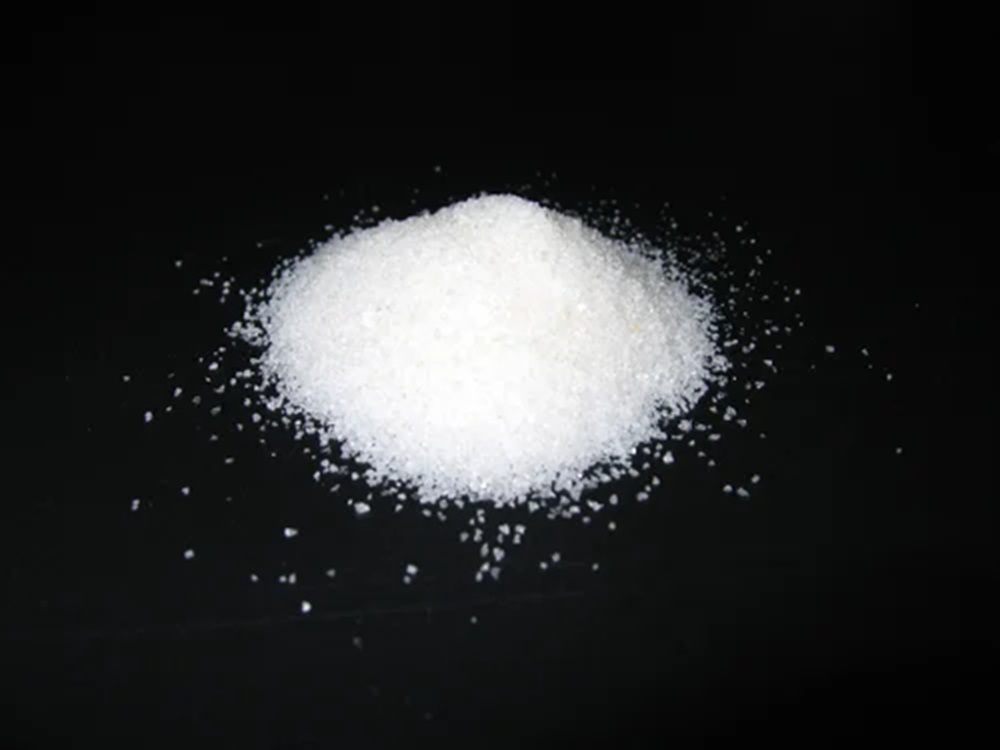
| Appearance | White powder, granules, or transparent gel |
| Chemical Structure | Anionic polyelectrolyte |
| Molar Mass | Variable (Typically around 2.5 million g/mol) |
| Density | ~1.22 g/cm³ |
| Solubility | Insoluble in water, swells to form a gel |
| Hygroscopy | High moisture retention capacity |
2. APPLICATION AREAS
Thanks to its superior water retention capacity, it is used in a wide range of sectors:
-
Hygiene Products: Disposable diapers, adult incontinence products, feminine hygiene pads.
-
Agriculture: As a soil moisture retainer and conditioner to improve irrigation efficiency.
-
Water Treatment: For capturing and removing heavy metal ions.
-
Construction: As a concrete additive to prevent cracking and enhance waterproofing; in coatings to provide impermeability.
-
Cosmetics: As a humectant and film-former in gel-based creams and masks.
-
Food Packaging: Specifically for humidity control in food packaging.
-
Industrial: Viscosity modifier in adhesives, specialty polymer blends, and coatings.
3. TYPES, MOLECULAR WEIGHT, AND APPLICATION DETAILS
The product's performance is optimized according to its form and molecular weight.
| Form | Molecular Weight | Typical Application Area | Usage Amount / Method | Primary Function |
|---|---|---|---|---|
| Granule | High (2-5 Million g/mol) | Hygiene products, Agriculture | Hygiene: 2-5 g per product Agriculture: Mixed into soil at 2-10 kg/ha |
Controlled swelling, very high water retention capacity. |
| Powder | Medium (0.5-2 Million g/mol) | Water treatment, Construction, Industrial additives | Added to formulation at 0.05% - 0.5%. | Rapid dispersion, ion scavenger, viscosity modifier. |
| Gel | Low (< 500,000 g/mol) | Cosmetics, Specialty coatings | Added to formulation at 0.1% - 1%. | Ready-to-use, soft film formation, moisturizing, and texture enhancement. |
4. WHY CHOOSE THIS PRODUCT?
-
Superior Water Retention Compared to Competitors: Traps hundreds of times its weight in water even at very low dosages.
-
Cost-Effectiveness: Delivers effective results with low usage rates due to its high performance.
-
Environmental Contribution: Saves irrigation water in agriculture and reduces waste volume in hygiene products.
-
Versatility: Demonstrates suitability across a wide spectrum of sectors, from hygiene and agriculture to construction and cosmetics.
5. SECTORAL SUITABILITY TABLE
| Sector | Suitability Rating | Description |
|---|---|---|
| Hygiene Products | ★★★★★ | The most common use case where performance is critical. |
| Agriculture | ★★★★☆ | Increases plant yield by retaining soil moisture, saves water. |
| Water Treatment | ★★★★☆ | Effectively captures heavy metal ions. |
| Construction | ★★★★☆ | Used as an additive to improve water impermeability and durability in concrete and coatings. |
| Cosmetics | ★★★☆☆ | Preferred in gel form for moisturizing and texture-improving properties. |
| Food Packaging | ★★★☆☆ | Used for moisture control, but subject to regulations concerning direct food contact. |
6. STORAGE AND PACKAGING
-
Storage Conditions: Must be stored in a cool, dry, and well-ventilated area, away from direct sunlight and moisture. Due to its hygroscopic nature, packages should be sealed airtight once opened. Recommended storage temperature: 5 - 35°C.
-
Shelf Life: 24 months from the production date when stored under suitable conditions.
-
Packaging: Standard packaging is 25 kg moisture-barrier kraft bags or PE-lined big bags. Please contact us for special packaging requests.
7. SAFETY AND HANDLING
-
Hazard Identification: The product is not classified as a hazardous substance. Physical and health hazards are low.
-
Basic Precautions: The product creates an extremely slippery surface when wet. In the event of a spill, clean up mechanically (using a broom, shovel) without using water.
-
Personal Protective Equipment (PPE): The use of a dust mask is recommended in environments where dust generation is high. Protective gloves and work clothes are sufficient for general use.
-
Detailed Information: Please refer to the Safety Data Sheet (SDS) for comprehensive safety information.
ADDITIONAL SECTIONS
8. OTHER NAMES AND IDENTIFIERS
| Identifier Type | Name / Abbreviation |
|---|---|
| IUPAC Name | Poly(sodium prop-2-enoate) |
| Common Abbreviations | ACR, ASAP, PAAS, SAP |
| Trade Names | Waterlock®, Aqua Keep, Luquasorb, Cabloc, Norsocryl |
| Other Technical Names | Super Absorbent Polymer, Acrylic Acid Polymer Sodium Salt, 2-Propenoic acid homopolymer sodium salt |
| CAS Number | 9003-04-7 |
9. SECTORAL SUITABILITY AND MOLECULAR WEIGHT CORRELATION
The table below shows the ideal molecular weight range, preferred form, and suitability rating for each sector.
| Sector | Suitability | Ideal Molecular Weight | Preferred Form | Why This Molecular Weight? |
|---|---|---|---|---|
| Hygiene Products | ★★★★★ | High (2-5 Million) | Granule | Provides maximum gel strength and Absorption Under Load (AUL). |
| Agriculture | ★★★★☆ | High (2-5 Million) | Granule | Resistant to wet-dry cycles in soil; long-lasting water reservoir. |
| Construction | ★★★★☆ | Medium (0.5-2 Million) | Powder | Controlled release of mixing water in concrete, prevents cracks. Optimized for high pH resistance. |
| Water Treatment | ★★★★☆ | Medium (0.5-2 Million) | Powder | High surface area for rapid metal ion capture; easy dispersibility. |
| Cosmetics | ★★★☆☆ | Low (< 500,000) | Gel / Powder | Provides a smooth, non-tacky feel. Suitable for formulations requiring low salt tolerance. |
| Food Packaging | ★★★☆☆ | Medium (1-2 Million) | Powder (embedded in film) | High absorbency in drip pads; controlled moisture barrier in films. |
| Detergents / Cleaning | ★★☆☆☆ | Low (< 300,000) | Liquid / Powder | Used in soluble form as a viscosity builder and anti-redeposition agent. |
10. APPLICATION FORMULATIONS (GUIDE RECIPES)
The following recipes are typical starting points and may require optimization based on specific conditions.
Recipe 1: Agricultural Soil Application
-
Purpose: Reduce water stress for potted and garden plants.
-
Ingredient: Sodium Polyacrylate (High MW, Granule)
-
Method:
-
Homogeneously mix dry granules with soil. Ratio: 0.1% - 0.3% of soil volume (e.g., 1-3 kg per 1 m³ of soil).
-
Apply to the plant root zone (10-20 cm depth).
-
Water thoroughly after planting. The polymer will swell, creating water reservoirs.
-
Recipe 2: Clear Hair Gel (Cosmetics)
-
Purpose: Alcohol-free, moisturizing, non-tacky hair gel.
-
Ingredients:
-
Sodium Polyacrylate (Low MW): 0.5%
-
Deionized Water: 93.5%
-
Glycerin (Humectant): 5.0%
-
Phenoxyethanol (Preservative): 1.0%
-
-
Method:
-
Slowly add the polymer to water at room temperature while stirring rapidly to prevent lumps.
-
Allow 30 minutes for complete hydration.
-
Add glycerin and preservative, then mix until a homogeneous, clear gel is obtained.
-
Recipe 3: Construction Waterproofing Slurry
-
Purpose: Waterproofing for concrete surfaces.
-
Ingredients (Dry Mix):
-
Portland Cement: 45.0%
-
Fine Silica Sand: 50.0%
-
Sodium Polyacrylate (Medium MW, Powder): 2.0%
-
Superplasticizer: 1.5%
-
Other additives (set accelerator, etc.): 1.5%
-
-
Method:
-
Mix all dry ingredients until homogeneous.
-
Immediately before use, add approximately 0.3-0.4 parts water to 1 part of the dry mix and stir until a creamy slurry is achieved.
-
Apply to the surface with a brush or trowel. The polymer swells to block capillary cracks.
-
11. ALTERNATIVE PRODUCTS AND COMPARISON
Here is a comparison of Sodium Polyacrylate (NaPA) with main competing or substitute polymers used in similar applications.
| Property / Criteria | Sodium Polyacrylate (NaPA) | Potassium Polyacrylate | Polyvinyl Alcohol (PVOH) | Carboxymethyl Cellulose (CMC) | Polyethylene Oxide (PEO) |
|---|---|---|---|---|---|
| Primary Function | Super Absorbent (Water Retention) | Super Absorbent (For Agriculture) | Film Former, Barrier | Thickener, Stabilizer | Lubricity, Flocculation |
| Water Absorption Capacity | Very High (100-1000x) | Very High (100-500x) | Low (Water-soluble) | Medium (Forms a gel) | Low-Medium (Water-soluble) |
| Ionic Character | Anionic | Anionic | Nonionic | Anionic | Nonionic |
| Salt Resistance | Low (Collapses in saline) | Low (Collapses in saline) | High | Medium | High |
| Biodegradability | Low | Low | Medium (Under specific conditions) | High | Low-Medium |
| Primary Advantage | Highest absorbency, cost-effective | Provides potassium to plants | Excellent film strength | Naturally derived (cellulose) | Low toxicity, lubricious feel |
| Typical Application | Diapers, industrial pads | Agriculture (soil conditioner) | Water-soluble packaging, paper coating | Food, toothpaste, detergents | Cosmetics (creams), pharma (tablets) |
| Disadvantage vs. NaPA | - | More expensive | Very low absorbency capacity | Lower absorbency and gel stability | Viscosity decreases with temperature |
12. ALL ACRYLATE TYPES AND COMPARISON TABLE
The "acrylate polymers" family is broad. The table below compares the most common acrylate derivatives and their characteristics. This is critical for alternative raw material selection during formulation development.
| Acrylate Type | Chemical Name | CAS Number | Structure / Form | Behavior in Water | Primary Function | Typical Application |
|---|---|---|---|---|---|---|
| Sodium Polyacrylate | Poly(sodium prop-2-enoate) | 9003-04-7 | Anionic, cross-linked powder/granule | Insoluble, Swells | Super Absorbent (SAP) | Diapers, agriculture, waterproofing |
| Ammonium Polyacrylate | Poly(ammonium prop-2-enoate) | 9003-03-6 | Anionic, liquid/powder | Soluble | Dispersant, thickener | Latex paints, ceramics |
| Sodium Acrylate / Acryloyldimethyl Taurate Copolymer | (Various trade names) | Mixture | Powder, pre-neutralized | Swells (slightly) | Electrolyte-resistant gel | Shampoos, sunscreens |
| Polyacrylic Acid (PAA) | Poly(prop-2-enoic acid) | 9003-01-4 | Anionic, liquid/powder | Soluble (pH dependent) | Dispersant, antiscalant | Water treatment, detergents |
| Carbomer | Carbomer (Carbopol®) | 9007-20-9 | Cross-linked, acidic powder | Swells (upon neutralization) | Clear gel thickener | Cosmetics, hand sanitizers |
| Ethyl Acrylate Copolymer | Poly(ethyl acrylate-co-methyl methacrylate) | 9010-88-2 | Nonionic, film | Insoluble | Enteric film coating | Pharmaceutical tablet coating |
| Hydroxyethyl Methacrylate (HEMA) | Poly(2-hydroxyethyl methacrylate) | 25249-16-5 | Nonionic, cross-linked | Swells (Gel) | Biocompatible hydrogel | Contact lenses, wound dressings |
Important Note: This table demonstrates that when selecting an "acrylate," factors like solubility, electrolyte tolerance, aesthetics (feel), and biocompatibility are crucial, not just "water absorption." For example, while Sodium Polyacrylate (insoluble SAP) is ideal for a diaper, a Carbomer (which clarifies upon neutralization) is preferred for a clear cosmetic gel.
Disclaimer:
The information provided in this technical data sheet and its additional sections is based on our current knowledge and experience and serves as a general introduction to the product. As usage and application conditions are beyond our control, the stated values and recommendations do not constitute a legally binding guarantee or warranty for the suitability of this product for a specific purpose. Users are obliged to determine the suitability of the product for their own processes and applications through their own testing.