We unleash your business potential by maximize the business innovation.
Send EmailL-Carnitine Tartrate, Carnitine Tartrate, L-Carnitine L-Tartrate, Levocarnitine Tartrate, 36687-82-8
L‑Carnitine Forms
-
L‑Carnitine Base (Free form)
-
CAS No: 541‑15‑1
-
Pure form without salt or ester. Commonly used in dietary supplements. Highly hygroscopic, acidic taste. Preferred for clinical carnitine deficiency.
-
-
L‑Carnitine Tartrate
-
CAS No: 36687‑82‑8 (Note: 36687‑47‑9 is incorrect)
-
The most common form for athletes. Provides fast absorption. Preferred for performance and fat metabolism support. Low hygroscopicity, easy to tablet.
-
-
Acetyl‑L‑Carnitine (ALCAR)
-
CAS No: 3040‑38‑8
-
Known for its effects on brain function and the nervous system. Used in nootropic supplements for cognitive performance. Crosses the blood-brain barrier, neuroprotective.
-
-
Propionyl‑L‑Carnitine
-
CAS No: 119793‑66‑7 (HCl salt) (Note: 511‑97‑1 is incorrect)
-
Recognized for its benefits on vascular health and circulation. Used in peripheral artery disease, heart failure, and angina. Supports vasodilation.
-
-
L‑Carnitine Fumarate
-
CAS No: 90471‑79‑7
-
Supports energy production and heart health. Also found in sports nutrition products. The fumarate ion directly contributes to the Krebs cycle. High bioavailability.
-
Carnitine Tartrate
1. Product Identification
| Parameter | Value |
|---|---|
| Product Name | Carnitine Tartrate |
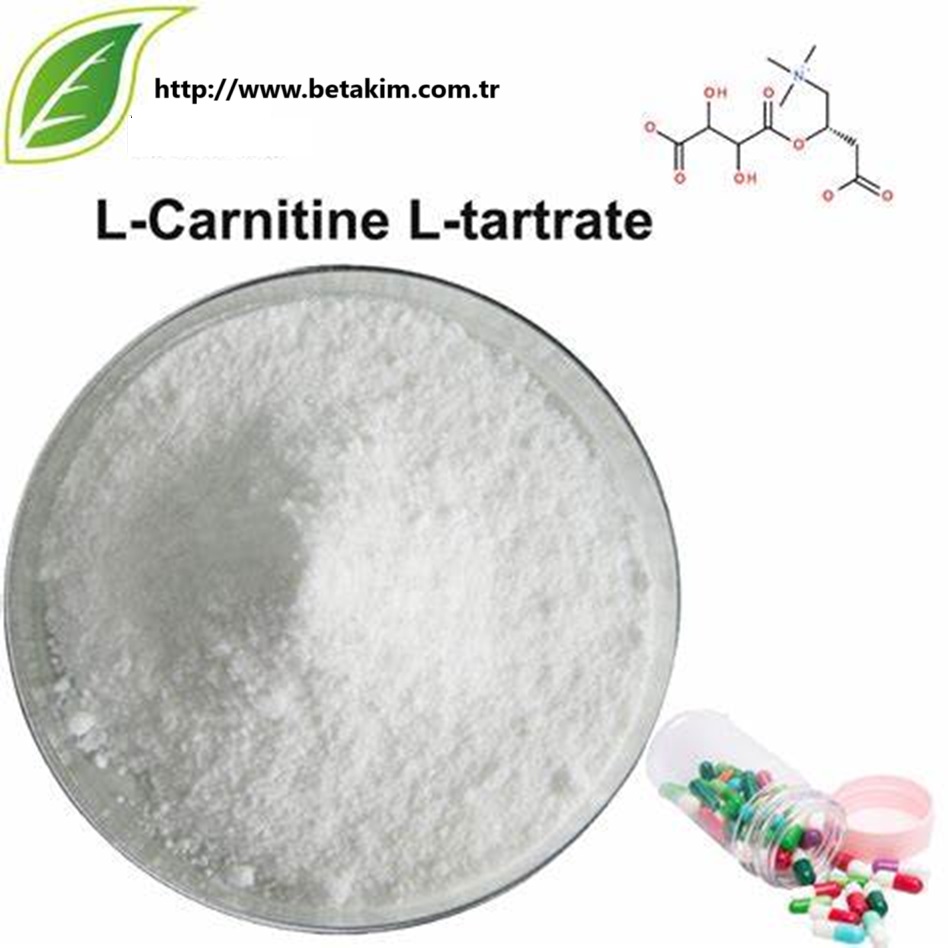
| Synonyms | Carnitine Tartarate, L-Carnitine Tartarate, L-Carnitine L-Tartrate, Levocarnitine Tartrate |
| CAS Number | 36687-82-8 |
| Chemical Formula | C₁₀H₂₀N₂O₁₂ |
| Molecular Weight | 472.49 g/mol |
| Structural Formula | L-Carnitine L-tartrate salt |
2. Physical and Chemical Properties
| Parameter | Specification |
|---|---|
| Appearance | White to off-white crystalline powder |
| Odor | Characteristic, odorless or slightly acidic |
| Solubility | Freely soluble in water (>100 g/L, 25°C) |
| pH (1% solution, 25°C) | 3.0 – 5.0 |
| Melting Point | ~180°C (decomposes) |
| Hygroscopicity | Low to moderate (stable in dry conditions) |
| Density | ~0.5 – 0.7 g/cm³ (untapped) |
3. Quality Specifications (Typical Analysis)
| Test | Specification | Method |
|---|---|---|
| Purity (as L-Carnitine base) | ≥ 98.0% | HPLC / Titration |
| L-Carnitine Content | 66.0 – 70.5% (on dry basis) | Titration (EP/USP) |
| Tartaric Acid Content | 29.5 – 34.0% | Titration |
| Loss on Drying | ≤ 1.0% | 105°C, 2 hours |
| Sulfated Ash | ≤ 0.5% | 600°C |
| Specific Optical Rotation [α]²⁵ᴅ | -9.5° to -11.0° (c=1, H₂O) | Polarimetry |
| Heavy Metals (as Pb) | ≤ 10 ppm | ICP-MS |
| Arsenic (As) | ≤ 2 ppm | ICP-MS |
| Total Plate Count | ≤ 1000 CFU/g | USP <61> |
| Yeast & Mold | ≤ 100 CFU/g | USP <61> |
| E. coli / Salmonella | Negative / 10g | USP <62> |
4. Solubility Profile
| Solvent | Solubility (20-25°C) | Evaluation |
|---|---|---|
| Water | ≥ 200 mg/mL | Freely soluble |
| Ethanol (96%) | < 5 mg/mL | Slightly soluble |
| Methanol | ~10 mg/mL | Partially soluble |
| DMSO | ~50 mg/mL | Moderately soluble |
| Oils / Lipids | Insoluble | – |
5. Stability and Storage
| Parameter | Condition |
|---|---|
| Shelf Life | 36 months in original packaging |
| Storage Condition | Store in a cool, dry place, protected from light and moisture (≤ 25°C, RH < 65%) |
| Stability Note | Non-hygroscopic but may cake under prolonged high humidity. Stable at acidic pH. |
| Packaging | PE inner bag + aluminum foil or HDPE drums (5 kg, 10 kg, 25 kg) |
6. Applications and Uses
| Area | Details |
|---|---|
| Dietary Supplements | Supports fatty acid metabolism and mitochondrial energy production. Used in capsules, tablets, powders, and liquid formulations. |
| Sports Nutrition | Enhances exercise performance, delays fatigue, reduces post‑exercise muscle damage and lactate accumulation. |
| Cardiovascular Health | Improves myocardial energy metabolism; adjunctive therapy for heart failure, angina, and ischemic conditions. |
| Weight Management | Increases fat oxidation, helping improve body composition. |
| Neurological Health | Investigated for neuroprotective potential (peripheral neuropathy, cognitive function). |
7. Typical Dosage Range (Supplement Use)
| Purpose | Daily Dose | Duration |
|---|---|---|
| General Health / Energy | 500 – 1000 mg | Long-term |
| Sports Performance | 1000 – 2000 mg (pre‑exercise) | 4–12 weeks |
| Weight Management | 1000 – 1500 mg | 8–12 weeks |
| Cardiovascular Support | 1000 – 2000 mg (under medical supervision) | 12+ weeks |
*Note: Doses may vary based on individual needs and health status. High doses (>2 g/day) may cause gastrointestinal discomfort (nausea, diarrhea) in some individuals.*
8. Mechanism of Benefits
-
Energy Production: Transports long‑chain fatty acids into mitochondria, enhancing β‑oxidation and ATP synthesis.
-
Muscle Recovery: Reduces exercise‑induced oxidative stress and lowers muscle damage markers (CK, LDH).
-
Heart Health: Optimizes myocardial fatty acid utilization, balances glucose consumption, and reduces ischemia/reperfusion injury.
-
Metabolic Effect: Promotes fat oxidation without taxing carbohydrate metabolism.
9. Safety and Regulatory Information
| Parameter | Information |
|---|---|
| GHS Classification | Not classified (generally recognized as safe) |
| Hazard Statements | None |
| Precautionary Statements | P264 (wash hands after handling), P280 (remove contaminated clothing) |
| GRAS Status | Recognized as GRAS by FDA (GRN No. 944) |
| Dietary Supplement Regulation | Permitted for use in dietary supplements in the US, EU, Turkey, and many other countries. |
10. Compatibility and Formulation Notes
-
Compatibility with other ingredients: Compatible with vitamin C, zinc, magnesium, creatine, coenzyme Q10.
-
Incompatibilities: Avoid prolonged contact with strongly alkaline conditions (pH > 7.5).
-
Isomeric Form: The L‑enantiomer is bioactive; D‑form is not used.
-
Bioavailability: ~15‑20% oral absorption. The tartrate salt offers lower hygroscopicity and better tabletting properties than L-carnitine base.
11. Reference Standards
| Pharmacopoeia | Monograph |
|---|---|
| USP | Levocarnitine Tartrate (no official monograph; L-Carnitine methods adapted) |
| EP | Levocarnitine (methods adaptable for tartrate salt) |
| FCC | L-Carnitine (specifications for L-Carnitine Tartrate available) |
Note: This Technical Data Sheet contains typical values and general information. For specific batch analysis results and certificates of analysis (COA), please contact the manufacturer or supplier. This product is intended for use in dietary supplements, functional foods, and non‑cosmetic applications.
Complete Guide to Carnitine Types: Comparison, Uses, Protocols, Alternatives & FAQs
1. Other Carnitine Types and Chemical Forms
| Name | Chemical Structure / Salt | CAS No. | Molecular Weight | Active Carnitine Ratio | Key Properties |
|---|---|---|---|---|---|
| L-Carnitine (Levocarnitine) | Pure L-Carnitine base | 541-15-1 | 161.20 g/mol | 100% | Highly hygroscopic, very acidic taste, moderate absorption |
| Carnitine Tartrate | L-Carnitine + L-Tartaric acid (1:1) | 36687-82-8 | 472.49 g/mol | ~67% | Low hygroscopicity, stable, gold standard for sports performance |
| Acetyl-L-Carnitine (ALCAR) | L-Carnitine + Acetyl group | 3040-38-8 | 203.23 g/mol (HCl salt) | ~80% (base) | Crosses blood-brain barrier, neurological effects |
| Propionyl-L-Carnitine (PLC) | L-Carnitine + Propionyl group | 119793-66-7 | 217.26 g/mol (HCl) | ~74% | Vasodilation, cardiovascular, peripheral artery disease |
| Glycopropionyl Carnitine (GPLC) | Glycol + Propionyl Carnitine | 14636-96-5 | ~290 g/mol | Variable | Vasodilation and nitric oxide production |
| D-Carnitine | D-enantiomer (synthetic, not natural) | 541-14-0 | 161.20 g/mol | None (inactive) | Toxic (inhibits endogenous carnitine) |
| DL-Carnitine | Racemic mixture | 461-06-3 | 161.20 + 161.20 | Only L-form active | Not used clinically |
2. Comparison Table: 4 Most Common Carnitine Types
| Feature | L-Carnitine (Base) | Carnitine Tartrate | Acetyl-L-Carnitine (ALCAR) | Propionyl-L-Carnitine (PLC) |
|---|---|---|---|---|
| Primary Use | General health, carnitine deficiency | Sports performance, fat burning | Neurology, brain health, aging | Cardiovascular, vascular health |
| Oral Bioavailability | ~14-18% | ~15-20% | ~20% (faster absorption) | ~15% |
| Crosses blood-brain barrier? | Very little | No | Yes (due to acetyl group) | Partially |
| Muscle accumulation | High (active transport from blood) | Very high | Moderate (high in brain) | Low (high in vascular tissue) |
| Fat oxidation / Energy | ++ | +++ (best) | + | + |
| Neuroprotective / Cognitive | + | – | ++++ | + |
| Cardioprotective | ++ | ++ | + | ++++ (best) |
| Vasodilation / NO increase | – | – | + | ++++ |
| Taste (powder form) | Very acidic, unpleasant | Acidic but more tolerable | Less acidic (salt form) | Slightly bitter |
| Hygroscopicity | Very high (cakes) | Low | Moderate | Low |
| Tabletability | Difficult | Excellent | Good | Good |
| Typical daily dose | 500-2000 mg | 1000-3000 mg | 500-2500 mg | 500-1500 mg (PAD: 2x500 mg) |
3. Usage Protocols (Clinical & Supplement Regimens)
Note: The following protocols reflect typical clinical and sports nutrition practices. Always consult a physician for disease treatment.
A. Sports Performance & Muscle Recovery (Carnitine Tartrate preferred)
| Goal | Dosage | Timing | Duration |
|---|---|---|---|
| Anaerobic power (short high-intensity) | 2 g (2000 mg) | 60-90 min pre-exercise | 4-8 weeks |
| Fat burning / endurance | 1-2 g/day | Morning on empty stomach + pre-exercise | 6-12 weeks |
| Reducing muscle damage (DOMS) | 2 g/day | 2 hours pre-workout + immediately post-workout | 2-4 weeks cycling |
Cycle recommendation: 8 weeks on → 2 weeks off → repeat.
B. Cognitive Function & Neurology (Acetyl-L-Carnitine)
| Condition | Dosage | Timing | Duration |
|---|---|---|---|
| Mild cognitive impairment / aging | 500-1500 mg/day | Morning & noon (evening may cause insomnia) | 6 months |
| Peripheral neuropathy (chemo/diabetic) | 500 mg 2-3 times/day | With meals | 3-6 months |
| Depressive symptoms (adjuvant) | 1000-2000 mg/day | Morning | 8-12 weeks |
C. Cardiovascular Health (Propionyl-L-Carnitine or L-Carnitine)
| Condition | Carnitine Type | Dosage | Duration / Note |
|---|---|---|---|
| Stable angina pectoris | Propionyl-L-Carnitine | 500 mg twice daily | 6 months (symptom improvement) |
| Congestive heart failure (NYHA II-III) | L-Carnitine (base or tartrate) | 1-2 g/day | 3-12 months |
| Peripheral artery disease (intermittent claudication) | Propionyl-L-Carnitine | 1-2 g/day (divided) | Increases walking distance |
D. Weight Management & Metabolic Health
| Protocol | Carnitine Type | Dose | Can be combined with |
|---|---|---|---|
| Energy during ketogenic diet | Carnitine Tartrate | 1-2 g/day | MCT oil, creatine |
| Metabolic syndrome / insulin resistance | L-Carnitine (base) | 1 g/day | Chromium picolinate, alpha-lipoic acid |
4. Carnitine Selection by Application
| Application Area | Recommended Carnitine Type | Alternative (second choice) |
|---|---|---|
| Sports nutrition (performance, fat loss) | Carnitine Tartrate | L-Carnitine base + Vitamin C |
| Brain health, focus, memory | Acetyl-L-Carnitine (ALCAR) | L-Carnitine + Omega-3 |
| Heart health, chest pain (angina) | Propionyl-L-Carnitine (PLC) | L-Carnitine + Coenzyme Q10 |
| Carnitine deficiency (genetic or drug-induced) | L-Carnitine (base) (e.g., valproate use) | – |
| Peripheral neuropathy (diabetic, chemo) | Acetyl-L-Carnitine | Combine with R-alpha-lipoic acid |
| Elderly energy & muscle mass preservation | L-Carnitine or Tartrate | ALCAR (for cognitive) |
| Vasodilation, “pump” | Glycopropionyl Carnitine (GPLC) | PLC |
| Infertility (male sperm quality) | L-Carnitine + Acetyl-L-Carnitine combo | 500+500 mg/day |
5. Alternatives (Compounds with Carnitine-like Effects)
| Alternative | Mechanism of Action | Advantage | Difference |
|---|---|---|---|
| Creatine Monohydrate | Speeds up ATP resynthesis | Short-term high-intensity performance | Does not directly affect fat metabolism |
| Coenzyme Q10 | Mitochondrial electron transport chain | Cardiovascular + energy | Not a fatty acid carrier |
| MCT Oil (C8, C10) | Rapid ketone production, alternative energy | Increases fat oxidation, supports ketosis | Enters mitochondria without needing carnitine |
| Green Tea Extract (EGCG) | Upregulates beta-oxidation | Fat burning, thermogenesis | Enzyme activation, not transport |
| Alpha-Lipoic Acid (ALA) | Mitochondrial antioxidant, glucose utilization | Neuropathy, metabolic syndrome | Does not carry fatty acids |
| Betaine (Trimethylglycine) | Methyl donor, cellular osmolyte | Energy, lowers homocysteine | No direct fatty acid oxidation |
| Ribose | ATP precursor | Muscle energy | Different pathway than carnitine |
6. Other Names (Synonyms & Trade Names)
| Carnitine Type | Other Names / Generic Names |
|---|---|
| L-Carnitine | Levocarnitine, (R)-3-Hydroxy-4-(trimethylammonio)butanoate, Carnitine base, Vitamin BT |
| Carnitine Tartrate | Carnitine Tartarate, L-Carnitine L-Tartrate, L-Carnitine Tartrate (1:1) |
| Acetyl-L-Carnitine | Acetyl-L-carnitine, ALC, ALCAR, Levocarnitine acetyl, Acetyllevocarnitine |
| Propionyl-L-Carnitine | Propionyl-L-carnitine, PLC, Levocarnitine propionyl |
| Trade names (examples) | Carnitor® (L-carnitine), GPLC® (GPLC), Alcar® (ALCAR), Propicarn® (PLC) |
Note: Some manufacturers use branded names like “Carnipure®” (Lonza’s high-purity L-carnitine and carnitine tartrate).
7. Frequently Asked Questions (FAQs)
Q1: Which carnitine type is best for fat burning?
A: Carnitine Tartrate has the highest muscle tissue uptake and enhances fat oxidation during exercise. It is the gold standard for athletes.
Q2: Is acetyl-L-carnitine the same as regular L-carnitine?
A: No. ALCAR crosses the blood-brain barrier and is neuroprotective. Regular L-carnitine is more active in muscle and heart tissue.
Q3: Is carnitine harmful to the heart? Is there a TMAO risk?
A: A 2013 study suggested that carnitine from red meat may convert to TMAO, potentially increasing atherosclerosis risk. However, subsequent studies have shown that supplemental carnitine does not cause clinically meaningful TMAO elevation and actually protects the heart. Patients with cardiovascular disease should consult their doctor.
Q4: What is the maximum daily carnitine intake?
A: For general health: 500-2000 mg; for athletes, short-term 3-4 g/day is safe. >5 g/day may cause gastrointestinal distress (diarrhea, cramps).
Q5: Should carnitine be taken on an empty or full stomach?
A: On an empty stomach for better absorption (when insulin is low). If stomach upset occurs, take with food. Pre-exercise intake is preferred.
Q6: Is carnitine tartrate powder or capsules better?
A: Powder is more cost-effective for higher doses but has an acidic taste. Capsules/tablets are convenient to mask taste. Bioavailability is the same.
Q7: Can carnitine be taken with creatine?
A: Yes, they show synergy. Carnitine supports fat metabolism, creatine supports the phosphocreatine system. A popular combination for sports performance.
Q8: Should vegetarians/vegans take carnitine?
A: Carnitine is naturally found in red meat and dairy. Vegetarians/vegans may have lower plasma carnitine levels. Supplementation may be beneficial but is not mandatory.
Q9: Does carnitine affect sleep? Is it stimulating?
A: ALCAR taken in the evening may cause insomnia in some individuals (due to neurotransmitter effects). Other carnitine forms generally do not affect sleep.
Q10: Can pregnant women take carnitine?
A: Safety data during pregnancy and breastfeeding are insufficient. Should not be used unless recommended by a doctor.
8. Conclusion: Which Carnitine Is Right for You?
| Goal / Condition | Recommended Carnitine |
|---|---|
| Athlete, bodybuilder | Carnitine Tartrate |
| Fat loss support | Carnitine Tartrate or L-Carnitine |
| Older adults, memory issues | Acetyl-L-Carnitine (ALCAR) |
| Heart disease, chest pain | Propionyl-L-Carnitine (PLC) |
| Peripheral neuropathy pain | Acetyl-L-Carnitine + ALA |
| Low energy (general supplement) | L-Carnitine base or Tartrate |
| Budget-friendly, general purpose | L-Carnitine powder (on empty stomach) |