We unleash your business potential by maximize the business innovation.
Send EmailCalcium Hydroxide, Slaked Lime, Portlandite, Pickling Lime, Hydrated Lime, E526, ACS, 1305-62-0
CALCIUM HYDROXIDE (Hydrated Lime / Slaked Lime)
CAS Number: 1305-62-0
EINECS Number: 215-137-3
Food Additive Code: E526 (Pickling Lime)
1. IDENTIFICATION
| Property | Information |
|---|---|
| Chemical Name | Calcium hydroxide |
| Synonyms | Slaked lime, Hydrated lime, Calcium hydrate, Pickling lime, Lime water (aqueous solution), Carbide lime, Portlandite (mineral form) |
| Chemical Formula | Ca(OH)₂ |
| Molecular Weight | 74.09 g/mol |
| CAS Number | 1305-62-0 |
| EINECS Number | 215-137-3 |
| MDL Number | MFCD00010901 |
| RTECS Number | EW2800000 |
| UN Number | 3262 (Corrosive solid, basic, inorganic, n.o.s.) |
| HS Code | 2825 90 19 |
2. PHYSICAL AND CHEMICAL PROPERTIES
| Property | Value |
|---|---|
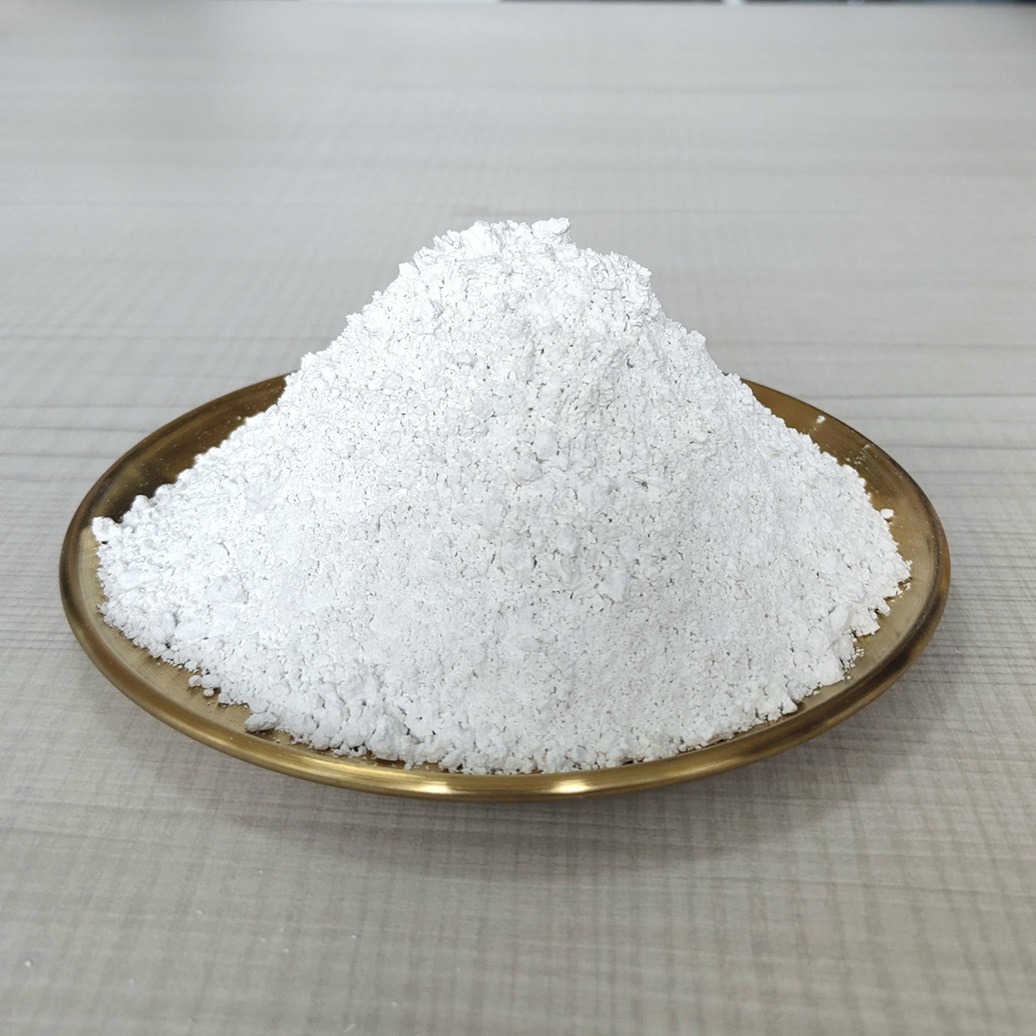
| Appearance | White powder or colorless crystals |
| Odor | Odorless |
| Density (20°C) | 2.21 – 2.24 g/cm³ |
| Melting Point | 580 °C (1,076 °F) – decomposes to CaO + H₂O |
| Boiling Point | 2,850 °C (decomposes before boiling) |
| Water Solubility (20°C) | 1.65 – 1.73 g/L (slightly soluble) |
| Solubility | Soluble in glycerol, acids, ammonium chloride solution, sugar solutions; Insoluble in alcohol |
| pH (saturated solution, 25°C) | 12.4 (strongly alkaline) |
| pKa | 12.6 (at 20°C) |
| Solubility Product Constant (Ksp) | pKsp = 5.26 |
| Vapor Pressure | Negligible |
| Storage Temperature | +5°C to +30°C |
| Stability | Stable; absorbs CO₂ from air to form CaCO₃; incompatible with strong acids |
Water Solubility at Different Temperatures (g/100mL):
| Temperature (°C) | Solubility (g/100mL) |
|---|---|
| 0 | 0.189 |
| 10 | 0.182 |
| 20 | 0.173 |
| 30 | 0.160 |
| 40 | 0.141 |
| 60 | 0.121 |
| 80 | 0.086 |
| 90 | 0.076 |
Note: Solubility decreases as temperature increases (inverse solubility).
3. TYPES / FORMS (SAME CAS NUMBER)
All forms share the same CAS number (1305-62-0); differences are in application, purity, or physical form.
| Type / Form | Description |
|---|---|
| Pure Calcium Hydroxide (Portlandite) | Natural mineral form, crystalline structure |
| Slaked Lime / Hydrated Lime | Produced by reacting CaO with water; widely used in construction and water treatment |
| Milk of Lime | Suspension of Ca(OH)₂ in water; used in sugar refining and food industry |
| Pickling Lime (E526) | Food additive grade, especially used in pickling and food processing |
| Laboratory Reagents (ACS, USP, EP, BP, JP) | High-purity grades for analysis and chemical synthesis |
| Technical Grade | Industrial grade for construction, flue gas treatment, etc. |
4. CHARACTERISTICS & REACTIVITY
-
Strong Base: Aqueous solutions are strongly alkaline (pH 12.4 at 25°C).
-
CO₂ Absorption: Readily absorbs carbon dioxide from air to form calcium carbonate (CaCO₃).
-
Thermal Decomposition: Decomposes above 580°C to calcium oxide (CaO) and water.
-
Acid Reaction: Dissolves in acids with significant heat generation.
-
Ammonium Salt Reaction: Reacts with ammonium salts to release ammonia gas.
-
Corrosive: Strong alkaline substance with irritating and corrosive effects.
5. APPLICATIONS
| Industry | Application |
|---|---|
| Construction | Mortar, plaster, cement additives, whitewash |
| Water Treatment | pH adjustment, water softening, flocculation, disinfection clarification |
| Agriculture | Soil pH correction (liming agent), pesticide carrier |
| Food Industry (E526) | Pickling agent, firming agent, sugar refining (carbonatation process), calcium fortification |
| Chemical Industry | Production of bleaching powder (calcium hypochlorite), calcium salts (calcium nitrate, calcium bromide, calcium peroxide), propylene oxide |
| Waste Treatment | Flue gas desulfurization (SO₂ removal), sludge treatment |
| Pharmaceuticals | Antacid, buffer, calcium supplement in formulations |
| Petrochemicals | Lubricating oil additives (anti-coking, corrosion prevention) |
| Laboratory | CO₂ absorbent, analytical reagent, buffer preparation |
Downstream Products:
-
Lithium hydroxide
-
Calcium hypochlorite (bleaching powder)
-
Calcium nitrate
-
Calcium nitrite
-
Calcium bromide
-
Calcium peroxide
-
Glyphosate
-
Propylene oxide
6. SAFETY AND HEALTH INFORMATION (MSDS SUMMARY)
GHS Hazard Classification
| Hazard Class | Category |
|---|---|
| Skin Corrosion/Irritation | Category 1 (Causes severe burns) |
| Serious Eye Damage | Category 1 (Risk of serious eye damage) |
| Specific Target Organ Toxicity (Single exposure) | Category 3 (Respiratory irritation) |
Hazard Statements (H-Codes)
| Code | Statement |
|---|---|
| H314 | Causes severe skin burns and eye damage |
| H315 | Causes skin irritation |
| H318 | Causes serious eye damage |
| H335 | May cause respiratory irritation |
Precautionary Statements (P-Codes)
| Code | Statement |
|---|---|
| P260 | Do not breathe dust |
| P280 | Wear protective gloves, protective clothing, eye protection, face protection |
| P302+P352 | IF ON SKIN: Wash with plenty of water |
| P305+P351+P338 | IF IN EYES: Rinse cautiously with water for several minutes; remove contact lenses if present |
| P304+P340 | IF INHALED: Remove person to fresh air |
Occupational Exposure Limits
| Agency | Limit |
|---|---|
| ACGIH (USA) | TWA: 5 mg/m³ |
| OSHA (USA) | TWA: 15 mg/m³ (total dust); TWA: 5 mg/m³ (respirable fraction) |
| NIOSH (USA) | TWA: 5 mg/m³ (ceiling) |
Toxicology
| Parameter | Value |
|---|---|
| Oral LD50 (rat) | 7,340 mg/kg |
| Oral LD50 (mouse) | 7,300 mg/kg |
| Eye Irritation (rabbit) | 10 mg – severe |
| Toxicity Class | Low toxicity (but corrosive) |
NFPA 704
| Health (Blue) | Fire (Red) | Reactivity (Yellow) | Special |
|---|---|---|---|
| 3 (Severe) | 0 (Does not burn) | 1 (Unstable if heated) | ALK (Alkali) |
7. FIRST AID MEASURES
| Route | Action |
|---|---|
| Inhalation | Remove to fresh air. If breathing is difficult, administer oxygen. Seek medical attention. |
| Skin Contact | Remove contaminated clothing. Wash with plenty of water for at least 15 minutes. |
| Eye Contact | Rinse immediately with running water for at least 15 minutes. Then rinse with 5% ammonium chloride or 0.01% EDTA solution. Seek immediate medical attention. |
| Ingestion | Do NOT induce vomiting. Drink large amounts of water or milk. Seek medical attention. |
8. FIRE FIGHTING MEASURES
| Property | Information |
|---|---|
| Flash Point | Non-flammable |
| Auto-ignition Temperature | Not applicable |
| Extinguishing Media | Water, CO₂, foam, dry powder |
| Special Hazards | Decomposes at high temperature to release CaO (irritant) |
| Protective Equipment | Self-contained breathing apparatus (SCBA) |
9. TRANSPORT & STORAGE
| Property | Information |
|---|---|
| UN Number | 3262 |
| Hazard Class | 8 (Corrosive substance) |
| Packing Group | III (minor danger) |
| Packaging | 25 kg multi-layer paper bags, PP woven bags, or FIBC (big bags), palletized |
| Storage Conditions | Cool, dry, well-ventilated warehouse; protect from moisture and CO₂ (prevents carbonation) |
| Incompatible Materials | Strong acids, fluorine, moisture, CO₂ |
| Shelf Life | 12-24 months when stored properly (protect from air to prevent carbonation) |
10. REGULATORY INFORMATION
| Region | Status |
|---|---|
| EU | REACH registered; E526 approved as food additive under Regulation (EC) 1333/2008 |
| USA (FDA) | GRAS (Generally Recognized as Safe) – 21 CFR §182.1205, §184.1205 |
| Turkey | Compliant with Turkish Food Codex (TGK) |
| Japan | Maximum usage: 1.84% (as calcium 1%) |
| FAO/WHO | ADI not specified (accepted as GMP); permitted in cream, whey cream, grape juice, baby food, caseinates |
11. ENVIRONMENTAL INFORMATION
| Property | Information |
|---|---|
| Ecotoxicity | Harmful to aquatic life in high concentrations (high pH) |
| Persistence | Not persistent; reacts with CO₂ to form CaCO₃ |
| Bioaccumulation | Not expected |
| Waste Disposal | Neutralize with acid (under controlled conditions) or dispose according to local regulations |
12. OTHER IDENTIFIERS
| Identifier | Value |
|---|---|
| InChI | InChI=1/Ca.2H2O/h;2*1H2/q+2;;/p-2/rCaH2O2/c2-1-3/h2-3H |
| SMILES | [Ca+2].[OH-].[OH-] |
| Merck Index | 14,1673 |
| TSCA Status | Yes (listed) |
| WGK Germany | 1 (slightly hazardous to water) |
13. REFERENCES & NOTES
-
E Number: E526 (when used as food additive)
-
Ksp (pKsp): 5.26
-
pH Range Indicator: 12.4 (saturated solution)
Important: This TDS is for Calcium Hydroxide (Ca(OH)₂, CAS 1305-62-0) only. Do not confuse with Calcium Oxide (CaO, quicklime, CAS 1305-78-8) or Calcium Carbonate (CaCO₃, CAS 471-34-1). For emergencies or a detailed Material Safety Data Sheet (MSDS), contact the manufacturer/supplier.