We unleash your business potential by maximize the business innovation.
Send EmailUndeceth-5, Polyethylene Glycol Undecyl Ether, Undecoxyethanol, Undecoxy Ethanol, 34398-01-1
Undeceth-5
1. Product Identity
| Property | Details |
|---|---|
| Product Name | Undeceth-5 |
| CAS Number | 34398-01-1 |
| EINECS Number | 500-084-3 |
| Molecular Formula | (C₂H₄O)ₙ · C₁₁H₂₄O (n=5) or C₁₃H₂₈O₂ |
| Molecular Weight | 216.36 g/mol |
| IUPAC Name | 2-undecoxyethanol |
| INCI Name | Undeceth-5 |
| Chemical Class | Nonionic surfactant, Polyethylene glycol derivative |
2. Synonyms and Other Names
| Name | Description |
|---|---|
| Polyethylene glycol monoundecyl ether | Common chemical name |
| Poly(oxy-1,2-ethanediyl), alpha-undecyl-omega-hydroxy- | IUPAC description |
| Undecan-1-ol, ethoxylated | Chemical description |
| 2-Undecyloxy-1-ethanol | Alternative chemical name |
| Polyoxyethylene (5) undecyl ether | Name indicating ethylene oxide units |
| Ethoxylated Undecanol | Technical description |
| Polyethylene glycol monoundecyl ether | Full chemical name |
| 2-undecoxyethanol | IUPAC name form |
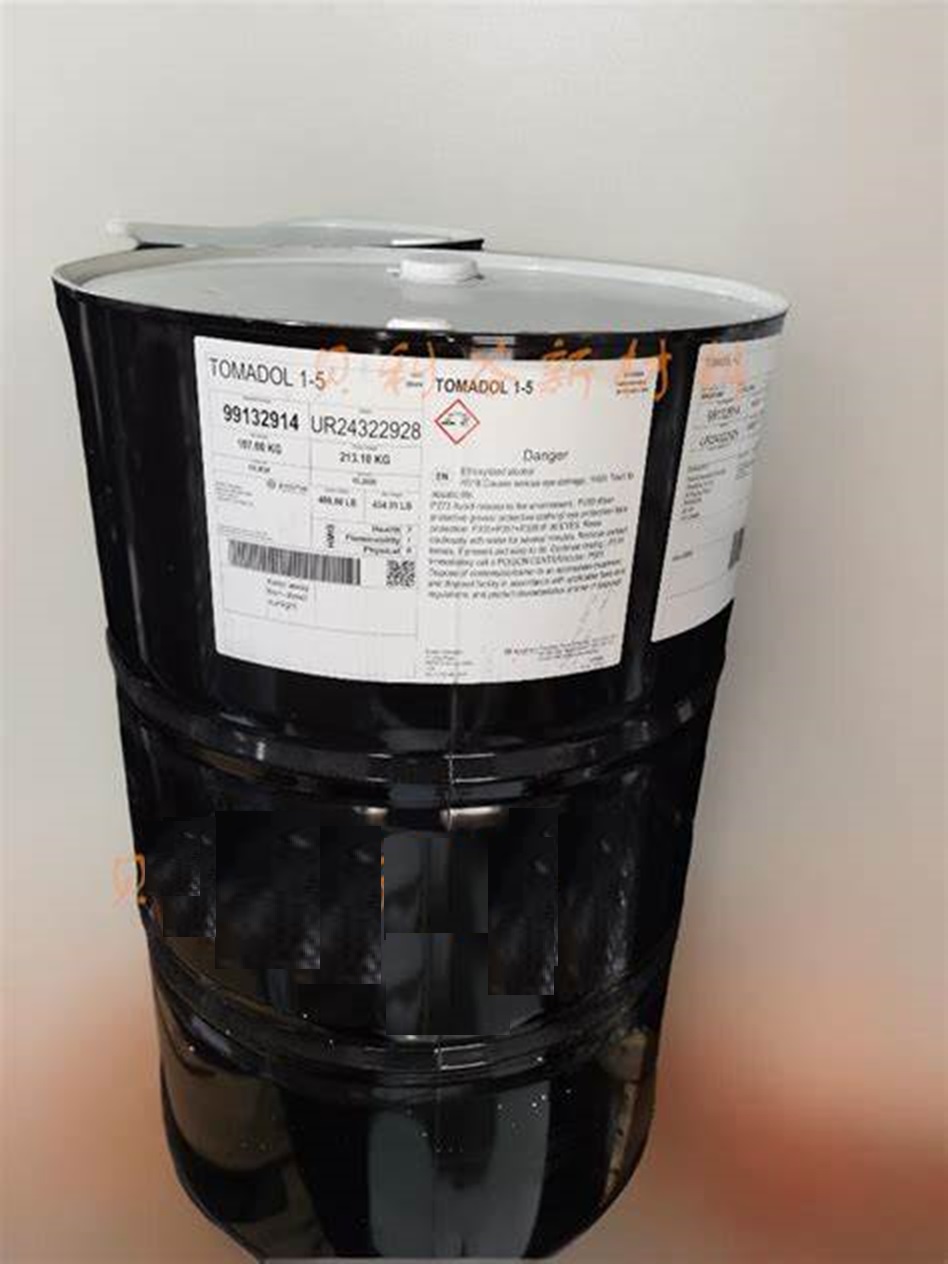
| Tomadol 1-7 | Trade name |
| P4MX 1-7 | Trade name |
| ISOGRISAL 7 C | Trade name |
| UNII | H0Z032IC7M, DMW92U6F5Q, R3GCD01O2Q, 1I9FH814TU, C02RQ2HC6W, 3B59X0I14C |
3. Product Description
Undeceth-5 is a nonionic surfactant widely used in cosmetic, personal care, and industrial cleaning products. It is an ethoxylated alcohol obtained by the polymerization of undecanol (C11 alcohol) with 5 units of ethylene oxide. It functions as an effective emulsifier, solubilizer, and dispersing agent, helping to mix oil and water.
Key Characteristics:
-
Nonionic surfactant
-
Emulsifying, solubilizing, and dispersing properties
-
Slightly hazy liquid form
-
Mild odor
4. Physical and Chemical Properties
| Property | Value |
|---|---|
| Appearance (25°C) | Clear to slightly hazy liquid |
| Odor | Mild odor |
| Molecular Weight | 216.36 g/mol |
| Density | 0.875 g/cm³ |
| Boiling Point | 289.7°C at 760 mmHg |
| Flash Point | 72.8°C |
| LogP (Octanol/Water) | 3.526 (estimated) |
| Refractive Index | 1.443 |
| PSA (Polar Surface Area) | 29.46 Ų |
5. Applications and Uses
Undeceth-5 is a versatile ingredient with a wide range of applications across various industries.
5.1. Cosmetics and Personal Care Products
| Product Type | Function |
|---|---|
| Shampoos | Cleansing agent, foam booster |
| Hair Conditioners | Emulsifier, conditioning agent |
| Facial Cleansers | Gentle cleanser |
| Body Washes | Surfactant |
| Creams and Lotions | Emulsifier, texture enhancer, spreadability improver |
5.2. Detergents and Cleaning Products
| Product Type | Function |
|---|---|
| Laundry Detergents | Surfactant, dirt and grease remover |
| Dishwashing Detergents | Grease remover, cleaning agent |
| Industrial Cleaners | Wetting agent, emulsifier, oil and dirt remover |
| Surface Cleaners | Effective cleaning agent |
| Degreasers | In heavy-duty cleaning formulations |
5.3. Industrial Applications
| Application | Function |
|---|---|
| Coating Industry | Dispersing agent, homogeneous distribution of pigments |
| Paint Manufacturing | Stabilizer in colloidal systems |
| Nanoparticle Suspensions | Ensuring homogeneous distribution of particles |
| Pesticide Formulations | Emulsifier in agricultural chemicals, effective spreading |
5.4. Pharmaceutical Preparations
| Application | Function |
|---|---|
| Hydrophobic Drugs | Solubility and bioavailability enhancer |
| Drug Delivery Systems | Stabilizer in micelle and emulsion formulations |
6. Safety and Toxicology
6.1. Classification (GHS)
| Hazard Class | Category | H Statements |
|---|---|---|
| Acute Toxicity (Oral) | Category 4 | H302 - Harmful if swallowed |
| Skin Irritation | Category 2 | H315 - Causes skin irritation |
| Eye Irritation | Category 2A | H319 - Causes serious eye irritation |
| Aquatic Chronic Toxicity | Category 2 | H411 - Toxic to aquatic life with long-lasting effects |
| Signal Word | - | Warning |
6.2. Health Effects
| Exposure Route | Effect |
|---|---|
| Ingestion | May be harmful |
| Eye Contact | May cause serious eye irritation, risk of serious eye damage |
| Skin Contact | Irritating |
| Inhalation | May cause respiratory tract irritation |
6.3. Safety Assessments
| Organization | Assessment |
|---|---|
| CIR (Cosmetic Ingredient Review) | Safe for use in cosmetics when formulated to be non-irritating |
| EPA | Low concern level in cleaning products |
| EWG | Subject to usage restrictions, certain contamination concerns |
7. Storage and Shelf Life
| Parameter | Details |
|---|---|
| Shelf Life | 2 years under proper storage conditions |
| Storage Conditions | Cool, dry, well-ventilated area |
| Precipitation | Solid sediment may form during storage; storage tanks should be circulated to ensure homogenization |
| Supply Forms | Bulk, drums, IBC tanks |
8. Environmental Information
| Parameter | Assessment |
|---|---|
| Biodegradability | Readily biodegradable (EU Ecolabel) |
| Anaerobic Degradation | Degradable under anaerobic conditions |
| Acute Toxicity (Aquatic) | Low acute toxicity (EPA tests) |
9. Regulatory Status
| Application | Status |
|---|---|
| Pesticide Formulations | Permitted as inert ingredient in non-food pesticide products |
| Cosmetics | Considered safe for use subject to specific concentration limits |
| Food Additive | GRAS status (US FDA) for certain cleaning product applications |
10. Summary
Undeceth-5 (CAS: 34398-01-1) is a nonionic surfactant obtained by the polymerization of undecanol with 5 units of ethylene oxide. It has the molecular formula C₁₃H₂₈O₂ and molecular weight of 216.36 g/mol.
Key Physical Properties:
-
Density: 0.875 g/cm³
-
Boiling point: 289.7°C
-
Flash point: 72.8°C
-
LogP: 3.526
Main Application Areas:
-
Cosmetics and Personal Care: Shampoos, hair conditioners, facial cleansers, creams and lotions as emulsifier
-
Detergents: Laundry and dishwashing detergents as surfactant
-
Industrial Cleaners: Degreasers, surface cleaners
-
Pharmaceuticals: Solubility enhancer for hydrophobic drugs
-
Coatings and Paint Industry: Pigment dispersant, dispersion stabilizer
Safety Considerations:
-
Harmful if swallowed
-
May cause skin and eye irritation
-
May be toxic to aquatic life
-
Should be used with appropriate personal protective equipment
Storage: 2-year shelf life under proper conditions; may form sediment during storage, should be homogenized by circulation.
Undeceth-5 is a versatile nonionic surfactant widely used from cosmetics to industrial cleaning, pharmaceuticals to paint industry, thanks to its emulsifying, solubilizing, and dispersing properties.