We unleash your business potential by maximize the business innovation.
Send EmailSodium Stearate, Sodium Octadecanoate, Sodium Soap, 822-16-2
SODIUM STEARATE
Sodium Stearate / Sodium Octadecanoate / Sodium Soap
CAS Number: 822-16-2
EC Number: 212-490-5
1. PRODUCT IDENTIFICATION AND CHEMICAL IDENTITY
| Parameter | Description |
|---|---|
| Chemical Name (IUPAC) | Sodium octadecanoate |
| Other Names | Sodium Stearate, Sodium Soap, Stearic Acid Sodium Salt, Octadecanoic Acid Sodium Salt |
| CAS Number | 822-16-2 |
| EC Number (EINECS) | 212-490-5 |
| Molecular Formula | C₁₈H₃₅NaO₂ |
| Molecular Weight | 306.47 g/mol |
| Chemical Class | Metal salt (fatty acid salt - sodium soap) |
| Appearance | White powder, flakes, or granules |
| Odor | Odorless or faint characteristic odor |
| Taste | Slightly soapy, bitter |
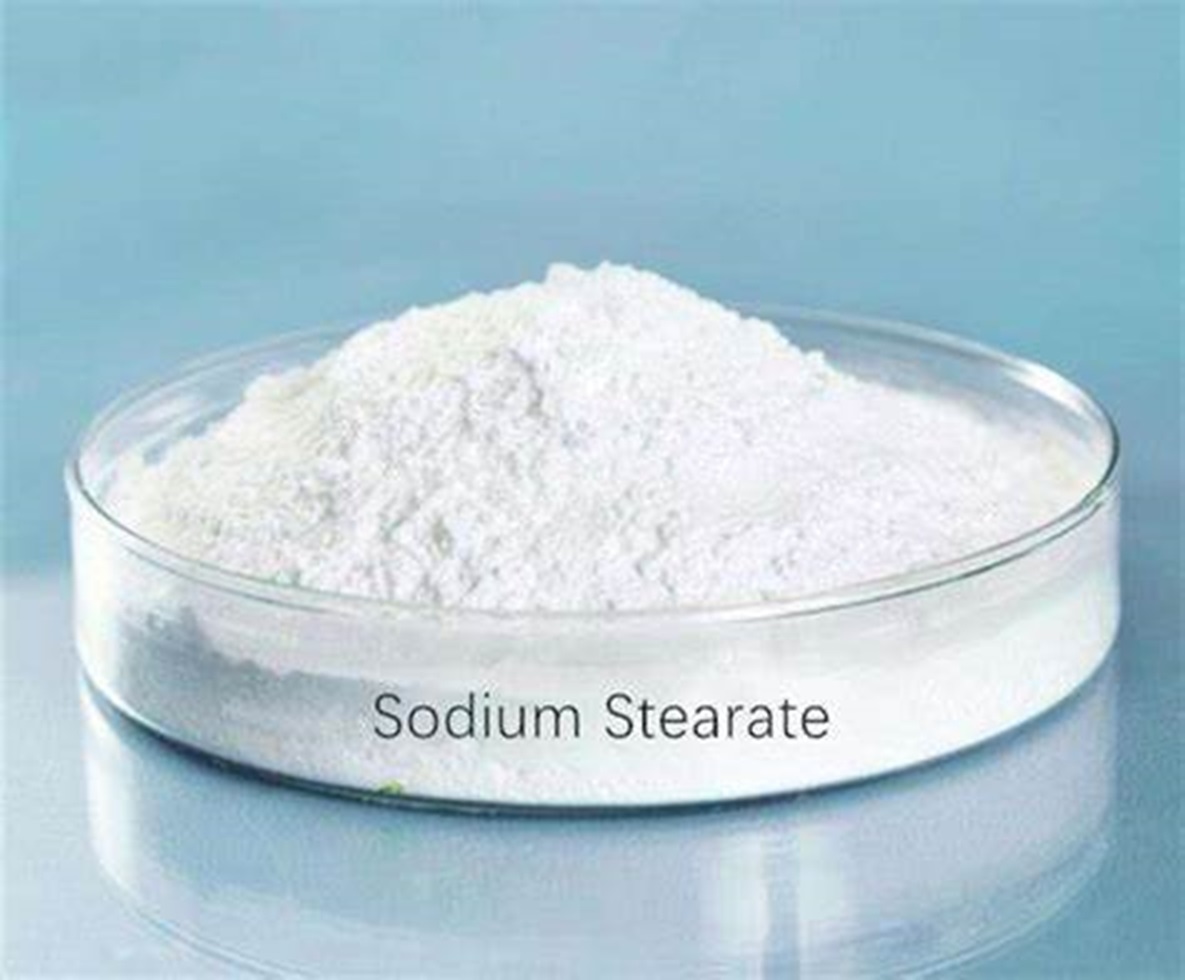
Sodium stearate is the sodium salt of stearic acid (octadecanoic acid). It is a white, odorless powder, flake, or granule classified as a metal salt (fatty acid salt) and is commonly known as a "sodium soap." As one of the most common soap compounds, sodium stearate is a key ingredient in traditional bar soaps and a versatile surfactant. It is produced by the saponification of stearic acid with sodium hydroxide or by the neutralization of stearic acid with sodium carbonate. Sodium stearate is highly soluble in water and exhibits excellent emulsifying, stabilizing, and thickening properties. Its versatility and mildness make it widely used in soaps, detergents, cosmetics, pharmaceuticals, food processing, plastics, rubber, and many other industrial applications. Sodium stearate is a white powder or flake that is odorless and has a slightly soapy, bitter taste.
2. PHYSICAL AND CHEMICAL PROPERTIES
| Property | Value |
|---|---|
| Molecular Formula | C₁₈H₃₅NaO₂ |
| Molecular Weight | 306.47 g/mol |
| Appearance | White powder, flakes, or granules |
| Odor | Odorless or faint characteristic odor |
| Taste | Slightly soapy, bitter |
| Density (True) | ~1.02-1.05 g/cm³ |
| Bulk Density | 0.2-0.5 g/cm³ |
| Melting Point | ~245°C (with decomposition) |
| Flash Point | ~175°C |
| Water Solubility (25°C) | ~150-200 g/L (soluble) |
| Organic Solvent Solubility | Slightly soluble in alcohol; insoluble in hydrocarbons and oils |
| pH (1% solution) | ~10-11 (basic) |
| Hydrophobicity | Amphiphilic (hydrophilic head, hydrophobic tail) |
| Heavy Metal Content (as Pb) | ≤ 20 ppm |
| Free Fatty Acid | ≤ 0.5% |
| Loss on Drying | ≤ 2.0% |
| Sodium Oxide (Na₂O) Content | ~10-12% |
| Stability | Stable under normal conditions; sensitive to light |
| Incompatible Materials | Strong acids, strong oxidizing agents, hard water ions (Ca²⁺, Mg²⁺) |
Sodium stearate is a white, odorless powder, flake, or granule with a slightly soapy, bitter taste. Its true density is approximately 1.02-1.05 g/cm³, while its bulk density ranges from 0.2-0.5 g/cm³ depending on the form. The melting point is approximately 245°C, at which decomposition begins. At 25°C, it is soluble in water (150-200 g/L), slightly soluble in alcohol, and insoluble in hydrocarbons and oils. The pH of a 1% aqueous solution is approximately 10-11, indicating basic character. As an amphiphilic compound, it has a hydrophilic head and a hydrophobic tail, giving it surfactant properties. Heavy metals are typically ≤ 20 ppm (as Pb). Free fatty acid content is ≤ 0.5%, loss on drying is ≤ 2.0%, and sodium oxide (Na₂O) content is approximately 10-12%. It is stable under normal conditions but sensitive to light. It is incompatible with strong acids, strong oxidizing agents, and hard water ions (Ca²⁺, Mg²⁺), which can form insoluble calcium and magnesium stearates.
3. CHEMICAL PROPERTIES AND REACTIONS
Sodium stearate is a sodium metal salt and a fatty acid soap (sodium soap). Its chemical behavior is determined by the properties of the stearate anion and the sodium cation.
Reaction with Acids:
Sodium stearate reacts with strong acids to form stearic acid and the corresponding sodium salt:
C₁₇H₃₅COONa + HCl → C₁₇H₃₅COOH + NaCl
Reaction with Hard Water Ions:
Sodium stearate reacts with calcium and magnesium ions in hard water to form insoluble calcium and magnesium stearates (soap scum):
2 C₁₇H₃₅COONa + Ca²⁺ → (C₁₇H₃₅COO)₂Ca↓ + 2 Na⁺
2 C₁₇H₃₅COONa + Mg²⁺ → (C₁₇H₃₅COO)₂Mg↓ + 2 Na⁺
Hydrolysis:
As a salt of a weak acid (stearic acid) and a strong base (sodium hydroxide), sodium stearate undergoes hydrolysis in water to form a basic solution:
C₁₇H₃₅COONa + H₂O ⇌ C₁₇H₃₅COOH + NaOH
Saponification:
Sodium stearate is itself a product of saponification (fat + NaOH → glycerol + sodium stearate).
Thermal Decomposition:
At temperatures above 245°C, sodium stearate decomposes to form sodium carbonate, carbon dioxide, and hydrocarbons.
Surfactant Properties:
As a surfactant, sodium stearate reduces surface tension and interfacial tension, enabling emulsification, wetting, and foaming.
Micelle Formation:
In aqueous solution above the critical micelle concentration (CMC), sodium stearate forms micelles, which are spherical aggregates of surfactant molecules with the hydrophobic tails inward and the hydrophilic heads outward.
4. PRODUCTION METHODS
Sodium stearate is produced industrially primarily by the saponification of stearic acid with sodium hydroxide or by the neutralization of stearic acid with sodium carbonate.
| Method | Raw Materials | Process Description |
|---|---|---|
| Saponification (Most Common) | Stearic Acid (C₁₇H₃₅COOH), Sodium Hydroxide (NaOH) | Stearic acid is reacted with sodium hydroxide (caustic soda) in water at elevated temperature (80-100°C). The resulting sodium stearate solution is cooled, dried, and milled to the desired particle size. This is the most common industrial method. |
| Neutralization | Stearic Acid (C₁₇H₃₅COOH), Sodium Carbonate (Na₂CO₃) | Stearic acid is reacted with sodium carbonate (soda ash) in water at elevated temperature. Carbon dioxide is released as a byproduct. |
| Saponification of Fats and Oils | Natural fats and oils (triglycerides), Sodium Hydroxide (NaOH) | Natural fats and oils (e.g., tallow, palm oil) are saponified with sodium hydroxide to produce a mixture of sodium stearate, sodium palmitate, and other sodium soaps (glycerol is a byproduct). This method produces mixed soaps rather than pure sodium stearate. |
Detailed Production Process (Saponification - Most Common):
-
Raw Material Preparation: Stearic acid (typically > 95% purity) and sodium hydroxide (caustic soda) are prepared. Stearic acid is typically melted.
-
Reaction: Melted stearic acid is added to a solution of sodium hydroxide in water at 80-100°C with stirring:
C₁₇H₃₅COOH + NaOH → C₁₇H₃₅COONa + H₂O
-
Cooling: The resulting sodium stearate solution is cooled to solidify the product.
-
Drying: The solid sodium stearate is dried to reduce moisture content to ≤ 2.0%.
-
Milling and Sieving: The dried product is milled to the desired particle size (powder, flake, or granule) and sieved.
-
Packaging: The final product is packaged in 25 kg bags, drums, or FIBCs.
Reaction Equation (Saponification with Sodium Hydroxide):
C₁₇H₃₅COOH + NaOH → C₁₇H₃₅COONa + H₂O
Reaction Equation (Neutralization with Sodium Carbonate):
2 C₁₇H₃₅COOH + Na₂CO₃ → 2 C₁₇H₃₅COONa + CO₂ + H₂O
5. COMPARISON WITH OTHER METAL STEARATES
| Property | Sodium Stearate | Potassium Stearate | Calcium Stearate | Magnesium Stearate |
|---|---|---|---|---|
| Formula | C₁₈H₃₅NaO₂ | C₁₈H₃₅KO₂ | C₃₆H₇₀CaO₄ | C₃₆H₇₀MgO₄ |
| Melting Point | ~245°C | ~215°C | ~155°C | ~88°C |
| Water Solubility | Soluble | Soluble | Insoluble | Insoluble |
| Foaming Properties | Excellent | Excellent | Poor | Poor |
| Emulsifying Properties | Good | Good | Good | Good |
| Soap Use | Bar soaps | Liquid soaps | - | - |
| Cosmetic Use | Yes | Yes | Yes | Yes |
| Pharmaceutical Use | Limited | Limited | Limited | Widespread |
Sodium stearate is highly soluble in water and has excellent foaming properties, making it ideal for bar soaps and other cleansing products. Potassium stearate is also water-soluble and used in liquid soaps. Calcium stearate and magnesium stearate are insoluble in water and are primarily used as release agents, lubricants, and stabilizers in plastics, rubber, and pharmaceutical applications.
6. APPLICATIONS AND INDUSTRIAL USES
Sodium stearate is a versatile compound with a wide range of applications across various industries due to its excellent emulsifying, stabilizing, thickening, and surfactant properties.
6.1. Soaps and Detergents (Most Important Application)
| Application | Description |
|---|---|
| Bar Soaps | Sodium stearate is a primary ingredient in traditional bar soaps, providing cleansing, foaming, and lathering properties. It is produced by saponification of natural fats and oils. |
| Syndet Bars | Used in synthetic detergent bars (syndet bars) as a binder and structurant. |
| Laundry Detergents | Used in laundry detergents as a surfactant and builder. |
| Dishwashing Detergents | Used in dishwashing detergents for foaming and grease-cutting properties. |
| Industrial Cleaners | Used in industrial cleaners and degreasers. |
Sodium stearate is one of the most common soap compounds and is the primary ingredient in traditional bar soaps. It provides excellent cleansing, foaming, and lathering properties. In soaps, sodium stearate is produced by the saponification of fats and oils (triglycerides) with sodium hydroxide. It is also used in synthetic detergent bars (syndet bars) as a binder and structurant. In laundry detergents, dishwashing detergents, and industrial cleaners, sodium stearate functions as a surfactant and builder, helping to remove dirt and grease.
6.2. Cosmetics and Personal Care Products
| Application | Description |
|---|---|
| Creams and Lotions | Used as an emulsifier and stabilizer, improving the consistency and stability of creams and lotions. |
| Makeup Products | Used as a binder and thickener in makeup products such as foundations, powders, and lipsticks. |
| Deodorants | Used as a consistency agent and lubricant. |
| Shampoos and Conditioners | Used as a thickener and foam stabilizer. |
| Sunscreens | Used as an emulsifier and texture enhancer. |
| Toothpaste | Used as a binder and thickener in toothpaste formulations. |
| Shaving Creams | Used as a foaming agent and stabilizer. |
Sodium stearate is widely used in cosmetics and personal care products as an emulsifier, stabilizer, thickener, binder, and consistency agent. It is found in creams, lotions, makeup products, deodorants, shampoos, conditioners, sunscreens, toothpaste, and shaving creams.
6.3. Food Industry
| Application | Description |
|---|---|
| Food Additive | Used as an emulsifier, stabilizer, and anti-caking agent in processed foods. |
| Baked Goods | Used as a dough conditioner and emulsifier in bread, cakes, and pastries. |
| Confectionery | Used in confectionery products as an emulsifier and stabilizer. |
| Margarine | Used as an emulsifier in margarine and spreads. |
| Ice Cream | Used as a stabilizer and emulsifier in ice cream. |
| E Number | E 470a (sodium salt of fatty acids) |
Sodium stearate is used as a food additive (E 470a) as an emulsifier, stabilizer, and anti-caking agent. It is used in baked goods as a dough conditioner and emulsifier, in confectionery products, in margarine and spreads, and in ice cream as a stabilizer and emulsifier.
6.4. Pharmaceutical Industry
| Application | Description |
|---|---|
| Tablet Binder | Used as a binder in tablet formulations (limited use). |
| Tablet Lubricant | Used as a lubricant in tablet production (limited use). |
| Emulsifier | Used as an emulsifier in topical formulations and creams. |
| Stabilizer | Used as a stabilizer in pharmaceutical formulations. |
Sodium stearate is used in the pharmaceutical industry as a binder, lubricant, emulsifier, and stabilizer, although it is not as common as magnesium stearate.
6.5. Plastics and Rubber Industry
| Application | Description |
|---|---|
| Release Agent | Used as a release agent in plastics and rubber production to prevent sticking to molds. |
| Lubricant | Used as an internal and external lubricant during plastic processing, improving flow properties. |
| Stabilizer | Used as a secondary stabilizer for PVC and other polymers. |
| Anti-Blocking Agent | Used to prevent sticking of plastic films. |
| Dispersing Agent | Used as a dispersing agent in masterbatch and pigment production. |
| Antistatic Agent | Used to reduce static charge accumulation. |
Sodium stearate is used in the plastics and rubber industry as a release agent, lubricant, stabilizer, anti-blocking agent, dispersing agent, and antistatic agent. It is used in the processing of PVC, polyethylene, polypropylene, and other polymers.
6.6. Paper Industry
| Application | Description |
|---|---|
| Coating Agent | Used as a coating agent in paper production to improve smoothness and printability. |
| Sizing Agent | Used as a sizing agent to improve water resistance. |
| Release Agent | Used as a release agent in paper machine operations. |
Sodium stearate is used in the paper industry as a coating agent, sizing agent, and release agent.
6.7. Textile Industry
| Application | Description |
|---|---|
| Softener | Used as a fabric softener. |
| Lubricant | Used as a lubricant in textile processing. |
| Antistatic Agent | Used to reduce static charge accumulation in textiles. |
| Emulsifier | Used as an emulsifier in textile finishing agents. |
Sodium stearate is used in the textile industry as a softener, lubricant, antistatic agent, and emulsifier.
6.8. Other Applications
| Application | Description |
|---|---|
| Adhesives | Used as a thickener, stabilizer, and anti-caking agent in adhesives. |
| Metal Processing | Used as a lubricant in metalworking and powder metallurgy. |
| Ceramics | Used as a binder and lubricant in ceramic manufacturing. |
| Ink Production | Used as a dispersant and stabilizer in printing inks. |
| Coatings | Used as a stabilizer and dispersant in paints and coatings. |
7. SAFETY AND HEALTH INFORMATION
Sodium stearate is generally considered to have low toxicity and is widely used in food, cosmetics, and pharmaceutical applications.
7.1. Toxicological Data
| Parameter | Value |
|---|---|
| Oral LD50 (Rat) | > 5,000 mg/kg (low toxicity) |
| Dermal LD50 (Rabbit) | > 2,000 mg/kg |
| Skin Irritation | Non-irritant to mild irritant |
| Eye Irritation | Mild irritant |
| Skin Sensitization | Not a sensitizer |
| Mutagenicity | Negative |
| Carcinogenicity | Not classified |
| Reproductive Toxicity | Not classified |
7.2. Health Effects
| Exposure | Effect |
|---|---|
| Inhalation (Dust) | May cause mild respiratory irritation |
| Skin Contact | Non-irritant to mild irritant; may cause slight dryness |
| Eye Contact | May cause mechanical irritation |
| Ingestion | Low toxicity; large amounts may cause gastrointestinal discomfort |
8. FIRST AID MEASURES
| Exposure Route | Action |
|---|---|
| Inhalation | Move person to fresh air. If symptoms persist, seek medical attention. |
| Skin Contact | Wash with soap and plenty of water. Remove contaminated clothing. |
| Eye Contact | Rinse immediately with plenty of water for at least 15 minutes. Remove contact lenses if present. |
| Ingestion | Rinse mouth. Drink plenty of water. If large amounts are swallowed, seek medical attention. |
9. SAFETY INFORMATION (GHS CLASSIFICATION)
Sodium stearate is not classified as a hazardous substance under GHS. However, fine powder may cause respiratory irritation.
| Hazard Class | Category |
|---|---|
| Skin Irritation | Category 3 (mild irritation) |
| Eye Irritation | Category 2B (mild irritation) |
| Specific Target Organ Toxicity - Single Exposure | Category 3 (respiratory irritation) |
Signal Word: WARNING
Hazard Statements (H-Codes):
| Code | Statement |
|---|---|
| H315 | Causes skin irritation (mild) |
| H319 | Causes serious eye irritation (mild) |
| H335 | May cause respiratory irritation (dust) |
Precautionary Statements (P-Codes):
| Code | Statement |
|---|---|
| P261 | Avoid breathing dust |
| P271 | Use only outdoors or in a well-ventilated area |
| P280 | Wear protective gloves, protective clothing, eye/face protection |
| P302+P352 | IF ON SKIN: Wash with plenty of soap and water |
| P304+P340 | IF INHALED: Remove person to fresh air and keep comfortable for breathing |
| P305+P351+P338 | IF IN EYES: Rinse cautiously with water for several minutes. Remove contact lenses if present and easy to do. Continue rinsing |
| P332+P313 | If skin irritation occurs: Get medical attention |
| P337+P313 | If eye irritation persists: Get medical attention |
| P403+P233 | Store in a well-ventilated place. Keep container tightly closed |
| P501 | Dispose of contents/container in accordance with local/regional/national/international regulations |
10. FIREFIGHTING MEASURES
| Parameter | Information |
|---|---|
| Fire Hazard | Combustible dust; dust-air mixtures may be explosive |
| Extinguishing Media | Water spray, CO₂, dry chemical powder, foam |
| Special Hazards | Thermal decomposition produces sodium oxide, carbon monoxide, and carbon dioxide |
| Protective Equipment | Self-contained breathing apparatus (SCBA), full protective clothing |
| Dust Explosion | Can form explosive dust clouds; use explosion-proof equipment |
11. ACCIDENTAL RELEASE MEASURES
| Parameter | Information |
|---|---|
| Personal Protection | Wear appropriate PPE (dust mask, goggles, protective clothing, gloves) |
| Ventilation | Increase ventilation |
| Containment | Contain powder to prevent spread |
| Cleaning Methods | Vacuum or sweep carefully to avoid dust generation; use wet methods to suppress dust |
| Environmental Precautions | Prevent entry into drains, sewers, and water bodies |
| Waste Disposal | Dispose of according to local, state, and federal regulations |
12. STORAGE AND HANDLING
| Parameter | Information |
|---|---|
| Storage Conditions | Cool, dry, well-ventilated area; protect from light and heat |
| Container Requirements | Tightly closed containers (bags, drums, FIBCs) |
| Materials to Avoid | Strong acids, strong oxidizing agents, moisture |
| Shelf Life | 24-36 months (unopened, under proper storage) |
| Hygroscopicity | Slightly hygroscopic |
| Static Charge | Can generate static charge; use grounding |
| Packaging Options | 25 kg bags (standard), 25 kg drums, 500-1000 kg FIBCs |
Sodium stearate should be stored in cool, dry, well-ventilated areas in tightly closed original containers. It is slightly hygroscopic and should be protected from moisture. It should be protected from light and heat. Contact with strong acids and strong oxidizing agents should be avoided. Proper grounding should be used to prevent static electricity accumulation.
Handling Notes:
-
Avoid dust generation (use enclosed systems, local exhaust ventilation)
-
Avoid contact with skin and eyes (use protective gloves and goggles)
-
Avoid breathing dust (use dust mask or respirator)
-
Keep away from ignition sources
-
Do not allow material to become wet (may cake and become difficult to handle)
13. TRANSPORT INFORMATION
| Parameter | Information |
|---|---|
| UN Number | Not applicable (not classified as dangerous good) |
| Hazard Class | Not a dangerous good |
| Packing Group | Not applicable |
| Proper Shipping Name | Sodium Stearate |
| Marine Pollutant | No |
| ADR/RID Label | Not applicable |
Sodium stearate is not classified as a dangerous good for transport. It is shipped in 25 kg bags, drums, or FIBCs. During transport, protect from moisture, impact, and excessive heat.
14. REGULATORY INFORMATION
| Region | Status |
|---|---|
| EU | REACH registered; approved as food additive |
| Turkey (KKDİK) | Mandatory compliance; requires registration |
| USA (TSCA) | Listed |
| Canada (DSL) | Listed |
| Australia (AICS) | Listed |
| Japan (ENCS) | Listed |
| Korea (KECL) | Listed |
| China (IECSC) | Listed |
Regulatory Status:
| Status | Information |
|---|---|
| FDA Compliance | Approved as food additive (GRAS) |
| EU Compliance | Approved as food additive (E 470a) |
| IARC Classification | Not classified |
| HS Code | 29157000 |
| RTECS | WI4280000 |
| WGK Germany | 1 (slight hazard to water) |
| TSCA | Yes |
| EINECS | 212-490-5 |
| E Number | E 470a (sodium salts of fatty acids) |
15. OTHER NAMES AND DATABASE IDENTIFIERS
| Category | Names / Identifiers |
|---|---|
| Chemical Names | Sodium octadecanoate |
| Synonyms | Sodium Stearate, Sodium Soap, Stearic Acid Sodium Salt, Octadecanoic Acid Sodium Salt |
| Trade Names | Sodium Stearate, Sodium Soap |
Database Identifiers:
| Database | Identifier |
|---|---|
| CAS | 822-16-2 |
| EC (EINECS) | 212-490-5 |
| MDL | MFCD00002749 |
| PubChem CID | 2724693 |
| RTECS | WI4280000 |
| UN | Not applicable |
| HS Code | 29157000 |
| Merck | 14, 8680 |
16. ENVIRONMENTAL INFORMATION
| Parameter | Information |
|---|---|
| Aquatic Toxicity | Low toxicity |
| Biodegradability | Readily biodegradable (fatty acid component) |
| Bioaccumulation | Low potential |
| Mobility in Soil | Moderate (water-soluble) |
| Waste Disposal | Dispose of according to local regulations. Incineration or disposal in permitted landfill recommended. |
17. APPLICATION SUMMARY TABLE
| Industry | Application | Function |
|---|---|---|
| Soaps and Detergents | Bar soaps, syndet bars, laundry detergents | Surfactant, foaming, cleansing, builder |
| Cosmetics | Creams, lotions, makeup, deodorants | Emulsifier, stabilizer, thickener, binder |
| Food Industry | Baked goods, confectionery, margarine, ice cream | Emulsifier, stabilizer, anti-caking agent |
| Pharmaceutical | Tablets, topical formulations | Binder, lubricant, emulsifier, stabilizer |
| Plastics and Rubber | Release agent, lubricant, stabilizer | Mold release, processing aid, stabilizer |
| Paper Industry | Coating agent, sizing agent | Smoothness, printability, water resistance |
| Textile | Softener, lubricant, antistatic agent | Softening, lubrication, static reduction |
| Other | Adhesives, metal processing, ceramics, inks | Thickener, lubricant, dispersant, stabilizer |
18. PHYSICAL FORMS
| Form | Particle Size | Description | Applications |
|---|---|---|---|
| Powder | 5-100 µm | Fine white powder | Cosmetics, food, pharmaceuticals, plastics |
| Flake | 50-500 µm | White flakes | Soaps, detergents, plastics, rubber |
| Granule | 200-1000 µm | Free-flowing granules | Soaps, detergents, industrial applications |
19. COMPARISON WITH OTHER SODIUM SOAPS
| Property | Sodium Stearate | Sodium Palmitate | Sodium Oleate |
|---|---|---|---|
| Fatty Acid | Stearic Acid (C18:0) | Palmitic Acid (C16:0) | Oleic Acid (C18:1) |
| Melting Point | ~245°C | ~235°C | ~200°C |
| Water Solubility | Soluble | Soluble | Soluble |
| Foaming Properties | Excellent | Excellent | Good |
| Hardness | Hard | Hard | Soft |
| Bar Soap Use | Main component | Common component | Component |
| Liquid Soap Use | Limited | Limited | Common |
Sodium stearate is the primary component in traditional hard bar soaps. Sodium palmitate is also a common component in bar soaps, while sodium oleate is more common in liquid soaps and soft soaps.
20. SUMMARY AND CRITICAL WARNINGS
SUMMARY:
Sodium stearate (C₁₈H₃₅NaO₂, CAS 822-16-2) is the sodium salt of stearic acid (octadecanoic acid). It is a white, odorless powder, flake, or granule classified as a metal salt (fatty acid salt) and is commonly known as a "sodium soap." The molecular weight is 306.47 g/mol, and the melting point is approximately 245°C. It is soluble in water (150-200 g/L at 25°C), slightly soluble in alcohol, and insoluble in hydrocarbons and oils. It is produced by the saponification of stearic acid with sodium hydroxide or by neutralization with sodium carbonate. As one of the most common soap compounds, sodium stearate is a key ingredient in traditional bar soaps and a versatile surfactant. It is widely used in soaps and detergents, cosmetics, food processing, pharmaceuticals, plastics, rubber, paper, and textiles. It has low toxicity and is not classified as a hazardous substance under GHS. It is stored in cool, dry, well-ventilated areas, protected from light, heat, and moisture. Packaging: 25 kg bags, drums, or FIBCs.
Key Properties:
| Property | Value |
|---|---|
| Appearance | White powder, flakes, or granules |
| Chemical Formula | C₁₈H₃₅NaO₂ |
| Molecular Weight | 306.47 g/mol |
| CAS Number | 822-16-2 |
| Melting Point | ~245°C |
| Water Solubility (25°C) | ~150-200 g/L |
| pH (1% solution) | ~10-11 |
| Primary Use | Soaps, detergents, emulsifier, stabilizer |
Major Application Areas:
| Industry | Applications |
|---|---|
| Soaps and Detergents | Bar soaps, syndet bars, laundry detergents |
| Cosmetics | Creams, lotions, makeup, deodorants, shampoos |
| Food Industry | Emulsifier, stabilizer, anti-caking agent (E 470a) |
| Pharmaceutical | Binder, lubricant, emulsifier, stabilizer |
| Plastics and Rubber | Release agent, lubricant, stabilizer |
| Paper Industry | Coating agent, sizing agent |
| Textile | Softener, lubricant, antistatic agent |
Key Safety Points:
-
LOW TOXICITY: GRAS by FDA; approved as food additive
-
SLIGHTLY HYGROSCOPIC: Protect from moisture; store in tightly closed containers
-
MILD IRRITANT: May cause mild skin and eye irritation
-
RESPIRATORY IRRITANT: May cause respiratory irritation from dust at high concentrations
-
STORAGE: Store in cool, dry, well-ventilated area, protected from light, heat, and moisture
-
PPE REQUIRED: Dust mask, safety goggles, protective gloves (for handling powder)
-
FOOD ADDITIVE: Approved as E 470a for use in food products
-
REACTION WITH HARD WATER: Reacts with calcium and magnesium ions to form insoluble soap scum
CRITICAL WARNINGS:
Soap and Detergent Application: Sodium stearate is one of the most common soap compounds and is the primary ingredient in traditional bar soaps. It provides excellent cleansing, foaming, and lathering properties. In soaps, sodium stearate is produced by the saponification of fats and oils with sodium hydroxide. It is also used in synthetic detergent bars as a binder and structurant.
Surfactant Properties: As a surfactant, sodium stearate reduces surface tension and interfacial tension, enabling emulsification, wetting, and foaming. This makes it valuable in a wide range of cleaning, personal care, and industrial applications. In aqueous solution, sodium stearate forms micelles, which are spherical aggregates of surfactant molecules that help solubilize oils and dirt.
Food Additive: Sodium stearate is approved as a food additive (E 470a) as an emulsifier, stabilizer, and anti-caking agent. It is used in baked goods, confectionery, margarine, spreads, and ice cream. The FDA has approved it as Generally Recognized as Safe (GRAS).
Reaction with Hard Water: One of the limitations of sodium stearate is its reaction with calcium and magnesium ions in hard water to form insoluble calcium and magnesium stearates (soap scum). This reduces its cleansing efficiency and can leave residues on surfaces. This is why synthetic detergents (syndets) were developed as alternatives to traditional soaps.
Cosmetic Use: Sodium stearate is widely used in cosmetic products as an emulsifier, stabilizer, thickener, and binder. It is found in creams, lotions, makeup products, deodorants, shampoos, conditioners, and toothpaste. Its mildness and compatibility with skin make it suitable for personal care applications.
Plastic and Rubber Use: In plastics and rubber, sodium stearate is used as a release agent, lubricant, stabilizer, anti-blocking agent, and dispersing agent. It is used in the processing of PVC, polyethylene, polypropylene, and other polymers. It improves flow properties, prevents sticking, and stabilizes the polymer against heat degradation.
Environment: Sodium stearate is readily biodegradable due to its fatty acid component. It has low toxicity to aquatic organisms. However, large discharges to water bodies can cause foam formation and oxygen depletion due to biodegradation. Proper waste management practices should be followed.
Important Disclaimer: This Technical Data Sheet (TDS) is for informational purposes only. The information provided is based on available data and is believed to be accurate. However, the user is solely responsible for determining the suitability of the product for their specific application and for complying with all applicable regulations and safety requirements. For complete safety, handling, storage, and regulatory compliance information, always refer to the official Safety Data Sheet (SDS/MSDS) provided by the manufacturer/supplier. Users are responsible for testing the product in their own processes and applications. All local, national, and international regulations must be followed when working with sodium stearate.