We unleash your business potential by maximize the business innovation.
Send EmailTitanium Dioxide, Titanium White, Titania, Rutile, Anatase, Brookite, E171, 13463-67-7, 1317-70-0, 1317-80-2
TITANIUM DIOXIDE (TiO₂)
SECTION 1: PRODUCT IDENTITY AND CHEMICAL IDENTIFICATION
| Parameter | Information |
|---|---|
| Product Name | Titanium Dioxide |
| Chemical Name | Titanium(IV) Oxide |
| Synonyms (Turkish) | Titanyum Dioksit, Titanyum Beyaz, Titania, Rutil, Anataz, E171 |
| Synonyms (English) | Titanium Dioxide, Titanium White, Titania, Rutile, Anatase, E171 |
| CAS Number (General) | 13463-67-7 |
| CAS Number (Anatase) | 1317-70-0 |
| CAS Number (Rutile) | 1317-80-2 |
| EC Number (Rutile) | 236-675-5 |
| EC Number (Anatase) | 238-877-9 |
| E Number | E171 (Food additive – whitening agent) |
| Molecular Formula | TiO₂ |
| Molecular Weight | 79.866 g/mol |
| Chemical Class | Metal oxide; Inorganic pigment |
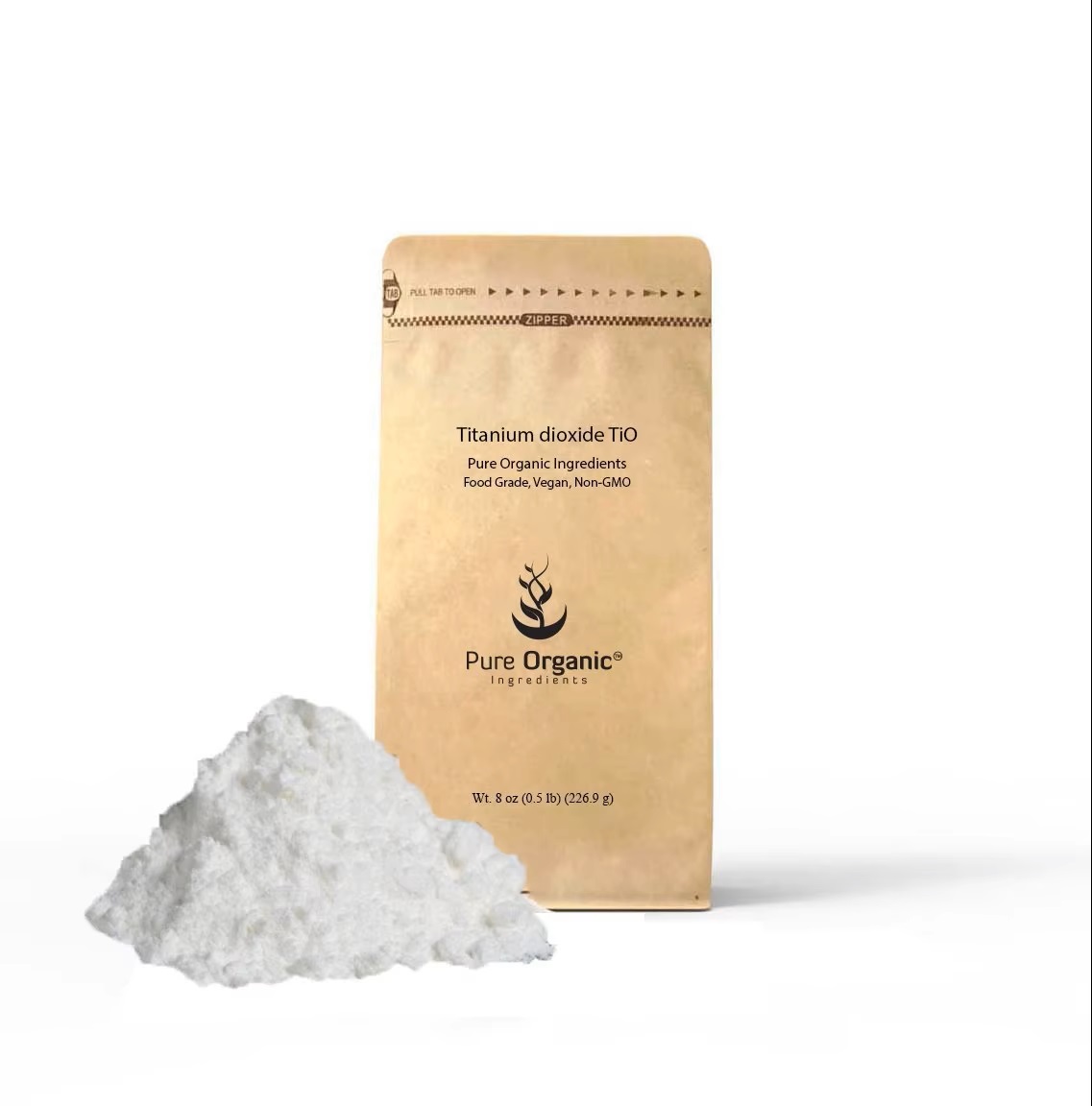
| Appearance | White, fine, odorless powder |
| Odor | Odorless |
| Physical State (20°C) | Solid (powder) |
SECTION 2: CHEMICAL STRUCTURE
Structure Description:
    Ti⁴⁺ — O²⁻ — Ti⁴⁺
          /    \
         O²⁻    O²⁻
        /        \
    Ti⁴⁺ — O²⁻ — Ti⁴⁺

    Titanium Dioxide (TiO₂)
    (Rutile / Anatase / Brookite polymorphs)
| Parameter | Description |
|---|---|
| Molecular Formula | TiO₂ |
| Molecular Weight | 79.866 g/mol |
| Titanium Content | 59.9% Ti |
| Oxygen Content | 40.1% O |
| Crystal Structure | Tetragonal (Rutile, Anatase), Orthorhombic (Brookite) |
| Coordination | Ti: 6-coordinate (octahedral); O: 3-coordinate |
| Oxidation State | Ti(IV) |
| SMILES | O=[Ti]=O |
| InChI | InChI=1S/2O.Ti |
| InChI Key | GWEVSGVZZGPLCZ-UHFFFAOYSA-N |
SECTION 3: CRYSTAL FORMS (POLYMORPHS)
| Form | Crystal Structure | Density (g/cm³) | Refractive Index | Stability | Primary Applications |
|---|---|---|---|---|---|
| Rutile | Tetragonal | 4.23 – 4.27 | 2.70 – 2.76 | Most stable, high weather resistance | Paints, plastics, paper, cosmetics (UV protection) |
| Anatase | Tetragonal | 3.82 – 3.90 | 2.49 – 2.55 | Metastable, higher photoactivity | Photocatalysis, environmental applications, specialty ceramics |
| Brookite | Orthorhombic | 4.12 – 4.14 | 2.58 – 2.70 | Rare, metastable | Research only (not commercial) |
Key Differences:
| Property | Rutile | Anatase |
|---|---|---|
| Thermal Stability | Stable at all temperatures | Converts to rutile at >700-800°C |
| UV Absorption | Excellent (broad spectrum) | Moderate |
| Photoactivity | Low (good for outdoor durability) | High (good for self-cleaning) |
| Hardness (Mohs) | 6-6.5 | 5.5-6 |
| Color | Slightly yellowish-white | Pure white |
| Refractive Index | 2.70 – 2.76 | 2.49 – 2.55 |
| Dielectric Constant | 110-114 | 31-48 |
SECTION 4: PHYSICAL AND CHEMICAL PROPERTIES
| Property | Rutile | Anatase | Test Method / Note |
|---|---|---|---|
| Appearance | White to slightly yellowish powder | Pure white powder | Visual |
| Odor | Odorless | Odorless | Olfactometric |
| Density (20°C) | 4.23 – 4.27 g/cm³ | 3.82 – 3.90 g/cm³ | - |
| Melting Point | 1,832 – 1,857 °C (decomposes) | Converts to rutile at ~700-800°C | DSC |
| Boiling Point | ~3,000 °C | ~3,000 °C | - |
| Refractive Index | nω = 2.609, nε = 2.899 (avg ~2.76) | nω = 2.561, nε = 2.488 (avg ~2.55) | - |
| Hardness (Mohs) | 6 – 6.5 | 5.5 – 6 | - |
| Water Solubility | Insoluble | Insoluble | General Method |
| Concentrated H₂SO₄ Solubility | Soluble | Soluble | - |
| HF Solubility | Soluble | Soluble | - |
| Dilute Acids | Insoluble | Insoluble | - |
| pH (10% Suspension) | 7 – 8 (neutral to slightly alkaline) | 7 – 8 | pH Meter |
| Hygroscopicity | Low (slightly higher for high surface area grades) | Low | - |
| Flash Point | >200°C | >200°C | - |
| Specific Surface Area (BET) | 5-20 m²/g | 10-50 m²/g | - |
SECTION 5: CHEMICAL PROPERTIES AND REACTIVITY
| Parameter | Information |
|---|---|
| Chemical Formula | TiO₂ |
| Molecular Weight | 79.866 g/mol |
| Chemical Class | Metal oxide |
| Stability | Very stable, chemically inert |
| Reactivity | Does not react with O₂, H₂S, SO₂, CO₂, NH₃ |
| Concentrated H₂SO₄ Reaction | TiO₂ + 2 H₂SO₄ → Ti(SO₄)₂ + 2 H₂O |
| HF Reaction | TiO₂ + 6 HF → H₂TiF₆ + 2 H₂O |
| Reaction with Bases at High Temperature | Amphoteric; reacts with bases |
| Oxidation State | Ti(IV) |
| Amphoteric Character | Partly acidic oxide |
| Thermal Decomposition | Decomposes above >2000°C |
SECTION 6: NANO GRADE vs PIGMENT GRADE COMPARISON
| Parameter | Pigment Grade | Nano Grade |
|---|---|---|
| Particle Size | 200 – 300 nm | 10 – 100 nm |
| Appearance | Opaque white | Transparent (in thin films) |
| UV Absorption | Good (scattering dominant) | Excellent (absorption dominant) |
| Visible Light Scattering | High (white appearance) | Low (transparent) |
| Primary Use | Opacifier (paints, plastics, paper) | UV protection (sunscreens, coatings) |
| Photoactivity | Low (rutile) / High (anatase) | Very high (requires surface coating) |
| Whiteness | High | Low-Moderate (transparent) |
| Dispersibility | Good (formulation dependent) | More difficult (surface treatment required) |
SECTION 7: MANUFACTURING PROCESSES
7.1. Sulfate Process:
| Step | Description |
|---|---|
| 1. Ore Preparation | Ilmenite (FeTiO₃) or titanium slag is ground |
| 2. Digestion | Ore is digested with concentrated sulfuric acid (H₂SO₄) |
| 3. Reaction | FeTiO₃ + 2 H₂SO₄ → TiOSO₄ + FeSO₄ + 2 H₂O |
| 4. Purification | Iron sulfate is crystallized and removed |
| 5. Hydrolysis | TiOSO₄ is hydrolyzed to obtain hydrated TiO₂ |
| 6. Calcination | Hydrated TiO₂ is calcined at 800-1000°C to produce TiO₂ |
| 7. Milling and Coating | Product is milled and surface treated (Al₂O₃, SiO₂, ZrO₂, organic coatings) |
Advantages: Lower cost, can use lower quality ores
Disadvantages: Higher environmental impact (waste acid, FeSO₄ by-product)
7.2. Chloride Process:
| Step | Description |
|---|---|
| 1. Ore Preparation | High-quality rutile or synthetic rutile is used |
| 2. Chlorination | Ore is reacted with chlorine gas (Cl₂) and carbon at 800-1000°C |
| 3. Reaction | TiO₂ + 2 Cl₂ + C → TiCl₄ + CO₂ |
| 4. Purification | TiCl₄ is purified by distillation |
| 5. Oxidation | TiCl₄ is oxidized with oxygen at high temperature (900-1400°C) |
| 6. Reaction | TiCl₄ + O₂ → TiO₂ + 2 Cl₂ (Chlorine is recycled) |
| 7. Milling and Coating | Product is milled and surface treated |
Advantages: Higher purity, lower environmental impact, chlorine recycling
Disadvantages: Requires high-quality ore, higher capital cost
SECTION 8: APPLICATION AREAS
| Industry | Application | Function | Preferred Form |
|---|---|---|---|
| Paints & Coatings | Architectural paints | Opacifier, whitener, UV resistance | Rutile (surface treated) |
| Industrial coatings | Corrosion protection, opacity | Rutile | |
| Automotive coatings | Bright white, durability | Rutile | |
| Powder coatings | Opacity, flow properties | Rutile | |
| Matt paints | Reduces gloss, matte appearance | Larger particle size rutile | |
| Plastics | PVC, Polyolefins | Whitening, opacity, UV stabilization | Rutile (surface treated) |
| Engineering plastics | Color stability, heat resistance | Rutile | |
| Masterbatches | Pigment concentrate | Rutile | |
| Matt plastics | Gloss reduction, natural appearance | Larger particle size rutile | |
| Paper | Paper coating | Opacity, brightness, printability | Rutile, Anatase |
| Paper filling | Opacity, show-through reduction | Anatase | |
| Cosmetics | Sunscreens | UV filter (UVA and UVB protection) | Rutile (nano grade, 10-100 nm) |
| Foundations, makeup | Pigment, opacity | Rutile (surface treated) | |
| Toothpaste | Whitening agent | Rutile | |
| Lipsticks, creams | Color pigment, opacity | Rutile | |
| Powders | Opacity, coverage | Rutile | |
| Food (E171) | Confectionery | Whitening agent (chewing gum, candies) | Anatase / Rutile |
| Sauces and dressings | Whitening, opacity | Anatase / Rutile | |
| Dairy products | Whitening (yogurt, cheese, ice cream) | Anatase / Rutile | |
| Bakery | Whitening (creams, fillings) | Anatase / Rutile | |
| Dietary supplements | Capsule, tablet whitening | Anatase / Rutile | |
| Pharmaceutical | Tablet coatings | Opacifier, whitening agent | Rutile |
| Capsules | Pigment, whitening | Rutile | |
| Syrups | Opacifier, whitening | Rutile | |
| Topical preparations | UV protection, pigment | Rutile | |
| Photocatalysis | Self-cleaning surfaces | Decomposes organic dirt under UV light | Anatase |
| Air purification | Decomposes VOC, NOₓ, bacteria | Anatase | |
| Water treatment | Decomposes organic pollutants | Anatase | |
| Anti-fog coatings | Hydrophilic property prevents fogging | Anatase | |
| Ceramics & Glass | Ceramic glazes | Opacifier, whitener | Anatase / Rutile |
| Porcelain enamels | Opacifier, whitener, acid resistance | Rutile | |
| Specialty glass | High refractive index glass | Rutile | |
| Textile | Delustrant | Reduces synthetic fiber gloss | Rutile |
| UV-protective fabric | UV-blocking textile coating | Rutile | |
| Other | Printing inks | White pigment | Rutile |
| Rubber | Filler, whitening | Rutile | |
| Welding electrode coatings | Arc stabilizer | Rutile |
SECTION 9: DELUSTRANT – DETAILED
| Parameter | Information |
|---|---|
| Definition | Reduction of surface gloss (shine) to achieve a matt/natural appearance |
| Mechanism | Larger TiO₂ particles scatter light randomly, reducing specular reflection |
| Particle Size | Larger than pigment grade (typically >0.5-1 µm vs. 0.2-0.3 µm for pigment) |
| Preferred Form | Rutile (more stable, better weather resistance) |
| Applications | Matt paints, matt plastics, delustered synthetic fibers (nylon, polyester), matt paper |
Effect: Higher particle size = lower gloss (more matt)
SECTION 10: QUALITY SPECIFICATIONS (PIGMENT GRADE)
| Parameter | Rutile Grade | Anatase Grade | Test Method |
|---|---|---|---|
| TiO₂ Content | ≥93 – 98% | ≥98% | Gravimetric / Titration |
| Particle Size (D50) | 0.2 – 0.3 µm | 0.2 – 0.3 µm | Laser Diffraction |
| Surface Treatment | Al₂O₃, SiO₂, ZrO₂, organic | None or minimal | - |
| Oil Absorption (g/100g) | 15 – 25 | 20 – 30 | ASTM D281 |
| pH (10% Suspension) | 7 – 8 | 7 – 8 | pH Meter |
| Resistivity (Ω·cm) | >5,000 | >3,000 | - |
| Volatiles at 105°C | ≤0.5% | ≤0.5% | Gravimetric |
| 325 Mesh Sieve Residue | ≤0.05% | ≤0.05% | Sieve |
| Whiteness (CIE L*) | ≥97 | ≥96 | Spectrophotometer |
| Tinting Strength | High | Moderate | Spectrophotometer |
| Refractive Index | 2.70 – 2.76 | 2.49 – 2.55 | Refractometry |
| Specific Surface Area (BET) | 5-20 m²/g | 10-50 m²/g | BET |
SECTION 11: SAFETY AND TOXICOLOGICAL PROFILE
| Parameter | Value / Description |
|---|---|
| GHS Classification | Carcinogenicity (Inhalation) Category 2 (H351) – only via inhalation |
| Signal Word | Warning |
| Hazard Pictograms | GHS08 (Health Hazard) |
| Hazard Statements (H-Codes) | H351 (Suspected of causing cancer – by inhalation of dust) |
| Precautionary Statements (P-Codes) | P261, P271, P280, P302+P352, P305+P351+P338, P312 |
| Acute Oral Toxicity (LD50, Rat) | >10,000 mg/kg (very low toxicity) |
| Acute Dermal Toxicity (LD50, Rabbit) | >10,000 mg/kg (very low toxicity) |
| Acute Inhalation Toxicity | High concentrations of dust may cause irritation |
| Skin Irritation | Not irritant |
| Eye Irritation | Mild irritant (mechanical) |
| Carcinogenicity (IARC) | Group 2B (possibly carcinogenic to humans – by inhalation only) |
| Mutagenicity | Not mutagenic |
| Reproductive Toxicity | No reproductive toxicity |
| Target Organs | Lungs (for dust inhalation) |
| FDA Status | GRAS (21 CFR 73.575); Approved as food additive |
Important Regulatory Note: IARC classifies TiO₂ as Group 2B (possibly carcinogenic to humans) only when inhaled in high concentrations (dust). Non-inhalation exposure (skin contact, ingestion) is considered safe.
SECTION 12: GHS CLASSIFICATION AND LABELING
GHS Classification (in accordance with 1272/2008/EC):
| Hazard Class | Category | H-Statement |
|---|---|---|
| Carcinogenicity (Inhalation) | Category 2 | H351 |
| Eye Irritation | Category 2 (optional) | H319 |
| STOT - SE | Category 3 (optional) | H335 |
Signal Word: Warning
Hazard Pictograms: GHS08 (Health Hazard)
NFPA 704 Hazard Classification:
| Health | Flammability | Reactivity | Special |
|---|---|---|---|
| 1 | 0 | 0 | - |
| (Minimal health hazard) | (Non-combustible) | (Stable) | (None) |
SECTION 13: PRECAUTIONARY STATEMENTS (P-CODES)
| Code | Statement |
|---|---|
| P261 | Avoid breathing dust |
| P271 | Use only outdoors or in a well-ventilated area |
| P280 | Wear protective gloves/protective clothing/eye protection/face protection |
| P302+P352 | IF ON SKIN: Wash with plenty of soap and water |
| P305+P351+P338 | IF IN EYES: Rinse cautiously with water for several minutes |
| P312 | Call a POISON CENTER/doctor if you feel unwell |
| P403+P233 | Store in a well-ventilated place. Keep container tightly closed |
| P405 | Store locked up |
| P501 | Dispose of contents/container in accordance with local/regional/national/international regulations |
SECTION 14: FIRST AID MEASURES
| Route of Exposure | Action |
|---|---|
| Inhalation | Move to fresh air. Get medical attention if respiratory irritation persists. |
| Skin Contact | Wash with plenty of soap and water. |
| Eye Contact | Rinse thoroughly with plenty of water for at least 15 minutes. Keep eyelids open. Seek medical attention if irritation persists. |
| Ingestion | Rinse mouth. Drink water. Unlikely to cause harm. |
| Note | Symptomatic treatment is administered. No specific antidote available. |
SECTION 15: FIREFIGHTING MEASURES
| Parameter | Information |
|---|---|
| Fire Hazard | Not combustible |
| Fire-Related Hazards | No thermal decomposition products |
| Suitable Extinguishing Media | Water mist, CO₂, dry chemical powder, foam |
| Unsuitable Extinguishing Media | Water jet (may spread dust) |
| Special Protective Equipment | SCBA (for dust control) |
SECTION 16: STORAGE AND SHELF LIFE
| Parameter | Information |
|---|---|
| Storage Conditions | Store in a cool, dry, well-ventilated area in tightly closed containers. |
| Container Requirements | Tightly closed, moisture-resistant containers (bags, drums, big bags) |
| Incompatible Materials | Moisture, strong acids, strong bases (at high temperatures) |
| Shelf Life | 24-60 months (stable – indefinite if kept dry) |
| Hygroscopicity | Low (slightly higher for high surface area grades) |
| Dust Hazard | Avoid inhalation of fine powder |
SECTION 17: PACKAGING OPTIONS
| Packaging Type | Quantity / Capacity | Material | Application Area |
|---|---|---|---|
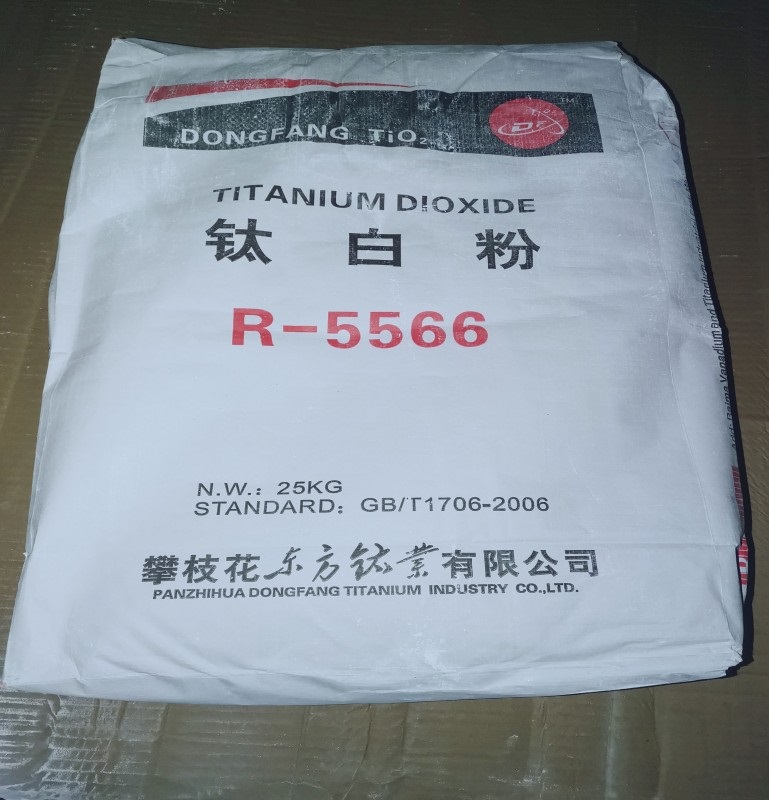
| Multi-wall Paper Bag | 25 kg | Kraft paper / PE liner | Industrial, paints, plastics |
| PE Bag | 25 kg | Polyethylene | Food, pharmaceutical, cosmetic |
| HDPE Drum | 25 kg, 50 kg | HDPE | High purity, pharmaceutical |
| Fiber Drum | 25 kg, 50 kg | Fiber / PE liner | Industrial supply |
| FIBC / Big Bag | 500 kg, 1000 kg | PP (PE lined) | Large-scale industrial supply |
| IBC Container | 500 kg, 1000 kg | HDPE | Large-scale industrial supply |
SECTION 18: TRANSPORTATION INFORMATION
| Parameter | Information |
|---|---|
| UN Number | Not regulated (not hazardous for transport) |
| Hazard Class | None |
| Packing Group | Not applicable |
| ADR/RID | Not classified as dangerous goods |
| IMDG Code | Not marine pollutant |
| IATA (Air) | Not classified as dangerous goods; can be transported by air |
| Transport Temperature | Ambient temperature; protect from moisture |
SECTION 19: REGULATORY STATUS
| Region / Authority | Status |
|---|---|
| European Union (EC) | REACH registered; E171 approved as food additive (under review) |
| France | E171 banned in food products (since 2020) |
| Turkey | Compliant with Turkish Food Codex; E171 permitted |
| USA (FDA) | GRAS; Approved as food additive (21 CFR 73.575) |
| USA (EPA) | Not classified as hazardous under CERCLA/RMP |
| IARC | Group 2B (possibly carcinogenic to humans – by inhalation only) |
| GHS | Classified as H351 (suspected of causing cancer – by inhalation) |
| California (Prop 65) | Listed (inhalable powder form) |
| Halal | Yes (synthetic, not animal-derived) |
| Kosher | Yes (with certification) |
| Vegan | Yes (synthetic, mineral-derived) |
EU Restrictions (TiO₂ Powder):
-
Labeling requirement for powders containing ≥1% TiO₂ particles with diameter ≤10 µm: "H351 – Suspected of causing cancer by inhalation"
-
Not applicable for liquid or solid formulations (e.g., paints, plastics)
SECTION 20: OTHER NAMES AND SYNONYMS
| Type | Name |
|---|---|
| Turkish Names | Titanyum Dioksit, Titanyum Beyaz, Rutil, Anataz, E171 |
| English Names | Titanium Dioxide, Titanium White, Rutile, Anatase, Titania |
| Trade Marks | Tiona, Tioxide, Kronos, Tronox, Cristal, Ti-Pure |
| CAS Numbers | 13463-67-7 (general), 1317-70-0 (Anatase), 1317-80-2 (Rutile) |
| EC Numbers | 236-675-5 (Rutile), 238-877-9 (Anatase) |
| E Number | E171 |
| PubChem CID | 26042 |
| FDA UNII | 15FIX9V2JP |
| HS Code | 3206.11 |
SECTION 21: SUMMARY TABLE
| Property | Rutile | Anatase |
|---|---|---|
| CAS Number | 1317-80-2 | 1317-70-0 |
| EC Number | 236-675-5 | 238-877-9 |
| Density (g/cm³) | 4.23-4.27 | 3.82-3.90 |
| Refractive Index | ~2.76 | ~2.55 |
| Stability | Very stable | Converts to rutile above 700°C |
| Photoactivity | Low | High |
| Primary Use | Paints, plastics, cosmetics, food | Photocatalysis, self-cleaning |
| GHS Signal Word | Warning | Warning |
| IARC Classification | Group 2B (inhalation) | Group 2B (inhalation) |
| FDA Status | GRAS | GRAS |
| E Number | E171 | E171 |
SECTION 22: CRITICAL WARNINGS AND BEST PRACTICES
CRITICAL WARNINGS:
-
Rutile vs Anatase Selection: For outdoor durability (UV resistance, low photoactivity), choose Rutile. For photocatalysis (self-cleaning, air purification), choose Anatase. Rutile is the preferred form for most pigment applications (paints, plastics, cosmetics, food).
-
Food Grade (E171): TiO₂ is approved as a food additive (E171) in many countries. France has banned E171 in food products since 2020 due to safety concerns. The EU is reviewing the status. Check local regulations before use in food products.
-
Nano TiO₂: Nano-grade TiO₂ (10-100 nm) provides effective UV protection without whitening appearance. Surface coatings (Al₂O₃, SiO₂) are applied to reduce photoactivity and prevent free radical formation.
-
Delustrant: For matt surfaces, use larger particle size TiO₂ (>0.5-1 µm) instead of standard pigment grade (0.2-0.3 µm). Prefer rutile grade for better weather resistance.
-
Dust Control: Although TiO₂ has low toxicity, chronic inhalation of fine dust may cause lung effects. Use dust masks and good ventilation when handling powder. Liquid and solid formulations (paints, plastics) do not pose inhalation hazards.
-
Regulatory Changes: TiO₂ regulations are evolving. The EU classification (H351 – suspected of causing cancer by inhalation) applies to powders containing ≥1% TiO₂ particles with diameter ≤10 µm. Formulators should monitor regulatory changes.
BEST PRACTICE RECOMMENDATIONS:
-
Form Selection: Choose the correct form (Rutile / Anatase) and particle size (pigment / nano / delustrant) based on application.
-
Surface Treatment: For applications requiring dispersibility and weather resistance, prefer surface-treated grades (Al₂O₃, SiO₂ coated).
-
Dosage: Avoid overuse. Due to high tinting strength, small amounts are sufficient.
-
Mixing: Disperse powder form with high-shear mixing. Pre-wetting is recommended for liquid formulations.
-
Storage: Store in cool, dry, airtight containers. Protect from moisture.
-
Personal Protective Equipment: Dust mask (N95/FFP2), safety goggles, protective clothing.
-
Hygiene: Wash hands after handling; Do not eat, drink or smoke when using this product.
-
Quality Control: Regularly perform TiO₂ content, particle size, pH, whiteness, tinting strength, oil absorption tests.
-
Regulatory Monitoring: Regularly monitor changes in E171 and nano TiO₂ regulations.
-
Sustainability: Prefer chloride process products over sulfate process for more environmentally friendly production.
LEGAL DISCLAIMER:
The information provided in this document is based on our current knowledge and experience and is presented in good faith. However, as all conditions of use are beyond our control, it does not constitute a binding specification or guarantee. This Technical Data Sheet is for informational purposes only. Users are responsible for testing suitability for their own applications and for complying with all local, regional, and national regulations. For complete safety, storage, use, handling, waste, and regulatory compliance information, please refer to the official Safety Data Sheet (SDS/MSDS) provided by the manufacturer/supplier. Titanium Dioxide is a widely used compound; avoid inhalation of powder form and comply with local regulations.