We unleash your business potential by maximize the business innovation.
Send EmailBromelin, Bromelain, Pineapple Enzyme, Pineapple Protease, E1101iii, 9001-00-7, 150977-36-9
BROMELAIN – BROMELAYİN
CAS Number: 9001-00-7 (General), 150977-36-9 (Specific form)
EC Number (EINECS): 232-572-4
Molecular Weight: ~1,223.2 g/mol (as monomer)
Enzyme Class: Cysteine protease (EC 3.4.22.32, EC 3.4.22.33)
Source: Pineapple plant (Ananas comosus) stem and fruit
E Number: E1101(iii)
SECTION 1: CHEMICAL IDENTITY AND DEFINITION
| Parameter | Information |
|---|---|
| Product Name | Bromelain |
| Other Names | Bromelin, Bromelains, Plant Protein Concentrate, Pineapple Enzyme, Pineapple Protease |
| Chemical Formula | C₃₉H₆₆N₂O₂₉ (varies with composition) |
| Molecular Weight | ~1,223.2 g/mol (as monomer) |
| CAS Number (General) | 9001-00-7 |
| CAS Number (Specific) | 150977-36-9 |
| EC Number (EINECS) | 232-572-4 |
| Enzyme Commission (EC) | 3.4.22.32 (stem bromelain), 3.4.22.33 (fruit bromelain) |
| Chemical Class | Cysteine protease (thiol protease) |
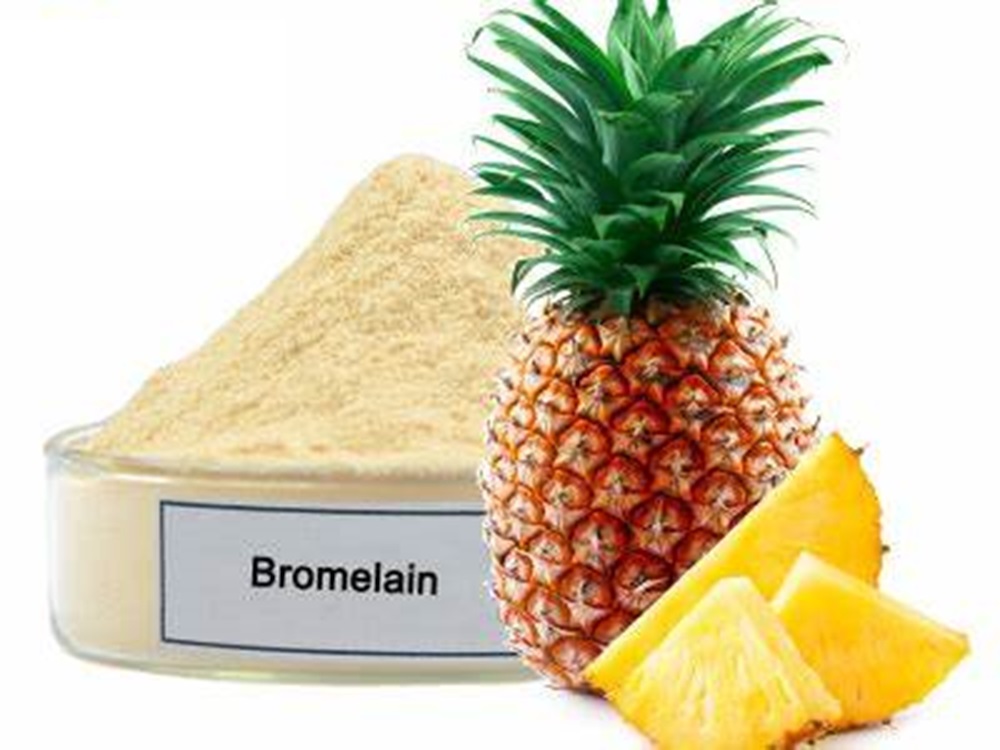
| Appearance | White to light yellow, amorphous powder |
| Odor | Slight characteristic |
| Physical State (20°C) | Solid (powder) |
| Solubility | Soluble in water; insoluble in ethanol, acetone, chloroform, ether |
| Source | Pineapple stem and fruit (Ananas comosus) |
| E Number | E1101(iii) (Food additive) |
SECTION 2: TYPES OF BROMELAIN
| Type | Source | CAS Number | Properties |
|---|---|---|---|
| Stem Bromelain (EC 3.4.22.32) | Pineapple stem | 9001-00-7 | Primary commercial source; higher activity |
| Fruit Bromelain (EC 3.4.22.33) | Pineapple fruit | 150977-36-9 | Lower activity; primarily in research |
| Bromelain Complex | Stem + Fruit | 9001-00-7 | Mixed proteases and other enzymes |
SECTION 3: PHYSICAL AND CHEMICAL PROPERTIES
| Property | Value |
|---|---|
| Appearance | White to light yellow, amorphous powder |
| Odor | Slight characteristic |
| Molecular Weight | ~1,223.2 g/mol (monomer) |
| Isoelectric Point | ~4.5 – 5.0 |
| Optimum pH | ~6.0 – 7.5 (active range: 4.0 – 8.5) |
| Optimum Temperature | 50 – 60 °C |
| Thermal Stability | Stable up to 60°C; inactivated at 70-80°C |
| Solubility in Water | Soluble |
| Solubility in Ethanol | Insoluble |
| Solubility in Acetone | Insoluble |
| Solubility in Chloroform | Insoluble |
| Solubility in Ether | Insoluble |
| pH Stability | Stable at pH 4.0 – 8.5 |
| Metal Ion Effects | Activated by Ca²⁺, Mg²⁺; inhibited by heavy metals (Hg²⁺, Cu²⁺) |
| Activators | Cysteine, glutathione, EDTA |
| Inhibitors | Heavy metals (Hg²⁺, Cu²⁺), iodoacetic acid, oxidizing agents |
SECTION 4: ENZYMATIC ACTIVITY AND MECHANISM
| Parameter | Description |
|---|---|
| Enzyme Class | Cysteine protease |
| Substrate Specificity | Broad; hydrolyzes proteins, peptides, and some esters |
| Specific Activity | ≥ 1.0-5.0 units/mg (varies by grade) |
| One Unit Definition | Amount of enzyme that hydrolyzes casein to produce 1 µg of tyrosine per minute at pH 6.0 and 37°C |
| Optimum pH | 6.0 – 7.5 |
| Optimum Temperature | 50 – 60 °C |
| Inactivation | 70-80°C for 10 minutes |
SECTION 5: HEALTH BENEFITS AND MECHANISMS
| Benefit | Mechanism |
|---|---|
| Anti-inflammatory | Reduces prostaglandin E2 and bradykinin; inhibits edema |
| Pain Relief | Reduces pain mediators; blocks substance P |
| Anti-edema | Decreases vascular permeability; reduces fluid accumulation |
| Immune Modulation | Modulates cytokine production; enhances natural killer cell activity |
| Wound Healing | Promotes granulation tissue formation; removes necrotic tissue |
| Sinusitis Relief | Reduces nasal secretions; decreases inflammation |
| Digestive Aid | Protein breakdown; supports protein digestion |
| Cardiovascular Support | Reduces platelet aggregation; improves circulation |
| Fibrinolysis | Breaks down fibrin; prevents blood clot formation |
SECTION 6: APPLICATION AREAS
6.1. Food Industry
| Application | Function |
|---|---|
| Meat Tenderization | Breaks down collagen and muscle proteins |
| Protein Hydrolysis | Produces protein hydrolysates |
| Beverage Clarification | Removes haze-causing proteins |
| Baking Industry | Modifies gluten structure |
| Chill-Proofing | Prevents haze formation in beer |
| Sausage Production | Improves texture and digestibility |
| Cheese Manufacturing | Milk clotting (limited use) |
6.2. Pharmaceutical and Healthcare
| Application | Function |
|---|---|
| Anti-inflammatory | Treatment of inflammation and edema |
| Wound Healing | Enzymatic debridement of wounds |
| Burn Treatment | Debridement of burn wounds |
| Sinusitis Treatment | Reduces nasal congestion and inflammation |
| Osteoarthritis | Reduces joint pain and inflammation |
| Sports Injuries | Reduces swelling and accelerates recovery |
| Digestive Support | Protein digestion aid |
| Platelet Aggregation | Reduces blood clotting |
6.3. Cosmetic Industry
| Application | Function |
|---|---|
| Exfoliation | Removes dead skin cells |
| Face Masks | Enzymatic peeling |
| Skin Care | Protein breakdown for smoother skin |
| Anti-aging | Cell renewal and regeneration |
SECTION 7: QUALITY SPECIFICATIONS (FOOD GRADE)
| Parameter | Specification (FCC / USP) |
|---|---|
| Appearance | White to light yellow, amorphous powder |
| Identification | Positive (Enzyme activity test) |
| Proteolytic Activity | ≥ 1.0 units/mg (food grade) |
| Loss on Drying | ≤ 8.0% |
| Ash Content | ≤ 10.0% |
| pH (1% solution) | 4.5 – 6.5 |
| Heavy Metals (as Pb) | ≤ 10 ppm |
| Lead (Pb) | ≤ 2 ppm |
| Arsenic (As) | ≤ 3 ppm |
| Mercury (Hg) | ≤ 1 ppm |
| Cadmium (Cd) | ≤ 1 ppm |
| Total Plate Count | ≤ 10,000 CFU/g |
| Yeast and Mold | ≤ 100 CFU/g |
| Salmonella spp. | Negative in 25g |
| Escherichia coli | Negative in 10g |
SECTION 8: MICROBIOLOGICAL SPECIFICATIONS
| Parameter | Specification |
|---|---|
| Total Aerobic Mesophilic Bacteria | ≤ 10,000 CFU/g |
| Yeast and Mold | ≤ 100 CFU/g |
| Salmonella spp. | Negative in 25g |
| Escherichia coli | Negative in 10g |
| Staphylococcus aureus | Negative in 1g |
| Pseudomonas aeruginosa | Negative in 1g |
SECTION 9: TYPICAL DOSAGE
| Application | Recommended Dosage |
|---|---|
| Anti-inflammatory | 200-400 mg/day (GDU 1,200-2,400) |
| Digestive Support | 100-500 mg/day |
| Wound Healing | 100-500 mg/day |
| Sports Injuries | 200-400 mg/day |
| Sinusitis | 100-500 mg/day |
| Meat Tenderization | 0.1-0.5% of meat weight |
SECTION 10: STORAGE AND SHELF LIFE
| Parameter | Information |
|---|---|
| Storage Conditions | Cool (15-25°C), dry, well-ventilated area |
| Container Requirements | Tightly closed, original packaging (hygroscopic) |
| Protect From | Moisture, heat, direct sunlight, heavy metals, strong oxidizing agents |
| Shelf Life | 12-24 months (unopened original packaging) |
| Stability Note | Hygroscopic; activity decreases with moisture and heat exposure |
SECTION 11: PACKAGING OPTIONS
| Packaging Type | Quantity | Material |
|---|---|---|
| Aluminum foil bag | 1-5 kg | Laminated aluminum |
| PE-lined kraft paper bag | 25 kg | Kraft paper + PE |
| Plastic pail | 20-25 kg | HDPE |
| Fiber drum | 25-50 kg | HDPE + PE |
| Big-Bag | 500-1000 kg | Polypropylene (with PE liner) |
SECTION 12: SAFETY AND HEALTH INFORMATION
GHS Classification (Bulk Powder)
| Hazard Class | Category |
|---|---|
| Skin Sensitization | Category 1 (H317) |
| Eye Irritation | Category 2A (H319) |
| Signal Word | Warning |
Hazard Statements (H-Codes)
| Code | Statement |
|---|---|
| H317 | May cause an allergic skin reaction |
| H319 | Causes serious eye irritation |
Precautionary Statements (P-Codes)
| Code | Statement |
|---|---|
| P261 | Avoid breathing dust |
| P280 | Wear protective gloves/eye protection |
| P302+P352 | IF ON SKIN: Wash with plenty of soap and water |
| P305+P351+P338 | IF IN EYES: Rinse cautiously with water for several minutes; remove contact lenses if present and easy to do; continue rinsing |
| P333+P313 | IF SKIN IRRITATION OR RASH OCCURS: Get medical attention |
SECTION 13: TOXICOLOGICAL INFORMATION
| Parameter | Value |
|---|---|
| Oral LD50 (Rat) | > 5,000 mg/kg |
| Skin Irritation | Non-irritant |
| Eye Irritation | Mild irritant |
| Skin Sensitization | May cause sensitization in susceptible individuals |
| Carcinogenicity | Not classified |
| Mutagenicity | Negative in standard tests |
| Allergen | Bromelain may cause allergic reactions in sensitive individuals (pineapple/latex allergy) |
SECTION 14: FIRST AID MEASURES
| Exposure Route | Action |
|---|---|
| Inhalation | Move to fresh air. If respiratory irritation persists, seek medical attention. |
| Skin Contact | Wash with plenty of soap and water. If rash develops, seek medical attention. |
| Eye Contact | Rinse immediately with plenty of water for at least 15 minutes. Seek medical attention. |
| Ingestion | Rinse mouth. Drink plenty of water. Seek medical attention. |
SECTION 15: REGULATORY STATUS
| Region / Authority | Status |
|---|---|
| European Union | Approved as food additive (E1101(iii)) |
| USA (FDA) | GRAS (21 CFR 184.1025) |
| Turkey | Approved (Turkish Food Codex) |
| JECFA | Approved |
| Codex Alimentarius | Approved (INS 1101(iii)) |
| Halal | Certifiable (plant-based source) |
| Kosher | Certifiable (plant-based source) |
SECTION 16: TRANSPORT INFORMATION
| Parameter | Information |
|---|---|
| UN Number | Not regulated (not dangerous goods) |
| Hazard Class | Not applicable |
| Packing Group | Not applicable |
| ADR/RID | Not regulated |
| IMDG Code | Not regulated |
| IATA (Air) | Not regulated |
| Marine Pollutant | No |
SECTION 17: FIRE-FIGHTING MEASURES
| Parameter | Information |
|---|---|
| Fire Hazard | Combustible organic powder |
| Suitable Extinguishing Media | Water spray (mist), CO₂, dry chemical powder |
| Specific Hazards | When heated, emits CO, CO₂, nitrogen oxides |
| Decomposition Products | CO, CO₂, NOx |
| Protective Equipment | Self-contained breathing apparatus (SCBA), full protective clothing |
SECTION 18: ACCIDENTAL SPILLAGE AND CLEANUP
| Parameter | Information |
|---|---|
| Personal Protection | Nitrile gloves, protective goggles, dust mask (N95) |
| Cleaning Methods | Sweep or vacuum; avoid dust generation |
| Environmental Precautions | Prevent entry into drains, soil, and surface waters |
| Waste Disposal | According to local regulations; incineration or landfilling at licensed facilities |
SECTION 19: OTHER NAMES AND SYNONYMS
| Type | Name |
|---|---|
| Turkish Names | Bromelain, Ananas Enzimi, Bitkisel Protein Konsantresi |
| English Names | Bromelain, Bromelin, Pineapple Enzyme, Pineapple Protease, Plant Protein Concentrate |
| Chemical Names | Cysteine protease, EC 3.4.22.32 (stem), EC 3.4.22.33 (fruit) |
| E Number | E1101(iii) |
| CAS (General) | 9001-00-7 |
| CAS (Specific) | 150977-36-9 |
| EC Number | 232-572-4 |
SECTION 20: SUMMARY AND CRITICAL NOTES
Product Summary
| Parameter | Value |
|---|---|
| Product | Bromelain |
| CAS Number | 9001-00-7 |
| E Number | E1101(iii) |
| Appearance | White to light yellow, amorphous powder |
| Molecular Weight | ~1,223.2 g/mol |
| Primary Function | Proteolytic enzyme |
| Source | Pineapple plant |
Critical Notes
-
Proteolytic Enzyme: Bromelain hydrolyzes proteins into peptides and amino acids; active at pH 4.0-8.5.
-
Anti-inflammatory: Reduces inflammation and edema by inhibiting prostaglandin E2 and bradykinin.
-
Wound Healing: Promotes debridement and granulation tissue formation.
-
Versatile Applications: Used in food, pharmaceutical, cosmetic, and industrial applications.
-
Two Forms: Stem bromelain (primary commercial source) and fruit bromelain.
-
Plant-Based: Derived from pineapple; suitable for vegetarian/vegan and Halal/Kosher applications.
-
Allergen Warning: May cause allergic reactions in individuals with pineapple or latex sensitivity.
-
Hygroscopic: Absorbs moisture; store in airtight containers.
-
GRAS Status: Recognized as GRAS by FDA (21 CFR 184.1025).
-
Enzyme Activity: Activity decreases with moisture and heat exposure; store in cool, dry conditions.
IMPORTANT DECLARATION: This Technical Data Sheet (TDS) is for informational purposes only and has been prepared based on available technical data. The user is responsible for determining the product's suitability for their specific application and for complying with all local, national, and international regulations. For complete safety, storage, use, transport, waste, and regulatory compliance information, refer to the official Safety Data Sheet (SDS/MSDS) provided by the manufacturer/supplier.