We unleash your business potential by maximize the business innovation.
Send EmailMaltitol, Hydrogenated Maltose, Maltitol Powder, Maltitol Syrup, E965, 585-88-6
MALTITOL (E965) – MALTİTOL
CAS Number: 585-88-6
EC Number (EINECS): 209-567-0
Molecular Formula: C₁₂H₂₄O₁₁
Molecular Weight: 344.31 g/mol
E Number: E965
SECTION 1: CHEMICAL IDENTITY AND DEFINITION
| Parameter | Information |
|---|---|
| Chemical Name (IUPAC) | 4-O-α-D-Glucopyranosyl-D-glucitol |
| Other Names | Maltitol, Maltitol Syrup, Maltitol Powder, Hydrogenated Maltose |
| Chemical Formula | C₁₂H₂₄O₁₁ |
| Molecular Weight | 344.31 g/mol |
| CAS Number | 585-88-6 |
| EC Number (EINECS) | 209-567-0 |
| E Number | E965 (Sweetener, bulking agent, humectant) |
| Chemical Class | Sugar alcohol (polyol) |
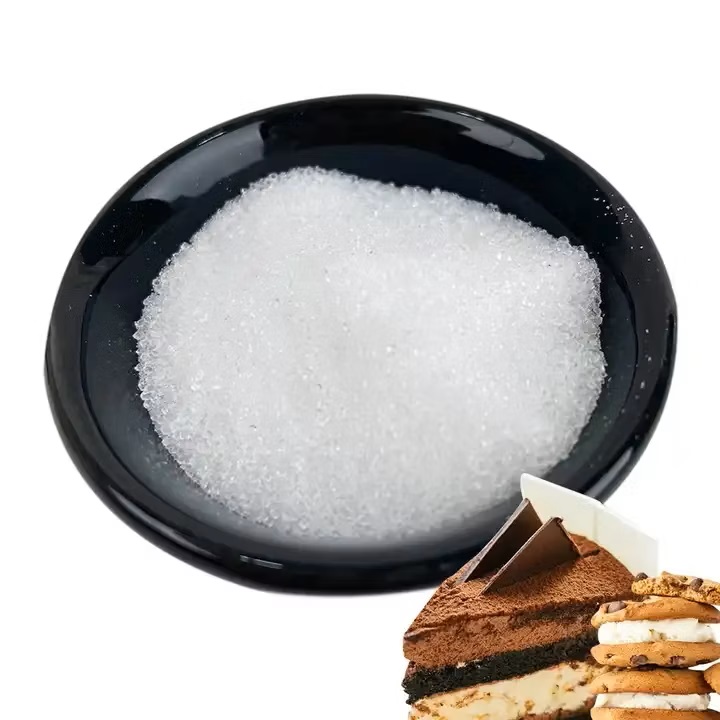
| Appearance | White, crystalline powder or clear, colorless syrup |
| Odor | Odorless |
| Taste | Sweet (75-90% of sucrose) |
| Physical State (20°C) | Solid (powder) or Liquid (syrup) |
| Source | Hydrogenation of maltose derived from starch |
SECTION 2: PHYSICAL PROPERTIES
| Property | Value |
|---|---|
| Appearance | White, crystalline powder or clear, colorless syrup |
| Odor | Odorless |
| Taste | Sweet (75-90% of sucrose) |
| Molecular Weight | 344.31 g/mol |
| Melting Point | 145 – 150 °C |
| Density | ~1.5 g/cm³ |
| Solubility in Water (20°C) | Soluble (~58 g/100 g water) |
| Solubility in Ethanol | Slightly soluble |
| pH (10% solution) | 5.0 – 7.0 |
| Sweetness (Sucrose = 100) | 75 – 90% |
| Caloric Value | 2.1 – 2.4 kcal/g (sucrose: 4.0 kcal/g) |
| Glycemic Index | 35 (powder), 52 (syrup) |
| Hygroscopicity | Medium (more hygroscopic than sucrose) |
| Cariogenicity | Non-cariogenic (tooth-friendly) |
| Heat Stability | Good (stable up to 148°C) |
| Maillard Reaction | Does not participate (no browning) |
| Specific Rotation [α]D²⁰ | +105.5° to +108.5° |
SECTION 3: CHEMICAL PROPERTIES
| Property | Information |
|---|---|
| Chemical Formula | C₁₂H₂₄O₁₁ |
| Molecular Weight | 344.31 g/mol |
| Chemical Class | Sugar alcohol (polyol) |
| Structure | Glucose + Sorbitol (disaccharide polyol) |
| Functional Groups | Hydroxyl (-OH) |
| SMILES | OCC@HC@@HC@([H])O[C@H]1OC@HC@@HC@H[C@H]1O |
| InChI Key | VQHSOMBJVWLPSR-UHFFFAOYNA-N |
| Production | Catalytic hydrogenation of high-maltose glucose syrup (100-150°C, 100-150 bar) |
| Stability | Stable under normal storage conditions |
| Thermal Stability | Stable up to 148°C; no browning |
| Hygroscopicity | Medium |
| Incompatible Materials | Strong oxidizing agents, strong acids |
SECTION 4: METABOLISM AND BIOLOGICAL PROPERTIES
| Parameter | Description |
|---|---|
| Absorption | Slow and partial absorption (5-80% varies by individual) |
| Metabolism | Hydrolyzed to glucose and sorbitol in the small intestine |
| Insulin Response | Lower insulin secretion compared to sucrose |
| Glycemic Response | Low (GI: 35-52) |
| Caloric Value | 2.1-2.4 kcal/g |
| Dental Health | Non-cariogenic (does not cause tooth decay) |
| Laxative Effect | May cause osmotic diarrhea at doses >30-40 g/day |
SECTION 5: COMPARISON WITH OTHER SWEETENERS
| Property | Maltitol (E965) | Sorbitol (E420) | Xylitol (E967) | Erythritol (E968) | Sucrose |
|---|---|---|---|---|---|
| Sweetness (Sucrose=100) | 75-90 | 60 | 100 | 70 | 100 |
| Calories (kcal/g) | 2.1-2.4 | 2.6 | 2.4 | 0.2 | 4.0 |
| Glycemic Index | 35-52 | 9 | 13 | 0 | 65 |
| Hygroscopicity | Medium | High | Medium | Low | Low |
| Cooling Effect | Minimal | Significant | High | High | None |
| Cariogenicity | None | None | None | None | Yes |
| Laxative Threshold | 30-40 g/day | 20-30 g/day | 20-30 g/day | 50-70 g/day | None |
| Heat Stability | Good | Good | Good | Good | Moderate |
SECTION 6: SECTORAL APPLICATIONS AND DOSAGE
| Sector | Application | Recommended Dosage | Reason for Preference |
|---|---|---|---|
| Confectionery | Sugar-free chocolate, candies, chewing gum, caramel | 30-100% of recipe | Closest taste to sugar; easy processing |
| Bakery Products | Cakes, biscuits, pastries | 20-60% of flour weight | Moisture retention; sugar-like bulk and texture |
| Beverages | Diet drinks, energy drinks | 10-30% of product | Low glycemic index; sugar-like taste profile |
| Dairy & Frozen Desserts | Sugar-free ice cream, yogurt | 20-50% of mix | Prevents crystallization; creamy texture |
| Pharmaceuticals | Tablet coatings, syrups, lozenges | 10-40% of formulation | Good solubility; taste masking; low calorie |
| Diet & Functional Foods | Diet products, sports nutrition | 20-60% of product | Sugar-like mouthfeel; reduced energy value |
SECTION 7: MALTITOL FORMS
| Form | Description | Application |
|---|---|---|
| Crystalline Maltitol | White powder with >98% maltitol content | Chocolate, hard candies, chewing gum |
| Maltitol Syrup | Viscous liquid with ≥50% maltitol content | Bakery, ice cream, liquid formulations |
| Maltitol Powder | Ground crystalline form | Tablets, capsules, dry mixes |
SECTION 8: QUALITY SPECIFICATIONS (FOOD GRADE)
| Parameter | Specification (FCC / JECFA) |
|---|---|
| Appearance | White, crystalline powder or clear syrup |
| Identification | Positive (HPLC, IR) |
| Assay (maltitol content) | ≥ 98.0% (powder), ≥ 50.0% (syrup) |
| Total Hydrogenated Saccharides | ≥ 99.0% |
| Water Content (Powder) | ≤ 0.5% |
| Water Content (Syrup) | ≤ 31.0% |
| Reducing Sugars | ≤ 0.1% (powder), ≤ 0.3% (syrup) |
| Ash Content | ≤ 0.1% |
| pH (10% solution) | 5.0 – 7.0 |
| Specific Rotation [α]D²⁰ | +105.5° to +108.5° |
| Heavy Metals (as Pb) | ≤ 10 ppm |
| Lead (Pb) | ≤ 0.5-1.0 ppm |
| Nickel (Ni) | ≤ 2 mg/kg |
| Arsenic (As) | ≤ 0.5 ppm |
| Total Plate Count | ≤ 20-1,000 CFU/g |
| Yeast and Mold | ≤ 10-100 CFU/g |
| Coliform Bacteria | Negative in 25g |
SECTION 9: MICROBIOLOGICAL SPECIFICATIONS
| Parameter | Specification |
|---|---|
| Total Aerobic Mesophilic Bacteria | ≤ 1,000 CFU/g |
| Yeast and Mold | ≤ 100 CFU/g |
| Salmonella spp. | Negative in 25g |
| Escherichia coli | Negative in 10g |
| Staphylococcus aureus | Negative in 1g |
SECTION 10: STORAGE AND SHELF LIFE
| Parameter | Information |
|---|---|
| Storage Conditions | Cool (15-25°C), dry, well-ventilated area |
| Container Requirements | Tightly closed, original packaging (hygroscopic) |
| Protect From | Moisture, direct sunlight, strong oxidizing agents, strong acids |
| Shelf Life | 24-48 months (unopened original packaging) |
| Stability Note | Hygroscopic; absorbs moisture; store in airtight containers |
SECTION 11: PACKAGING OPTIONS
| Packaging Type | Quantity | Material |
|---|---|---|
| PE-lined kraft paper bag | 25 kg | Kraft paper + PE |
| Plastic pail | 20-25 kg | HDPE |
| Fiber drum | 25-50 kg | HDPE + PE |
| Aluminum foil bag | 1-5 kg | Laminated aluminum |
| Big-Bag | 500-1000 kg | Polypropylene (with PE liner) |
| Plastic drum (Syrup) | 200-250 kg | HDPE |
SECTION 12: SAFETY AND HEALTH INFORMATION
GHS Classification (Bulk Powder)
| Hazard Class | Category |
|---|---|
| Not classified as hazardous | - |
Hazard Statements
| Code | Statement |
|---|---|
| None | Not classified as hazardous |
Precautionary Statements
| Code | Statement |
|---|---|
| P261 | Avoid breathing dust |
| P280 | Wear protective gloves/eye protection |
| P305+P351+P338 | IF IN EYES: Rinse cautiously with water for several minutes; remove contact lenses if present and easy to do; continue rinsing |
SECTION 13: TOXICOLOGICAL INFORMATION
| Parameter | Value |
|---|---|
| Oral LD50 (Rat) | > 5,000 mg/kg |
| ADI (Acceptable Daily Intake) | Not specified (JECFA, 1993) |
| Laxative Threshold | 30-40 g/day (single dose) |
| Gastrointestinal Tolerance | Well tolerated up to 30 g/day; mild effects may occur at 40 g/day |
| Carcinogenicity | Not classified |
| Mutagenicity | Negative in standard tests |
| GRAS Status | Recognized as GRAS by FDA |
| Reproductive Toxicity | No evidence of adverse effects |
SECTION 14: FIRST AID MEASURES
| Exposure Route | Action |
|---|---|
| Inhalation | Move to fresh air. If respiratory irritation persists, seek medical attention. |
| Skin Contact | Wash with plenty of soap and water. |
| Eye Contact | Rinse immediately with plenty of water for at least 15 minutes. Seek medical attention. |
| Ingestion | Rinse mouth. Drink plenty of water. Seek medical attention. |
SECTION 15: REGULATORY STATUS
| Region / Authority | Status |
|---|---|
| European Union | Approved as E965 |
| USA (FDA) | GRAS |
| Turkey | Approved (Turkish Food Codex) |
| JECFA (FAO/WHO) | Approved; ADI: Not specified |
| Codex Alimentarius | Approved (INS 965) |
| Kosher | Certifiable |
| Halal | Certifiable |
| Japan | Approved as food additive |
SECTION 16: TRANSPORT INFORMATION
| Parameter | Information |
|---|---|
| UN Number | Not regulated (not dangerous goods) |
| Hazard Class | Not applicable |
| Packing Group | Not applicable |
| ADR/RID | Not regulated |
| IMDG Code | Not regulated |
| IATA (Air) | Not regulated |
| Marine Pollutant | No |
SECTION 17: FIRE-FIGHTING MEASURES
| Parameter | Information |
|---|---|
| Fire Hazard | Combustible organic solid |
| Suitable Extinguishing Media | Water spray (mist), CO₂, dry chemical powder |
| Specific Hazards | When heated, emits CO, CO₂ |
| Decomposition Products | CO, CO₂ |
| Protective Equipment | Self-contained breathing apparatus (SCBA), full protective clothing |
SECTION 18: ACCIDENTAL SPILLAGE AND CLEANUP
| Parameter | Information |
|---|---|
| Personal Protection | Nitrile gloves, protective goggles, dust mask (N95) |
| Cleaning Methods | Collect mechanically (sweep or spatula) |
| Environmental Precautions | Prevent entry into drains, soil, and surface waters |
| Waste Disposal | According to local regulations; landfilling at licensed facilities |
SECTION 19: OTHER NAMES AND SYNONYMS
| Type | Name |
|---|---|
| Turkish Names | Maltitol, Maltitol Şurubu, Maltitol Tozu, Şeker Alkolü |
| English Names | Maltitol, Maltitol Syrup, Maltitol Powder, Hydrogenated Maltose |
| Chemical Names | 4-O-α-D-Glucopyranosyl-D-glucitol, D-Maltitol |
| Trade Names | Maltisorb®, Maltisweet®, Maltilite®, Lycasin® |
| E Number | E965 |
| CAS Number | 585-88-6 |
| EC Number | 209-567-0 |
| INS Number | 965(i) |
SECTION 20: SUMMARY AND CRITICAL NOTES
Product Summary
| Parameter | Value |
|---|---|
| Product | Maltitol |
| CAS Number | 585-88-6 |
| E Number | E965 |
| Appearance | White, crystalline powder or clear syrup |
| Sweetness | 75-90% of sucrose |
| Calories | 2.1-2.4 kcal/g |
| Primary Function | Sweetener, bulking agent |
Critical Notes
-
Closest to Sugar: Maltitol has the closest taste and texture profile to sucrose among polyol sweeteners. It can be used as a direct sugar replacement.
-
Low Calorie: Provides approximately half the calories of sucrose (2.1-2.4 kcal/g vs 4.0 kcal/g).
-
Low Glycemic Index: GI ranges from 35-52; suitable for diabetic products.
-
Tooth-Friendly: Non-cariogenic; does not cause tooth decay.
-
Heat Stability: Stable up to 148°C; does not participate in Maillard reaction (no browning).
-
Laxative Effect: May cause osmotic diarrhea at doses >30-40 g/day. EU requires warning labels on products with polyol content ≥10%.
-
Hygroscopicity: Moderately hygroscopic; more moisture-absorbing than sucrose.
-
Two Forms: Available as crystalline powder (≥98% maltitol) and syrup (≥50% maltitol).
-
GRAS Status: Recognized as GRAS by FDA; ADI not specified by JECFA.
-
Versatile Applications: Widely used in confectionery, bakery, ice cream, beverages, pharmaceuticals, and diet foods.
IMPORTANT DECLARATION: This Technical Data Sheet (TDS) is for informational purposes only and has been prepared based on available technical data. The user is responsible for determining the product's suitability for their specific application and for complying with all local, national, and international regulations. Maltitol may have a laxative effect at high doses; consumption levels should be monitored. For complete safety, storage, use, transport, waste, and regulatory compliance information, refer to the official Safety Data Sheet (SDS/MSDS) provided by the manufacturer/supplier.