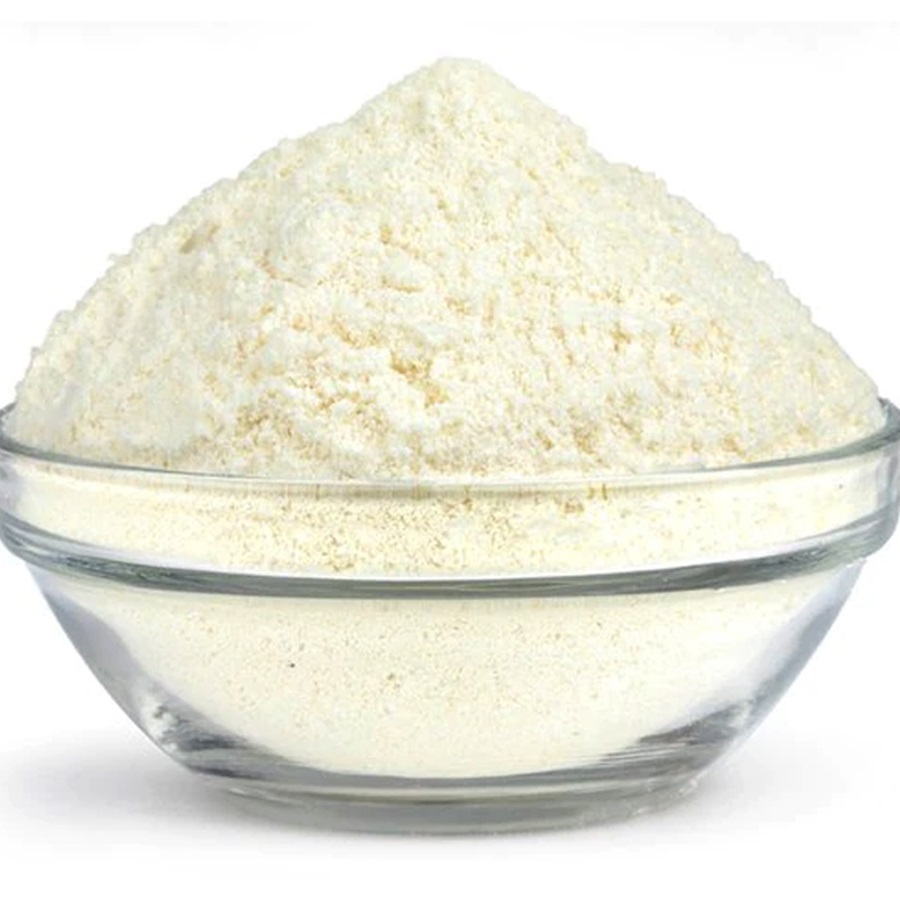
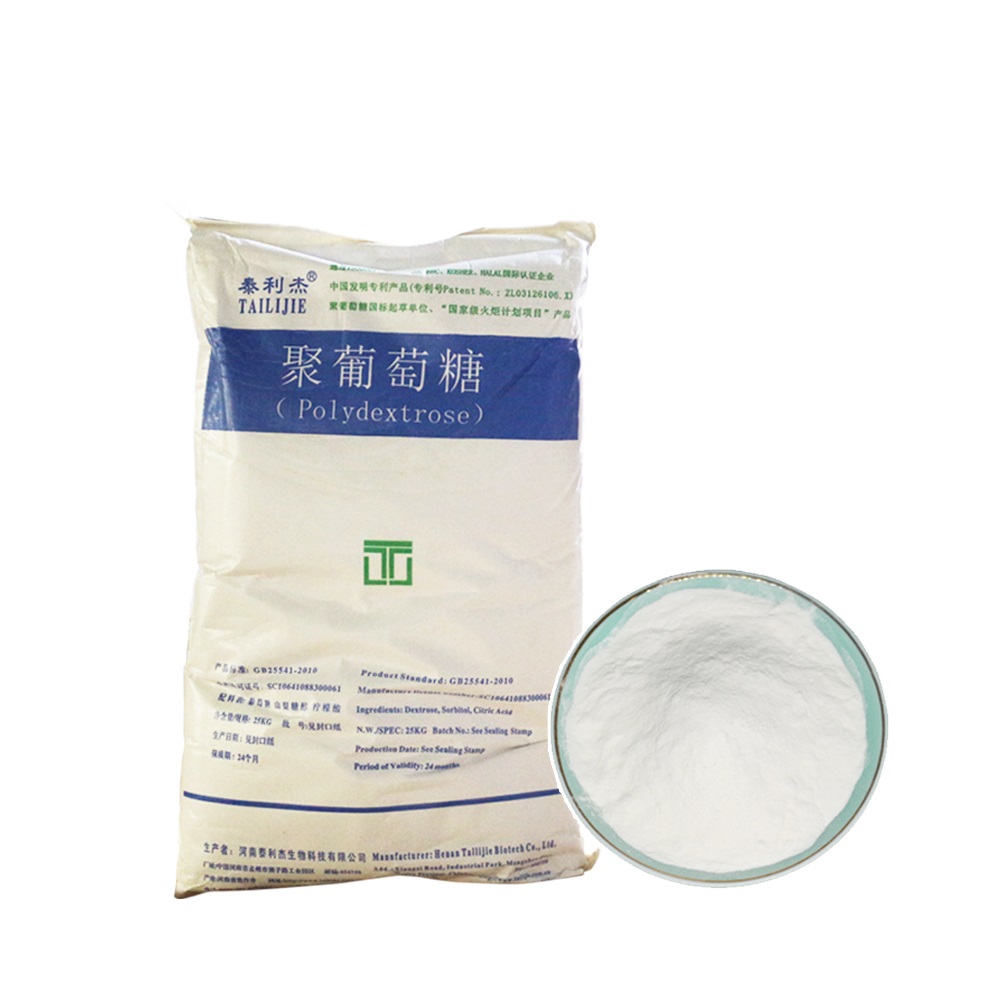
Polydextrose, Poli-D-glucose, E1200, 68424-04-4
POLYDEXTROSE
Product Name: Polydextrose
Other Names: Poli-D-glucose, E1200
CAS Number: 68424-04-4
EC Number (EINECS): 614-467-9
Chemical Formula: C₁₂H₂₂O₁₁ (basic unit)
Molecular Weight: 342.30 g/mol
Chemical Class: Synthetic polymer, soluble dietary fiber
SECTION 1: PRODUCT IDENTIFICATION AND DEFINITION
| Parameter |
Information |
| Product Name |
Polydextrose |
| Other Names |
Polydextrose, Poli-D-glucose, E1200 |
| Source |
Synthesized from dextrose (glucose), sorbitol, and citric acid; typically derived from starch |
| CAS Number |
68424-04-4 |
| EC Number (EINECS) |
614-467-9 |
| Chemical Formula |
C₁₂H₂₂O₁₁ (basic unit) |
| Molecular Weight |
342.30 g/mol |
| Chemical Class |
Synthetic polymer, soluble dietary fiber |
| Appearance |
White to cream-colored, granular powder |
| Odor |
Odorless |
| Taste |
Neutral (slightly sweet) |
| Physical State (20°C) |
Solid (powder) |
| Density |
1.8 g/cm³ |
| Solubility |
Excellent solubility in water |
| UN Number |
Not subject to transport regulations |
| Allergen Status |
Allergen-free (plant-based origin) |
SECTION 2: CHEMICAL STRUCTURE AND COMPOSITION
2.1. Chemical Structure
| Parameter |
Information |
| Chemical Name |
Randomly cross-linked glucose polymer |
| Structural Type |
Branched structure with randomly cross-linked glucose molecules |
| Components |
Dextrose (glucose), sorbitol, citric acid |
| Bond Type |
Glycosidic bonds; contains bonds not broken down by digestive enzymes |
2.2. History
| Date |
Event |
| 1965 |
Discovered by Dr. Hans Renhard |
| 1981 |
Approved as a food additive by the US FDA |
SECTION 3: PHYSICAL AND CHEMICAL PROPERTIES
| Property |
Value |
| Appearance |
White to cream-colored, granular powder |
| Odor |
Odorless |
| Taste |
Neutral, slightly sweet |
| Molecular Weight |
342.30 g/mol (average) |
| Density |
1.8 g/cm³ |
| Solubility |
Excellent solubility in water |
| pH (solution) |
Neutral to slightly acidic |
| Energy Value |
1 kcal/g |
| Fiber Content |
~90% soluble fiber |
| Hygroscopicity |
Moderate |
| Stability |
Stable; incompatible with oxidizing agents |
SECTION 4: NUTRITIONAL AND FUNCTIONAL PROPERTIES
4.1. Nutritional Profile (per 100g)
| Parameter |
Value |
| Energy |
~100 kcal (1 kcal/g) |
| Total Carbohydrate |
~90 g |
| Dietary Fiber (Soluble) |
~90 g |
| Sugars |
Minimal |
| Fat |
0 g |
| Protein |
0 g |
4.2. Functional Properties
| Property |
Description |
| Calorie Reduction |
1 kcal/g (compared to 4 kcal/g for carbohydrates) |
| Prebiotic Effect |
Supports beneficial bacteria in the digestive system |
| Bulking Agent |
Provides volume; replaces sugar and fat |
| Texture Improvement |
Controls ice crystal formation in frozen foods |
| Moisture Retention |
Maintains moisture balance in products |
| Glycemic Index |
Low glycemic index |
SECTION 5: HEALTH BENEFITS AND EFFECTS
5.1. Health Benefits
| Benefit |
Description |
| Digestive Health |
Supports gut health as soluble dietary fiber; prevents constipation |
| Weight Management |
Low-calorie (1 kcal/g); promotes satiety; limits calorie intake |
| Blood Sugar Regulation |
Low glycemic index helps regulate blood sugar levels |
| Prebiotic Effect |
Feeds beneficial bacteria in the gut flora |
| Colon Health |
May help reduce the risk of colon cancer |
5.2. Side Effects and Tolerance
| Effect |
Description |
| Digestive Issues |
Excessive consumption may cause bloating, gas, and digestive discomfort |
| Tolerance |
Generally well tolerated; side effects may increase at high doses |
| Special Conditions |
Consult a doctor during pregnancy/breastfeeding |
SECTION 6: APPLICATION AREAS
6.1. Food Industry
| Application |
Function |
| Diet and Low-Calorie Foods |
Sweetener, thickener, texturizing agent |
| Dietary Fiber Supplements |
Soluble fiber source; supports gut health |
| Frozen Foods |
Controls ice crystal formation; improves texture |
| Protein Powders |
Bulking agent; soluble fiber source |
| Bakery Products |
Sugar and fat replacement; moisture management |
| Dairy Products |
Low-calorie formulations; texture improvement |
| Confectionery |
Sugar reduction; volume provision |
| Beverages |
Fiber fortification; soluble fiber source |
| Diet Products |
Calorie reduction; fiber enrichment |
6.2. Special Application Areas
| Application |
Function |
| Weight Management Products |
Low-calorie alternative; satiety promotion |
| Diabetic Foods |
Low glycemic index ingredient |
| Sports Nutrition |
Fiber source; calorie control |
| Halal Food |
Plant-based origin; generally considered halal |
SECTION 7: QUALITY SPECIFICATIONS (FOOD GRADE)
| Parameter |
Specification |
| Appearance |
White to cream-colored, free-flowing powder |
| Purity |
≥ 90% polydextrose |
| Moisture |
≤ 5.0% |
| pH (10% solution) |
4.0 – 6.0 |
| Ash Content |
≤ 0.5% |
| Heavy Metals (as Pb) |
≤ 10 ppm |
| Lead (Pb) |
≤ 2 ppm |
| Arsenic (As) |
≤ 3 ppm |
| Total Plate Count |
≤ 1,000 CFU/g |
| Yeast and Mold |
≤ 50 CFU/g |
| Salmonella spp. |
Negative in 25g |
| Escherichia coli |
Negative in 10g |
SECTION 8: TYPICAL DOSAGE AND USAGE RATES
| Application |
Recommended Usage Rate |
| Low-Calorie Foods |
2-15% of formulation |
| Dietary Fiber Supplements |
5-15 g per day |
| Frozen Foods |
1-5% of formulation |
| Bakery Products |
2-10% of flour weight |
| Protein Powders |
2-10 g per serving |
| Beverages |
1-5% of formulation |
| Dairy Products |
1-5% of formulation |
SECTION 9: STORAGE AND SHELF LIFE
| Parameter |
Information |
| Storage Conditions |
Cool (15-25°C), dry, well-ventilated area |
| Container Requirements |
Tightly closed, original packaging |
| Protect From |
Moisture, heat, direct sunlight |
| Shelf Life |
24-36 months (unopened original packaging) |
| Stability Note |
Hygroscopic; absorbs moisture; store in airtight containers |
SECTION 10: PACKAGING OPTIONS
| Packaging Type |
Quantity |
Material |
| Aluminum foil bag |
1-5 kg |
Laminated aluminum |
| PE-lined kraft paper bag |
10-25 kg |
Kraft paper + PE |
| Plastic pail |
20-25 kg |
HDPE |
| Fiber drum |
25-50 kg |
HDPE + PE liner |
| Big-Bag |
500-1000 kg |
Polypropylene (with PE liner) |
SECTION 11: SAFETY AND HEALTH INFORMATION
GHS Classification
| Hazard Class |
Category |
| Not classified as hazardous |
– |
| Chemical Hazard |
No hazards requiring special first aid measures |
Hazard Statements
| Code |
Statement |
| None |
Not classified as hazardous |
Precautionary Statements
| Code |
Statement |
| P261 |
Avoid breathing dust |
| P280 |
Wear protective gloves/eye protection |
SECTION 12: TOXICOLOGICAL AND REGULATORY INFORMATION
12.1. Toxicological Information
| Parameter |
Value |
| Oral LD50 (Rat) |
> 5,000 mg/kg |
| Skin Irritation |
Non-irritant |
| Eye Irritation |
Mild irritant |
| Carcinogenicity |
Not classified |
| Mutagenicity |
Negative in standard tests |
| Allergen Status |
Allergen-free |
12.2. Regulatory Status
| Region / Authority |
Status |
| European Union |
Approved as food additive (E1200) |
| USA (FDA) |
GRAS (Generally Recognized as Safe) – approved in 1981 |
| Turkey |
Approved as food additive |
| Halal Status |
Plant-based origin; generally considered halal |
SECTION 13: OTHER NAMES AND SYNONYMS
| Type |
Name |
| Turkish Names |
Polidekstroz, Poli-D-glikoz |
| English Names |
Polydextrose, Poli-D-glucose |
| E Number |
E1200 |
| CAS Number |
68424-04-4 |
| EC Number |
614-467-9 |
| Commercial Names |
Litesse, Sta-Lite |
SECTION 14: SUMMARY AND CRITICAL NOTES
Product Summary
| Parameter |
Value |
| Product |
Polydextrose |
| CAS Number |
68424-04-4 |
| Appearance |
White to cream-colored, granular powder |
| Energy Value |
1 kcal/g |
| Fiber Content |
~90% soluble fiber |
| Primary Function |
Low-calorie bulking agent, soluble dietary fiber |
Critical Notes
-
Low Calorie: Provides 1 kcal/g; significantly lower than typical carbohydrates (4 kcal/g).
-
High Fiber Content: Contains ~90% soluble dietary fiber.
-
Versatile Use: Can be used as a replacement for sugar, starch, and fat.
-
Prebiotic Effect: Demonstrates prebiotic properties that support gut health.
-
Low Glycemic Index: Helps maintain stable blood sugar levels.
-
Frozen Foods: Controls ice crystal formation and improves texture.
-
Halal Compliance: Plant-based origin; generally considered halal.
-
History: Discovered in 1965; approved by the FDA in 1981.
-
Side Effects: Excessive consumption may cause bloating, gas, and digestive discomfort.
-
Application Areas: Low-calorie foods, dietary fiber supplements, frozen foods, protein powders, bakery products, dairy products, confectionery, beverages.
IMPORTANT DECLARATION: This Technical Data Sheet (TDS) is for informational purposes only and has been prepared based on available technical data. The user is responsible for determining the product's suitability for their specific application and for complying with all local, national, and international regulations. For complete safety, storage, use, transport, waste, and regulatory compliance information, refer to the official Safety Data Sheet (SDS/MSDS) provided by the manufacturer/supplier.