We unleash your business potential by maximize the business innovation.
Send EmailCalcium Stearate, Calcium Distearate, Calcium Soap, 1592-23-0
CALCIUM STEARATE
Calcium Stearate / Calcium Distearate / Calcium Soap / Octadecanoic Acid Calcium Salt
CAS Number: 1592-23-0
EC Number: 216-472-8
1. PRODUCT IDENTIFICATION AND CHEMICAL IDENTITY
| Parameter | Description |
|---|---|
| Chemical Name (IUPAC) | Calcium octadecanoate |
| Other Names | Calcium Stearate, Calcium Distearate, Calcium Soap, Stearic Acid Calcium Salt, Octadecanoic Acid Calcium Salt |
| CAS Number | 1592-23-0 |
| EC Number (EINECS) | 216-472-8 |
| Molecular Formula | C₃₆H₇₀CaO₄ |
| Molecular Weight | 607.02 g/mol |
| Chemical Class | Metal salt (fatty acid salt - calcium soap) |
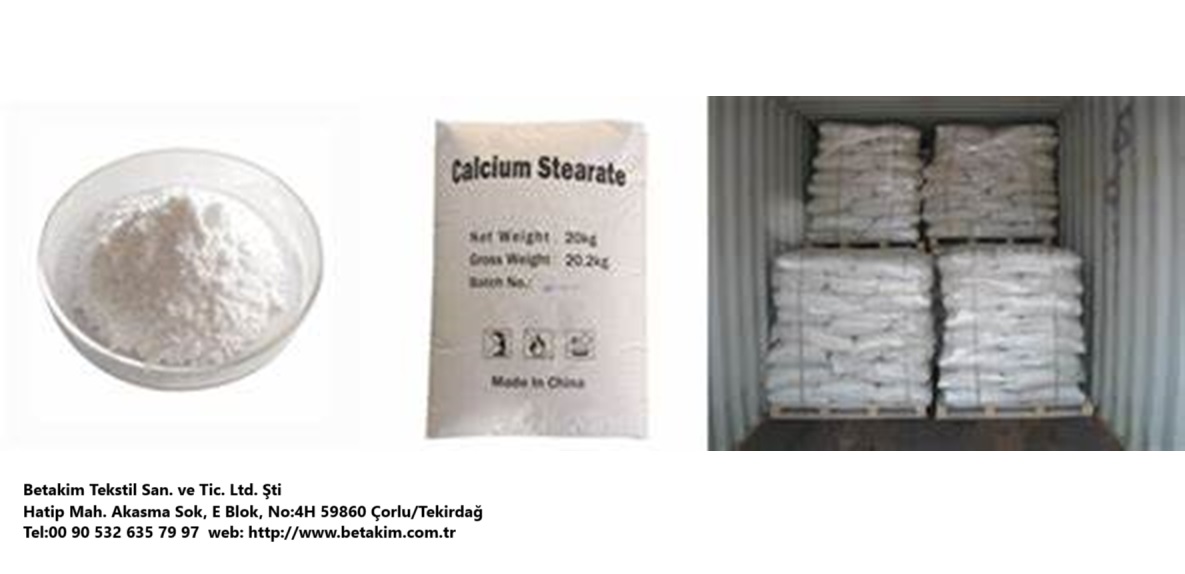
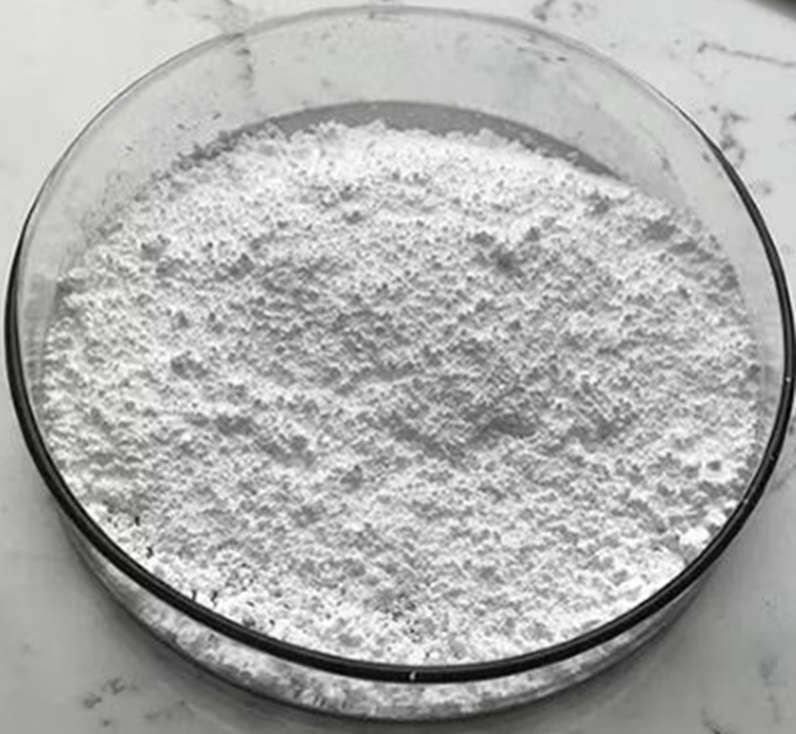
| Appearance | White, silky fine powder |
| Odor | Odorless |
| Taste | Slightly soapy |
Calcium stearate is the calcium salt of stearic acid (octadecanoic acid). It is a white, silky fine powder classified as a metal salt (fatty acid salt) and is commonly known as "calcium soap." Calcium stearate is produced by the reaction of stearic acid with lime (calcium oxide or calcium hydroxide). It is insoluble in water but soluble in hot organic solvents (alcohol, benzene, toluene, xylene, acetone). Due to its high thermal stability, excellent water resistance, and non-toxicity, it can even be used as a food additive. Calcium stearate is widely used in the plastics and rubber industry as a stabilizer, lubricant, and release agent; in cosmetic products as an emulsifier and stabilizer; in the pharmaceutical industry as a binder and lubricant in tablet production; in paints and coatings as a flatting and sanding agent; and in construction materials as a water-repellent agent.
2. PHYSICAL AND CHEMICAL PROPERTIES
| Property | Value |
|---|---|
| Molecular Formula | C₃₆H₇₀CaO₄ |
| Molecular Weight | 607.02 g/mol |
| Appearance | White, silky fine powder |
| Odor | Odorless |
| Taste | Slightly soapy |
| Density (True) | ~1.03-1.08 g/cm³ |
| Bulk Density | 0.2-0.5 g/cm³ |
| Melting Point | ~180°C (with decomposition) |
| Flash Point | >200°C |
| Water Solubility | Practically insoluble |
| Organic Solvent Solubility | Soluble in hot alcohol, benzene, toluene, xylene, acetone |
| pH (aqueous suspension) | ~9-10 (basic) |
| Hydrophobicity | Highly hydrophobic (water-repellent) |
| Heavy Metal Content (as Pb) | ≤ 20 ppm |
| Free Fatty Acid | ≤ 0.5% |
| Loss on Drying | ≤ 2.0% |
| Residue on Ignition | ~8-12% |
| Calcium Oxide (CaO) Content | ~9-11% |
| Stability | Stable under normal conditions; highly stable at elevated temperatures |
| Incompatible Materials | Strong acids, strong oxidizing agents |
| Toxicity | Non-toxic; can be used as food additive |
Calcium stearate is a white, fine powder with a silky feel when touched. Its true density is approximately 1.03-1.08 g/cm³, while its bulk density ranges from 0.2-0.5 g/cm³ depending on the form. The melting point is approximately 180°C, at which decomposition begins. It is practically insoluble in water but soluble in hot alcohol, benzene, toluene, xylene, and acetone. The pH of its aqueous suspension is approximately 9-10, indicating basic character. It is highly hydrophobic (water-repellent). Free fatty acid content is ≤ 0.5%, loss on drying is ≤ 2.0%, and residue on ignition is approximately 8-12%. Calcium oxide (CaO) content is approximately 9-11%. Heavy metals are typically ≤ 20 ppm (as Pb). It is stable under normal conditions and highly stable at elevated temperatures. It is incompatible with strong acids and strong oxidizing agents. It is non-toxic and can even be used as a food additive.
3. CHEMICAL PROPERTIES AND REACTIONS
Calcium stearate is a calcium metal salt and a fatty acid soap (calcium soap). Its chemical behavior is determined by the properties of the stearate anion and the calcium cation.
Reaction with Acids:
Calcium stearate reacts with strong acids to form stearic acid and the corresponding calcium salt:
(C₁₇H₃₅COO)₂Ca + 2 HCl → 2 C₁₇H₃₅COOH + CaCl₂
Production Reaction (Stearic Acid + Calcium Oxide):
Calcium stearate is produced by the reaction of stearic acid with calcium oxide (lime) or calcium hydroxide:
2 C₁₇H₃₅COOH + CaO → (C₁₇H₃₅COO)₂Ca + H₂O
Hydrolysis:
Although insoluble in water, calcium stearate can hydrolyze at high temperatures or under extremely acidic or basic conditions.
Thermal Decomposition:
At temperatures above 180°C, calcium stearate decomposes to form calcium carbonate, carbon dioxide, and hydrocarbons.
Saponification:
As a soap (fatty acid salt), calcium stearate exhibits surfactant properties and can stabilize emulsions.
Combustion:
Calcium stearate is combustible and upon burning produces calcium oxide, carbon dioxide, and water.
Hard Water Tolerance:
Unlike sodium stearate and potassium stearate, calcium stearate does not have precipitation problems with hard water because it is already present as insoluble calcium stearate. This makes it advantageous in some specialized applications.
4. PRODUCTION METHODS
Calcium stearate is produced industrially by the reaction of stearic acid with calcium oxide (lime) or calcium hydroxide.
| Method | Raw Materials | Process Description |
|---|---|---|
| Direct Reaction (Most Common) | Stearic Acid (C₁₇H₃₅COOH), Calcium Oxide (CaO) or Calcium Hydroxide (Ca(OH)₂) | Stearic acid is reacted with calcium oxide or calcium hydroxide. The reaction is typically carried out at elevated temperature (80-150°C). The resulting calcium stearate is cooled, milled, and packaged. |
| Double Decomposition | Sodium Stearate (C₁₇H₃₅COONa), Calcium Chloride (CaCl₂) | Sodium stearate is reacted with calcium chloride to form calcium stearate and sodium chloride. This method is less common. |
Detailed Production Process (Direct Reaction - Most Common):
-
Raw Material Preparation: Stearic acid and calcium oxide (lime) or calcium hydroxide are prepared. Stearic acid is typically melted.
-
Reaction: Molten stearic acid is reacted with calcium oxide or calcium hydroxide. The reaction is typically carried out at 80-150°C with stirring:
2 C₁₇H₃₅COOH + CaO → (C₁₇H₃₅COO)₂Ca + H₂O
2 C₁₇H₃₅COOH + Ca(OH)₂ → (C₁₇H₃₅COO)₂Ca + 2 H₂O
-
Water Removal: The water formed during the reaction is removed by vacuum or inert gas flow.
-
Cooling and Solidification: The reaction mixture is cooled to solidify the calcium stearate.
-
Milling and Sieving: The solid calcium stearate is milled to the desired particle size and sieved.
-
Packaging: The final product is packaged in 25 kg bags, drums, or FIBCs.
Reaction Equation (with Calcium Oxide):
2 C₁₇H₃₅COOH + CaO → (C₁₇H₃₅COO)₂Ca + H₂O
5. COMPARISON WITH OTHER METAL STEARATES
| Property | Calcium Stearate | Magnesium Stearate | Zinc Stearate | Lithium Stearate |
|---|---|---|---|---|
| Formula | C₃₆H₇₀CaO₄ | C₃₆H₇₀MgO₄ | C₃₆H₇₀ZnO₄ | C₁₈H₃₅LiO₂ |
| Melting Point | ~180°C | ~88°C | ~120°C | ~220°C |
| Water Solubility | Insoluble | Insoluble | Insoluble | Insoluble |
| Thermal Stability | Excellent | Moderate | Moderate | Excellent |
| Water Resistance | Excellent | Moderate | Good | Excellent |
| PVC Stabilizer | Yes | Limited | Limited | No |
| Food Additive | Yes | Yes | Limited | No |
| Cosmetic Use | Yes | Yes | Yes | Yes |
| Pharmaceutical Use | Limited | Widespread | Limited | Limited |
Calcium stearate is known for its high thermal stability and excellent water resistance. It is widely used as a PVC stabilizer. Magnesium stearate is the most widely used metal stearate in pharmaceutical applications. Zinc stearate is common in cosmetic and paint applications. Lithium stearate is used in high-temperature lubricating greases.
6. APPLICATIONS AND INDUSTRIAL USES
Calcium stearate has a wide range of applications across various industries due to its excellent thermal stability, water resistance, lubricating properties, and non-toxicity.
6.1. Plastics and Polymer Industry (Most Important Application)
| Application | Description |
|---|---|
| PVC Stabilizer | Used as a primary and secondary heat stabilizer for PVC and other polymers. Increases the durability of plastics against external factors such as heat and light. |
| Lubricant | Improves the processability of materials during plastic processing (extrusion, injection molding) by increasing fluidity. Improves product homogeneity, reduces energy consumption, and saves raw materials. |
| Release Agent | Used as a release agent to prevent sticking to molds. |
| Surface Modifier | Improves surface properties of polymers, imparting water resistance and heat resistance. |
| Anti-Blocking Agent | Used to prevent sticking of plastic films. |
| Dispersing Agent | Used as a dispersing agent in masterbatch and pigment production. |
| Antistatic Agent | Used to reduce static charge accumulation. |
Calcium stearate is one of the most widely used additives in the plastics and polymer industry. It plays a critical role as a stabilizer, lubricant, and release agent in the processing of PVC and other polymers. It increases the durability of plastics against external factors such as heat and light. During processing, it improves the processability of materials by increasing fluidity; it improves product homogeneity, reduces energy consumption, and saves raw materials. It enables better transparency, good color retention, long-term stability, and weather resistance.
6.2. Food Industry
| Application | Description |
|---|---|
| Food Additive | Used as an emulsifier, stabilizer, anti-caking agent, and lubricant. |
| Emulsifier | Ensures the mixing of oil and water phases in food products, improving product homogeneity. |
| Lubricant | Facilitates the processing of materials in food processing equipment. |
| Preservative | Provides protection against oxidation in some food products. |
| E Number | E 470 (calcium salts of fatty acids) |
Calcium stearate is used as a food additive (E 470) as an emulsifier, stabilizer, anti-caking agent, and lubricant. It ensures the mixing of oil and water phases in food products, improving product homogeneity. It is non-toxic and considered safe as a food additive.
6.3. Cosmetics and Personal Care Products
| Application | Description |
|---|---|
| Emulsifier | Used as an emulsifier in creams, lotions, and other cosmetic products. |
| Stabilizer | Improves product stability. |
| Anti-Caking Agent | Prevents caking in powder products. |
| Lubricity Enhancer | Provides a smooth feel on the skin during application of creams and lotions. |
| Filler | Used as a volume enhancer in cosmetic products. |
| Surfactant | Ensures homogeneous distribution of products in shampoos, lotions, and creams. |
Calcium stearate is used in cosmetic and personal care products as an emulsifier, stabilizer, anti-caking agent, and lubricity enhancer. It is found in creams, lotions, powders, deodorants, and makeup products.
6.4. Pharmaceutical Industry
| Application | Description |
|---|---|
| Tablet Lubricant | Used as a lubricant in tablet production (limited use). |
| Tablet Binder | Used as a binder in tablet formulations (limited use). |
| Excipient | Used to ensure the stability of active ingredients in pharmaceutical formulations. |
| Emulsion Stabilizer | Used to improve the stability of emulsions in liquid drug formulations. |
Calcium stearate is used in the pharmaceutical industry as a lubricant and binder in tablet production, as well as an excipient and emulsion stabilizer. However, it is not as common as magnesium stearate.
6.5. Paints and Coatings
| Application | Description |
|---|---|
| Flatting Agent | Used to create a matte finish. |
| Sanding Agent | Improves the sandability of coatings. |
| Suspension Agent | Used to prevent pigment settling. |
| Water Repellent | Imparts water-repellent properties to coatings. |
| Lubricant | Improves flow and leveling in powder coatings. |
Calcium stearate is used in the paint and coating industry as a flatting agent, sanding agent, suspension agent, and water repellent.
6.6. Construction and Building Materials
| Application | Description |
|---|---|
| Water-Repellent Agent | Used as a water-repellent agent in cement-based mortars, plasters, joint fillers, and waterproofing products. |
| Lubricant | Improves the workability of construction materials. |
| Stabilizer | Increases the durability of building materials. |
Calcium stearate is used as an additive in construction materials to improve water resistance and durability. It acts as a water-repellent agent in joints, plasters, and waterproofing products.
6.7. Rubber Industry
| Application | Description |
|---|---|
| Release Agent | Used as a release agent in rubber molding. |
| Lubricant | Used as a lubricant in rubber processing. |
| Anti-Blocking Agent | Used to prevent sticking of rubber products. |
| Accelerator Activator | Used as an accelerator activator in rubber vulcanization. |
Calcium stearate is used in the rubber industry as a release agent, lubricant, anti-blocking agent, and accelerator activator.
6.8. Textile Industry
| Application | Description |
|---|---|
| Softener | Used as a fabric softener. |
| Lubricant | Used as a lubricant in textile processing. |
| Water Repellent | Imparts water-repellent properties to fabrics. |
Calcium stearate is used in the textile industry as a softener, lubricant, and water repellent.
6.9. Other Applications
| Application | Description |
|---|---|
| Agriculture | Used in pesticide and fertilizer formulations. |
| Metal Processing | Used as a lubricant in powder metallurgy. |
| Paper Industry | Used as a coating lubricant. |
| Adhesives | Used as an anti-caking agent and release agent. |
| Ink Production | Used as a dispersing agent and stabilizer. |
7. SAFETY AND HEALTH INFORMATION
Calcium stearate is non-toxic and can even be used as a food additive. It has very low toxicity.
7.1. Toxicological Data
| Parameter | Value |
|---|---|
| Oral LD50 (Rat) | > 10,000 mg/kg (very low toxicity) |
| Dermal LD50 (Rabbit) | > 2,000 mg/kg |
| Skin Irritation | Non-irritant |
| Eye Irritation | Mild irritant |
| Skin Sensitization | Not a sensitizer |
| Mutagenicity | Negative |
| Carcinogenicity | Not classified |
| Reproductive Toxicity | Not classified |
| GRAS Status | Generally Recognized as Safe (GRAS) by FDA |
7.2. Health Effects
| Exposure | Effect |
|---|---|
| Inhalation (Dust) | May cause mild respiratory irritation |
| Skin Contact | Non-irritant |
| Eye Contact | May cause mechanical irritation |
| Ingestion | Low toxicity; large amounts may cause gastrointestinal discomfort |
8. FIRST AID MEASURES
| Exposure Route | Action |
|---|---|
| Inhalation | Move person to fresh air. If symptoms persist, seek medical attention. |
| Skin Contact | Wash with soap and plenty of water. Remove contaminated clothing. |
| Eye Contact | Rinse immediately with plenty of water for at least 15 minutes. Remove contact lenses if present. |
| Ingestion | Rinse mouth. Drink plenty of water. If large amounts are swallowed, seek medical attention. |
9. SAFETY INFORMATION (GHS CLASSIFICATION)
Calcium stearate is not classified as a hazardous substance under GHS.
| Hazard Class | Category |
|---|---|
| Skin Irritation | Category 3 (mild irritation) |
| Eye Irritation | Category 2B (mild irritation) |
Signal Word: WARNING
Hazard Statements (H-Codes):
| Code | Statement |
|---|---|
| H315 | Causes skin irritation (mild) |
| H319 | Causes serious eye irritation (mild) |
| H335 | May cause respiratory irritation (dust) |
Precautionary Statements (P-Codes):
| Code | Statement |
|---|---|
| P261 | Avoid breathing dust |
| P271 | Use only outdoors or in a well-ventilated area |
| P280 | Wear protective gloves, protective clothing, eye/face protection |
| P302+P352 | IF ON SKIN: Wash with plenty of soap and water |
| P304+P340 | IF INHALED: Remove person to fresh air and keep comfortable for breathing |
| P305+P351+P338 | IF IN EYES: Rinse cautiously with water for several minutes. Remove contact lenses if present and easy to do. Continue rinsing |
| P332+P313 | If skin irritation occurs: Get medical attention |
| P337+P313 | If eye irritation persists: Get medical attention |
| P403+P233 | Store in a well-ventilated place. Keep container tightly closed |
| P501 | Dispose of contents/container in accordance with local/regional/national/international regulations |
10. FIREFIGHTING MEASURES
| Parameter | Information |
|---|---|
| Fire Hazard | Combustible dust; dust-air mixtures may be explosive |
| Extinguishing Media | Water spray, CO₂, dry chemical powder, foam |
| Special Hazards | Thermal decomposition produces calcium oxide, carbon monoxide, and carbon dioxide |
| Protective Equipment | Self-contained breathing apparatus (SCBA), full protective clothing |
| Dust Explosion | Can form explosive dust clouds; use explosion-proof equipment |
11. ACCIDENTAL RELEASE MEASURES
| Parameter | Information |
|---|---|
| Personal Protection | Wear appropriate PPE (dust mask, goggles, protective clothing, gloves) |
| Ventilation | Increase ventilation |
| Containment | Contain powder to prevent spread |
| Cleaning Methods | Vacuum or sweep carefully to avoid dust generation; use wet methods to suppress dust |
| Environmental Precautions | Prevent entry into drains, sewers, and water bodies |
| Waste Disposal | Dispose of according to local, state, and federal regulations |
12. STORAGE AND HANDLING
| Parameter | Information |
|---|---|
| Storage Conditions | Cool, dry, well-ventilated area; protect from heat and moisture |
| Container Requirements | Tightly closed containers (bags, drums, FIBCs) |
| Materials to Avoid | Strong acids, strong oxidizing agents |
| Shelf Life | 24-36 months (unopened, under proper storage) |
| Hygroscopicity | Low |
| Static Charge | Can generate static charge; use grounding |
| Packaging Options | 25 kg bags (lined kraft paper), 500-1000 kg FIBCs |
Calcium stearate should be stored in cool, dry, well-ventilated areas in tightly closed original containers. It should be kept away from heat, moisture, and ignition sources. Contact with strong acids and strong oxidizing agents should be avoided. Proper grounding should be used to prevent static electricity accumulation.
Handling Notes:
-
Avoid dust generation (use enclosed systems, local exhaust ventilation)
-
Avoid contact with skin and eyes (use protective gloves and goggles)
-
Avoid breathing dust (use dust mask or respirator)
-
Keep away from ignition sources
13. TRANSPORT INFORMATION
| Parameter | Information |
|---|---|
| UN Number | Not applicable (not classified as dangerous good) |
| Hazard Class | Not a dangerous good |
| Packing Group | Not applicable |
| Proper Shipping Name | Calcium Stearate |
| Marine Pollutant | No |
| ADR/RID Label | Not applicable |
Calcium stearate is not classified as a dangerous good for transport. It is shipped in 25 kg bags, drums, or FIBCs. During transport, protect from moisture, impact, and excessive heat.
14. REGULATORY INFORMATION
| Region | Status |
|---|---|
| EU | REACH registered; approved as food additive |
| Turkey (KKDİK) | Mandatory compliance; requires registration |
| USA (TSCA) | Listed |
| Canada (DSL) | Listed |
| Australia (AICS) | Listed |
| Japan (ENCS) | Listed |
| Korea (KECL) | Listed |
| China (IECSC) | Listed |
Regulatory Status:
| Status | Information |
|---|---|
| FDA Compliance | Approved as food additive (GRAS) |
| EU Compliance | Approved as food additive (E 470) |
| IARC Classification | Not classified |
| HS Code | 29157000 |
| RTECS | WI3000000 |
| WGK Germany | 1 (slight hazard to water) |
| TSCA | Yes |
| EINECS | 216-472-8 |
| E Number | E 470 (calcium salts of fatty acids) |
15. OTHER NAMES AND DATABASE IDENTIFIERS
| Category | Names / Identifiers |
|---|---|
| Chemical Names | Calcium octadecanoate |
| Synonyms | Calcium Stearate, Calcium Distearate, Stearic Acid Calcium Salt, Octadecanoic Acid Calcium Salt, Calcium Soap |
| Trade Names | Calstar, Aquacal, Calcium Stearate |
Database Identifiers:
| Database | Identifier |
|---|---|
| CAS | 1592-23-0 |
| EC (EINECS) | 216-472-8 |
| MDL | MFCD00036390 |
| PubChem CID | 15324 |
| RTECS | WI3000000 |
| UN | Not applicable |
| HS Code | 29157000 |
| Merck | 14, 1692 |
16. ENVIRONMENTAL INFORMATION
| Parameter | Information |
|---|---|
| Aquatic Toxicity | Low toxicity |
| Biodegradability | Readily biodegradable (fatty acid component) |
| Bioaccumulation | Low potential |
| Mobility in Soil | Low (insoluble in water) |
| Waste Disposal | Dispose of according to local regulations. Incineration recommended. |
17. APPLICATION SUMMARY TABLE
| Industry | Application | Function |
|---|---|---|
| Plastics and Polymer | PVC stabilizer, lubricant, release agent | Heat stabilization, processability, fluidity |
| Food Industry | Emulsifier, stabilizer, anti-caking agent | Homogeneity, stability, fluidity |
| Cosmetics | Emulsifier, stabilizer, anti-caking agent | Stability, texture, anti-caking |
| Pharmaceutical | Tablet lubricant, binder, excipient | Tablet production, stability |
| Paints and Coatings | Flatting agent, sanding agent, suspension agent | Matte finish, sandability, pigment stabilization |
| Construction | Water-repellent agent, lubricant | Water resistance, workability |
| Rubber | Release agent, lubricant, accelerator activator | Release, processing, vulcanization |
| Textile | Softener, lubricant, water repellent | Softness, lubrication, water resistance |
18. PHYSICAL FORMS
| Form | Particle Size | Description | Applications |
|---|---|---|---|
| Powder | 5-50 µm | Fine, silky white powder | PVC, cosmetics, food, pharmaceuticals |
| Flake | 50-500 µm | White flakes | Plastics, rubber, paints |
| Granule | 200-800 µm | Free-flowing granules | Plastics, rubber, construction |
19. COMPARISON WITH OTHER CALCIUM SOAPS
| Property | Calcium Stearate | Calcium Palmitate | Calcium Oleate |
|---|---|---|---|
| Fatty Acid | Stearic Acid (C18:0) | Palmitic Acid (C16:0) | Oleic Acid (C18:1) |
| Melting Point | ~180°C | ~170°C | ~140°C |
| Water Solubility | Insoluble | Insoluble | Insoluble |
| Thermal Stability | Excellent | Good | Moderate |
| Water Resistance | Excellent | Good | Moderate |
| PVC Stabilizer | Yes | Limited | No |
Calcium stearate is the most commonly used calcium soap. Calcium palmitate and calcium oleate are also used but are not as common as calcium stearate.
20. SUMMARY AND CRITICAL WARNINGS
SUMMARY:
Calcium stearate (C₃₆H₇₀CaO₄, CAS 1592-23-0) is the calcium salt of stearic acid (octadecanoic acid). It is a white, silky fine powder classified as a metal salt (fatty acid salt) and is commonly known as "calcium soap." The molecular weight is 607.02 g/mol, and the melting point is approximately 180°C. It is practically insoluble in water but soluble in hot alcohol, benzene, toluene, xylene, and acetone. It is produced by the reaction of stearic acid with lime (calcium oxide or calcium hydroxide). It is non-toxic and can even be used as a food additive. Its most important applications include: PVC stabilizer, lubricant, and release agent in the plastics and polymer industry; emulsifier and stabilizer (E 470) in the food industry; emulsifier and stabilizer in cosmetic products; tablet lubricant and binder in the pharmaceutical industry; water-repellent agent in construction materials; and flatting and sanding agent in paints and coatings. It has very low toxicity and is not classified as a hazardous substance under GHS. It is stored in cool, dry, well-ventilated areas, protected from heat and moisture. Packaging: 25 kg bags, drums, or FIBCs.
Key Properties:
| Property | Value |
|---|---|
| Appearance | White, silky fine powder |
| Chemical Formula | C₃₆H₇₀CaO₄ |
| Molecular Weight | 607.02 g/mol |
| CAS Number | 1592-23-0 |
| Melting Point | ~180°C |
| Water Solubility | Practically insoluble |
| Primary Use | PVC stabilizer, lubricant, release agent |
Major Application Areas:
| Industry | Applications |
|---|---|
| Plastics and Polymer | PVC stabilizer, lubricant, release agent |
| Food Industry | Emulsifier, stabilizer, anti-caking agent (E 470) |
| Cosmetics | Emulsifier, stabilizer, anti-caking agent |
| Pharmaceutical | Tablet lubricant, binder, excipient |
| Paints and Coatings | Flatting agent, sanding agent, suspension agent |
| Construction | Water-repellent agent, lubricant |
| Rubber | Release agent, lubricant, accelerator activator |
Key Safety Points:
-
VERY LOW TOXICITY: GRAS by FDA; approved as food additive
-
COMBUSTIBLE DUST: Avoid dust cloud formation; use explosion-proof equipment
-
MILD IRRITANT: May cause mild skin and eye irritation
-
WATER INSOLUBLE: Insoluble in water; soluble in organic solvents
-
STORAGE: Store in cool, dry, well-ventilated area, away from heat and moisture
-
USE PPE: Dust mask, gloves, safety goggles (if dust formation occurs)
CRITICAL WARNINGS:
PVC Stabilizer: Calcium stearate is one of the most widely used heat stabilizers for PVC and other polymers. It increases the durability of plastics against external factors such as heat and light. During PVC processing, calcium stearate prevents polymer degradation by inhibiting the release of hydrogen chloride (HCl).
Lubricant and Release Agent: Calcium stearate is an excellent lubricant and release agent during plastic and rubber processing. It improves the processability of materials by increasing fluidity; it improves product homogeneity, reduces energy consumption, and saves raw materials.
Food Additive: Calcium stearate is used as a food additive (E 470) as an emulsifier, stabilizer, and anti-caking agent. It is non-toxic and Generally Recognized as Safe (GRAS) by the FDA.
Water-Repellent Properties: Calcium stearate is highly hydrophobic (water-repellent). Therefore, it is used to provide water resistance in construction materials, impart water repellency in coatings, and provide water-repellent properties in cosmetic products.
Thermal Stability: Calcium stearate is highly stable at elevated temperatures. This property makes it an ideal additive for plastics and other materials processed at high temperatures.
Dust Explosion: Calcium stearate dust can reach explosive concentrations in air. Explosion-proof equipment, proper grounding, and dust collection systems should be used to prevent explosion risk. Static electricity accumulation should be avoided.
Environment: Calcium stearate is readily biodegradable due to its fatty acid component. It has low toxicity to aquatic organisms. Large discharges to water bodies should be avoided.
Important Disclaimer: This Technical Data Sheet (TDS) is for informational purposes only. The information provided is based on available data and is believed to be accurate. However, the user is solely responsible for determining the suitability of the product for their specific application and for complying with all applicable regulations and safety requirements. For complete safety, handling, storage, and regulatory compliance information, always refer to the official Safety Data Sheet (SDS/MSDS) provided by the manufacturer/supplier. Users are responsible for testing the product in their own processes and applications. All local, national, and international regulations must be followed when working with calcium stearate.