We unleash your business potential by maximize the business innovation.
Send EmailCaprylic Triglyceride, Capric Triglyceride, MCT Yağı, Orta Zincirli Trigliserit, MCT Oil, 73398-61-5, 65381-09-1
CAPRYLIC/CAPRIC TRIGLYCERIDE (MCT OIL)
SECTION 1: PRODUCT IDENTITY AND CHEMICAL IDENTIFICATION
| Parameter | Information |
|---|---|
| Product Name | Caprylic/Capric Triglyceride |
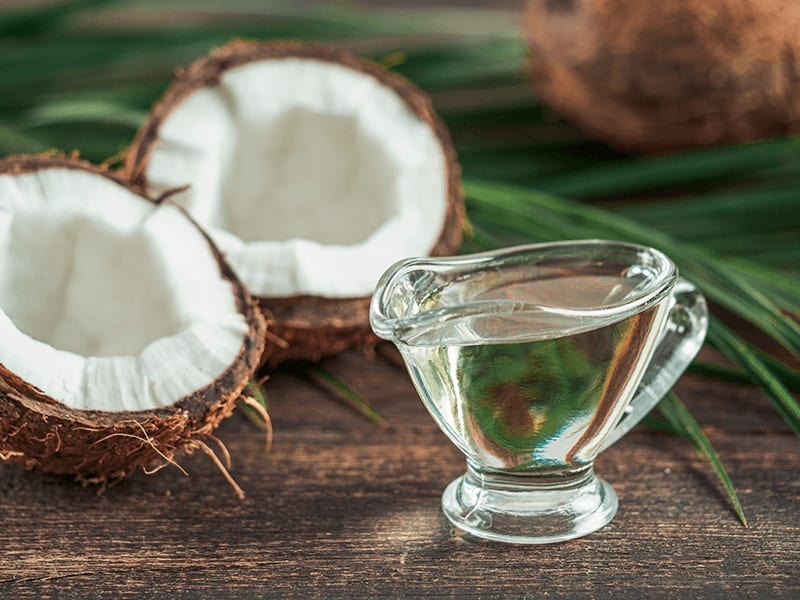
| Common Names | MCT Oil, Medium Chain Triglycerides, MCT, Fractionated Coconut Oil |
| Other Names | Medium Chain Triglyceride Oil, Caprylic/Capric Glycerides, MCT Powder |
| CAS Number | 73398-61-5 (general MCT mixture) |
| CAS Number | 65381-09-1 (caprylic/capric triglyceride) |
| Molecular Weight | Variable (mixture; ~500-600 g/mol) |
| Chemical Class | Medium Chain Triglycerides (MCT) |
| Main Fatty Acids | Caprylic Acid (C8:0), Capric Acid (C10:0) |
| Source | Coconut oil, palm kernel oil (by fractionation) |
| Appearance (Liquid) | Clear, colorless to pale yellow liquid |
| Appearance (Powder) | White to cream-colored, free-flowing powder |
| Odor and Taste | Neutral; odorless and tasteless |
Note: MCT oil is a mixture of triglycerides formed from medium-chain fatty acids (6-12 carbon atoms), primarily caprylic acid (C8:0) and capric acid (C10:0), with glycerol. It is typically obtained by fractionation of coconut oil or palm kernel oil. Due to its unique metabolic pathway compared to long-chain triglycerides (LCT), it stands out as a rapid energy source and is widely used in ketogenic diets, sports nutrition, medical nutrition, and cosmetics.
SECTION 2: CHEMICAL STRUCTURE
General Structure:
    CH₂—O—CO—(CH₂)₆—CH₃
         |
    CH—O—CO—(CH₂)₆—CH₃
         |
    CH₂—O—CO—(CH₂)₈—CH₃

    Caprylic Acid (C8:0) - CH₃(CH₂)₆COOH
    Capric Acid (C10:0) - CH₃(CH₂)₈COOH

    Caprylic/Capric Triglyceride
    (Medium Chain Triglyceride - MCT)
Simplified Structure:
    Glycerol + 3 Medium Chain Fatty Acids → Triglyceride

    (Esterification of C8:0 and C10:0 fatty acids with glycerol)
| Parameter | Description |
|---|---|
| Molecular Structure | Glycerol + 3 medium-chain fatty acids |
| Fatty Acids | Caprylic acid (C8:0), Capric acid (C10:0) |
| Ester Bonds | 3 ester bonds (glycerol + fatty acids) |
| Saturation | Highly saturated (low iodine value) |
| Functional Groups | Ester (-COO-) |
| Typical C8:C10 Ratio | ~50-70% C8:0 / ~30-50% C10:0 |
| InChI | InChI=1S/C21H38O6/c1-2-3-4-5-6-7-8-9-10-11-12-13-14-15-16-17-18-20(23)26-19-21(24)25/h2-18H2,1H3 |
| InChI Key | Variable (mixture) |
SECTION 3: PHYSICAL AND CHEMICAL PROPERTIES
| Property | Value (Liquid) | Value (Powder) | Test Method / Note |
|---|---|---|---|
| Appearance | Clear, colorless – pale yellow liquid | White – cream-colored powder | Visual |
| Odor | Odorless | Odorless | Olfactometric |
| Taste | Tasteless | Tasteless | Sensory |
| Density (20°C) | ~0.94 – 0.96 g/cm³ | ~0.5-0.7 g/cm³ (bulk) | ASTM D4052 |
| Viscosity (25°C) | 25 – 35 mPa·s | - | - |
| Smoke Point | ~150 – 160 °C | - | - |
| Freezing Point | <0°C (remains liquid) | - | - |
| Melting Point | -5 to 0°C | - | DSC |
| Peroxide Value | ≤1.0 meq O₂/kg | ≤1.0 meq O₂/kg | Titrimetric |
| Acid Value | ≤0.2 mg KOH/g | ≤0.2 mg KOH/g | Titrimetric |
| Iodine Value | ≤1.0 g I₂/100g | ≤1.0 g I₂/100g | Titrimetric |
| Water Solubility | Insoluble | Dispersible | General Method |
| Oil Solubility | Soluble | Soluble | General Method |
| Organic Solvent Solubility | Soluble | Soluble | General Method |
| HLB Value | ~5-6 | - | - |
| Refractive Index (n²⁰/D) | 1.448 – 1.450 | - | ASTM D1218 |
| Boiling Point | >200°C | - | - |
| Flash Point | >200°C | - | ASTM D93 |
SECTION 4: MCT COMPONENTS COMPARISON
| Fatty Acid | Carbon Count | Double Bonds | Melting Point | MCT Ratio | Properties |
|---|---|---|---|---|---|
| Caprylic Acid | C8:0 | None | 16-17°C | 50-70% | Fastest ketone production, strongest antimicrobial |
| Capric Acid | C10:0 | None | 31-32°C | 30-50% | Moderate ketone production, well-tolerated |
| Lauric Acid | C12:0 | None | 44-46°C | <5% | Slower metabolism, LCT-like |
| Caproic Acid | C6:0 | None | -3°C | <2% | Very low ratio, pungent odor |
SECTION 5: METABOLIC PROPERTIES AND MECHANISM OF ACTION
| Property | Description |
|---|---|
| Rapid Digestion and Absorption | Unlike long-chain triglycerides (LCT), MCTs are less dependent on bile salts and pancreatic lipase for digestion and absorption. They are rapidly hydrolyzed in the small intestine and transported directly to the liver via the portal vein as free fatty acids. |
| Rapid Energy Production | Quickly enters mitochondria in the liver and undergoes beta-oxidation, rapidly converting to energy (ATP) or ketone bodies. This process is much faster than LCT transport through the lymphatic system. |
| Ketone Production | MCTs are rapidly and efficiently converted to ketone bodies (beta-hydroxybutyrate, acetoacetate) in the liver, making them a key component of ketogenic diets. Ketones provide an alternative and efficient energy source for the brain and muscles. |
| Low Fat Storage Tendency | Fatty acids from MCTs are primarily used for energy production and have a lower tendency to be stored in adipose tissue compared to LCTs. |
| Satiety and Thermogenic Effect | MCT consumption may increase satiety and slightly elevate diet-induced thermogenesis (energy expenditure). |
| Antimicrobial Properties | Medium-chain fatty acids (especially caprylic acid) in MCTs may exhibit antimicrobial effects against some bacteria, fungi, and viruses. |
SECTION 6: HEALTH BENEFITS
| Benefit | Description | Evidence Level |
|---|---|---|
| Rapid Energy Source | Digestion and absorption are much faster than LCTs; transported directly to the liver via the portal vein | Strong Clinical Evidence |
| Ketone Production | Rapidly converted to ketone bodies in the liver, providing alternative fuel for the brain and muscles | Strong Clinical Evidence |
| Weight Management Support | May increase satiety, slightly elevate energy expenditure, and has low fat storage tendency | Moderate Clinical Evidence |
| Cognitive Function | Ketones provide alternative energy for the brain, especially when glucose metabolism is impaired (Alzheimer's, mild cognitive impairment) | Moderate Clinical Evidence |
| Antimicrobial Effect | MCT components (especially caprylic acid) may protect against harmful microorganisms | Preclinical Evidence |
| Sports Performance | Provides energy during endurance sports, preserves muscle glycogen | Clinical Evidence |
SECTION 7: APPLICATIONS AND USAGE
| Industry | Application | Function | Typical Usage Rate |
|---|---|---|---|
| Ketogenic Diet & Sports Nutrition | Rapid energy source, ketone production | Mental and physical performance support | 5-30 g/day |
| Medical Nutrition | Malabsorption syndromes, gallbladder issues | Epilepsy (ketogenic diet), premature infant nutrition | Clinical formulations specific |
| Food Supplements | Energy powders, protein bars | Meal replacement products | 1-10 g MCT per serving |
| Cosmetics & Personal Care | Emollient, moisturizer, carrier oil | Light, non-greasy texture | 1-10% |
| Pharmaceutical | Excipient in drug formulations | Capsule filling, solvent | Variable |
| Animal Nutrition | Energy supplement, digestive ease | Feed formulations | Variable |
| Aromatherapy | Carrier oil | Essential oil carrier | 5-20% |
SECTION 8: MCT POWDER FORM
| Parameter | Information |
|---|---|
| Production Method | Spray drying of liquid MCT onto a carrier (acacia gum, starch, maltodextrin) |
| MCT Content | Typically 50-70% MCT (depending on carrier) |
| Appearance | White to cream-colored, free-flowing powder |
| Solubility | Water-dispersible (cold/hot) |
| Advantages | Ease of use in powdered supplements, sports nutrition products, instant beverage mixes |
| Applications | Protein powders, coffee blends, smoothies, snack bars |
SECTION 9: QUALITY SPECIFICATIONS
| Parameter | Specification | Test Method |
|---|---|---|
| Appearance | Clear, colorless to pale yellow liquid | Visual |
| Odor and Taste | Neutral; odorless and tasteless | Sensory |
| Density (20°C) | 0.940 – 0.960 g/cm³ | ASTM D4052 |
| Refractive Index (20°C) | 1.448 – 1.450 | ASTM D1218 |
| Acid Value | ≤0.2 mg KOH/g | Titrimetric |
| Peroxide Value | ≤1.0 meq O₂/kg | Titrimetric |
| Iodine Value | ≤1.0 g I₂/100g | Titrimetric |
| Saponification Value | 330 – 360 mg KOH/g | Titrimetric |
| C8 Content | ≥50-70% | GC |
| C10 Content | ≥30-50% | GC |
| Total MCT Content | ≥98% | GC |
| Heavy Metals (Pb) | ≤10 ppm | ICP-MS |
| Arsenic (As) | ≤2 ppm | ICP-MS |
| Lead (Pb) | ≤2 ppm | ICP-MS |
| Microbiological Purity | TAMC ≤10² CFU/g; TYMC ≤10¹ CFU/g | USP <61> |
SECTION 10: ALTERNATIVES AND COMPARISON
| Alternative | Comparison with MCT |
|---|---|
| Long-Chain Triglycerides (LCT - Vegetable Oils) | Slower digestion and absorption; transported via lymphatic system. Inefficient for ketone production. More prone to fat storage compared to MCT. |
| Coconut Oil (Unrefined) | Naturally contains 55-65% MCT, but also significant LCT. MCT oil is a purer, more concentrated MCT source obtained by fractionation. |
| Other Ketogenic Diet Fats (Butter, Tallow) | High in LCT and cholesterol. Contribution to ketone production is much lower than MCT and provides slower energy. |
| Exogenous Ketone Salts/Esters | Provide direct ketone bodies, instantly raising blood ketone levels. MCT supports the body's own ketone production (endogenous ketogenesis) as a precursor. |
SECTION 11: TYPICAL DOSAGE AND USAGE
| Application | Recommended Daily Dose | Notes |
|---|---|---|
| Ketogenic Diet (Beginner) | 5-15 g/day | Gradual increase recommended |
| Ketogenic Diet (Advanced) | 15-30 g/day | Divided into 2-3 meals |
| Sports Nutrition | 10-20 g/day | Before or after training |
| General Health Support | 5-15 g/day | With coffee, smoothies, yogurt |
| Weight Management | 10-20 g/day | For satiety |
| Cognitive Support | 10-20 g/day | With morning coffee |
| Topical (Cosmetics) | 1-10% | Creams, lotions, serums |
SECTION 12: SAFETY AND HEALTH INFORMATION
GHS Classification:
| Hazard Class | Category |
|---|---|
| Not classified as hazardous substance | – |
Signal Word: None
Hazard Pictograms: None
Side Effects:
| Side Effect | Frequency | Management |
|---|---|---|
| Digestive discomfort (diarrhea, stomach cramps) | Common (high dose) | Gradual dose increase, take with meals |
| Nausea | Less common | Reduce dose, take with meals |
| Allergic reaction | Rare | Discontinue use, seek medical attention |
Safety Notes:
-
Generally recognized as safe (GRAS)
-
Rapid consumption at high doses (especially in unaccustomed individuals) may cause temporary digestive discomfort
-
Gradual dose increase is recommended
-
Should be used under medical supervision during pregnancy and lactation
SECTION 13: FIRST AID MEASURES
| Route of Exposure | Action |
|---|---|
| Inhalation | Vapor not expected in liquid form. If powder is inhaled, move to fresh air. |
| Skin Contact | Wash with plenty of soap and water. Seek medical attention if irritation develops. |
| Eye Contact | Rinse thoroughly with plenty of water for at least 15 minutes. Seek medical attention if irritation persists. |
| Ingestion | Rinse mouth. Do NOT induce vomiting. Drink 1-2 glasses of water. Seek medical attention. |
SECTION 14: STORAGE AND SHELF LIFE
| Parameter | Information |
|---|---|
| Storage Conditions (Liquid) | Store in a cool (<25°C), dry, dark place in tightly closed containers. Protect from oxidation; nitrogen blanket may be applied for long-term storage. |
| Storage Conditions (Powder) | Store in a cool, dry place, protected from moisture. |
| Temperature Limits | 15-25°C (ideal); do not exceed 30°C |
| Light | Protect from light (oxidation) |
| Container Requirements | Tightly closed, moisture-resistant containers (HDPE, glass, stainless steel) |
| Incompatible Materials | Light, heat, oxygen, strong oxidizing agents |
| Shelf Life (Liquid) | 24-36 months (unopened original packaging) |
| Shelf Life (Powder) | 18-24 months (unopened original packaging) |
| Signs of Degradation | Darkening color, odor change (rancidity), cloudiness |
SECTION 15: PACKAGING OPTIONS
| Packaging Type | Quantity / Capacity | Material | Application Area |
|---|---|---|---|
| HDPE Drum | 5 kg, 10 kg, 25 kg, 200 kg | HDPE | Industrial, food, cosmetic |
| Glass Bottle | 1 L, 5 L, 10 L | Amber glass | Laboratory, high purity |
| IBC Container | 500 kg, 1000 kg | HDPE (UV protected) | Large-scale industrial supply |
| Aluminum Foil Bag (Powder) | 1 kg, 5 kg, 10 kg, 25 kg | Aluminum / PE | Powder form |
| PE-Lined Kraft Bag (Powder) | 10 kg, 25 kg | Kraft paper / PE | Powder form |
SECTION 16: TRANSPORTATION INFORMATION
| Parameter | Information |
|---|---|
| UN Number | Not applicable (not classified as dangerous substance) |
| Hazard Class | Not applicable |
| Packing Group | Not applicable |
| ADR/RID | Not classified as dangerous goods |
| IMDG Code | Not marine pollutant |
| IATA (Air) | Not classified as dangerous goods; can be transported by air |
| Transport Temperature | Ambient temperature; protect from heat, moisture, and light |
| Transport Precautions | Light-proof, leak-proof packaging |
| Marine Pollutant | No |
SECTION 17: REGULATORY STATUS
| Region / Authority | Status |
|---|---|
| USA (FDA) | GRAS (21 CFR 184.1505); Approved as food additive |
| European Union (EC) | Approved as food supplement ingredient; Approved for reuse |
| Turkey | Approved as food supplement and cosmetic ingredient; Ministry of Health approval required |
| EFSA | Approved food ingredient |
| ECHA (REACH) | Registered substance |
| TSCA (USA) | Listed |
| California (Prop 65) | Not listed |
| Halal | Yes (coconut/palm source, Halal certified) |
| Kosher | Yes (with certification) |
| Vegan | Yes (plant-derived) |
SECTION 18: OTHER NAMES AND SYNONYMS
| Type | Name |
|---|---|
| Turkish Names | MCT Yağı, Orta Zincirli Trigliserit, Kaprilik/Kaprik Trigliserit |
| English Names | MCT Oil, Medium Chain Triglycerides, Caprylic/Capric Triglyceride |
| Trade Marks | MCT Oil, Pure MCT, Brain Octane, Ketogenic MCT |
| CAS Numbers | 73398-61-5 (general); 65381-09-1 (caprylic/capric) |
| HS Code | 1515.90 |
SECTION 19: SUMMARY TABLE
| Property | Value |
|---|---|
| CAS Number | 73398-61-5 / 65381-09-1 |
| Chemical Class | Medium Chain Triglyceride (MCT) |
| Main Fatty Acids | Caprylic Acid (C8:0), Capric Acid (C10:0) |
| Source | Coconut oil, palm kernel oil |
| Appearance | Clear, colorless liquid or white powder |
| Density (20°C) | ~0.94 – 0.96 g/cm³ |
| Odor and Taste | Neutral; odorless and tasteless |
| Primary Benefit | Rapid energy source, easy ketone production |
| Shelf Life | 24-36 months |
| Storage | Cool, dry, light-protected |
| GHS Classification | Not hazardous |
| FDA Status | GRAS |
| Halal / Kosher / Vegan | Yes |
SECTION 20: CRITICAL WARNINGS AND BEST PRACTICES
CRITICAL WARNINGS:
-
Dose Increase: Rapid consumption at high doses (especially in unaccustomed individuals) may cause temporary digestive discomfort (diarrhea, stomach cramps). Gradual dose increase is recommended.
-
Oxidation Sensitivity: MCT oil is sensitive to oxidation. Protect from light and heat.
-
Water Insolubility: Liquid MCT oil is insoluble in water; emulsions or powder forms can be used.
-
Caloric Value: MCT oil is high in calories (8.3 kcal/g). Should be considered when calculating daily caloric needs.
-
Pregnancy / Lactation: Should be used under medical supervision during pregnancy and lactation.
-
Diabetes: May affect blood sugar levels; diabetic patients should monitor blood sugar.
-
CAS Difference: 73398-61-5 identifies the general MCT mixture, while 65381-09-1 identifies the specific caprylic/capric triglyceride.
BEST PRACTICE RECOMMENDATIONS:
-
Starting Dose: Start with 1-2 teaspoons (5-10 mL), increase as tolerated.
-
Gradual Increase: Increase dose gradually over 1-2 weeks.
-
With Meals: Take with meals to reduce digestive discomfort.
-
Coffee and Smoothies: Mix into coffee, smoothies, yogurt, or protein drinks.
-
Emulsion: Thoroughly mix liquid MCT oil when adding to water-based beverages.
-
Powder Form: Use powder form for easy mixing and portability.
-
Storage: Store in a cool, dry, dark place.
-
Oxidation Control: Keep tightly closed after opening to minimize air exposure.
LEGAL DISCLAIMER:
The information provided in this document is based on our current knowledge and experience and is presented in good faith. However, as all conditions of use are beyond our control, it does not constitute a binding specification or guarantee. This Technical Data Sheet is for informational purposes only. Users are responsible for testing suitability for their own applications and for complying with all local, regional, and national regulations. For complete safety, storage, use, handling, waste, and regulatory compliance information, please refer to the official Safety Data Sheet (SDS/MSDS) provided by the manufacturer/supplier.