We unleash your business potential by maximize the business innovation.
Send EmailFumed Silica, Pyrogenic Silica, Colloidal Silica, Hydrophobic Fumed Silica, 67762-90-7
FUMED SILICA - PYROGENIC SILICA
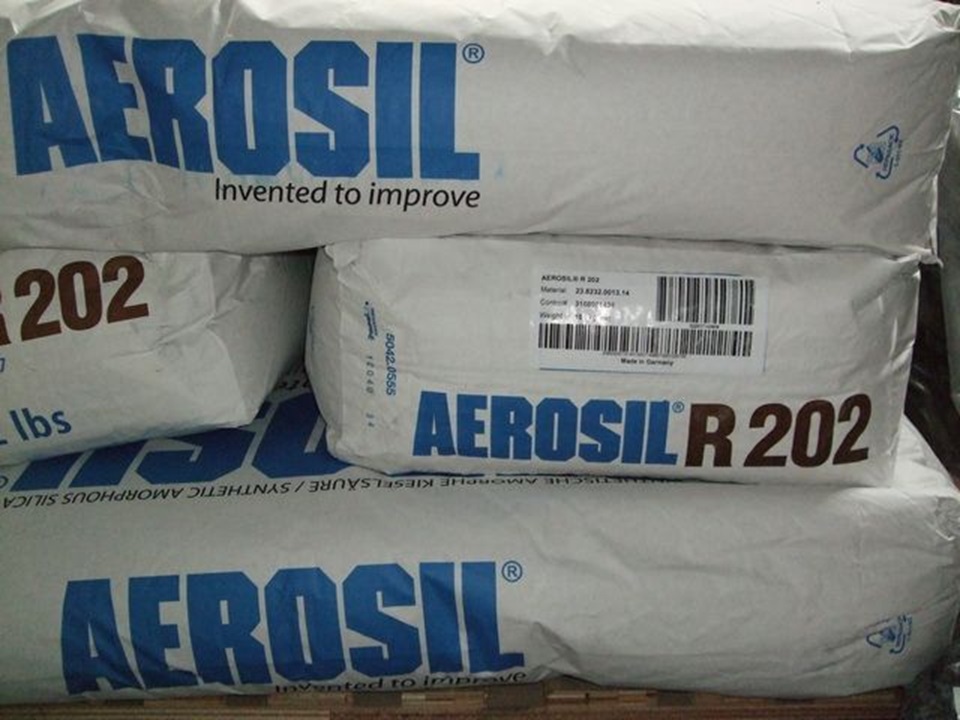
Colloidal Silica - Hydrophobic Fumed Silica - AEROSIL® R 202
CAS: 67762-90-7
| Product Name | Fumed Silica / AEROSIL® R 202 |
| CAS Number | 67762-90-7 |
| EC Number | 266-710-4 |
| Chemical Class | Silicon Dioxide (Synthetic Amorphous) |
| Surface Treatment | Polydimethylsiloxane (PDMS) - Hydrophobic Coating |
| Manufacturer | Evonik Industries (AEROSIL® series) |
ITEM 1: PRODUCT IDENTITY AND NOMENCLATURE
| Parameter | Description |
|---|---|
| Chemical Name | Silicon Dioxide (Amorphous, Synthetic) |
| CAS Number | 67762-90-7 |
| EC Number | 266-710-4 |
| Chemical Formula | SiO₂ |
| Molecular Weight | 60.08 g/mol |
| Synonyms | Fumed Silica, Pyrogenic Silica, Colloidal Silica, AEROSIL® R 202, Hydrophobic Fumed Silica |
| HS Code | 2811.22.00.00.00 |
| REACH Status | Registered and compliant |
Description: Fumed silica (AEROSIL® R 202) is a synthetic amorphous silicon dioxide produced by high-temperature hydrolysis (approximately 1000°C) of silicon tetrachloride (SiCl₄). This product is surface-treated with polydimethylsiloxane (PDMS) to impart hydrophobic (water-repellent) properties. Due to its unique physical properties—extremely fine particle size, very high specific surface area, and low density—it is widely used as a thickening agent, thixotropic agent, flow control agent, and rheological additive across various industries.
ITEM 2: CHEMICAL STRUCTURE AND PHYSICOCHEMICAL PROPERTIES
| Parameter | Description |
|---|---|
| Chemical Structure | Amorphous silica (SiO₂) |
| Crystal Structure | Amorphous (not crystalline) |
| Surface Treatment | Polydimethylsiloxane (PDMS) coating |
| Surface Property | Hydrophobic (water-repellent) |
| Morphology | Branched chain aggregates (non-spherical) |
| Primary Particle Size | Approximately 10 – 15 nm |
| Specific Surface Area (BET) | Approximately 90 – 130 m²/g |
| Tapped Density | Approximately 0.050 – 0.060 g/cm³ |
| pH (4% Aqueous Dispersion) | 4.0 – 6.0 |
| Loss on Drying (105°C, 2h) | ≤ 1.0% |
| Carbon Content | 2 – 4% (from PDMS coating) |
Description: AEROSIL® R 202 is a hydrophobic fumed silica surface-treated with PDMS. The key feature of fumed silica is its branched chain-like aggregate structure. This structure forms a three-dimensional network through hydrogen bonding and van der Waals forces in liquid systems, providing rheological effects (viscosity increase, thixotropy, yield point). The surface treatment converts the hydrophilic nature to hydrophobic, reducing moisture sensitivity and improving compatibility with organic systems.
ITEM 3: PHYSICAL APPEARANCE AND FORM
| Parameter | Specification | Test Method |
|---|---|---|
| Appearance | White, fine, free-flowing powder | Visual Inspection |
| Physical Form | Powder | Visual Inspection |
| Odor | Odorless | Organoleptic |
| Particle Morphology | Chain-like aggregates | SEM |
| Color | White | Visual Inspection |
Description: AEROSIL® R 202 is a white, extremely fine, free-flowing, and odorless powder. Fumed silica consists not of conventional particles but of chain-like aggregates interconnected in a three-dimensional structure. This structure provides extremely high surface area and forms the basis of its effectiveness as a rheological additive.
ITEM 4: BASIC PHYSICAL AND CHEMICAL PROPERTIES
| Property | Specification | Typical Value | Test Method |
|---|---|---|---|
| Appearance | White powder | White powder | Visual |
| Surface Treatment | PDMS | Hydrophobic | – |
| Primary Particle Size | 10 – 15 nm | 12 nm | TEM |
| Specific Surface Area (BET) | 90 – 130 m²/g | 110 m²/g | ISO 9277 |
| Tapped Density | 0.05 – 0.06 g/cm³ | 0.055 g/cm³ | ISO 787-11 |
| pH (4% Aqueous) | 4.0 – 6.0 | 5.0 | ISO 787-9 |
| Loss on Drying (105°C, 2h) | ≤ 1.0% | 0.5% | ISO 787-2 |
| Carbon Content | 2.0 – 4.0% | 3.0% | ISO 3262-20 |
| SiO₂ Content | ≥ 99.8% | 99.9% | – |
| Melting Point | ~1710°C | – | – |
| Density | ~2.2 g/cm³ | – | – |
Description: These properties demonstrate the purity and successful surface treatment of AEROSIL® R 202. High specific surface area (90-130 m²/g) and low tapped density are the most important factors determining its rheological effectiveness. Carbon content indicates the PDMS coating level.
ITEM 5: RHEOLOGICAL PROPERTIES AND THICKENING EFFECT
| Property | Description / Mechanism |
|---|---|
| Rheological Effect | Viscosity increase, thixotropy, yield point formation |
| Thickening Mechanism | Forms 3D network via hydrogen bonds and van der Waals interactions between surface hydroxyl and siloxane groups |
| Thixotropy | Structure breaks down under shear (viscosity decreases); rebuilds when shear is removed (viscosity increases) |
| Yield Point | Prevents flow at low shear stresses; provides stability against gravity |
| Shear Thinning | Viscosity decreases at high shear rates; facilitates easy application |
| Temperature Stability | Rheological effect maintained over wide temperature range |
| Time Stability | Rheological properties stable during storage |
Description: Fumed silica forms a strong three-dimensional network in liquid systems through hydrogen bonding, thanks to its branched chain structure. This network imparts high viscosity, thixotropic behavior, and a yield point to the system. AEROSIL® R 202, with its PDMS coating, shows excellent thickening performance in non-polar and medium-polarity systems.
ITEM 6: EPOXY RESIN APPLICATIONS
| Application | Function / Benefit |
|---|---|
| Epoxy Resins | Thickening agent, thixotropic agent, flow control |
| Gelcoats | Prevents sagging and running on vertical surfaces |
| Floor Coatings | Application ease, smooth surface |
| Adhesives | Adhesion control, sag prevention |
| 2K Epoxy Coatings | Prevents pigment settling, rheological control |
| Corrosive Systems | Viscosity control |
Typical Usage Levels (Epoxy Systems):
| System | Recommended Level | Notes |
|---|---|---|
| Epoxy Resins | 1 – 5% | Based on desired viscosity and thixotropy level |
| Gelcoats | 1 – 3% | Prevents sagging on vertical surfaces |
| 2K Coatings | 0.5 – 2% | Prevents pigment settling |
Description: AEROSIL® R 202 is a highly efficient thickening and thixotropic agent in epoxy resins. It prevents sagging and flow issues on coatings applied to vertical surfaces. It also prevents settling of pigments and fillers, ensuring homogeneous distribution. The PDMS coating provides excellent compatibility with epoxy systems.
ITEM 7: POLYURETHANE AND VINYL ESTER RESIN APPLICATIONS
| Application | Function / Benefit |
|---|---|
| Polyurethane Resins | Thickening agent, thixotropic agent |
| Vinyl Ester Resins | Rheological control, flow adjustment |
| Glass Fiber Reinforced | Viscosity control in laminate manufacturing |
| Coatings | Flow and leveling control |
Description: AEROSIL® R 202 is also an effective rheological additive in polyurethane and vinyl ester resins. Its hydrophobic structure ensures high compatibility with these resins. In glass fiber-reinforced composite production, it optimizes resin penetration into the reinforcement and provides processing ease.
ITEM 8: COSMETIC APPLICATIONS
| Application | Function / Benefit |
|---|---|
| Creams and Lotions | Thickening agent, texture enhancer |
| Sunscreens | Water resistance enhancer, flow control |
| Makeup Primers | Spreadability, texture improvement |
| Hair Care Products | Viscosity adjustment, distribution |
| Deodorants | Flow control |
| Color Cosmetics | Pigment dispersion |
Description: In cosmetics, AEROSIL® R 202 is used as a moisture-reducing, water-repellent, and texture-enhancing agent. Its hydrophobic structure increases water resistance in creams and lotions. It also provides smooth application and homogeneous pigment distribution in makeup products. It meets the required purity standards for cosmetic use.
ITEM 9: ELECTRICAL AND ELECTRONIC APPLICATIONS
| Application | Function / Benefit |
|---|---|
| Cable Gels | Thickening agent, water resistance |
| Fiber Optics | Thickening agent in adhesives and sealants |
| Toners | Tribo-charge enhancer, flowability improver |
| Lubricants | Viscosity control, flow control |
| Insulation Materials | Filler, flow control |
Description: AEROSIL® R 202 is used as a toner additive due to its low water absorption and high electrical insulation properties. It improves tribo-charge and flowability of toner particles. Additionally, its low water absorption provides moisture protection in electronic applications (cable gels, fiber optics).
ITEM 10: TONER APPLICATIONS (TRIBO-CHARGE ENHANCER)
| Application | Function / Benefit |
|---|---|
| Color and Black Toners | Tribo-charge enhancer |
| Flowability Improver | Improves toner particle flowability |
| Anti-caking Agent | Prevents toner particles from agglomerating |
| Electrical Property | Stable electrical properties with low moisture absorption |
| Print Quality | Sharper and clearer prints |
| Toner Flow | Better flow and transfer inside printer |
Description: AEROSIL® R 202 is used in toner formulations as a tribo-charge enhancer and flowability improver. The PDMS coating provides hydrophobic properties, and low moisture absorption ensures stable electrical properties. It improves toner particle flowability, enabling better transfer inside the printer and sharper print quality.
ITEM 11: ADHESIVE AND SEALANT APPLICATIONS
| Application | Function / Benefit |
|---|---|
| Fiber Optic Cables | Thickening agent in adhesives and sealants |
| Industrial Adhesives | Rheological control, sag prevention |
| Sealants | Viscosity increase, flow control |
| Cable Gels | Water resistance, flow control |
| Automotive Sealants | Application ease |
Description: AEROSIL® R 202 provides viscosity and flow control in fiber optic cable adhesives and sealants. It prevents sagging of adhesives on vertical surfaces and provides application ease. It also improves water resistance properties of sealants.
ITEM 12: FILLER ANTI-SETTLING AND SEDIMENTATION CONTROL
| Application | Function / Benefit |
|---|---|
| Fillers (Chalk, Quartz) | Anti-settling, anti-sedimentation |
| Paint with Fillers | Ensures homogeneous distribution |
| Coating Systems | Prevents pigment and filler settling |
| Resin Systems | Homogeneous distribution of fillers |
Description: AEROSIL® R 202 prevents heavy fillers (chalk, quartz, barium sulfate, etc.) from settling and forming sediment in resin systems. The three-dimensional network it forms keeps filler particles suspended, ensuring homogeneous distribution. This prevents settling during storage and ensures consistent product quality during application.
ITEM 13: CORROSION PROTECTION SYSTEMS
| Application | Function / Benefit |
|---|---|
| Corrosion Protection Coatings | Rheological control, application ease |
| Barrier Coatings | Density increase, barrier effect |
| Industrial Coatings | Flow control, homogeneous application |
| Marine Coatings | Water resistance, flow control |
Description: In corrosion protection coating systems, AEROSIL® R 202 provides rheological control, facilitating coating application. It also increases coating density, improving the barrier effect. In marine coatings, its water-repellent properties support the coating's water resistance.
ITEM 14: DEFOAMER FORMULATIONS
| Application | Function / Benefit |
|---|---|
| Defoamers | Reinforcing additive, activator |
| Lubrication Systems | Foam control |
| Industrial Formulations | Stabilizer |
Description: AEROSIL® R 202 is used as a reinforcing additive in defoamer formulations. It improves defoaming efficiency by increasing the surface activity of defoamer active substances.
ITEM 15: USAGE LEVELS AND FORMULATION GUIDELINES
| Application | Recommended Level | Notes |
|---|---|---|
| Epoxy Resins | 1 – 5% | Maximum effect with proper dispersion |
| Polyurethane Systems | 1 – 3% | High shear dispersion required |
| Gelcoats | 1 – 3% | Pre-dispersion recommended |
| 2K Coatings | 0.5 – 2% | Prevents pigment settling |
| Toner Formulations | 0.2 – 1% | Tribo-charge and flow control |
| Adhesives | 1 – 5% | Based on desired viscosity |
| Cosmetic Formulations | 0.5 – 3% | For texture and water resistance |
| Lubricants | 1 – 5% | Viscosity control |
Dispersion Recommendations:
| Parameter | Recommendation |
|---|---|
| Dispersion Equipment | High-shear mixer (dissolver, three-roll mill) |
| Powder Addition | Add slowly during mixing |
| Mixing Time | Minimum 10-15 minutes high shear for complete dispersion |
| Temperature | Room temperature or slightly warmed (maximum 40-50°C) |
| Pre-mixing | Pre-mix with solvent or resin if necessary |
Description: Fumed silica shows maximum effectiveness with proper dispersion. High-shear mixers (dissolver, ball mill, three-roll mill) are recommended. Powder should be added slowly during mixing and complete dispersion ensured. Heat generated during dispersion should be controlled.
ITEM 16: SAFETY AND HEALTH INFORMATION
| Parameter | Description |
|---|---|
| Health Risk | Dust inhalation may cause irritation |
| Skin Irritation | Mild irritation possible |
| Eye Irritation | Mechanical irritation possible |
| Inhalation | Dust inhalation may cause respiratory tract irritation |
| Carcinogenicity | Not classified (amorphous silica) |
| Crystalline Silica | Does not contain (amorphous) |
| Asbestos | Does not contain |
| Occupational Exposure Limit (OEL) | 4 mg/m³ |
| Dust Explosion Risk | Not explosive like organic dusts |
Description: Fumed silica should not be confused with crystalline silica (quartz) as it is amorphous. Amorphous silica is not classified as carcinogenic. However, inhalation of dust may cause mechanical irritation. Use in well-ventilated areas and use of a dust mask is recommended.
ITEM 17: HANDLING AND PERSONAL PROTECTIVE EQUIPMENT (PPE)
| Parameter | Recommendation |
|---|---|
| Dust Control | Minimize dust formation |
| Ventilation | Adequate general ventilation or local exhaust |
| Gloves | Nitrile or neoprene gloves |
| Eye Protection | Safety goggles |
| Respiratory Protection | Dust mask (N95 / FFP2) |
| Skin Contact | Wash with soap and water |
| Eye Contact | Rinse with plenty of water for 15 minutes; seek medical attention |
| Inhalation | Move to fresh air; seek medical attention |
Description: Standard industrial hygiene practices should be followed when handling fumed silica. Dust formation should be minimized and adequate ventilation provided.
ITEM 18: STORAGE AND SHELF LIFE
| Parameter | Description |
|---|---|
| Storage Temperature | Room temperature (15 – 30°C) |
| Storage Conditions | Cool, dry, well-ventilated area |
| Moisture | Keep away from moisture; store in tightly closed containers |
| Shelf Life | 24 months (unopened, original packaging) |
| Signs of Degradation | Caking, moisture absorption |
| Packaging | Closed bags or containers |
Description: Fumed silica is sensitive to moisture. Moisture absorption can cause caking and reduced rheological effectiveness. Store in tightly closed containers in a cool, dry place.
ITEM 19: SPILL CLEANUP AND DISPOSAL
| Parameter | Description |
|---|---|
| Dry Spills | Sweep or vacuum (closed system) |
| Wet Spills | Rinse with water, do not discharge to sewers |
| Do Not | Discharge to sewers or water sources |
| Waste Disposal | Dispose according to local regulations |
| Environmental Classification | Not hazardous |
| Biodegradability | Not biodegradable (inorganic) |
ITEM 20: REGULATORY AND CERTIFICATION STATUS
| Certificate / Standard | Status |
|---|---|
| REACH (EC 1907/2006) | Registered and compliant |
| TSCA (USA) | Listed |
| EINECS (EU) | 266-710-4 |
| FDA 21 CFR | Food contact (select grades) |
| Cosmetics | Permitted |
| ISO 9001:2015 | Certified manufacturing |
| ISO 14001:2015 | Environmental Management System |
Disclaimer: This Technical Data Sheet provides typical values for reference purposes only. All values are based on standard laboratory measurements and do not constitute a binding specification. For binding properties, please request the Certificate of Analysis (COA) for each specific batch. The user is solely responsible for determining product suitability for their intended application and for compliance with all applicable regulations. Safety Data Sheet (SDS) must be requested from the supplier before use.